E6
Pūrongo ā-tau
Annual Report
For the year ended 30 June 2025
Te Kāhui Tika Tangata
Human Rights Commission
Te Tari Whakatau Take Tika Tangata
Office of Human Rights Proceedings
About Aotearoa New Zealand Human Rights Commission
Te Kāhui Tika Tangata Human Rights Commission is Aotearoa New Zealand’s national
human rights institution (NHRI), operating under the UN Paris Principles.
The Human Rights Commission was formed in 1977 to provide better implementation
and protection of human rights in Aotearoa New Zealand. The Commission works under
the Human Rights Act 1993.
The Commission is funded through the Ministry of Justice but operates independently of
the New Zealand Government as an independent Crown entity.
We are the voice for human rights in Aotearoa New Zealand. Our vision is to be a
credible, effective, connected and highly valued organisation that makes human rights
and the human rights dimensions of Te Tiriti real and relevant. We are confident in our
Tiriti-based aspiration and are working to make a positive impact for all communities,
individuals, whānau, hapū, and iwi in Aotearoa New Zealand.
Re-accreditation of ‘A’ status under the Paris Principles
In March 2022, the Commission underwent the periodic re-accreditation process
through the Global Alliance of National Human Rights Institutions (GANHRI) Sub-
Committee on Accreditation. This review process takes place every five years
and assesses NHRIs compliance with the Paris Principles. The Commission was
reaccredited with ‘A’ status under the Paris Principles, which indicates full compliance.
ISSN: 3021-4939 (print)
ISSN: 3021-3894 (online)
Te Khui Tika Tangata
Human Rights Commission
Te Tari Whakatau Take Tika Tangata
Office of Human Rights Proceedings
Creative Commons License: Attribution - Non-Commercial - Share-Alike 4.0
International
1
Human Rights Commission Annual Report 2025

Hon. Minister of Justice
In accordance with the requirements of section 150 of the Crown Entities Act 2004,
I am pleased to present the Annual Report of the Human Rights Commission for the year
ended 30 June 2025.
Stephen Rainbow
Te Amokapua
Chief Commissioner
Hon. Minister of Justice
At pages 73 to 78 of this Annual Report, the Director of Human Rights Proceedings
reports to the Hon. Minister of Justice on the Director’s decisions for the year ended
30 June 2025, in accordance with section 92A(4) of the Human Rights Act 1993.
Greg Robins
Tumuaki Whakatau Take Tika Tangata
Director of Human Rights Proceedings
2
Contents
Te Amokapua foreword
4
From the Tatau Uruora | Tatau Urutahi leaders
7
Our Kaupapa – Our Strategy
10
Who we are and what we do
11
Progress towards strategic objectives
19
Outcome 1: Knowledge of Te Tiriti and human rights
19
Outcome 2: Inclusive Tiriti and human rights-based communities
22
Outcome 3: Accountable duty-bearers
23
Outcome 4: Effective Tiriti and human rights-based remedies
24
Status of human rights in Aotearoa New Zealand
25
Te Tiriti o Waitangi-based organisation
38
Spotlight on impact: Case studies in action
40
Legal interventions, submissions and international reporting
51
Human Rights enquiries, complaints and dispute resolution
54
The Office of Human Rights Proceedings
73
Organisational Health and Capability
79
2025 Statutory Remuneration Disclosures
85
Statement of Responsibility
88
Statement of Performance
89
Statement of Service Performance 2024/25
92
Financial Statements
97
Independent Auditor’s Report
120
3
Human Rights Commission Annual Report 2025
Te Amokapua foreword
Aotearoa New Zealand continues to enjoy strong human rights foundations, with many
examples of progress driven by whānau, communities, iwi, government, and civil society.
At the same time, we know that not everyone experiences these rights equally, and
persistent gaps require focused and sustained attention. We also recognise that human
rights often require careful balancing — upholding one person’s rights while ensuring
others are not diminished. This means that the work of the Commission can often be
contentious, and so we are committed to evidence-based approaches and to dialogue
wherever possible, even if this can be challenging. There is much to be proud of, and
much more to do, as we work together to ensure every person in Aotearoa can fully
realise their human rights.
At its core, human rights are about how we live together, including how we see the
inherent dignity of every human being, regardless of our differences. So, as my fellow
Commissioners and I have taken up the baton passed on from our predecessors, we
have been focused on reinforcing these foundational values and vigorously defending the
freedoms that we enjoy because of the sacrifices made by our forebears.
Welcoming new commissioners
This financial year has seen much change for Te Kāhui Tika Tangata Human
Rights Commission, as we farewelled one Commissioner and welcomed three new
Commissioners. In November 2024, new Race Relations Commissioner Dr Melissa
Derby, Equal Employment Opportunities Commissioner Professor Gail Pacheco, and I as
Chief Commissioner, were warmly received with pōwhiri in both Auckland and Wellington.
Dr Derby (Ngāti Ranginui) comes from a distinguished career in early literacy and human
development, having worked as senior lecturer at the University of Waikato, where
she still holds an honorary position. She is the recipient of several awards, including
a Fulbright Graduate Award, a SAGE Young Writer’s Award, and Te Kōpūnui Māori
Research Award and the Falling Walls award, both from the Royal Society of
New Zealand.
Professor Pacheco brings a wealth of knowledge and expertise to her role as EEO
Commissioner, as a professor of economics and former Commissioner at the NZ
Productivity Commission. She was also a director of the NZ Policy Research Institute,
and has written and researched widely on minimum wage, gender pay gaps and health
and labour issues.
4
My own career has encompassed a range of roles relevant to this appointment, including
being an advocate for Rainbow rights for most of my adult life; as an author and lecturer;
as a Wellington City Councillor for three terms and subsequently in senior management
roles in city-building institutions ranging from the Wellington Waterfront to Auckland’s
City Rail Link, specialising in managing complex relationships with often deeply polarised
stakeholders. Working in these roles to build bridges between parties who may not
appear to be natural allies is a skill I want to bring to the Commission and its work.
We have also had the invaluable support of the existing Disability Rights Commissioner,
Prudence Walker, and Rongomau Taketake, Dayle Takitimu (Te Whānau-ā-Apanui, Ngāti
Porou), who have continued to provide their immense knowledge and experience as we
have navigated our new responsibilities throughout the year.
Royal Commission of Inquiry into Abuse in Care
One of my first actions as Chief Human Rights Commissioner in late 2024 was to attend
an event at Pipitea Marae in Wellington led by survivors who were part of the Royal
Commission of Inquiry into Abuse in Care.
This significant occasion, which followed Prime Minister Christopher Luxon’s national
apology, was deeply moving for all those gathered, as we heard directly from survivors
about the horrific abuse they experienced in State and faith-based care institutions.
The Royal Commission’s revelations about how children were abused after being forcibly
removed from families was appalling to hear and clearly one of the State’s most heinous
actions, with impacts still felt today. One of our key roles as a national human rights
institution is to shine the bright light of justice into the darkest corners of society, and it
will be one of my priorities as Chief Commissioner to hold the Government to account
on implementing the recommendations of the Royal Commission of Inquiry into Abuse in
State Care.
Participating in GANHRI
In March, our Tatau-Uruora Kāwanatanga Chief Executive Meg de Ronde and I attended
the Annual Meeting of the Global Alliance of National Human Rights Institutions
(GANHRI) at the United Nations, where we participated in the Asia Pacific Forum
(APF) regional meeting. APF is one of the four regional networks of GANHRI, which
included NHRIs from the Pacific to the Middle East, so it’s an important forum where
our Commission plays a significant role. Along with the Annual Meeting, we attended
GANHRI›s Annual Conference which focused on the human rights of women and girls,
as well as side events that included participating in a working group progressing a
Convention on the Rights of Older Persons.
5
Human Rights Commission Annual Report 2025
Acknowledgements
I want to acknowledge the exceptional work of our previous acting Chief Human Rights
Commissioner Saunoamaali’i Karanina Sumeo. Dr Sumeo was originally appointed at
the start of her term as the Equal Employment Opportunities Commissioner, but due
to a number of movements within the board she held, in an Acting capacity, the Race
Relations and Chief Commissioner portfolios by the end of her time with the Commission.
Across her term she was a tireless advocate for marginalised communities, and she led
our historic investigation into the inequitable working conditions faced by many Pacific
people. This ground-breaking national inquiry into the Pacific Pay Gap also enabled the
Commission to identify opportunities to close pay gaps for all workers across Aotearoa
New Zealand.
As the first indigenous Pacific person to hold a Commissioner or Chief Commissioner
role, she has not only strengthened the Commission’s relationships with many
communities who haven’t always connected with our work, she also shone a light for
those struggling the most in our society.
Finally, I want to thank Michael Timmins who announced his resignation as Director of
the Office of Human Rights Proceedings in October 2024. Michael has been Director
since 2019 and throughout this period has been a steadfast advocate for human rights
in Aotearoa New Zealand. Following his resignation, he remained on as interim Director
helping to navigate the Office through to the appointment of his successor Greg Robins.
Greg has been with the Office for several years, bringing a wide range of experience and
I look forward greatly to Greg’s ongoing contribution, in this significant leadership role.
Achievements to be proud of
Martin Luther King Jr. once said, “The arc of history always bends towards justice”. In
these extraordinary times, as we face some of the greatest threats to our social cohesion
since the end of World War II 80 years ago, it’s heartening to see in this annual report
signs that a future with less polarisation and division could be possible.
Seeing the inherent dignity in every human being, regardless of our differences, is the
foundation of all human rights and needs to be constantly reinforced and encouraged.
The achievements outlined in this document I genuinely believe are something all in
Aotearoa New Zealand can be justly proud of.
Dr Stephen Rainbow
Chief Commissioner
6
From the Tatau Uruora | Tatau Urutahi
leaders
The 2024/2025 year was one of change and growth for the Commission, alongside
rapid shifts at home and globally. We welcomed a new complement of commissioners,
and as operational leaders of Te Kāhui Tika Tangata, we are proud to have acted as a
steadying bridge — ensuring continuity and cohesion during this period. Building on five
years of excellent work from the previous Board, we are carrying this momentum into
our new strategic period. We are incredibly proud of the hard mahi of our staff team, who
continue to protect and uphold the rights of everyone in New Zealand through our dispute
resolution services, our legal interventions, research, and engagement with communities
across the country. As part of our journey to a rights-respecting Aotearoa New Zealand,
we continue to embed human rights and the human rights dimensions of Te Tiriti in
everything we do and work towards an Aotearoa New Zealand where all people feel safe
and have a sense of belonging.
Responding to the needs of the public
This year, our Information and Dispute Resolution rōpū (IDR) responded to 8,376 people
seeking assistance with human rights concerns. This represents a 74% increase from
the previous year, which reflects both the growing confidence in the Commission, as well
as the impact international events are having on particular communities in Aotearoa New
Zealand. While the significant rise in service demand placed additional pressures on our
small team and systems, we either met or exceeded the targets set by the Ministry of
Justice. A comprehensive summary of the work of our IDR services is provided later in
this report. The most frequently cited grounds for unlawful discrimination were disability
(29%), followed by race and ethnic or national origins (25%) and sex (9%), highlighting
the ongoing issues we need to address as a society to ensure we are creating an
Aotearoa New Zealand where we can all thrive.
Advocating for tino rangatiratanga and human rights
The abuse in State and faith-based institutions is a dark stain on our nation’s history, and
it’s concerning that the government has ignored recommendations for an independent
redress system. Survivors want decisions about compensation to be independent of
the government, but the government has ruled this out, which is a missed opportunity
for meaningful justice. We will continue to hold the government to account for how it
responds to survivors.
7
Human Rights Commission Annual Report 2025
We’ve also been supporting our LGBTIQ+ communities, who have faced hostility and
attempts to roll back protective policies, especially targeting transgender and non-binary
people. We hosted a webinar on the support survivors of conversion practices need and
advocated for a human rights-based approach to the Ministry of Health’s puberty blocker
consultation.
On the pay equity front, we were quick to express concern about the use of urgency to
amend legislation that would make it harder for people to claim pay equity. Pay equity is
crucial for gender equality and fairness. In an unprecedent act of advocacy, Professor
Pacheco was joined by three former EEO Commissioners in calling for the release of the
human rights analysis provided to Cabinet.
When it comes to law-making, we want to improve lives, especially for communities who
bear the brunt of inequities. That’s why we’re concerned about the Regulatory Standards
Bill, which prioritises individual and private interests over other human rights and
ignores Te Tiriti o Waitangi, the New Zealand Bill of Rights Act and New Zealand’s wider
obligations under international law.
Over the 2024/25 year the Commission made 19 submissions, mostly to Parliamentary
select committees, promoting and protecting human rights in the development of law and
policy. The Commission also intervened in seven court cases concerning breaches of the
Bill of Rights Act and the rights of disabled people.
Building social cohesion is key to our work. When conflicts erupt overseas, their impact
is deeply felt in communities here in Aotearoa New Zealand. We have spoken out
strongly to uphold everyone’s right to live free from discrimination and harassment.
During May, we consulted with a diverse range of groups and organisations to inform our
‘shadow report’ to the International Convention on the Elimination of All Forms of Racial
Discrimination (CERD) Committee. We also hosted a workshop on how to submit to the
committee. Race Relations Commissioner Dr Melissa Derby will present our shadow
report in person to the UN CERD Committee in Geneva in 2025.
Commitment to human rights and the human rights dimensions of
Te Tiriti
In our submission calling for a halt to the Treaty Principles Bill, the Commission recalled
the words of Bishop Manuhuia Bennett who described Te Tiriti as “the promise of two
peoples to take the best possible care of each other”.
The Commission has a role to hold the government to account for its human rights and
Te Tiriti commitments, and the proposed legislation raised significant implications.
8

We supported the views of the Waitangi Tribunal and Government officials that it would
create “uncertainty, unpredictability and confusion” and “give rise to systemic racism”.
We issued research aiming to understand New Zealanders’ views on human rights and
Te Tiriti, and how it should be honoured. The Horizon poll shows that most of us want
respectful discussion about Te Tiriti and race relations, not political rhetoric. Nearly 90%
believe it’s essential for everyone to feel a sense of belonging, and 71% think Te Tiriti
should be protected in our laws.
The survey also ranked the National Library of New Zealand (44%), the Waitangi Tribunal
(41%, significantly up from 36% in 2023) and Te Kāhui Tika Tangata Human Rights
Commission (29% up from 25% in 2023) as the most trusted sources of information on
Te Tiriti.
This further underlines the increasing profile the Commission has on the national
stage and reinforces what incredible work is being done by all our kaimahi across our
organisation.
Advancing human rights and harmonious relations
In April, we provided a review briefing to the Justice Committee, outlining our strategic
priorities, challenges, and achievements, and reflecting on the 2023/2024 year. Looking
ahead, we aspire to deliver an ambitious national human rights programme over the next
four years, aligned with our legislative mandate and Statement of Intent 2025 - 2029.
Our new strategic priorities are structured around three themes —connect, promote,
and protect — which will underpin our forthcoming National Human Rights Action Plan
through three unifying streams of work. Building on the progress reported in this Annual
Report, the new strategy positions the Commission to deepen its impact and respond
effectively to the challenges and opportunities ahead.
Meg de Ronde
Julia Whaipooti
Kāwanatanga Chief Executive
Tino Rangatiratanga Leader
9
Human Rights Commission Annual Report 2025
Our Kaupapa – Our Strategy1
Our mission
Our purpose
Our values
A credible, effective, connected
An Aotearoa where we respect
Mana tangata
and highly valued organisation
and protect each other's mana,
– human dignity
that makes human rights real
dignity and rights
and relevant within and outside
Mia, tika, pono
the organisation, is confident in
– courage and integrity
its Tiriti-based aspiration, and
making a positive impact for
Whanaungatanga
all individuals, whānau, hapū,
– relationships
communities and iwi in Aotearoa
New Zealand.
Strategic priorities
Inclusion,
Popularising
Eliminating
Eliminating
Organisational
equality and
human rights
violence and
poverty
excellence
belonging
and Te Tiriti o
abuse
Waitangi
Outcomes we seek
Outcome 1:
Outcome 2:
Outcome 3:
Outcome 4:
Knowledge of Te Tiriti
Inclusive Tiriti-based
Accountable duty-
Effective Tiriti-based
and human rights
communities
bearers
remedies
Everyone in Aotearoa
Communities are
Government and
Effective remedies are
New Zealand knows
welcoming, inclusive
other duty- bearers
available to individuals
what their Tiriti and
and empowered to
are held to account for
and communities for
human rights and
engage with each other improving performance
breaches of their Tiriti
responsibilities are and and with government to
against domestic
amd human rights.
feels empowered to
enhance Te Tiriti, human
and international
advocate on their
rights and harmonious
human rights and Tiriti
own behalf.
relationships.
commitments.
Enablers
Financial resources; highly skilled and engaged Commissioners and staff; established relationships
with tangata whenua and national and international networks; effective systems, technology and
processes; and meaningful performance measures
1 Since 1 July 2025, the Commission has begun operating under a new strategy, which sets new priorities for the
years ahead.
10
Who we are and what we do
The first part of this section outlines the Commission’s domestic and international role, as
well as the composition and statutory obligations of its governing body.
Overview
As Aotearoa New Zealand’s only NHRI, we are tasked with promoting and protecting
human rights.2 As an independent Crown entity, we recognise our obligation under
Te Tiriti o Waitangi3 to affirm Tino Rangatiratanga as a form of authority alongside
Kāwanatanga and have committed to being a Te Tiriti o Waitangi-based organisation.
Our governance is provided by a board of Commissioners: a Chief Commissioner, and
Commissioners appointed to lead the Commission’s work in the areas of disability rights,
equal employment opportunities (including pay equity), and race relations.
The Commission’s independence from government is protected by domestic and
international requirements.
We provide expert advice to government and other duty bearers, and we actively
engage with public, community, and business stakeholders to promote human rights
broadly. Our work includes monitoring human rights progress and reporting on it
both locally and internationally. We inform human rights decisions by Aotearoa New
Zealand courts and human rights assessments by international human rights bodies,
and we provide an impartial human rights information and dispute resolution service.
The Office of Human Rights Proceedings (OHRP) operates independently of the rest
of the Commission. Led by the Director of Human Rights Proceedings, it provides legal
representation to people wanting to bring discrimination claims in the Human Rights
Review Tribunal and has a role in some privacy proceedings.
As Aotearoa New Zealand’s member of the Global Alliance of National Human Rights
Institutions (GANHRI) and its Asia Pacific Forum (APF), we are accredited to speak at
the United Nations (UN) Human Rights Committee as the independent voice on Aotearoa
New Zealand’s human rights record.
2 See APF, ‘NHRIs uphold the rights and dignity of those who are marginalised or forgotten’ available at https://www.
asiapacificforum.net/members.
3 On the basis of the contra proferentem rule (where if an agreement is ambiguous the preferred legal meaning is the
one that acts against the interests of the party who provided the wording), we give primacy to the reo Māori version
of the treaty: Te Tiriti o Waitangi.
11
Human Rights Commission Annual Report 2025
Independence from government
NHRIs hold a unique position in the international human rights framework “as a bridge
between the government and civil society, advocating for the protection of human rights,
inquiring into rights violations, and promoting awareness and education”.4 To do this
credibly and effectively as an NHRI, the Commission must be independent from both
government and civil society organisations.
The Commission’s 2022 A-status re-accreditation,5 reconfirmed our adherence to the
Paris Principles for NHRIs6 and required us to demonstrate our continued independence.
The Commission’s A-status (which we have maintained since 1999) and our international
reputation enable us to contribute to relevant UN Human Rights Council and committee
sessions. The Commission is due to undergo its next GANHRI re-accreditation process
in 2027.
We have also been able to support the international human rights framework as a
member and Chair of GANHRI’s Subcommittee on Accreditation (SCA) since 2024. As
the Asia Pacific representative, we are upholding global NHRI credibility by contributing to
accreditation decisions for numerous countries until mid-2026.
Our Legal and Strategic Frameworks
International framework
While our domestic focus is the protection and promotion of human rights for all people
in Aotearoa New Zealand, our work is positioned within the broader international
human rights framework. The aspiration for an international and scrupulously protected
consensus on universal human rights was in direct response to the desolation of World
War II.7 Since then, the international human rights context has evolved over decades of
dedicated cooperation between States and, over time, has been codified in a progressive
system of treaties, institutions, and human rights mechanisms.
Human rights are not privileges but are inherent to our shared humanity, and our
nation’s safety and prosperity depend on a robust and well-functioning system of
international law.
4 See APF, ‘About NHRIs’ available at https://www.asiapacificforum.net/members.
5 See our 2022 GANHRI reaccreditation report (including A-status retention recommendations) available at https://
ganhri.org/wp-content/uploads/2022/04/SCA-Report-March-2022_EN.pdf.
6 See GANHRI, ‘Paris Principles’. (UN-endorsed principles outlining minimum international standards for credible
and independent National Human Rights Institutions (NHRIs) including requiring an NHRI to be independent of
government in its structure, composition, decision making, and method of operation.) Available at https://ganhri.org/
paris- principles/.
7 See UN, ‘Universal Declaration of Human Rights’ available at https://www.un.org/en/about-us/universal-declaration-
of- human-rights.
12
Our effectiveness in this system relies on having a credible reputation for respecting
and providing for human rights, and strong collaborative relationships with
communities and with both public and private entities. These mutually respectful and
productive partnerships are essential for safeguarding our reputation on the world
stage.
Aotearoa New Zealand is required under international law to meet its human rights
obligations as set out in the international human rights instruments to which successive
governments have committed. The various treaties and declarations that establish
human rights standards include the Universal Declaration of Human Rights (UDHR), the
International Covenant on Civil and Political Rights (ICCPR), the International Covenant
on Economic, Social and Cultural Rights (ICESCR), and the UN Declaration on the
Rights of Indigenous Peoples (UNDRIP).8
The international framework also provides guidance on the role of businesses in relation
to human rights. The UN Guiding Principles on Business and Human Rights (UNGPs)
were endorsed by the UN Human Rights Council in 2011 and reinforce obligations that
States have under international human rights treaties. They provide the world’s most
authoritative, normative, guiding framework for businesses on responsible conduct, and
on addressing human rights abuses in business operations and global supply chains.
The Commission’s responsibilities to these international human rights instruments are
foundational to our operations. Domestically, our role includes advocating and promoting
respect for these commitments and supporting duty bearers to uphold them – including
holding our government to account. Internationally, our role is as an independent voice
on Aotearoa New Zealand’s efforts to promote and protect human rights.9
Domestic Human Rights Framework
All activities carried out by the Commission must be for the purpose of fulfilling its statutory
functions, which are to:10
a) advocate and promote respect for, and an understanding and appreciation of, human
rights in New Zealand society, and
b) encourage the maintenance and development of harmonious relations between
individuals and among the diverse groups in New Zealand society, and
8 Others include: International Convention on the Elimination of All Forms of Racial Discrimination (CERD);
Convention on the Elimination of All Forms of Discrimination against Women (CEDAW); Convention against
Torture and Other Cruel, Inhuman or Degrading Treatment or Punishment (CAT); Convention on the Rights of the
Child (CRC); and Convention on the Rights of Persons with Disabilities (CRPD).
9 Our role includes participating in the periodic reviews of Aotearoa New Zealand’s compliance with individual
treaties, and in the UN Human Rights Committee’s Universal Periodic Review process.
10 See s 5(1) of the Act.
13
Human Rights Commission Annual Report 2025
c) promote racial equality and cultural diversity, and
d) promote equal employment opportunities (including pay equity), and
e) promote and protect the full and equal enjoyment of human rights by persons with
disabilities.
These statutory functions may be achieved through: advocacy; education; public
statements; commitment to Te Tiriti o Waitangi;11 preparing guidelines; consulting with
communities on human rights issues; provision of dispute resolution services; intervening
in court proceedings; promoting compliance with international human rights instruments;
developing a national human rights action plan; and protecting rights through inquiring
into, and reporting on, human rights violations.12
Important guiding human rights principles are also enshrined in our nation’s constitutional
arrangements or legislation, including Te Tiriti o Waitangi 1840, the New Zealand Bill of
Rights Act 1990, and the Crimes of Torture Act 1989.
Statutory focus of Commissioners
While the Commissioners each have specific areas of human rights focus, they
operate collectively to carry out their functions as a Board. This enables more
effective consideration across portfolio areas and leads to more inclusive policies that
acknowledge the multifaceted ways13 in which individuals experience human rights
issues.
Chief Commissioner: The Chief Commissioner has a wide range of statutory
responsibilities covering governance, strategic leadership, and day-to-day activities of
the Commission. The functions of the Chief Commissioner14 include chairing the Board
and allocating spheres of responsibility to other Commissioners.15
Disability Rights Commissioner: The Disability Rights Commissioner champions
the rights of disabled people.16 The UN Convention on the Rights of Persons with
Disabilities (CRPD) affirms that disabled people have the same rights and freedoms
as non-disabled people and clarifies Aotearoa New Zealand’s obligations to ensuring
disabled people enjoy equal rights. Disability is a prohibited ground of discrimination in
the Act and the Commission receives high numbers of complaints of discrimination on
11 See s5(2)(d) of the Act.
12 See ss 5(2)(3) of the Act.
13 This is often referred to as ‘intersectionality’ which recognises that individuals do not experience discrimination
based solely on one aspect of their identity but rather through the interconnectedness of multiple identities.
See UN Network on Racial Discrimination and Protection of Minorities, ‘Guidance note on intersectionality,
racial discrimination and protection of minorities’ (2022) available at Guidance note on intersectionality.pdf.
14 See s15 of the Act.
15 See ss8(1B) and 16 of the Act.
16 See s8(1A)(a) of the Act.
14
the grounds of disability. As a population group, disabled people experience inequity
across almost every social and economic indicator with higher rates of poverty,
unemployment, and inadequate housing.17
Equal Employment Opportunities Commissioner: The Equal Employment
Opportunities (EEO) Commissioner has a statutory responsibility to promote equal
employment opportunities, including pay equity,18 as one of the “primary functions of the
Commission”.19 The portfolio has a strong focus on ensuring employment in Aotearoa
New Zealand delivers on the Decent Work Agenda20 consistent with the UN Sustainable
Development Goal 8.21
Race Relations Commissioner: The Race Relations Commissioner leads the
Commission’s work in the race relations priority area.22 The Commission’s primary
statutory functions include “encourage[ing] the maintenance and development of
harmonious relations between individuals and among the diverse groups in New Zealand
society” and “promot[ing] racial equality and cultural diversity”.23 The portfolio focuses
on eliminating racism by leading discussions for the Commission in relation to race
relations, providing advice and leadership on race relations matters that arise during the
performance of the Commission’s functions (both when engaging in those activities and
when consulted) and contributing to the public debate on race relations matters.
Rongomau Taketake Indigenous Rights Governance Partner:
Aotearoa New Zealand
does not currently have an Indigenous Rights Commissioner, although the Act in its
current form would allow for it. To ensure Te Tiriti o Waitangi and Indigenous Rights
expertise is available to the Board and the Commission, the Commissioners and staff
are advised by the Rongomau Taketake, the Indigenous Rights Governance Partner.
This position was strongly advocated for by the National Iwi Chairs Forum (NICF). The
appointee is nominated by the NICF for appointment by the Commission and is an
integral component of the Commission’s commitment to strengthening and sustaining a
thriving and respected Te Tiriti o Waitangi-based organisation. The current Rongomau
Taketake has been formally tasked in this area by the Chief Commissioner.
17 See UNCRPD, ‘Concluding observations on the combined second and third periodic reports of New Zealand
(26 September 2022) available at CRPD/C/NZL/CO/2-3 (hyperlink only).
18 See s 8(1A)(b) of the Act
19 See s5(1)(d) of the Act.
20 See International Labour Organisation, ‘Decent Work’ available at https://www.ilo.org/topics/decent-work
21 See Global Goals for Sustainable Development, ‘Goal 8: Decent Work and Economic Growth’ available at
https://www.globalgoals.org/goals/8-decent-work-and-economic-growth/.
22 See s8(1A)(c) of the Act.
23 See s5(1)(b)(c) of the Act.
15
Human Rights Commission Annual Report 2025
Torture prevention: National Preventive Mechanism
Freedom from torture and from other “cruel, inhuman or degrading treatment or
punishment” is a fundamental right under the UDHR24 and the ICCPR.25 Aotearoa New
Zealand has made comprehensive and binding commitments to uphold that right in
the Convention against Torture and Other Cruel, Inhuman or Degrading Treatment or
Punishment (CAT)26 and the Optional Protocol to CAT (OPCAT).27
Places where New Zealanders are deprived of their liberty include prisons, police
cells, court cells, care and protection facilities, youth mental health facilities, youth
justice facilities, intellectual disability secure and supported accommodation
services, inpatient acute mental health units, aged care facilities, immigration
detention facilities, and defence force penal establishments.
Aotearoa New Zealand has committed to maintaining an independent National
Preventive Mechanism (NPM),28 preventing torture and other cruel, inhuman
or degrading treatment or punishment through a system of regular independent
monitoring visits to these places.29
The Commission, as the central NPM (CNPM), facilitates collaboration between
NPM agencies, engages with international bodies, and provides expert human rights
advice. The CNPM’s vital coordination work strengthens the overall effectiveness
of OPCAT by ensuring a unified and informed approach to protecting fundamental
human rights for all people in Aotearoa New Zealand by preventing torture and ill-
treatment.
The Commission also publishes the NPM’s annual report, a domestic and international
communication tool required under the OPCAT30 and thematic reports on CAT rights in
Aotearoa New Zealand.
24 See UN, ‘Universal Declaration of Human Rights’ (Article 5) available at https://www.un.org/en/about-us/
universal- declaration-of-human-rights.
25 See OHCHR, ‘International Covenant on Civil and Political Rights’ (Article 7) available at https://www.
ohchr.org/en/instruments-mechanisms/instruments/international-covenant-civil-and-political-rights.
26 See OHCHR, ‘Convention against Torture and Other Cruel, Inhuman or Degrading Treatment or
Punishment’ available at https://www.ohchr.org/en/instruments-mechanisms/instruments/convention-
against-torture-and-other-cruel-inhuman-or-degrading.
27 See OHCHR, ‘Optional Protocol to the Convention against Torture and Other Cruel, Inhuman or
Degrading Treatment or Punishment (OPCAT)’ available at https://www.ohchr.org/en/instruments-
mechanisms/instruments/optional-protocol- convention-against-torture-and-other-cruel.
28 See s31of the Crimes of Torture Act 1989. More information available at https://tikatangata.org.nz/our-
work/monitoring- places-of-detention.
29 Under OPCAT (above).
30 See Article 23 of OPCAT (above) and s27(c) of the Crimes of Torture Act 1989.
16
Our Services and Functions
Information and dispute resolution
Our human rights information and dispute resolution services contribute significantly
to the Commission’s key functions as Aotearoa New Zealand’s NHRI.31 These free,
informal, and confidential services are available to anyone seeking information about
human rights or making a complaint about unlawful discrimination or harassment.
Our information service provides clear and accessible information about the services
available to support people and communities in understanding their rights and options.
This includes guidance on the human rights issues we can assist with, the dispute
resolution pathways available, and referrals to other agencies or services where
appropriate. Our dispute resolution service, including mediation and early resolution
support, provides a fair, impartial, and accessible process for resolving disputes, while
also helping to identify human rights issues in Aotearoa New Zealand.
While the Commission does not have an adjudicative or judicial function, our information
and dispute resolution service plays a critical role in the broader human rights framework
by resolving matters at an early stage and reducing the burden on our country’s judicial
system. Where disputes cannot be resolved through the Commission’s processes,
people may take their cases to the Human Rights Review Tribunal.
Office of Human Rights Proceedings
The OHRP is an independent part of the Commission. The Director of Human
Rights Proceedings (the Director) provides legal representation under the Act and
brings proceedings under the Privacy Act 2020. If a complainant cannot resolve their
issue through the Commission’s dispute resolution service, they can apply for legal
representation from the Director to take their claim to the Human Rights Review Tribunal.
The Director also has a role in privacy proceedings where the Privacy Commissioner
refers a complaint to the OHRP.
31 During the 2023/24 period, the Commission closed 95% of all complaints (920) alleging unlawful discrimination
within twelve months of receiving them. See the Commission’s ‘Annual report for the year ended 30 June
2024’ available at https://tikatangata.org.nz/about-us/corporate-publications/annual-reports.
17
Human Rights Commission Annual Report 2025
The OHRP has provided representation in many important human rights cases32 in
Aotearoa New Zealand. The OHRP covers all costs of legal representation, offering a
free service to help people understand their rights and seek remedies for harm. If the
Director decides not to represent someone under the Act, they provide a clear explanation
of their decision, helping the person to understand the legal strength of their case.
While an independent part of the Commission, OHRP’s work contributes to the core
deliverables and outputs of the broader organisation. OHRP’s impact leads to changes in
people’s understanding of their human rights and changes to their lives through access
to remedies under the (Human Rights) Act and the Privacy Act 2020.
32 Examples include high-profile sexual harassment claims, claims seeking payment for caregivers of disabled
family members, and challenges to laws that are inconsistent with human rights.
18
Progress towards strategic objectives
The Commission operates in a complex social and economic context. Human rights
treaties are many, and they encompass a broad range of issues. Prioritisation is a critical
element of our annual work programme, acknowledging that our outcomes are often
long-term, and achieved incrementally and in collaboration with multiple stakeholders.
Our Statement of Intent for the period 2021/22 to 2024/25 sets out our strategic priorities
and the outcomes we seek:
• knowledge of Te Tiriti o Waitangi and human rights
• inclusive Tiriti and human rights-based communities
• accountable duty-bearers
• effective Tiriti and human rights-based remedies.
In reporting against the indicators, we have focused on case studies, partnerships and
projects to demonstrate our performance.
Outcome 1: Knowledge of Te Tiriti and human rights
Performance expectation
• Effectively communicate and promote human rights and Te Tiriti o Waitangi.
• Undertake research to inform communications and the development of targeted
strategies, campaigns or guidelines.
• Develop strategies, campaigns, or guidelines to foster understanding, empowerment
and support advocacy efforts.
• Provide education, advocacy and advice, including legal interventions and
submissions to advance human rights.
What this looks like
Our research, campaigns, inquiries, guidelines, submissions, and advice:
• provide clear public information on Te Tiriti and human rights issues
• promote and advocate for key issues, raising awareness and encouraging action
• influence decision-makers and other stakeholders, building their capacity to address
human rights challenges, and those identified under Te Tiriti
• are regarded as credible and useful by stakeholders, helping to drive positive
outcomes in policy and practice.
19
Human Rights Commission Annual Report 2025
How well did we do?
Our resources, services, inquiries, and campaigns are designed to reach, inform,
and influence our audiences. This year we implemented several key initiatives with
significant impact as follows.
Convention on the Elimination of All Forms of Racial Discrimination (CERD) and
the International Covenant on Civil and Political Rights (ICCPR)
In 2025, we made submissions to inform New Zealand’s upcoming reviews under the
Convention on the Elimination of All Forms of Racial Discrimination (CERD) and the
International Covenant on Civil and Political Rights (ICCPR), while supporting civil
society and community engagement in these processes. These submissions helped
shape the lists of themes and issues issued by the relevant UN Committees, against
which the Government will report in the coming years. Preparation for the CERD review
later in 2025 continued throughout the year, including targeted community engagement
to guide our participation. We also initiated formal engagement with the Government’s
International Human Rights Governance Group to support ongoing monitoring and
implementation of UN recommendations between periodic reviews.
Advancing human rights jurisprudence in Aotearoa New Zealand - Legal
Interventions
The Commission intervened in seven court cases, which helped to advance the
understanding of human rights law:
• “J” v A-G (Supreme Court), a case about the Intellectual Disability (Compulsory Care
and Rehabilitation) Act 2003.
• Chief of Defence Force v Four Members of the Armed Forces (Supreme Court) and
Director-General of Health v New Health New Zealand Inc (Court of Appeal), both
cases dealing with how decision-makers are required to take into account New
Zealand Bill of Rights Act (BORA) rights in their decision-making.
• Putua v A-G (Supreme Court) and
Fitzgerald v A-G (Supreme Court), both relating to
compensation for breach of BORA by the judicial branch of government.
• Wairarapa Moana ki Pouākani Incorporation v A-G (Court of Appeal), regarding
the BORA declaration of inconsistency jurisdiction and the BORA right to access to
justice.
• Fleming v A-G (Supreme Court), the latest in a long-running series of litigation about
workers’ rights and disabled people’s rights in families where one family member
cares for another adult family member.
20
• A decision was issued in one of these cases,
Chief of Defence Force.33 The Supreme
Court engaged closely with the Commission’s submissions, particularly in relation to
the process to be followed when a person wants to argue that government should
have taken a less rights-limiting approach.34
• A decision was also issued in
A-G v Chisnall,35 a case the Commission intervened in
during the 23/24 reporting year. In Chisnall the Supreme Court majority decided to
issue rare declarations of inconsistency with BORA. This case had been adjourned
in 2022 to allow time for the Court to invite the Commission to intervene. The
Commission’s submissions were cited at numerous points in the judgment.
Shaping public policy through submissions
• Over the 2024/25 year the Commission issued 19 submissions to encourage
promotion and protection of human rights when law and policy is developed.
Most were to Parliamentary Select Committees, on the Oranga Tamariki (Repeal
of Section 7AA) Amendment Bill, the Sentencing (Reinstating Three Strikes)
Amendment Bill, the Oversight of Oranga Tamariki System Legislation Amendment
Bill, the Principles of the Treaty of Waitangi Bill, the Responding to Abuse in Care
Legislation Amendment Bill, the Mental Health Bill, the Oranga Tamariki (Responding
to Serious Youth Offending) Amendment Bill (“bootcamps” Bill), the Employment
Relations (Employee Remuneration Disclosure) Amendment Bill, the Education
and Training Amendment Bill (No 2) (on freedom of expression in universities),
and the Regulatory Standards Bill. Submissions to other bodies included to the
Ministry of Health End of Life Choice Act statutory review, the Law Commission
Ia
Tangata review of selected Human Rights Act provisions, to the Health and Disability
Commissioner Act and Code review, to the Ministry of Health consultation on the
use of puberty blockers in young people with gender-related health needs and to
Corrections’ “Consultation on options for more transparent management of extreme
threat prisoners”.
33 https://www.courtsofnz.govt.nz/cases/chief-of-defence-force-ors-v-four-members-of-the-armed-forces-
34 See paragraphs [147]-[152].
35 https://www.courtsofnz.govt.nz/cases/attorney-general-v-chisnall
21
Human Rights Commission Annual Report 2025
Outcome 2: Inclusive Tiriti and human rights-based communities
Performance expectation
• Measure and report on perceptions of inclusivity and belonging.
• Develop and share guidelines and tools.
What this looks like
• Engage with communities on human rights and Te Tiriti issues.
• Provide opportunities for new audiences to consider human rights and Te Tiriti.
• Commission research to increase our understanding of human rights issues.
How well did we do?
Our education and information resources continue to enhance understanding of Te Tiriti
and human rights, contributing to shifts in attitudes and behaviours.
Embedding a disability lens in family and sexual violence prevention
To amplify disabled people’s voices and embed a disability lens across the work of the
Executive Board for the Elimination of Family and Sexual Violence, the Commission
facilitated regular engagement with a Strategic Disability Reference Group (SDRG)
of disabled subject-matter experts. The SDRG reviewed new and ongoing work,
advising on accessibility, effectiveness, and relevance for disabled people, while also
strengthening sector capability. We introduced guidelines for effective engagement,
requiring all commissioned work to apply a disability lens and draw on SDRG advice.
Amplifying the voices of tāngata whaikaha Māori and other disabled people has had a
tangible, positive impact on the Executive Board’s programme and priorities.
Strengthening partnership with National Iwi Chairs Forum (NICF)
We strengthened our partnership with NICF through the Tūhonotanga agreement,
which provides a foundation for respectful and collaborative engagement—particularly
vital at a time of strained Crown–iwi relations. This partnership ensures the Commission
stays connected to iwi and communities, and informed by Tangata Whenua priorities,
rights, and advocacy. The Rongomau Taketake participates in NICF hui Rangatira,
supporting, reporting, accountability and communication between the Commission
and its partners. The partnership also supports international advocacy, including
engagement with UN treaty body reviews, and the Aotearoa New Zealand Independent
Monitoring Mechanism.
22
Outcome 3: Accountable duty-bearers
Performance expectation
• Inquire into, report on, and highlight duty-bearers’ performance against
commitments.
• Identify and share case studies of performance by duty-bearers.
What this looks like
• Implement our international monitoring and reporting obligations as Aotearoa New
Zealand’s national human rights institution.
• Respond to significant human rights concerns.
• Contribute human rights analysis to government and other duty-bearer processes.
How well did we do?
Our active engagement with UN treaty mechanisms and international organisations
ensures that our analysis and recommendations contribute to meaningful progress in
the realisation of Te Tiriti and human rights in Aotearoa New Zealand.
• In 2024/25, we actively engaged in UN treaty body reviews of New Zealand,
including leading participation in the Convention on the Elimination of All Forms of
Discrimination Against Women (CEDAW) review, submitting a follow-up shadow
report to the Committee Against Torture, and preparing submissions for upcoming
CERD and ICCPR reviews. Our contributions shaped the issues raised by UN
Committees and amplified civil society voices, keeping concerns such as family
violence, equal pay, treatment of Māori in the justice system, and the rights of people
in detention central to international scrutiny of New Zealand’s human rights record.
• We also advanced Te Tiriti and Indigenous peoples’ rights through participation in
the UN Expert Mechanism on the Rights of Indigenous Peoples (EMRIP), raising
concerns about legislative reforms affecting Tangata Whenua rights, and providing
input to the UN Special Rapporteur on the Rights of Indigenous Peoples’ 2025
report. A strong focus on Indigenous rights was further embedded in our CEDAW
shadow report, which recommended stronger protections for wāhine Māori rights.
23
Human Rights Commission Annual Report 2025
Outcome 4: Effective Tiriti and human rights-based remedies
Performance expectation
• Provide education, advocacy and advice on systemic issues.
• Provide an effective dispute resolution service.
• Provide legal representation under the Human Rights Act 1993.
What this looks like
• Provide information and advice online and in person.
• Support people to act on their human rights.
• Offer appropriate pathways of redress to complainants.
How well did we do?
In this reporting period:
• 8,087 enquiries and complaints were closed
• 793 complaints of alleged discrimination were finalised and closed. Of these, 99
were closed within 12 months (our KPI is 80% closed in 12 months)
• The Director of Human Rights Proceedings granted legal representation to 9
applicants.
Our Statement of Performance presents the end-of-year results, providing an overview of
our delivery against the measures set out in our Statement of Performance Expectations
2024/25. This section includes compliance with
Public Benefit Entity Financial Reporting
Standard 48 (PBE FRS 48), ensuring transparency in reporting our service performance.
24
Status of human rights in Aotearoa
New Zealand
Overview
Aotearoa New Zealand has a long history of steady progress towards improved human
rights frameworks and outcomes, and many human rights indicators during the reporting
period remain positive. Progress has stalled in some critical areas and there is a risk
of things going backwards. Frequent use of urgency and passage of Bills, despite
Attorney‑General findings of inconsistency with the Bill of Rights Act, has limited
meaningful amendment of significant legislation. Several proposed Bills and reforms risk
diminishing human rights and Te Tiriti o Waitangi protections and civic participation.
People in New Zealand generally enjoy a high level of realisation of civil and political
rights, but challenges remain particularly for certain groups. Progress was made on
institutional monitoring and coordination, and there have been some targeted funding
increases for disability support and mental health facility improvements. Systemic deficits
persist for vulnerable groups — Māori, Pacific peoples, disabled people, transgender
and non‑binary people, and migrant workers — who continue to face disproportionate
discrimination and economic disadvantage.
Human rights framework
New Zealand’s human rights monitoring and implementation framework has matured
over the reporting period (July 2024-June 2025), due to the government’s National
Mechanism for Implementation, Reporting and Follow-Up (NMIRF). The NMIRF seeks
to coordinate New Zealand’s implementation of human rights recommendations and
streamline reporting, policy delivery and development of its international human rights
obligations.36
Challenges to the human rights framework this year have included frequent use of
urgency in the Parliamentary process, including for significant pieces of legislation37,
and proposed Bills that risk diminishing human rights protections and opportunities for
democratic participation.38 Significant policy commitments made in government coalition
agreements have been progressed with limited opportunity for amendment through
36 https://www.mfat.govt.nz/assets/OIA/OIA-2021-22/ERS-21-MIN-0047-Establishment-of-a-Human-Rights-National-
Mechanism.pdf
37 See https://newsroom.co.nz/2025/01/28/govt-smashes-record-for-laws-passed-without-select-committee-scrutiny/;
https://newsroom.co.nz/2025/05/29/govt-on-record-breaking-urgency-streak-amid-flurry-of-budget-laws/; https://
newsroom.co.nz/2025/05/22/regulatory-standards-bill-will-be-debated-under-urgency/; https://tikatangata.org.nz/
news/is-the-use-of-urgency-and-proposed-fast-tracking-diminishing-our-human-rights-2
38 See for example Commission’s submissions on the Principles of the Treaty of Waitangi Bill https://tikatangata.org.
nz/cms/assets/Documents/Submissions/2024-25-Submissions/Submission-of-Te-Kahui-Tika-Tangata-Human-
Rights-Commission-on-the-Principles-of-the-Treaty-of-Waitangi-Bill.pdf; Submission on the Regulatory Standards
Bill https://tikatangata.org.nz/news/regulatory-standards-bill-misleading-and-ineffectaul-says-commission
25
Human Rights Commission Annual Report 2025
democratic processes.39 Legislation has been
In preparation for the relaunch of
passed despite the Attorney-General informing the National Human Rights Action
Parliament of inconsistency with the Bill of
Plan, the Commission undertook
Rights Act (BORA).40
a human rights stocktake during
Ongoing limitations of the New Zealand human 2024–25. This provided critical
rights framework include the fact that the
insights to guide our strategic
BORA is not supreme law and does not contain objectives and establish the
all the rights within the International Covenant
baseline for monitoring progress
on Civil and Political Rights (ICCPR) or any of
throughout the year.
the rights within the International Covenant on
Economic, Social and Cultural Rights (ICESCR).41 New Zealand’s commitment to the full
spectrum of international human rights instruments remains incomplete, either because
reservations remain for key treaties or the government has not become a party to key
instruments over the last year.42
Te Tiriti o Waitangi and Indigenous Rights
He Whakaputanga o te Rangatiratanga o Nu Tireni (New Zealand’s 1835 Declaration
of Independence) and Te Tiriti o Waitangi (Te Tiriti) are New Zealand’s founding
constitutional documents, defining the relationship between hapū (Māori nations) and the
British Crown. However, there is a lack of constitutional protection provided for Te Tiriti,
allowing Parliament to override Māori rights upheld by the courts and Waitangi Tribunal.43
39 See https://www.rnz.co.nz/news/political/563636/the-regulatory-standards-bill-what-is-it-what-does-it-propose-and-
what-s-next and https://newsroom.co.nz/2024/10/14/govt-to-change-or-remove-treaty-of-waitangi-provisions-in-28-
laws/
40 See below re Gangs Act under civil, political rights heading.
41 See New Zealand Bill of Rights Act 1990 - https://www.legislation.govt.nz/act/public/1990/0109/latest/DLM224792.
html; See the International Covenant on Civil and Political Rights 1966 (ICCPR) https://www.ohchr.org/en/
instruments-mechanisms/instruments/international-covenant-civil-and-political-rights and the International Covenant
on Economic, Social and Cultural Rights (1966) (ICESCR) https://www.ohchr.org/en/instruments-mechanisms/
instruments/international-covenant-economic-social-and-cultural-rights
42 New Zealand retains reservations to ICCPR and the Convention Against Torture, and is not party to the International
Conventions for the Protection of All Persons from Enforced Disappearance and on the Protection of the Rights of
All Migrant Workers, or the Optional Protocol to the International Covenant on Economic, Social and Cultural Rights
on communication. See https://tbinternet.ohchr.org/_layouts/15/TreatyBodyExternal/treaty.aspx and https://treaties.
un.org/Pages/TreatyParticipantSearch.aspx?clang=_en
43 For example, Parliament recently enacted legislation that extinguished, without consent, active court proceedings
brought by Wairarapa Māori seeking the return of lands and assets: Ngāti Kahungunu ki Wairarapa Tāmaki nui-a-
Rua Claims Settlement Act 2022.
26
UN bodies have repeatedly recommended44 that government progress constitutional
conversations in partnership with hapū and iwi to strengthen constitutional protections for
Te Tiriti and human rights.
The Treaty Principles Bill, a proposal to reinterpret foundational Te Tiriti principles,
was met with widespread opposition including that the Bill was likely to cause harm to
harmonious relations, social cohesion and especially impact on Māori.45
The United Nations Declaration on the Rights of Indigenous Peoples (UNDRIP) action
plan has been halted46 and steps are underway to remove references to Te Tiriti from
legislation,47 alongside other reforms affecting the constitutional status of Te Tiriti.48 The
government has also announced a review of the Waitangi Tribunal’s legislated scope and
mandate.49
Civil and Political Rights
People in New Zealand generally enjoy a high level of realisation of civil and political
rights, but challenges remain for the full realisation of rights contained in the ICCPR,
particularly for certain groups.50
The Gangs Act 2024 was passed despite the Attorney-General51 and the Commission52
concluding that the legislation was inconsistent with the rights to freedom of expression,
association and assembly. The Commission advocated for a human rights-based
44 UN Committee on the Elimination of All Forms of Racial Discrimination,
Concluding Observations on the Combined
Twenty-First and Twenty-Second Periodic Reports of New Zealand, CERD/C/NZL/CO/21-22 (22 September 2017) at
[13]; Committee on the Elimination of Discrimination Against Women,
Concluding Observations on the Ninth Periodic
Report of New Zealand, CEDAW/C/NZL/CO/9 (30 October 2024) at [43]; Committee on Economic, Social and
Cultural Rights,
Concluding Observations on the Fourth Periodic Review of New Zealand, E/C.12/NZL/CO/4 (1 May
2018) at [6], [8], [9]; Human Rights Council,
Report of the Working Group on the Universal Periodic Review – New
Zealand, A/HRC/57/4 (11 June 2024) at [132.27]–[132.33].
45 Te Kāhui Tika Tangata (2024),
Submission on the Principles of the Treaty of Waitangi Bill.
46 Te Puni Kōkiri, “UN Declaration on the Rights of Indigenous Peoples,” last updated 17 July 2025.
47 Section 7AA Oranga Tamariki Act outlining Te Tiriti duties in relation to tamariki Māori has been repealed. Presently
23 pieces of legislation are under review to potentially change the meaning and effect of 44 Treaty clauses. Ministry
of Justice “Review of Legislation Including Reference to the Principles of the Treaty of Waitangi.” Last modified July
16, 2025.
48 This includes advancing a principles-based regulatory framework that excludes Te Tiriti and repealing protections for
Māori representation in local government. See Regulatory Standards Bill; Local Government (Electoral Legislation
and Māori Wards and Māori Constituencies) Amendment Act.
49 1News, "Waitangi Tribunal Review to Begin Mid-Year – Govt," May 9, 2025, https://www.1news.co.nz/2025/05/09/
waitangi-tribunal-review-to-begin-mid-year-govt/.
50 See the Commission’s submission on the ICCPR List of Issues Prior to Reporting for a more complete picture
tbinternet.ohchr.org/_layouts/15/treatybodyexternal/Download.aspx?symbolno=INT%2FCCPR%2FIFR%2FN-
ZL%2F61882&Lang=en
51 Passed into law in September 2024, a report from the Attorney-General found that the measures proposed under
the Bill would create unjustified limitations on the rights to freedom of expression, assembly and association under
the New Zealand Bill of Rights Act 1990 see https://bills.parliament.nz/v/4/94070b85-6dbf-47ed-24a4-08dc3e331753
52 https://www.parliament.nz/resource/en-NZ/54SCJUST_EVI_d054c8b9-9572-438f-0895-08dc3e31559c_JUST2521/
b9863a0143d72aededc048ab462af547166da797
27
Human Rights Commission Annual Report 2025
approach to the issue with a stronger focus on prevention and early intervention within
communities, and highlighted the need to address structural and socio-economic
disadvantages including within the state care system.53
A review of the protections in the Human Rights Act for people who are transgender,
non-binary, and who have innate variations of sex characteristics has been referred to Te
Aka Matua o te Ture Law Commission (Law Commission).54 The Law Commission is also
reviewing the law relating to hate crime, but the review of hate speech previously on the
Law Commission’s work programme has been withdrawn.55
The Education and Training Amendment Bill No.2 passed its first reading in May 2025,
and as of the end of June 2025 is being considered by Select Committee. The Bill
requires universities to adopt a statement on freedom of expression, and to report
on freedom of expression and academic freedom within their organisation, including
ensuring a complaints process.56 Freedom of expression, and the distinct but connected
right to academic freedom, are both vital for ensuring universities are spaces of open
debate, education, innovation and research. However, the Bill’s proposed provisions risk
creating legal uncertainty, and could unintentionally undermine human rights protections
by failing to situate the right to freedom of expression alongside other relevant rights
within the broader domestic and international human rights framework. The Bill’s process
also lacked a human rights-based approach.57
Economic, Social and Cultural Rights
Economic, social and cultural rights are an important pillar of the international human
rights framework. High cost of living impacts the enjoyment of Article 11 ICESCR
‘adequate standard of living’ which includes the right to food, water, sanitation and a
decent home. Household cost increases have eased in some areas over the past year as
the inflation rate decreased, but this does not appear to be impacting pressures on New
Zealanders around the cost of living.58
53 https://tikatangata.org.nz/news/gang-patch-legislation-problematic-for-human-rights ; also see RCOI Abuse in State
Care final report https://www.abuseincare.org.nz/reports/whanaketia
54 https://www.lawcom.govt.nz/our-work/ia-tangata/
55 Hara ngākau kino | Hate crime
56 https://www.education.govt.nz/our-work/information-releases/issue-specific-information-releases/education-and-
training-amendment-bill-no-2
57 See https://www.parliament.nz/resource/en-NZ/54SCEDUW_EVI_8826c9d4-8f6e-4018-cdf7-08dd758b2660_
EDUW5361/517673b5527d265ad5217934c850ab97cc53ca4f
58 See https://www.salvationarmy.org.nz/research-policy/social-policy-parliamentary-unit/state-nation-2025/work-and-
incomes/; https://www.thepost.co.nz/business/360738303/where-it-hurts-my-back-pocket; https://www.stuff.co.nz/
money/360568226/how-much-cost-living-has-increased-kiwis
28
Food insecurity worsened sharply over the past year, with the proportion of households
with children reporting some level of food insecurity especially for Pacific families,
reaching the highest level in over a decade.59 Salvation Army services continued to see
levels of need for food support that are 40% higher than pre-COVID-19, distributing more
than 84,000 food parcels during 2024.60
Housing quality, accessibility and affordability are still key concerns in New Zealand.
Inequalities in New Zealand’s housing are apparent, with one-parent families, the
unemployed, disabled people, Māori and Pacific peoples often experiencing poorer
housing conditions, overcrowding and homelessness.61 According to data from July 2025,
1 in every 1000 people in New Zealand is currently without shelter and 14 in every 1000
people live in housing considered uninhabitable.62 According to Stats New Zealand’s
Household Disability Survey,63 23% of disabled people lived in a home that wasn’t the
right size for the people living in it, compared with 18% of non-disabled people. Even with
the issues around data collection in this area, data shows homelessness has increased
over the last year, impacting multiple communities.64
The Commission undertook a housing inquiry from 2021-2023.65 The inquiry’s final report
made six recommendations to improve the right to a decent home in New Zealand, none
of which have been implemented.66
The right to the highest attainable standard of health is not recognised in law in New
Zealand. This right is currently delivered through a publicly funded healthcare system
that covers hospitals, some primary care (GPs) and specialist services, with services
such as maternity care and treatment for accidents being fully covered.
59 See https://www.salvationarmy.org.nz/research-policy/social-policy-parliamentary-unit/state-nation-2025/work-and-
incomes/
60 https://www.salvationarmy.org.nz/news/state-of-the-nation-2025-shows-serious-challenges-and-falling-living-
standards-across-aotearoa-new-zealand/
61 See https://www.stats.govt.nz/news/aotearoas-housing-often-unsuited-to-pacific-families/#:~:text=A%20lack%20
of%20suitable%20affordable,Definition%20of%20homelessness:%202015%20update; https://www.hud.
govt.nz/assets/Uploads/Documents/4208-Fale-mo-Aiga_Placemat-6_0.pdf; https://www.tandfonline.com/doi/
full/10.1080/1177083X.2021.1920984#:~:text=The%20current%20housing%20crisis%20has%20continued%20
to,with%20European%20ethnicity%20(Stats%20NZ%20Citation%202018); https://www.stats.govt.nz/reports/
household-disability-survey-2023-findings-definitions-and-design-summary/; https://www.stats.govt.nz/reports/
housing-in-aotearoa-new-zealand-2025/.
62 Salvation Army released data: The survey involved frontline housing and homelessness organisations across the
country, including The Salvation Army, Community Housing Aotearoa, and Housing First Auckland Backbone, Kāhui
Tū Kaha, Christchurch Methodist Mission, DCM and Wellington City Mission. The data also included information
obtained through OIA requests and other government sources. See https://www.salvationarmy.org.nz/news/state-of-
the-nation-2025-shows-serious-challenges-and-falling-living-standards-across-aotearoa-new-zealand/
63 Data was collected in 2023 but only released in 2025 https://www.stats.govt.nz/reports/household-disability-survey-
2023-findings-definitions-and-design-summary/
64 https://www.rnz.co.nz/news/political/567818/we-have-a-real-problem-homelessness-increases-but-by-how-much-
unclear-government-report
65 https://tikatangata.org.nz/our-work/inquiry-into-the-right-to-a-decent-home
66 https://tikatangata.org.nz/our-work/housing-inquiry-final-report
29
Human Rights Commission Annual Report 2025
In June 2025, the Auditor General undertook a review of equitable access to planned
health care treatment. The review found that treatment provided is often not equitable or
timely, depending largely on geographical factors. In addition, people waiting longer for
treatment are disproportionately those living in rural areas, those who experience social
deprivation, Māori, Pacific peoples, and disabled people.67 According to the Household
Disability Survey 2023, 39% of disabled people described their health as fair or poor
compared with 6% of non-disabled people.68
Te Aka Whai Ora (Māori Health Authority), which was created to help address the long-
standing inequities in Māori health, was disestablished in 2024.69 The Waitangi Tribunal
is in the process of conducting an urgent inquiry as part of the wider Health Services and
Outcomes Kaupapa Inquiry, into its disestablishment.70
The 2025 Budget invests $50 million in improving the safety, privacy and dignity
of mentally distressed people at mental health facilities. This is part of a plan to lift
standards at care facilities in response to safety recommendations by the Royal
Commission of Inquiry into Abuse in Care.71
The latest UNICEF Innocenti Report Card on Child Wellbeing ranked New Zealand 32nd
out of 36 countries for overall child wellbeing.72 According to this report, New Zealand
had the highest suicide rate for children out of the 36 OECD and European Union
countries, at a rate of almost three times higher than the average.73 New Zealand men
and boys have significantly higher rates of suicide.74
67 https://oag.parliament.nz/2025/planned-care/overview.htm
68 https://www.stats.govt.nz/reports/household-disability-survey-2023-findings-definitions-and-design-summary/
69 https://www.legislation.govt.nz/bill/government/2024/0026/latest/whole.html
70 https://www.waitangitribunal.govt.nz/en/inquiries/kaupapa-inquiries/health-services-and-outcomes#HauoraRep
71 https://www.national.org.nz/news/20250522-mental-distress-111-calls-to-get-a-mental-health-response
72 https://www.unicef.org/innocenti/media/11111/file/UNICEF-Innocenti-Report-Card-19-Child-Wellbeing-Unpredictable-
World-2025.pdf
73 https://www.rnz.co.nz/news/national/561037/new-zealand-has-highest-child-suicide-rate-a-survey-of-wealthy-
countries-shows
74 https://mentalhealth.org.nz/suicide-prevention/statistics-on-suicide-in-new-zealand
30
Abuse in Care Response
The Royal Commission of Inquiry into Abuse in Care released its Final Report in 2024.75
The report made 233 recommendations. The recommendations aim to address past
wrongs, improve current care, and empower communities. On 12 November 2024, the
Prime Minister issued a formal apology and committed to avoid repetition.76 The apology
received mixed reactions from survivors.77
In 2024, a Crown Response Office was established as the central government agency to
coordinate, monitor and report on the government’s response to the Royal Commission.78
The UN Committee for the Convention Against Torture has found in two cases79 that
the Government failed to conduct prompt and impartial investigations, proceed with
prosecutions, and provide adequate compensation and rehabilitation for the torture
survivors suffered in violation of the Convention against Torture and Other Cruel,
Inhuman or Degrading Treatment.80
Specific redress including compensation has yet to be made in these cases, however,
the government has set out its plan to provide redress as a priority for Lake Alice
survivors.81 The Commission is working to hold the government to account for
implementing the Inquiry’s recommendations as a key priority over the next year.
Criminal Justice and Torture Prevention
Over the last year the Commission continued its role coordinating the New Zealand
National Preventive Mechanism (NPM) under the Optional Protocol of the UN
Convention Against Torture and, domestically, the Crimes of Torture Act 1989. The NPM
is a group of five statutory bodies which have a mandate to independently and regularly
monitor places where people are deprived of their liberty, to prevent torture and other
cruel, inhuman or degrading treatment or punishment.
75 RCOI Final_Report ‘Whanaketia’. See particularly recommendations 39-87 and recommendations_111–138
76 Rt Hon Christopher Luxon, Prime Minister ‘Crown apology to abuse survivors’ speech delivered in Parliament, 12
November 2024.
77 Lilian Hanley
RNZ ‘Abuse in care apology called PR stunt, 'not genuine' and 'tokenistic' by some survivors’ (12
November 2024).
78 https://www.abuseinquiryresponse.govt.nz/
79 Zentveld v. New Zealand (4 December 2019) Jurisprudence Database and Richards
v. New Zealand (12 May 2022) Jurisprudence Database
80 https://www.abuseinquiryresponse.govt.nz/information-releases/maori-in-state-care/united-nations-committee-
against-torture-reports-on-lake-alice
81 https://www.beehive.govt.nz/release/torture-redress-survivors-lake-alice-unit
31
Human Rights Commission Annual Report 2025
Despite several initiatives within the Corrections system to address the over-
representation of Māori and improve outcomes for Māori offenders and their whānau,82
Māori are still over-represented across the criminal justice system.
The 2024 budget removed targets to reduce the prison population and there were
minimal increases in funding for rehabilitation programmes and legal aid.83 The onsite
prison population now exceeds 10,000 for the first time in four years.84 New Zealand’s
imprisonment rate is high, at 187 per 100,000 people, making it double the rate of
Canada (90 per 100,000), and higher than Australia (163 per 100,000) and England
(141 per 100,000).85 The practice of ‘double bunking’, where two inmates share a cell,
continues in New Zealand, however, over the last year two inmates have been killed by
cellmates in double bunked cells leading to further investigation into the practice.86
Several legislative reforms have been introduced around criminal justice over the last
year. These include the removal of the requirement for Corrections to focus on improving
outcomes for Māori, and of references to Te Tiriti o Waitangi from the Corrections
Amendment Bill; limiting judicial discretion at sentencing; and reinstating three strikes
sentencing.87
Disabled people are over-represented in the Corrections system and experience disparate
outcomes.88 This year, prolonged detention in a facility utilising extended seclusion,
restrictive practices, and lacking expert staff and cultural advisors,89 was challenged in the
Supreme Court as being inconsistent with the New Zealand Bill of Rights Act 1990 and
UN CRPD.90 At the time of publication the judgment was still pending.
82 See Māori Pathways and Hōkai Rangi: Ara Poutama Aotearoa Strategy 2019-2024, focus on culturally responsive
approaches, whānau-centered support, and strengthening connections to community and culture, see https://www.
corrections.govt.nz/news/maori_pathways/about_the_pathway
83 As above
84 Adam Pearse
New Zealand Herald ‘Prison population exceeds 10,000 for first time in four years’ (11 November
2024). This is compared with a total prison population of 8,513 at 30 June 2023 when the Committee against Torture
undertook its most recent review of NZ. See Corrections ‘Prison facts and statistics - June 2023.’
85 See https://www.prisonstudies.org/highest-to-lowest/prison_population_rate?field_region_taxonomy_tid=All; https://
www.rnz.co.nz/news/on-the-inside/556381/new-sentencing-laws-will-drive-nz-s-already-high-imprisonment-rates
86 https://www.rnz.co.nz/news/national/566782/prisoner-deaths-in-double-bunk-cells-puts-process-under-scrutiny
87 See paragraph 7 of the Commission’s November 2024 ‘Alternative follow-up submission on Concluding
Observations from Aotearoa New Zealand's 7th Periodic Report under the Convention against Torture and Other
Cruel, Inhuman or Degrading Treatment or Punishment’ https://tbinternet.ohchr.org/_layouts/15/treatybodyexternal/
Download.aspx?symbolno=INT%2FCAT%2FNGS%2FNZL%2F60511&Lang=en
88 Corrections ‘Disability Action Plan 2023 – 2027’ https://www.corrections.govt.nz/resources/strategic_reports/
disability_action_plan_2023_2027 and Ombudsman ‘Kia Whaitake’, at [139] ,’ above , and Ombudsman ‘Kia
Whaitake’, at [139] https://www.ombudsman.parliament.nz/resources/kia-whaitake-making-difference-investigation-
ara-poutama-aotearoa-department-corrections ]
89 Ombudsman ‘OPCAT Report: Report on an announced inspection of Pohutukawa Forensic Intellectual Disability
Unit, Mason Clinic, under the Crimes of Torture Act 1989,’ (September 2022), at p.9.
90 Commission ‘Commission intervenes in Supreme Court disability rights case’ (29 August 2024). Both this Committee
(CAT/C/NZL/CO/7, 24 August 2023) at [42(b)] and the CRPD Committee (CRPD/C/NZL/CO/2-3, 26 September 2022)
at [28(b)] have previously raised concerns with the IDCCR Act, although it is not on the Government’s reform agenda.
32
Monitors of mental health and disability facilities continue to express concerns about
over-occupancy, substandard material conditions, and limited specialist staff with
inadequate training and varied cultural competence.91
Right to Work and Equal Employment Opportunities
The public service gender pay gap has decreased from 12.2 percent in 2018 to 6.1
percent in 2024.92
Pay disparity continues to exist across ethnic groups in New Zealand.93 Pacific, Māori
and Asian workers experience persistent pay gaps across most sectors when compared
to New Zealand European workers.94 The Commission’s Pacific Pay Gap Inquiry
identified discrimination as one of the contributing factors across every stage of the
employment process including recruitment, retention and progression.95
Transgender and non-binary people tend to earn less and have higher unemployment
rates than cisgender people.96 The Public Service Commission removed separate
questions about sexual orientation, gender identity, and variations of sex characteristics
in Te Taunaki, the Public Service Census.97 These questions were replaced with a single
question about whether respondents identify as part of the Rainbow community meaning
it is no longer possible for specific groups within the Rainbow population to be identified
in public service data.
In 2025, the Government tightened the criteria and process for gender-based pay equity
claims, which discontinued 33 active pay equity claims (covering sectors like nursing,
teaching and social work).98 Ongoing claims have been halted and agreed reviews have
been cancelled. Future claims (including those previously cancelled) must meet stricter
conditions.99 In practice, these changes make it more difficult, and for some groups
unworkable to advance a pay equity claim in a female-dominated sector or industry, even
where there is evidence of historic undervaluation of female-dominated work.
91 Concerns have been raised in successive years - Aotearoa New Zealand National Preventive Mechanism (NPM)
‘Monitoring Places of Detention 2022-2023’, p.28, ‘Monitoring Places of Detention 2023-2024’, p.18. Available at
https://tikatangata.org.nz/our-work/monitoring-places-of-detention.
92 https://www.publicservice.govt.nz/system/public-service-people/pay-gaps-and-pay-equity
93 https://tikatangata.org.nz/cms/assets/Documents/Reports-and-Inquiry/Employment/Pacific-Pay-Gap-Inquiry/Voices-
of-Pacific-Peoples-Pacific-Pay-Gap-Inquiry-Report.pdf eg pp21,76-78.
94 https://tikatangata.org.nz/cms/assets/Documents/Reports-and-Inquiry/Race-and-Ethnicity/Empirical-analysis-of-
Pacific-Maori-and-ethnic-pay-gaps-in-New-Zealand.pdf p1.
95 Human Rights Commission, Inquiry into the Pacific Pay Gap (19 August 2021).
96 https://www.stats.govt.nz/reports/lgbtiq-population-of-aotearoa-new-zealand-2023/
97 https://www.rnz.co.nz/news/on-the-inside/568544/just-as-nz-began-collecting-meaningful-data-on-rainbow-
communities-census-changes-threaten-their-visibility
98 https://www.stuff.co.nz/politics/360679022/five-things-you-need-know-about-surprise-pay-equity-change
99 https://www.beehive.govt.nz/release/changes-improve-pay-equity-process
33
Human Rights Commission Annual Report 2025
Racial Discrimination
Racism in New Zealand remains a pressing issue, manifested overtly and systemically.100
Māori, Pacific, ethnic and religious minority communities continue to experience
discrimination (both at the individual and institutional level) across several important
areas of life including employment,101 education102 and health.103
The Government has been developing a National Action Plan Against Racism (NAPAR)
for some years to eliminate racism in all forms experienced by Māori and other ethnic
minorities.104 Originally co-designed with Iwi leaders, the plan has been diluted, causing
the Indigenous peoples’ caucus to withdraw, citing government attempts to downplay
colonial racism and institutional racism towards Māori.105
One in three complaints alleging unlawful discrimination to the Commission are about
racial discrimination. However, most people who experience racism don’t make a
complaint.
Racist hate speech remains a significant concern for many minority groups, particularly
in online spaces. Reforms to hate speech law, which were recommended by the Royal
Commission of Inquiry into the terrorist attack on Christchurch masjidain (places of
worship) on 15 March 2019 (RCOI 15 March), have been halted, with hate crime law
reform being referred to the Law Commission.106 The coordinated cross-government
response to the RCOI 15 March was concluded in August 2024, despite eight
recommendations not being implemented, including to establish an Advisory Group on
counter-terrorism via legislation.107
100 Te Kāhui Tika Tangata Human Rights Commission, 2022. Ki te whaiao, ki te ao Mārama: Community Engagement
Report for developing a National Action Plan Against Racism
101 Tan et al “Racism and employment : a narrative review of Aotearoa New Zealand and international qualitative
studies” (2024) 39-1 NZS 1-21
102 Education Review Office. (2022). Education For All Our Children: Embracing Diverse Ethnicities. https://ero.govt.nz/
our-research/category/responding-to-diverse-cultures
103 Ministry of Health. 2023. Racial Discrimination 2011/12, 2016/17 and 2020/21: New Zealand Health Survey.
104 NZ agreed to adopt a comprehensive national strategy to combat racism, racial discrimination, xenophobia and
other forms of intolerance, including racial and religious hatred in its 2019 Universal Periodic Review see
https://www.ohchr.org/en/hr-bodies/upr/nz-index follow up 2019.
105 https://e-tangata.co.nz/comment-and-analysis/tina-ngata-why-we-walked-away/
106 Hara ngākau kino | Hate crime.
107 https://www.beehive.govt.nz/release/march-15-coordinated-response-concludes; https://www.rnz.co.nz/news/
national/523941/government-won-t-progress-remaining-8-recommendations-of-christchurch-terror-attack-
commission
34
Immigration and Migration
Migrant workers experience exploitation and inadequate protection, particularly those
temporarily in New Zealand under the Recognised Seasonal Employer (RSE) or
Accredited Employer Work Visa (AEWV) scheme.108
The practice of detaining asylum seekers in prisons has ceased. However, the
Immigration (Fiscal Sustainability and System Integrity) Amendment Bill passed its first
reading on 24 June 2025.109 The Bill proposes to increase the time that a member of a
mass arrival group (a group of more than 30 people who arrive in New Zealand by boat)
can be detained without a warrant.110
Women’s Rights
In September 2024, The Commission submitted its report on women’s rights in New
Zealand to the UN Committee on Eliminating All forms of Discrimination Against
Women ahead of New Zealand’s review in October 2024.111 The main areas of concern
highlighted in our report were Sexual and Gender Based Violence (SGBV), online
harassment and wage equality. New Zealand ranks highly globally for gender equality.
We were ranked 5th out of 148 countries in the World Economic Forum Gender Gap
report in 2025, with an overall gender parity score of 82.7%, marking a slight decline
from its peak of 85.6% in 2023.112 In 2025, setbacks were seen in political empowerment,
parity in parliamentary representation, and wage equality (which fell below 70% for first
time since 2007).113
108 New review: Migrant workers being exploited in AEWV work visa scheme
109 https://www.legislation.govt.nz/bill/government/2025/0138/latest/d7007969e2.html
110 See Commission submission to Select Committee https://www3.parliament.nz/en/pb/sc/submissions-and-advice/
document/54SCEDUW_EVI_3094698c-a5ac-419d-cdf6-08dd758b2660_EDUW6027/te-kahui-tika-tangata-human-
rights-commission.
111 https://tikatangata.org.nz/our-work/monitoring-the-declaration-on-womens-rights
112 World Economic Forum Gender Gap Report 2025, https://reports.weforum.org/docs/WEF_GGGR_2025.pdf
113 World Economic Forum Gender Gap Report 2025, https://reports.weforum.org/docs/WEF_GGGR_2025.pdf
35
Human Rights Commission Annual Report 2025
New Zealand continues to have high rates of SGBV disproportionately affecting wāhine
Māori, transgender women and women of diverse Sexual Orientation, Gender Identity
and Expression, and Sex Characteristics (SOGIESC), disabled,114 ethnic, and migrant
women and girls. Online SGBV continues to be of concern, with attacks on women in
public-facing roles, particularly ethnic women and women of diverse SOGIESC.115,116
Rainbow Rights
After decades of community advocacy, Census 2023 was the first national population
survey to collect data on sexual identity, gender, and innate variations of sex
characteristics.117 Among those aged 15 and over, 4.9% of the population were counted
as LGBTIQ+, noting that this is an undercount for a range of reasons.118
According to the
Counting Ourselves survey almost one in five trans and non-binary New
Zealanders were threatened with physical violence because of their gender identity in
the past four years.119 The Commission spoke out against violent and threatening anti-
Rainbow protest actions at Auckland Pride Festival events.120
Disability Rights
Disabled people continue to experience poorer outcomes than non-disabled people in
most settings. They have lower employment participation, are less likely to have enough
money to meet daily needs, and face discrimination at much higher rates than the
general population.121 For example, 53% of disabled people reported not enough or only
just enough income to meet basic needs, compared with 33% of non-disabled people.122
114 https://www.beehive.govt.nz/speech/andrew-little-speech-united-nations-human-rights-council-third-universal-
periodic-review; https://hrc-nz-resources.s3.ap-southeast-2.amazonaws.com/files/6016/3822/4741/Honour_the_
Treaty_Protect_the_person_Violence_and_abuse_of_tangata_whaikaha_Maori_FINAL_English.pdf; https://
hrc-nz-resources.s3.ap-southeast-2.amazonaws.com/files/6016/3822/4741/Honour_the_Treaty_Protect_the_
person_Violence_and_abuse_of_tangata_whaikaha_Maori_FINAL_English.pdf; https://hrc-nz-resources.s3.ap-
southeast-2.amazonaws.com/files/9316/3822/4755/Acting_now_for_a_violence_and_abuse_free_future_FINAL.pdf.
115 https://static1.squarespace.com/static/65c9ceb1a6a5b72d6f280d67/t/65cc2275de3f6e051af58601/1707876983168/
Dangerous-speech-misogyny-and-democracy.pdf.
116 Amnesty reveals alarming impact of online abuse against women | Amnesty International NZ
117 https://www.stats.govt.nz/news/2023-census-shows-1-in-20-adults-belong-to-aotearoa-new-zealands-lgbtiq-
population/
118 https://www.stats.govt.nz/assets/Uploads/Reports/LGBTIQ+-population-of-Aotearoa-New-Zealand-2023/Download-
data/LGBTIQ+-population-of-Aotearoa-New-Zealand-2023.pdf
119 https://countingourselves.nz/2022-survey-report/
120 https://tikatangata.org.nz/news/rainbow-rights-are-human-rights-and-deserve-protection
121 https://www.stats.govt.nz/news/disabled-people-still-faring-worse-than-non-disabled-people/
122 Stats Household Disability Survey. See footnote 28
36
In the May 2025 budget, funding increased for disability support services, and the freeze
on flexible funding ended allowing for greater autonomy around how allowances are
spent. However, there are still many disabled people not receiving adequate support to
participate in community.123
The significantly greater experience of material hardship for disabled children and
children living in households affected by disability is an ongoing concern. Data shows
more disabled children than non-disabled children live in households with material
hardship, and children in disabled households were 2.4 times more likely than children in
non-disabled households to live in households with material hardship.124
In the Commission’s engagements with disabled people and disabled people’s
organisations, including in our role within New Zealand’s Independent Monitoring
Mechanism (IMM)125, disabled people express concern that there has been an erosion in
the participation of disabled people in the matters that affect them.
Environment and Climate Change
New Zealand, unlike most of its international counterparts,126 does not legally recognise
the right to a clean, healthy, and sustainable environment in law. However, New Zealand
has made international commitments to environmental protection and human rights,
including voting in favour of the UN resolution recognising the right.127 A Bill proposing the
addition of this right to the BORA was defeated at its first reading in 2024.128
In the last year, New Zealand has experienced extreme weather events including
severe flooding. Māori, Pacific peoples, rural communities, older people, and disabled
people are more vulnerable to the impacts of climate change.129 In August 2024 the first
monitoring review was undertaken on New Zealand’s National Adaptation Plan 2022-
2028. The review found that urgent action is needed as adaptation is not happening on
the scale or at the pace that is needed.130
123 https://www.rnz.co.nz/news/national/541821/disability-funding-changes-resulting-in-untold-distress-to-vulnerable-
people-reports
124 Stats Household Disability survey, see footnote 28.
125 See for information on IMM and its role - https://www.ohchr.org/en/treaty-bodies/crpd/new-zealand-imm-situation
126 More than 80% of UN member states recognise the right to a healthy environment through national law, court
decisions or regional treaties - https://www.unep.org/news-and-stories/story/landmark-un-resolution-confirms-
healthy-environment-human-right
127 https://docs.un.org/en/A/RES/76/300
128 https://www.parliament.nz/media/9881/new-zealand-bill-of-rights-right-to-sustainable-environment-amendment-bill.
pdf
129 See Ministry for the Environment, Te kimi kāinga rua ā-hapori me te tahua urutau: Ngā take me ngā kōwhiringa
Community-led retreat and adaption funding: Issues and options (2023) avaialble at https:// environment.govt.nz/
publications/community-led-retreat-and-adaptation-funding-issues-and-options/
130 Climate Change Commission delivers first national adaptation plan progress assessment » Climate Change
Commission
37
Human Rights Commission Annual Report 2025
Te Tiriti o Waitangi-based organisation
The Commission’s statutory mandate to promote human rights and the human rights
dimensions of Te Tiriti, recognises the strong alignment and interrelationship between
our founding treaty and the globally agreed human rights framework. The rights and
responsibilities set out in Te Tiriti are also human rights, with corresponding human rights
obligations. Human rights standards, most significantly the UN Declaration on the Rights
of Indigenous Peoples, provide valuable guidance on how the promises of Te Tiriti can be
achieved.
Promoting and protecting these human rights is not only a core part of the Commission’s
role as an Independent National Human Rights Institution. As an Independent Crown
Entity, the Commission is mindful of its own Tiriti and human rights obligations. We are
committed to upholding the human rights standards and responsibilities we promote to
others, and to ‘walking the talk’ by putting Te Tiriti into practice within our own organisation.
Since 2015, the Commission has been on a journey to become a Te Tiriti o Waitangi
based organisation, committed to upholding our Te Tiriti responsibilities at every level
of the organisation and across all areas of our work. The transformation has involved
building capability and capacity across the organisation, realigning our structures and
processes to ensure our effectiveness, strengthening partnerships with Tangata Whenua,
and ensuring we are promoting Te Tiriti and Indigenous peoples’ rights in our work.
This year has been pivotal for Te Tiriti and Indigenous peoples’ rights, with a raft of
legislative proposals posing a risk to decades of progress, and hundreds of thousands
of people mobilising through public action and submissions to defend them. Our work
to become a Te Tiriti-based organisation and to strengthen our capacity and expertise
in this area, has positioned the Commission to respond effectively to this context and
provide a clear human rights lens for Aotearoa New Zealand.
Promoting law reform that affirms Te Tiriti o Waitangi and Indigenous
peoples’ rights
• Ongoing efforts to strengthen organisational capability on human rights and the
human rights dimensions of Te Tiriti positioned the Commission well to respond to
the significant volume of legislative reform in 2024/25. The Commission submitted on
numerous Bills with significant implications for Tangata Whenua rights, including the
Principles of the Treaty of Waitangi Bill, the Regulatory Standards Bill, the Oranga
Tamariki (Repeal of Section 7AA) Amendment Bill, and legislation on Māori wards and
constituencies. These submissions reflect the Commission’s collective expertise and
commitment to Indigenous rights law, ensuring a strong and credible voice on Te Tiriti
and human rights. This credibility is critical in a context where human rights language
has often been misused to cast Te Tiriti-based measures as contrary to human rights,
despite their essential role in realising those rights.
38
Engaging in international advocacy on Te Tiriti and Indigenous peoples’ rights
• In line with its mandate to promote and monitor New Zealand’s compliance with
international human rights, the Commission engaged with a range of UN human
rights bodies and experts, reporting on developments and highlighting areas of
concern. This included participation in the 17th annual session of the UN Expert
Mechanism on the Rights of Indigenous Peoples (EMRIP) in Geneva, where the
Commission highlighted concerns about recent legislative reforms’ impact on Tangata
Whenua rights - an intervention that was reported in national media.
• A strong Tiriti and Indigenous rights analysis and focus was also reflected in input
to the UN Special Rapporteur on the Rights of Indigenous Peoples’ 2025 report
on recognition of Indigenous peoples, and in the Commission’s Convention on the
Elimination of All Forms of Discrimination Against Women (CEDAW) shadow report,
which made several recommendations on strengthening recognition and protection
for wāhine Māori rights.
Continuing to grow our partnership with the National Iwi Chairs Forum
• This Commission continues its partnership with the National Iwi Chairs Forum (NICF)
through the Tūhonotanga agreement, which provides a foundation for respectful and
collaborative engagement - particularly important at a time when Crown-iwi relations
face challenges. Through this partnership, the Commission receives important insight
into Tangata Whenua priorities, rights, and advocacy, and is able stay connected
to a broad network of iwi and communities. This includes the Rongomau Taketake
attending NICF hui rangatira, providing important listening, reporting back and
accountability functions between the Commission and its partners. The Commission
and NICF also collaborated on a range of international advocacy, including
engagement with EMRIP, international human rights treaty body reviews, and support
for the Aotearoa New Zealand Independent Monitoring Mechanism.
Strengthening foundational knowledge and application of Te Tiriti across the
organisation
• Building kaimahi capability across the organisation was also a focus this year, with
the launch of internal training modules covering tikanga and kawa, te reo Māori,
and the significance of Te Tiriti to the Commission’s human rights mandate. Internal
tikanga guidelines were introduced to sit alongside a range of tools, including new
quality assurance and monitoring and evaluation frameworks. Further support for
staff is provided through a cross-team network for the sharing of good practice and
problem-solving.
Sharing our journey internationally
Interest in the Commission’s Te Tiriti journey remains strong internationally. This year the
Commission shared its experiences and insights at the 29th Asia Pacific Forum General
Meeting and at the Commonwealth Forum of National Human Rights Institutions’ Biennial
Conference.
39
Human Rights Commission Annual Report 2025
Spotlight on impact: Case studies in
action
The following case studies illustrate the impact of our strategic priorities. Each case
study showcases our commitment to advancing human rights and fulfilling our obligations
under Te Tiriti o Waitangi. By examining these success stories, we gain valuable insights
into how our initiatives have empowered individuals and communities, addressed
pressing issues, and fostered accountability among duty-bearers. Together, they
represent a testament to our dedication to promoting social justice and equality for all in
Aotearoa New Zealand.
Upholding dignity and decent work for the people we invite to live
and work in Aotearoa New Zealand
Workers invited to live and work in Aotearoa New Zealand on temporary visas come
from across the world, bringing different cultures, new skills and perspectives. No matter
where they come from, they all deserve to experience dignity and belonging in their work
and have opportunities to create a better life for themselves and their families.
Unfortunately, many people who come to work and live in our communities are forced to
pay large illegal premiums for jobs, may be sold non-existent jobs or they are not paid for
their work. Some are forced to work in dangerous conditions and face bullying or sexual
harassment.
These problems can be caused by or contributed to by our government’s policy
decisions. For example, many people who are invited to work and live in our communities
from overseas are tied by government policy to a single employer through their visa.
Tied visas set the stage for exploitation, making it easy for abuse to happen and hard for
people to escape it.
Influencing policy
Our theory of change for addressing migrant exploitation involved three strands:
The first strand involved a focus on policy. The aim was to produce a high-quality human
rights review that could support meaningful community engagement and promote
credible, rights-based and Te Tiriti-centred solutions to migrant exploitation.
40
We published an Accredited Employer Work Visa (AEWV) human rights review in August
2024, informed by engagements with migrant workers who had experienced exploitation,
as well as with advocates, immigration experts and employers. The review aimed to
provide robust human rights analysis and solutions along with a platform for advocacy.
The development of the review led to significant engagements from officials working
on policy within the Ministry of Business, Innovation and Employment (MBIE) and also
resulted in a meeting to discuss policy settings with the Immigration Minister.
The review received widespread domestic attention, including being featured in
communications from the New Zealand Council of Trade Unions and Caritas, and across
national news media. Then EEO Commissioner, Saunoamaali’i Karanina Sumeo, also
appeared on
Q+A about its release. Internationally, the report has been referenced in an
Australian law review and in Labour Migration Policy case studies. It has since become
a prominent resource for those concerned with migrant worker exploitation and human
rights, downloaded 298 times to end June 2025. (The review announcement on our
website was viewed 3,000 times).
In November 2024, the EEO Commissioner featured in a TVNZ segment on the
immigration policy for temporary migrant workers in the horticulture and viticulture
sectors. Her commentary in the piece directly led to the Commission receiving an
anonymous complaint concerning potential migrant exploitation. The complaint was
escalated by Commission staff and subsequently investigated by the appropriate
authorities.
Sharing insights and building capability
Our second strand focused on community connection and building capability and
capacity. In October 2024, we held a well-attended webinar with 184 registrants. The
webinar focused on our AEWV review and the broader issue of migrant exploitation.
The event featured the EEO Commissioner, a migrant union advocate, an immigration
advisor, and our own Rongomau Taketake. The aim was to share insights from the AEWV
review and build capability by educating interested people and organisations on human
rights and Te Tiriti-based responses to migrant exploitation.
On 2 July 2025, our Senior Human Rights Advisor to the EEO Commissioner presented
on our migrant exploitation advocacy to a group of influential stakeholders. This was
through a meeting of the Oceania Freedom Network who are a collaborative alliance
of faith groups, NGOs, and governments across Oceania committed to ending modern
slavery and human trafficking.
41
Human Rights Commission Annual Report 2025
Shifting public opinion
Our third strand focused on building community capacity while developing effective
narratives to support human rights and Te Tiriti-based solutions to migrant exploitation.
The underlying theory is that well-crafted narratives can help “move the rock” of public
opinion, shifting what is seen as politically and socially possible and laying the foundation
for human rights and Te Tiriti-based policy reform.
To support this work, we established a Champions of Change network comprising a
diverse group of interested parties, including modern slavery experts, migrant worker
unions, community representatives, and migrant worker advocates. A key focus was
ensuring broad and inclusive representation of affected communities.
During this period, we produced a literature review analysing international approaches
to communicating migrant worker issues and related topics such as immigration. We
also undertook training in narrative writing and development and have now created a
set of draft narratives. These are being tested through external surveys to assess their
effectiveness and may also be subject to interview testing.
We are confident that the narratives we have developed will provide a strong foundation
for communicating rights-based and Te Tiriti-consistent solutions to migrant exploitation.
We are now planning how this work can be advanced.
A leading voice on migrant exploitation
The project has resulted in deeper understanding of the problems and solutions to
affected community, advocates and the general public. The Commission has constructed
and socialised credible solutions to uphold the human rights of migrant workers in
Aotearoa New Zealand. We are now seen as a leading voice on migrant exploitation in
Aotearoa New Zealand and have been invited by leading academics in Aotearoa New
Zealand to join an international project on Liberating Migrant Labour.
Our extensive media work, endorsement by stakeholders referencing our work, and our
own speaking events including the webinar and the Oceania Freedom Network, are all
examples of work that has built capability within affected communities and human rights
stakeholders.
As well as supporting community capacity, the establishment of the Champions for
Change group contributes to sustaining and growing the Commission’s capacity to
have effective communications with the public. It has also deepened relationships
and developed narrative skills within the Commission and advocacy communities.
The narratives we have generated will provide a valuable resource to support ongoing
advocacy in this area and we continue to explore different opportunities to present this
information to advocates and interested members of the public.
42
Out and About: Reaching more Rainbow people around the motu
Human rights relating to Rainbow people have been hard-won and slow to bring to life
in Aotearoa New Zealand. Making up at least 4.9% of the population, Rainbow people,
as referred to here, include those whose sexual orientation, gender identity, gender
expression, or sex characteristics (SOGIESC) differ from majority, binary norms.
Rainbow people have been uniquely affected by rollbacks and threats to their human
rights in the past year. This has been targeted and deliberate - from legislation to policy -
across areas including health, education, and sport.
Rainbow communities have also been subjected to orchestrated harassment during
Pride events, fuelled by transphobia and disinformation.
Te Kāhui Tika Tangata Human Rights Commission seeks a world where all people live
in dignity and enjoy their human rights, regardless of their sexual orientation, gender
identity or expression, and sex characteristics. The barriers to achieving this vision
include attitudes of hostility and intolerance, invisibility in data and planning, and
exclusion of lived expertise in decision-making.
We intended to demonstrate that the rights of all Rainbow people are a key part of the
Commission’s kaupapa as a Tiriti-based national human rights institution. Through
attending and hosting events, and the use of key strategic communications, we sought to
disseminate our resources to those most likely to need them. We also wanted to build the
profile of our Commissioner spokesperson for Rainbow rights, Prudence Walker, and that
of the first out gay Chief Human Rights Commissioner, Dr Stephen Rainbow.
The Pride season is a crucial time of year for Te Kāhui Tika Tangata to reach a wide
range of Rainbow people throughout the motu. We attended Pride events in-person in
four cities (Ōtepoti Dunedin, Ōtautahi Christchurch, Te Whanganui-a-Tara Wellington,
and Tāmaki Makaurau Auckland), presented at a conference, hosted an online webinar
about conversion practices and a Pride panel on intersectionality, published statements,
and engaged with key Rainbow groups and stakeholders throughout February-
March. Our work profiled takatāpui Māori, Pacific Rainbow/MVPFAFF+ people, and
disabled Rainbow people. We also prepared human rights-based submissions against
the proposed changes to puberty blockers for transgender young people and the
Relationships and Sexuality Education interim draft framework.
43
Human Rights Commission Annual Report 2025
Eighty-four people attended our webinar on eliminating conversion practices, 19
people attended our Awaken Maranga Mai conference presentation on our conversion
practices resources, and 30 people attended our Christchurch panel on the strength of
intersectionality. Participants stated in evaluation surveys that they would take action
because of attending these events, demonstrating we are deepening their understanding
and building the community’s capacity and confidence to act.
During Pride, we increased support for the exercise of tino rangatiratanga by Tangata
Whenua. This included our own Tatau-Urutahi Tino Rangatiratanga Leader Julia
Whaipooti speaking at our webinar, and the promotion of a video for, and featuring, a
takatāpui Māori survivor of conversion practices.
We sought to change law, policy, and practice through our submissions, which had a
particular focus on the rights of children and young people. In meetings with professional
bodies, we shared our resources and encouraged them to update their website content
using our research and information.
Over the year, we also significantly increased views and downloads of our key online
resources including videos, guidelines, reports, and research. We improved their
accessibility by providing them in alternate formats (large print, Braille, audio, NZ Sign
Language, and Easy Read).
A core role of Te Kāhui Tika Tangata Human Rights Commission is to promote and
protect the rights of all people in Aotearoa New Zealand. Rainbow people are among
those most at risk of experiencing barriers to enjoying their human rights. To fulfil our
primary function, we continue to work towards increasing our advocacy, visibility, and
accessibility to Rainbow people around the motu.
44
Building inclusive futures: 25 years of youth empowerment through
the Race Unity Speech Awards
For 25 years the Race Unity Speech Awards have provided young people with a platform
to lead and contribute to the conversation on improving race relations and building a
more harmonious society in Aotearoa New Zealand. Since the first awards in 2001, over
3,000 young people have shared their experiences, vision, views and ideas on how to
eliminate racism, prejudice and discrimination in New Zealand. Their timing aligns with
March 21, the UN International Day for the Elimination of Racial Discrimination.
The awards provide an opportunity for young people to build their capacity to influence
positive change and spread understanding and awareness of their communities’
experiences and aspirations.
The Commission values the longstanding partnership we have had with the NZ Baha’i
Community and involvement with the awards. The Commission contributes annually to
the Awards, including supporting the Tohu Eke Panuku – Human Rights Commission
Award for Impact. Our involvement also includes providing regional judges, media
training for finalists and the participation of the Race Relations Commissioner on the
National Finals judging panel.
We engage throughout the year with organisers and have the opportunity to influence
the speech topics, questions and Hui. Regional heats are held in 15 cities and national
finals are held in Auckland. Organisers are actively working on increasing the number
of participating schools each year to widen their reach. The awards attract high public
interest with over 300,000 views of our posts on Instagram, Facebook and TikTok this
year. Speeches can be in English or Te Reo.
The Race Unity Speech Awards and hui provide us with an opportunity to hear directly
from young people their stories, challenges, ideas and hopes for eliminating racism,
discrimination and fostering harmonious relations. For young people, the speeches
provide them with an opportunity to deepen their understanding around these issues,
platform their ideas to a public audience, including leaders and influencers, and develop/
strengthen important lifelong skills.
Promoting harmonious relations
Promoting harmonious relations is a core mandate of the Race Relations Commissioner.
This mandate is advanced by supporting and working alongside the New Zealand Baha’i
Community, as well as Muslim, Jewish, Chinese, Indian, and many more ethnic and faith
communities. These relationships also enable the Commission to deepen its impact in
promoting and protecting human rights, including the human rights dimensions of Te
Tiriti, at the grassroots level.
45
Human Rights Commission Annual Report 2025
In her first six months in the role, the Race Relations Commissioner, Dr Melissa Derby,
witnessed first-hand the work of these diverse communities in fostering connection,
community, and belonging for many people, making a crucial and valued contribution to
social cohesion and harmonious relations in Aotearoa New Zealand.
Te Tiriti o Waitangi survey informs constructive public dialogue
Aotearoa New Zealand has a strong history as a human rights leader, and is a country
founded on promises of belonging and mutual respect through Te Tiriti o Waitangi. Te
Tiriti is not only an agreement that affirms rights, responsibilities and belonging for all
New Zealanders, but is a unique part of our national identity that has shaped our nation.
Despite its significance, actual legal or constitutional protection of Te Tiriti or human
rights is limited. This lack of protection means that, unlike many comparable countries,
lawmakers here can override and violate citizens’ rights with relative ease.
One of the Commission’s roles under the Human Rights Act is to promote a better
understanding of human rights and the human rights dimensions of Te Tiriti. To inform
our work in this area and provide baseline data for ongoing tracking, the Commission
engaged Horizon Research to conduct a nationally representative survey into New
Zealanders’ knowledge and understanding of Te Tiriti, human rights and our constitution.
Belief in importance of Te Tiriti
The survey highlighted New Zealanders’
71% of NZers see protection of Te
strong support for human rights and Te Tiriti
Tiriti / the Treaty as important to the
and their legal and constitutional protection.
country’s future
It showed a clear belief in the importance of
Te Tiriti to our history and national identity,
65% are aware that Te Tiriti relates
and a strong desire for respectful discussion
to people’s human rights (up 16%
of Tiriti issues.
from 2023)
78% want respectful discussion on
When asked about what is important for the
Te Tiriti
future, most respondents (72%) agreed that
harmonious race relations through honouring
61% feel informed about NZ’s
Te Tiriti is important. The survey indicated
constitution
increasing awareness levels regarding Te Tiriti,
45%
are aware that current
with a growing number (65%) aware of its
checks and balances don’t prevent
relationship to human rights. The survey also
Parliament from passing laws that
ranked the National Library of New Zealand,
breach human rights and Te Tiriti
the Waitangi Tribunal and the Commission as
the most trusted institutions when it comes to
sources of information on Te Tiriti.
46
Survey results of national interest
The survey results were of national interest and were widely reported on, with coverage
in and around the lead-up to Waitangi Day highlighting the desire for respectful
discussion. Reports noted the degree of public unity on issues that are often portrayed
as divisive or as something to be feared.
The research findings were also used by supporters to promote human rights and the
human rights dimensions of Te Tiriti. For example, the country’s top judge, Chief Justice
of New Zealand the Right Honourable Dame Helen Winkelmann cited the research in her
speech on Waitangi Day, noting the importance placed on respectful discussion and on
protection of Te Tiriti.
The research findings provide valuable baseline data which the Commission will use both
to inform our monitoring, education and advocacy work, and to track changes over time.
The media coverage of the research results, feedback from stakeholders and examples
of their use to date show they are already contributing to a constructive public dialogue
on these issues.
Supporting public participation to protect Te Tiriti o Waitangi
The last year saw New Zealanders turn out in huge numbers to have their voices heard
in relation to Government actions impacting on Te Tiriti o Waitangi.
From the thousands attending Waitangi Day celebrations, to the tens of thousands taking
to the streets to hīkoi mō Te Tiriti, to the hundreds of thousands making submissions
on bills, recent months have seen people of all ages and backgrounds expressing their
views on how the promises of our founding document should be honoured.
The Commission has a statutory role to promote respect for and understanding of human
rights and the human rights dimensions of Te Tiriti in Aotearoa New Zealand.
The Principles of the Treaty of Waitangi Bill was one of a series of recent law reforms
with major implications for human rights and Te Tiriti. Concerns about the Bill had
prompted claims to the Waitangi Tribunal, which carried out an urgent inquiry. The
Tribunal found multiple Treaty breaches and warned, in no uncertain terms, that the
Bill was likely to cause harm – to race relations, social cohesion, to New Zealand’s
constitutional foundations, and especially to Māori. The Tribunal concluded that if
passed, the Bill would amount to “the worst, most comprehensive breach of the Treaty/Te
Tiriti in modern times”.
47
Human Rights Commission Annual Report 2025
Significant human rights issues at stake
Given the strong parallels between human rights and Te Tiriti, these Te Tiriti breaches
would also amount to human rights violations. In both its substance and process, the Bill
infringed both Te Tiriti and international human rights standards. With such significant
human rights issues at stake, and because human rights had been cited as one rationale
for the Bill, it was important for the Commission to provide a human rights analysis of the
proposals.
As well as advising the Parliamentary Committee considering the Bill, one of our key
aims was to help the public apply a human rights and human rights dimensions of Te
Tiriti approach to their own submission. Because a flawed approach to human rights
underpinned the Bill, it was important to inform and empower members of the public with
an accurate understanding of human rights and the human rights dimensions of Te Tiriti.
The Commission’s submission provided a detailed analysis of the human rights and
Te Tiriti implications of the Bill, drawing on international and domestic authorities. We
recommended halting the Bill, and instead holding a constructive, respectful, and
informed national conversation on Te Tiriti, underpinned by accurate information and
public education, and with Tangata Whenua at the table.
Contribution to public discussion
The Commission’s submission was released two months prior to the Parliamentary
deadline, to contribute to the public discussion on the Bill and support public participation
in the submission process. Given the high public interest, the Commission also wrote to
the Select Committee with recommendations and advice on ensuring that the submission
process and timeframes maximised participation, minimised any restrictions on content,
and that decisions were equitable and transparent.
As well as being shared with the Commission’s 13,660 newsletter recipients, the
submission was widely circulated by iwi, NGOs, lawyers, academics, school boards of
trustees, community groups and networks. Our submission was also shared, supported,
endorsed, used in submission-writing preparation and workshops, and cited in
submissions made by others. It was also referenced in the Select Committee’s report. By
30 June 2025, our full submission was downloaded 1,200 times.
We received thanks and positive feedback from submitters who said they found it helpful
in supporting their preparation.
The Commission provided its submission to relevant United Nations bodies, as
an update on human rights developments in Aotearoa New Zealand and to alert
international human rights bodies to our concerns. One of these expert bodies, the
UN Expert Mechanism on the Rights of Indigenous Peoples followed up with a letter
to the New Zealand Government expressing its deep concerns regarding the Bill. Our
submission supported and contributed to an ultimately record-breaking level of public
participation.
48
 Building a violence-free future for tāngata whaikaha Māori and all
disabled people
Building a violence-free future for tāngata whaikaha Māori and all
disabled people
At twice the rate of their non-disabled peers, too many tāngata whaikaha Māori and
other disabled people are living in fear and subject to violence and abuse. Many
disabled people also face barriers to escaping or accessing help due to being ignored,
disbelieved, silenced, or because of poverty and inaccessible safe havens and services.
Addressing the many barriers requires collaboration across a range of supports and
systems. There is little systemic collaboration between the family violence, sexual
violence and disability support services to help build each other’s knowledge and
therefore stronger competence in preventing and responding to violence experienced by
disabled people and tāngata whaikaha Māori.
With the aim of amplifying disabled people’s voices and ensuring a disability lens across
the work of the Executive Board for Elimination of Family and Sexual Violence, the
Commission brokered regular engagement with a Strategic Disability Reference Group
(SDRG) of disabled subject matter experts. The group was able to review new and
ongoing work, providing advice for enhancing accessibility, effectiveness and relevance
for disabled people, including through building the knowledge and capability of sector
staff.
When the application of a disability lens did not appear to be routinely applied, we
developed guidelines for effective engagement which included ensuring that any work
commissioned within the Executive Board should apply a disability lens and draw from
advice already provided by the SDRG before engagement with them.
Amplifying the voices of tāngata whaikaha Māori and other disabled people has had a
positive impact on the workplan and focus of the Executive Board’s initiatives.
The Executive Board indicated that the Commission facilitating engagement with the
SDRG had ensured more accessible processes and expertise within the executive board,
and had provided subject matter expertise, a strategic lens and guidelines for future
work.
49
Human Rights Commission Annual Report 2025
To further amplify the voices and expertise of tāngata whaikaha Māori and other disabled
people, and to support collaboration across sectors the Commission hosted an inclusive
webinar, ‘Building a violence free future for tāngata whaikaha Māori and all disabled
people’ - planned for the final week of 24/25 year but for technical reasons deferred to
1 July 2025. The webinar positioned violence as a human rights issue and shared the
experiences of disabled people and barriers affecting access to support, the initiatives
of the family violence, sexual violence and disability sectors to improve response and
address barriers they faced to doing more. The webinar included the Executive Board
speaking to initiatives designed to respond to disabled people’s experiences and
barriers.
The webinar garnered a great deal of interest (170 registrations) and high attendance.
The recording was shared widely. All participants who provided feedback (30% of
participants) said the webinar was valuable, including for:
• Subject matter expertise of speakers and gaining information
• Hearing different perspectives and the voice of disabled people/ being heard
• Collaboration and different perspectives
• Human rights and Te Tiriti analysis and amplifying need for change
The webinar also generated action or intentions to act including:
• Commit to training (staff) and making reasonable accommodations.
• Ongoing collaboration
• Spreading the webinar and information widely
• Improve data collection
• Use knowledge and link to the reports mentioned in the Webinar
Feedback also generated lots of ideas and showed willingness to continue to collaborate
to free disabled people and tāngata whaikaha from the burden of violence currently
carried.
50
Legal interventions, submissions and
international reporting
The Commission makes submissions to law and policy makers at all levels on the human
rights and Tiriti o Waitangi impacts of proposed legislation and policy. We also have
functions under the Human Rights Act to appear and make submissions as an intervener
in court cases that have implications for human rights in New Zealand, and to monitor
New Zealand’s obligations and reporting under international human rights treaties and
instruments. The Commission’s participation in these international processes is in our
capacity as New Zealand’s National Human Rights Institution, accredited with A status for
independence under the United Nations Paris Principles.
Legal interventions
The Commission appeared as intervener in seven cases this year.
• “J” v A-G (Supreme Court), a case about the Intellectual Disability (Compulsory Care
and Rehabilitation) Act 2003.
• Chief of Defence Force v Four Members of the Armed Forces (Supreme Court) and
Director-General of Health v New Health New Zealand Inc (Court of Appeal), both
cases dealing with how decision-makers are required to take into account New
Zealand Bill of Rights Act (BORA) rights in their decision-making.
• Putua v A-G (Supreme Court) and
Fitzgerald v A-G (Supreme Court), both relating to
compensation for breach of BORA by the judicial branch of government.
• Wairarapa Moana ki Pouākani Incorporation v A-G (Court of Appeal), regarding
the BORA declaration of inconsistency jurisdiction and the BORA right to access to
justice.
• Fleming v A-G (Supreme Court), the latest in a long-running series of litigation about
workers’ rights and disabled people’s rights in families where one family member
cares for another adult family member.
A decision was issued in one of these cases,
Chief of Defence Force.131
The Supreme
Court engaged closely with the Commission’s submissions, particularly in relation to
the process to be followed when a person wants to argue that government should have
taken a less rights-limiting approach.132
131 https://www.courtsofnz.govt.nz/cases/chief-of-defence-force-ors-v-four-members-of-the-armed-forces-
132 See paragraphs [147]-[152].
51
Human Rights Commission Annual Report 2025
A decision was also issued in
A-G v Chisnall,133 a case the Commission intervened in
during the 23/24 reporting year. In
Chisnall the Supreme Court majority decided to issue
rare declarations of inconsistency with BORA. This case had been adjourned in 2022
to allow time for the Court to invite the Commission to intervene. The Commission’s
submissions were cited at numerous points in the judgment.
“During the hearing it became apparent that the appeals raised important
issues as to the nature of the jurisdiction to issue declarations of inconsistency
and as to matters of procedure associated with that jurisdiction. We therefore
adjourned the hearing part way through to enable Te Kāhui Tika Tangata | the
Human Rights Commission to intervene at our invitation, and also to enable
the parties to file additional submissions on those and other issues. We record
thanks to the Commission for the very helpful submissions it has provided
on the many issues arising in the context of an application for a declaration of
inconsistency.”
- Supreme Court majority judgment in Chisnall (2024) at para 13, emphasis added.
At the end of the reporting year, the Commission was awaiting seven substantive
decisions – in six of the cases listed above, and two heard in the 2023-24 reporting
year (
Hoban v A-G in the Court of Appeal and
Soapi v Pick Hawkes Bay Inc in the
Employment Court).
Submissions
Over the 2024/25 year the Commission issued 19 submissions to encourage promotion
and protection of human rights when law and policy is developed. Most were to
Parliamentary Select Committees, on the Oranga Tamariki (Repeal of Section 7AA)
Amendment Bill, the Sentencing (Reinstating Three Strikes) Amendment Bill, the
Oversight of Oranga Tamariki System Legislation Amendment Bill, the Principles of the
Treaty of Waitangi Bill, the Responding to Abuse in Care Legislation Amendment Bill,
the Mental Health Bill, the Oranga Tamariki (Responding to Serious Youth Offending)
Amendment Bill (“bootcamps” Bill), the Employment Relations (Employee Remuneration
Disclosure) Amendment Bill, the Education and Training Amendment Bill (No 2) (on
freedom of expression in universities), and the Regulatory Standards Bill.
Submissions to other bodies included to the Ministry of Health End of Life Choice Act
statutory review, the Law Commission
Ia Tangata review of selected Human Rights
Act provisions, to the Health and Disability Commissioner Act and Code review, to the
Ministry of Health consultation on the use of puberty blockers in young people with
gender-related health needs, and to Corrections’ “Consultation on options for more
transparent management of extreme threat prisoners”.
133 https://www.courtsofnz.govt.nz/cases/attorney-general-v-chisnall
52
International human rights reporting
The Commission carries out ongoing monitoring and promotion of New Zealand’s
compliance with human rights instruments both independently and alongside other
members of the Children’s Convention Monitoring Group, and the Convention on the
Rights of People with Disabilities Independent Monitoring Mechanism. Additionally,
the Commission supports the work of the United Nations Declaration on the Rights of
Indigenous Peoples Independent Monitoring Mechanism. The Commission also promotes
compliance with the Convention Against Torture in its role as the Central National
Preventive Mechanism (NPM) under the Crimes of Torture Act and the Optional Protocol
to the Convention Against Torture (OPCAT). With the four other OPCAT NPM agencies,
the Commission publishes a joint annual report after the publication of each NPM
agency’s separate annual report.
We participate cyclically in the UN treaty bodies’ programme of regular reviews of New
Zealand. In October 2024, then EEO Commissioner and Acting Chief Commissioner
Saunoamaali’i Dr Karanina Sumeo led the Commission’s participation in the
ninth periodic review of New Zealand by the UN Committee on the Elimination of
Discrimination against Women (CEDAW), in Geneva. The Committee expressed grave
concern about family violence rates, and made recommendations in that area as well
as in relation to access to education, equal pay, health, migrant workers’ rights, climate
change and other issues.
In 2024 we also submitted a follow-up shadow report to the Committee Against
Torture, who followed up on their highest priority recommendations to New Zealand
from their review the previous year. We reported to the UN that most of the priority
recommendations had been counteracted. Human rights concerns had increased in
relation to medical services to people in detention, treatment of Māori in the justice
system, detention of children, and prevention of and response to the abuse of children
in State care. Mixed progress had been made in relation to a recommendation about
survivors of torture at Lake Alice.
In 2025 we made submissions to inform upcoming reviews of New Zealand under the
Convention on the Elimination of all forms of Racial Discrimination (CERD) and the
International Covenant on Civil and Political Rights (ICCPR). We also supported civil
society (CSO) and community engagement in these processes. Our submissions and
CSO submissions informed lists of themes, or lists of issues, issued by the relevant UN
Committees. In coming years, the New Zealand government will be required to report
against these lists which raise issues we identified in our submissions. At the end of the
reporting year, preparation was continuing for the CERD review scheduled for later in
2025, including community engagements to inform our participation.
53
Human Rights Commission Annual Report 2025
Human Rights enquiries, complaints and
dispute resolution
Our vital role
This year, our enquiry, complaint and dispute resolution service supported a record
number of people navigating complex and sensitive human rights issues, reflecting our
growing relevance and impact in a shifting social context. These services play a vital part
in making human rights a reality for everyone in Aotearoa New Zealand. The services
are free, informal, confidential and available to anyone seeking information about human
rights or wanting to raise concerns about unlawful discrimination or harassment.
While the Commission does not have an adjudicative or judicial role, our services are an
essential part of Aotearoa New Zealand’s wider human rights framework. By supporting
early resolution of human rights matters, we help reduce pressure on the judicial system.
Our focus on providing accessible information, guidance, and early support enables
individuals and communities to better understand and exercise their rights, while also
helping agencies, organisations, and businesses meet their responsibilities under
the Human Rights Act 1993. If a dispute cannot be resolved through our processes,
individuals have the option to take their case further, including to the Human Rights
Review Tribunal.
The Commission’s Information and Dispute Resolution rōpū supports people through two
key service areas, each designed to help individuals and communities understand and
exercise their human rights:
Human Rights Information and Support Services (HRISS): This team is the
Commission’s first point of contact. It provides accessible information and guidance on
issues within the Commission’s scope and links people to the right services when further
support is needed.
Dispute Resolution Team (DRT): This team offers confidential and impartial support to
individuals experiencing discrimination under the Human Rights Act. It works with parties
to resolve complaints, often through mediation, with a focus on open communication and
collaborative problem-solving.
Despite operating in an environment of constrained resourcing, our enquiry, complaint
and dispute resolution service has continued to deliver high-quality, accessible services
to a growing number of people across Aotearoa New Zealand. We remain committed
to continually improving our service and adapting to meet emerging needs, even as
increasing demand and complexity test the limits of our capacity.
54
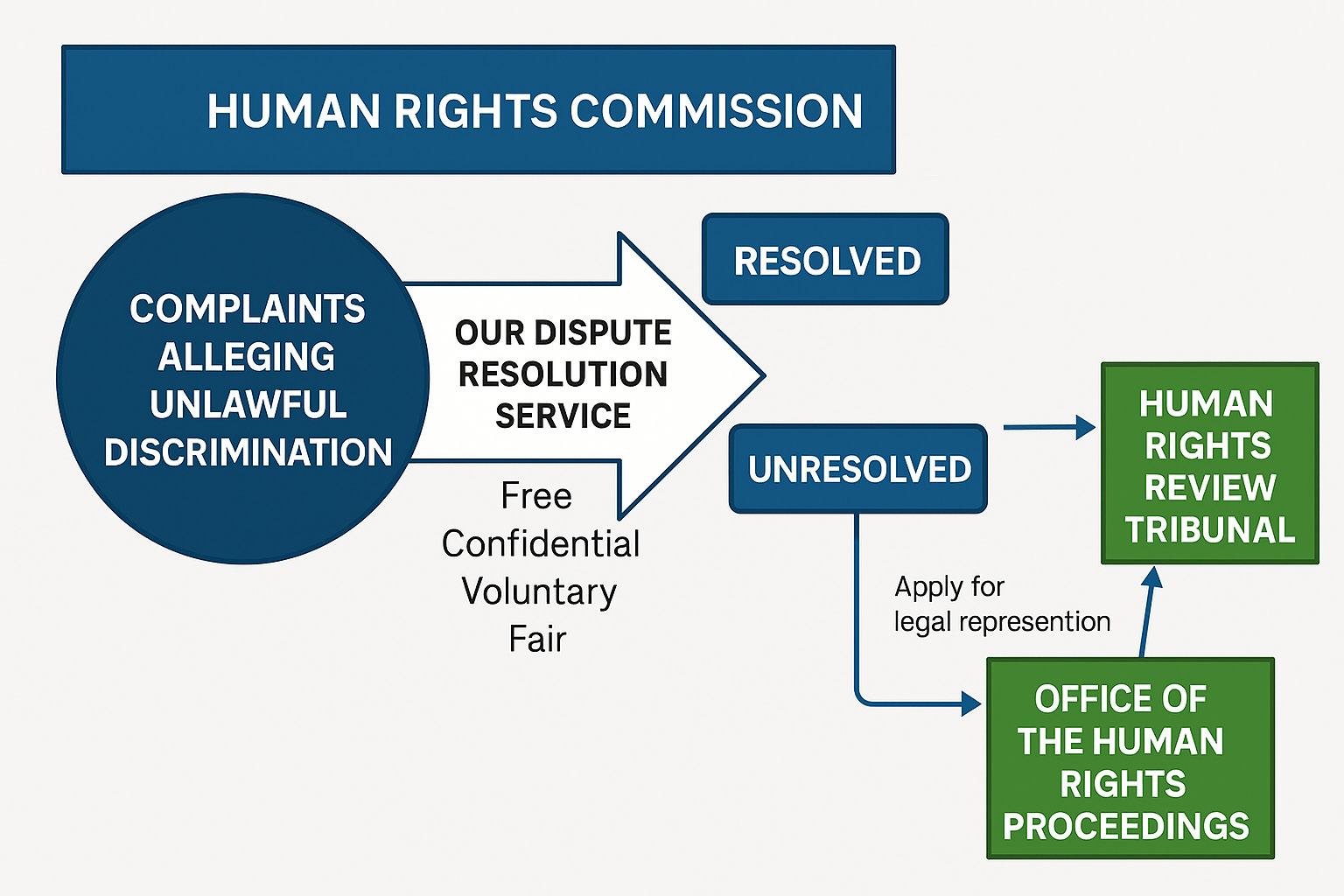 Pathways to resolving human rights concerns
When someone believes they have experienced unlawful discrimination, their journey
often begins with Te Kāhui Tika Tangata Human Rights Commission. The Commission
offers a dispute resolution process designed to help people resolve issues through
conversation and mutual understanding. This process is free, impartial, voluntary, and
aims to support constructive dialogue between the parties involved.
If a matter cannot be resolved through the Commission’s dispute resolution process,
individuals may choose to lodge a claim with the Human Rights Review Tribunal, an
independent decision-making body that can make legally binding rulings. Before doing
so, individuals can also apply for free legal representation from the Office of Human
Rights Proceedings, a separate part of the Commission that operates independently.
This resolution pathway ensures that people have access to both support and
accountability when seeking to address unlawful discrimination under the Human
Rights Act.
55
Human Rights Commission Annual Report 2025
Enquiries and complaints at a glance (2024-2025)
This year, our service responded to 8,376 people seeking help with human rights
concerns. This represents a 74% increase from the previous year. This substantial
increase reflects both rising public confidence in the Commission as a first port of call
for human rights concerns and our role in responding to international events affecting
communities in Aotearoa New Zealand.
The significant rise in service demand this year placed additional pressure on our small
team and systems. While we are proud to have supported more people than ever before,
the scale and pace of enquiries and complaints, coupled with staffing constraints,
meant that some service users experienced delays. These challenges underscore the
importance of sustainable resourcing to ensure timely, high-quality service delivery.
Here’s a snapshot of our key activities and outcomes:
• Enquiries and complaints received: 8,376
» Enquiries and complaints closed: 8,087
• Enquiries and broader human rights complaints received: 7,724
» Enquiries and broader human rights complaints closed: 7,294
• Human rights information and guidance provided: 6,440
• Alleged unlawful discrimination complaints received: 652
» Alleged unlawful discrimination complaints closed: 793
• Dispute resolution interventions offered (includes mediations): 336
» Complaints that reached agreement: 136
- Agreements that included individual remedies only: 47
- Agreements that included individual and systemic remedies: 28
» Complaints unresolved:60
• Mediations held: 86
» Mediations that reached agreement: 66
» Mediations that did not reach agreement: 20
56
Emerging human right issues (2024-2025)
During 2024–25, the Commission received a wide range of enquiries and complaints
reflecting significant shifts in the types of human rights concerns raised by the public.
These patterns reflect evolving public sentiment and highlight the need for responsive
and future-focused human rights practice.
The following summaries present a selection of issues people have raised with us
during the year. The issues reflect differing views on the boundaries between freedom
of expression, freedom of religion, and the right to be free from discrimination or
harassment.
Increase in complaints about hate speech and international conflict
The Commission was contacted by many people expressing concern about hate speech,
international conflict, and related social media content. The escalation of violence
in Gaza and the wider Middle East region influenced how individuals and groups in
New Zealand expressed their views, and how those expressions were experienced,
particularly by communities with personal, cultural, or religious ties to those regions.
People raised a broad spectrum of concerns, including experiences or perceptions of
discrimination, vilification, or fear of harassment. The scale and complexity of these
issues highlighted the profound impact global events can have on social cohesion
and human rights in Aotearoa New Zealand. They also reinforced the importance of
the Commission continuing to promote respectful public dialogue, protect community
wellbeing, and support the conditions needed for harmonious relations to thrive.
Public response to parliamentary suspensions
The Commission received enquiries and views relating to the suspension of Members of
Parliament. We received concerns about the implications of these decisions for freedom
of expression, participation in democratic processes, and cultural expression. Others
raised broader issues relating to potential discrimination and consistency with Te Tiriti.
While most views were critical of the suspensions, some supported the actions taken.
These differing perspectives reflect the range of opinions held across our society on
political conduct, cultural identity, and the role of protest within parliamentary settings.
They also highlight the importance of creating spaces where people can connect across
differing viewpoints while maintaining respect and understanding.
Public demonstrations and religious expression
People contacted the Commission regarding public protests and associated commentary.
Concerns were raised about the language and conduct at some events, which were
perceived by some as promoting religious intolerance, expressing homophobia and
transphobia, inciting hostility, or creating feelings of insecurity in public spaces.
57
Human Rights Commission Annual Report 2025
These issues highlight the challenges involved in protecting the right to protest and
freedom of expression, while also ensuring that public spaces remain inclusive and safe
for all. The Commission continues to work in ways that promote mutual respect, protect
individual rights, and support the conditions necessary for harmonious relations among
diverse communities.
Differing views on cultural symbolism in public communications
The Commission received complaints about a regional road safety campaign shared
on social media. The campaign featured a group of young people from diverse
backgrounds.
Some individuals and groups expressed concern that certain visual elements could
be interpreted as conveying political messages, which they considered unsuitable for
a publicly funded initiative. Others, however, were more concerned about the public
reaction to the campaign. In particular, some noted that online responses included
commentary that appeared to single out a young person based on aspects of their visible
cultural identity.
Complainants highlighted that the public discourse gave rise to harmful online
commentary, including language that could be considered offensive or discriminatory.
These concerns reflect broader community perspectives on the balance between cultural
expression, political neutrality, and responsible public representation. While some found
the inclusion of certain symbols uncomfortable, others viewed it as a positive affirmation
of cultural diversity and inclusion. A number of complainants also emphasised the
importance of safeguarding children and young people from being targeted in public
discussions, especially in high-profile or official online spaces.
As this was a matter that we could not help with through our dispute resolution process,
we provided information about our service and other avenues to explore if wanting to
pursue a complaint.
Concerns about race-based pricing and access to public events
The Commission was contacted by individuals raising concerns about a community
event that used race-based ticket pricing. Some people viewed the approach as
exclusionary, while others supported it to improve access for communities historically
underrepresented in public spaces.
These views reflected broader questions about how to achieve equity while maintaining
fairness and inclusion. The Human Rights Act prohibits discrimination in the provision of
goods and services but allows for lawful measures to ensure equality where they aim to
support disadvantaged groups.
58
The Commission acknowledged the intention behind the event and encouraged
approaches that promote positive race relations, protect rights, and support harmonious
relations in Aotearoa New Zealand.
The emergence of complex and often polarising issues has increased the demand for
nuanced, skilled engagement. Meeting these needs with limited resources has required
our service to be both agile and innovative in our approach.
Most cited prohibited grounds of discrimination and context
Each year, the Commission analyses complaints received to identify the most reported
grounds of unlawful discrimination and the contexts in which they occur. Our dispute
resolution service closed 793 complaints. This data provides important insight into the
types of discrimination people experience in Aotearoa New Zealand and supports the
Commission’s ongoing work to advance human rights and promote fair treatment.
During 2024-2025, the Commission received the following most frequently cited grounds
for unlawful discrimination:
• Disability - 29% was the most cited ground of unlawful discrimination this year.
Individuals reported negative experiences primarily in employment, followed by in
the provision of goods and services, and within government interactions, highlighting
ongoing structural and cultural barriers affecting participation and access.
• Race and ethnic or national origins -
25% taken together, were the second most
cited discrimination grounds. These complaints were most often reported in the
provision of goods and services such as retail, hospitality, or health sectors, followed
by employment, and then engagement with government agencies, reflecting the
ongoing impact of racial discrimination in public-facing environments.
• Sex - 9% - which includes discrimination related to gender, pregnancy, childbirth
and breastfeeding, was the third most cited ground, and was most prevalent in
workplaces, with further instances occurring when engaging with government and
when accessing goods and services.
59
Human Rights Commission Annual Report 2025
These results highlight ongoing challenges people face when engaging with employment,
accessing the goods and services, and engaging with government. They help shape
the Commission’s broader strategic priorities, including policy development, advocacy,
and addressing systemic issues. A detailed breakdown of the prohibited grounds of
discrimination and affected areas of life is provided below.
Grounds closed complaints F25
Grounds
Grounds Count
%
Disability
230
29
Ethnic or national origins
107
13
Race
97
12
Sex
74
9
Sexual harassment
65
8
Victimisation
47
6
Racial harassment
42
5
Age
35
4
Family status
27
3
Religious belief
21
3
Colour
17
2
Sexual orientation
10
1
Employment status
8
1
Marital status
7
1
Political opinion
7
1
Domestic Violence
4
0
Ethical belief
3
0
Racial disharmony
3
0
Conversion Practices
0
0
804
60
Areas of life closed complaints F25
Area of life
Area of Life Count
%
Employment
183
30
Provision of goods and services
146
24
Government Activity
122
20
Educational establishments
71
12
Land, housing and accommodation
32
5
Pre-employment
29
5
Places, facilities, vehicles
16
3
Professional and trade associations
6
1
Public places - racial disharmony (s61)
4
1
Qualifying bodies
3
0
Advertisements
1
0
Vocational training bodies
1
0
Partnerships
0
0
614
Supporting the resolution of discrimination complaints
Resolving 793 complaints fairly and effectively remained a core strength of our service
this year. In 336 of these matters, we provided dispute resolution interventions, including
mediation where appropriate. This service is delivered by our specialist mediators and
requires the agreement of both the complainant and respondent to participate.
We achieved resolution134 in 136 complaints (54%). Outcomes included apologies,
financial compensation, staff training and policy reform remedies demonstrating the value
of our dispute resolution service in achieving meaningful change through accessible
and respectful processes. Mediation remains a particularly effective resolution tool. Of
the 86 mediations provided this year135, 66 (77%) resulted in full or partial resolution.
Our mediators played a key role in supporting constructive and respectful engagement
between parties.
While our process does not always result in resolution, dispute resolution offers an
important early opportunity to address issues of discrimination. Where agreement cannot
be reached, complainants retain the right to take their case to the Human Rights Review
Tribunal.
134 Includes partial resolution
135 Requires agreement by both parties to participate
61
Human Rights Commission Annual Report 2025
No of dispute resolution interventions offered (includes Mediations):
336
Dispute resolution interventions (including mediations) that were resolved or
136
partly resolved:
Individual remedies agreed to, such as an apology, financial compensation,
82
or other personal redress
Systemic remedies agreed to that addressed wider organisational
improvements, such as policy or procedure changes, staff training, or
13
public statements
Systemic and individual remedies agreed to
41
Provided information - No further action required
13
Dispute resolution interventions (including mediations) where both parties were
60
unable to reach agreement (unresolved)
Dispute resolution intervention offered but declined by the respondent
76
Complaint withdrawn by complainant
51
Listening and learning
The Commission actively reviews feedback from people who contact us, to better
understand what they value in their experience and where improvements can be
made. Feedback this year underscored the importance of responsiveness, respectful
communication, and resolution pathways that empower individuals and communities.
Many people described their interactions with the Commission as respectful and
impartial, noting that they felt “heard and understood” during what were often difficult
and complex situations. Others highlighted the clarity and usefulness of the information
we provided, which helped them better understand their rights and options. The dispute
resolution process, particularly mediation, was also seen as a valuable tool for exploring
options, facilitating difficult conversations and achieving a sense of closure.
Some people raised concerns about delays in response times. These delays occurred
in the context of sustained high demand and reduced resourcing which affected our
capacity to respond as quickly as people had hoped. We acknowledge that these
constraints sometimes impacted the timeliness of our responses and required us to
make difficult prioritisation decisions. Despite this, our staff consistently upheld the mana
and dignity of those engaging with our services.
We deeply value the voices of those who use our services. The experiences of what
worked and what could be better continued to shape how we engage with individuals and
communities.
62
In response to feedback, we are actively:
• Reviewing and strengthening our internal processes to streamline enquiry and
complaint triage and enhance the efficiency of providing information and dispute
resolution pathways.
• Exploring system solutions to improve communication responsiveness and data
analysis, as resourcing allows.
• Prioritising enquiries and complaints that pose significant human rights risks to ensure
prompt attention.
These insights directly inform our internal training, service design, and operations.
Our performance (2024-2025)
The Commission’s information and dispute resolution services are measured annually by
the Ministry of Justice against two specific Statement of Performance Expectation (SPE)
targets. We met or exceeded both targets this year, demonstrating our commitment to
quality, accountability, and continuous improvement.
Target
Actual
Performance Measure
2024/25
2024/25
SPE 7.1: The level of satisfaction expressed by service
users who have engaged with our information and
75%
76%
complaints processes.136
SPE 7.2: Responsive and timely resolution of complaints
80%
of unlawful discrimination closed within one year.
99%
136 This year, we streamlined our feedback process by replacing two separate service satisfaction surveys with a single,
unified survey. Previously, we used different surveys for people engaging with our mediation services and those
seeking information or support on broader human rights issues. Now, all service users who provide a valid email
or postal address are invited to complete the same survey, ensuring a more consistent and inclusive approach to
capturing user experience and satisfaction.
63
Human Rights Commission Annual Report 2025
Key metrics for 2024-2025
Behind each metric is a person or whānau seeking fairness, safety, and resolution. We
are proud to deliver services that are not only measurable, but meaningful. This year’s
data affirms the Commission’s crucial role as a trusted, high volume public interface in
Aotearoa New Zealand’s human rights system.
2024-2025
2023-2024
Performance metrics
Actual
Comparative
Enquiries and complaints received and closed
Enquiries and complaints received
8,376
137
4,806
Enquiries and complaints closed
8,087
4,720
Unlawful discrimination complaints received138
652
887
Unlawful discrimination complaints closed
793
920
Average days to resolve a complaint alleging
173 days
130 days
unlawful discrimination
Enquiries and broader human rights complaints
7,724
3,919
received
Enquiries and broader human rights complaints
7,294
3,800
closed
Average days to resolve enquiries and broader
52 days
33 days
human rights complaints
137 We saw a 74% increase in contacts to our service, with a doubling of human rights enquiries and a significant rise
in demand relating to international conflict and hate speech
138 A complaint alleging unlawful discrimination under the Human Rights Act 1993 refers to a claim that a person has
been treated unfairly based on a prohibited ground of discrimination under section 21 of the Act. These complaints
fall under Part 1A (discrimination by government or public sector bodies) or Part 2 (discrimination in areas such as
employment, education, or the provision of and access to services).
64
Dispute resolution outcomes (Closed Matters)
Human Rights information and guidance provided
6440
3960
Dispute resolution interventions offered (includes
336
376
mediations)
Dispute resolution interventions resolved
136
158
Parties agree to individual remedies only
82
99
Parties agree to systemic remedies only
13
10
Parties agree to individual and systemic remedies
41
47
Mediations
Mediations held
86
93
Mediations resolved
66
58
Mediations unresolved
20
31
Note: Data may vary depending on the time of reporting due to the natural lifecycle of
complaint-handling. Figures can change as cases are received, assessed, reopened and
closed over time.
Our performance results reflect not only the commitment of our staff but also the
cumulative impact of sustained service pressure. Meeting or exceeding our targets under
these conditions speaks to the resourcefulness and professionalism of our service. To
maintain this performance, and meet increasing public need, ongoing investment in
capability and infrastructure is essential.
65
Human Rights Commission Annual Report 2025
Our impact
Case studies
The stories below offer a glimpse into the human side of our enquiry, complaint and
dispute resolution service where early resolution, respectful processes, and shared
understanding have supported people to feel heard, valued, and treated fairly. They
illustrate how our service not only resolves individual concerns but also supports system-
level change and accountability.
Note: All personal information has been removed, and details adjusted to protect privacy.
Guidance helps school resolve cultural conflict constructively
A high school principal approached the Commission seeking guidance after members of
the school community raised a concern during the school’s Cultural Week. A student had
created a poster expressing pride in their cultural heritage. However, a group within the
school community found the content of the poster politically controversial and offensive.
The principal had already sought advice through other channels but was looking for
further clarity on how to manage the situation in a way that upheld human rights. She
wanted to avoid escalating tensions within the school community and felt caught between
two competing concerns:
• protecting the student’s right to cultural expression
• responding respectfully to the concerns raised by the group.
The Commission provided early guidance grounded in a human rights framework. This
included explaining the relevant context under the New Zealand Bill of Rights Act and the
Human Rights Act, in particular the qualified nature of the right to freedom of expression,
and the legal threshold for harmful speech under section 61 of the Act. We advised
that the poster was unlikely to meet the threshold for unlawful expression and shared
the benefits of having clear school policies with objective standards around harmful or
offensive speech.
We also reviewed and provided feedback on the principal’s draft response to the
concerned group, encouraging an approach that acknowledged their discomfort while
affirming the student’s right to express their cultural identity.
Following this support, the principal told us she felt more confident in her response. She
was able to maintain an inclusive environment at the school, supporting diverse cultural
identities while upholding respectful dialogue.
66
Promoting inclusion through listening and accountability
A teacher approached the Commission after experiencing persistent mistreatment
following her gender transition while employed at a school. Despite raising concerns with
school management, she reported being repeatedly misgendered by staff and students
and subjected to negative comments. She described feeling unsafe and unsupported,
which significantly affected her mental health. Ultimately, she resigned and moved to a
different school where she felt affirmed and welcomed.
Through our dispute resolution service, the Commission shared her concerns with
the former school. In response, the school provided a heartfelt written apology,
acknowledging the harm caused to the teacher and expressing a genuine commitment to
building a more inclusive environment for all students and staff.
The teacher told us she felt a sense of closure. She believed that, by coming forward,
she had helped raise awareness of the seriousness of what had occurred and prompted
reflection and learning at the school.
Supporting informed choice and inclusion
A concerned friend contacted the Commission seeking advice on how to support a
disabled person in their life. They explained that their friend relies on a support worker
to get out and about but had not been able to meet up with friends or make independent
decisions. The caller felt the support worker might be too controlling and wanted to
understand how to help their friend.
We provided information about the rights of disabled people, including the right to
participate fully in society and to make decisions about their own care. These rights are
affirmed in the Convention on the Rights of Persons with Disabilities.
We introduced the concept of supported decision-making, the principle that disabled
people should be empowered to make their own decisions, and provided access to the
support, information and advice they need to do this.
We acknowledged their advocacy for their friend and emphasised the importance of
seeking their friend’s perspective and wishes. We also provided information they could
share with their friend about the Health and Disability Commissioner and the Advocacy
Service, which support people with complaints about disability services. We encouraged
their friend to contact us if they had questions or wanted to talk through their options with
us directly.
67
Human Rights Commission Annual Report 2025
Complaint results in company policy change and CEO commitment
Two people contacted the Commission separately after experiencing similar issues
when travelling with a major transport provider. Both used mobility devices to assist with
walking but were told by the company that the weight of their devices would count toward
travel allowance.
One person was asked to pay an additional fee to take their device, while the other was
told their device could not be taken on the journey at all. Both described feeling stressed
and confused at being forced to choose between taking essential equipment and packing
for their holiday. They also expressed concern about how policies like these affect the
dignity and freedom of disabled travellers.
The Commission contacted the transport company to raise the concerns and share
information about the Human Rights Act. The company’s Chief Executive acknowledged
that the policy had unintended and discriminatory consequences for people who rely on
mobility devices.
As a result of our engagement, the company committed to changing the policy to ensure
that mobility devices are not treated as part of a passenger’s luggage allowance and can
be carried at no extra cost. This change is now in place for all travellers.
Both complainants were relieved and pleased to hear that their experiences had led to a
positive change. One noted that policies that overlook the needs of disabled people can
make them feel invisible. They were both proud that by speaking up, they helped ensure
fairer travel experiences for others in the future.
Restoring dignity after racial profiling by facial recognition technology
A customer was mistakenly identified by a store’s facial recognition system as a
previously trespassed shoplifter. Despite providing multiple forms of identification, she
was publicly approached and confronted by staff. She described the interaction as
humiliating and racially charged, leaving her feeling unsafe and distressed.
The individual contacted the Commission, raising concerns of racial profiling and
discrimination based on ethnicity, issues that engage the right to be free from unlawful
discrimination under the Human Rights Act 1993. The incident also highlighted the
potential human rights implications of emerging technologies in public spaces.
Through the Commission’s dispute resolution service, the parties took part in our
voluntary mediation process. The conversation enabled a respectful exploration of the
harm caused and the values of mana tangata (inherent human dignity) that underpin our
human rights framework.
68
The mediation resulted in a confidential agreement that included a formal apology,
financial redress, and a commitment from the store to provide staff training on the
responsible use of facial recognition technology and on recognising and addressing
discriminatory behaviour.
Job applicant’s concern leads to fairer recruitment practices
A job applicant raised a concern about a potential breach of the Human Rights Act 1993
after applying for a customer service role with a large company. The application form
required a date of birth, and when the applicant did not receive a response several
weeks later, he questioned whether his age, 65, may have influenced the outcome.
The applicant lodged a complaint with the Commission. We contacted the employer to
share the concern and provide guidance, including our pre-employment guidelines on
avoiding discrimination during recruitment.
The employer explained that they had routinely collected applicants’ ages to ensure
legal compliance for higher risk roles requiring staff to be over 18. However, through
our engagement, they recognised that this was not necessary for the customer service
position in question.
As a result, the company immediately updated its recruitment process. They committed
to asking only whether applicants were over 18 and only when relevant to the role. They
amended their application form to include a clear explanation when such information is
required. The company also clarified that the delay in responding was due to receiving a
large volume of applications for the position and not related to the applicant’s age. The
applicant was satisfied with the company’s response and the positive changes made. He
expressed appreciation that his concerns were taken seriously and relief that he had not
been unfairly disadvantaged.
Addressing harm from sexual harassment in the workplace
An employee contacted the Commission to share concerns about experiences of sexual
harassment in her workplace. She described inappropriate and sexually suggestive
comments her employer had made that left her feeling uncomfortable, distressed
and unsupported. After raising her concerns directly with her employer and seeing no
meaningful change, she decided to resign.
Uncertain about next steps and still affected by the experience, she agreed to engage in
the Commission’s mediation process. With her consent, the Commission contacted her
former employer to offer mediation. He accepted, expressing a desire to put things right
but acknowledging he was not sure how best to do so.
69
Human Rights Commission Annual Report 2025
The mediator worked separately with each person to prepare them for the conversation
and reduce their anxiety. The mediator helped the former employee explain what genuine
acknowledgment looked like to her and provided guidance to the employer about how to
make an effective apology.
The mediator helped the participants focus on understanding the impact of the
employer’s behaviour had been, and on repairing the harm. During the conversation, the
employer acknowledged the impacts of his actions, expressed a sincere apology, and
shared the steps he had taken to improve his organisation’s culture and ensure staff felt
safe and supported.
The parties reached an agreement that included a commitment that the behaviour would
not be repeated, and financial support to assist with the former employee’s counselling
costs. Both individuals expressed their appreciation for the mediation process. They said
it had allowed them to feel heard, supported and better able to move forward.
Volunteer raises concerns about sexism and seeks cultural change
A volunteer contacted the Commission with concerns about how she was treated after
she raised issues about sexist comments made by other volunteers in the organisation.
She said she was excluded from her duties after speaking up and felt the organisation
had not taken her concerns seriously.
The Commission facilitated a mediation where both parties shared their experiences,
asked questions, and explored possible resolutions. The organisation apologised and
outlined the steps it was taking to improve its culture and respond more effectively to
discrimination concerns. An offer to settle the matter was also made.
Although the mediation did not lead to a final resolution, the volunteer felt vindicated by
the opportunity to share her experience and receive an apology. She said that as soon
as the Commission became involved, she felt more at ease. She left the process feeling
informed and empowered to take further steps, including applying to the Office of Human
Rights Proceedings for free representation at the Human Rights Review Tribunal.
The organisation’s representative also noted that the mediator had created a safe
environment for open and constructive dialogue.
70
“Respectful and fair process with a real and genuine commitment to try and
resolve the matter. Additional support through the mediation was provided
to the other party because they did not have a support, which I’m sure was
appreciated by both sides. The mediator made it easy to be open and transparent
in communication in a complex and tricky situation where potential conflict could
have overridden the purpose of finding common ground.”
“Fantastic service!”
“Excellent support throughout
the process”
“Thank you for making this a mana
enhancing process for all parties, but
most importantly our customer. Your
“We found the process was
professionalism and commitment to
well managed and suited the
ensuring all opinions were heard and
nature of the complaint very
understood, and that agreed actions
well. The mediator was also very
were followed through is appreciated.”
professional and personable.”
“Much thanks to
“I appreciate having
for assisting me.”
“Your staff were really friendly and
good people like you
helped clarify few things which was
working on these
said in the meeting. Knowledgeable
sorts of things in our
and helped resolve the issue. Much
communities.”
appreciated. Thankyou”
“I really appreciate
“Thank you so much for your calm and supportive
all the time, and
guidance throughout the process.”
dedication, trust and
more from everyone.
Thank you”
“Your staff were wonderful and
kind and tried their very best to find
common ground between me and
“I appreciated being called
the organisation. I’m in awe of their
before being emailed.”
humanity and wisdom. Thank you for
all the effort you put in on my behalf.”
71
Human Rights Commission Annual Report 2025
“This was a very positive
“Extremely helpful, compassionate,
mediation and we
provided 100% assistance to me in all
appreciated the tone and
aspects of my complaint throughout
environment.”
this process. I felt that ‘I had been
heard’ and that my complaint was taken
seriously and that ‘there is hope’ at the
“You supply a much
end of this process.”
needed service to the
community, its importance
cannot be understated.
“Your staff member was so
Thank You.”
kind and considerate. Thank
you so much.”
“You are a voice for those
“Thank you for your
whom do not have the means
assistance in bringing the
to hold such a powerful
parties together and guiding
organisation to account with
discussion, it was much
mediation. Just fantastic.”
appreciated.”
“This was the most useful
interaction I’ve had after months
of trying! Thanks so much for your
“Thank you for guiding
kindness, ideas and empathy!”
us through what
was a real unknown
process for us...
Thanks for making us
“Our mediator did a great job of keeping the
feel comfortable to
conversation on track. They felt very fair and
talk through what had
measured in their approach. Very practical and
happened and come to
good at setting expectations ahead of the meeting.”
a resolution.”
“It was in the end the outcome we all had hoped for. I don’t know how you did it!
I’m so grateful to you for persisting with this request for us. We really were getting
nowhere so without your help it would have had to be abandoned. I can’t thank
you enough”
“Thank you so much for your kindness and
support. Your actions made me feel truly
respected and equal.”
72
The Office of Human Rights Proceedings
The Director of Human Rights Proceedings is required to report annually to the Minister on the
Director’s decisions following applications for free legal representation in the Human Rights
Review Tribunal (Tribunal).139
Report to the Minister on the Director of Human Rights
Proceedings’ decisions
I am pleased to note the Office has received several groundbreaking decisions from the
Tribunal in the last twelve months. In a well-publicised proceeding, we represented a
young woman who was forced out of the workplace and onto parental leave, and then
felt she had to resign, once she became pregnant. The Tribunal agreed she had been
discriminated against because of her pregnancy and awarded nearly $100,000 in lost
wages, foregone parental leave payments and for humiliation, loss of dignity and injury to
feelings.140
In another case, our client had filed proceedings against her local Muslim association to
seek better inclusion of women, particularly at its annual general meetings. That claim
was settled, but our client considered the association was not living up to its promises.
We filed proceedings to enforce the settlement agreement, and the Tribunal agreed the
association had breached the settlement agreement. It required the association to hold
two annual gatherings for its women’s chapter dedicated to support and mentoring for
its female members and awarded damages to mark the harm suffered by our client in
pursuing her case. I hope it will serve as a useful reminder to parties to take seriously the
obligations in settlement agreements.
Finally, we have received two important decisions under the Privacy Act 2020, following
my intervention in proceedings brought by other parties.141 In each, we were pleased
to see the Tribunal rely on our submissions in support of the claims going ahead, and
applying an access to justice model for an expansive jurisdiction for the Tribunal.
This year has also seen significant change within our Office. In late 2024 I announced
my intention to step down from the role of Director. We also farewelled our solicitor, with
his replacement commencing in July 2025. In a team of only four lawyers, that has meant
our capacity this year has been significantly reduced, and I am very proud of our staff’s
ability to work to a high standard in those circumstances.
139 Under s 92A(4) of the Human Rights Act 1993 (HRA) the Director must report to the Minister at least once each year and, without
referring to identifiable individuals concerned, on the Director’s decisions under s 90(1)(a) (applications for representation in the
Human Rights Review Tribunal in respect to enforcing settlement) and s 90(1)(c) (applications for representation in the Tribunal in
respect to complaints under the HRA).
140
Doria v Diamond Laser Medispa Taupo Limited & Ors [2025] NZHRRT 12.
141
Sheehan v Wilson (Appointing Representative Defendant) [2024] NZHRRT 62 and
Steele v Commissioner of Police
(Jurisdiction) [2025] NZHRRT 21.
73
Human Rights Commission Annual Report 2025
In the coming year, that work includes several significant sexual harassment claims,
proceedings challenging benefit rates under the Social Security Act 2018 and the
availability of ACC, a case about access to medication in prison and two proceedings on
behalf of our transgender whānau. We also await a Tribunal decision on access to New
Zealand Sign Language on television. I see our role as giving a voice to the vulnerable
and seeking to uphold their rights, and I am proud of the mahi our staff undertakes every
day to make that a reality. I thank them for their utmost dedication to the role and to
human rights jurisprudence in Aotearoa New Zealand.
I am concerned to see that funding for three Deputy Chairpersons in the Tribunal has not
been renewed. The Tribunal has been beset by delays in recent years and, in my view,
requires a significant and permanent injection of resources to ensure all parties have
the benefit of timely decisions and effective remedies. I hope further resources can be
allocated soon.
The Tribunal performs an important constitutional function when it hears cases under
Part 1A of the Human Rights Act 1993. It has the power to declare enactments as being
inconsistent with the New Zealand Bill of Rights Act 1990. This triggers a requirement
for the Attorney-General to inform Parliament of the Declaration and for the responsible
Minister to subsequently report to Parliament on the Government’s intended response.
In a country that does not have embedded human rights protections in supreme law, this
is an incredibly important accountability tool. Accordingly, the Tribunal should be given
the resources that match its constitutional role and importance.
Finally, this will be my last report as Director. I have been incredibly privileged to have
this role. I am grateful to all of my colleagues in the Office of Human Rights Proceedings,
from solicitors to law clerks, as well as the support I have received from Commissioners
and the Human Rights Commission staff over the years. Since I indicated my intention
to resign and reduced my hours, my Deputy, Greg Robins, has had to step up and
absorb a large amount of the administrative and management responsibilities for the
role. I am very grateful for him doing so. I leave the Office in good hands, with excellent
human rights litigators ready to continue to litigate in the public interest. I look forward to
watching the Office’s continued mahi.
I would like to make special mention of an integral part of the Office of Human Rights
Proceedings. Since the Office’s inception in 2002, we have been fortunate to have
Pamela Rowe as part of our team. Her care and dedication to her work is without peer,
and she has provided an incredible public service well over two decades. She is known,
with cause, as The Real Director. Thank you for your service and support, Pam.
Michael Timmins
Former Director of Human Rights Proceedings
74
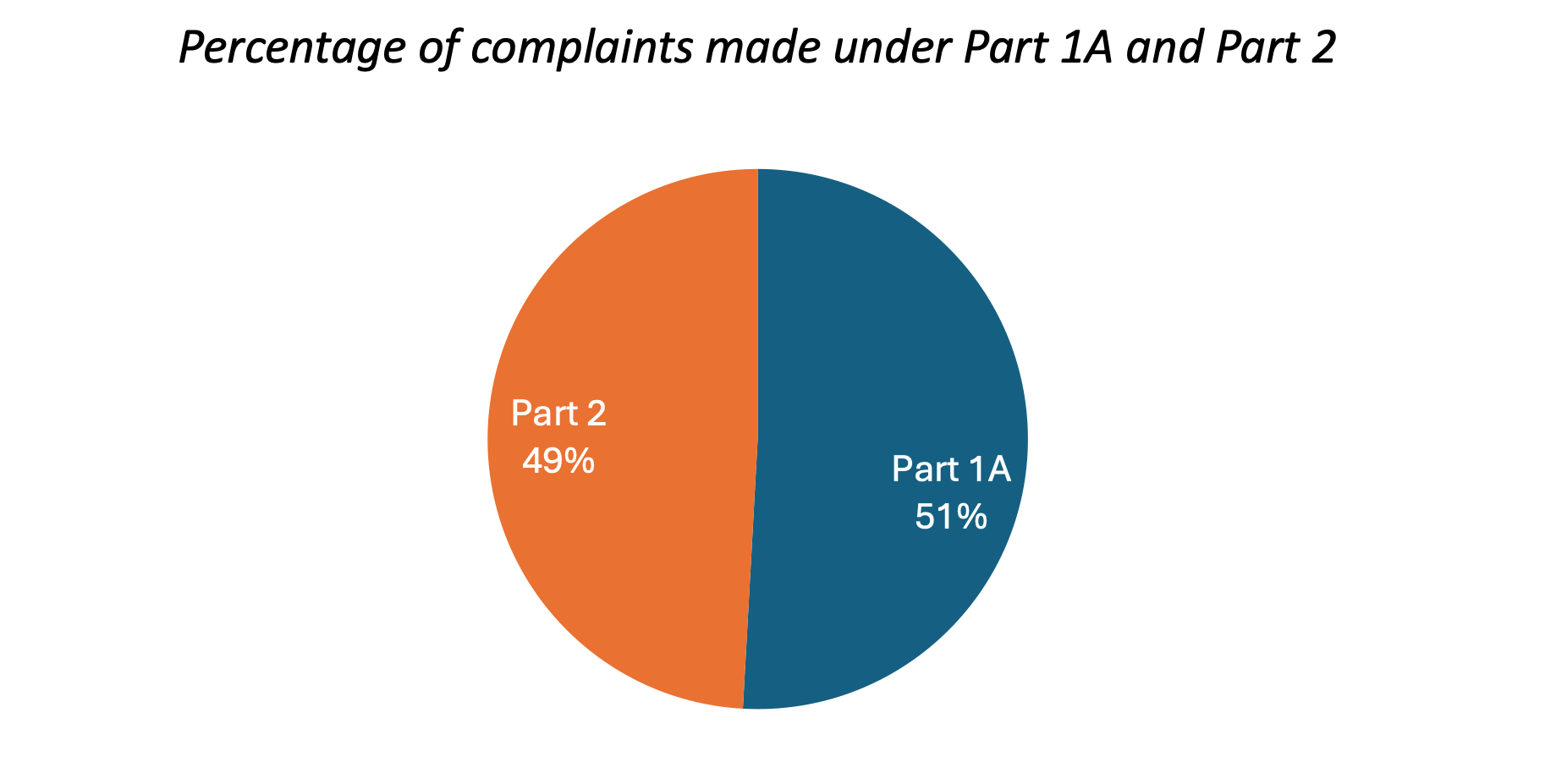 Summary of decisions made
The Director made fifty-seven (57) decisions on applications for representation in the
Tribunal. Of those, the Director decided to grant representation to nine (9) applicants:
seven (7) grants were for representation in the Tribunal, and two (2) were for
representation for settlement attempts.
Forty-three (43) decisions were made not to provide representation; three (3) to take
no further action; and two (2) were referred back to the Human Rights Commission for
mediation.
Expressed as a percentage, the Director provided representation to sixteen percent
(16%) of applicants overall.
The proportion of decisions for complaints made under Part 1A vs Part 2 of
the Human Rights Act 1993
Some twenty-nine (29) of the decisions made concerned complaints under Part 1A of
the HRA142 as against twenty-eight (28) that concerned complaints under Part 2 of the
HRA143.
142 Part 1A applies to unlawful discrimination complaints against Government agencies or persons or bodies performing public
acts pursuant to law (other than complaints about employment discrimination, racial disharmony, racial harassment, sexual
harassment, and victimisation).
143 Part 2 applies to complaints against private entities.
75
Human Rights Commission Annual Report 2025
Part 1A complaints by entity, ground and decision
The table below shows the public-sector entities or type of public-sector entities
complained against, the prohibited grounds of discrimination alleged in respect to those
entities, and the Director’s decisions.
Public Sector Entities
Ground144
Decision
• ACC
Disability (16)
No (14), Yes (1), RB145 (1)
• Department of Corrections
Employment Status (1)
No (1)
• Department of Internal Affairs Ethnic/National Origin
No (2)
• Inland Revenue Department
(2)
• Ministry of Business,
Race (4)
No (4)
Innovation and Employment
Racial Harassment (1)
Yes(S)146 (1)
• Ministry of Education and/or
Educational Establishment
Sex (5)
No (1), NFA147(1), Yes (3)
• Ministry of Health
• Ministry of Social
Development
• Tertiary Institution
• Te Whatu Ora Health New
Zealand
• Other bodies performing a
public function, power or duty
conferred or imposed by law
144 Where an applicant has relied on several grounds, a single primary ground has been isolated.
145 ‘RB’ denotes that the Director decided to refer the matter back to the Human Rights Commission for a dispute resolution meeting
or other form of mediation designed to facilitate resolution of the complaint.
146 ‘Yes(S)’ indicates the Director agreed to provided representation for settlement negotiations only.
147 ‘NFA’ denotes that the Director decided to take no further action on the application.
76
Part 2 complaints by area, ground, and decision
The following table shows the areas of life, the prohibited grounds of discrimination
alleged to be involved, and the Director’s decisions in respect to applications involving
complaints under Part 2 of the HRA.
Area
Ground148
Decision
Employment/
• Disability (4)
• No (4)
Pre-Employment (16)
• Ethnic/National Origin (1)
• No (1)
• Ethical Belief (1)
• No (1)
• Race (1)
• RB149 (1)
• Religious Belief (1)
• No (1)
• Sex (1)
• No (1)
• Sexual Harassment (3)
• Yes (1), No (2)
• Victimisation/Protected
• No (2), NFA150 (2)
Disclosure (4)
Goods & services (10)
• Disability (2)
• No (2)
• Marital Status (1)
• No (1)
• Race (2)
• No (2)
• Racial Harassment (1)
• Yes(S)151 (1)
• Sex (2)
• Yes (2)
• Sexual Harassment (2)
• No (2)
Other forms of discrimination • Disability (1)
• No (1) [No jurisdiction]
(2)
• Race (1)
• No (1) [No jurisdiction]
148 See n 144.
149 See n 145.
150 See n 147.
151 See n 146.
77
Human Rights Commission Annual Report 2025
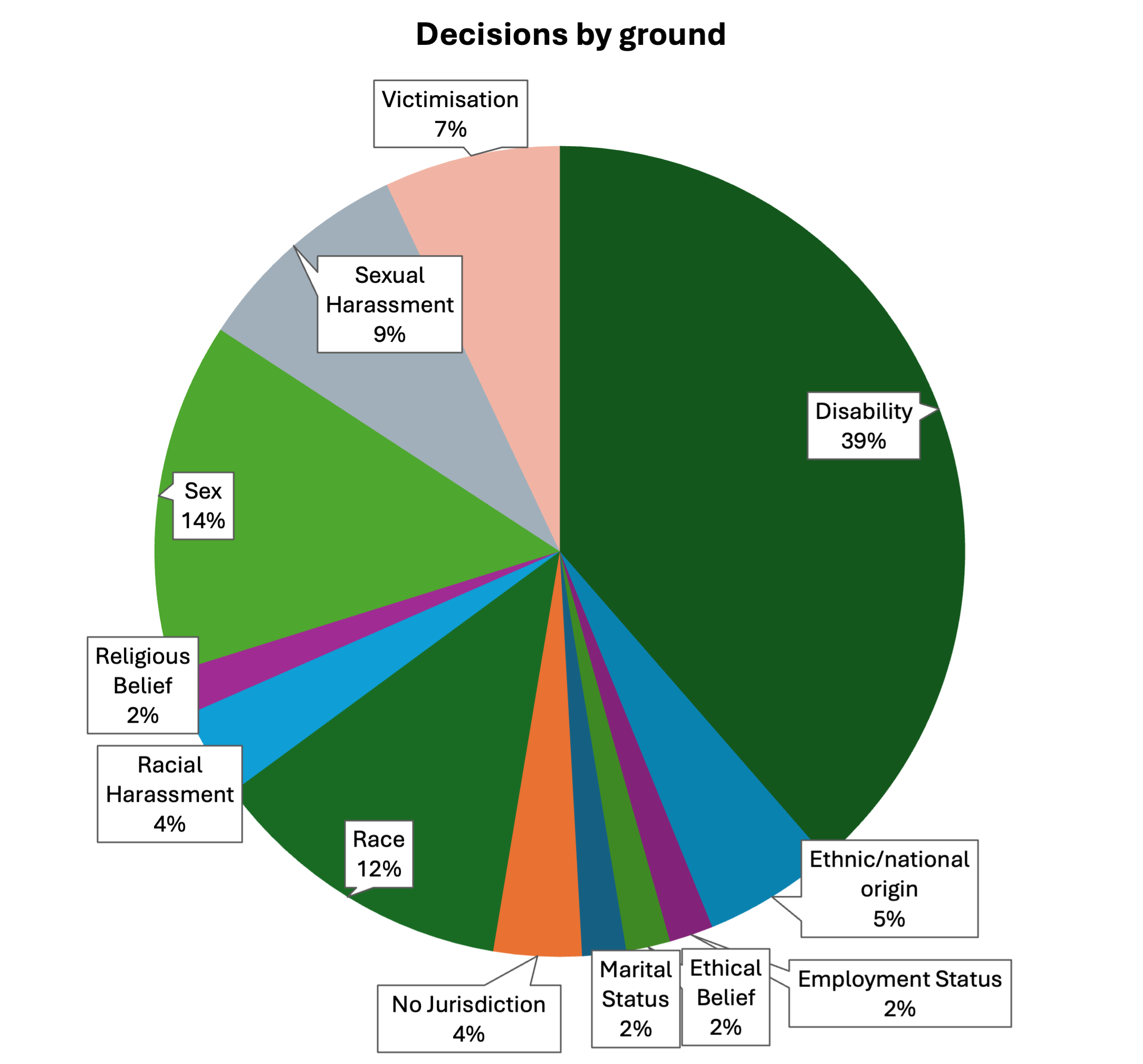 Decisions by ground
The following diagram shows all decisions, whether relating to Part 1A or Part 2, made
by reference to the alleged prohibited grounds152 involved in the complaints, as a
percentage.
The Director’s Privacy Act functions
The Director also has statutory powers, duties and functions under the Privacy Act 2020.
Significantly, the Director may bring privacy interference proceedings upon referral from
the Privacy Commissioner.
The Director did not receive any referrals from the Privacy Commissioner this reporting
year.
The Director made five (5) decisions on invitations to intervene in proceedings before the
Tribunal pursuant to reg 14 of the Human Rights Review Tribunal Regulations 2002. No
decisions were made to intervene in these matters.
152 See n 144.
78
Organisational Health and Capability
We are in a new strategic phase
The work as Aotearoa New Zealand’s national human rights institution is more important
than ever with emerging human rights challenges nationally and internationally. In
2024/25 we are in a time of transforming with the end of warrants for a number of
statutory officeholders and the appointment and arrival of new commissioners in
November 2024 who bring new perspectives and expertise to the Commission. With
constrained resources we have been responding to our financial reality while recognising
the need for adequate resources to effectively fulfil our statutory obligations. Following on
from the retrenchment action necessary in 2023-24, we have reviewed and consolidated
core functions to be more efficient, focused and coordinated for collective impact.
We are focused on organisational sustainability, efficiency and
effectiveness as a Tiriti-based organisation
We have a comprehensive understanding of our organisational cost drivers and
continually work to improve our service delivery and responsiveness so we achieve
our mandate to promote and protect human rights in Aotearoa New Zealand. We
have focused action to consolidate resources, reduce cost, strengthen and sustain the
Commission in 2024-25 across a number of operational areas:
• Resourcing and structural efficiencies, delivered through various organisational
change processes including the consolidation of administrative functions for improved
cross-team support and review of corporate services capability needs
• Recruitment and resourcing aligned to organisational priorities
• Relocation
to a new Auckland office
• Streamlining business-as-usual expenditure
• Successful contract renegotiations across key suppliers
• Optimising funding revenue
• Completion and rollout of Te Tūāpapa, our human and indigenous rights staff
capability programme, and development of a sector-leading, foundational Te Tiriti
policy which is now aligned to a number of revised organisational policies, all part of
the Commission’s infrastructure.
We are supported by our Finance, Audit and Risk Committee (chaired by an external
member) and our Wellbeing, Health and Safety Committee (governance and operational
leaders and members) that provide an extra line of assurance for our strategic planning,
financial performance and reporting, health and safety and core business policies and
processes.
79
Human Rights Commission Annual Report 2025
Our highly capable, committed team are our greatest resource
We are committed to being a good employer. Our organisational values, mana tangata,
māia-tika-pono, whanaungatanga, and the principles and practice of equal employment
opportunities are embedded in how we work and our organisational policies and practice.
Good and safe working conditions
• The Commission has recently undertaken a comprehensive review, development,
and implementation of key policies to strengthen staff wellbeing, safety, and
operational effectiveness.
• Managing Unreasonable Conduct Policy – Implemented to safeguard staff,
ensuring physical security matters are addressed promptly and consistently.
Wellbeing and Health & Safety Policies – Renewed to include emergency
preparedness provisions and strengthen wellbeing offerings.
Comprehensive Leave Policy – Developed and implemented to provide staff clear
guidance on entitlements and related processes, and supports managers in applying
the Commission’s leave provisions consistently.
• Generous leave provisions and wellbeing support are available to all staff, and
professional support supervision is regularly accessed by some staff.
• Haumaru, the Wellbeing, Health and Safety Committee has strong representation
from the Board, staff and leaders, delivering a comprehensive work programme.
• A comprehensive wellbeing programme tailored to our environment occurs
throughout the year, including free flu vaccinations, employee assistance programme
(and alternative providers when appropriate), workstation assessments and
equipment.
• First aiders and office wardens undertake regular training, and in 2024-25 a number
of first responders were trained to support staff with wellbeing concerns.
• The Commission’s culture promotes autonomy, personal responsibility and flexibility,
supporting staff to achieve work-life balance. Working from home guidance and the
flexible working policy provides clear direction for both staff and leaders.
80
Recognition of the aims and aspirations of Mori
• The Commission’s journey to be a Tiriti-based organisation and our partnership with
National Iwi Chairs Forum demonstrates recognition of the aims and aspirations of
Māori with conviction and commitment.
• We have completed and rolled out Te Tūāpapa, our online professional development
programme to build human rights and the human rights dimensions of Te Tiriti
knowledge.
• There are active networks for tangata whenua staff, and tools and resources enable
our staff to build and apply knowledge about Te Tiriti, indigenous rights and human
rights.
• In our latest AskYourTeam survey our staff confirmed and valued the Commission’s
support for the use of te reo Māori (86%), actively values te āo Māori (85%) and Te
Tiriti (80%).
Equal employment opportunities including recognition of employment
requirements of cultural differences, ethnicity, disability and gender
• Following our 2023-24 results, the Commission eliminated pay gaps related to
gender, ethnicity (Māori, Pacific Peoples) and disability. In 2024-25, our pay gaps
further improved in favour of females, Māori, Pacific Peoples, and employees with
disabilities.
• We continue to maintain an effective, trusted working partnership with the Public
Service Association (PSA), meeting regularly to consult on organisational policies
and working practices, wellbeing, health and safety measures, and change
management.
• Our wellbeing programme is tailored to the Commission’s environment and the
diverse needs of our people, including access to alternative employee assistance
and/or professional support providers, as well as Rongoā Māori services.
• In our latest AskYourTeam survey staff affirmed that the Commission respects their
values and cultural beliefs (83%) and the Commission is culturally competent (82%)
and diverse and inclusive (78%).
• Review of employee turnover and reasons for exit are analysed to identify trends
and opportunities.
81
Human Rights Commission Annual Report 2025
Impartial selection of suitably qualified people and opportunity for capability
enhancement
• Robust recruitment and selection processes and policies are in place to attract a
diverse range of applicants, ensure consistent decision-making, and appropriately
manage conflicts of interest.
• All recruitment panels include appropriate representation of tino rangatiratanga and
experienced people leaders.
• Selection processes assess the capabilities required to support the Commission’s
Tiriti-based organisational journey.
• Staff have access to a range of development opportunities, including projects,
secondments, and higher duties.
• Active networks are in place for tangata whenua, Pacific Peoples, and people of
other ethnicities.
• In our latest AskYourTeam survey our staff confirmed very positive results in people’s
experience of the organisation (80%) and organisational culture (74%).
Gender, ethnic and disability pay gaps have been eliminated
Since 2020/21, focused action to address pay gaps has resulted in their elimination
by 2023/24, with further progress achieved in 2024/25. This represents significant
improvement, as prior to 2020/21 the pay gaps for women and Māori pay gaps were
10.93% and 8.43% respectively. For Asian and MELAA (Middle Eastern, Latin American,
African) and non-binary staff, numbers are too small to report in earlier years without
compromising individual privacy.
82
Progress to eliminate pay gaps from 2022/23 to 2024/25 is illustrated below:
Pay gap related to
2022/23
2023/24
2024/25
Gender
2.00%
-0.95%
-3.79%
Māori
-0.27%
-1.79%
-3.12%
Pacific Peoples
-13.39%
-10.81%
-12.34%
Disability
-4.32%
-1.94%
-1.44%
• To ensure this progress is maintained the Commission continues to work closely
with the PSA to ensure there is no unjustified bias or discrimination in our systems
or practices. Our recruitment and remuneration approach includes providing timely
people and culture advice to managers as decisions are made. Equal pay and
pay parity were also central to the 2023/24 collective bargaining process, with the
agreements reached forming a cornerstone of the new Collective Employment
Agreement in effect from 1 July 2023 to 30 June 2025.
83
Human Rights Commission Annual Report 2025
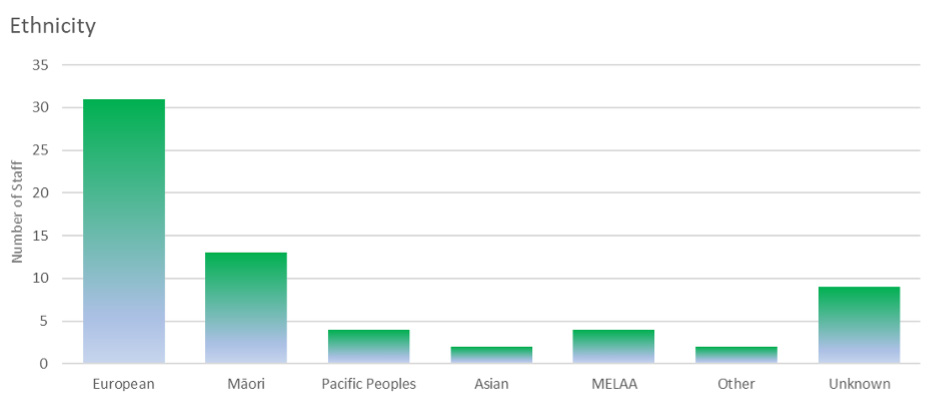
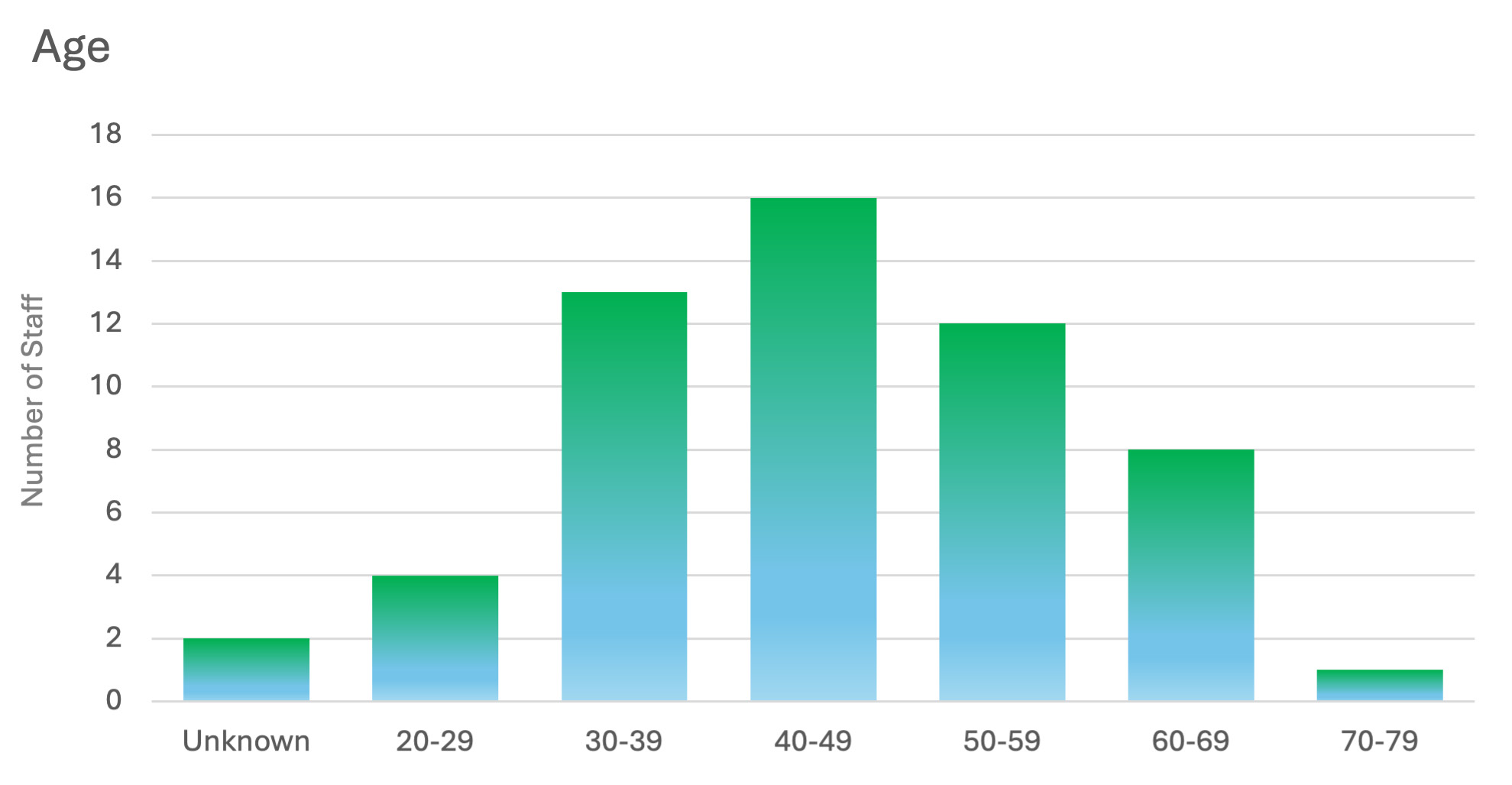
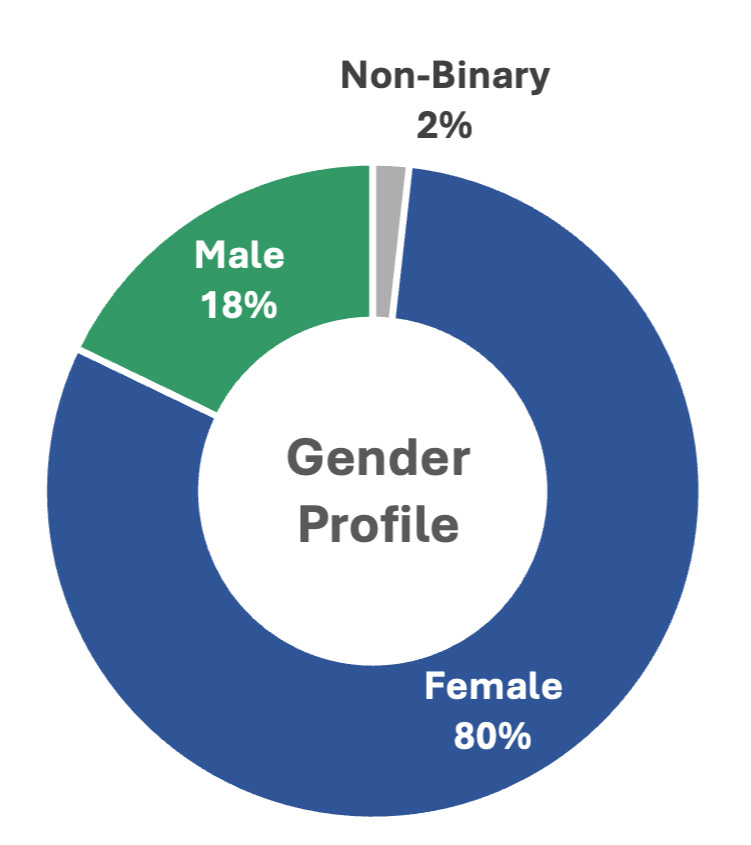
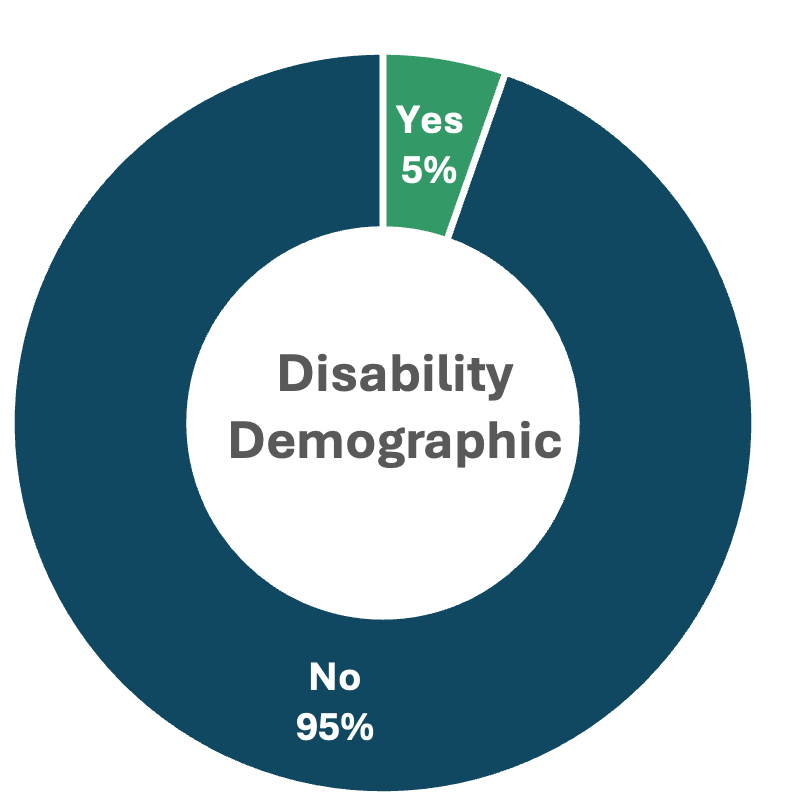 Workforce profile (including all
permanent and fixed-term employees as
at 30 June 2025)
84
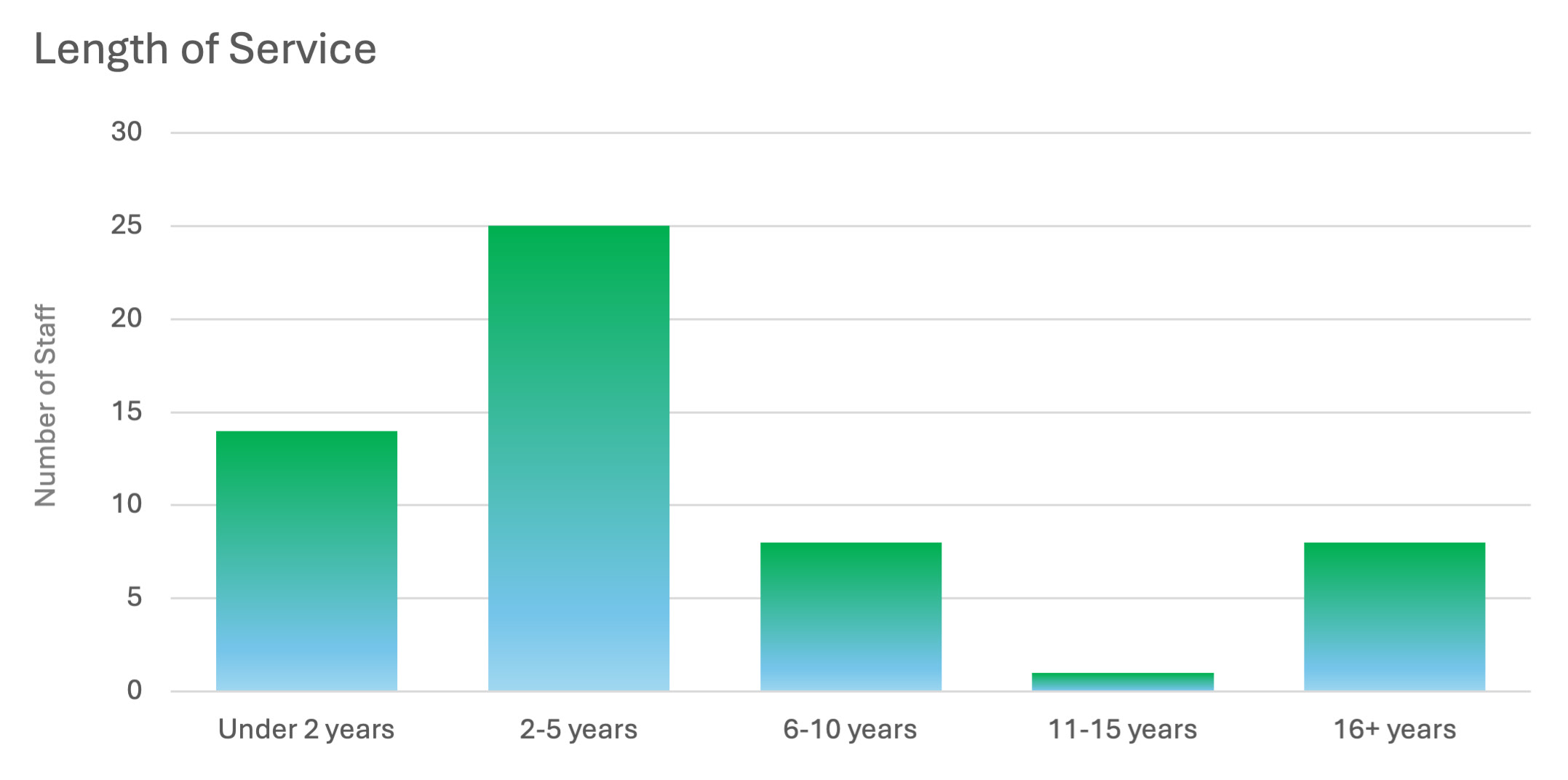 Meeting our legal responsibilities
Through our governance, operational and business rules, we ensured we met our good
employer requirements and our obligations under the Public Finance Act 1989, the
Public Service Act 2020, the Crown Entities Act 2004 and other applicable crown entity
legislation.
2025 Statutory Remuneration
Disclosures
Crown entities are required under section 152 of the Crown Entities Act 2004 to disclose
in the annual report the remuneration of Commissioners, committee members and
employees. However, the disclosure is not required to be audited and as such these
disclosures do not form part of the audited financial statements.
Commissioners’ and other committee members’ remuneration
Total remuneration includes all benefits paid or payable to each Commissioner, Director
and Committee Member during the financial year. There was $77,322 paid out for
accrued leave entitlements for one Commissioner and Director leaving the Commission
during the year. (2024: $31,745 for 1 Commissioner).
85
Human Rights Commission Annual Report 2025
Position
Member
Term
Term
2025
2024
started
ended
$000
$000
Chief Commissioner
Stephen Rainbow
11 Nov 24
Current
266
-
Director of Human
Michael Timmins
11 Mar 19
Current
90
282
Rights Proceedings
Acting Chief
Commissioner and
Equal Employment
Karanina Sumeo
05 Nov 18 08 Nov 24
217
326
Opportunities
Commissioner
Equal Employment
Opportunities
Gail Pacheco
11 Nov 24
Current
175
-
Commissioner
Race Relations
Melissa Derby
04 Nov 24
Current
179
-
Commissioner
Disability Rights
Prudence Walker
19 Jun 23
Current
272
269
Commissioner
Audit Committee Chair Edie Moke
23 Mar 23
Current
13
10
Audit Committee
Phillip Jacques
20 Jul 23
Current
3
3
Member
Indemnity insurance
The Commission effected Directors’ and Officers’ Liability and Professional Indemnity
insurance cover during the financial year in respect of the liability or costs of
Commissioners, the Director, and employees.
Employee remuneration
As a Crown entity, the Commission is required to disclose in its annual report the
number of employees receiving total remuneration of $100,000 or more per annum.
Total remuneration includes end-of-contract payments such as contractual notice pay
and accrued leave entitlements but excludes cessation payments. In compliance, the
table below has been produced, which is in $10,000 bands to preserve the privacy
of individuals. Because Commissioners and the Director are not employees of the
Commission they are not included in the table.
86
Remuneration of employees over $100,000 per annum
Number of employees
Total remuneration p.a.
2025
2024
$100,000 - $110,000
5
6
$110,001 - $120,000
5
11
$120,001 - $130,000
8
8
$130,001 - $140,000
5
2
$140,001 - $150,000
4
5
$150,001 - $160,000
3
3
$160,001 - $170,000
-
1
$170,001 - $180,000
1
2
$180,001 - $190,000
-
2
$190,001 - $200,000
3
1
$220,001 - $230,000
1
1
$270,001 - $280,000
1
1
$280,001 - $290,000
1
-
Cessation payments
Cessation payment of $26,438 was paid to one employee. This employee ceased to be
employed within the financial year ending 30 June 2025. (2024: $458,179).
87
Human Rights Commission Annual Report 2025
 Statement of Responsibility
Pursuant to section 155 of the
Crown Entities Act 2004, we certify that:
• We are responsible for the preparation of these financial statements and the
statement of performance and for the judgements in them.
• We are responsible for any end-of-year performance information provided by the
Commission under section 19A of the
Public Finance Act 1989, whether or not that
information is included in this annual report.
• We have been responsible for establishing and maintaining a system of internal
control designed to provide reasonable assurance as to the integrity and reliability of
financial reporting.
• We are of the opinion that these financial statements and statement of performance
fairly reflect the financial position as of 30 June 2025 and the operating results and
cash flows of the Commission for the year ended 30 June 2025.
Approved on behalf of the Board of the Commission
Stephen Rainbow
Prudence Walker
Chief Commissioner
Disability Rights Commissioner
Te Amokapua
Kaihautū Tika Hauātanga
Date: 29 October 2025
88
Statement of Performance
Our Statement of Intent 2021/22 to 2024/25 and 2024/25 Statement of Performance
Expectations provide our strategic direction and priorities. Each year, we deliver targeted
mechanisms and programmes to help achieve our overall desired outcomes in human
rights. To monitor our progress, we set ourselves a series of outcome measures in our
Statement of Intent and report against four annual output measures in our Statement of
Performance Expectations and 2024/25 Estimates of Appropriation.
Significant judgements or assumptions
There were no significant judgements or assumptions for the service performance
measures. This section reports how we performed against those measures this year.
Output class statement – Services from the Human Rights Commission
Actual
Budget
Actual
2025
2025
2024
$000
$000
$000
Revenue
Crown
12,446
12,446
13,829
Other
534
448
220
Total revenue
12,980
12,894
14,049
Total expenses
11,902
12,971
13,789
Net surplus/(deficit)
1,078
(77)
260
89
Human Rights Commission Annual Report 2025
Public Benefit Entity Financial Reporting Standard 48 Service
Performance Reporting (PBE FRS 48)
Reporting Service Performance Information
The New Zealand Accounting Standards Board (XRB) issued the Public Benefit Entity
Financial Reporting Standard 48: Service Performance Reporting (PBE FRS 48) in
November 2017, with subsequent amendments. This Standard requires public benefit
entities to report service performance information in their annual reports beginning on or
after 1 January 2022.
The Commission’s Service Performance Outputs for the current year are largely
consistent with those of the previous year. However, some performance measures or
assessment criteria has been revised to better reflect current priorities and outcomes.
The nature and effect of these changes are outlined below.
Changes to Performance Measures
• Adjustments have been made to certain performance measures to improve alignment
with organisational priorities and to enhance the clarity and relevance of reporting
outcomes (measures 1.2, 4.3, 7.1 and 7.2)
• Assessment criteria have been refined to ensure measurable and transparent
evaluation of service performance.
New Measures
The following measures were new for the current period. These new measures along
with their nature and effect are outlined as follows.
Measure 1.1
The Commission’s engagement is guided by the National Plan of Action for Human
Rights and targets stakeholders including government agencies, iwi and hapū,
community groups, NGOs, and the public. Activities include consultations, workshops,
hui, surveys, and digital engagement, with feedback used to refine approaches.
This ensures engagement remains relevant and effective, supporting policy advice,
awareness initiatives, partnerships, and broader human rights outcomes, while
continuously aligning with national priorities.
Measure 2.1
The Commission has undertaken a stocktake of recommendations from reports,
inquiries, and submissions, drawing on its extensive research and human rights work.
This measure is designed to ensure that the development of the National Plan of Action
for Human Rights is informed by past insights, lessons learned, and evidence-based
priorities. Findings are summarised to guide the Commission’s strategic planning, inform
policy advice, strengthen stakeholder engagement, and ensure a coordinated approach
to advancing human rights across Aotearoa New Zealand.
90
Measure 3.2
The Commission, as the Central National Preventive Mechanism (CNPM), coordinates
with other NPMs and liaises with government and the UN Subcommittee on Prevention of
Torture (SPT) to identify and address systemic issues in places of detention. Its advocacy
includes monitoring emerging issues, engaging stakeholders, providing policy advice,
and promoting best practice, strengthening accountability and improving conditions for
people deprived of liberty.
Measure 5.1
The Commission is undertaking baseline research to assess and track public
understanding of Aotearoa New Zealand’s constitutional arrangements. This work
involves designing and conducting surveys and other research methods to gather
insights into how people perceive constitutional structures, roles, and responsibilities.
Findings will provide a foundation for monitoring changes over time, informing public
education initiatives, and guiding policy advice to strengthen awareness, engagement,
and understanding of constitutional matters across the country.
As acknowledged in the PBE FRS 48 Standard, the following attributes apply to the
current Service Performance reporting environment:
a) Service performance reporting is an area of reporting that continues to evolve;
b) Entities may be subject to a range of Service Performance reporting requirements,
including legislative requirements and may use a variety of performance frameworks;
and
c) It provides flexibility for entities to determine how best to report on service
performance in an appropriate and meaningful way.
The Human Rights Commission has provided the following for its Service Performance
reporting:
a) Sufficient contextual information to understand what the Commission intends to
achieve in broad terms over the medium to long term and how it will do this [FRS 48
para 15(a)].
b) Provided users with information about what the Commission has done during the
reporting period in working towards its strategic objectives [FRS 48 para 15(b)].
c) Present its Service Performance information and its financial statements together in
the Annual Report [FRS 48 para 6].
d) Present Service Performance information for the same entity and same reporting
period as the financial statements [FRS 48 para 11].
e) Disclose judgements that have the most significant effect on the selection,
measurement, aggregation and presentation of Service Performance information
[FRS 48 para 44].
f) Provide comparative information [FRS 48 para 37].
91
Human Rights Commission Annual Report 2025
Statement of Service Performance
2024/25
Outcome 1: Knowledge of Te Tiriti and human rights
Intervention 1: Communicate and promote Te Tiriti o Waitangi and human rights
Performance Measure
Baseline 2024/25
Actual
Variance expla-
2023/24
Target
2024/25
nation (target vs
result
result
actual 24/25 result)
1.1 An engagement
NM153
Engage-
Not
Not delivered, due
N/A
plan is designed for
ment plan achieved to budget cuts
a National Plan of
designed
which limited the
Action for Human
Commission’s
Rights
capacity to progress
work on the National
Human Rights Action
Plan.
1.2 Partner and design 60%
70%
76%
-
73%
projects with tino
Achieved
rangatiratanga Tiriti
partners in our mahi,
to achieve mutually
agreed outcomes to
the satisfaction of
Tiriti partners
Intervention 2: Undertake Te Tiriti and human rights research
2.1 Undertake a
NM
Stocktake Achieved The stocktake
N/A
stocktake of
completed
is designed
recommendations
to identify key
from reports,
themes, gaps, and
inquiries and
areas of progress
submissions that
across existing
build on our years of
human rights
rights research and
recommendations,
protection to prepare
providing a
for a National Plan
consolidated
of Action for human
evidence base
rights
to inform the
development of a
National Human
Rights Action Plan.
153 New measure
92
Intervention 3: Develop strategies, campaigns, guidelines and resources to
support understanding, empowerment and advocacy
Performance Measure
Baseline 2024/25
Actual
Variance explana- 2023/24
Target
2024/25
tion (target vs ac- result
result
tual 24/25 result)
3.1 The number
2
2
2
We met our
5
of community
Achieved 2024/25 target
guidelines and
of publishing two
resources produced
guidelines, though
this is fewer than
the five published
in 2023/24. This
year’s result reflects
a shift in focus
towards impact and
relevance.
3.2 Advocacy initiative
NM
One
Not
Not delivered due to N/A
on issues within the
advocacy
achieved budget constraints,
National Preventive
initiative
which limited the
Mechanism (NPM)
developed
Commission’s
mandate
capacity to progress
additional initiatives.
Available resources
were prioritised to
meet core reporting
obligations under the
NPM.
Intervention 4: Provide education, advocacy and advice
4.1 Access and
30,000
30,000
70,704
The Commission
38,150
information to
page views page
exceeded the
page
human rights and
on news
views
performance target views
our services reaches
articles
on news of 30,000 page
and informs relevant
articles
views, achieving
audiences and users
a total of 70,704
views. This increase
Achieved is attributed to
heightened public
interest in Te Tiriti
o Waitangi and
broader human
rights issues,
particularly in
response to
proposed legislative
changes.
93
Human Rights Commission Annual Report 2025
Performance Measure
Baseline 2024/25
Actual
Variance explana- 2023/24
Target
2024/25
tion (target vs ac- result
result
tual 24/25 result)
4.2 The Commission
No base- 2 legal in-
7
The SPE was
5
participates as
line154
terventions Achieved exceeded this year
an intervener in a
undertaken
partly due to the
minimum two legal
number of appellate
cases per year
cases developing
potentially important
precedent in relation
to the human rights
framework. These
are decisions
in which the
Commission may
be conspicuous by
its absence were
it not to intervene,
and where we wish
to influence the
development of the
human rights legal
framework.
4.3 Education,
10
5 submis-
19
We significantly
15
information and
sions
Achieved exceeded the target
submissions
of 5 submissions,
promote reflect
This over-
the Commission’s
performance reflects
primary functions
high demand for
to promote
timely human rights
positive change
advice in response
for all human right
to a high volume
including disability,
of legislative and
race relations and
policy proposals.
employment rights
The result builds on
strong performance
in the previous year
(15) and reflects
increased external
need to respond
effectively.
94
154 No baseline indicated due to nature of legal proceedings.
Outcome 2: Inclusive Tiriti and human rights-based communities
Intervention 5: Measure and report on perceptions of inclusivity and belonging
Performance Measure
Baseline 2024/25
Actual
Variance explana- 2023/24
Target
2024/25
tion (target vs ac- result
result
tual 24/25 result)
5.1 Baseline research of NM
Research
Achieved The findings
N/A
public understanding
findings are
provide a clear
to assess and
completed
snapshot of how
track how people
and
people in Aotearoa
in Aotearoa New
published
view human rights
Zealand view
and Te Tiriti and
our constitutional
the country’s
arrangements
constitutional
arrangements. This
evidence will guide
the Commission’s
monitoring,
education, and
advocacy work.
Outcome 3: Accountable duty-bearers
Intervention 6: Inquire into, report on and highlight duty-bearers’ performance
against commitments
6.1 Human rights and Te 4
4
7
Alongside the three 6
Tiriti obligations are
monitoring initiatives ongoing monitoring
monitored to promote
initiatives
Achieved mechanisms,
compliance
more international
monitoring
procedures than
anticipated were
progressed by UN
Treaty Bodies this
reporting year,
including for the
Conventions against
Torture, Racial
Discrimination,
Discrimination
Against Women, and
Civil and Political
Rights.
95
Human Rights Commission Annual Report 2025
Outcome 4: Effective Tiriti and human rights-based remedies
Intervention 7: Our human rights enquiries and dispute resolution provide an
effective service
Performance Measure
Baseline 2024/25
Actual
Variance explana- 2023/24
Target
2024/25
tion (target vs ac- result
result
tual 24/25 result)
7.1 Level of satisfaction 75%
75%
76%
-
78%
with the human
Achieved
rights enquiries and
dispute resolution
process
7.2 Responsive and
80%
80%
99%
The result of
95%
timely resolution
Achieved 99% significantly
of enquiries and
exceeded the target
dispute resolutions
of 80% due to the
as measured by
implementation of a
the percentage
focused response
of enquiries and
reduction strategy
dispute resolutions
over the final four
closed within one
months of the
year
reporting period.
This targeted
approach effectively
improved overall
performance.
Intervention 8: Provide legal representation under the Human Rights Act 1993
8.1 Percentage of
80%
80%
68%
The 68% result fell 85%
applications
Not
short of the 80%
decided within four
achieved target, primarily
months of receipt
due to delays in the
of the Privacy Act
final quarter of the
material from the
year. These delays
Commission, where
were influenced
applicable
by significant
resource constraints
and increased
complexity of
applications.
Performance in
earlier quarters was
largely on track.
96
Financial Statements
Statement of Comprehensive Revenue and Expense
for the year ended 30 June 2025
Actual
Budget
Actual
Notes
2025
2025
2024
$000
$000
$000
Revenue
Revenue from the Crown
12,446
12,446
13,829
Interest received
399
248
130
Other revenue
135
200
90
Total revenue
2
12,980
12,894
14,049
Expenses
Personnel costs
3
8,766
9,604
10,326
Other expenses
4
2,142
2,291
2,230
Programmes and projects
5
42
75
212
Travel costs
402
532
342
Depreciation and amortisation
550
469
679
Total expenses
11,902
12,971
13,789
Net surplus/deficit
1,078
(77)
260
Other comprehensive revenue and expense
-
-
-
Total comprehensive revenue and expense
1,078
(77)
260
The accompanying notes form part of the financial statements including Note 17 for major
variances from budget.
97
Human Rights Commission Annual Report 2025
Statement of Financial Position
at 30 June 2025
Actual
Budget
Actual
Notes
2025
2025
2024
$000
$000
$000
Equity
Accumulated funds
4,910
3,791
3,832
Total equity
4,910
3,791
3,832
Current assets
Cash and cash equivalents
4,214
3,164
3,076
Receivables
6
198
14,313
49
GST Refund
57
-
103
Prepayments
163
224
205
Total current assets
4,632
17,701
3,433
Current liabilities
Payables
7
538
517
715
GST payable
-
1,789
-
Crown funding in advance
-
12,446
-
Employee entitlements
8
508
753
597
Provisions
9
-
-
12
Total current liabilities
1,046
15,505
1,324
Working capital
3,586
2,196
2,109
Non-current assets
Property, plant, and equipment
10
1,332
1,546
1,716
Intangible assets
11
220
212
305
Total non-current assets
1,552
1,758
2,021
Non-current liabilities
Payables
7
162
91
108
Employee entitlements
8
66
72
102
Provisions
9
-
-
88
Total non-current liabilities
228
163
298
Net assets
4,910
3,791
3,832
The accompanying notes form part of the financial statements including Note 17 for
major variances from budget.
98
Statement of Changes in Equity
for the year ended 30 June 2025
Actual
Budget
Actual
Notes
2025
2025
2024
$000
$000
$000
Balance at 1 July
3,832
3,868
3,572
Total comprehensive revenue
1,078
(77)
260
and expense
Balance at 30 June
4,910
3,791
3,832
The accompanying notes form part of the financial statements including Note 17 for
major variances from budget.
99
Human Rights Commission Annual Report 2025
Statement of Cash Flows
for the year ended 30 June 2025
Actual
Budget
Actual
Notes
2025
2025
2024
$000
$000
$000
Cash flows from operating activities
Receipts from the
12,446
12,446
13,829
Crown
Receipts from other
19
200
77
sources
Interest received
399
248
130
Payments to commissioners and employees
(8,669)
(9,457)
(10,019)
Payments to suppliers
(3,006)
(3,107)
(3,064)
Goods and services
46
82
(251)
tax (net)
Net cash flow from operating activities
1,235
412
702
Cash flows from investing activities
Maturity of term deposits
13,600
-
-
Sales of property, plant, and equipment
-
-
-
Placement of term deposits
(13,600)
-
-
Purchases of property, plant, and equipment
(97)
(20)
(97)
Purchases of intangible assets
-
-
-
Net cash flow from investing activities
(97)
(20)
(97)
Net increase/(decrease) in cash
1,138
392
605
Cash and cash equivalents at the
3,076
2,772
2,471
beginning of the year
Cash and cash equivalents at the
4,214
3,164
3,076
end of the year
The accompanying notes form part of the financial statements including Note 17 for
major variances from budget.
100
Notes to the Financial Statements for the year ended 30 June 2025
1. Statement of accounting policies
Reporting entity
The Human Rights Commission is a Crown entity as defined by the Crown Entities Act
2004 and operates in New Zealand. The Commission’s functions and responsibilities
are set out in the Human Rights Act 1993 and Crimes of Torture Act 1989 and it has
designated itself as a public benefit entity (PBE) for financial reporting purposes.
The financial statements of the Commission are for the year ended 30 June 2025 and
were approved by the Board of the Commission on 29 October 2025.
Basis of preparation
The financial statements have been prepared on a going concern basis and the
accounting policies have been applied consistently throughout the period.
Statement of compliance
The financial statements of the Commission have been prepared in accordance with the
requirements of the Crown Entities Act 2004, which includes the requirement to comply
with generally accepted accounting practice in New Zealand (NZ GAAP).
These financial statements have been prepared in accordance with Tier 2 PBE
accounting standards as appropriate for public sector entities. The Commission is eligible
to apply Tier 2 PBE accounting standards because it does not have public accountability,
as defined in the PBE accounting standards, and its total expenses are less than $33
million.
These financial statements comply with PBE accounting standards.
Presentation currency and rounding
The financial statements are presented in New Zealand dollars and all values are
rounded to the nearest thousand dollars ($000).
Summary of material accounting policies
Revenue
Revenue is measured at the fair value of consideration received or receivable. The
specific accounting policies for significant revenue items are explained below:
101
Human Rights Commission Annual Report 2025
Revenue from the Crown
The Commission is primarily funded by revenue received from the Crown through
the Ministry of Justice for the provision of outputs. This funding is dedicated to the
Commission meeting the objectives specified in the Human Rights Act 1993 and
Crimes of Torture Act 1989 and the scope of the relevant appropriations of the funder.
The Commission considers there are no conditions attached to the funding and it is
recognised as non-exchange revenue at the point of entitlement. The fair value of
revenue from the Crown has been determined to be equivalent to the amounts due in the
funding arrangements.
Interest received
Interest revenue is recognised using the effective interest method.
Provision of services
Services provided to third parties on commercial terms, such as the provision of advice
and educational workshops, are exchange transactions. Revenue from these services is
recognised in proportion to the stage of completion at balance date.
Grants received
Grants are recognised as revenue when they become receivable unless there is an
obligation in substance to return the funds if conditions of the grant are not met. If there
is such an obligation, the grants are initially recorded as grants received in advance and
recognised as revenue when conditions of the grant are satisfied.
Salaries and wages
Salaries and wages are recognised as an expense as employees provide services.
Project and programme costs
Costs, other than staff and general travel costs, that are directly attributable to a project
or programme activity are reported in the statement of comprehensive revenue and
expense as project and programme costs.
Leases
Operating leases
An operating lease is a lease that does not transfer substantially all the risks and
rewards incidental to ownership of an asset to the lessee.
Lease payments under an operating lease are recognised as an expense on a straight-
line basis over the lease term. Lease incentives received are recognised in the surplus or
deficit in the statement of comprehensive revenue and expense as a reduction in rental
expense over the lease term.
102
Cash and cash equivalents
Cash and cash equivalents include cash on hand and funds on deposit at banks maturing
within three months, beyond that term deposits are separately reported. While cash and
cash equivalents on 30 June 2025 are subject to the expected credit loss requirements
of PBE IFRS 9, no loss allowance has been recognised because the estimated loss
allowance for credit losses is trivial.
Receivables
Short-term receivables are recorded at the amount due, less an allowance for credit
losses. The Commission applies the simplified expected credit loss model of recognising
lifetime expected credit losses for receivables.
In measuring expected credit losses, short-term receivables have been assessed on
a collective basis as they possess shared credit risk characteristics. They have been
grouped based on the days past due.
Short-term receivables are written off when there is no reasonable expectation of
recovery. Indicators that there is no reasonable expectation of recovery include the
debtor being in liquidation.
Property, plant and equipment
Property, plant and equipment consists of equipment, furniture and fittings, and leasehold
improvements. Property, plant and equipment and leasehold improvements are
measured at cost less any accumulated depreciation and impairment losses.
Additions
The cost of an item of property, plant and equipment is recognised as an asset when it is
probable that future economic benefits or service potential associated with the item will
flow to the Commission and the cost of the item can be measured reliably.
Work in progress is measured at cost less impairment and is not depreciated.
In most instances, an item of property, plant and equipment is initially recognised at its
cost. Where an asset is acquired through a non-exchange transaction, it is recognised at
its fair value at the date of acquisition.
Disposals
Gains and losses on disposals are determined by comparing the proceeds with the
carrying amount of the asset. Gains and losses on disposals are reported as a net
amount in the surplus or deficit in the statement of comprehensive revenue and expense.
103
Human Rights Commission Annual Report 2025
Subsequent costs
Costs incurred after initial acquisition are capitalised only when it is probable that
future economic benefits or service potential associated with the item will flow to the
Commission and the cost of the item can be measured reliably. The costs of day-to-day
servicing of property, plant and equipment are recognised in the surplus or deficit in the
statement of comprehensive revenue and expense as they are incurred.
Depreciation
Depreciation is provided on a straight-line basis on all property, plant and equipment
at rates that will write off the cost of the assets to their estimated residual values over
their useful lives. The useful lives and associated depreciation rates of major classes of
property, plant and equipment have been estimated as follows:
Equipment
2–13 years
7.6–50%
Furniture and fittings
3–20 years
5.0–33%
Leasehold improvements
2–12 years
8.3–50%
Leasehold improvements are depreciated over the expected occupancy of the premises
or the estimated useful life of the improvement, whichever is the shorter.
The residual value and useful life of an asset is reviewed, and adjusted if applicable, at
each financial year-end.
Intangible assets
Software acquisition
Fees to access the supplier’s application software in a SaaS arrangement:
Where the SaaS contract only gives the Commission a right to receive access to the
supplier’s application software, that access in the SaaS arrangement would usually not
result in the recognition of an intangible asset due to lack of control over an identified
asset. This is because the SaaS provider usually holds, manages, and updates the
SaaS application software over the period of the arrangement. However, where the
Commission receives rights beyond a right of access, this could indicate there is an
intangible asset under PBE IPSAS 31 Intangible Assets or the arrangement contains a
finance lease under PBE IPSAS 13 Leases. If the fees associated with the access to the
software of a SaaS arrangement give rise to an intangible asset, then these are recorded
against the intangible asset as part of its cost. If fees associated with the access to the
software of a SaaS arrangement do not give rise to an intangible asset or finance lease,
they are viewed as payments for services and are expensed as incurred (generally over
the term of arrangement).
104
Configuration and customisation costs related to SaaS:
If the Commission controls the software in the SaaS arrangement and is recognising
an intangible asset for the SaaS, then the configuration and customisation costs of that
software are capitalised as an intangible asset. If the SaaS has been assessed as not an
intangible asset of the Commission and the configuration and customisation to the SaaS
provider’s application software are performed by the Commission or its contractors, those
costs are expensed as they are incurred. However, if the configuration and customisation
work is performed by the SaaS provider, or their subcontractor, further analysis of the
costs is required to determine if they should be expensed as the configuration and
customisation services are incurred (usually upfront) and recognising a liability if the
costs are paid over the term of the arrangement or spread over the term of the SaaS
arrangement (recognising a prepayment if paid upfront).
For configuration and customisation related costs that are paid upfront (as opposed to
payments throughout the service term), if the configuration and customisation services
delivered to the Commission are distinct from the delivery of the SaaS access services,
then they are expensed as incurred. Otherwise, if configuration and customisation
services delivered are not distinct from the delivery of the SaaS access services, they
are recognised as a prepayment and are expensed over the expected service term of the
SaaS arrangement.
Amortisation
The carrying value of an intangible asset with a finite life is amortised on a straight-line
basis over its useful life. Amortisation begins when the asset is available for use and
ceases at the date the asset is derecognised. The amortisation charge for each financial
year is recognised in the surplus or deficit in the statement of comprehensive revenue
and expense.
The useful lives and associated amortisation rates of major classes of intangible assets
have been estimated as follows:
Acquired software
2–3 years
20–33%
Developed software
2-5 years
20-50%
Impairment of property, plant and equipment and intangible assets
Cash-generating assets
The Commission does not hold any property, plant and equipment or intangible assets
that are cash-generating. Assets are considered cash-generating where their primary
objective is to generate a commercial return, otherwise they are considered non-cash
generating.
105
Human Rights Commission Annual Report 2025
Non-cash-generating assets
Property, plant and equipment, leasehold improvements and intangible assets that
have a finite useful life are reviewed for impairment whenever events or changes in
circumstances indicate that the carrying amount may not be recoverable. An impairment
loss is recognised for the amount by which the asset’s carrying amount exceeds its
recoverable service amount. The recoverable service amount is the higher of an asset’s
fair value less costs to sell and value in use.
Value in use is determined using an approach based on depreciated replacement cost or
restoration cost. The most appropriate approach used to measure value in use depends
on the nature of the impairment and availability of information.
If an asset’s carrying amount exceeds its recoverable service amount, the asset is
regarded as impaired and the carrying amount is written-down to the recoverable
amount. The total impairment loss is recognised in the surplus or deficit in the statement
of comprehensive revenue and expense. The reversal of an impairment loss is also
recognised in the surplus or deficit in the statement of comprehensive revenue and
expense.
Intangible assets that have an indefinite useful life are not subject to amortisation and are
tested annually for impairment. An intangible asset that is not yet available for use at the
balance date is tested for impairment annually.
Payables
Short-term payables are recorded at their face value. Leasehold incentives with an
unexpired portion beyond 12 months are recorded at face value and classified as a non-
current liability.
Employee entitlements
Short-term employee entitlements
Employee benefits that are due to be settled within 12 months after the end of the period
in which the employee renders the related service are measured based on accrued
entitlements at current rates of pay and are classified as current liabilities. These include
salaries and wages accrued up to balance date and annual leave earned but not yet
taken at balance date. A liability and an expense are recognised for bonuses where
there is a contractual obligation or where there is a past practice that has created a
constructive obligation, and a reliable estimate of the obligation can be made.
Permanent employees are entitled to actual and reasonable sick leave to recover from
genuine illness, but entitlements do not accumulate and are recognised as an expense
when the absence occurs.
106
Long-term employee entitlements
Employee benefits that are due to be settled beyond 12 months after the end of the
period in which the employee renders the related service, such as long service leave and
retirement leave, have been calculated on an actuarial basis and are classified as non-
current liabilities. The calculations are based on:
1. likely future entitlements accruing to staff based on years of service, years to
entitlement, the likelihood that staff will reach the point of entitlement, and contractual
entitlements information and
2. the present value of the estimated future cash flows.
Superannuation schemes
Defined contribution schemes
Obligations for contributions to KiwiSaver are accounted for as defined contribution
schemes and are recognised as an expense in the surplus or deficit in the statement of
comprehensive revenue and expense as incurred.
Commitments
Expenses yet to be incurred on non-cancellable lease and capital contracts that have
been entered into on or before balance date are disclosed as commitments to the extent
that there are equally unperformed obligations.
Cancellable commitments that have penalty or exit costs explicit in the agreement on
exercising that option to cancel are disclosed at the value of that penalty or exit cost.
Accumulated funds
Accumulated funds are the net surpluses and deficits that have accumulated over time
and represent the Crown’s investment in the Commission. Accumulated funds are
measured as the difference between total assets and total liabilities.
Goods and services tax (GST)
All items in the financial statements are stated exclusive of GST, except for receivables
and payables which are stated on a GST inclusive basis. Where GST is not recoverable
as input tax it is recognised as part of the related asset or expense.
The net amount of GST recoverable from, or payable to, Inland Revenue (IR) is
presented in the statement of financial position.
The net GST paid to or received from the IR, including the GST relating to investing and
financing activities, is classified as an operating cash flow in the statement of cash flows.
Commitments and contingencies are disclosed exclusive of GST.
107
Human Rights Commission Annual Report 2025
Income tax
The Commission is a public authority and consequently is exempt from the payment of
income tax. Accordingly, no provision has been made for income tax.
Budget figures
The budget figures are derived from the Statement of Performance Expectations
approved by the Board at the beginning of the financial year. The budget figures have
been prepared in accordance with New Zealand GAAP using accounting policies that are
consistent with those adopted by the Board in preparing these financial statements.
Critical accounting estimates and assumptions
In preparing these financial statements, the Commission has made estimates and
assumptions concerning the future. These estimates and assumptions may differ from
the subsequent actual results. Estimates and assumptions are continually evaluated and
are based on historical experience and other factors, including expectations of future
events that are believed to be reasonable under the circumstances.
The estimates and assumptions that have a significant risk of causing material
adjustment to the carrying amount of assets and liabilities within the next financial year
are discussed below:
Estimating useful lives and residual values of property, plant and equipment and
intangible assets
At each balance date, the useful lives and residual values of property plant and
equipment and intangible assets are reviewed. Assessing the appropriateness of useful
life and residual value estimates of property, plant and equipment and intangible assets
requires several factors to be considered such as the physical condition of the asset,
expected period of use of the asset by the Commission, and expected disposal proceeds
from the future sale of the asset. An incorrect estimate of the useful life or residual value
will affect the depreciation or amortisation expense recognised in the surplus or deficit in
the statement of comprehensive revenue and expense, and the carrying amount of the
asset in the statement of financial position.
Notes 10 and 11 detail the carrying amounts of property, plant and equipment and
intangible assets respectively.
Retirement and long service leave
Note 8 details the critical estimates and assumptions made in relation to retirement and
long service leave liabilities.
108
Comparative information
When presentation or classification of items in the financial statements is amended or
accounting policies are changed voluntarily, comparative figures are restated to ensure
consistency with the current period unless it is impracticable to do so. There have been
no restatements of comparative information in the financial statements.
2. Revenue
2025
2024
$000
$000
Revenue from non-exchange transactions
Revenue from the Crown
12,446
13,829
Other revenue
-
10
Total revenue from non-exchange transactions
12,446
13,839
Revenue from exchange transactions
Interest received
399
130
Other revenue
135
80
Total revenue from exchange transactions
534
210
Total revenue
12,980
14,049
3. Personnel costs
2025
2024
$000
$000
Salaries and wages
8,322
9,869
Employer contributions to defined contribution plans
233
276
Employee entitlements
(125)
(34)
Other155
336
215
Total personnel costs
8,766
10,326
155 Relates to short-term contractors, recruitment and professional development.
109
Human Rights Commission Annual Report 2025
Personnel costs include the Commissioners and Director of Human Rights Proceedings
who are appointed by warrant of the Governor-General and are therefore not employees.
Employer contributions to defined contribution plans include contributions to KiwiSaver.
Employee entitlements of ($125,000) is mainly due to annual leave taken exceeding
annual leave accrued during the financial year. There have also been reductions in
the long service leave provision and retiring leave provision. Note 8 details employee
entitlements owing at balance date.
Personnel costs were $1,560,000 less than last year due to redundancies made at the
end of the 2023/24 financial year and three Commissioners not being replaced until
November 2024.
Cessation payments of $26,438 were paid to one employee. This employee ceased to be
employed within the financial year ending 30 June 2025. (2024: $458,179).
4. Other expenses
2025
2024
$000
$000
Operating lease expense
822
865
Information and communications technology
595
733
Audit fees
75
75
Other operating costs
650
557
Total other expenses
2,142
2,230
Audit fees have been disclosed for the first time in compliance with accounting standard
PBE IPSAS 1.
5. Programmes and Projects
Programmes and projects do not include any grants for the 2025 year. (2024: Nil).
110
6. Receivables
2025
2024
$000
$000
Receivables under non-exchange transactions
Other receivables
5
26
5
26
Receivables under exchange transactions
Debtors
193
23
193
23
Total receivables
198
49
Receivables are deemed immaterial with any expected credit loss rates affecting the
amounts disclosed not considered significant. The impact of macroeconomic factors on
expected credit loss rates is not considered significant. The carrying value of receivables
approximates their fair value.
All receivables have been assessed for impairment and there is no impairment.
7. Payables
2025
2024
$000
$000
Current portion
Payables under exchange transactions
Creditors
313
394
Revenue received in advance
53
20
Make good lease payable
17
-
Lease incentive
17
17
Total current payables under exchange transactions
400
431
Payables under non-exchange transactions
PAYE tax payable
138
284
Total current payables under non-exchange transactions
138
284
Total current portion
538
715
Non-current portion
111
Human Rights Commission Annual Report 2025
Payables under exchange transactions
Make good lease payable
71
-
Lease incentive
91
108
Total non-current payables under exchange transactions
162
108
Total non-current portion
162
108
Total payables
700
823
PAYE tax payable is lower than the previous year due to the payout of redundancies in
June 2024.
8. Employee entitlements
2025
2024
$000
$000
Current portion
Annual leave
444
547
Retirement and long service leave
64
50
Total current portion
508
597
Non-current portion
Retirement and long service leave
66
102
Total non-current portion
66
102
Total employee entitlements
574
699
The annual leave liability has reduced due to lower staffing levels and encouraging staff
to take their annual leave.
The liability for retirement and long-service leave entitlements is carried at the present
value of estimated future cash flows, calculated based on several factors determined on
an actuarial basis.
Two key assumptions used in calculating the retirement and long service leave
liability include the discount rate and the salary inflation factor. Any changes in these
assumptions will impact on the carrying amount of the liability. Expected future payments
are discounted using forward discount rates derived from the yield curve of New Zealand
government bonds. The salary inflation factor has been determined based on the long-
term annual increase in salaries and wages expected by the New Zealand Treasury. A
discount rate of 3.96 percent (2024: 5.30 percent) and an inflation factor of 2.01 percent
(2024: 2.32 percent) were used.
112
Because the carrying amount of the retirement and long-service leave liability is small,
the impact of either the discount rate or salary inflation factor differing by one percentage
point from that used is negligible.
9. Provisions
2025
2024
$000
$000
Current portion
Lease Make Good
-
12
Total current portion
-
12
Non-current portion
Lease Make Good
-
88
Total non-current portion
-
88
Total provisions
-
100
The Commission moved its Auckland operations to cheaper accommodation at the end
of September 2024. The lessor is the same for both offices and make-good costs are
required to be paid to the lessor totalling $100,000. The make good costs were covered
by a provision created in the 2024 financial year. The provision was replaced by a
payable in September 2024.
10. Property, plant, and equipment
Movements for each class of property, plant and equipment are as follows:
Equipment Furniture &
Leasehold
WIP
Total
$000
Fittings Improvements $000
$000
$000
$000
Cost
Balance at 1 July 2023
554
534
2,451
-
3,539
Additions
96
1
-
12
109
Disposals
(1)
-
-
-
(1)
Balance at 30 June 2024
649
535
2,451
2
3,647
113
Human Rights Commission Annual Report 2025
Equipment Furniture &
Leasehold
WIP
Total
$000
Fittings Improvements $000
$000
$000
$000
Balance at 1 July 2024
649
535
2,451
12
3,647
Additions
63
2
32
-
97
Capitalised
12
-
-
(12)
-
Disposals
(194)
(99)
(921)
- (1,214)
Balance at 30 June 2025
530
438
1,562
-
2,530
Accumulated depreciation and impairment losses
Balance at 1 July 2023
396
236
706
-
1,338
Depreciation expense
87
55
452
-
594
Eliminate on disposal
(1)
-
-
-
(1)
Balance at 30 June 2024
482
291
1,158
-
1.931
Balance at 1 July 2024
482
291
1,158
-
1,931
Depreciation expense
93
50
322
-
465
Eliminate on disposal
(193)
(84)
(921)
- (1,198)
Balance at 30 June 2025
382
257
559
-
1,198
Carrying amounts
At 1 July 2023
158
298
1,745
-
2,201
At 30 June and 1 July 2024
167
244
1,293
12
1,716
At 30 June 2025
148
181
1,003
-
1,332
There are no restrictions over the title of the Commission’s property, plant and
equipment, nor are any assets held under finance leases or pledged as security for
liabilities (2024: nil).
114
11. Intangible assets
Movements for each class of intangible asset are as follows:
Acquired Trademarks
WIP
Total
Software
$000
$000
$000
$000
Cost
Balance at 1 July 2023
689
-
-
689
Additions
-
-
-
-
Disposals
-
-
-
-
Balance at 30 June 2024
689
-
-
689
Balance at 1 July 2024
689
-
-
689
Additions
-
-
-
-
Disposals
(1)
-
-
(1)
Balance at 30 June 2025
688
-
-
688
Accumulated amortisation and impairment losses
Balance at 1 July 2023
299
-
-
299
Amortisation expense
85
-
-
85
Eliminate on disposal
-
-
-
-
Balance at 30 June 2024
384
-
-
384
Balance at 1 July 2024
384
-
-
384
Amortisation expense
85
-
-
85
Eliminate on disposal
(1)
-
-
(1)
Balance at 30 June 2025
468
-
-
468
Carrying amounts
At 1 July 2023
390
-
-
390
At 30 June and 1 July 2024
305
-
-
305
At 30 June 2025
220
-
-
220
There are no restrictions over the title of the Commission’s intangible assets, nor are any
intangible assets pledged as security for liabilities (2024: nil).
115
Human Rights Commission Annual Report 2025
12. Capital commitments and operating leases
Capital commitments
There are no capital commitments for the 2025/26 year. (2025: Nil).
Operating leases
The future aggregate minimum lease payments to be paid under non-cancellable
operating leases are as follows:
2025
2024
$000
$000
Not later than one year
694
708
Later than one year and not later than five years
2,593
1,398
Later than five years
856
778
Total non-cancellable operating leases
4,143
2,884
The increase in lease commitments from 2024 is due to an increase in rent for the
Wellington office. From March 2025 the rent increased by $124,000 annually. This is a
significant portion of the total non-cancellable operating lease expense relating to the
lease of one floor of an office building in Wellington. The Wellington office lease is a ten-
year lease which expires on 31 October 2031.
The lease for the Shortland St office in Auckland was terminated in September 2024 and
a new lease signed for an office in High St commencing in October 2024. The lease for
the new office will expire at the end of September 2030.
The remainder of the non-cancellable operating lease expense relates to the lease of a
small portion of floor space in the Christchurch Integrated Government Accommodation
campus. The lease expires in November 2027.
The Commission leases video conference facilities in the Auckland and Wellington
offices. Both leases will expire in June 2026.
The Commission does not have the option to purchase the assets at the end of the lease
terms and there are no restrictions placed on the Commission by any of the leasing
arrangements.
116
13. Contingencies
Contingent liabilities
The Commission has no contingent liabilities. (2024: Nil).
Contingent assets
The Commission has no contingent assets (2024: nil).
14. Related party transactions and key management personnel
The Commission is a wholly owned entity of the Crown.
Related party disclosures have not been made for transactions with related parties that
are within a normal supplier or client/recipient relationship on terms and conditions no
more or less favourable than those it is reasonable to expect the Commission would
have adopted in dealing with a party at arm’s length in the same circumstances. Further,
transactions with other government agencies (for example, government departments and
Crown entities) are not disclosed as related party transactions when they are consistent
with the normal operating arrangements between government agencies and undertaken
on the normal terms and conditions for such transactions.
Key management personnel compensation
2025
2024
$000
$000
Commissioners and Director of Human Rights Proceedings
Total remuneration
1,199
1,132
Full-time equivalent members
3.6
3.5
Senior Management Team
Total remuneration
1,774
2,255
Full-time equivalent members
8.3
8.9
Total key management personnel compensation
2,973
3,387
Total full-time equivalent personnel
11.9
12.4
Full-time equivalent values have been pro-rated for positions that were not part of the
senior management team for the full year.
117
Human Rights Commission Annual Report 2025
15. Events after balance date
There were no events after balance date that would have an impact on the Commission.
16. Financial instruments
Financial instrument categories
The carrying amounts of financial assets and financial liabilities in each of the financial
instrument categories are as follows:
2025
2024
$000
$000
Financial assets measured at amortised cost
Cash and cash equivalents
4,214
3,076
Receivables
198
49
Total financial assets measured at amortised cost 4,412
3,125
Financial liabilities measured at amortised cost
Payables (excluding revenue in advance and taxes payable)
399
394
Total financial liabilities measured at amortised cost
399
394
17. Explanation of major variances from budget
Statement of comprehensive revenue and expense
Revenue
Revenue was more than budget due to interest received being higher than expected, due
to interest received being higher than expected, because the Commission received all
2025 crown funding at the start of the year as opposed to quarterly as in previous years.
This enabled more term deposits to be set up during the year.
Expenses
Personnel costs were less than budgeted due to vacant commissioner positions for
several months and a reduction in the annual leave liability.
Travel costs were less than budgeted. This was due to not having a full complement of
Commissioners for the financial year.
Other expenses were less than budget due to lower consultancy and ICT costs than
expected.
118
Statement of financial position
Cash and cash equivalents are more than budget due to lower spend because of the
vacant commissioner positions which impacted the completed work during the year.
Receivables, Crown funding in advance and GST payable are less than budget because
the treatment of Revenue from the Crown for the 2026 year was different from budget.
Fixed assets are less than budget due to accelerated depreciation on the leasehold
improvements in the Auckland office.
Employee entitlements are less than budget due to a reduction in the annual leave
liability.
Payables are less than budget due to a timing difference at year end.
Statement of cash flows
Payments to personnel and suppliers are slightly less than budget due to vacant
Commissioner positions, reduced travel and lower legal fees.
119
Human Rights Commission Annual Report 2025
 Independent Auditor’s Report
TO THE READERS OF THE HUMAN RIGHTS COMMISSION’S ANNUAL FINANCIAL
STATEMENTS AND PERFORMANCE INFORMATION
FOR THE YEAR ENDED 30 JUNE 2025
Independent Auditor’s Report
TO THE READERS OF THE HUMAN RIGHTS COMMISSION’S ANNUAL FINANCIAL
STATEMENTS AND PERFORMANCE INFORMATION
FOR THE YEAR ENDED 30 JUNE 2025
The Auditor-General is the auditor of the Human Rights Commission. The Auditor-
General has appointed me, Bryce Henderson, using the staff and resources of Deloitte
Limited, to carry out, on his behalf, the audit of:
• the annual financial statements that comprise the statement of financial position as
at 30 June 2025, the statement of comprehensive revenue and expense, statement
of changes in equity, and statement of cash flows for the year ended on that date
and the notes to the financial statements that include accounting policies and other
explanatory information on pages 97 to 119; and
• the performance information that consists of:
o the statement of performance for the year ended 30 June 2025 on pages 89 to
96; and
o the end-of-year performance information for appropriations for the year ended 30
June 2025 on page 92 to 96.
Opinion
In our opinion:
• The annual financial statements of the Human Rights Commission:
o fairly present, in all material respects:
- its financial position as at 30 June 2025; and
- its financial performance and cash flows for the year then ended; and
o comply with generally accepted accounting practice in New Zealand in accordance
with the Public Benefit Entity Standards Reduced Disclosure Regime; and
• The statement of performance fairly presents, in all material respects, the Human
Rights Commission’s performance for the year ended 30 June 2025. In particular, the
statement of performance:
o provides an appropriate and meaningful basis to enable readers to assess the
actual performance of the Human Rights Commission for each class of reportable
outputs; determined in accordance with generally accepted accounting practice in
New Zealand; and
120

o fairly presents, in all material respects, for each class of reportable outputs:
- the actual performance of the Human Rights Commission;
- the actual revenue earned; and
- the output expenses incurred
as compared with the forecast standards of performance, the expected revenues,
and the proposed output expenses included in the Human Rights Commission’s
statement of performance expectations for the financial year; and
o complies with generally accepted accounting practice in New Zealand in
accordance with the Public Benefit Entity Standards Reduced Disclosure Regime.
• The end-of-year performance information for appropriations:
o provides an appropriate and meaningful basis to enable readers to assess
what has been achieved with the appropriation; determined in accordance with
generally accepted accounting practice in New Zealand; and
o fairly presents, in all material respects:
- what has been achieved with the appropriation; and
- the actual expenses or capital expenditure incurred in relation to the
appropriation as compared with the expenses or capital expenditure that were
appropriated or forecast to be incurred; and
o complies with generally accepted accounting practice in New Zealand in
accordance with the Public Benefit Entity Standards Reduced Disclosure Regime.
Our audit was completed on 29 October 2025. This is the date at which our opinion is
expressed.
Basis for our opinion
We carried out our audit in accordance with the Auditor-General’s Auditing Standards,
which incorporate the Professional and Ethical Standards, the International Standards
on Auditing (New Zealand), and New Zealand Auditing Standard 1 (Revised):
The Audit
of Service Performance Information issued by the New Zealand Auditing and Assurance
Standards Board. Our responsibilities under those standards are further described in the
Responsibilities of the auditor section of our report.
We have fulfilled our responsibilities in accordance with the Auditor-General’s Auditing
Standards.
We believe that the audit evidence we have obtained is sufficient and appropriate to
provide a basis for our audit opinion.
121
Human Rights Commission Annual Report 2025
 Responsibilities of the Board for the annual financial statements and the
performance information
The Board is responsible on behalf of the Human Rights Commission for preparing:
• Annual financial statements that fairly present the Human Rights Commission’s
financial position, financial performance, and its cash flows, and that comply with
generally accepted accounting practice in New Zealand.
• A statement of performance that:
o provides an appropriate and meaningful basis to enable readers to assess the
actual performance of the Human Rights Commission for each class of reportable
outputs; determined in accordance with generally accepted accounting practice in
New Zealand;
o fairly presents, for each class of reportable outputs:
- the actual performance of the Human Rights Commission;
- the actual revenue earned; and
- the output expenses incurred
as compared with the forecast standards of performance, the expected revenues,
and the proposed output expenses included in the Human Rights Commission’s
statement of performance expectations for the financial year; and
o complies with generally accepted accounting practice in New Zealand.
• End-of-year performance information for appropriations that:
o provides an appropriate and meaningful basis to enable readers to assess
what has been achieved with the appropriation; determined in accordance with
generally accepted accounting practice in New Zealand;
o fairly presents what has been achieved with the appropriation;
o fairly presents the actual expenses or capital expenditure incurred in relation to
the appropriation as compared with the expenses or capital expenditure that were
appropriated or forecast to be incurred; and
o complies with generally accepted accounting practice in New Zealand.
The Board is responsible for such internal control as they determine are necessary to
enable them to prepare annual financial statements, and a statement of performance that
are free from material misstatement, whether due to fraud or error.
In preparing the annual financial statements, and a statement of performance, the Board
is responsible on behalf of the Human Rights Commission for assessing the Human
Rights Commission’s ability to continue as a going concern.
122

The Board’s responsibilities arise from the Crown Entities Act 2004 and the Public
Finance Act 1989.
Responsibilities of the auditor for the audit of the annual financial statements and
the performance information
Our objectives are to obtain reasonable assurance about whether the annual financial
statements, the statement of performance, and the end-of-year performance information
for appropriations, as a whole, are free from material misstatement, whether due to fraud
or error, and to issue an auditor’s report that includes our opinion.
Reasonable assurance is a high level of assurance, but is not a guarantee that an audit
carried out in accordance with the Auditor-General’s Auditing Standards will always detect
a material misstatement when it exists. Misstatements are differences or omissions of
amounts or disclosures, and can arise from fraud or error. Misstatements are considered
material if, individually or in the aggregate, they could reasonably be expected to
influence the decisions of readers, taken on the basis of the annual financial statements,
and the statement of performance, and the end-of-year performance information for
appropriations.
For the budget information reported in the annual financial statements, and the statement
of performance, and the end-of-year performance information for appropriations,
our procedures were limited to checking that the information agreed to the Human
Rights Commission’s statement of performance expectations or to the Estimates of
Appropriations for the Government of New Zealand for the Year Ending 30 June 2025.
We did not evaluate the security and controls over the electronic publication of the annual
financial statements, and the statement of performance, and the end-of-year performance
information for appropriations.
As part of an audit in accordance with the Auditor-General’s Auditing Standards, we
exercise professional judgement and maintain professional skepticism throughout the
audit. Also:
• We identify and assess the risks of material misstatement of the annual financial
statements, the statement of performance, and the end-of-year performance
information for appropriations, whether due to fraud or error, design and perform audit
procedures responsive to those risks, and obtain audit evidence that is sufficient and
appropriate to provide a basis for our opinion. The risk of not detecting a material
misstatement resulting from fraud is higher than for one resulting from error, as fraud
may involve collusion, forgery, intentional omissions, misrepresentations, or the
override of internal control
123
Human Rights Commission Annual Report 2025

• We obtain an understanding of internal control relevant to the audit in order to design
audit procedures that are appropriate in the circumstances, but not for the purpose
of expressing an opinion on the effectiveness of the Human Rights Commission’s
internal control.
• We evaluate the appropriateness of accounting policies used and the reasonableness
of accounting estimates and related disclosures made by the Board.
• We evaluate whether the statement of performance and the end-of-year performance
information for appropriations:
o provide an appropriate and meaningful basis to enable readers to assess
the actual performance of the Human Rights Commission in relation to the
actual performance of the Human Rights Commission (for the statement
of performance) and what has been achieved with the appropriation by the
Human Rights Commission (for the end-of-year performance information for
appropriations). We make our evaluation by reference to generally accepted
accounting practice in New Zealand; and
o fairly present the actual performance of the Human Rights Commission and what
has been achieved with the appropriation by the Human Rights Commission for
the financial year.
• We conclude on the appropriateness of the use of the going concern basis of
accounting by the Board.
• We evaluate the overall presentation, structure and content of the annual financial
statements, the statement of performance, and the end-of-year performance
information for appropriations, including the disclosures, and whether the annual
financial statements, the statement of performance, and the end-of-year performance
information for appropriations represent the underlying transactions and events in a
manner that achieves fair presentation.
We communicate with the Human Rights Commission regarding, among other matters,
the planned scope and timing of the audit and significant audit findings, including any
significant deficiencies in internal control that we identify during our audit.
Our responsibilities arise from the Public Audit Act 2001.
Other information
The Board is responsible for the other information. The other information comprises all
of the information included in the annual report, but does not include the annual financial
statements, the statement of performance, and the end-of-year performance information
for appropriations, and our auditor’s report thereon.
124


Our opinion on the annual financial statements, and the statement of performance, and
the end-of- year performance information for appropriations, does not cover the other
information and we do not express any form of audit opinion or assurance conclusion
thereon.
In connection with our audit of the annual financial statements, and the statement
of performance, and the end-of-year performance information for appropriations,
our responsibility is to read the other information. In doing so, we consider whether
the other information is materially inconsistent with the annual financial statements,
and the statement of performance, and the end- of-year performance information
for appropriations or our knowledge obtained in the audit, or otherwise appears to
be materially misstated. If, based on our work, we conclude that there is a material
misstatement of this other information, we are required to report that fact. We have
nothing to report in this regard.
Independence
We are independent of the Human Rights Commission in accordance with the
independence requirements of the Auditor-General’s Auditing Standards, which
incorporate the independence requirements of Professional and Ethical Standard
1: International Code of Ethics for Assurance Practitioners
(including International
Independence Standards) (New Zealand) issued by the New Zealand Auditing and
Assurance Standards Board.
Other than in our capacity as auditor, we have no relationship with, or interests in, the
Human Rights Commission.
Bryce Henderson
Deloitte Limited
On behalf of the Auditor-General
Auckland, New Zealand
125
Human Rights Commission Annual Report 2025
126
facebook.com/NZHumanRightsCommission
@NZHumanRights
New Zealand Human Rights Commission
Document Outline
