


 R esource Consent RESOURCE MANAGEMENT ACT 1991
Consent No.
R esource Consent RESOURCE MANAGEMENT ACT 1991
Consent No.
WGN250128
Consent ID(s)
[40060] Discharge permit – discharge of stormwater to land
[40061] Land use consent – soil disturbance
[40062] Discharge permit – sediment laden discharge to land/water
[40063] Land use consent – stream works
[40064] Land use consent – creation of new impervious surfaces
[40472] Water permit – temporary surface water diversion
Name
DMAC Homes Limited
Address
P.O. Box 30389, Lower Hutt 5040
Decision made
Sections 104B, 105, 107, 108 of the Resource Management Act 1991 (RMA)
under
Duration of consent
Granted: 14 August 2025
Expires:
[40060] 14 August 2060
[40061] 14 August 2030
[40062] 14 August 2030
[40063] 14 August 2030
[40064] held in perpetuity
[40472] 14 August 2030
Lapse date:
14 August 2030
Purpose for which
To carry out earthworks, including earthworks >3,000 m2 and associated
consent(s) is
sediment-laden discharges, stream works, and the creation of impervious
granted
surfaces and associated stormwater discharges, to enable the development of
a 108-dwelling subdivision.
Location
217, 239 Wise Street at or about map reference NZTM 1763421.5433341
Legal description of
Lot 200 Deposited Plan 571561, Lot 3 Deposited Plan 336174, Road Reserve.
land
Conditions
See below
Decision approved Richard Percy
Team Leader,
by:
Environmental Regulation
Consent conditions WGN250128
[40061]: Land use consent to undertake 47,035 m2 of earthworks
[40062]: Discharge permit for the discharge of associated sediment laden water
where it may enter water
INTERPRETATION
Wherever used in the conditions of consent, the fol owing terms shall have the prescribed
meaning:
Earthworks means the alteration or disturbance of land, including by moving, removing, placing,
blading, cutting, contouring, fil ing or excavation of earth (or any matter constituting the land
including soil, clay, sand and rock); but excludes gardening, cultivation, and disturbance of land
for the installation of fence posts.
Except that, for the purposes of Rules WH.R20, WH.R21 and P.R19, P.R20, of Proposed Plan
Change 1 to the Natural Resources Plan for the Wel ington Region (October 2023), ‘earthworks’
has the same meaning as given in section 3 of the Resource Management (National
Environmental Standards for Plantation Forestry) Regulations 2017.
ESC Guide for Land Disturbing Activities in the Wellington Region means Revision 1 (February
2021) of the
Erosion and Sediment Control Guide for Land Disturbing Activities in the Wellington
Region.
Manager means the Manager, Environmental Regulation, Wel ington Regional Council.
Notification or notice means email of notification t
o [email address]. Please include the
consent reference number (WGN250128) and the name and phone number of a contact person
responsible for the proposed works.
Stabilised means inherently resistant to erosion, or rendered resistant to erosion through the
application of the proven methods of stabilisation specified in Section E3 of the
ESC Guide for
Land Disturbing Activities in the Wellington Region, unless alternative methods are approved by
the Manager. Where seeding, grassing or hydroseeding is used the surface is considered
stabilised once a minimum of 80% vegetative cover has been established over the entire surface.
SQEP means a suitably qualified and experienced person (or persons) who can provide sufficient
evidence to the Manager to demonstrate their suitability and competence in the relevant field of
expertise for a particular task or action directed by a condition.
Warranted Officer means any person authorised under section 38 of the Resource Management
Act 1991.
General conditions
1.
The location, design, implementation and operation of the works authorised by this
consent shall be in general accordance with the consent application and its associated
plans and documents lodged with the Wel ington Regional Council, including:
• Application documents received on 25 February 2025
•
29702_221 Wise St_GWRC_SWPC1.pdf and appendices
• Further information (s92) received on 14 May 2025
Page 2 of 43
OURSPACE-8-216
•
GWRC 29702 217 & 239 Wise Street s92 14-03-25.pdf and appendices
• Further information (stream works methodology) received on 23 July 2025
•
29702_207 Wise St Wainuiomata_s92.
pdf and appendices
•
Further clarification received via email on 28 July 2025
Where there may be contradiction or inconsistencies between the application and further
information provided by the applicant, the most recent information applies. In addition,
where there may be inconsistencies between information provided by the applicant and
conditions of the consent, the conditions apply.
Note: Any change from the location, design, implementation and/or operation of the works
may require a new resource consent or a change of consent conditions pursuant to
Section 127 of the Resource Management Act 1991.
2.
The consent holder shall ensure that a copy of this consent, and all documents and plans
referred to in this consent, is:
•
Provided to each operator or contractor undertaking the works authorised by this
consent, prior to works commencing; and
•
Kept on site at all times and presented to any Wel ington Regional Council
Warranted Officer upon request.
Note: It is recommended that the contractors be verbally briefed on the requirements of
the conditions of this consent prior to works commencing.
Pre-construction site meeting
3.
The consent holder shall arrange and conduct a pre-construction site meeting prior to any
work authorised by this consent commencing and invite, with a minimum of
5 working
days’ notice, the Manager.
The pre-construction meeting must not occur before the following management plans
have been certified by the Manager:
• Erosion and Sediment Control Plan
• Flocculation Management Plan
Note: In the case that any of the invited parties, other than the representative of the
consent holder, does not attend this meeting, the consent holder will have complied with
this condition, provided the invitation requirement is met.
Erosion and Sediment Control Plan
4.
The consent holder must submit a final Erosion and Sediment Control Plan (ESCP) to the
Manager for certification at least
10 working days prior to the proposed date of
commencement of the works authorised by this consent. The purpose of the ESCP is to
show what measures, procedures and methodologies wil be put in place to manage the
actual and potential erosion and sediment discharge related risks and effects.
The ESCP must be prepared by a SQEP and must be in accordance with the
ESC Guide for
Land Disturbing Activities in the Wellington Region and the Erosion and Sediment Control
Plan submitted with the application.
Page 3 of 43
The ESCP must include the fol owing information, plans and details as a minimum:
a) Responsibilities and contact details of all parties responsible for the construction,
inspection or maintenance of erosion and sediment controls;
b) The locations of any rivers, streams, wetlands, waterbodies and stormwater
drainage;
c) Areas and cross-sections of cut and fil ;
d) The extent of soil disturbance and vegetation removal;
e) Any areas that wil remain undisturbed;
f) Locations of all temporary stockpiles, permanent spoil deposition areas, access
roads and stabilised construction entrances;
g) Nature of progressive site rehabilitation proposed;
h) All erosion and sediment control measures, including diversion channels, and
staging details for those measures;
i) The catchment boundaries and areas of all sediment control devices;
j) The specific locations of all points of discharge to the receiving environment,
including to the stormwater network;
k) Details of the methodology for undertaking any monitoring required by conditions of
this consent, including location for upstream and downstream (at zone of
reasonable mixing) water quality monitoring required under condition 16; and
l) Any other relevant site or information required to demonstrate compliance with the
ESC Guide for Land Disturbing Activities in the Wellington Region or consent
conditions.
Note: It is recommended that the ESCP is prepared with input from the contractor
undertaking the works.
5.
Works authorised by this consent shall not commence until the consent holder has
received notice in writing that the ESCP has been certified by the Manager.
6.
The consent holder shall undertake all works and install, operate, monitor and maintain
all erosion and sediment controls in accordance with the certified ESCP, unless
otherwise approved in writing by the Manager.
As-builts
7.
At least
2 working days prior to the commencement of earthworks authorised by this
consent, the consent holder shall provide the Manager with ‘as-built’ plans and details,
which have been prepared and signed by a SQEP, confirming that the erosion and
sediment controls have been constructed in accordance with the ESCP.
Page 4 of 43
OURSPACE-8-216
Note: As-built check sheets are available on the Wellington Regional Council's website at
the following link: gw.govt.nz/earthworks.
For other ESC measures, as-built information for the purpose of this condition may
include:
•
A signed copy of the certified ESCP with a statement that the ESC measure has been
constructed in accordance with the certified ESCP. This statement may include the
relevant construction quality check sheet for the ESC measure from Appendix C1.0
of the ESC Guidelines for the Wellington Region; and
•
Photographs of each control measure as constructed.
Flocculation Management Plan
8.
The consent holder must submit a Flocculation Management Plan (FMP) to the Manager
for certification at least
10 working days prior to any discharges occurring from any
decanting earth bund and/or sediment retention device.
The purpose of the Flocculation Management Plan (FMP) is to demonstrate how
flocculation wil be used, monitored and managed appropriately.
The FMP must be prepared by prepared by a SQEP in consultation with the contractor
undertaking the works and party who wil be responsible for the operation and
maintenance of the system and must be in accordance with the
ESC Guide for Land
Disturbing Activities in the Wellington Region.
The FMP must include as a minimum:
a) Specific design details of the chemical treatment dosing system, based on a rainfall
activated methodology for decanting earth bunds (DEBs) and sediment retention
ponds (SRPs);
b) Monitoring, maintenance (including post-storm) and contingency programme
(including a record sheet);
c) Details of optimum dosage, including assumptions;
d) Results of initial chemical treatment trials;
e) A spil contingency plan; and
f) Details of the person or bodies that are responsible for the operation and
maintenance of the chemical treatment system and the organisational structure that
wil support this system.
9.
Works authorised by this consent shall not commence until the consent holder has
received notice in writing that the FMP has been certified by the Manager.
10.
The consent holder shall undertake flocculation in accordance with the certified FMP,
unless otherwise approved in writing by the Manager.
Page 5 of 43
11.
The consent holder must review the FMP prior to commencing each new stage of works,
or at minimum on a yearly basis. Reviews must reference monitoring data and/or further
bench testing results to determine the effectiveness of the FMP and whether it needs to
be amended to ensure on-going optimal performance. The findings of each review shall
be submitted to the Manager upon request.
Flocculation monitoring and maintenance reports
12.
When the consent holder is using flocculation on site, the consent holder shall submit
weekly flocculation monitoring reports as required by the FMP to the Manager. These
reports must include:
a) Dates and results of operation and maintenance undertaken by a SQEP;
b) Flocculation testing undertaken (record sheets); and
c) Any corrective measures taken where a device has been found to not be functioning
effectively.
Amendments to Management Plans
13.
The consent holder may request amendments to the management plans (ESCP or FMP)
by submitting the amended management plan to the Manager for the certification. Any
amendments must be in accordance with the
ESC Guide for Land Disturbing Activities in
the Wellington Region and other conditions of this consent. The amendments sought shall
not be implemented until the consent holder has received notice in writing amendments
have been certified by the Manager. All works shall be carried out in accordance with the
certified amendments.
Stabilisation
14.
The consent holder must progressively stabilise all disturbed or un-stabilised areas in
accordance with the staging plan and progressive site rehabilitation details set out in the
ESCP and
ESC Guide for Land Disturbing Activities in the Wellington Region. Upon
completion of works authorised by this consent, the entire site shall be stabilised.
Site audits
15.
During works authorised by this consent, and until the site has been stabilised, the
consent holder shall have the site and erosion and sediment control measures audited by
a SQEP.
The audits must identify whether all erosion and sediment controls have been installed,
operated and maintained in accordance with the ESCP and
ESC Guide for Land Disturbing
Activities the Wellington Region, and identify any steps or measures required to ensure
compliance is achieved.
The audits required by this condition must be undertaken:
a) on a minimum of a weekly basis (unless a reduced frequency is approved in writing
by the Manager); and
Page 6 of 43
OURSPACE-8-216
b) as soon as practicable and within 24 hours after a rainfall event greater than 7mm in
1 hour, or 20mm in 24 hours.
Each audit must be recorded in writing and submitted to the Manager within
2 working
days of completing the audit, unless an alternative timeframe is approved by the
Manager.
Note: Any site audits carried out by Wellington Regional Council or its contractors do not
constitute the audits required by this condition.
Sediment treatment device monitoring
16.
The consent holder shall sample and record the parameters set out in Table 1 below as
soon as practicable in the fol owing instances as a minimum:
a) Fol owing a rainfall event greater than 7mm in 1 hour, or 20mm in 24 hours, as
measured at the Wel ington Regional Council rainfall monitoring site Wainuiomata
River at Wainui Reservoir; and
b) Fol owing the commencement of the discharge from each Decanting Earth Bund
(DEB) and Sediment Retention Pond (SRP), and daily for duration of the discharge.
The sampling and recording must be undertaken in accordance with the methodology
included in the ESCP.
The sampling and recording must be undertaken in accordance with the methodology
included in the ESCP.
Table 1: Sampling Parameters for Device
Location: Black Creek and tributaries
Parameter
Inflow
Outflow Downstream
Immediately upstream of
the point of discharge from
each SRP or DEB
pH
✓
✓
✓
✓
Turbidity
✓
✓
✓
✓
(NTU)
The consent holder must submit all monitoring data and information col ected to the
Manager within
5 working days of the date the sampling is undertaken, unless an
alternative timeframe is approved by the Manager.
The monitoring required by this condition may only cease once the catchment has been
completely stabilised and sediment control measures decommissioned, unless
otherwise approved by the Manager.
Discharge quality
17.
The consent holder shall ensure that any discharges to Black Creek (including any
tributaries) or the coastal marine area do not give rise to any of the following, more than
50m downstream of any discharge point (where the discharge is to the Black Creek) or
Page 7 of 43
15m downstream of any discharge point (where the discharge is to the coastal marine
area):
a. The production of any conspicuous oil or grease films, scums or foams, or floatable
or suspended materials; or
b. Any conspicuous change in the colour; or
c. A decrease in water clarity of more than
i. 20% in a River class 1 and in any river identified as having high
macroinvertebrate community health in Schedule F1 (rivers/lakes) identified
the Wel ington Regional Council Natural Resources Plan for the Wel ington
Region; or
ii. 30% in any other river; or
d. Any emission of objectionable odour; or
e. the freshwater is unsuitable for consumption by farm animals; or
f. any significant adverse effects on aquatic life.
Monitoring response
18.
In the event that any of the fol owing incidents occur:
a) the sediment treatment device monitoring required under condition 16 confirms
that:
a. at the outflow of the device, the NTU value is 170 NTU or greater, and/or
b. for any flocculated device the pH is at or below 5.5 or above 8.5; or
b) there is a failure or malfunction of any erosion and sediment control measure, or any
other unauthorised discharge of contaminants, that has resulted in a discharge
either directly or via land to a waterbody or local authority stormwater
infrastructure;
the consent holder shall:
i. Immediately notify the Manager of the incident;
ii. Immediately investigate the cause of the incident and implement changes required
to prevent a reoccurrence;
i i. Take photographs of the discharge point, and upstream and downstream of the
discharge point;
iv. Re-establish erosion and sediment control measures as soon as practicable in
accordance with the ESCP;
Page 8 of 43
OURSPACE-8-216
v. Within
5 working days of any of the issues in a)-c) above occurring, provide a written
report to the Manager including the fol owing information:
•
Date and time of the incident;
•
Weather conditions prior to and during the incident;
•
Photographs required by i i;
•
Investigations undertaken;
•
Cause of the incident;
•
Response actions taken; and
•
Lessons learnt and actions taken to prevent a recurrence.
Winter Works
19.
All earthworked areas shall be stabilised prior to 1 June each year and be maintained in a
stabilised state until at least 30 September. The stabilised surface shall be maintained in
accordance with the ESCP.
20.
No earthworks authorised by this consent, other than those necessary for the
maintenance of erosion and sediment controls, shall take place during the period of 1
June to 30 September inclusive each year.
Cut and fill
21.
All fil material used on site shall be restricted to natural material such as clay, soil and
rock, and inert material such as concrete and brick.
Note: Rule R82 (Discharges from contaminated land) of the Natural Resources Plan will
apply to any imported or insitu material worked on the site. If the activity does not meet
the permitted standards under Rule R82, consent will be required under Rule R83
(Investigation of, or discharges from contaminated land – discretionary activity).
22.
All permanent or final cut and fil surfaces must be completed and stabilised so as to
prevent erosion or instability. Any erosion of soil that is attributable to the works shall be
contained, remedied and/or mitigated by the consent holder.
Stockpiles
23.
The consent holder shall not place temporary stockpiles of earth or other material related
to works that may unreasonably divert, obstruct, or concentrate overland flow in a
manner that may result in off-site hazards, including on adjoining lots or public road
corridors, greater than those existing under pre-development conditions.
Note: Identified overland flood flow paths are defined in Appendix A of Appendix 3: 221 &
239 Wise Street Flood Hazard Assessment & Stormwater Servicing Report document
(Appendix D - E2 - Flood Risk Assessment.pdf
), dated 25 June 2021, supplied with the
application.
Decommissioning
24.
The consent holder must not remove or decommission any erosion or sediment control
measure until the contributing catchment for the erosion or sediment control measure is
completely stabilised. Written notice must be provided to the Manager prior to the
removal or decommissioning of each erosion or sediment control measure. Written
Page 9 of 43
notice must include evidence of stabilisation and be signed by a SQEP confirming that the
contributing catchment for the erosion or sediment control measure is stabilised.
Discovery of artefacts
25.
If koiwi, taonga, waahi tapu or other archaeological material is discovered in any area
during the works, the consent holder must immediately cease all work and within 12
hours notify the Manager, Port Nicholson Block Settlement Trust, Te Rūnanga o Toa
Rangatira Inc, and Heritage New Zealand in writing. If human remains are found, the New
Zealand Police must also be notified immediately. The consent holder shall allow the
above parties to inspect the site and, in consultation with them, identify what needs to
occur before work can resume.
Notification must be emailed to:
• Greater Wel ington Regional Coun
cil, [email address]
• Heritage New Zealand
, [email address]
• Te Rūnanga o Toa Rangatira In
c, [email address]
• Port Nicholson Settlement Block Trus
t, [email address]
Heritage New Zealand must also be contacted by phone on 04 472 4341 (National
Office).
No works may resume on site until the consent holder has provided to the Manager
written notification that consultation with the parties identified above has been
undertaken.
Note: Evidence of archaeological material may include burnt stones, charcoal, rubbish
heaps, shell, bone, old building foundations, artefacts and human burials.
Complaints
26.
At all times from the commencement of works authorised by this consent until the works
are complete and the site is stabilised, the consent holder shall maintain a permanent
record of any complaints received alleging adverse effects from, or related to, the
exercise of this consent. The record shall include:
a) The name and address of the complainant;
b) The nature of the complaint;
c) Location, date and time of the complaint and of the alleged event;
d) Weather conditions at the time of the complaint (as far as practicable), and
including wind direction and approximate wind speed if the complaint relates to air
quality;
e) The outcome of the consent holders investigation into the complaint;
f) Measures taken to respond to the complaint; and
g) Any other activities occurring in the area at the time of the complaint.
Page 10 of 43
OURSPACE-8-216
The consent holder shall also keep a record of any remedial actions undertaken. This
record shall be maintained on site and shall be made available to the Manager, upon
request. The consent holder shall notify the Manager of any such complaints as soon as
practicable and within 48 hours after the complaint is received by the consent holder.
CONSENT DURATION
Pursuant to section 123 of the Resource Management Act 1991, consent WGN250128 [40061]
[40062] shall expire on 14 August 2030.
Page 11 of 43
Consent conditions WGN250128 [40060] [40064]
[40060] Discharge permit for the discharge of stormwater to land
[40064] Land use consent for the creation of impervious surfaces
INTERPRETATION
Wherever used in the conditions of consent, the fol owing terms shall have the prescribed
meaning:
Manager means the Manager, Environmental Regulation, Wel ington Regional Council.
Notification or notice means email of notification t
o [email address]. Please include the
consent reference number (WGN250128) and the name and phone number of a contact person
responsible for the proposed works.
Warranted Officer means any person authorised under section 38 of the Resource Management
Act 1991.
General conditions
1.
The location, design, implementation and operation of the works authorised by this
consent shall be in general accordance with the consent application and its associated
plans and documents lodged with the Wel ington Regional Council, including:
• Application documents received on 25 February 2025
•
29702_221 Wise St_GWRC_SWPC1.pdf and appendices
• Further information (s92) received on 14 May 2025
•
GWRC 29702 217 & 239 Wise Street s92 14-03-25.pdf and appendices
• Further information (stream works methodology) received on 23 July 2025
•
29702_207 Wise St Wainuiomata_s92.pdf and appendices
• Further clarification received via email on 28 July 2025
Where there may be contradiction or inconsistencies between the application and further
information provided by the applicant, the most recent information applies. In addition,
where there may be inconsistencies between information provided by the applicant and
conditions of the consent, the conditions apply.
Note: Any change from the location, design, implementation and/or operation of the works
may require a new resource consent or a change of consent conditions pursuant to
Section 127 of the Resource Management Act 1991.
2.
The consent holder shall ensure that a copy of this consent, and all documents and plans
referred to in this consent, is:
• Provided to each operator or contractor undertaking the works authorised by this
consent, prior to works commencing; and
• Kept on site at all times and presented to any Wel ington Regional Council Warranted
Officer upon request.
Note: It is recommended that the contractors be verbally briefed on the requirements of
the conditions of this consent prior to works commencing.
Page 12 of 43
OURSPACE-8-216
Stormwater Detailed Design
3.
The consent holder shall finalise and provide the Stormwater Detailed Design, including
drawings, specifications, design report and calculations for the stormwater management
devices to the
Manager at least 20 working days prior to proposed installation of the
stormwater management devices.
The Detailed Design shall be in general accordance with the consent application and its
associated plans and documents lodged with the Wel ington Regional Council.
The Detailed Design shall be in accordance with the approved drawings and information
supplied with the application.
For all stormwater management devices, the Detailed Design shall include (but not
necessarily be limited to):
a) Contributing catchment size and impervious percentage;
b) Specific locations of bioretention devices/raingardens; soakage layers in
raingardens; planting around watercourses; and retention tanks;
c) Supporting calculations, including sizing capacity of stormwater management
devices;
d) A planting plan for the vegetation around watercourses; and
e) Catchment boundaries for the stormwater treatment devices.
The construction of any stormwater management devices shall not commence until the
consent holder has received notice in the writing that the Detailed Design has been
certified by the Manager.
Stormwater Maintenance Plan
4.
The consent holder shall prepare and submit a final Stormwater Maintenance Plan (SMP)
to the Manager for certification at least
20 working days prior to discharges commencing
from any stormwater management devices.
The objective of the SMP is to ensure that all stormwater management devices are
operated and maintained according to best practice, and in accordance with the
Wellington Water Ltd Water Sensitive Design for Stormwater: Treatment Device Design
Guideline (the Guideline) December 2019; and the application documents.
The SMP wil provide for all stormwater devices, including (but not necessarily limited to):
i. Open channel waterways (modified or restored);
ii. Flow control structures (e.g., culverts, orifices, outlet controls);
i i. Erosion protection and riprap armouring;
iv. Stormwater detention and compensatory flood storage areas; and
Page 13 of 43
v. Overland flow paths and secondary bypass routes.
The SMP shall include (but not necessarily be limited to):
a) Details of the person or organisation that wil hold responsibility for long-term
maintenance of the stormwater management devices, including procedures and
thresholds for intervention for sediment removal, vegetation management, debris
clearance, and repair of damaged structures;
b) A programme for regular maintenance and inspection of the stormwater
management devices, including inspection frequency, trigger events, and
performance indicators;
c) A programme for the col ection and disposal of debris and sediment col ected by the
stormwater management devices or practices;
d) A programme for post storm inspection and maintenance;
e) Access provisions for future asset owners;
f) A requirement to retain records of all inspections and maintenance for the
stormwater management system, for the preceding three years.
Records kept under 4(f) shal be made available to the Manager upon request.
5.
Discharges from the stormwater treatment devices shall not commence until the consent
holder has received notice in writing that the SMP has been certified by the Manager.
6.
The consent holder shall ensure that the stormwater management system is managed in
accordance with the certified Stormwater Management Plan.
As-built plans
7.
No later than
20 working days after the construction of the stormwater management
devices, the consent holder shall provide the Manager with “as-built” certified plans of
the stormwater management devices, detailing that the stormwater management devices
have been built in accordance with condition 1.
8.
The as-built plans shall be certified (signed) by a suitably qualified and experienced
engineer.
Inspections and maintenance
9.
The consent holder shall inspect and maintain the stormwater management devices in
accordance with the certified SMP.
10.
The consent holder shall provide an inspection and maintenance report to the Manager
on request.
The maintenance report shal include (but not necessarily be limited to) the following
information:
Page 14 of 43
OURSPACE-8-216
a) Details of the person or bodies that are responsible for the operation and
maintenance of the stormwater management system and the organisational
structure supporting this process;
b) Details of all inspections completed for the preceding three years; and
c) Details of all maintenance undertaken for the preceding three years.
Amendments to Detailed Design and/or Stormwater Management Plan
11.
The consent holder may request amendments to the Stormwater Management Plan or
Detailed Design by submitting the amendments in writing for the certification of the
Manager. The amendments sought shall not be implemented until the consent holder has
received notice in writing that the amended Stormwater Management Plan or Detailed
Design has been certified by the Manager.
Financial contributions
12.
The consent holder shall pay Wel ington Regional Council a financial contribution of
$30,600 for stormwater discharges from an impervious area of 8,500 m2, in relation to
the
residual environmental effects of stormwater discharges as a result of the creation of
impervious surfaces under this consent.
Should the impervious area created be greater or less than 8,500 m2
based on the
certified Stormwater Management Plan, the consent holder shall pay a revised financial
contribution amount as a result of the actual new impervious area created. The revised
amount shall be calculated at a rate of $360/100 m2 for Te Whanganui-a-Tara Whaitua.
The financial contribution shall be paid to the Wel ington Regional Council on the 20th of
the month fol owing the issue of an invoice by the Council.
Note 1: An invoice for the financial contribution will be issued following the certificatio n of
the Stormwater Management Plan.
Note 2: Contributions have been calculated in accordance with Schedule 30: Financial
Contributions
of the Natural Resources Plan: Proposed Plan Change 1 (October 2023)
for
Te Whanganui-a-Tara Whaitua. If the value of financial contributions payable changes
through the PC1 hearing process, the applicant may apply for a change of condition under
s127.
CONSENT DURATION
Pursuant to section 123 of the Resource Management Act 1991, consent WGN250128 [40060]
shall expire on 14 August 2060, and consent WGN250128 [40064] shall be held in perpetuity.
Page 15 of 43
Consent conditions WGN250128 [40063] [40472]
[40063] Land use consent for stream works
[40472] Water permit for the temporary diversion of water
INTERPRETATION
Wherever used in the conditions of consent, the fol owing terms shall have the prescribed
meaning:
Manager means the Manager, Environmental Regulation, Wel ington Regional Council.
Notification or notice means email of notification t
o [email address]. Please include the
consent reference number (WGN250128) and the name and phone number of a contact person
responsible for the proposed works.
Surface water body means any river, lake, natural wetland, estuary outside of the coastal marine
area, or water race, and their bed. Surface water body does not include ephemeral watercourses.
Warranted Officer means any person authorised under section 38 of the Resource Management
Act 1991.
General conditions
1.
The location, design, implementation and operation of the works authorised by this
consent shall be in general accordance with the consent application and its associated
plans and documents lodged with the Wel ington Regional Council, including:
• Application documents received on 25 February 2025
•
29702_221 Wise St_GWRC_SWPC1.pdf and appendices
• Further information (s92) received on 14 May 2025
•
GWRC 29702 217 & 239 Wise Street s92 14-03-25.pdf and appendices
• Further information (stream works methodology) received on 23 July 2025
•
29702_207 Wise St Wainuiomata_s92.pfd and appendices
• Further clarification received via email on 28 July 2025
Where there may be contradiction or inconsistencies between the application and further
information provided by the applicant, the most recent information applies. In addition,
where there may be inconsistencies between information provided by the applicant and
conditions of the consent, the conditions apply.
Note: Any change from the location, design, implementation and/or operation of the works
may require a new resource consent or a change of consent conditions pursuant to
Section 127 of the Resource Management Act 1991.
2.
The consent holder shall ensure that a copy of this consent, and all documents and plans
referred to in this consent, is:
• Provided to each operator or contractor undertaking the works authorised by this
consent, prior to works commencing; and
• Kept on site at all times and presented to any Wel ington Regional Council Warranted
Officer upon request.
Page 16 of 43
OURSPACE-8-216
Note: It is recommended that the contractors be verbally briefed on the requirements of
the conditions of this consent prior to works commencing.
Stream Works Construction and Management Plan (SCMP)
3.
The consent holder shall submit a final Stream Works Construction and Management
Plan (SCMP) to the Manager for certification at least
20 working days prior to the
proposed date of commencement of any works authorised by this consent.
The purpose of the SCMP is to demonstrate the measures, procedures, and
methodologies that wil be put in place to manage the actual and potential effects related
to stream works and temporary diversion of water.
The SCMP shall be prepared by a SQEP and must be in accordance with the stream works
methodology received on 23 July 2025 (
29702_207 Wise St Wainuiomata_s92.pdf and
appendices).
The SCMP must include the fol owing information, plans and details (but is not
necessarily limited to):
a) Responsible personnel, including the roles and responsibilities of all staff and
contractors;
b) The construction programme and timeframes;
c) Longitudinal and cross-sectional profiles of all surface water bodies;
d) The construction methodology, including:
i. Details of the temporary stream diversions, including sufficient sizing of
diversion channels to allow for the same flow as the original channel and to
ensure flooding does not occur; and
ii. Measures for managing increased volumes of water when rainfall occurs during
works; and
e) Methods to treat any sediment-laden water before discharge into Black Creek;
f) Methods to minimise any contaminants on site, including sediment, from entering
surface water bodies;
g) Methods to ensure effects on ecological values wil be reduced in accordance with
condition 12;
h) Details on how turbidity monitoring wil be undertaken in accordance with conditions
13 and 14;
i) Details on how fish rescue, if required, wil be undertaken in accordance with
condition 15 and Appendix 1;
j) A flood response plan in accordance with condition 16; and
Page 17 of 43
k) Any other relevant matters to ensure compliance with all conditions.
4.
No stream works shall commence until the consent holder has received notice in writing
that the SCMP has been certified by the Manager.
5.
The consent holder shall undertake all stream works in accordance with the SCMP.
Stream Works Detailed Design
6.
The consent holder shall finalise and provide a Stream Works Detailed Design, including
drawings, specifications, design report and calculations for all proposed outlet structures
that discharge to Black Creek, and flow control structures and culvert interfaces within
the northern waterway, to the
Manager at least 20 working days prior to proposed
construction of structures.
The Detailed Design shall be in general accordance with the consent application and its
associated plans and documents lodged with the Wel ington Regional Council.
The Detailed Design shall be in accordance with the approved drawings and information
supplied with the application.
For outlet structures discharging into Black Creek, the Detailed Design shall include (but
not necessarily be limited to):
a) Scour analysis based on predicted exit velocities;
b) Erosion protection design, including riprap sizing, apron dimensions, geotextile
filters, and toe embedments;
c) Longitudinal and cross-sectional profiles showing the tie-ins of structures to natural
channel beds and banks, and confirmation of freeboard;
d) Maintenance access provisions, including secure entry, sediment/debris removal
capability, and safe inspection access for long-term access management; and
For control structures in the northern waterway, the Detailed Design shall include (but not
necessarily be limited to):
e) A detailed drawing showing structure geometry, invert levels, crest elevations,
access chambers, bypass or overflow features (if applicable), and tie-ins to adjacent
drainage infrastructure.
The construction of any proposed outlet structures that discharge to Black Creek shall
not commence until the consent holder has received notice in the writing that the
Detailed Design has been certified by the Manager.
Temporary diversions within surface water body channels
7.
The consent holder shall ensure temporary surface water body diversions are in place
prior to the commencement of instream works (excavation, widening and deepening, and
construction). The temporary water diversion shall:
Page 18 of 43
OURSPACE-8-216
a) Be implemented, managed, and maintained in accordance with condition 3;
b) Separate all construction activities from flowing water;
c) Remain in place for the ful duration of instream works;
d) Not be removed, resulting in stream flow being reinstated, until associated
construction activities have been completed.
Reducing effects on water quality
8.
The Consent Holder shall minimise sediment discharges and adverse effects on instream
habitats and ecology during the stream works by undertaking the following as a minimum:
a) Completing all works within the minimum time practicable;
b) Undertaking works in dry weather conditions, as far as practicable;
c) Avoiding the placement of construction or excavated material in wetted channels, as
far as practicable;
d) Separating all construction activities from flowing water; and
e) Minimising operation of machinery in the streambed and undertaking works from the
banks where practicable.
9.
The Consent Holder shall ensure that:
a) No contaminants from machinery, including but not limited to oil, petrol, diesel, or
hydraulic fluid, is released into water, or to land where it may enter water;
b) No contaminant storage or re-fuel ing areas are within 20m of any waterbody, water
flow channel or stormwater system to ensure there is no discharge of contaminants
to water or to land where it may enter water, and;
c) No machinery is cleaned, stored or refuel ed within 20m of any waterbody, water
flow channel or stormwater system.
10.
The Consent Holder shall ensure that all vehicles and equipment are inspected for the
presence of invasive or pest aquatic species including
Didymosphenia geminata (didymo)
prior to entering a water body. In the event that an invasive or pest aquatic species is
discovered upon any vehicle or equipment it shall be cleaned in accordance with the
Ministry for Primary Industries cleaning methods.
Note: Note: The Ministry for Primary Industries cleaning methods can be found at
https://www.mpi.govt.nz/outdoor-activities/boating-and-water-activities-preventing-the-
spread-of-pests-weeds-and-diseases/check-clean-dry/.
11.
The consent holder shall ensure that no dry cement product, unset concrete, concrete
wash water or any water contaminated with concrete enters water as a result of the
works.
Page 19 of 43
Reducing effects on ecological habitat values
12.
The consent holder shall ensure the beds of on-site surface water bodies are reverted
back to the pre-construction condition or better upon completion of the stream works
authorised by this consent. This may include, but is not limited to:
a) Removing, stockpiling, and reinstating any natural stream bed materials;
b) Replicating pre-construction pools, riffles, and backwaters along the affected reach
of the water body;
c) Ensuring instream structures do not obstruct fish passage; and
d) Ensuring there is a variety of widths and depths along the affected reach of the water
body.
All works, and timing of works, to reduce effects on ecological habitat values and revert
surface water bodies to their pre-construction condition or better shall be undertaken in
accordance with the certified SCMP.
Turbidity monitoring
13.
The consent holder shall undertake turbidity monitoring in Black Creek during the livening
of temporary diversions and the re-livening of on-site waterbodies. Turbidity monitoring
shall be undertaken in accordance with the certified SCMP.
The consent holder shall place turbidity loggers no more than 20 meters upstream and
downstream of the temporary diversion to record, for the duration of the livening of
temporary diversions and re-livening of on-site waterbodies, the peak turbidity of the
discharge and duration of increased turbidity.
Turbidity monitoring shall continue until it is demonstrated downstream turbidity levels
are lower than, or within 10% of, upstream turbidity levels.
14.
In the event downstream turbidity levels are elevated above 10% of upstream turbidity
levels
24 hours after the livening of temporary diversions or re-livening of on-site
waterbodies, the consent holder shall:
a) Immediately notify the Manager of the exceedance as soon as reasonably practical
but no later than
24 hours of becoming aware of the breach;
b) Immediately undertake onsite investigations to determine the cause of the elevated
turbidity levels and what can be done to remedy the issue as soon as reasonably
practical but no later than
24 hours of becoming aware of the breach;
c) Liaise with the Manager to establish whether any remediation or mitigation is
required, and carry out any such action as required by and to the satisfaction of the
Manager;
Page 20 of 43
OURSPACE-8-216
d) Record the date, time and weather conditions, details of investigations, possible
causes, lessons learned, and actions taken or to be taken to reduce turbidity levels
and prevent re-occurrence during future works; and
e) Within 5 working days of the exceedance being recorded, provide the information in
(d) above to the Manager.
Works in channels
15.
Prior to undertaking works associated with widening and deepening surface water bodies,
the consent holder shall inspect the channels for standing water and associated
presence of any fish.
In the instance any fish are identified in the surface water bodies, the consent holder shall
undertake fish rescue in accordance with the Greater Wel ington Fish Rescue Protocol
(included as Appendix A in the consent conditions), and by a SQEP, such as a freshwater
ecologist, with the required permits.
Note: It is the responsibility of the consent holder to ensure that they secure any
necessary authorisations from the Department of Conservation, the Ministry of Primary
Industry and Fish and Game New Zealand, prior to the commencement of any fish rescue.
16.
In the instance fish rescues are carried out under condition 15, the consent holder shall
provide all fish rescue data, including the number, length, and species of each captured
fish, to the Manager within 5 working days of completion of starting stream works.
Flood Response Plan
17.
The consent holder shall submit a Flood Response Plan to the Manager for certification at
least 10 working days prior to works commencing. The Flood Response Plan shall include
the following information, and details (but is not necessarily limited to):
a) A primary and secondary on-call emergency contact;
b) Details of the on-site location of any chemicals, construction materials, and
vehicles; and
c) A management plan for the site in the event of a severe weather warning being
issued by MetService.
18.
No stream works shall commence until the consent holder has received notice in writing
that the Flood Response Plan has been certified by the Manager.
19.
The consent holder shall undertake all stream works in accordance with the Flood
Response Plan.
Amendments to Management Plans
20.
The consent holder may request amendments to the SCMP and Flood Response Plan by
submitting the amendments in writing for the certification of the Manager. The
amendments sought shall not be implemented until the consent holder has received
notice in writing that the amended SCMP has been certified by the Manager.
Page 21 of 43
CONSENT DURATION
Pursuant to section 123 of the Resource Management Act 1991, consent WGN250128 [40063]
[40472] shall expire on 14 August 2030.
Page 22 of 43
OURSPACE-8-216
GENERAL NOTES
a)
Where conditions require the submission of information to the
Manager, information can
be emailed t
o [email address]. Please include the consent reference
WGN250128 and the name and phone number of a contact person responsible for the
information submitted.
b)
A resource management charge, set in accordance with section 36(2) of the Resource
Management Act 1991, shall be paid to the Wel ington Regional Council for the carrying
out of its functions in relation to the administration, monitoring, and supervision of
resource consents and for the carrying out of its functions under section 35 (duty to
gather information, monitor, and keep records) of the Act.
c)
The Wel ington Regional Council shall be entitled to recover from the consent holder the
costs of any review, calculated in accordance with and limited to the Council’s scale of
charges in force and applicable at that time pursuant to section 36 of the Resource
Management Act 1991.
d)
The granting of this resource consent does not provide you with the right to access private
properties. Landowner entry requirements need to be gained and be in place before you
may exercise this consent.
e)
Additional resource consents from your local city or district council may be required to
undertake this proposal. We advise you to contact your local city or district council prior
to commencing works.
f)
Section 322 of the Resource Management Act allows any Warranted Officer to go onto the
property at all reasonable times for the purpose of carrying out inspections to determine
whether or not this consent is being complied with, or to take samples.
CONSENT REVIEW
Wel ington Regional Council may review any or all conditions of this consent by giving notice of its
intention to do so pursuant to section 128 of the Resource Management Act 1991, within one
month of each anniversary of the commencement of this consent, for any of the following
reasons:
a)
To review the adequacy of any plan and/or monitoring requirements, and if necessary,
amend these requirements outlined in this consent
b)
To deal with any adverse effects on the environment that may arise from the exercise of
this consent; and which are appropriate to deal with at a later stage
c)
To require the implementation of Best Practicable Options, in respect to new
methodologies for the undertaking of the works to avoid, remedy or mitigate any
significant adverse effect on the environment arising from the works
Page 23 of 43
d)
To enable consistency with any relevant Regional Plans or any National Environmental
Standards or Regulations
The review of conditions shall allow for the deletion or amendment of conditions of this consent;
and the addition of such new conditions as are shown to be necessary to avoid, remedy or
mitigate any significant adverse effects on the environment.
Note: “exercise of the consent” is deemed to be once the works authorised by this consent have
commenced.
Page 24 of 43
OURSPACE-8-216
Appendix A
Fish Rescue Protocol for Minor Stream Works
This protocol applies to:
• minor stream works, being defined in this protocol as <30 metres in length;
• any waterbody where there is any flowing or still water present; and
• all fish including native fish ‘whitebait’, tuna (eels), koura (freshwater crayfish), kākahi
(freshwater mussel) and trout, except where specifically excluded as pest fish below.
This protocol excludes:
• pest fish including brown bullhead catfish, gambusia, koi carp, rudd, and tench.
Preparation
1.
Containers/buckets wil be half-fil ed with clean stream water and kept in the shade as
much as practicable. The containers must have lids to prevent escape.
2.
Barriers or bunds wil be installed in/across the stream to stop fish and water from entering
the works area. These barriers/diversion bunds should be closed to completely separate
the construction area from the rest of the stream.
Inspection and rescue before any works start
3.
If diversion of the water flow is included in the works, the part of the stream that is gradually
de-watered shall be inspected continuously for stranded fish.
4.
A thorough walkover of the stream bed, including any pools or mud, wil be done to examine
the entire area of the stream for fish, koura or kākahi.
5.
Any fish, koura or kākahi found shall be handled with dip nets and/or wet hands or gloves –
these make gripping easier and reduce the risk of injury to fish.
6.
Any fish, koura or kākahi found shall be photographed, measured and counted, with the
details recorded. The record shall be emailed t
o [email address] within five
working days, including the location, date and WGN/WAR number.
7.
Any fish, koura or kākahi found shall be put into to a lidded container (as prepared above) of
appropriate volume for the number of fish or directly into flowing water upstream of the
work area.
8.
During any excavation of any part of the stream bed, the top 0.5m of spoil wil be spread out
in a thin layer on the bank near the stream for inspection. When safe to access the spoil, it
wil be visually checked for any fish, koura or kākahi.
Transfer and release ASAP
9.
Fish, koura and kākahi wil be held in containers for as short a time as practicable. If release
wil not be occurring within 30mins of being found, a battery-powered aerator all be used in
each container, the lidded container wil be stored in the shade and the water changed
regularly.
Page 25 of 43
10. Fish density and behaviour shall be monitored regularly for any signs of distress (e.g. air
gulping).
11. Containers shall not be overstocked and larger eels (>500mm) and koura shall be kept in
separate containers to other captured fish to avoid injury or predation. Eels can be
temporarily held in wet sacks as long as they are kept wet, cool and shaded, or in the water.
12. Fish, koura and kākahi wil be relocated to suitable habitats within the same stream system
with similar flow conditions and similar or better habitat.
13. Upon release, fish, koura and kākahi shall be distributed over a similar length of stream as
they were caught, with small fish released first. Large numbers of fish shall not be released
in one location to minimise the risk of short term overstocking or predation.
Page 26 of 43
OURSPACE-8-216
 Reasons for decision
1.
Background and proposal
DMAC Homes Limited (the applicant) (trading as Family Homes) has
applied to Wellington Regional Council (GWRC) for resource consent to
enable construction of a 108-dwelling subdivision. Consents are for land
use consents to carry out earthworks over 3,000 m2, stream works, and to
construct new/redeveloped impervious surfaces; discharge permits to
discharge sediment-laden water, and stormwater; and water permits to
temporarily divert surface water.
1.1
Location
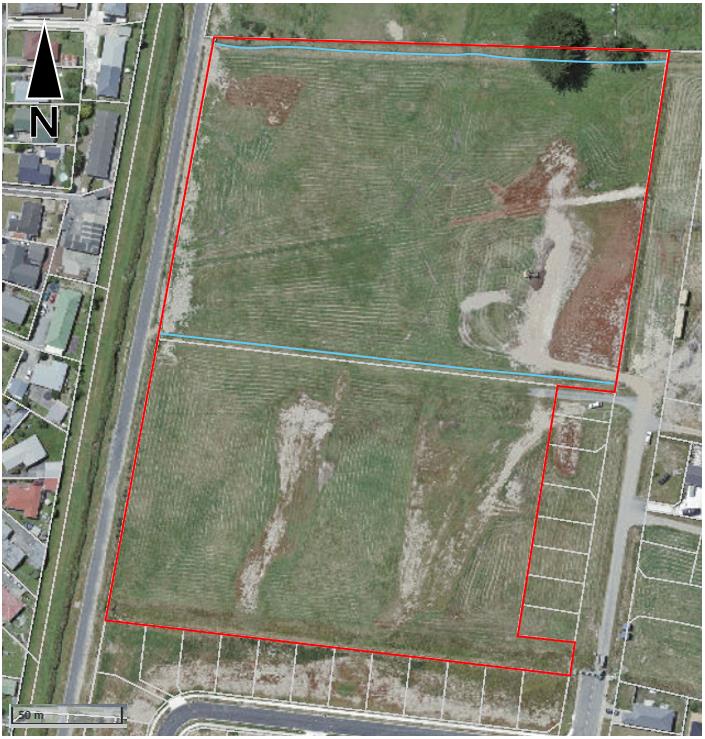
The subject site is located at 217 and 239 Wise Street, Wainiomata, Lower
Hutt (Figure 1) over two parcels of land. The site is ~4.7 ha in area.
The proposed activity is not located within or near a scheduled site in the
NRP. The receiving environment of the site is ultimately the Wainuiomata
River, the lower reaches of which are a Schedule C site, being of
significance to Taranaki Whānui ki te Upoko o te Ika a Maui.
The proposal is located within the Te Whanganui-a-Tara Whaitua.
Figure 1: The subject site outlined in red. On-site streams are shown in
blue.
Page 27 of 43
1.1.1 Waterways
There are two unnamed watercourses (tributaries of Black Creek and
ultimately the Wainuiomata River) identified on site, shown on Figure 1:
• The northern stream flows from east to west across the northern
boundary.
• The central stream flows through the centre of the subject site (along
the boundary between the two land parcels).
An artificial drain is located at the southern boundary of the site. The drain
is vegetated with wetland plant species, exotic grasses, and exotic woody
vegetation.
1.1.2 Pasture exclusion wetlands
Wet areas in depressions on site were identified by the applicant during
the ecological assessment. These were identified as pasture exclusion
wetlands as they did not meet the definition of a natural inland wetland
under the NES-FM.
1.2
Proposed earthworks
Earthworks are required to level the site and expand on-site waterways for
increased stormwater flows.
Earthworks will encompass 47,035 m2, and include:
• Cut of 2,569 m3 to a maximum depth of 1.90 m,
• Fill of 8,288 m3 to a maximum height of 1.10 m, and
• A raft volume of 12,870 m3.
The applicant proposes to provide for erosion and sediment controls by
clean water diversion channels and bunds; dirty water diversion channels
and bunds, contour drains, stabilised entrances and a haul road; surface
roughening; silt fences; super silt fences; sediment retention ponds
(SRPs), decanting earth bunds (DEBs); and dust control.
1.3
Impervious surfaces and stormwater discharge
The applicant proposes to construct approximately 8,500 m2 of new
impervious surfaces, including roads, right of ways, and footpaths.
Roofing does not meet the definition of impervious surfaces as run-off is
directed to retention tanks for re-use.
To mitigate the effects of an increase in impervious surfaces, the
applicant proposes to widen onsite watercourses (streams and the drain)
to increase stormwater capacity; bioretention devices (raingardens) to
capture first-flush flows from the stormwater system; soakage layers
Page 28 of 43
OURSPACE-8-216
under the raingardens; planting around onsite watercourses to provide
additional treatment; and retention tanks on properties with overflow into
either the stormwater system or on-site watercourses. The applicant
proposes greywater re-use systems for all residential dwellings.
Financial contributions are proposed for roads, right of ways, and
footpaths to treat residual contaminants.
1.4
Stream works
Stream works will be carried out in accordance with the
Erosion and
Sediment Control Guide for Land Disturbing Activities in the Wellington
Region. The applicant proposes to carry out works with stable batter
construction with rock armouring and/or geotextile reinforcement where
needed. The site will be immediately stabilised post-works. Energy
dissipation structures will be installed at key flow transition points.
1.1.1 Northern stream works
The applicant proposes to modify the northern stream by excavating the
bed and banks, mucking out the bed, widening and deepening the stream,
removing riparian vegetation, and replanting the stream following
completion of works.
Following widening and deepening, the applicant proposes to install a
Redi-Rock system and low flow channel in the northern channel. The low
flow channel will be reinstated with riprap to prevent scour and erosion. A
compacted clay/silt bedding later will be installed below the riprap to
reduce the potential for seepage or baseflow loss.
The proposed gradient will be greater than 5%. Fish passage will be
provided via constructing side pools, and dissipating energy with stream
substrate.
1.1.2 Central stream works
The applicant proposes to remove vegetation from the central stream,
widen the banks, and replant following completion of works. Unlike the
northern channel, the applicant does not propose to muck out the bed of
the central channel.
1.1.3 Proposed temporary stream diversion
To enable widening and deepening of the northern channel, the applicant
proposes to divert water in the northern channel to an existing vegetated
open channel running north-south adjacent to the subject site. Flows from
this temporary channel will then be diverted into the central channel and
ultimately discharge into Black Creek.
Page 29 of 43
Following completion of works, the temporary diversion channel will be
decommissioned and backfilled.
1.1.4 Culvert design
The applicant proposes to replace the culvert at the intersection of the
northern stream and Black Creek. This culvert will be constructed with a
spat rope (or similar structure) and embedment and sizing to enable fish
passage. As outlined in section 2 below, the applicant proposes to
undertake replacement of this culvert as a permitted activity.
The applicant will likely install a culvert at the Wise Street corridor in the
future. The applicant will assess the proposed culvert for fish passage and
apply for consent if required.
1.5
Timing of the works
The applicant proposes that construction will take place over three
seasons (i.e., three years). The applicant is not proposing to carry out
earthworks in the winter works period.
2.
Reasons for resource consent / activity status
2.1
Natural Resources Plan (NRP)
The Natural Resources Plan (NRP) was made operative on 28 July 2023,
and those provisions are relevant to this activity. Proposed Plan Change 1
of the Natural Resources Plan (NRP–PC1) was publicly notified by the
Council on 30 October 2023. All rules in the NRP–PC1 have immediate
legal effect under section 86B(3) of the RMA. As the application was
lodged after 30 October 2023, the NRP-PC1 is relevant to determining the
resource consents required, activity status, the notification decision and
the substantive assessment of the proposal under section 104 of the RMA.
RMA
Rule
Activity
Comments
section
Status
Natural Resources Plan (NRP)
S 15
Rule R49 Permitted
The proposed stormwater discharge does
not comply with Rule R49 of the NRP
Rule R50 Restricted
because works do not meet condition (a).
discretionary Stormwater discharge must therefore be
assessed as a restricted discretionary
activity against Rule R50.
S 9, S15
Rule
Permitted
The proposed earthworks do not comply
R101
with Rule R101 of the NRP because the
application is for over 3,000 m2 of
Rule
Discretionary earthworks within a 12-month period. In
R107
addition, proposed earthworks do not meet
condition (d) as works are within 5m of a
Page 30 of 43
OURSPACE-8-216
RMA
Rule
Activity
Comments
section
Status
Natural Resources Plan (NRP)
surface water body. Earthworks must
therefore be assessed as a discretionary
activity against Rule R107.
S 13
Rule
Permitted
The applicant has assessed the application
R126
against Rules R126 and R130 of the NRP and
regulation 70 of the NES-F and has stated
Rule
Permitted
that the replacement, repair, and
R130
construction of culverts wil be undertaken
as a permitted activity in compliance with
these rules and regulations.
As culvert placement wil be undertaken as a
permitted activity, this consent does not
authorise activities associated with the
placement of any culverts.
S 13
Rule
Discretionary The applicant proposes to widen and
R145
deepen the on-site waterbodies (classified
as rivers) to a depth and width greater than
the existing grade and cross-section of the
channel. These works in the bed of a river
are not expressly allowed for by any other
rule in the NRP so proposed works must be
considered as a discretionary activity
against Rule R145.
S 13
Rule
Discretionary The applicant proposes to temporarily divert
R147
the onstream watercourses (including those
classified as rivers) while carrying out works.
These works are not expressly allowed for by
any other rule in the NRP so proposed works
must be considered as a discretionary rule
against Rule R147.
Natural Resources Plan – Plan Change 1
S9, S15
WH.R5
Permitted
The proposed stormwater discharge does
not comply with Rule WH.R5 of the NRP-PC1
WH.R6
Control ed
because the proposed works do not comply
WH.R11
Discretionary with condition (a). The proposed discharge
does not comply with Rule WH.R6 of the
NRP-PC1 because the proposed works do
not comply with condition (a). The
application must therefore be assessed as a
discretionary activity against Rule WH.R11.
The applicant has provided a Stormwater
Impact Assessment, and financial
contributions wil be imposed.
Page 31 of 43
RMA
Rule
Activity
Comments
section
Status
Natural Resources Plan (NRP)
S 9, S15
WH.R23
Permitted
Proposed earthworks do not comply with
Rule WH.R23 because proposed works do
WH.R24
Restricted
not comply with condition (c) or (c)(i).
discretionary Earthworks must therefore be assessed as a
restricted discretionary activity against Rule
WH.R24
2.2
Overall activity status
The activity is considered a discretionary activity under the NRP, a
discretionary activity under the proposed NRP-PC1. Overall, the activity
must be assessed as a
discretionary activity.
3.
Notification decision
A decision was made on 1 August 2025 to process the application on a
non-notified basis as the effects of the activity are considered to be no
more than minor under s95D. Further information on the notification
decision and potentially affected persons is provided in document
#250128-1465901845-54. For this application it is considered that there
are no affected persons.
4.
Consultation
Iwi authority
Comments
Port Nicholson
A summary of the proposal and access to the application
Settlement Block Trust
documents were sent to Port Nicholson Settlement Block
representing Taranaki
Trust.
Whānui ki Te Upoko o Te At the time of finalising this report, no comment had been
Ika
provided.
Te Rūnanga O Toa
A summary of the proposal and access to the application
Rangatira representing
documents were sent to Te Rūnanga O Toa Rangatira.
Ngāti Toa Rangatira
Te Rūnanga requested further information on stream flow,
which was provided via site photos and information from
the applicant.
Te Rūnanga understood that open water streams are to be
kept naturalised and for riparian vegetation to be restored.
Te Rūnanga advised that best practise to be followed for
stormwater in alignment with Te Mahere Wai, and that
stormwater discharges be managed in a way that aligns
with natural flow regimes of Black Creek.
Page 32 of 43
OURSPACE-8-216
5.
Environmental effects
This section provides an assessment of the effects of the proposed
activity on the environment. Information has been drawn from the
application provided by the applicant and other information sourced
during the processing of the application.
The application was assessed on behalf of Greater Wellington by the
following technical experts:
• Larrissa Fraser-MacFarlane, Resource Advisor, Wellington Regional
Council
• Ruslaan Riyaz, Kaipūkaha Senior Engineer – Knowledge, Water
Resilience, Wellington Regional Council
• Amanda McLaren, Senior Environmental Engineer Mataaro Taiao,
Morphum Environmental
• Michael Greer, Principal Scientist, Director, Torlesse Environmental
5.1
Erosion and sediment effects
During earthworks, sediment has the potential to be mobilised and
subsequently discharged to land where it may enter a waterbody. Once in
a waterbody, sediment has the potential to cause a local and temporary
increase in turbidity, thus reducing overall water quality. Higher
concentrations of suspended solids (i.e., sediment) can have adverse
effects on aquatic ecology, especially if the above conditions persist over
a long period of time.
Erosion and sediment controls were reviewed by Mrs Fraser-MacFarlane,
who recommended the applicant provide a finalised ESCP prior to
beginning works; as-builts for the SRP, DEBs, and silt fence; a flocculation
management plan; and monitoring of sediment treatment devices. I have
recommended these be included as consent conditions.
The applicant has not applied for winter works, and I therefore have
applied a condition prohibiting any works over winter.
Given Mrs Fraser-MacFarlane’s expert review, and provided the
recommended conditions are complied with, I consider the environmental
effects of proposed earthworks on the environment will be less than
minor.
5.2
Flooding effects
Earthworks and the erection of structures within proximity to surface
waterbodies can result in changes to the movement of flood water and
can exacerbate flooding effects.
Page 33 of 43
Mr Ruslaan Riyaz reviewed the flooding aspects of the proposed activity.
Mr Riyaz noted that the proposed control structure on the northern
waterway/proposed stormwater system will play a critical role in
controlling discharge to Black Creek, and that the performance of the
northern waterway will be critical for managing overflow on the site.
Mr Riyaz was satisfied with the level of information provided but, given the
impacts on proposed changes to stormwater overflow, recommended
additional conditions to minimise the risk of increased flooding via the
new and modified stormwater system. These included detailed design for
proposed outlet structures discharging into Black Creek and a
Maintenance and Inspection Plan for flood mitigation and conveyance
infrastructure. Mr Riyaz also considered that stockpiling of earth and
materials should not be undertaken within existing overland flow paths to
prevent obstruction of flows. I have recommended these consent
conditions.
Based on Mr Riyaz’s advice, I am satisfied that the environmental effects
from changes to flooding risk from modifications to stormwater flow are
likely to be less than minor and can be appropriately managed through
consent conditions.
5.3
Stormwater and impervious surface effects
The proposed works will result in changes in land use and increased
impervious surfaces. These changes may result in the introduction of
contaminants into stormwater run-off and increases in peak flow, run-off
volume and frequency of run-off to the Wainuiomata River. Discharges of
contaminants from urban environments, including heavy metals and
hydrocarbons, may result in contamination of surface water. If not
managed correctly, stormwater may also impact downstream ecological
values of the receiving environment.
Stormwater aspects of the application were reviewed by Ms Amanda
McLaren. Ms McLaren requested further information on bioretention
sizing, the Stormwater Impact Assessment, and on areas within the site
that did not appear to drain to a treatment device. Ms McLaren noted that
the proximity of the discharge to the outlet of the bioretention
devices/stormwater management areas means it is unlikely that there
would be significant opportunity for infiltration to be achieved. However,
in her opinion the impacts of this are likely to be low, and the applicant
has demonstrated that alternatives to introduce treatment for this
location do not seem practicable.
I have recommended that a finalised Stormwater Management Plan and
Detailed Design is required in the consent conditions.
Page 34 of 43
OURSPACE-8-216
Given Ms McLaren’s expert review, and subject to compliance with
conditions, I consider the environmental effects of proposed stormwater
discharges on the environment will be less than minor.
5.4
Freshwater ecology effects
Works in the bed of a stream, and diversion of water in from a stream, can
negatively impact freshwater ecology and aquatic habitat. Discharges of
contaminants, including sediments and also potentially heavy metals,
into a waterway during works, can directly impact fish health and cause
sedimentation of waterways. Fish rescue may be required, which can
negatively impact fish health and wellbeing. In addition, channels
constructed and/or utilised for diversion can have fewer environmental
values than the original stream, which can have a short-term negative
impact on fish health and wellbeing.
The effects of works on freshwater ecology were reviewed by Dr Michael
Greer. Dr Greer requested a draft stream methodology and assessment of
effects of stream works, in particular the effects of the proposed stream
diversion on the central stream, and the effects of installation of Redi-
Rock and the low flow channel on stream ecology. Dr Greer also
requested further clarification on the proposed deepening of the northern
stream, in particular that the stream would still be accessible to fish
following re-grading. After receiving this information, Dr Greer was
satisfied the environmental effects of stream works would be no more
than minor.
I have recommended consent conditions including a final Stream Works
Management Plan and turbidity monitoring of Black Creek to manage
effects during diversions.
Given Dr Greer’s expert review, and provided the recommended
conditions are complied with, I consider the environmental effects of
proposed earthworks on the environment will be no more than minor.
5.5
Summary of effects
Given the assessment above, it is considered that the effects of the
activity on the environment will likely be no more than minor when
undertaken in accordance with the consent conditions.
6.
Statutory assessment
6.1
Part 2
Part 2 outlines the purposes and principles of the RMA. Section 5 defines
its purpose as the promotion of the sustainable management of natural
and physical resources. Sections 6, 7 and 8 of Part 2 define the matters a
consent authority shall consider when achieving this purpose.
Page 35 of 43
I am satisfied that the granting of the application is consistent with the
purpose and principles in Part 2 of the RMA.
6.2
Matters to be considered – Sections 104-108AA
Sections 104-108AA of the RMA provide a statutory framework in which to
consider resource consent applications. All relevant matters to be
considered for this application are summarised in the table below:
RMA section Matter to
Comment
consider
104(1)(a)
Actual or
See Section 5 of this report.
potential effects
on environment
104(1)(ab)
Measures to
The applicant has not proposed any measures to
offset or
offset or compensate for adverse effects on the
compensate for
environment.
adverse effects
on the
environment
104(1)(b)(ii )
National Policy Statement for Freshwater Management 2020
This national policy statement applies to all freshwater and relates to
the management of freshwater and the protection of natural wetland
and river values and habitats.
In accordance with section 104(2F) of the RMA, I have not had regard
to clauses 1.3(5) or 2.1 of the NPS-FM.
Relevant policies are discussed below.
Policy 2
The application was sent Taranaki Whānui ki Te
Upoko o Te Ika and Ngāti Toa Rangatira to provide
the opportunity to identify any concerns they may
have with the proposal and to assist with
determining if they are an affected party. This
provides the opportunity for mana whenua input
at the resource consent decision making level.
The proposal is therefore consistent with this
policy.
Policy 3
The activity is proposed to be managed in an
integrated way that means the adverse effects,
including those from the use and development of
land, on the receiving environment are no more
than minor.
The proposal is therefore consistent with this
policy.
Policy 5
I consider this policy is met as the consent
conditions required that the discharges are
managed appropriately and so the health and
Page 36 of 43
OURSPACE-8-216
RMA section Matter to
Comment
consider
wel -being of Black Creek and unnamed on-site
tributaries wil be maintained/improved.
104(1)(b)(v)
Regional Policy Statement (including proposed Change 1)
Fol owing the decision on proposed Change 1, the freshwater
provisions, denoted by an FW, of the RPS Change 1 are now deemed
operative.
Objective 12
This objective and policies relate to ensuring
Policies 40, 41,
freshwater quality and ecosystems are
42, 47
safeguarded for now and future generations by
minimising the effects of contamination from
stormwater, and flows and volumes of
stormwater, through incorporating water
sensitive urban design and hydrological controls.
The applicant has proposed hydrological control
measures including retention tanks, greywater re-
use, and diversion of first flush rainfall to
soakage. In addition, bioretention devices are
proposed to treat runoff and first flush run-off to
reduce discharge of contaminants into the
stormwater system.
The proposal is therefore consistent with this
objective and policies.
Objective 13
These objectives and policies relate to ensuring
Policy 40, 41
the quality of freshwater meets a range of uses,
and 43
safeguards the life supporting capacity of
waterbodies, and meets the needs of future
generations. Additionally, they relate to ensuring
the region’s rivers support healthy, functional
ecosystems, and the aquatic ecological function
of waterbodies is protected.
Works are taking place within on-site
waterbodies, including tributaries of Black Creek,
to deepen and widen waterbodies. Additionally,
earthworks wil take place within a 5 m setback of
these waterbodies. Fol owing reviews by a
freshwater ecology and erosion and sediment
control expert, I consider these objectives and
policies are met as the recommended consent
conditions require that any discharges
associated with earthworks are appropriately
mitigated, particularly through the
implementation of the ESCP.
Objectives 23,
These objectives and policies relate to
24, 26, 27
recognising the role tangata whenua have in
Policies 48, 49
decision making, and the need to consider Te
Tiriti o Waitangi when making decisions regarding
Page 37 of 43
RMA section Matter to
Comment
consider
resource management. They also relate to
maintaining the mauri of waterbodies and
mahinga kai are maintained in a healthy and
accessible state for tangata whenua.
I have considered these objectives and policies
while assessing this application.
Objective 29
This objective and policy relate to ensuring land
Policy 41
management practices do not accelerate soil
erosion, and the effects of earthworks are
minimised.
I consider that the recommended conditions of
consent manage earthworks so that discharges of
sediment into the receiving environment are
avoided or appropriately mitigated. I consider
that, with the application of the recommended
conditions of consent, including the requirement
that earthworks are undertaken in accordance
with the ESCP, the proposed activity is consistent
with Objective 29 and Policy 41.
104(1)(b)(vi)
Natural Resources Plan Objectives O1,
These objectives and policies relate to the
O2, O3, O4
holistic and integrated use and management of
Policy P1
resources. I have recognised and considered
these objectives while assessing this consent
application and consider that, with the
application of the recommended conditions of
consent, the proposal is consistent with this
objective and policies.
Objectives O12, These objectives and policies recognise the
O13
cultural relationship between Māori and air, land
Policies P18,
and water, recognise and provision for
P20, P21
kaitiakitanga, and recognise the need to maintain
the mauri of fresh and coastal waters.
A copy of the application was provided to Te
Rūnanga o Toa Rangatira and Port Nicholson
Settlement Block Trust. Te Rūnanga o Toa
Rangatira provided comment, which can be
found in section 4.
I consider that, with the application of the
recommended conditions of consent, the
proposal is consistent with these objectives and
policies.
Page 38 of 43
OURSPACE-8-216
RMA section Matter to
Comment
consider
Objective O17,
These objectives and policies relate to
O18, O19
maintaining and improving the quality of surface
Policies P9, P30, water bodies, including for recreation and Māori
P31
customary use, with the aim of improving overall
aquatic ecosystem health.
The receiving environment of proposed works is
Black Creek. Sediment discharges from the site
are proposed to be managed and minimised
through erosion and sediment control measures.
The application has been reviewed by an erosion
and sediment control expert, who has
recommended appropriate conditions to manage
effects from earthworks to be less than minor.
Proposed diversions of freshwater have been
reviewed by a freshwater ecology expert, who
considered that the effects on the environment
would be no more than minor.
I have considered these objectives and policies
while assessing this proposal and consider it is
consistent with these.
Objective O34
These objectives and policy relate to minimising
Policy P107
the adverse effects on soil and water from land
use activities.
I am satisfied that, given the proposed erosion
and sediment controls, the proposal is consistent
with this objective and policy.
Objective O33
This objective related to maintaining health and
life supporting ability of soils.
I am satisfied that, given the proposed erosion
and sediment controls, and intention of works to
avoid increasing the risk of erosion during heavy
rainfall or flooding, the proposal is consistent
with this objective.
Objective O37
This objective and policy seek that earthworks
Policy 107
wil use good management practise to minimise
the risk of accelerated soil erosion, control silt
and sediment runoff, and ensure the site is
stabilised relate to minimising the adverse effects
on soil and water from land use activities.
Because the effects of earthworks wil be
managed through appropriate erosion and
sediment controls, and because the applicant
wil undertake progressive stabilisation as
necessary, I consider that the activity is
consistent with Objective 37 and Policy P107.
Page 39 of 43
RMA section Matter to
Comment
consider
104(1)(b)(vi)
Natural Resources Plan – Proposed Plan Change 1
Objectives
These objectives relate to improving the health
WH.O1, WH.O2, and wel being of all freshwater bodies to a wai ora
WH.O3
state, and improving coastal water quality.
Policies WH.P1, The effects of earthworks wil be managed
WH.P2
through appropriate erosion and sediment
controls, and the applicant proposes to
undertake progressive stabilisation, minimising
runoff of sediment into the receiving
environment. Works in the bed of streams have
been assessed by a freshwater ecology expert,
who concluded effects would be no more than
minor.
I consider that, with the proposed erosion and
sediment controls as reviewed by a relevant
expert, and subject to compliance with
conditions, the proposal is therefore consistent
with this objective.
Policies WH.P9, These policies relate to managing stormwater
WH.P10,
discharges, including so that the baseline water
WH.P14
quality states for copper and zinc, including from
new/redeveloped impervious surfaces.
To minimise contaminants, the applicant
proposes to direct first flush runoff to treatment
devices, including bioretention devices, and
proposes that zinc and copper wil not be used in
roofing and guttering. Hydrological control
measures include retention tanks, greywater re-
use, and diversion of stormwater to bioretention
gardens to be diverted away from the stormwater
system via evapotranspiration and soakage.
These methods wil form the stormwater
treatment system on the site.
I consider that the proposed stormwater design,
and subject to compliance with the
recommended conditions, the proposal is
consistent with this objective.
Policy WH.P15
This policy relates to providing for stormwater
contaminant offsetting for new greenfield
developments.
The site is undeveloped and has no existing
servicing and therefore can be considered as
greenfield. I have applied a condition requiring
financial contributions in accordance with
Schedule 30, and consider this proposal is
therefore consistent with this policy.
Page 40 of 43
OURSPACE-8-216
RMA section Matter to
Comment
consider
Policies
These policies relate to managing earthworks
WH.P29,
appropriately, given site specific conditions, and
WH.P30
minimising the discharge of sediment-laden
water from earthworks.
I consider that, with the proposed erosion and
sediment controls as reviewed by an earthworks
expert, and subject to compliance with
conditions, the proposal is consistent with this
objective.
Policy WH.P31
This policy relates to stabilising earthworks sites
over the winter period (1 June to 30 September).
The applicant has not applied for winter works. I
consider works are consistent with this policy.
104(1)(c)
Any other matter There are no other matters relevant to this
application.
105(1)
Matters relevant I have had regard to the matters in s105(1)(a) –
to discharge
(c) of the RMA when considering this application.
permits
107
Restrictions on
The proposed discharges are not expected to
grant of certain
result in any of the effects listed in s107(1) of the
discharge
RMA after reasonable mixing. In the event that
permits
any of the effects listed in s107(1) do arise, the
discharge wil be temporary and so wil meet the
requirements of section 107(2).
108 – 108AA
Conditions on
All the conditions of consent meet s108 and
resource
s108AA of the RMA. I have assessed the
consents
conditions against the criteria in s108AA and
consider that they:
• have been agreed to by the applicant, and so
meet s108AA(1)(a)
• are directly connected to an adverse effect
of the activity on the environment, a regional
rule or an NES, and so meet s108AA(1)(b)
• relate to an administrative matter of the
resource consent, and so meet s108AA(1)(c)
6.3
Weighting of the NRP Proposed Plan Change 1
As the conclusion reached under the NRP assessment is consistent with
that reached under the proposed NRP-PC1 there is no need to undertake a
weighting exercise between the NRP and proposed NRP- PC1.
Page 41 of 43


 7.
Main findings
7.
Main findings
In conclusion:
1. The proposed activity is consistent with the purpose and principles of
the Resource Management Act 1991.
2. The proposed activity is consistent with the relevant objectives and
policies of Regional Policy Statement (including proposed Change 1)
and the Natural Resources Plan (including proposed Plan Change 1).
3. The actual or potential adverse effects of the proposed activity on the
environment are likely to be no more than minor.
4. The proposal incorporates appropriate mitigation measures to
manage the adverse effects of the proposal.
5. Conditions of the consent(s) require that the adverse effects of the
activity on the environment are appropriately avoided, remedied or
mitigated.
8.
Duration of consent
Under section 123 of RMA, I propose a consent duration of:
• [40060]: 35 years
• [40061]: 5 years
• [40062]: 5 years
• [40063]: 5 years
• [40064]: held in perpetuity
• [40472]: 5 years
These durations are similar to consents granted in the region and will
allow the consent holder to carry out works while allowing for possible
unforeseen delays.
Decision
Katherine Greenaway
Resource Advisor,
recommended by:
Environmental Regulation
Decision peer
Jessica Davidson
Resource Advisor,
reviewed by:
Environmental Regulation
Decision approved Richard Percy
Team Leader,
by:
Environmental Regulation
Page 42 of 43
OURSPACE-8-216
 Processing timeframes:
Application lodged:
03/12/24
Application officially received:
25/02/25
Application stopped (s91/92/95):
14/03/25
Application started:
28/07/25
Applicant to be notified of decision by: 14/08/25
Applicant notified of decision on: 14/08/25
Time taken to process application:
20 working days (including 5 working days under s37)
The applicant provided written agreement
(2025 08 04 s37 5 WD extension.msg)
on 4 August 2025 for an extension of timeframes under s37(1) to process the
application. The extension is for 5 working days under section 37A(4) of the RMA.
The reason for the extension is to allow time for the applicant to review draft
consent conditions, and to allow time to resolve any questions or concerns on
conditions.
In making this decision, the Wellington Regional Council has given consideration
to the following issues, as required by section 37A(1) of the RMA:
• The interests of any person who the Council considers may be directly
affected by the extension;
• The interests of the community in achieving adequate assessment of the
effects of the proposal; and
• The Council's duty under section 21 of the RMA to avoid unreasonable delay.
Decision approved Richard Percy
Team Leader,
by:
Environmental Regulation
Page 43 of 43
