




 FILTEC FLUORIDE
SOLUTIONS
FILTEC FLUORIDE
SOLUTIONS
PROPOSAL PRESENTED BY
FILTEC LTD. AUCKLAND
Rev
Date
Description
By
Checked
Approved
Steven
0
20/01/2022 Draft for discussion
Mark Hillman
Rumble
Steven
1
20/01/2022 Final Draft
Mark Hillman
Steven Rumble
Rumble


 www.filtec.co.nz | 09 274 4223 | [email address]
PO Box 132-329, Sylvia Park, Auckland 1644
102A Carbine Road, Mt Wellington, Auckland 1060
www.filtec.co.nz | 09 274 4223 | [email address]
PO Box 132-329, Sylvia Park, Auckland 1644
102A Carbine Road, Mt Wellington, Auckland 1060
28/01/2022
filtec.co.nz
2
link to page 4 link to page 4 link to page 4 link to page 5 link to page 5 link to page 5 link to page 5 link to page 6 link to page 6 link to page 7 link to page 7 link to page 7 link to page 8 link to page 8 link to page 9 link to page 10


 FLUORIDATION REPORT
Contents
1
Fluoridation Chemicals ...............................................................4
1.1
Sodium Fluoride......................................................................................4
1.2
SODIUM FLUOROSILICATE .......................................................................4
1.3
FLUOROSILICIC ACID ..............................................................................5
2
equipment required....................................................................5
2.1
sodium fluoride.......................................................................................5
2.2
sodium fluorosilicate................................................................................5
2.3
FLUOROSILICIC ACID ..............................................................................6
3
fluoride dosing considerations ...................................................6
4
LAYOUT CONSIDERATIONS ........................................................7
4.1
SODIUM FLUORIDE .................................................................................7
4.2
FLUOROSILICIC ACID ..............................................................................7
5
ROOM LAYOUT............................................................................8
5.1
SODIUM FLUORIDE .................................................................................8
6
COST SUMMARY .........................................................................9
7
P&IDs.......................................................................................10
28/01/2022
filtec.co.nz
3


 FLUORIDATION REPORT
SUMMARY
FLUORIDATION REPORT
SUMMARY
The Ministry of Health is expected to consider issuing directions to fluoridate from mid-2022. Local
Authorities with un-fluoridated water that service over 500 people are encouraged to start
fluoridation-related preparatory work now – especially those in areas with large populations or
have poor oral health outcomes.
The purpose of this report is to provide all Filtec customers with preliminary information on water
fluoridation to allow them to initiate discussions with Filtec on the most effective fluoride solution
for their drinking water supply.
1
FLUORIDATION CHEMICALS
There are currently 3 fluoridation chemicals available in New Zealand.
Sodium Fluoride – NaF
Sodium Fluorosilicate (SFS) – also known as SSF
Fluorosilicic Acid - (FSA) – also known as HFA
1.1
SODIUM FLUORIDE
Sodium Fluoride (NaF) is supplied as a white crystalline powder, comprising 45% w/w fluoride
ion.
classified as a Dangerous Good with a hazard class of 6.1 Toxic
NaF has an almost constant solubility in water of approximately 4%, regardless of water
temperature. This allows for automatic, continuous preparation of saturated solutions in a
saturator tank without the need for equipment to measure chemical addition, therefore
reducing the risk of overdosing fluoride.
Suitable for small WTPs supplying up to 5MLD
NaF is available from Ixom in 5kg bottles which are supplied for the Prominent patented bottle
unloader
1.2
SODIUM FLUOROSILICATE
Sodium Fluorosilicate (SFS – Na2SiF6) is supplied as a white pungent crystalline powder,
comprising 60% w/w fluoride ion.
classified as a Dangerous Good with a hazard class of 6.1 Toxic.
SFS has a variable solubility in water (unlike NaF) and therefore must be added at a
controlled rate to produce the saturated solution
Suitable for medium size WTPs supplying 5 – 50MLD.
Available in 25kg bags – minimum order of 1 tonne (Ixom)
Note – due to lack of information, Sodium Fluorosilicate is not considered from a cost
perspective in this report.
28/01/2022
filtec.co.nz
4


 FLUORIDATION REPORT
1.3
FLUOROSILICIC ACID
Fluorosilicic acid (FSA/HFA – H2SiF6) is a pale-yellow fuming corrosive acid with a pungent
odour.
currently delivered at a concentration of 16.8% – 18.4% (w/w) and has a pH of approximately
1.
classified as a Dangerous Good1 with a hazard class of 8 Corrosive
available in 200L drums, 1000L IBCs and bulk delivery (North Island only) – Ixom. Bulk
deliveries to the South Island would be considered if the demand warrants.
2
EQUIPMENT REQUIRED
2.1
SODIUM FLUORIDE
Typical sodium fluoride installations contain the following equipment:
Saturation tank – upflow saturation is preferred
stirrer
Dosing skid – pump/s, filters, piping, valves
Control panel
Analyser
Water softener – required if water hardness exceeds75mg/L as calcium carbonate
The main benefit of using sodium fluoride is that a constant 4% solution is produced thus
minimising the risk of over-dosing. Sodium fluoride powder is more expensive than the other 2
chemical options however the capital cost of the equipment is less.
2.2
SODIUM FLUOROSILICATE
Typical sodium fluorosilicate installations contain the following equipment:
Hopper containing the powder for a pre-determined dosing capacity
Vacuum loading facility – handheld or automated
Powder feed system flow paced to ensure an accurate measure of powder is added to the
solution tank
Solution tank
Stirrer
Dosing skid – pump/s, filters, piping, valves
analyser
Sodium Fluorosilicate has a variable solubility and therefore it is good practice to provide a 10
minute detention time to ensure the powder is completely dissolved. If this cannot be met using
one tank then a second tank is required – one for dissolution, one for dosing.
28/01/2022
filtec.co.nz
5


 FLUORIDATION REPORT
2.3
FLUOROSILICIC ACID
Typical fluorosilicic acid installations contain the following equipment:
Bulk unloading system
Bulk tank storage
Transfer pump system
Day tank
Ventilation system
Bunding
Dosing skid – pump/s, piping, valves
Heating (if required)
3
FLUORIDE DOSING CONSIDERATIONS
Target concentration of fluoride in treated water is between 0.7 and 1.0 mg/L
Drinking water supplier should maintain an historical record of the fluoride concentration in
the raw water to ensure an appropriate allowance is made when determining the dosing
concentration
Fluoride concentration in the drinking water must never exceed 1.5 mg/L
Real time monitoring of the fluoride concentration is required
The system must be fully automated and operated by a control system based at the WTP
The Fluoride Code of Practice requires that a number of independent checks are met. For
water supply systems that serve more than 10,000 people, at least two of the three
following independent checks must be used. If the water supply system serves 10,000 or
fewer people, then at least one of the three independent checks is required.
o
Independent Check 1: Use of a day tank that can only be filled once a day and
is equipped with an online device to measure its contents
o
Independent Check 2: Use of a fluoride measuring flow meter on the fluoride
dosing line before the dosing point (only for (a) fluorosilicic acid, or (b) sodium
fluoride from a saturator)
o
Independent Check 3: Fluoride concentration analyser on the drinking-water
line after dosing point
Other design inputs which must be considered:
Existing water offtakes and their location in relation to the dosing point
Anti-siphonage and backflow prevention
Level of existing control
Corrosion and dust suppression
Existing building materials – high gloss moisture resistant finish walls for NaF and SFS
installations (Hardie Glaze or similar recommended)
handling and storage facilities
guaranteed chemical supply
environmental considerations - spill removal and clean up systems
Plant security
Continuous monitoring
Existing plant infrastructure
Operation and maintenance
28/01/2022
filtec.co.nz
6


 FLUORIDATION REPORT
Ventilation
Reporting and auditing
4
LAYOUT CONSIDERATIONS
4.1
SODIUM FLUORIDE
Minimum room size required – approx. 3m x 2.5m. This is based on a Prominent 5kg jar
system. System would fit into a 10’ container. No allowance for any NaF storage
Security of the site is required
The walls of the room to be high gloss
4.2
FLUOROSILICIC ACID
Bunded area of approx. 3m x 3m to house both the storage and day tanks (based on a
population of 10,000. Ideally storage tank to be placed external to the building.
Bunded chemical delivery area required
Safety shower required
Security of the site is required
28/01/2022
filtec.co.nz
7



 FLUORIDATION REPORT
5
ROOM LAYOUT
FLUORIDATION REPORT
5
ROOM LAYOUT
5.1
SODIUM FLUORIDE
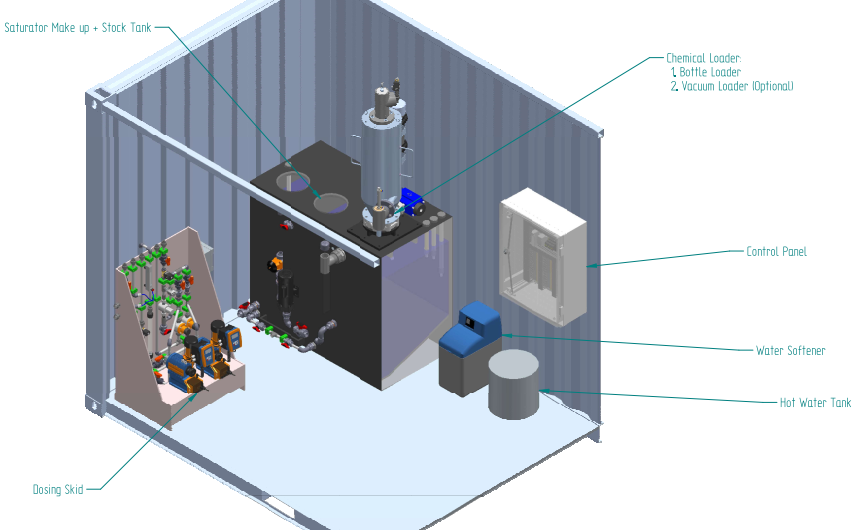
Following is a typical layout of the Sodium Fluoride Prominent 5kg jar solution.
Figure 1 – Sodium Fluoride Typical Layout (Image courtesy from Prominent)
5.2
FLUOROSILICIC AID
No typical equipment layouts are available for the HFA installation. However, this would typically
show a chemical unloading system and storage tank mounted externally to the treatment building
with the day tank and dosing equipment inside. All areas would be bunded to suit.
28/01/2022
filtec.co.nz
8



 FLUORIDATION REPORT
6
COST SUMMARY
FLUORIDATION REPORT
6
COST SUMMARY
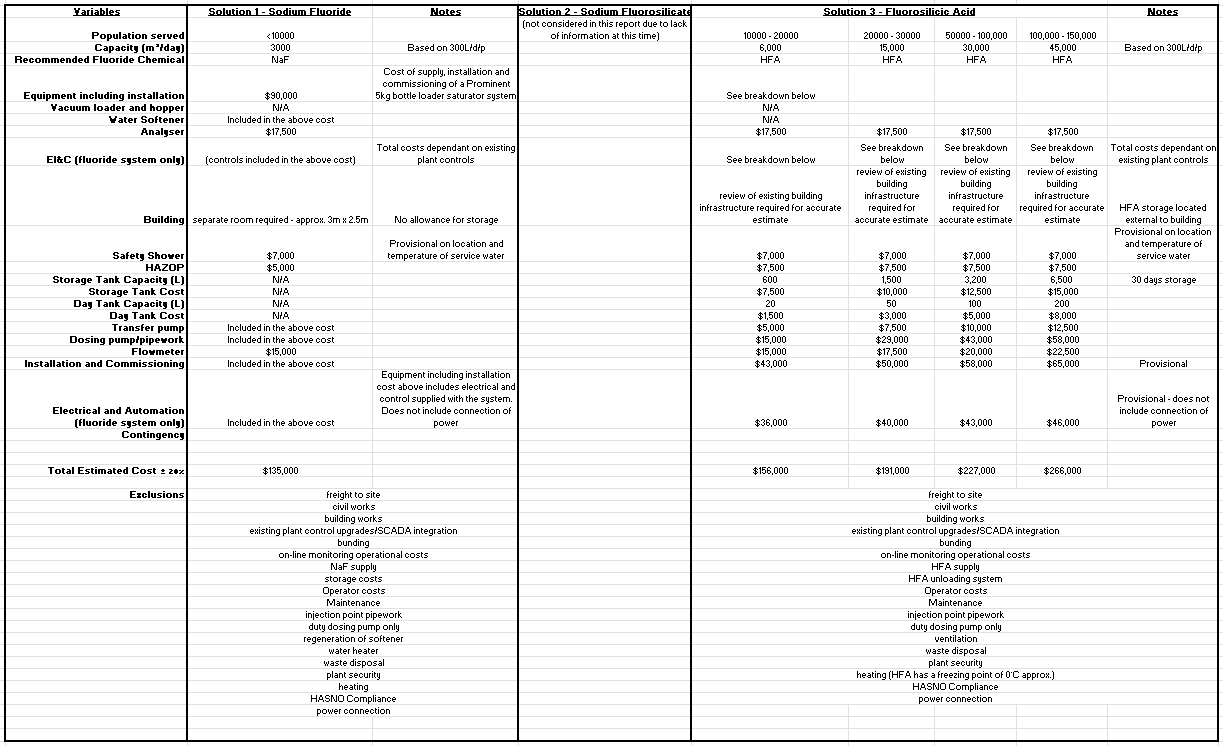
The costs below are indicative only. More detail design and information on the current treatment plant infrastructure would be required to provide more accurate estimates of the costs involved.
28/01/2022
filtec.co.nz
9



 FLUORIDATION REPORT
7
P&IDS
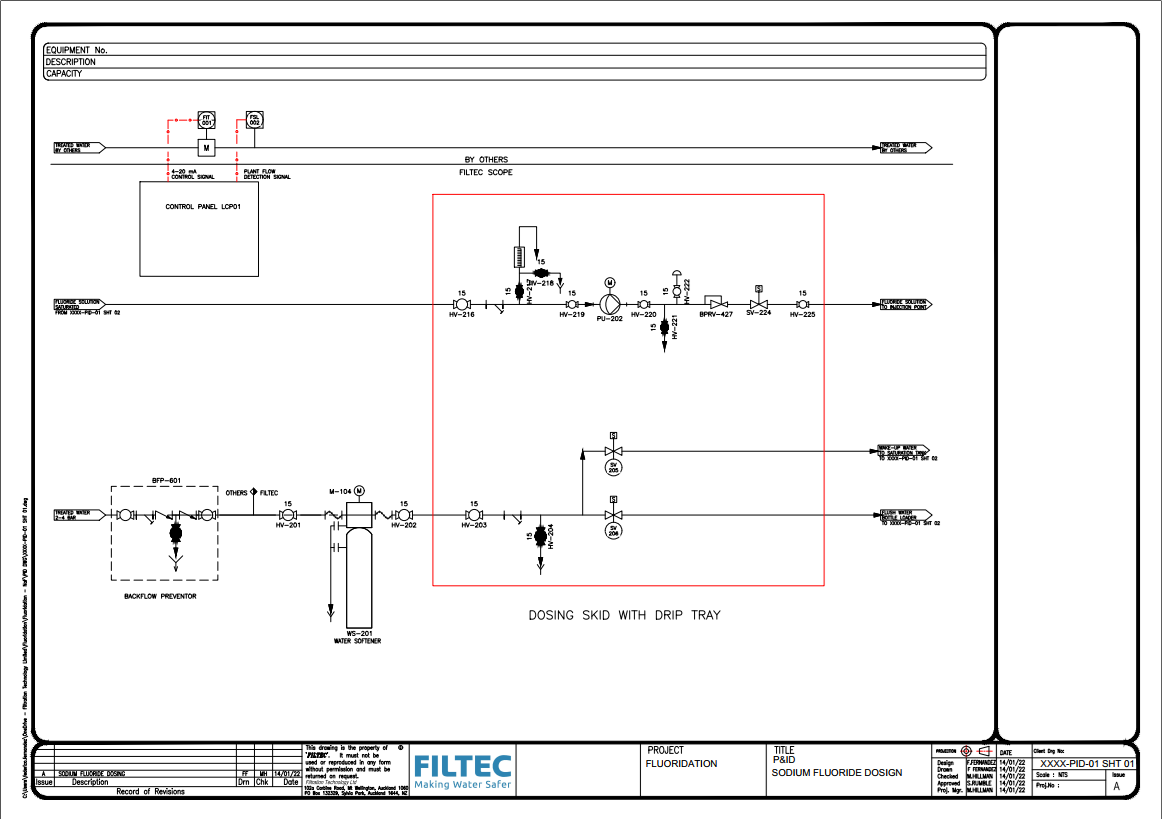
Figure 2 - Sodium Fluoride Sheet 1 of 2
FLUORIDATION REPORT
7
P&IDS
Figure 2 - Sodium Fluoride Sheet 1 of 2
28/01/2022
filtec.co.nz
10



 FLUORIDATION REPORT
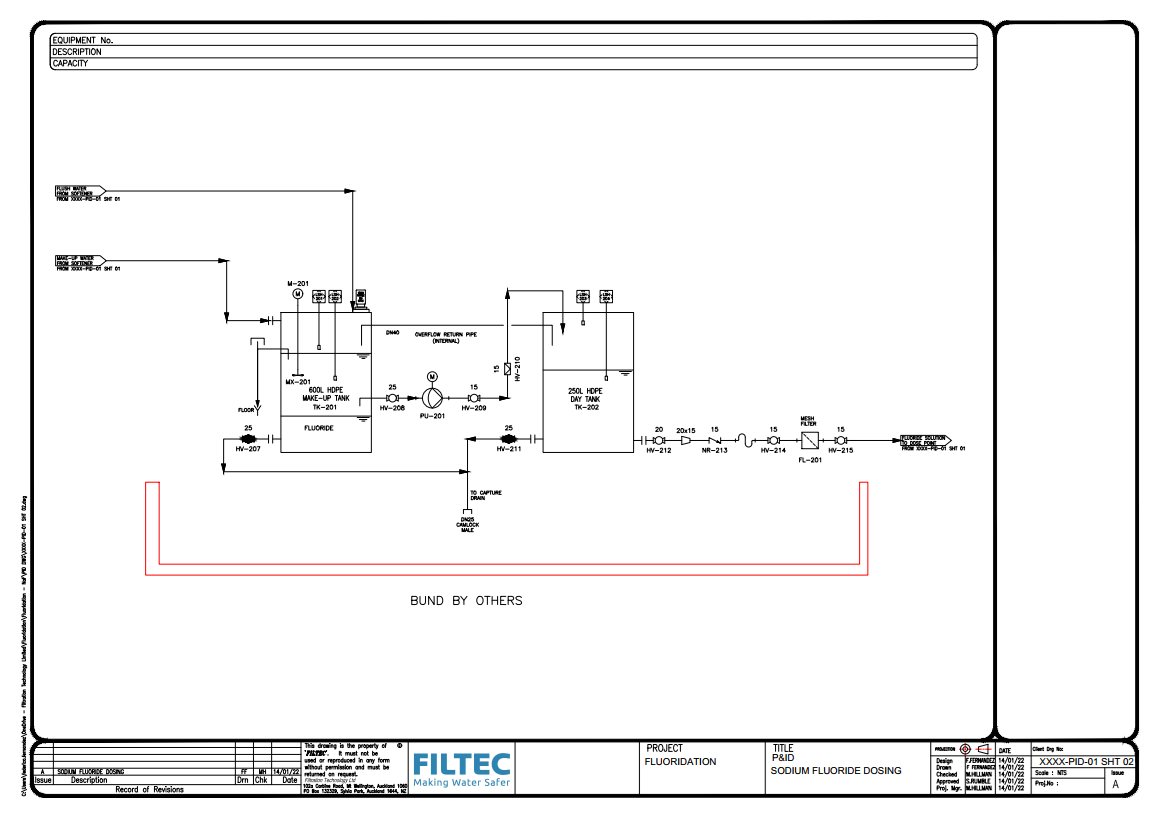
Figure 3 - Sodium Fluoride Sheet 2 of 2
FLUORIDATION REPORT
Figure 3 - Sodium Fluoride Sheet 2 of 2
28/01/2022
filtec.co.nz
11



 FLUORIDATION REPORT
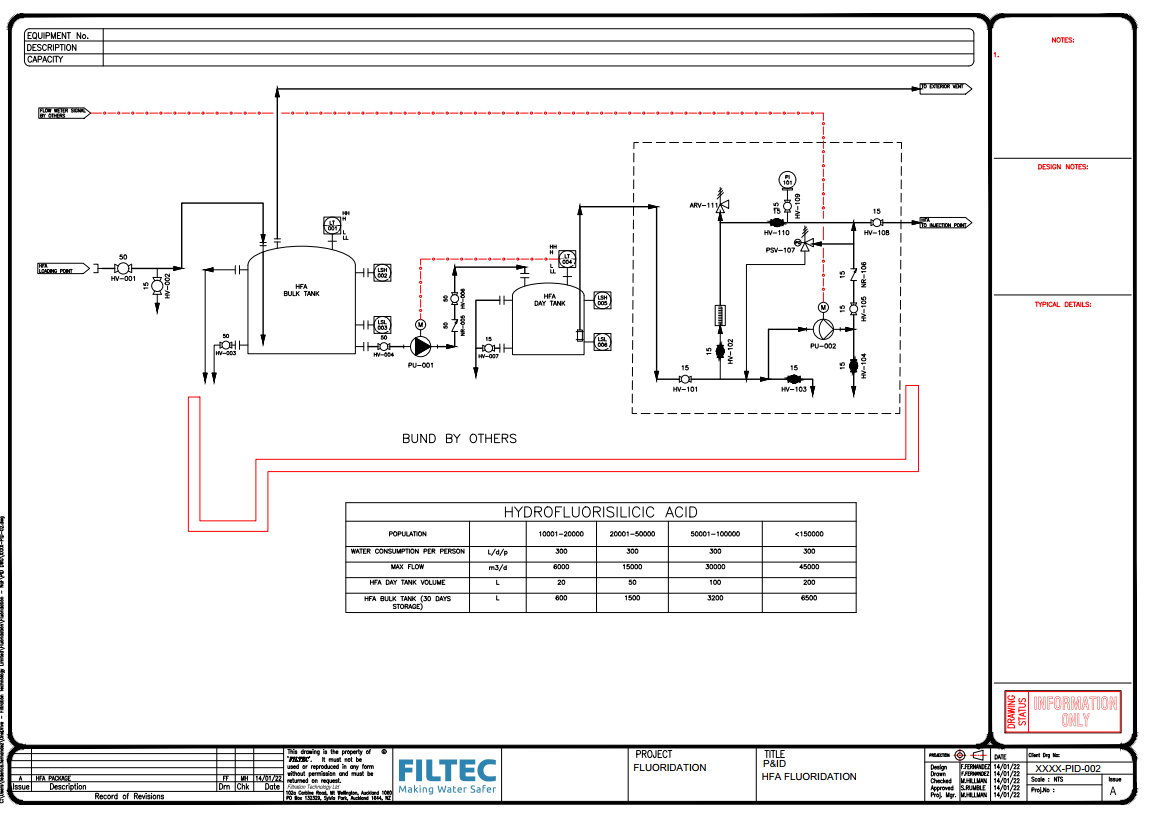
Figure 4 - HFA Sheet 1 of 1
FLUORIDATION REPORT
Figure 4 - HFA Sheet 1 of 1
28/01/2022
filtec.co.nz
11
Document Outline
