


 April 2021
Chemicals in Drinking Water
April 2021
Chemicals in Drinking Water
Two chemicals have featured in our national headlines during the past month, both in relation to
drinking water. Fluoride and lead both have interesting stories, with lead starting in the Roman times.
This newsletter explains a little bit about each element and what it means to New Zealanders.
Fluoride
It has recently been reported that the New Zealand Government is taking control of water fluoridation
from councils and giving it to Director-General of Health Dr Ashley Bloomfield. The move transfers the
decision-making process from local councils and ratepayers to the Ministry of Health, which means
that any future decisions to adopt drinking water fluoridation in the area you live will be made by the
Ministry.
But what is fluoride? Fluoride is a very common, naturally occurring element, ranked the 13th most
common of the elements found in terrestrial locations. It is also found in seawater at levels of around
1.3 parts per million (ppm). New Zealand groundwater drinking-water sources contain fluoride at
levels of between 0.02 and 0.20 ppm, which means that fluoride is in the environment all around us
and is in many things that we eat and drink.
Fluoride has been found to help protect our teeth by making them stronger and reducing tooth decay.
The naturally occurring levels in our drinking water are topped up by several councils around New
Zealand. But drinking water is not the only source of fluoride in our diet.
Tea and tea-based drinks such as kombucha can contain more fluoride than many of the other food
items we ingest. This is because the tea plant
Camellia sinensis concentrates fluoride in its leaves,
and this is extracted by the tea-making process. We performed a study at Eurofins by taking some
common brands of tea along with some known styles of tea and a chamomile tea, and determined the
fluoride content of each.
A sample of the tea, either one teabag or one tablespoon of tea, was infused in boiling deionised
water for three minutes and then analysed using a calibrated Ion Selective Electrode. By using
deionised water, we ensured that the fluoride we measured could only be from the tea.
Fluoride
One of the biggest brands of New Zealand tea
Sample
showed a fluoride concentration of 2.1 parts per
mg/L (ppm)
million. This is three times the recommended level of
Earl Grey Tea Bag
2.3
fluoride in drinking water (0.7 parts per million).
Brand One Tea Bag
2.1
Brand One Tea Leaves
1.9
If the tea has been made with fluoridated water, then
Green Tea Tea Bag
1.4
the level of fluoride could be as high as 2.8 ppm.
Brand Two Tea Bag
0.5
Green Tea Leaves
0.2
As well as tea and tea-based drinks, fish and
Chinese Green Tea Leaves
<0.1
seafood also contain levels of fluoride that get
Rooibos (South African tea)
<0.1
ingested.
Chamomile Herbal Tea Bag
<0.1
The fluoride debate will continue in the public area,
and fluoride news articles will continue to appear. As a laboratory, it is our job to report test results
without opinion, so we will leave the debate to the wider community.
Eurofins will maintain the capability to test for fluoride in a
Each 250mL cup of tea made with
wide range of matrices including drinking water.
treated water contains the same
amount of fluoride as 1 litre of
Please get in contact if you require a fluoride testing
fluoridated drinking water
service.
Eurofins Food and Water Testing. Auckland, Wellington, Taupo, Christchurch and Dunedin



 Lead
Lead
All water is plumbosolvent – meaning it can dissolve lead
and other metals from any metallic surfaces. Small
All New Zealand Councils issue a
quantities of lead can be found in drinking water that has
6-monthly notice to ratepayers
been in contact with old pipes, pipe-joiners, and brass
reminding them to flush a mugful
fittings.
of water from their taps each
morning.
Drinking water is not the only source of lead in our
environment.
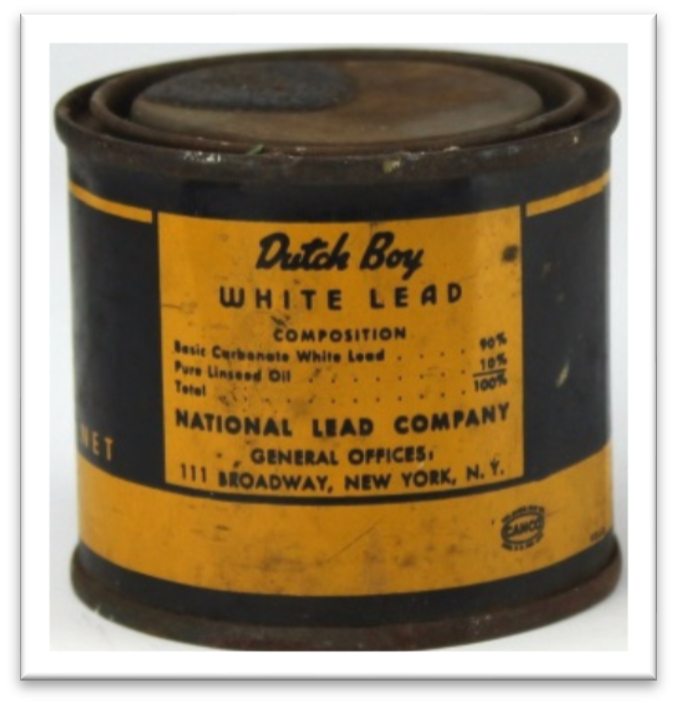
It was used to paint our houses until 1979 when white lead was banned, and in petrol until it too was
banned in 1996. Lead solder was also used in the food canning industry until 1991, and the risk of
lead poisoning was the reason we were told not to leave food sitting in cans.
Other sources of lead include toys that have been painted with a
lead-based paint. Some toys are imported from countries without
a ban on lead-based paint and some of those are tested by
Eurofins.
We have recently been involved in an interesting case of lead
poisoning, where a young girl had developed high blood levels
and health authorities were investigating the possible cause.
For children presenting with high blood levels, the cause is most
often identified as coming from an old house previously painted
with a lead-based paint. This lead-based paint most commonly
becomes a problem when homes are renovated, and lead dust is
formed from sanding and flaking off. This dust can settle in and
Old Tin of White Lead
around the home and in the surrounding gardens, often in areas
where young children tend to play.
What is most surprising is that lead paint is sweet, and children develop a liking for the taste. Children
have been known to chew on windowsills and baby cots when lead is present for this reason. It is so
sweet that the compound lead acetate used in the paint is considered a sugar substitute! It has been
used widely since Roman times and is also known as ‘sugar of lead’.
In this most recent instance, Eurofins received an eyeliner powder for analysis. This eyeliner was
purchased overseas and returned a result of 724,000 mg/Kg – that’s 72.4% and is the highest lead
result we have ever recorded in any product.
The child may have absorbed the lead through the moist lining of her
Did you know the lead in
eyes or more likely by eating it, because it tasted nice. It is unlikely
pencils does not contain
that any beauty products on the New Zealand market would have
lead - and it never has?
elevated lead levels.
To help reduce lead intake, please follow the advice of your local council, and flush a mugful of water
from your tap each morning before you fill the kettle or take a drink. Also take care when renovating
an old house, and if in doubt, get the paint tested for lead.
Eurofins Food and Water Testing NZ can test a wide range of products for lead levels, including
drinking water, toys, soil and food.
Please get in contact if you require a lead testing service.
Eurofins Food and Water Testing. Auckland, Taupo, Wellington, Christchurch and Dunedin
