IR-01-26-21350
9 July 2026
Nigel Gray
[FYI request #34578 email]
Dear Nigel
Request for information
I refer to your Official Information Act 1982 (OIA) request of 14 June 2026 in which you
asked for information regarding DrugWipe 3S Procurement and independent laboratory
testing. I have addressed each part of your request below.
On 11 June 2026, the Office of the Control er and Auditor-General (OAG)
responded to my OIA request of 4 June 2026. In that response, the OAG stated:
“The first, second and fifth categories of information you have requested wil be
held by New Zealand Police.”
The categories referred to were:
Al documents, reports, and data relating to the independent laboratory testing
conducted on DrugWipe 3S and other tenderers’ products.
Al tender evaluation documents relating to the DrugWipe 3S procurement.
Any documents describing or summarising the testing process undertaken by
Police or their contractors.
However, in previous OIA responses, New Zealand Police have stated or implied
that Police do not hold:
independent laboratory testing reports
validation or accuracy data
testing methodologies
pass/fail criteria
scientific evaluation material for DrugWipe 3S
Given the direct contradiction between the OAG’s statement and Police’s earlier
responses, clarification is required.
I therefore request the following under the OIA:
1. Confirmation of whether New Zealand Police holds the information described
in categories 1, 2, and 5 above.
For clarity, this includes:
laboratory reports
Police National Headquarters 180 Molesworth Street. PO Box 3017, Wellington 6140, New Zealand.
Telephone: 04 474 9499. Fax: 04 498 7400. www.police.govt.nz

 validation or accuracy data
testing methodologies
pass/fail criteria
correspondence with laboratories or testing providers
technical assessments
scoring matrices
evaluation panel notes
conflict-of-interest declarations
risk assessments
internal or external summaries of the testing process
2. If Police do hold this information, please provide it.
validation or accuracy data
testing methodologies
pass/fail criteria
correspondence with laboratories or testing providers
technical assessments
scoring matrices
evaluation panel notes
conflict-of-interest declarations
risk assessments
internal or external summaries of the testing process
2. If Police do hold this information, please provide it.
For tender evaluation documents, I refer you to pages 17-18 of the ‘Oral Fluid Testing
Equipment Request for Proposal’ document which outlines the evaluation criteria and
scoring matrix used during procurement. This document is publicly available; the link has
been previously provided to you but has been reattached to this OIA for your reference
here: https://www.police.govt.nz/about-us/publication/proactive-release-papers-relating-
implementation-roadside-drug-driving-testing
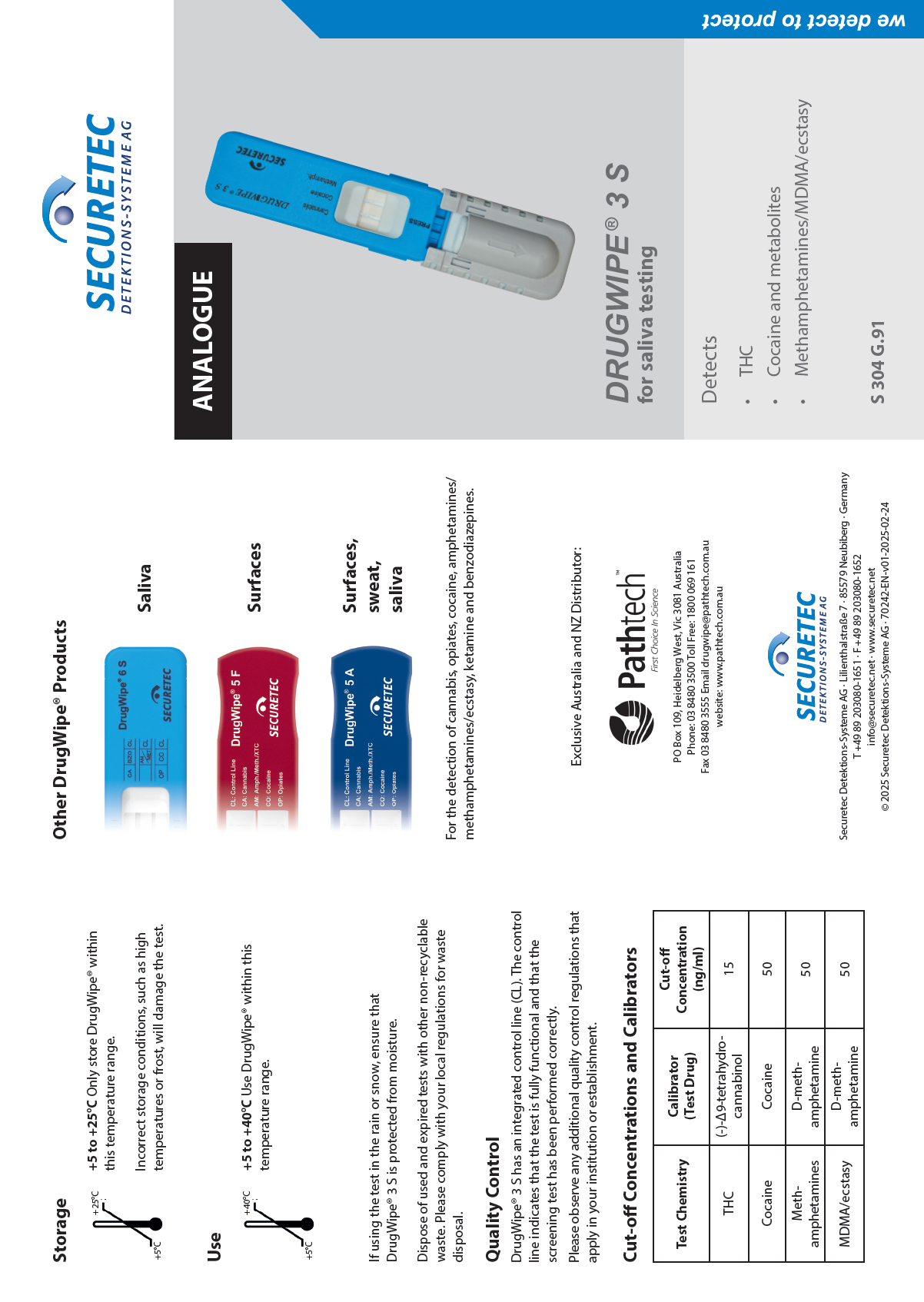
For testing documents regarding the DrugWipe 3S Device, please also find included with
my response the ‘IFC Expert Report’, and the ‘abf diagnostics Evaluation Report’.
These reports contain technical scientific data that is generated and assessed in
accordance with AS/NZS 4760:2019, the Standard that sets the performance and
verification criteria for oral-fluid testing devices. To ensure the information is understood
within the framework it was designed for, the response notes this context, and only the
detailed dilution/spiking tables, containing non-public laboratory methodology, have been
withheld under the relevant provisions of the OIA.
As such, some of the information has been withheld pursuant to the fol owing sections of
the OIA:
•
9(2)(b)(i ), as the withholding of the information is necessary to protect the
commercial position of the person who supplied or who is the subject of the
information, where release would be likely to unreasonably prejudice that
commercial position (the withheld material comprises detailed, non-public
laboratory methods).
•
9(2)(ba)(i), as the withholding of the information is necessary to protect
information which is subject to an obligation of confidence or which any person
has been or could be compelled to provide under the authority of any enactment,
where the making available of the information would be likely to prejudice the
supply of similar information, or information from the same source, and it is in the
public interest that such information should continue to be supplied.
•
9(2)(k), as the withholding of the information is necessary to prevent the
disclosure or use of official information for improper gain or improper advantage
(the withheld material includes precise bench-level preparation recipes that could
be used to probe or game screening thresholds).



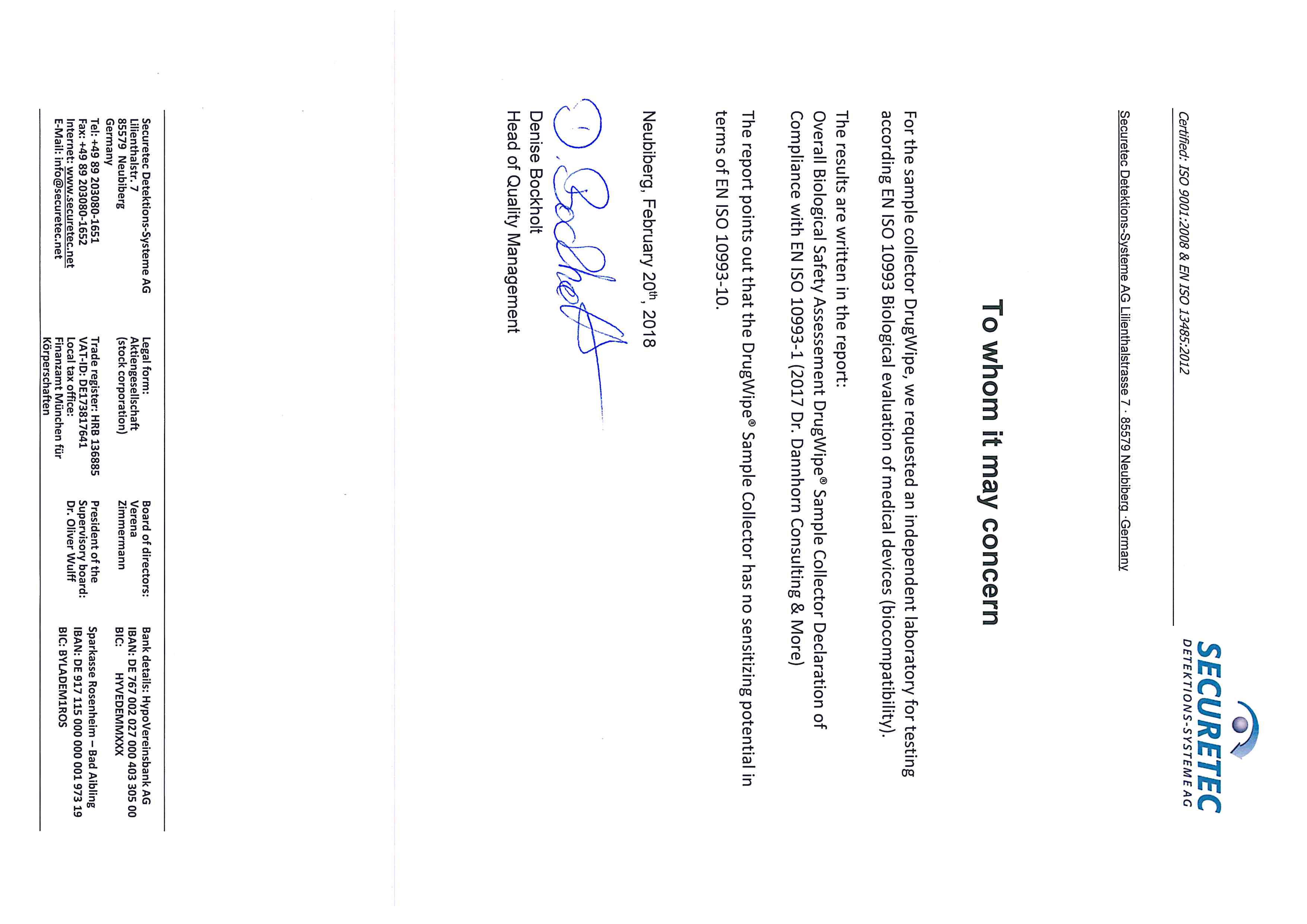
The fol owing certification was also provided to NZ Police for the DrugWipe 3 S:
•
Compliance with EN ISO 10993
Biological evaluation of medical devices,
confirming there has no sensitizing potential.
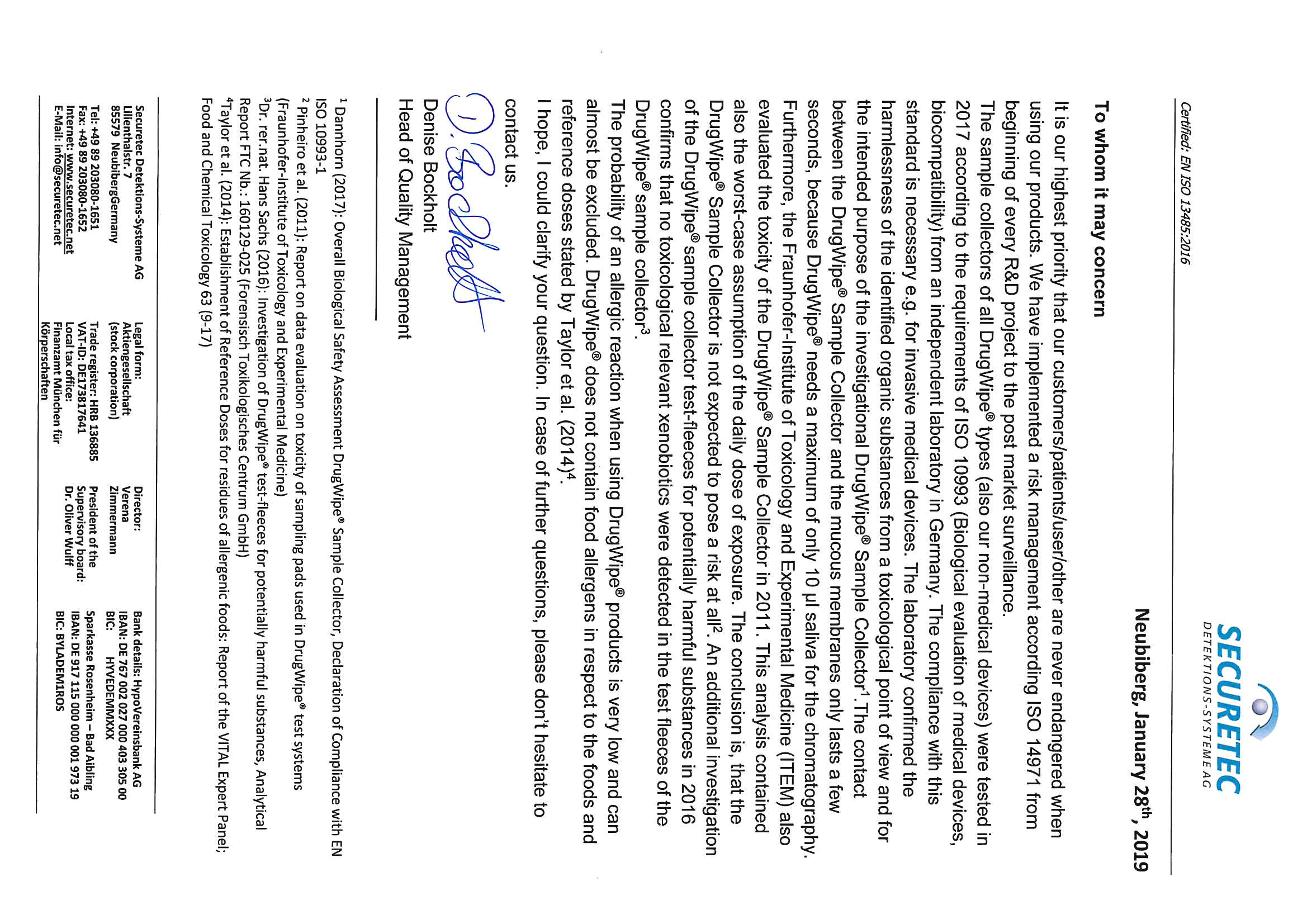
•
Compliance with ISO 14971
Medical devices – Application of risk management
and ISO 10993
Biological evaluation of medical devices and confirmation of there
being no detection of harmful substances.
4. Any internal Police communications discussing the OAG’s statement that
Police hold this material.
Purpose of this request
This request is necessary to reconcile:
the OAG’s explicit statement that Police hold the independent laboratory testing
and tender evaluation material, and
Police’s earlier statements indicating that such material is not held.
Police does not hold any communications discussing the Office of the Control er and
Auditor General’s statements, including their statement to you that Police hold the
independent laboratory testing and tender evaluation material. Their statement to you is
referring you to Police as the appropriate agency to address your request. Therefore,
your request is refused under section 18(e) of the OIA as the document alleged to contain
the information requested does not exist.
For clarity, Police has provided you publicly available information before regarding the
DrugWipe 3 S device. In our letter to you dated 1 May 2026 (IR-01-26-11763), we
confirmed that Police holds operational and procurement-related scientific validation and
accuracy assessments of the DrugWipe 3 S. However, your request at the time was
specifically for assessments in relation to legislative vetting or Bill of Rights Act (BORA)
analysis which we had confirmed as not held by Police.
I trust this information is satisfactory in answering your request. If you are not satisfied
with the way your request has been responded to, you have the right under section 28(3)
of the OIA to ask the Ombudsman to review our decisions. Information on how to do this
is available online at www.ombudsman.parliament.nz.
Yours sincerely
Inspector Peter McKennie
Acting Director: Road Policing
New Zealand Police
 *** FINAL REPORT ***
6 August 2025
Phil Wheeler
Procurement Lead
Impaired Driving Programme
National Road Policing Centre
Police National Headquarters
180 Molesworth St
Wellington, New Zealand
Re:
Assessment of the Pathtech Roadside Drug Testing Device
NZ Police:
RFP TN/25/18
IFC Expert Report No.:
25-0105
Dear Mr Wheeler,
You and your organisation have retained Independent Forensic Consulting represented by Dr
Michael Robertson as consultants in toxicology and analytical chemistry in the above captioned
matter.
You have requested that I review the results of the Pathtech Securetec Drugwipe® 3 S drug device
verification and comment on whether the results of the on-site testing device conform to the
requirements of Appendix C of the current oral fluid standard: AS/NZS 4760 - Procedure for
specimen collection and the detection and quantitation of drugs in oral fluid (the Standard).
Expert Report No. 25-0105
Page 1 of 7
 METHODS / PROCEDURE
Device verified - Pathtech: Securetec Drugwipe 3 S. Batch Y1647.25092, Expiry 2026-02.
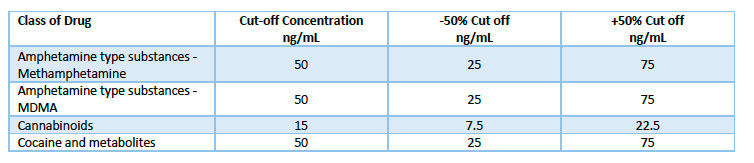
The device was assessed against the screening cut-offs for on-site immunoassay screening test
listed in Table A1; Appendix A of AS/NZS 4760:2019 and are as follows:
Stock solutions of the required calibrators (methamphetamine, cocaine or benzoylecgonine and
THC) were prepared immediately prior to performing the verification.
Blank human oral fluid specimens were spiked with the appropriate volume of the stock solutions,
one spiked at +50% of the screening cut-off concentrations and the other at -50% of the screening
cut-off concentrations.
A separate set of stock solutions of MDMA were also prepared immediately prior to performing
the verification.
The concentrations of the MDMA stock solutions prepared were dependent on the cross reactivity
of MDMA on the methamphetamine strip of the respective device.
In order to test to section C3 of Appendix C of AS/NZS 4760:2019, device verification was
assessed by testing a minimum of twenty (20) spiked samples. Ten (10) kits with oral fluid samples
spiked at -50% of the screening cut-offs, and ten (10) kits with oral fluid samples spiked at +50%
of the screening cut-offs.
All testing was performed in accordance with the provided manufacturer’s instructions.
Section C3 of Appendix C states that if a total of twenty kits are tested, no more than two failures
in total (either false ‘not-negative’ or false ‘negatives’) are permitted for each drug class tested.
A separate verification was performed for MDMA due to its cross reactivity on the
methamphetamine strip.
Prior to testing, all components were brought to room temperature prior to verification.
Expert Report No. 25-0105
Page 3 of 7

Fresh oral fluid was collected from drug free human donors. Specimens were pooled, centrifuged
and frozen until required for evaluation. Centrifugation was required to remove bubbles etc. to
allow for a more accurate measurement of oral fluid volume, an important aspect of verification.
To ensure the correct concentration of drugs were spiked into the samples, aliquots of the blank
oral fluid, -50% spiked oral fluid and +50% spiked oral fluid were also assessed by LCMS.
The Pathtech: Securetec Drugwipe® 3 S device has the following drug test strips and cut-off
concentrations, all of which conform to the Standard:
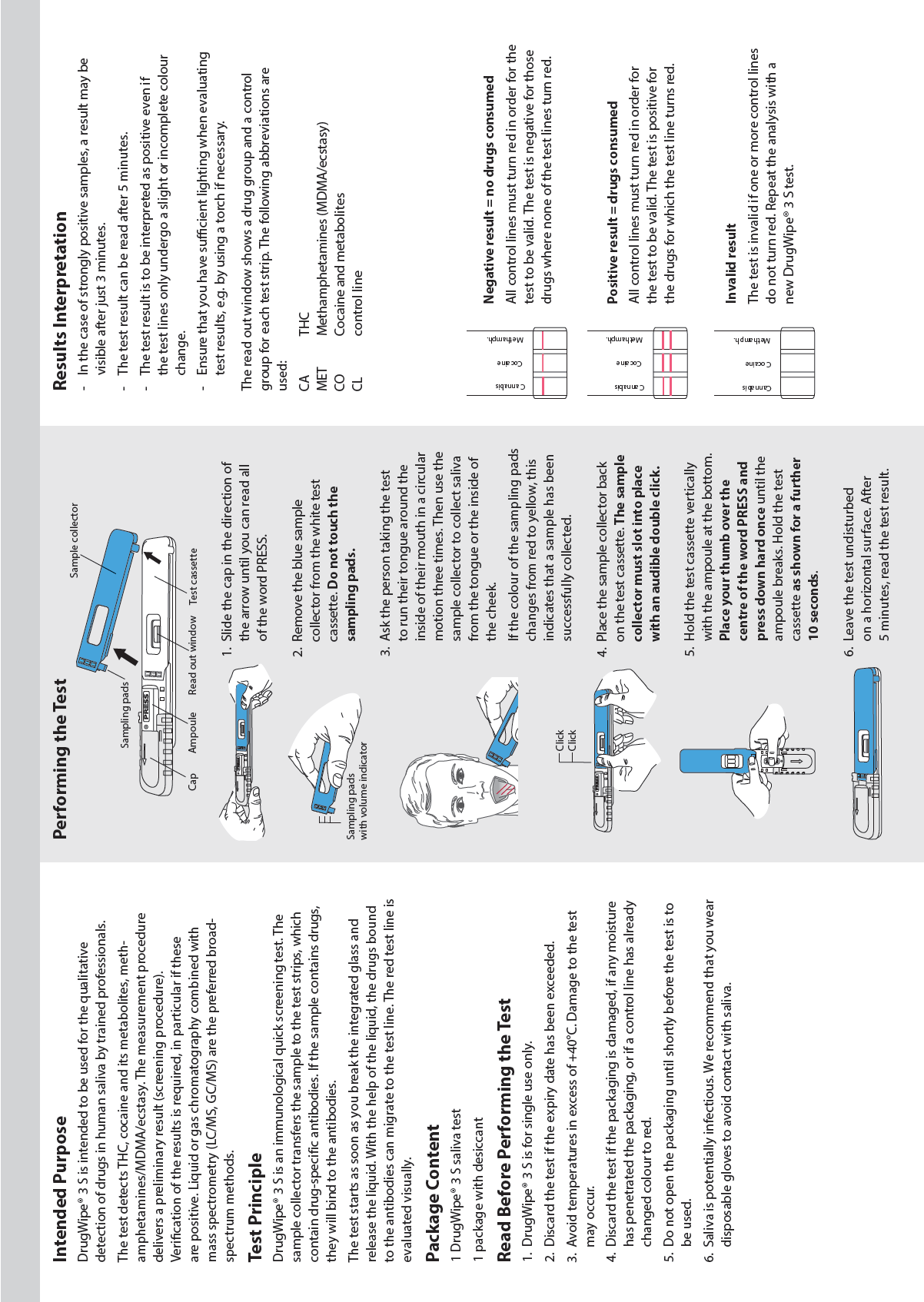
Aliquots (3 x 10μL) of the appropriate spiked oral fluid specimen were added to the sample
collector pads before being placed back onto the test device. The test device was held upright, a
thumb placed over the word PRESS before pressing down hard once, breaking the internal
ampoule. The device was held upright for a further 10 seconds before being placed on the bench
surface (Instructions for Use, S 304 G.91).
A control line must be observed for the test to be valid. Any visible line or part thereof on the test
strip indicates a positive or non-negative result. No visible line indicates a negative result. All
results were read at 5 minutes after the test was started.
The temperature during verification was recorded by a calibrated data logger and was 23.2°C.
Expert Report No. 25-0105
Page 4 of 7
 RESULTS
1. All compounds and cutoff concentrations comply with AS/NZS 4760:2019.
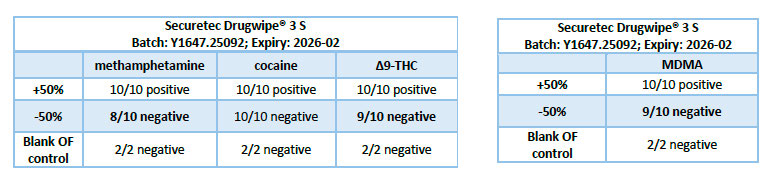
2. The results for the evaluation of the Pathtech: Securetec Drugwipe® 3 S device are shown in
the tables below.
3. Control lines were present for all observed tests.
4. There were two false positives for methamphetamine and one false positive each for THC and
MDMA, however this is within the required criteria of the Standard.
5. Concentrations of the spiked oral fluid samples were confirmed by LCMS and were within
acceptable ranges for all drug groups.
CONCLUSION
The Pathtech: Securetec Drugwipe® 3 S device was verified and complied with the criteria
outlined in Appendix C3 of AS/NZS 4760:2019 for methamphetamine, cocaine, THC and MDMA.
The Pathtech: Securetec Drugwipe® 3 S device has been tested and does comply with the Standard
and therefore does meet the required cut-off thresholds defined in Table A1 of the joint
AS/NZS4760:2019 Standard and it’s cut off thresholds and false positive/negative results as
required by pre-condition 5 of NZ Polices OFTE RFP.
Sincerely,
Dr Michael Robertson
Pharmacologist, Forensic Toxicologist, Analytical Chemist
Expert Report No. 25-0105
Page 5 of 7
Qualifications, experience and expertise in the field of drug and alcohol policies,
procedures and testing
I am a pharmacologist and forensic toxicologist at Independent Forensic Consulting (IFC). After
completing my undergraduate degree majoring in pharmacology and toxicology, I earned my
Ph.D. in medicine studying at the Victorian Institute of Forensic Medicine (Monash University),
specialising in toxicology. I subsequently completed my post-doctoral fellowship in forensic
toxicology at National Medical Services (NMS) in Pennsylvania (USA).
As a pharmacologist and forensic toxicologist with more than 30 years professional experience, I
have studied the affects and effects of drugs and poisons on humans and animals including
mechanism of action; desirable effects and non-desirable or adverse effects. I have also performed
research in the field of pharmacology and toxicology including methods of drug analysis; affects
of drugs on humans; evaluation of the safety and efficacy of drugs on humans. I have assigned,
supervised, performed, certified and interpreted hundreds of toxicological analyses for a range of
clients including pathology and forensic laboratories, pharmaceutical companies, regulatory
agencies and legal professionals.
I have prepared expert reports and testified throughout Australia and overseas in local, state,
federal and military courts for prosecution, defence and plaintiff lawyers relating to forensic
toxicology including matters involving:
• Criminal Law (including drug facilitated sexual assault; DUI and DUID; cause or contribution
to death; human performance and behaviour; poisonings; drug possession and matters of legal
status of drugs including the evaluation of Synthetic
Cannabis and Synthetic Stimulants e.g.
‘Bath Salts’ and issues associated with analogue provisions);
• Family Law (including the interpretation of urine, drug and hair follicle testing; Liver Function
Tests (LFT), Carbohydrate Deficient Transferrin (CDT) and Ethyl Glucuronide (EtG) testing
and result interpretation);
• Personal Injury, Medical Negligence, CTP, Insurance claims;
• Workplace Disputes (including the interpretation of urine, oral fluid and/or hair test results and
compliance with acceptable drug testing procedures);
• Workplace Accidents (involving the cause and contribution of drugs and alcohol to an
incident); together with matters including exposure to chemicals and other poisons;
• Doping disputes and investigations including professional athletes (ASADA; WADA) and
Steward enquiries involving the racing industry (jockeys, riders, racehorses, harness racing,
greyhounds etc.);
• Miscellaneous civil matters and disputes involving drugs and chemicals.
I have lectured at numerous Universities on topics such as pharmacology and forensic toxicology.
I have authored a number of peer-review papers, and I routinely attend national and international
scientific conferences. I currently hold membership of The International Association of Forensic
Expert Report No. 25-0105
Page 6 of 7
Toxicologists (TIAFT), the Society of Hair Testing (SoHT), the Society of Forensic Toxicologists
(SOFT), The Australian and New Zealand Forensic Science Society (ANZFSS) and the Forensic
and Clinical Toxicology Association (FACTA) and am bound by the Code of Ethics of these
Societies. I have been a member of the SOFT Drugs and Driving Committee and SOFT Drug
Facilitated Sexual Assault Committee and served as an invited reviewer on the SOFT Scientific
Advisory panel. I currently serve as an invited reviewer for the international journals, Forensic
Science International and Forensic Science, Medicine, and Pathology.
With respect to workplace drug testing, I am a consulting toxicologist to a number of national drug
testing organisations and an expert in Australian Standard compliant drug testing for both urine
and oral fluid (AS/NZS 4308:2023 and AS/NZS 4760-2019 respectively). I am the immediate
past Chair of the Standards Australia oral fluid committee reviewing and updating AS/NZS 4760
– Procedure for specimen collection and the detection and quantitation of drugs in oral fluid. I am
the immediate past Chair of the Standards Australia urine committee reviewing and updating
AS/NZS 4308 – Procedure for specimen collection and the detection and quantitation of drugs in
urine. I am the current Chair of Standard Australia’s technical committee (CH-039) that is
responsible for the ‘Detection and Analysis of Drugs in Specimens of Human Origin’. I am a
contributing member of the FACTA technical committee on Hair Drug Testing Guidelines.
I have been involved in and testified in a number of workplace disputes before Fair Work Australia
and other tribunals including: Endeavour Energy and CEPU, ASU and APESMA; The Maritime
Union of Australia v DP World Brisbane Pty Ltd and Ors; and CFMEU v PKCT; among others.
As a qualified trainer in the workplace collection and testing of breath, urine and oral fluids in
compliance with AS 3547:2019, AS/NZS 4308:2008; AS/NZS 4308:2023; AS 4760-2006 and
AS/NZS 4760-2019 respectively, I perform drug and alcohol training throughout Australia for a
number of clients to ensure compliance with the Australian Standards. This training includes
ensuring compliant collection, on-site testing, storage, and transportation to the laboratory. Policy
review and recommendations to ensure the respective drug-testing program in place is both
compliant to the respective Australian Standard and is able to achieve the desired outcome or intent
of the client. In the last 10 years I have performed more than 200 training sessions across more
that 150 organisations.
Expert Report No. 25-0105
Page 7 of 7
 abf diagnostics GmbH
Gewerbepark 14
D-85402 Kranzberg
Germany
T.: +49/8166-9986-130
F.: +49/8166-9986-140
E.: [email address]
Kranzberg, 14th of March 2025
Evaluation Report - Securetec DrugWipe 3 S (S303G.91)
Introduction
DrugWipe 3 S test kits were evaluated for specificity and sensitivity in compliance around
nominated cut-offs for each of the three analyte groups in accordance to Appendix C3 auf AS/NZS
4760:2019 with the following protocol.
Methods:
Drug solutions were prepared by spiking pooled saliva of 10 volunteers with the analytes. The
final dilutions provide a test sample with a concentration 50 % above (high drug “spiked” solution)
or 50 % below (lower drug “spiked” solution) the specified cut-off.
s 9(2)(b)(ii) OIA, s 9(2)(k) OIA, s 9(2)(ba)(i) OIA
abf diagnostics
– Drugwipe Evaluation Report
Page 1 of 4
s 9(2)(b)(ii) OIA, s 9(2)(ba)(i) OIA, s 9(2)(k) OIA
abf diagnostics
– Drugwipe Evaluation Report
Page 2 of 4
Specificity testing:
10 µL of each lower drug “spiked” solution was pipetted onto the respective wiping fleece of the
DrugWipe® sample collectors and tests were performed according to the enclosed instructions
for use. The tests were evaluated visually as described in the instructions for use.
An appearing red control line and no red test line shows a negative result.
Sensitivity testing:
10 µL of each high drug “spiked” solution was pipetted onto the respective wiping fleece of the
DrugWipe® sample collectors and tests were performed according to the enclosed instructions
for use. The tests were evaluated visually as described in the instructions for use.
An appearing red control line and a red test line shows a positive result.
Results:
Specificity at – 50% cut-off
Analyte
Concentration
Negative results
% Correct results
Δ9-THC
7 ng/ml
27/30
90%
D-
25 ng/ml
27/30
90%
Methamphetamine/
D.L-MDMA
Cocaine
25 ng/ml
29/30
96%
Sensitivity at + 50% cut-off
Analyte
Concentration
Positive results
% Correct results
Δ9-THC
22 ng/ml
28/30
93%
D-
75 ng/ml
30/30
100%
Methamphetamine/
D.L-MDMA
Cocaine
75 ng/ml
29/30
96%
abf diagnostics
– Drugwipe Evaluation Report
Page 3 of 4
 Summary:
DrugWipe 3 S (S304G.91) test kits fulfil ed the criteria of Appendix C3 of AS/NZS 4760:2019 with
not more than a total of 10% false positive results in specificity testing at – 50% of the respective
cut-offs and not more than a total of 10% false negative results in sensitivity testing at + 50% of
the respective cut-offs for THC, Methamphetamine/MDMA and Cocaine.
Kranzberg, 14th of March 2025
……………………………….
Dr. Franz Aberl
abf diagnostics GmbH
abf diagnostics
– Drugwipe Evaluation Report
Page 4 of 4