
Management Report for Auckland Council
Willow control by aerial drone application of herbicide in Te Henga Wetland
January 2026
By Matuku Reserve Trust
link to page 4 link to page 4 link to page 5 link to page 6 link to page 10 link to page 12 link to page 12 link to page 17 link to page 17 link to page 18 link to page 18 link to page 18 link to page 19 link to page 19 link to page 19 link to page 21 link to page 24 link to page 25 link to page 25 link to page 26 link to page 27 link to page 27 link to page 30 link to page 31 link to page 31 link to page 31 link to page 32 link to page 32 link to page 32 link to page 34 link to page 35 link to page 35 link to page 35
Management Plan
Contents
1. Purpose of this Plan ........................................................................................................ 3
2. Background and Rationale .............................................................................................. 3
2.1.
Targeted pest plant: crack willow ........................................................................ 4
2.2.
History of willow control in Te Henga ................................................................... 5
3. Land Tenure and Community Engagement ....................................................................... 9
4. Governance, Support, and Approvals ............................................................................ 11
5. Target pest plant species and control methods .............................................................. 11
6. Herbicides and Additives Used ...................................................................................... 16
6.1.
Primary Herbicide ................................................................................................. 16
6.2.
Adjuvants and Additives ........................................................................................ 17
7. Aerial Operations (2025) ................................................................................................ 17
7.1.
Timing .................................................................................................................. 17
7.2.
Operational information ....................................................................................... 18
7.2.1.
Operator, Qualifications, and Equipment .......................................................... 18
7.2.2.
Equipment........................................................................................................ 18
8. Sensitive Areas, Species and Mitigation Measures ......................................................... 20
9. Spray Drift and Weather Controls .................................................................................. 23
10. Monitoring .................................................................................................................... 24
10.1. Water Testing ....................................................................................................... 24
10.2. Post spray monitoring by Boffa Miskell .................................................................. 25
10.3. On site inspection ................................................................................................ 26
10.4. Drone survey ........................................................................................................ 26
11. Conclusion ................................................................................................................... 29
Appendix A - References ...................................................................................................... 30
1.
Waitākere Ranges Strategic Weed Management Plan June 2015 ............................. 30
2.
Wetland restoration : a handbook for New Zealand freshwater systems ................. 30
3.
Auckland Council Technical Report 2013/003 Changes in indigenous ecosystems and
the environment within the boundary of the Waitakere Ranges Heritage Area Act 2008:
2008-2013 Report ......................................................................................................... 31
4.
Local Area Plan Te henga (Bethells Beach) and the Waitakere River Valley (2015) .... 33
5.
Landcare ICM Report No. 2008-2009/01, Motueka Integrated Catchment
Management Programme Report Series: Use of willows in stream bank control in New
Zealand: a survey of regional councils, .......................................................................... 34
1 | P a g e
link to page 36 link to page 37 link to page 38 link to page 45 link to page 46 link to page 46
6.
Other national reports on willows in wetlands and/or willow control projects ......... 35
7.
Letter of support from 104 Te Henga residents ....................................................... 36
8.
Report of Certificate of Compliance ...................................................................... 37
9.
Permitted activity notice granted ........................................................................... 44
10.
Breeding Australasian Bittern – Statement. ........................................................ 45
11.
Dr Aileen Sweeney – Inanga spawning statement ............................................... 45
2 | P a g e
Project: Crack Willow (
Salix fragilis) Control – Te Henga / Bethells Wetland
Lead organisation: Matuku Reserve Trust
1. Purpose of this Plan
The purpose of the plan is to clearly document
why,
how,
when, and
under what
controls crack willow control has been and will be undertaken in the Te Henga wetland,
with transparent links back to publicly available information.
Further detail, background explanations, and FAQs are available on the Matuku Link
website:
https://matukulink.org.nz/pest-plant-control/
This plan also aims to satisfy Auckland Council’s request for an overview of information
previously supplied to different departments.
All documents which are referred to in this Plan are either available on the designated
page of the Matuku Link website, or available via the supplied link, or copied into
Appendix A. Where privacy issues are identified, documents will be available upon
request.
When the trustees of Matuku Reserve Trust applied to the Department of Conservation
Community Fund for the funding of this project, it was in the knowledge of following up
on willow work done before by several councils and council departments in the past –
for ecological benefit as well as flood protection. Cyclone Gabrielle in February 2023
highlighted this fact, when several properties along Te Henga wetland were inundated
and damaged.
For more information on Matuku Reserve Trust please visit the website
www.matukulink.org.nz
2. Background and Rationale
Removing crack willow is a critical restoration action to improve the ecological function
of te Henga wetland, a
Significant Ecological Area (SEA). Willow control has a long
history in te Henga wetland.
Wetlands are now rare and those left are in poor condition. Of the original wetland area
that existed in the North Island of pre-settlement Aotearoa New Zealand, only 4.9%
remains, one of the highest extent of wetland loss in the world. It is imperative to restore
what remains of our wetlands to good health. Te Henga Wetland, the largest mainland
wetland in the Auckland region, is a very valuable taonga. Restoration is vital for its
3 | P a g e
biodiversity and hence the drone spraying of the willows, the single most invasive weed
in te Henga, is fully supported by Te Kawerau ā Maki, mana whenua to the area.
Wetlands also provide essential ‘ecosystem services’. These include sequestering
carbon and returning nitrogen to the atmosphere, protecting and improving water
quality by filtering water, storing and slowing floodwaters – especially important in these
days of climate change and increased rain events.
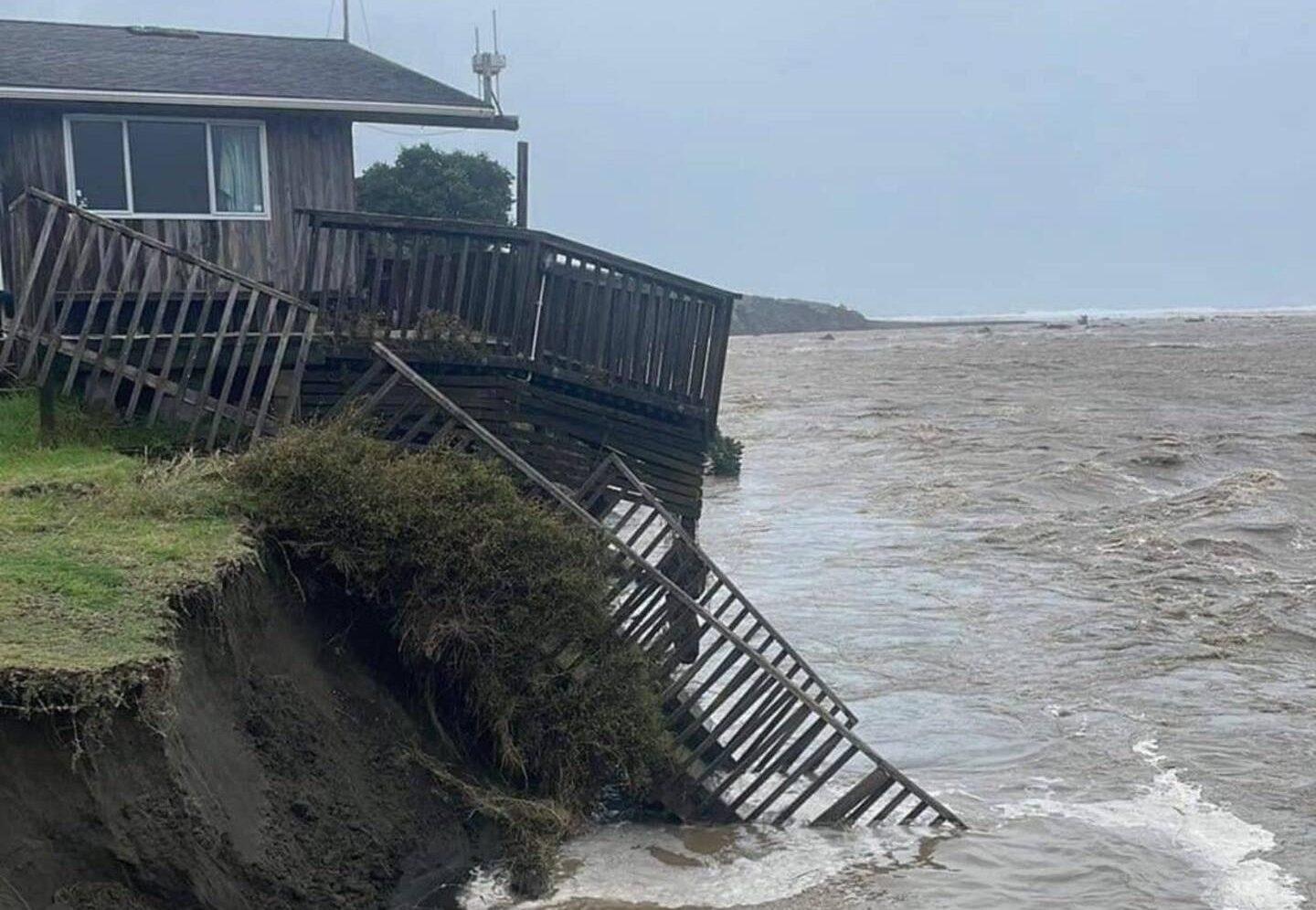
Image below: Deck of the Te Henga Surf club washed away when the Waitakere River
flooded in the anniversary floods and Cyclone Gabrielle events of February 2023.
2.1. Targeted pest plant: crack willow
Crack willow (
Salix fragilis) is a major pest plant in the Te Henga wetland. It is also on the
National Pest Plant Accord list, and considered a pest plant on the Auckland Council
websi
te https://www.tiakitamakimakaurau.nz/protect-and-restore-our-
environment/pests-in-auckland/pest-search/salfra/
Crack willow:
- traps sediment and debris, causing blockages in waterways
- raises flood levels and increases flood risk to homes, roads, and services
- outcompetes native wetland vegetation
4 | P a g e
- degrades habitat for threatened species including
matuku-hūrepo
(australasian bittern) and
pekapeka touroa (long-tailed bat)
2.2. History of willow control in Te Henga
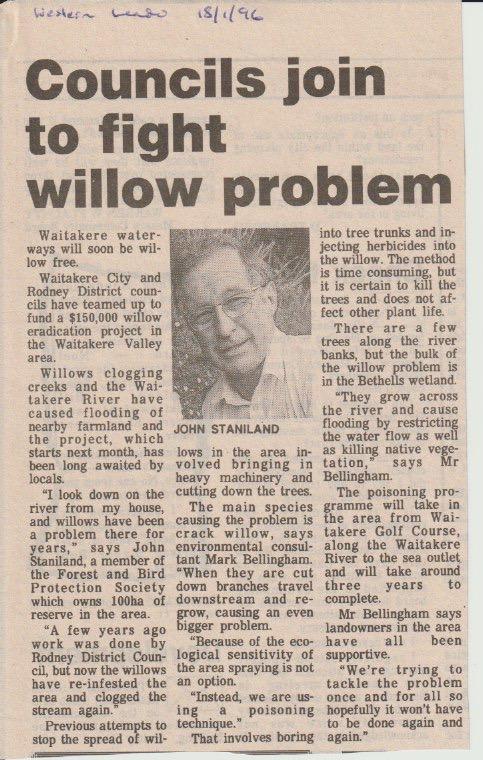
Willow control in Te Henga has a long history, as per the article below.
Auckland Council and its predecessors have been writing reports recommending weed
control, and specifically crack willow control, for several decades. For instance:
- Both
Salix Fragilis and
Salix Cinera are on the
Proposed pest plant list Auckland
City Appendix 14 – 2006
(http://www.aucklandcity.govt.nz/council/documents/hgi/docs/hgiApp14.pdf)
-
Auckland Council Technical Report on Changes in indigenous ecosystems and
the environment within the boundary of the Waitakere Ranges Heritage Area Act
2008: 2008-2013 report
5 | P a g e
-
Local Area Plan Te henga (Bethells Beach) and the Waitakere River Valley (2015)
-
Waitākere Ranges Strategic Weed Management Plan June 2015, C Jack Craw
There are many other national reports on the detrimental effects of willows in wetlands,
see list of references in Appendix A.
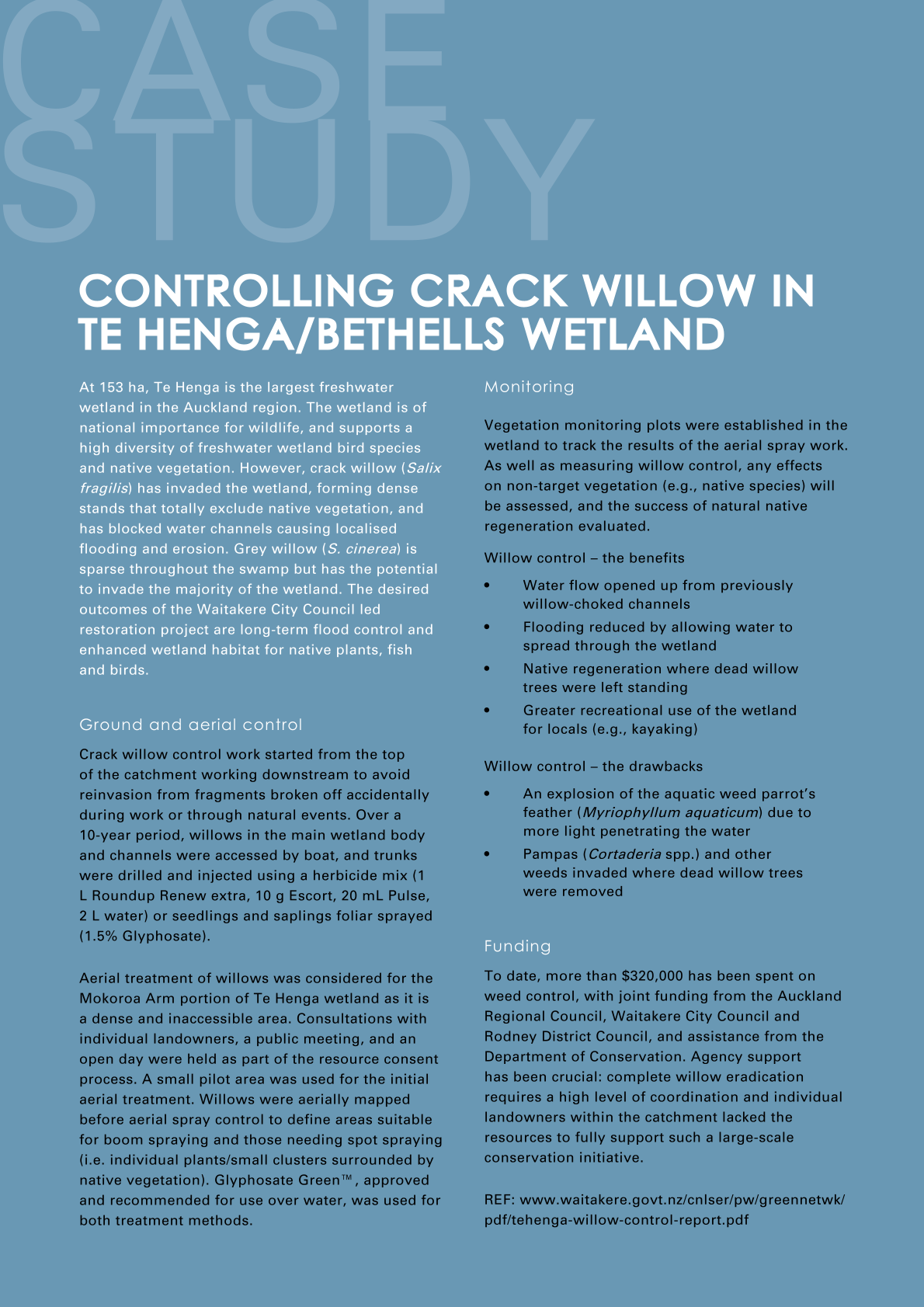
The work done by Matuku Reserve Trust follows in the footsteps of the Willow control
operation by aerial spraying which was done in 2009 by the then Auckland Regional
Council, Rodney City Council and Waitakere City Council. This features in the national
handbook for wetland restoration.
-
Wetland restoration: a handbook for New Zealand freshwater systems / edited by
Monica Peters and Beverley Clarkson. -- Lincoln, N.Z. : Manaaki Whenua Press,
2010. Chapter 9: Kerry Bodmin – p 21 onward. Case study: CONTROLLING
CRACK WILLOW IN TE HENGA/BETHELLS WETLAND
6 | P a g e
 7 |
7 | P a g e
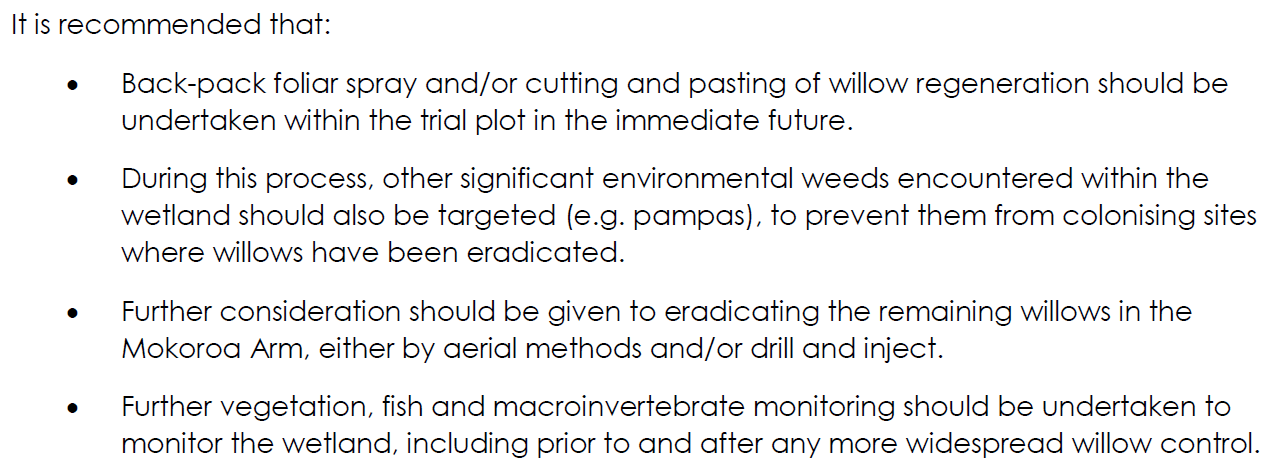
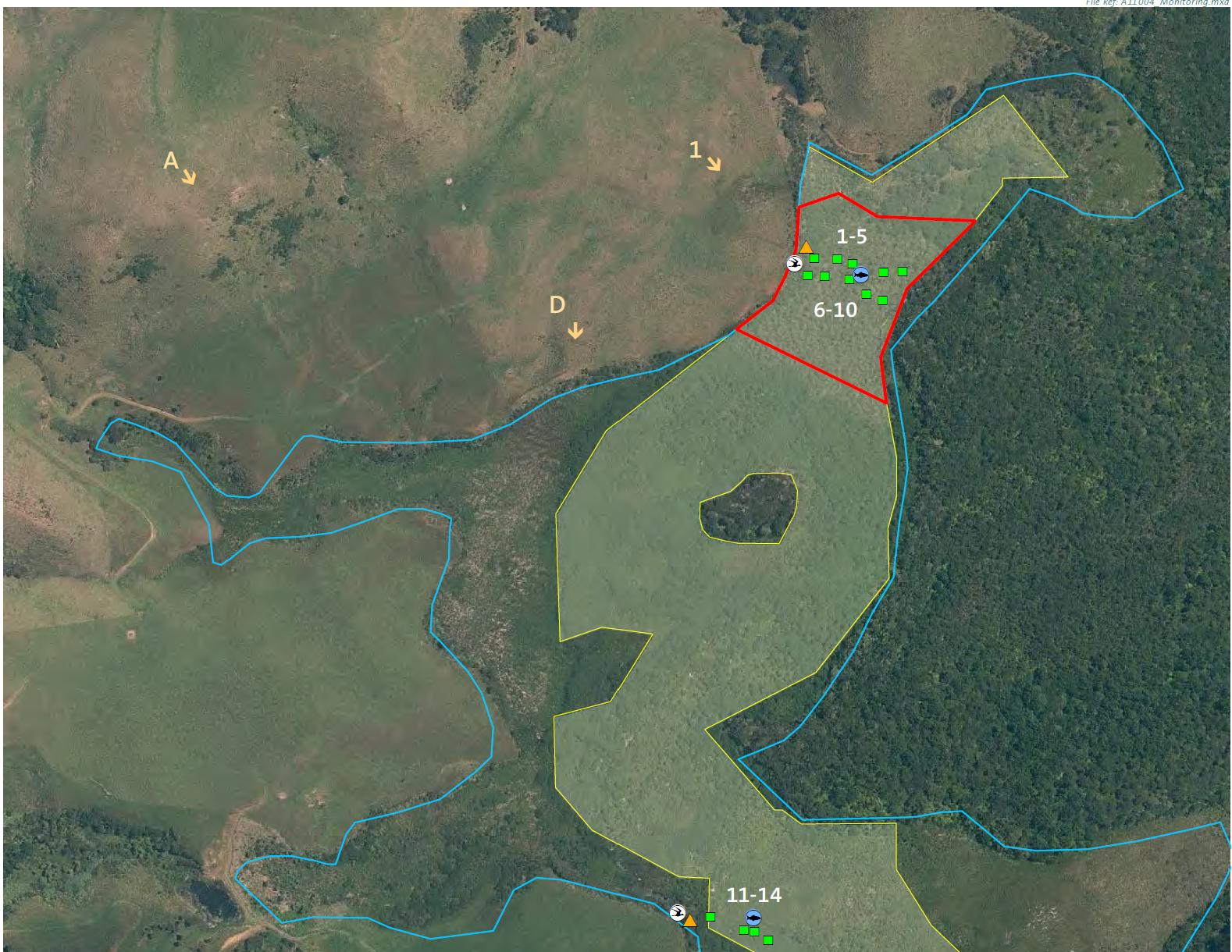
The above project was monitored by Boffa Miskell for the consecutive years after the
spraying, the monitoring reports are downloadable from the website
https://matukulink.org.nz/pest-plant-control/. All reports recommend a follow-up to the spraying:
Unfortunately this follow up was never done and the willows have reinvaded this area
again. Below the 2009 spray area in the red line.
8 | P a g e
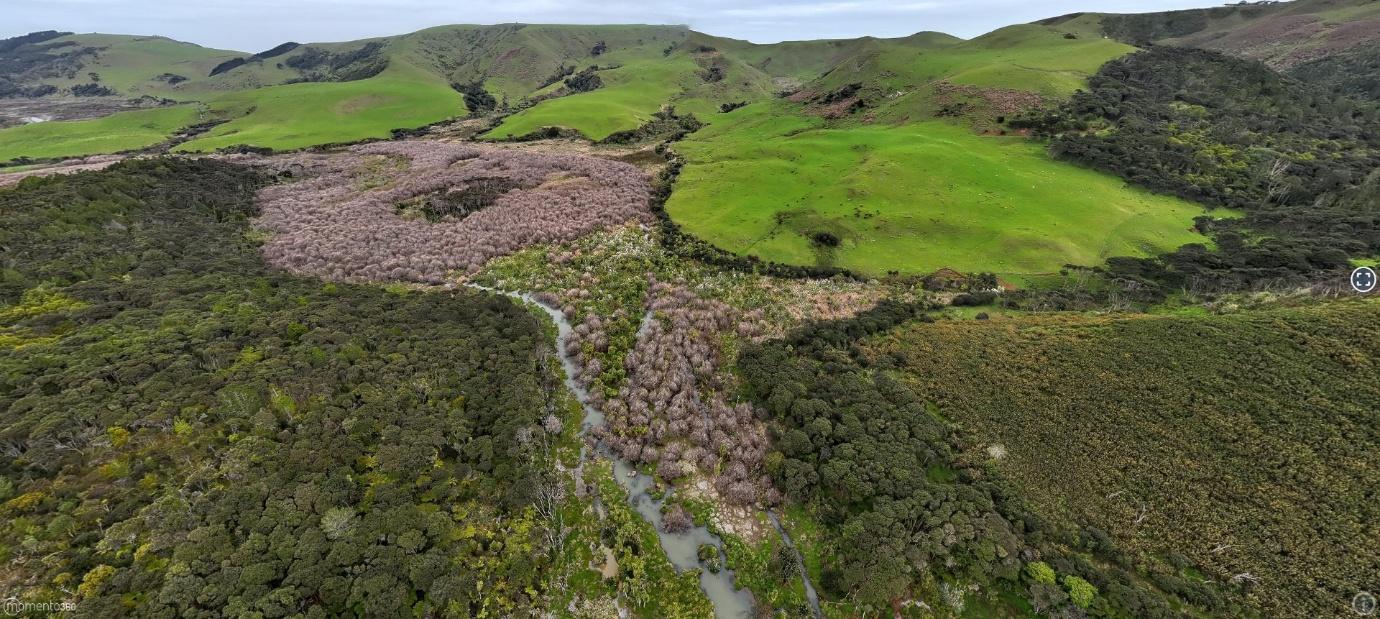
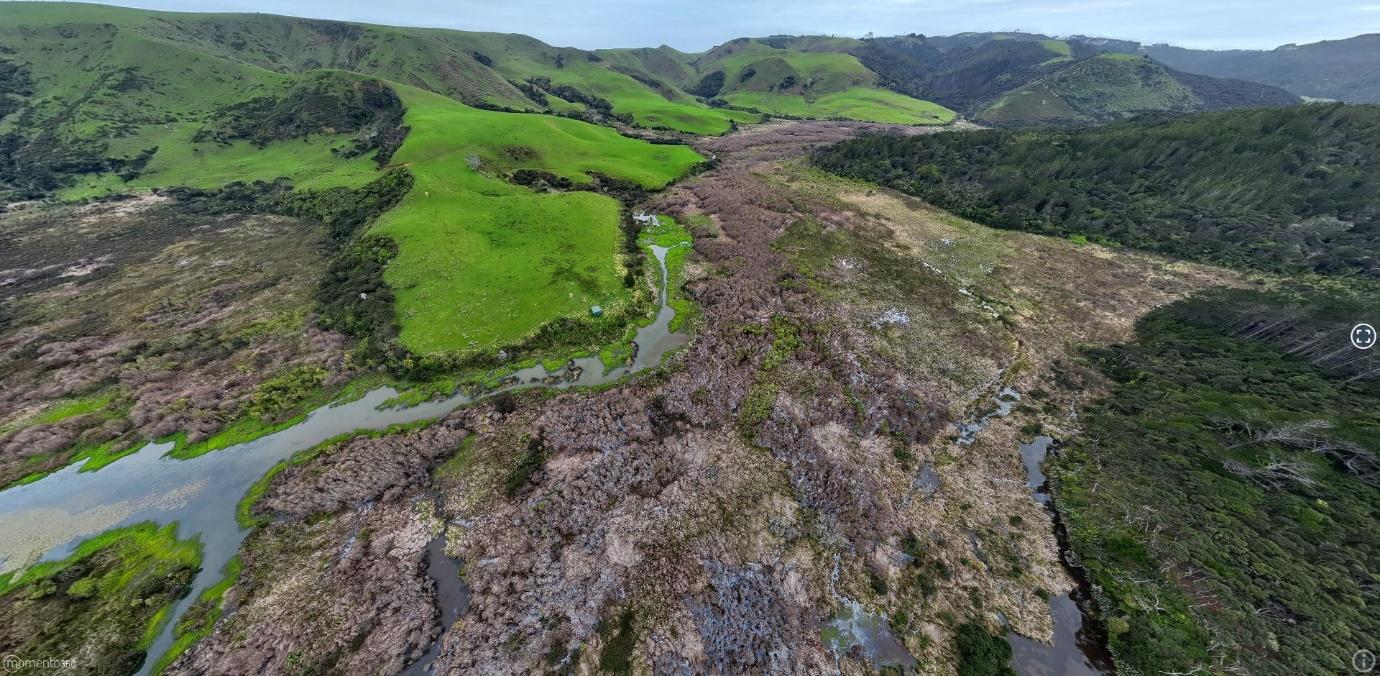
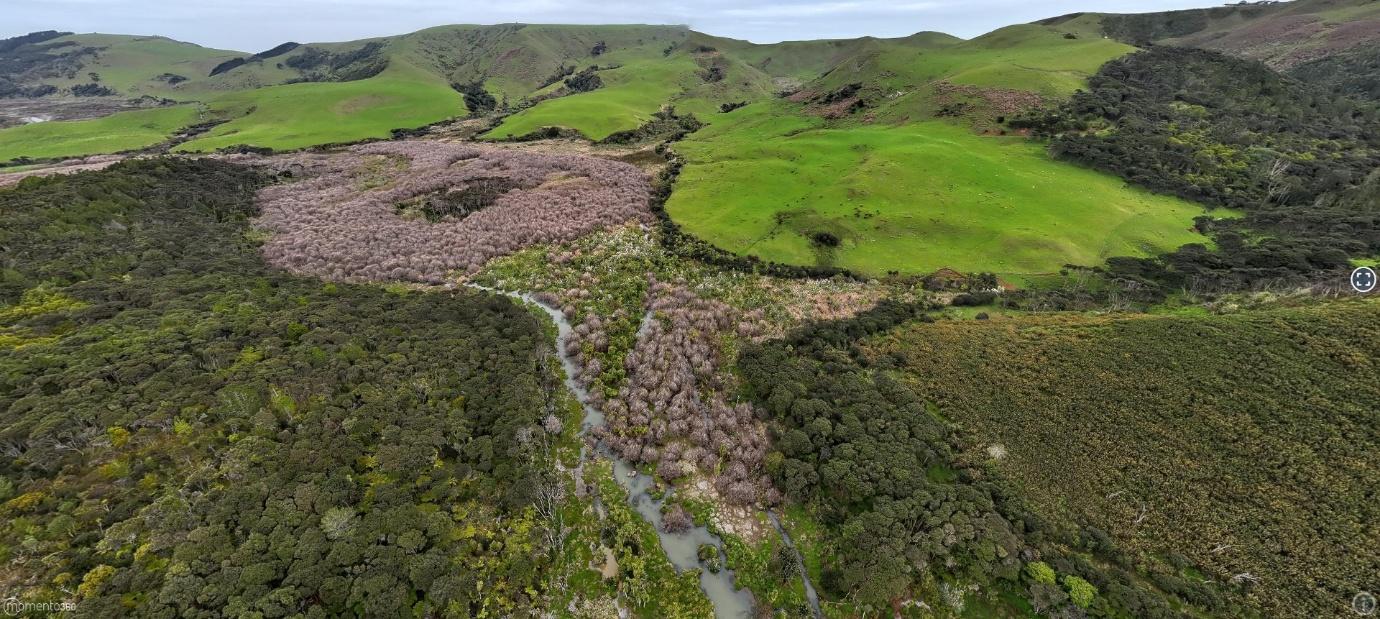
Drone image below by Auckland Council taken September 2025. All grey-red foliage
north of this line is reinvaded willow (currently dying due to the 2025 spraying).
All reports conclude that crack willows are the most significant threat to the wetland
and removing those would be the largest part of the wetland restoration. They conclude
that aerial application of herbicide has no measurable negative effects to the water
quality, aquatic macroinvertebrates, birds or fish.
Threatened species like Australasian Bittern (matuku hūrepo) breed in raupo, not under
willows. Raupo does not grow under willows: the removal of willows will restore and
improve bittern habitat. Improvement in abundance of fish species will increase the
possibility of bittern breeding at te Henga as well, as research has shown
(by Dr E
Williams, Department of Conservation and P. Langlands, Wildlands) food abundance is
critical for their breeding success.
3. Land Tenure and Community Engagement
The drone survey identified the willows – yellow on map below. This map was supplied
to Auckland Council with a description of proposed work.
9 | P a g e
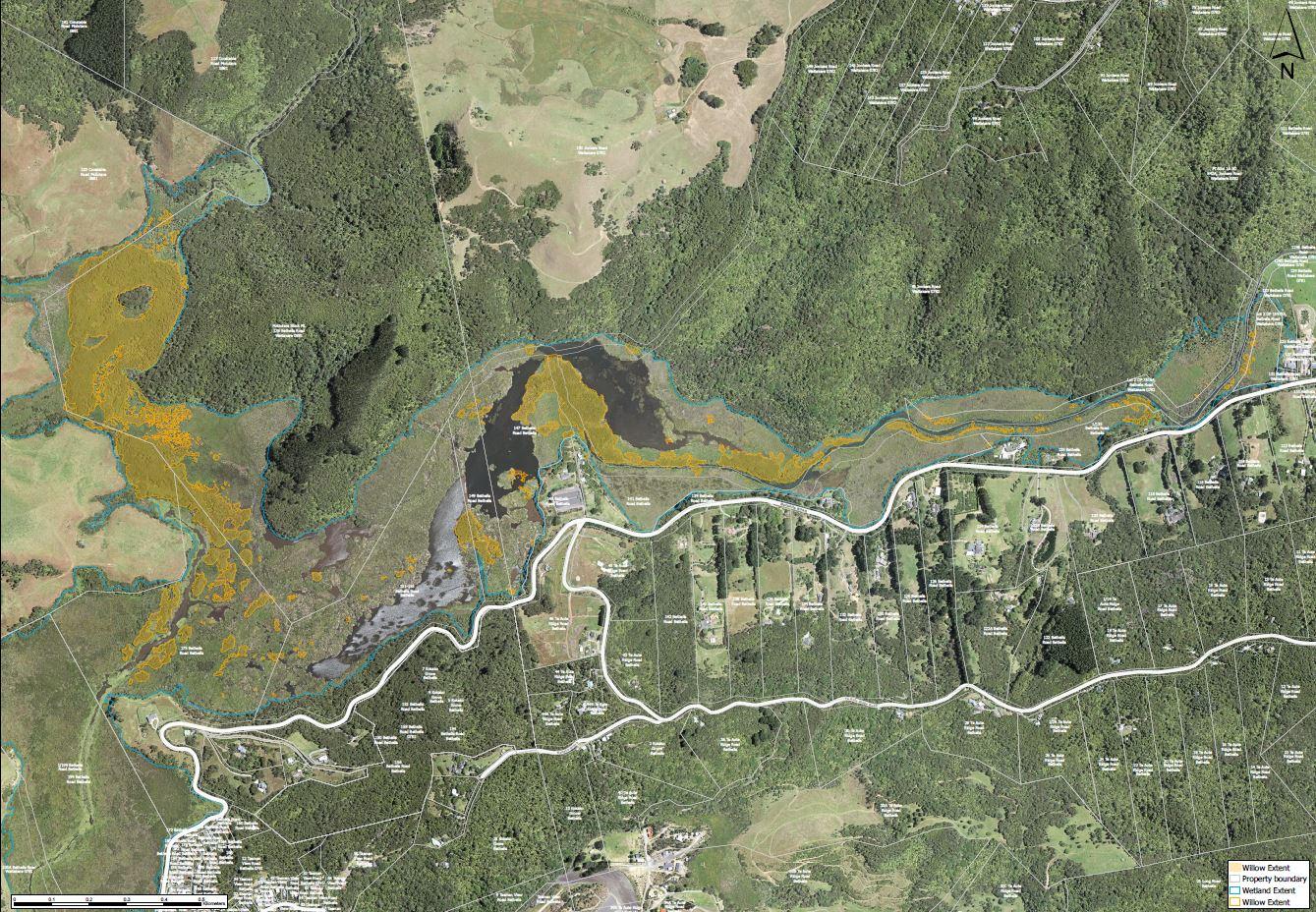
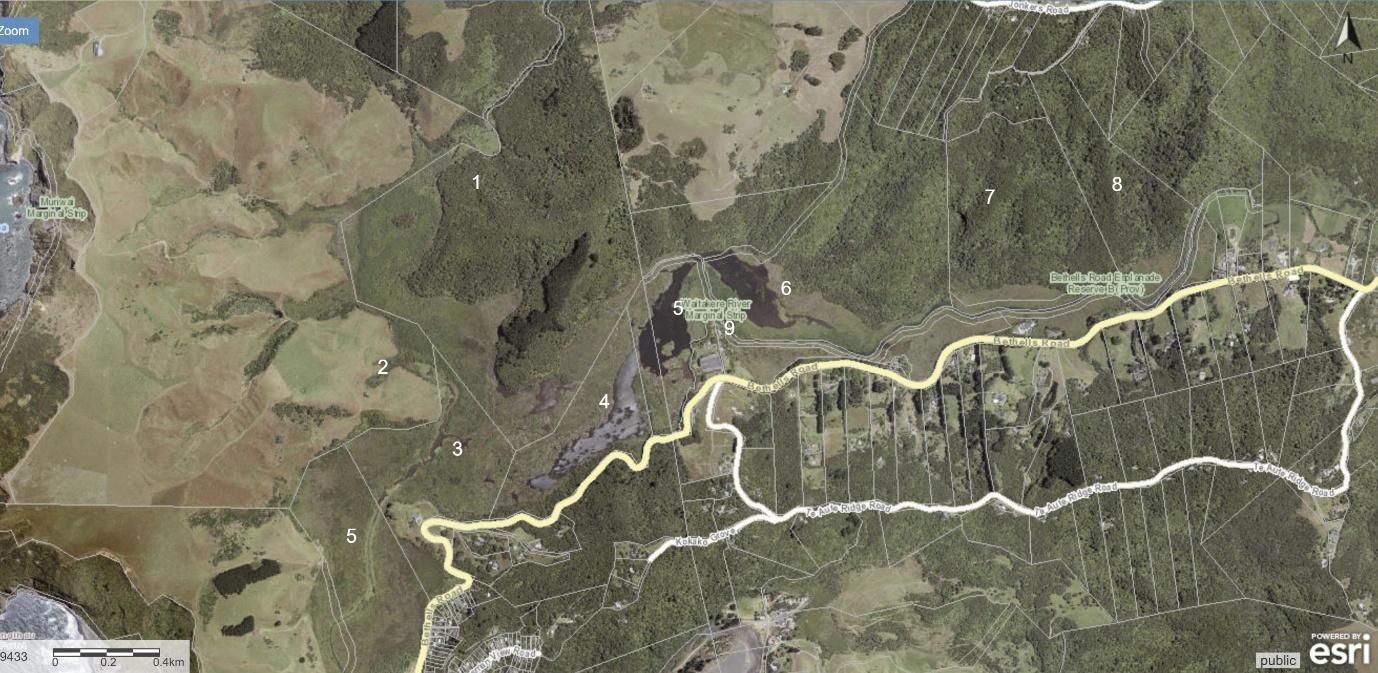
All crack willow control work has been undertaken with landowner support for the work
occurring on their properties (nrs 1 to 8 below – names upon request due to privacy).
• The pest plant control webpage has been publicly available since
November
2024 as background information for the community.
• Several community information evenings were held, supported by:
o Letter drops
10 | P a g e
o Email notifications
o Facebook posts
The webpage
https://matukulink.org.nz/pest-plant-control/ was specifically designed to
answer common community questions in advance of operations.
• Landowners and interested community members were notified in advance
• Email notifications and evidence of timing are held in
Q11 – Notifications
4. Governance, Support, and Approvals
The restoration programme is supported by:
• Auckland Council Biosecurity Team
• Auckland Council Bioinformation Team
• Department of Conservation (funding)
• Te Kawerau ā Maki (mana whenua)
Auckland Council issued the relevant Permitted Activity Notice and Certificate of
Compliance, and the programme aligns with regional pest plant management
objectives as well as national pest plant standards, see appendix A for both.
As a small but vocal number of local residents continued spreading false information on
the local Facebook Page (“Bethells Bongo”), a much larger group of locals wanted to
show their support for this work. Over 100 local residents signed a letter of support for
the work Matuku Link is doing restoring the wetland, also included in Appendix A.
5. Target pest plant species and control methods
Not all willow species are invasive; ornamental and non-crack willow species are not
targeted, nor are other invasive weeds.
•
Primary target: Crack willow (
Salix fragilis) – spreads by broken branches and
suckering roots.
• The more invasive Grey willow (
Salix cinerea) was prioritised in the 1990’s as it
spreads from seed as well as suckering roots. Broken branches can root in soil
and grow into trees. It was treated manually by Auckland Council staff,
contractors and volunteers and eradicated from the Waitakere River valley.
11 | P a g e
Control methods for crack willow in wetlands assessed include:
• Cut and burn / chainsaw
• Drill and inject (herbicide)
• Aerial spraying by helicopter/fixed wing plane
•
Targeted drone spraying (selected method)
Drone spraying was selected because it is demonstrably necessary to achieve the goal
of eradicating the single biggest threat to this threatened wetland ecosystem. The Boffa
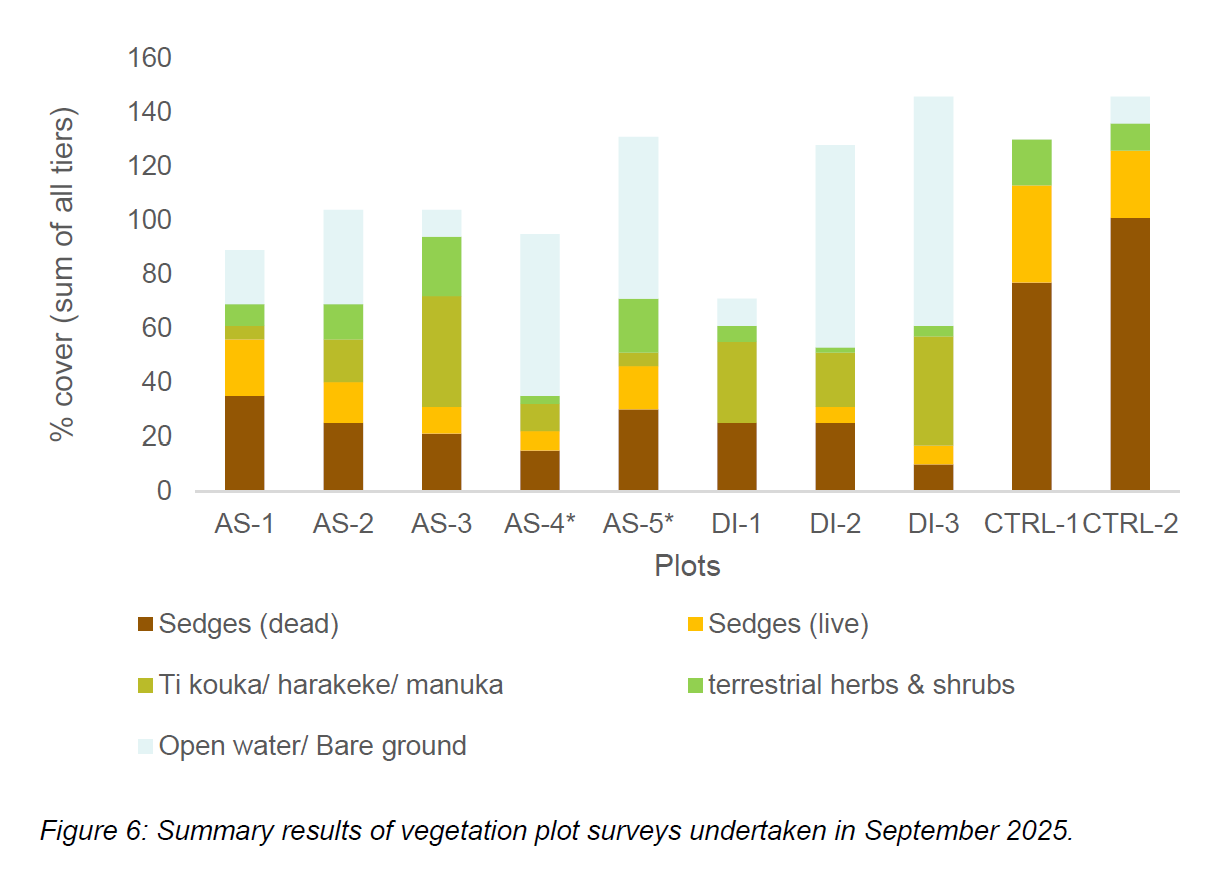
Miskell monitoring reports post the 2009 spraying all native understory has regrown
after several years. The Boffa Miskell 2026 report by Dr. Sarah Flynn concludes that
some native species (
Carex and
Machaerina) are more affected than Harakeke and
cabbage trees by glyphosate. Spring regrowth of raupō and
Machaerina was noted on
the immediate periphery of aerially sprayed willow stands, see p.11 onward of said
report and figures below.
12 | P a g e
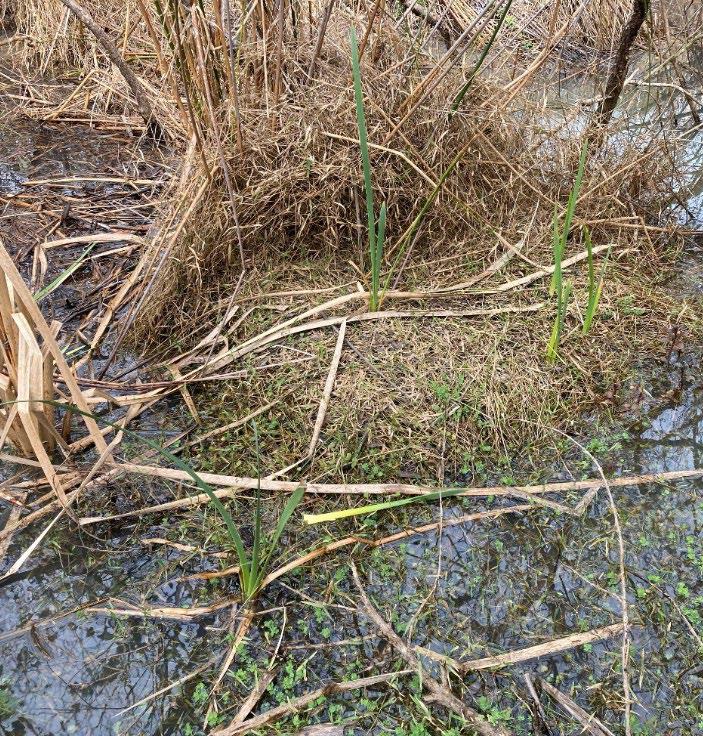
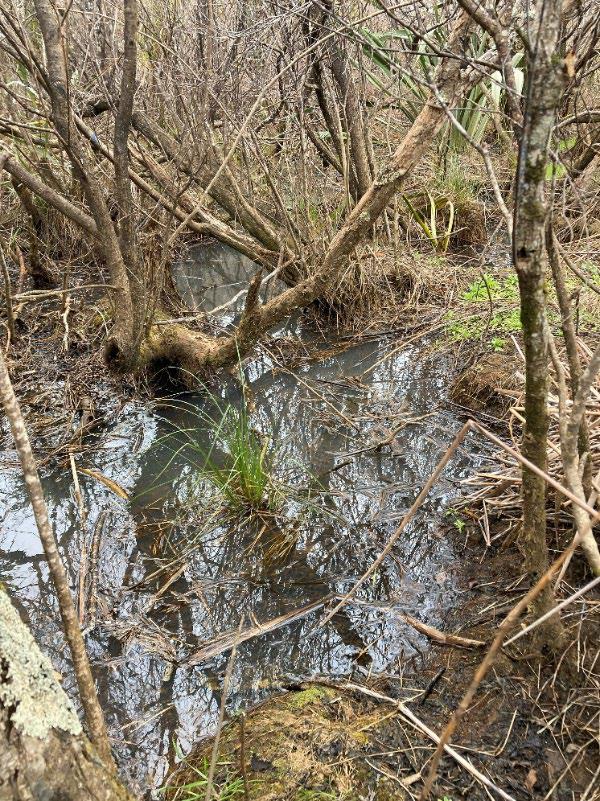 Figure 11 above: Spring regrowth of raupo adjacent to AS-1 (beneath willow scrub on edge of spray treatment
area).
Figure12: Plot AS-5, showing dead and resprouting Carex, live harakeke.
13 | P a g e
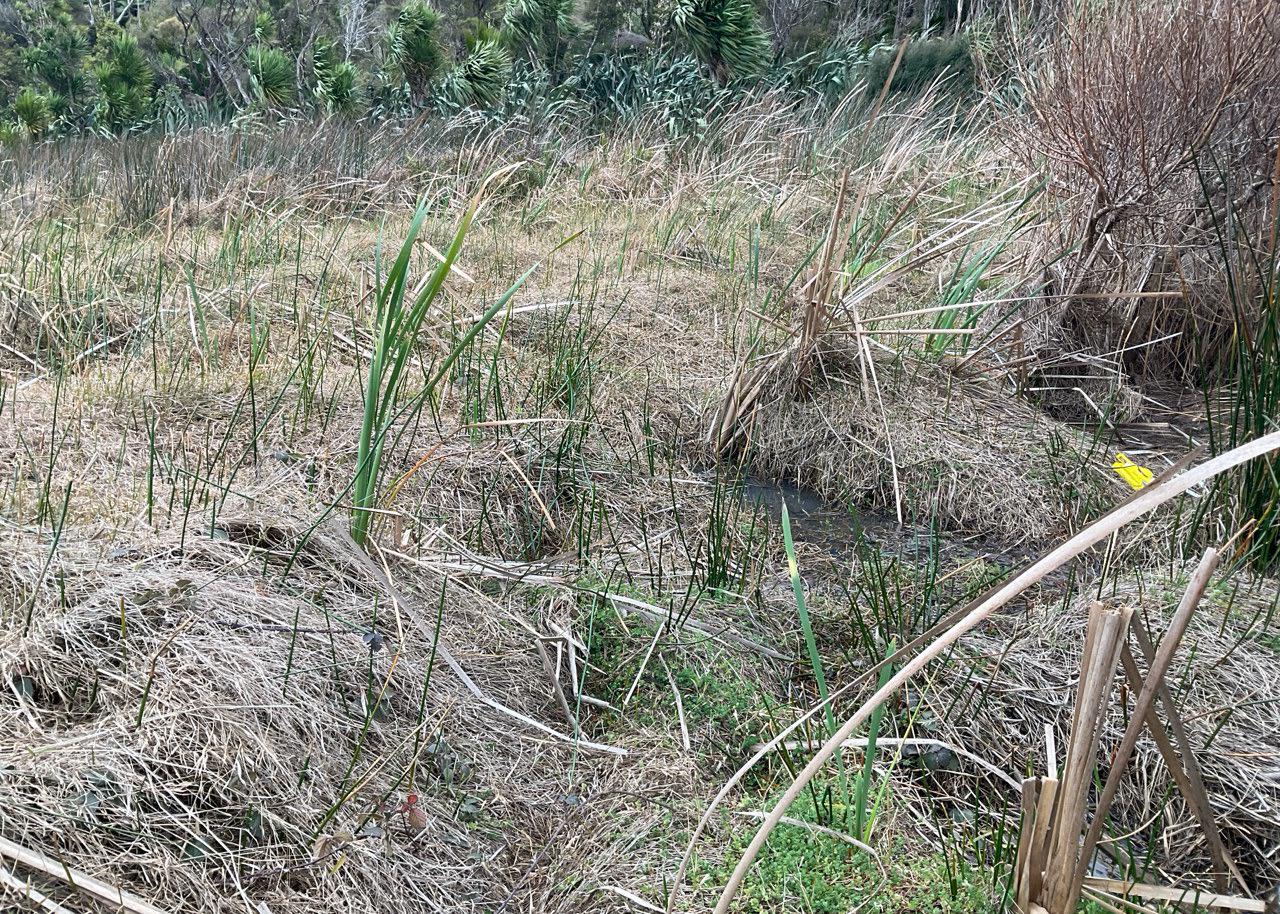 Figure 13: spring regrowth of raupo, Machaerina (13 September 2025) through dead swamp millet litter on edge
of spray treatment area (dead willow in top right corner).
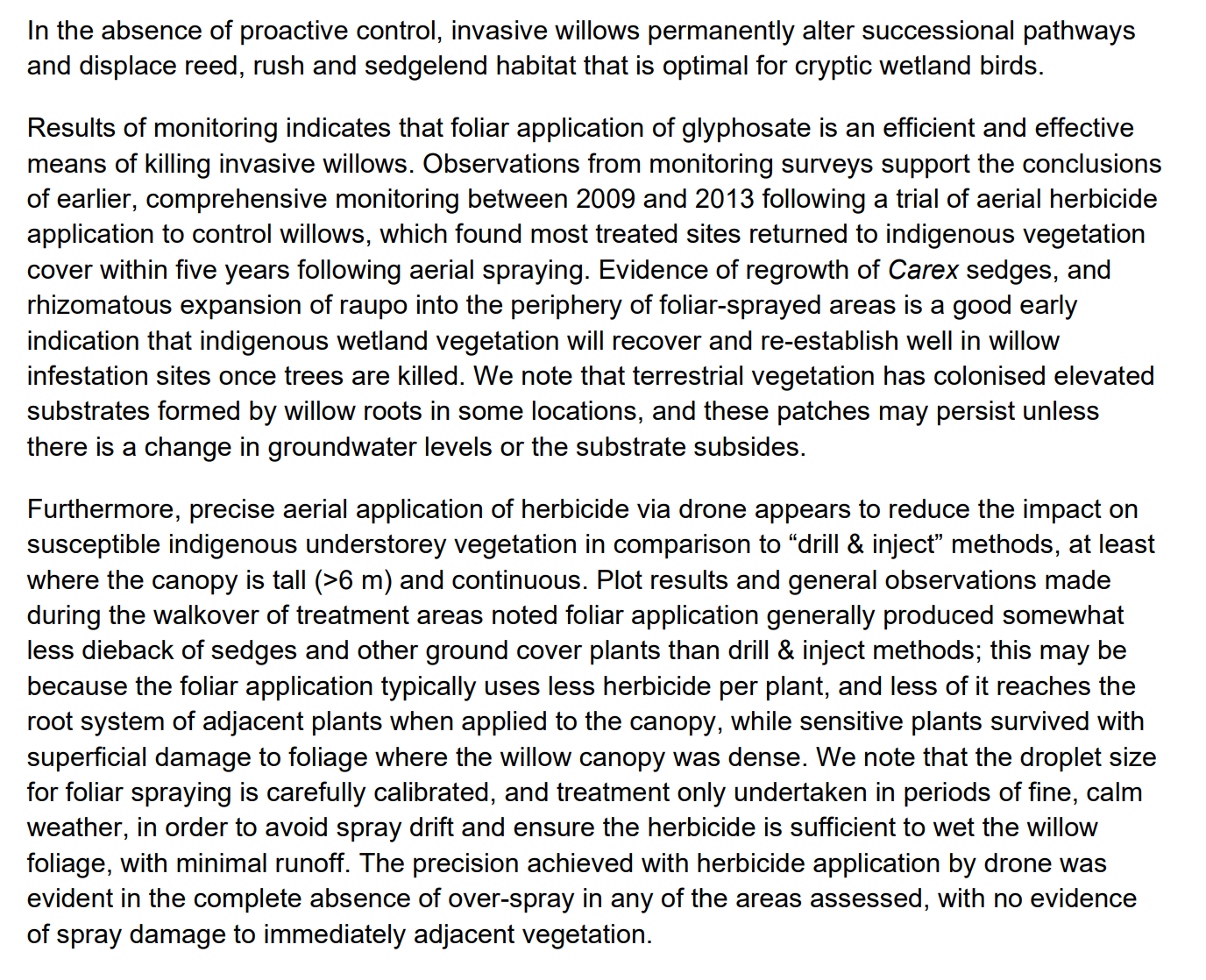
The Boffas Miskell 2026 report also states the dieback of undergrowth is larger in
manually treated (drill and inject) areas than treated by drone, see below.
Herbicide application by drone:
• uses significantly less herbicide than drill-and-inject
• is highly targeted and flown very low
• minimal spray drift compared to application by helicopter or plane
• is applied to the canopy with a sticking agent ensuring with minimal discharge in
water.
See Q2 on our webs
ite https://matukulink.org.nz/pest-plant-control/ and below for
comparison table.
14 | P a g e
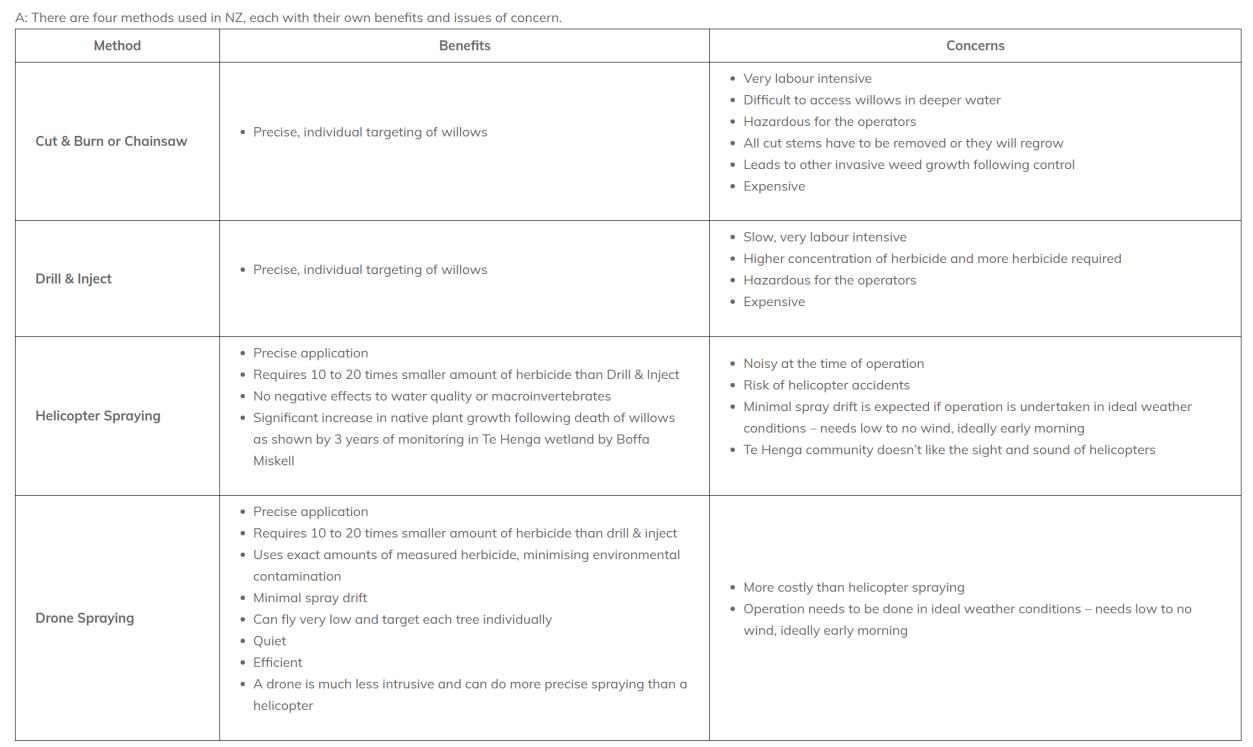
This method allows native wetland vegetation to recover with minimal disturbance, as
proven by comparison per Boffa Miskell Report 2025 p.14 – supplied to Auckland
Council a
nd downloadable from our website.
15 | P a g e
6. Herbicides and Additives Used
All agrichemicals were used in accordance with EPA controls, product labels, safety
data sheets, and NZS 8409:2004.
6.1.
Primary Herbicide
• Polaris 450 (Glyphosate)
- Approved for use over water
Product information:
https://www.adama.com/new-zealand/en/crop-protection/herbicides/polaris450
New Zealand Food Safety has advised that glyphosate does not pose a risk to humans
when applied in accordance with maximum residue levels. The application method
used complies with these requirements. Further glyphosate information is provided at
the bottom of the Matuku Link webpag
e https://matukulink.org.nz/pest-plant-control/
16 | P a g e
6.2.
Adjuvants and Additives
• Aquakynde (used instead of regular organosilicone, following Auckland Council
Biosecurity advice)
https://drive.google.com/file/d/1xCa1xoAo7YAq9iO1etHdXkHc70h05FBX/view
• AntiFoam 1410
https://agpro.co.nz/downloads/sds-agpro-anti-foam-1410-dzgn7.pdf
• Blue “FIL Done That” marker dye
https://www.fil.co.nz/file/done-that-safety-data-sheet/open
Packaging photographs were supplied to Auckland Council on request; operational
drums were triple-rinsed, decommissioned, and recycled as per manufacturer
instructions.
7. Aerial Operations (2025)
7.1.
Timing
Drone spraying was undertaken on the following dates and times:
-
16 January 2025 — 9:00–18:00
-
28 January 2025 — 10:00–16:00
-
30 January 2025 — 9:00–16:00
-
3 February 2025 — 10:00–14:00
-
10 February 2025 — 10:30–16:00
-
12 February 2025 — 8:30–13:30
-
14 February 2025 — 9:00–14:00
-
20 February 2025 — 8:30–12:30
-
25 February 2025 — 8:30–15:30
-
26 February 2025 — 8:30–10:30
Operations avoided willow flowering season to protect pollinators and was done within
operational criteria of low wind, no precipitation or predicted precipitation within 12
hours. Each work day had the required number of people as spotters, pilots etcetra – on
average six people per day.
The drone work done over (some very short) 10 days covered approx. 90% of willows.
The manual ‘drill and inject’ work took another 10 days with 5 or 6 people per day. Due
to the physical demands of this work (carrying 20 l backpack sprayers while scrambling
through willows, fully covered, in the heat – amongst huge nests of invasive wasps) and
mental strain (demotivated by the knowledge this work could have been done by drone
in a couple of hours), two employees of Phylogeny quit their job after these 10 days.
17 | P a g e
7.2.
Operational information
Spray plan for January–February 2025: see
Matuku Link Briefing Sheet.xls as
supplied to Auckland Council.
GPS flight paths, spray swaths, and daily records supplied to Auckland Council.
7.2.1.
Operator, Qualifications, and Equipment
• All aerial spraying was carried out by contracted company Phylogeny, )
www.phylogeny.co.nz owned by David Hall who has over 30 years’ experience in
horticulture and environmental management
• 15 years as owner-operator of Phylogeny Environmental Services
Qualifications include:
• Pilot’s Chemical Rating
• CAA Part 102 certification
• GrowSafe Certificate
• LUV 4x4 Off-Road Handling Certificate
Certificates have been provided to Auckland Council.
7.2.2.
Equipment
18 | P a g e
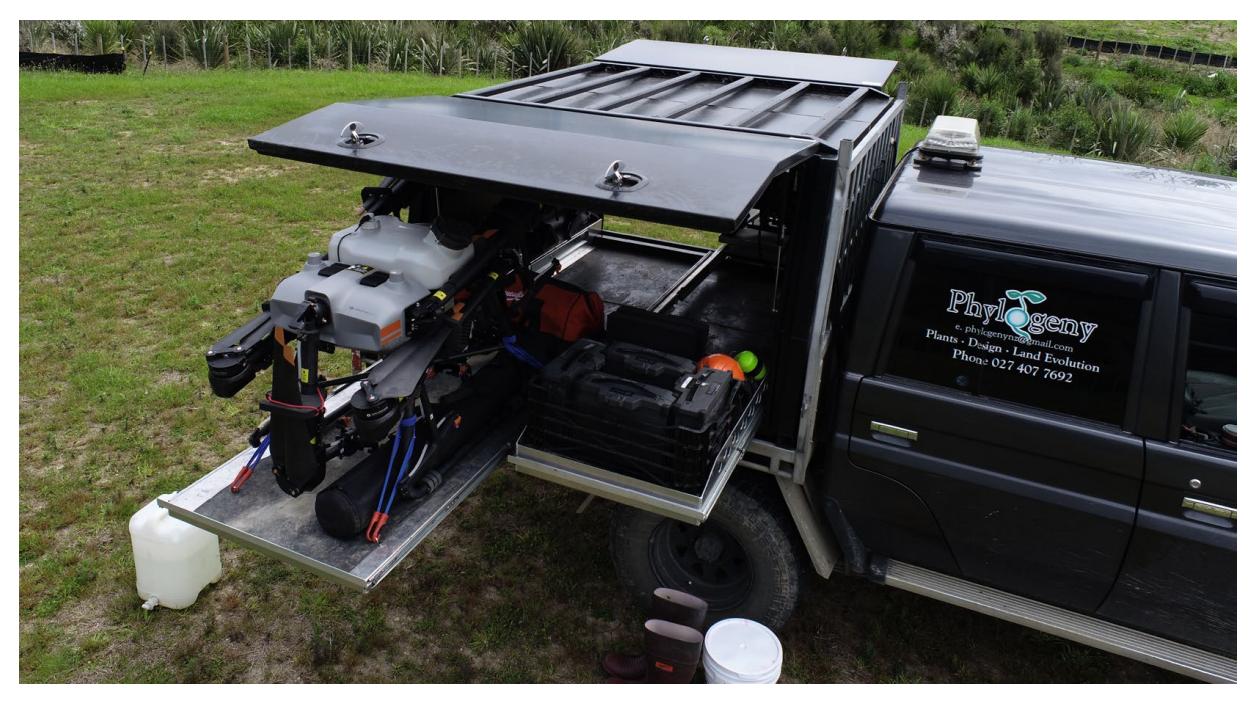
Drone: DJI Agras T30
Drone as inspected on vehicle by Auckland Council compliance officers.
Employed as herbicide spraying system to reach previously unreachable areas,
apply chemicals over difficult ground / terrain to lessen impacts of ground-based
services where areas might need to be shut down where pedestrians were in
location, applications to cropping, farm pasture etc.
To apply herbicide to wasteland, farmland and revegetation areas where planting is
or has occurred, to control weeds on roadways, storage areas, boundaries and
extraction areas.
Dry spreader, to utilise the drone as above with Fertiliser, Grass/ Crop Seed and also
specialised native revegetation seeding process developed by Phylogeny for slip
sites or unreachable land. Also, applications of dry herbicide in applicable areas.
Mavic Enterprise 3 RTK
To supply detailed mapping file to the T30 to execute spraying programme. To film/
photograph and measure stockpiles, plantings and weed infestations.
DRTK base station
Accurate ground measuring radar to provide “ground millimetre” accuracy to the RTK
platform.
Vehicles and Equipment
- Toyota Hilux twin cab Ute wellside tray, lockable aluminium canopy, Sign written.
- Toyota Landcruiser twin cab Ute with custom built secure lockable canopy. Sign
written. DC and AC power.
- Quickspray 400L twin remote 100m reels ground unit. Honda GSX 120 Motor
- Quickspray 300L single remote reel 100m, static 30m line. Honda GSX 100
Motor.
- Chemicals in Lock boxes.
- IBC x 1000L tanks on twin axle new trailers.
- 250 Litre mixing tank to pre-mix chemicals and bowser delivery for drone with
Honda W60 pump.
- Water in 20 Litre drums as required.
- Generator for charging batteries and equipment, DJI 9000 digital inverter.
- Calibrated measure jugs, Syringes for small volume accurate delivery.
- Spill Tray
- Spill Kit
- PPE, Overalls, Masks, Gloves, Glasses, Aprons, Splash Face shield
19 | P a g e
- First Aid kits x 3
- Fire Extinguishers x 4
- Signage for excluding area from entry.
- Flashing beacons, Vehicle flags.
- Anemometer handheld wind direction and speed
- Binoculars for site survey, checking boundaries.
- Laser rangefinder for measuring hazards, obstacles, boundaries etc.
- Laptop
- Samsung S21 for communications/ Data / Internet access.
- Tait TP3900 RT x 4 comms on site direct point to point private channels and
comms.
8. Sensitive Areas, Species and Mitigation Measures
Sensitive areas assessed included:
• Dwellings
• Potable water supplies
• Organic and spray-free gardens
• Non-target flora and fauna (including bees)
Mitigation actions included:
• No aerial spraying within 50 m of dwellings
• Manual treatment of willows near 135, 139, and 145 Bethells Road at landowner
request
• Temporary disconnection of roof water systems (139 and 145 Bethells Road)
• Private owner’s drinkwater/rainwater tank refilled with delivered water at 139
Bethells Road to compensate for missed rain water due to temporary
disconnection.
• No spraying during flowering season
• There is no water take recorded for agricultural use downstream from spray area.
• Water quality tests have been done before, during and after spraying.
Maps and details have been provided to Auckland Council.
Drone spraying done west of red line, manual drill and inject east of red line. Distance in
meters to sensitive areas.
20 | P a g e
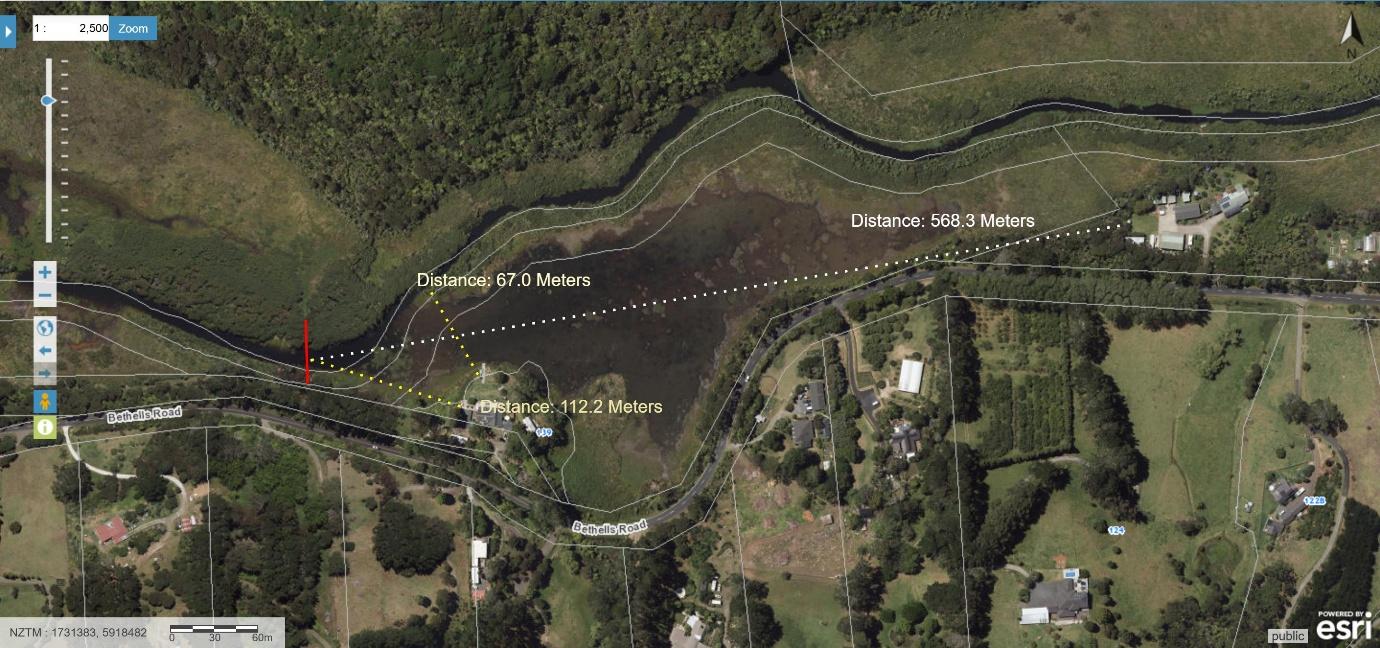
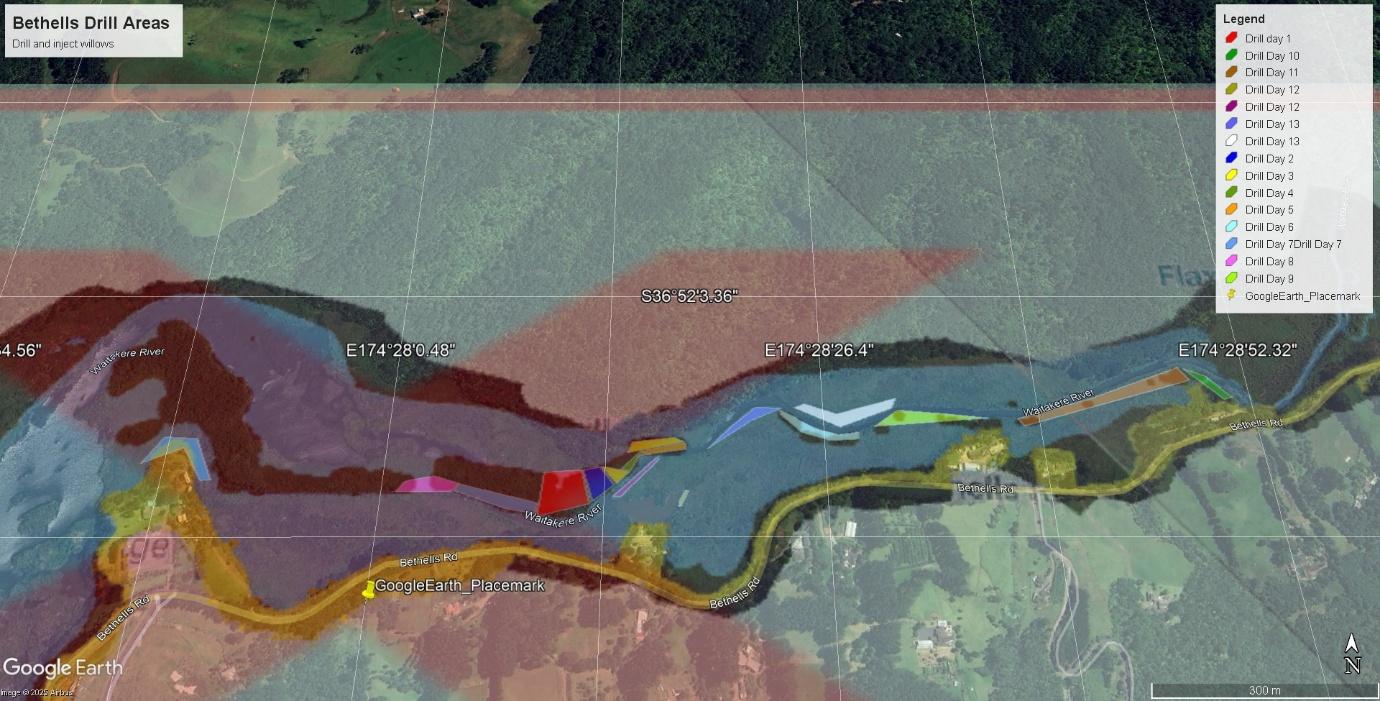
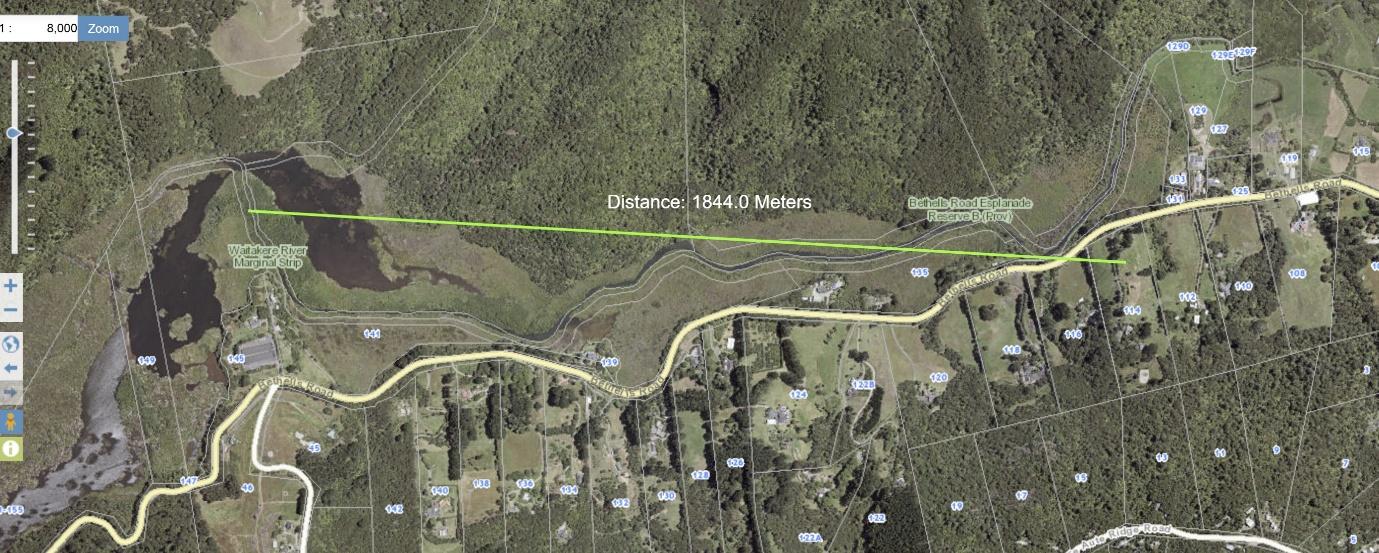
Drill and inject areas below
Distance to one of the concerned residents below.
21 | P a g e
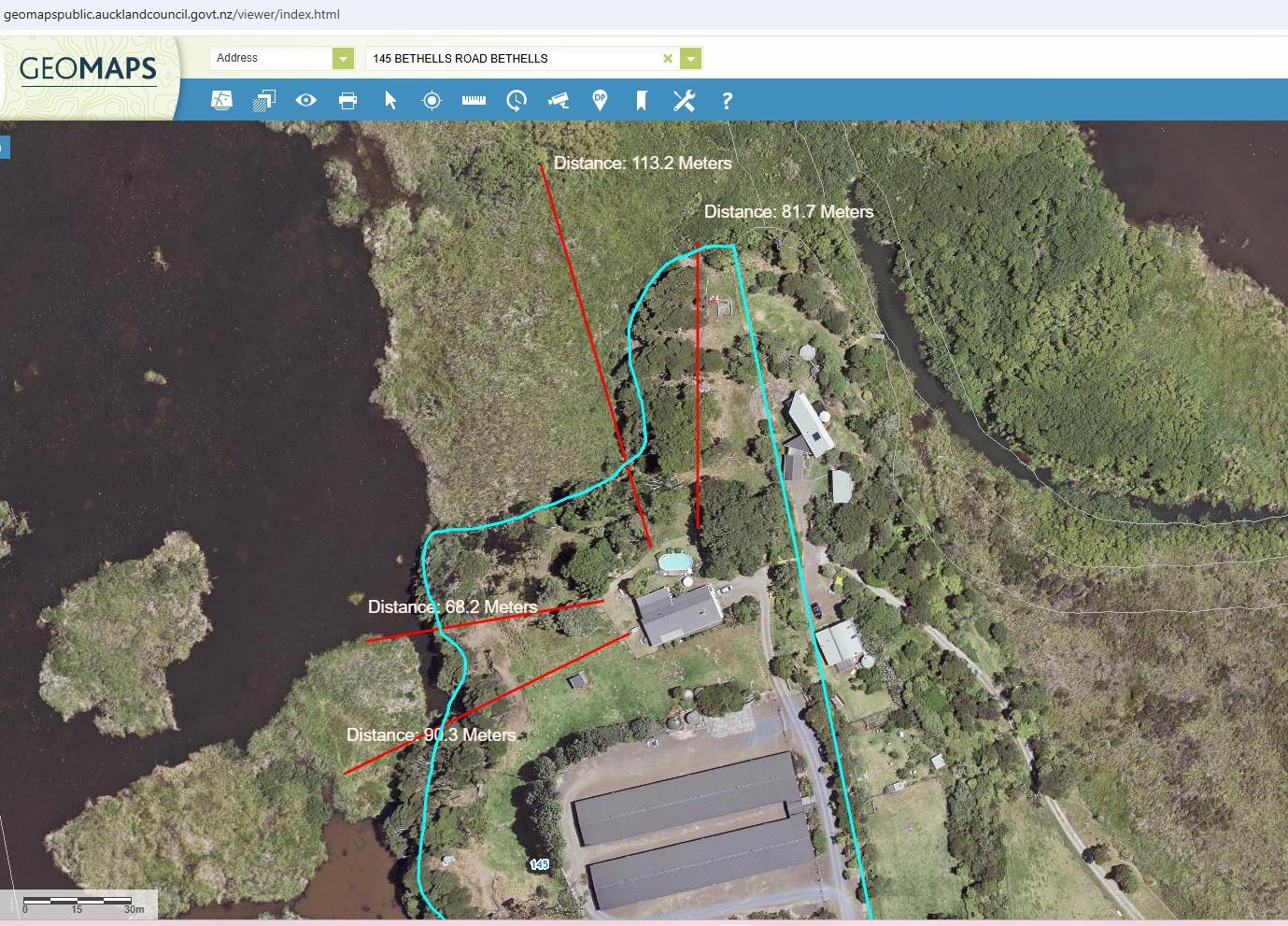
Distance to one of the other concerned residents below. Rainwater tanks were
disconnected from roofs, reconnected after spraying and after first rains.
Any disturbance of breeding birds will be less than minor as work is done outside of the
breeding area – statement by bittern expert P. Langland included in the attachment.
None of the monitoring done by Boffa Miskell (2011, 2012, 2013 after the 2009 aerial
helicopter spray) and 2026 after 2025 aerial drone spray) reported any adverse effects
to macroinvertebrates, fish or water quality. All repor
ts downloadable from our website.
Disturbance of threatened fish species will be less than minor or none, according to
statement by Dr Aileen Sweeney BSc PhD Ecology – as per statement attached, due to:
1. Location - spraying occurred upstream from inanga spawning site, and downstream
on any other whitebait species spawning sites.
2. Time of year - spraying occurred outside of whitebait spawning season (this happens
in Autumn) AND outside of whitebait returning to freshwater from the ocean (this
happens in Spring).
3. Dilution levels: the minimal amount of foliage spray will be highly diluted in the large
body of water as spawning site is downstream from the confluence of the Waitākere
River with Waitī Stream.
22 | P a g e
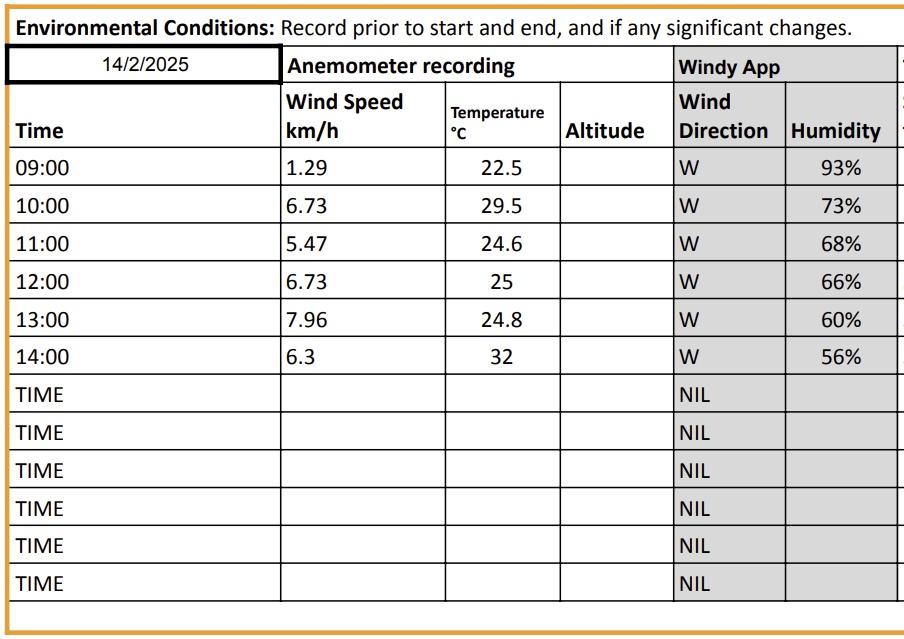
9. Spray Drift and Weather Controls
• Spraying occurred only when wind speed was low and direction was away from
sensitive areas
• Anemometer readings were recorded daily
• Spray quality was no smaller than “coarse”
• All drift mitigation complied with NZS 8409:2004
• Anemometer results were shared with all interested residents the next day.
• All complaints/concerns (when people living on a ridge felt the wind was higher
than allowed) were followed up with a visit at the spray site in the valley, by the
Matuku Link project manager to check wind speed on site. No violations of wind
speeds were seen.
Documentation is held in:
•
Matuku Link Briefing Sheet.xls
•
Q13 Safety Risk Assessment
•
Q14 Anemometer Daily Flight Sheets
Example of Anemometer record. All daily records supplied to Auckland Council.
23 | P a g e
10. Monitoring
10.1. Water Testing
Water testing was not required by Auckland Council but was undertaken following
community requests.
• Testing conducted by
AsureQuality
• Results shared publicly on th
e Matuku Link website and emailed to interested
residents
Sampling locations:
• 205 Bethells Road / 207 Bridge (upstream of the confluence)
• 139 Bethells Road
Pre-spray testing at 139 Bethells Road showed elevated E. coli, highlighting existing
water quality issues unrelated to spraying. None of the tests showed a measurable
amount of glyphosate or its derivatives.
24 | P a g e
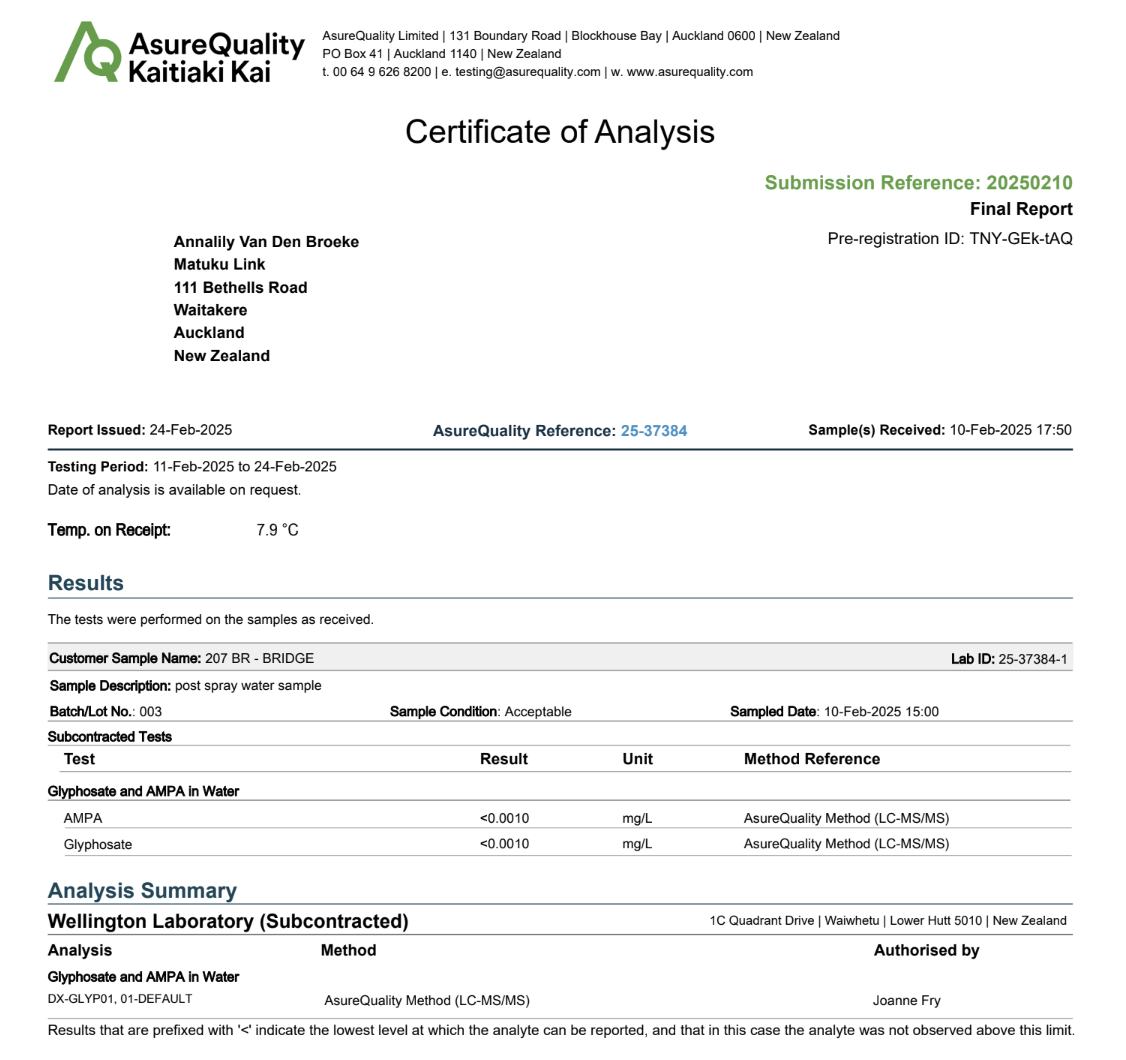
This is an expected outcome as the herbicide is sprayed on the foliage, not in the water.
10.2. Post spray monitoring by Boffa Miskell
Even though not required, Matuku Reserve Trust engaged Boffa Miskell to do a post
spray monitoring including a comparison between drone sprayed sites and manually
drill-and-inject sites.
Boffa Miskell was chosen as they had also done the post 2009 monitoring and were
aware of the site and the project.
• Treated crack willows are dying, standing and rot naturally. This reduces the risk
of fragments re-establishing downstream
• Native wetland vegetation is already recovering strongly – see Boffa Miskell
report
25 | P a g e
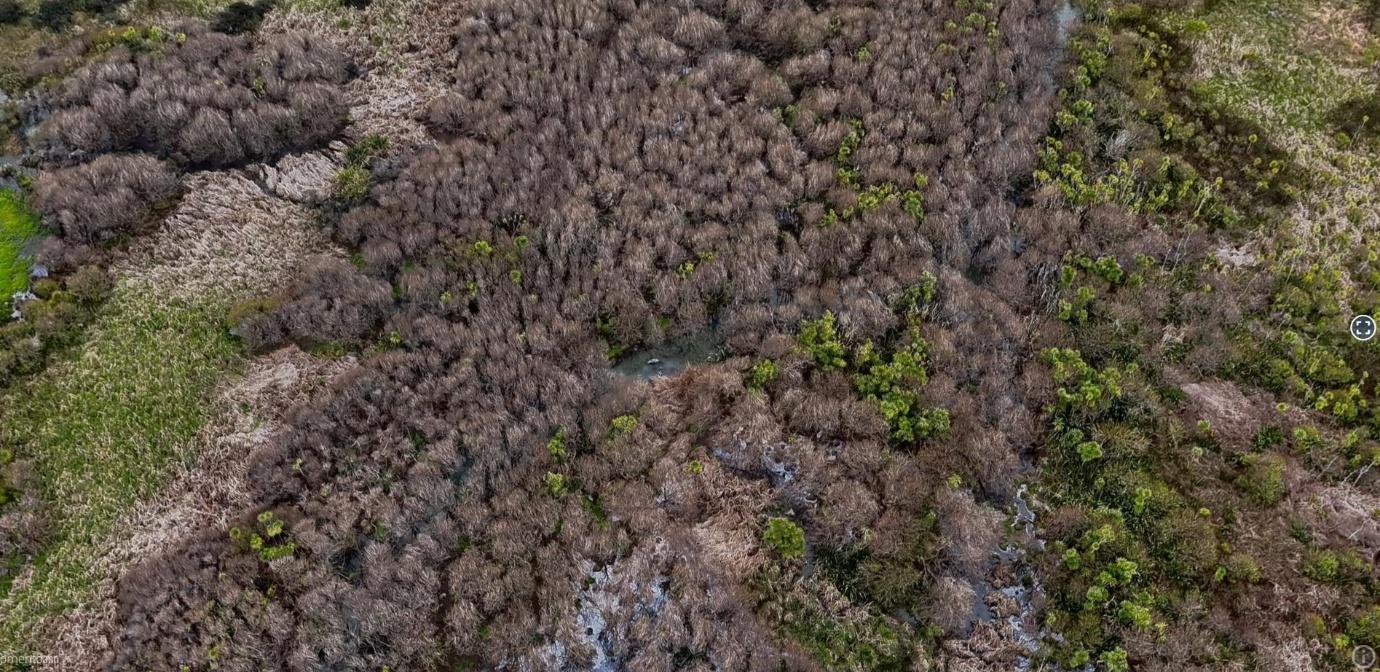
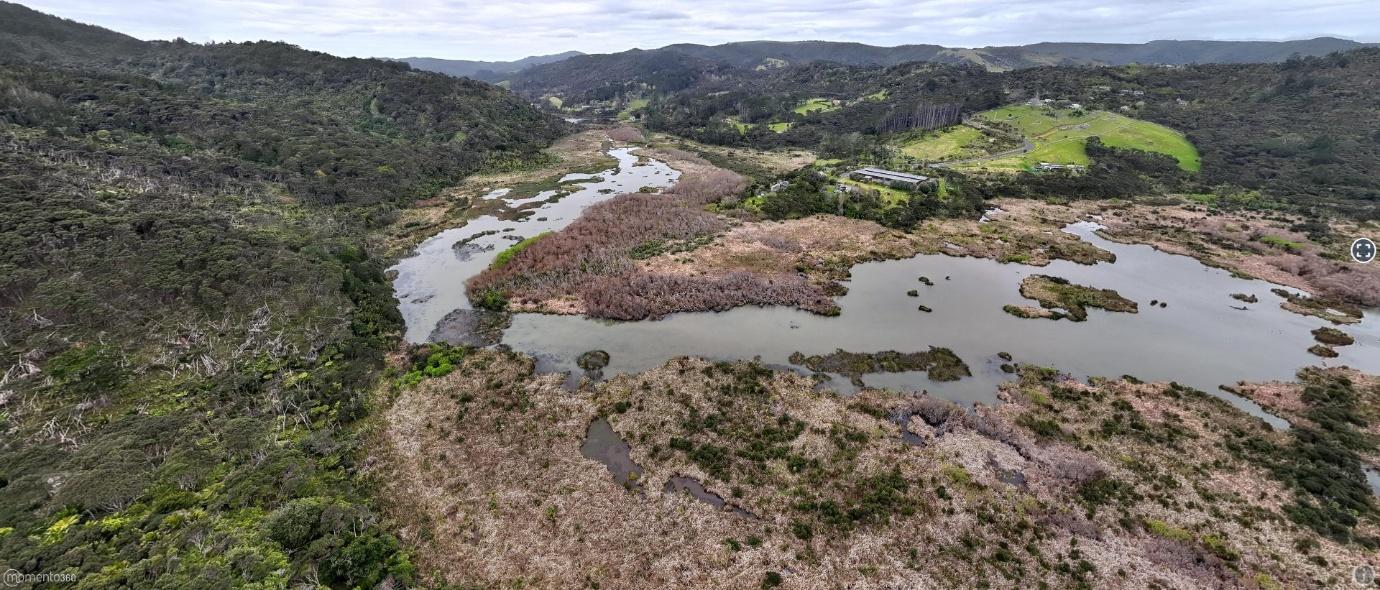
Monitoring will continue for up to two years post-treatment, with further mop-up if
required, as per recommendations in Boffa Miskell report.
10.3. On site inspection
Several Auckland Council staff visited Matuku Link – some to inspect the drone and
equipment used by Phylogeny, others to see the results of the spraying. Many follow up
questions were asked, frequently prompted by a complaint from one of the few
opposing locals. No issues were raised during these visits.
10.4. Drone survey
Hugo Geddes, Senior Bio Information Analyst & Chief Pilot (Prime Person) Auckland
Council — pilot licence CAA UAOC 97839 surveyed over most of the treated site. All
redgrey foliage is treated and dying willows.
26 | P a g e
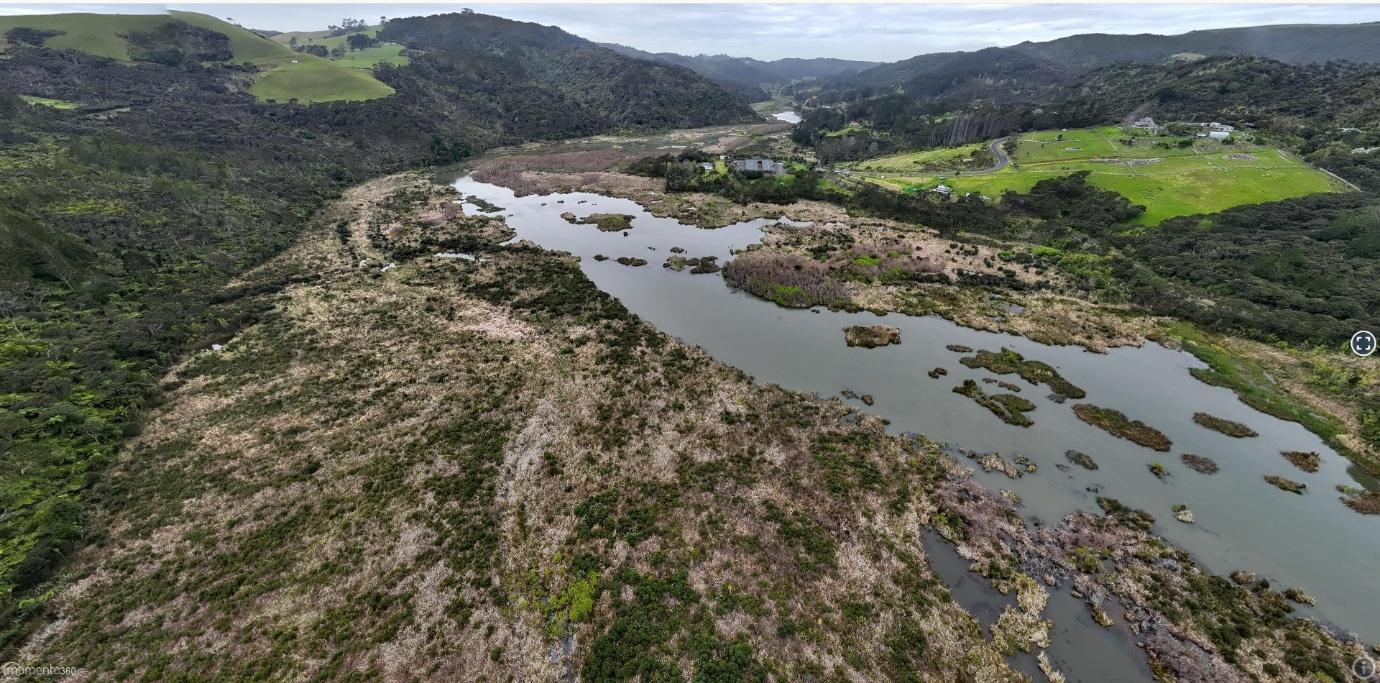
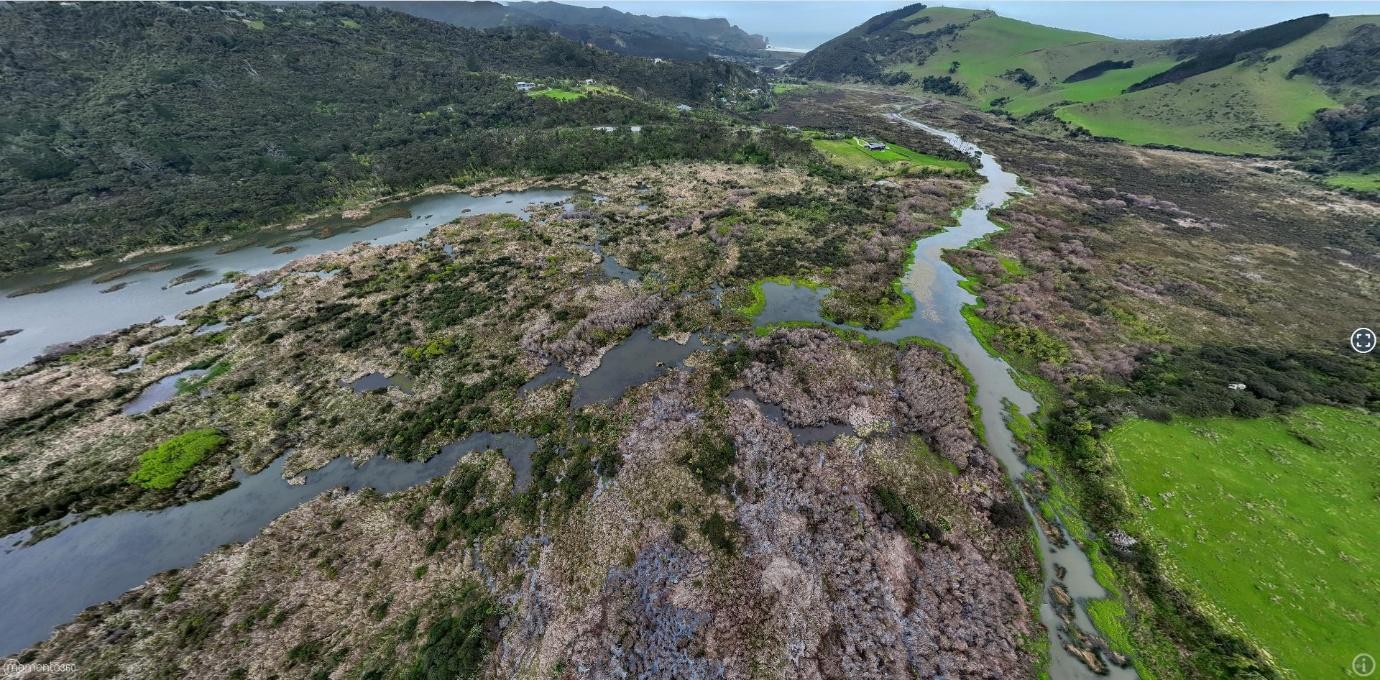
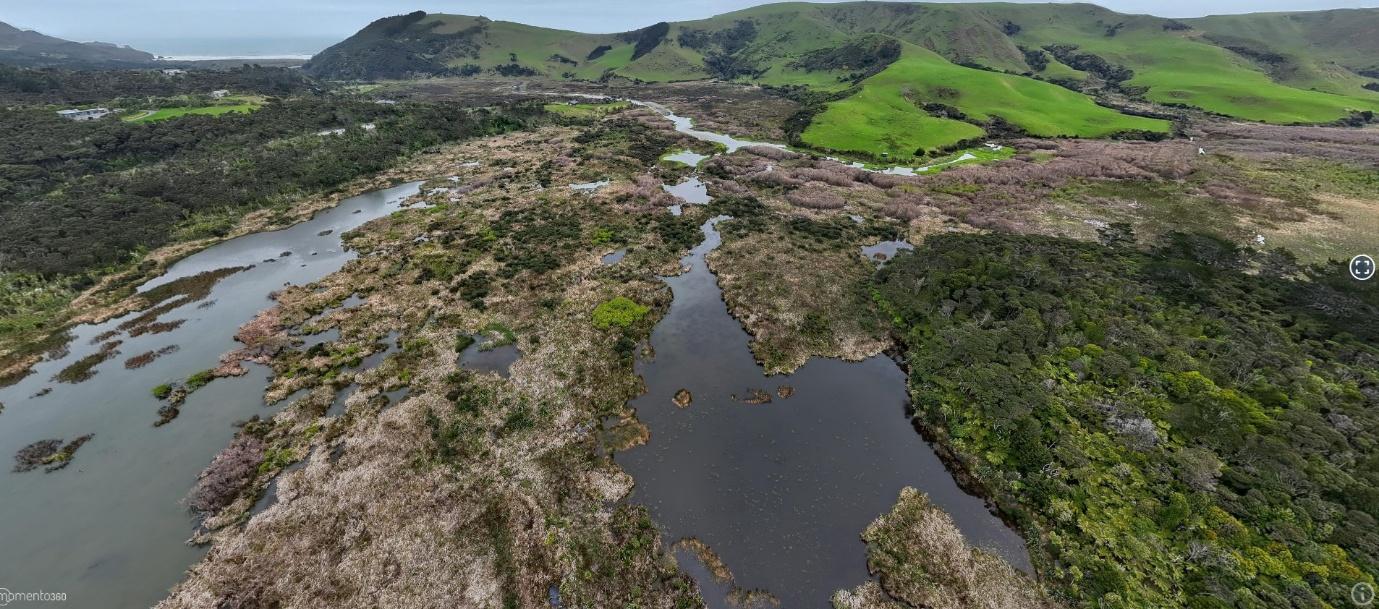 27 |
27 | P a g e
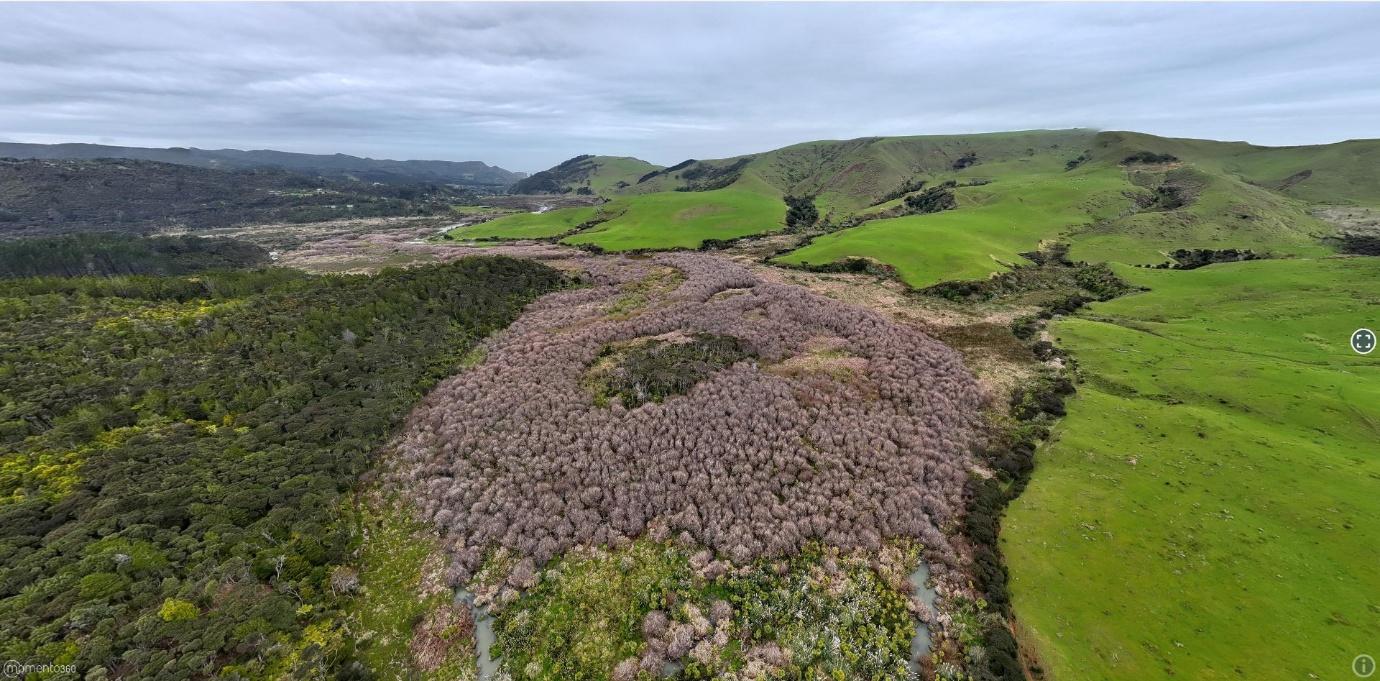
 28 |
28 | P a g e
11. Conclusion
Based on these Auckland Council drone surveys and subsequent drone surveys by
Phylogeny and monitoring report from Boffa Miskell it is evident:
- Overspray was nil or minimal
- the ti kouka - cabbage trees are vibrant green and thriving
- the remainder of the willows are in hard to reach places – a drone is still needed
and the most efficient and effective tool to do this
- eradication of willows is possible in the near future, enabling a major restoration
of Aucklands largest mainland wetland.
With perhaps 80% of the targeted invasive pest plant now killed with demonstrably no ill
effects to other indigenous fauna or flora, it is vital that the remaining willows be dealt to
this year and next if needed, so that the threat of re-invasion does not need to be
addressed by a future local community, conservationists, or council. In this way, the
habitat will be restored for rare indigenous fauna and flora and the risks of flooding
damage to local infrastructure will be reduced.
29 | P a g e
Appendix A - References
1. Waitākere Ranges Strategic Weed Management Plan June 2015, C Jack Craw
Principal, Koru Biosecurity Management, for Waitakere Ranges Local Board, p22
onward:
Waterways
The Waitākere Ranges streams are free of most significant freshwater aquatic pest
plants. This has been largely due to the pristine condition of the headwaters, and
sensible management by Auckland Council staff. However the weedy condition of the
Waitākere Stream is of considerable concern, with crack and grey willows, alligator
weed, Mexican water lily, parrot’s feather and other weeds causing considerable
ecological damage and posing high infrastructure and public safety risks in the Te
Henga wetland. Programmes to control these weeds have been opposed by a number of
residents concerned at pesticide use. The willow removal programme was
implemented over 20 years ago at the request of the local community, as a result of
flooding caused by willow logs blocking the stream. This flooding threatened both the
houses at the bottom of the estuary and the road. The clearing of willows from the main
channel has been successful in reducing this threat of flooding. There are also many
ecological benefits that will result if the willows are replaced by native vegetation. A fully
funded programme (initially $200,000 pa, falling to $40,000 pa) could achieve
eradication of willows, alligator weed and Mexican water lily within 10 years. All of the
pest plants of concern in the Te Henga wetland can be controlled and/or eradicated
without causing any negative water quality or ecological impacts. Unfortunately, budget
cuts at Auckland Council have meant that some programmes have recently been cut,
including part of the $90,000 pa aquatic weed programme at Te Henga. This pest plant
programme will need to be restored at some stage and may require external funding
assistance.
Recommendation 14 – Advocacy via the Long-term Plan process: It is recommended
that the Waitākere Ranges Local Board seeks to secure funding for completion of the Te
Henga aquatic weed programme.
2. Wetland restoration : a handbook for New Zealand freshwater systems / edited
by Monica Peters and Beverley Clarkson. - Lincoln, N.Z. : Manaaki Whenua Press,
2010. Chapter 9 Weeds, Kerry Bodmin – p 21 onward. Case study: CONTROLLING
CRACK WILLOW IN TE HENGA/BETHELLS WETLAND, ISBN: 978-0-478-34706-7
30 | P a g e
3.
Auckland Council Technical Report 2013/003 Changes in indigenous
ecosystems and the environment within the boundary of the Waitakere Ranges
Heritage Area Act 2008: 2008-2013 Report ISSN 2230-4525
Bishop, Craig D, Landers, Todd J and Goldwater, Nick P (2013). Auckland Council
technical report, TR2013/003 – p65 onward:
10.5.1 Auckland Council pest management
Introduced plants and animals can significantly threaten indigenous biodiversity and
the healthy functioning of ecosystems. The Auckland Council developed the Auckland
Regional Pest Management Strategy 2007-2012 (ARPMS) in accordance with the
Biosecurity Act 1993 which provides a strategic and statutory framework for managing
pest plants and animals. This document includes harmful pathogens such as kauri
dieback (Chapter 7). The ARPMS objectives include maintaining both extensive and
intensive biosecurity programmes on regional parks and buffer zones to address
pathways of pest incursions and to optimise the effectiveness of pest control
programmes. These objectives includes working with local boards, tangata whenua,
DOC, community groups, volunteers and private property owners to deliver effective
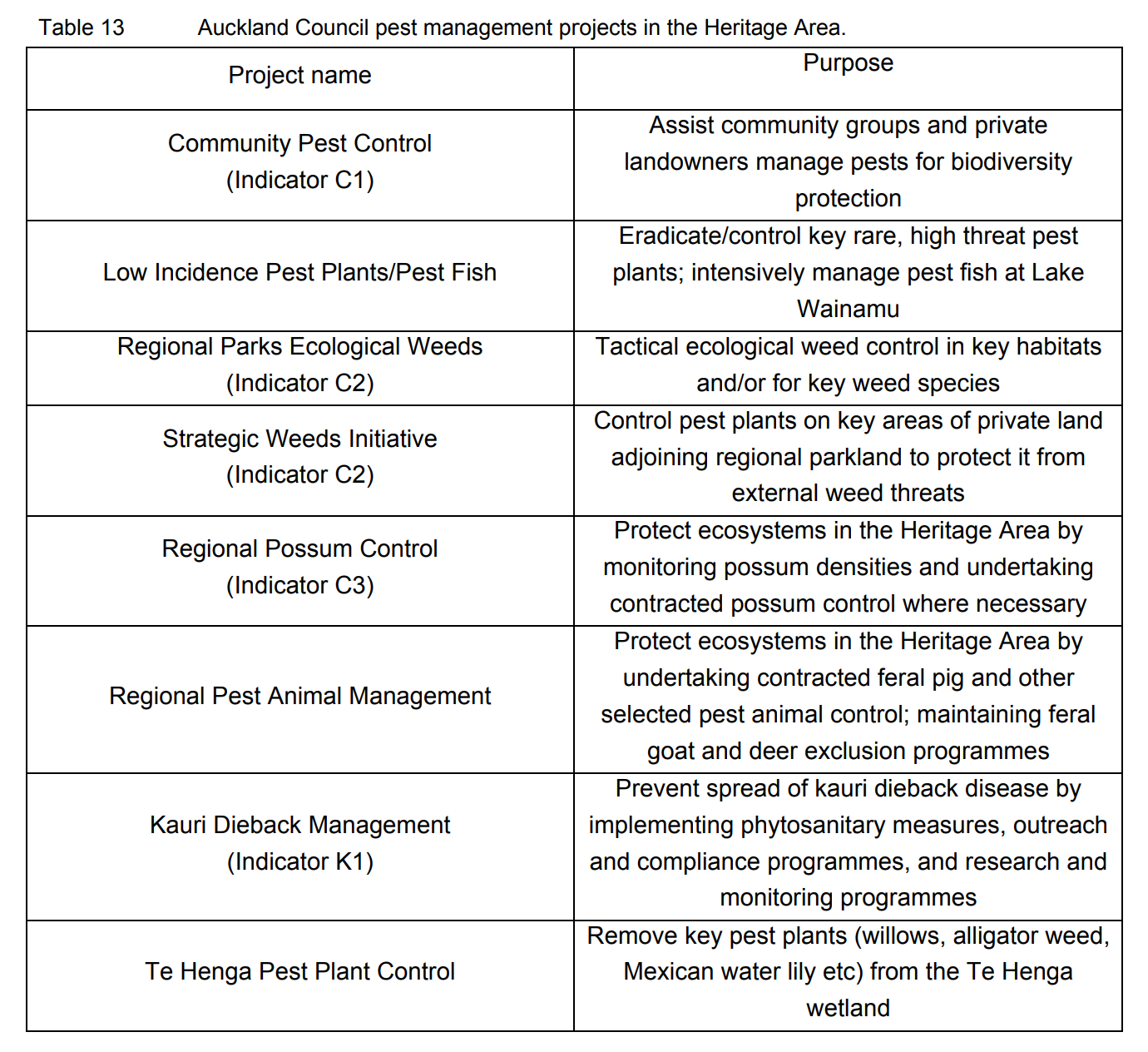
pest control programmes. At present there are eight primary pest management projects
run by the Auckland Council Biosecurity Team in the WRHA (Table 13). Each of these
projects run annually based on the Council’s financial year from 1 July to June 30th, with
specific budgeted monies and staff time coming primarily from the Biosecurity Team’s
annual budget. Several indicators are presented below in this and the following sections
dealing directly with some of the major pest projects. The other projects are highlighted
below as well.
31 | P a g e
Te Henga Pest Plant Control
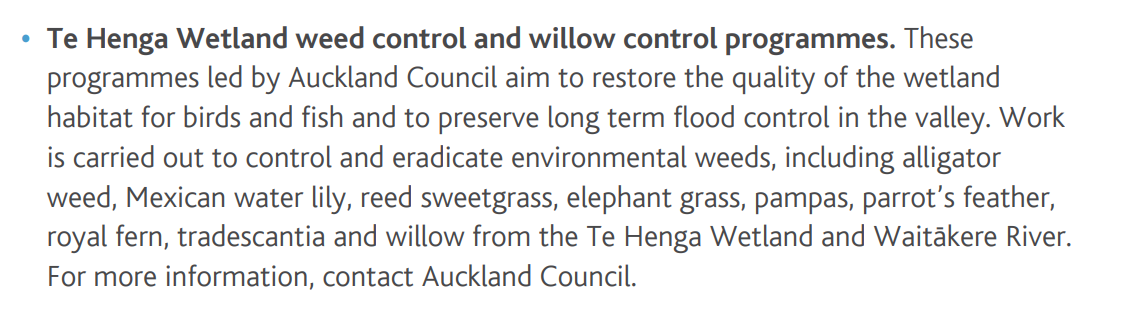
The former Waitakere City Council and now Auckland Council have been working to
control key pest plants in the Te Henga wetland area, specifically grey willow, crack
willow, Mexican water lily and alligator weed. The programme had its genesis in willow
control for flood protection but has | 66 expanded to include ecological protection. The
programme involves targeted pest plant control, working with the wider local
community to educate the value of the work, explain rules around notification of work
on private and public property, and address concerns about the use of herbicides. In
addition to achieving control of key pest plants at Te Henga, this project has also raised
the profile of the wetland through the community interactions and pest work.
10.8.7 Indicator W6: Average native: exotic weed plant frequency in monitored wetlands
Summary
32 | P a g e
The exotic component of wetlands is a key component of wetland health, and indicators
W3, W4 and W5 include all exotic plants in the exotic species group, irrespective of how
weedy they are. Indicator W6 recognizes that some exotic plants have a much greater
effect on indigenous wetland ecosystems than others. Populations of many different
exotic herbs and grasses often take up space within a wetland that could be occupied
by native herbs, grasses, and rushes. However, not all these exotic species are
aggressively weedy. That is, they do not grow into large woody plants that are likely to
grow quickly and/or suppress native plant species in lower tiers, or they do not form
dense swards that spread and actively displace native wetland plants form the system.
In contrast, the invasion of important wetland weeds species such as crack willow, grey
willow, pampas, Mercer grass or reed sweet grass can have a much greater impact on
the indigenous component of wetlands. These species are capable of completely
altering the vegetation structure (e.g. in the case of willow turning a rushland into a
forest) and/or displacing native plants by smothering and out-competing them. The
definition of a ‘weed’ for the purposes of this indicator was any exotic plant species that
is a known ecological weed species of wetland ecosystems. The data used for this
indicator is from recently established plots and only baseline measures are available for
this report. This baseline will be used to monitor future change. However, it is clear from
comparing the averages for this indicator from different types of wetlands across the
Auckland Region (Figure 18) that wetlands in the Heritage Area have a relatively low
frequency of exotic wetland weed species.
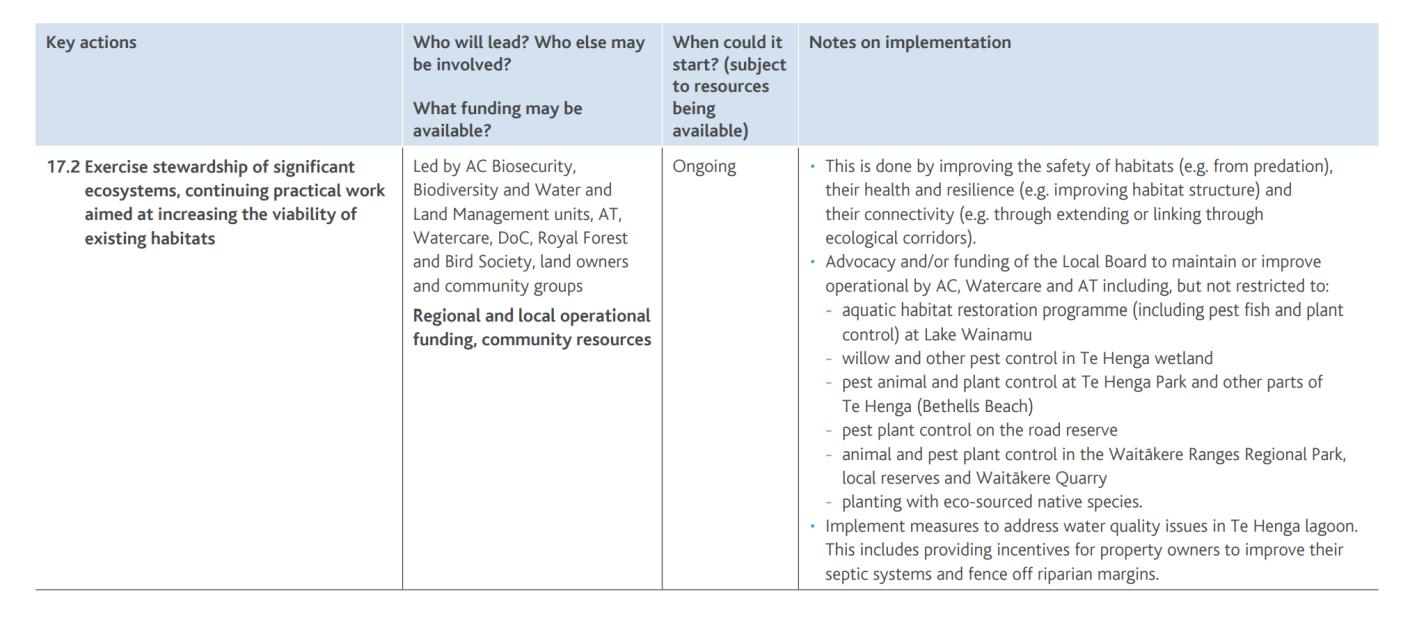
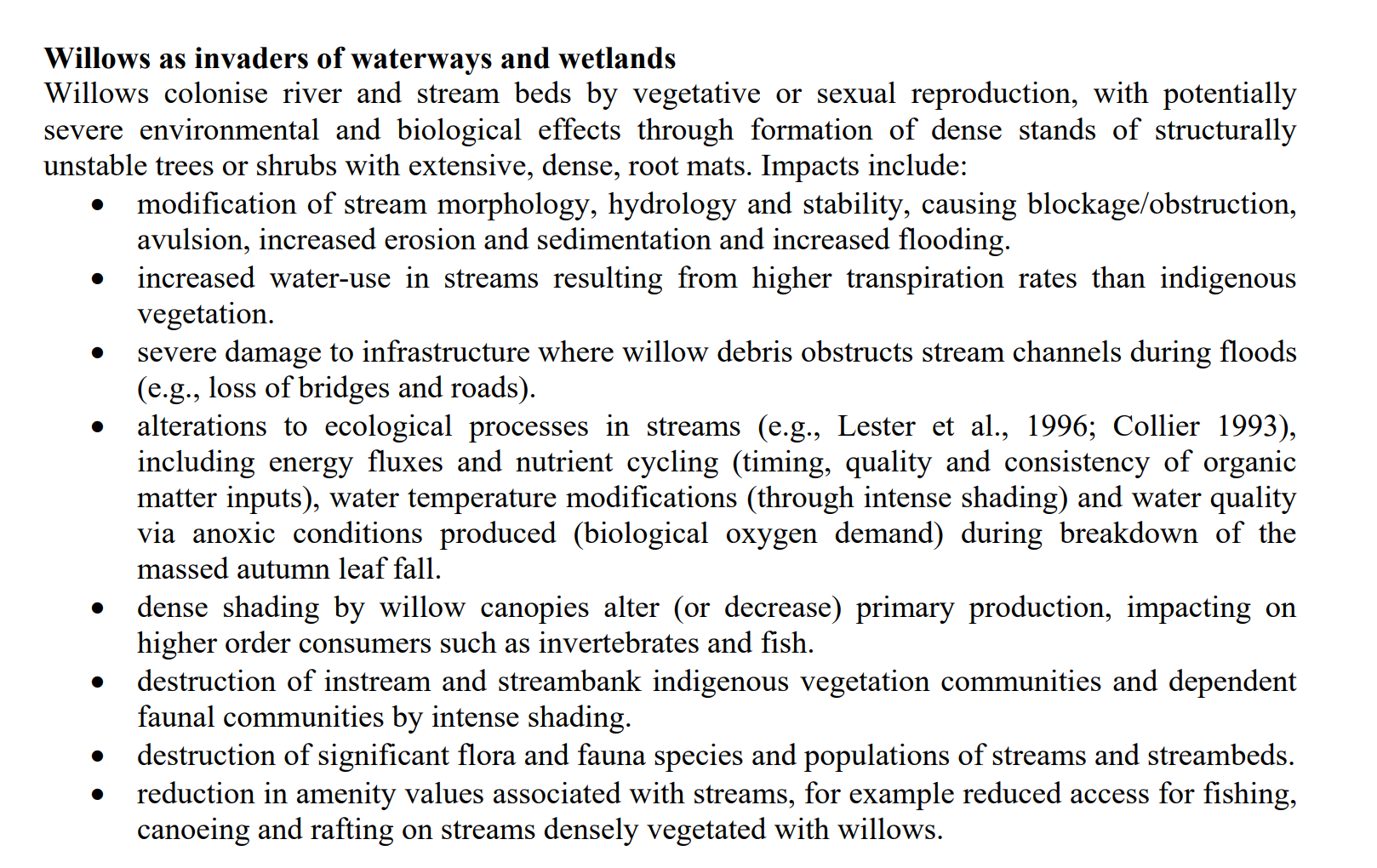
4. Local Area Plan Te henga (Bethells Beach) and the Waitakere River Valley (2015)
p.47 and Key Action 17.2:
33 | P a g e
5.
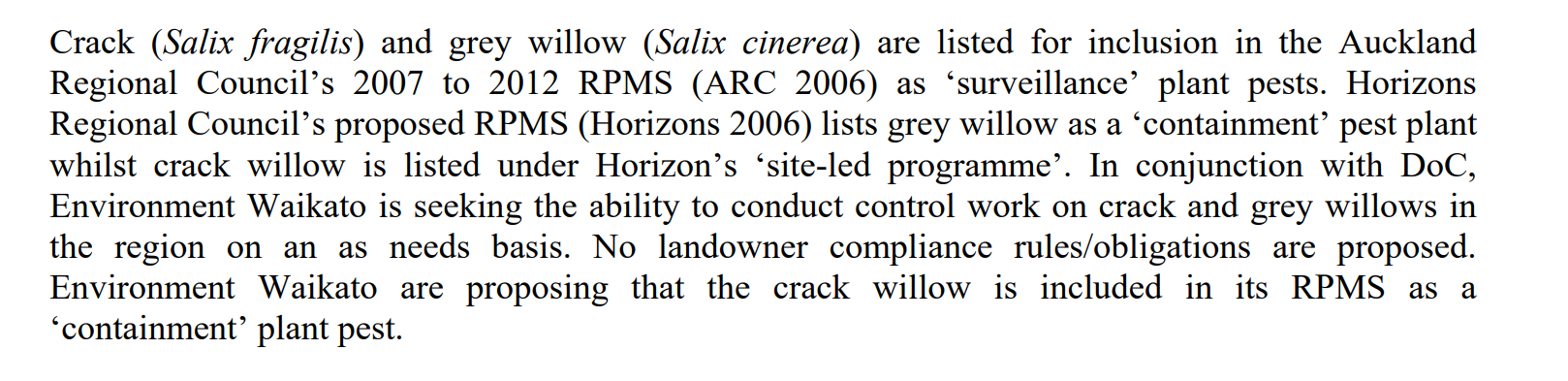
Landcare ICM Report No. 2008-2009/01, Motueka Integrated Catchment
Management Programme Report Series: Use of willows in stream bank control
in New Zealand: a survey of regional councils, December 2008,
https://icm.landcareresearch.co.nz/knowledgebase/publications/public/willows_su
rvey_report_2008.pdf
Page10 onward:
34 | P a g e
 6. Other national reports on willows in wetlands and/or willow control projects
1. Amaravathi, K K (2010) The role of crack willow in the wetland water balance,
Moutere region, New Zealan
d https://ir.canterbury.ac.nz/items/da530602-4d0d-
4fc9-8eab-0e6d9567af7a
2. CSIROS (2007) Removing willows can generate big water savings
https://gwydirshire.com/wpcontent/uploads/2014/05/benefits%20of%20willow
%20removal.pdf
3. NZ Landcare Trust (2015) Best Practice Guidelines for Willow and Alder Control
for Riparian Restoration for the Waikato Riv
er https://landcare.org.nz/wp-
content/uploads/2022/09/WillowAlder-Guidelines-2015.pdf
4. Otago Regional Council - Guidance on willow control
https://www.orc.govt.nz/environment/land-care/landuse-in-otago/willow-
management-in-otago/guidance-on-willow-control
35 | P a g e
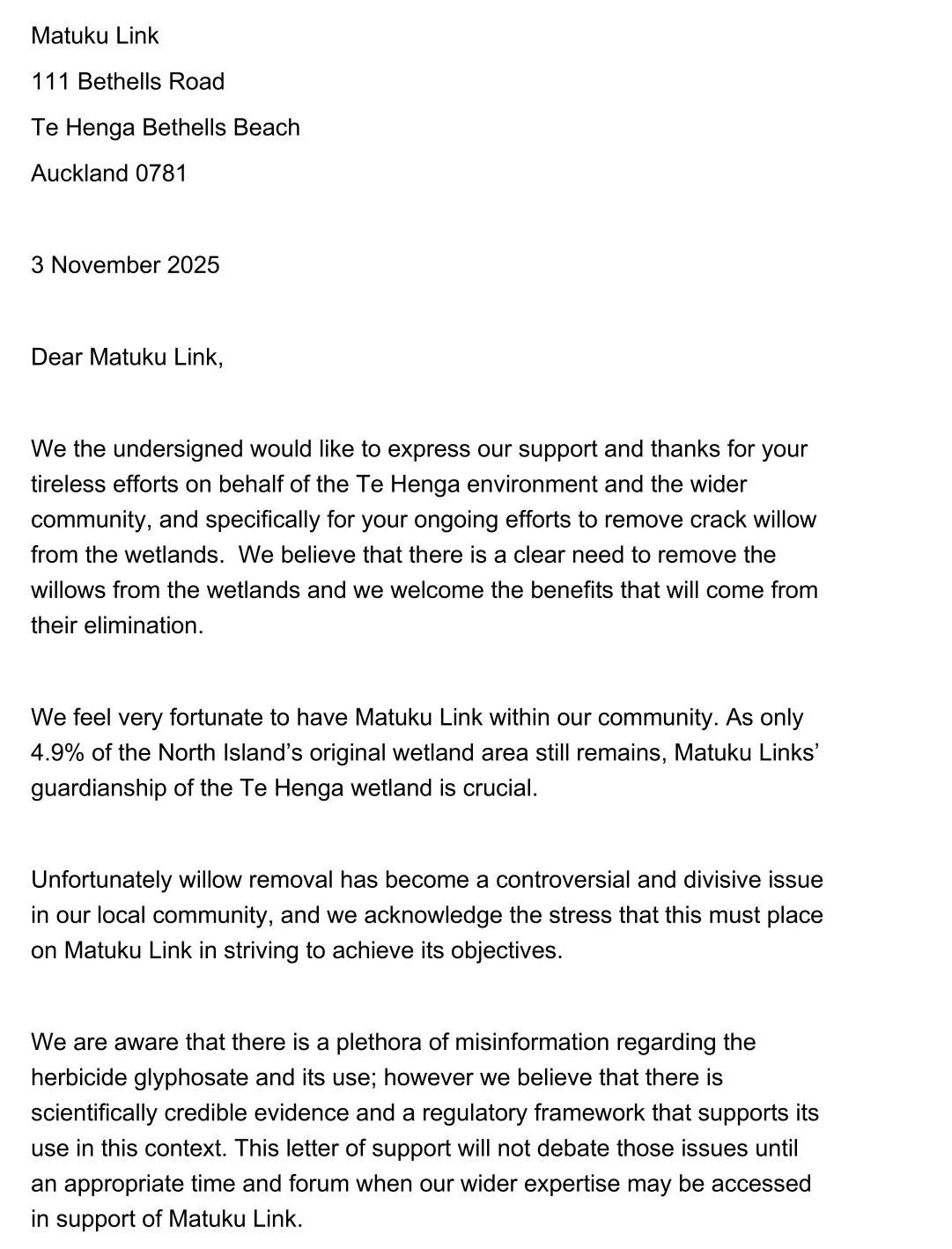
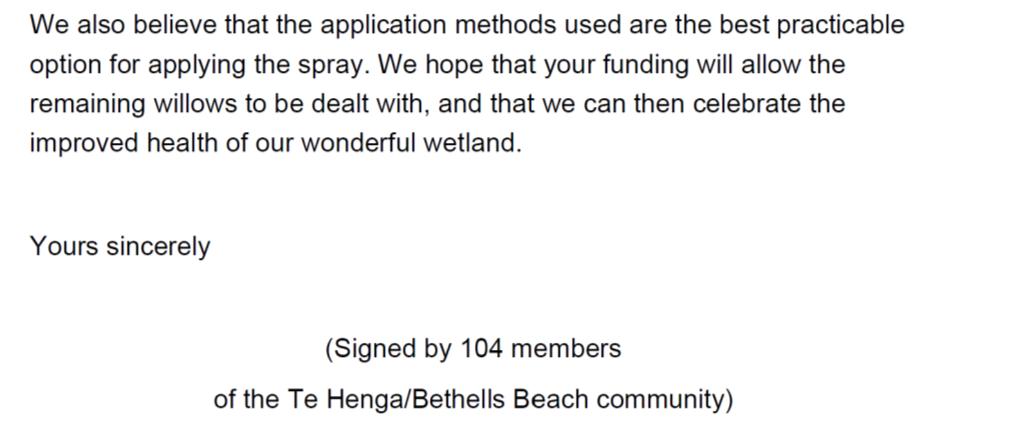 7. Letter of support from 104 Te Henga residents
36 |
7. Letter of support from 104 Te Henga residents
36 | P a g e
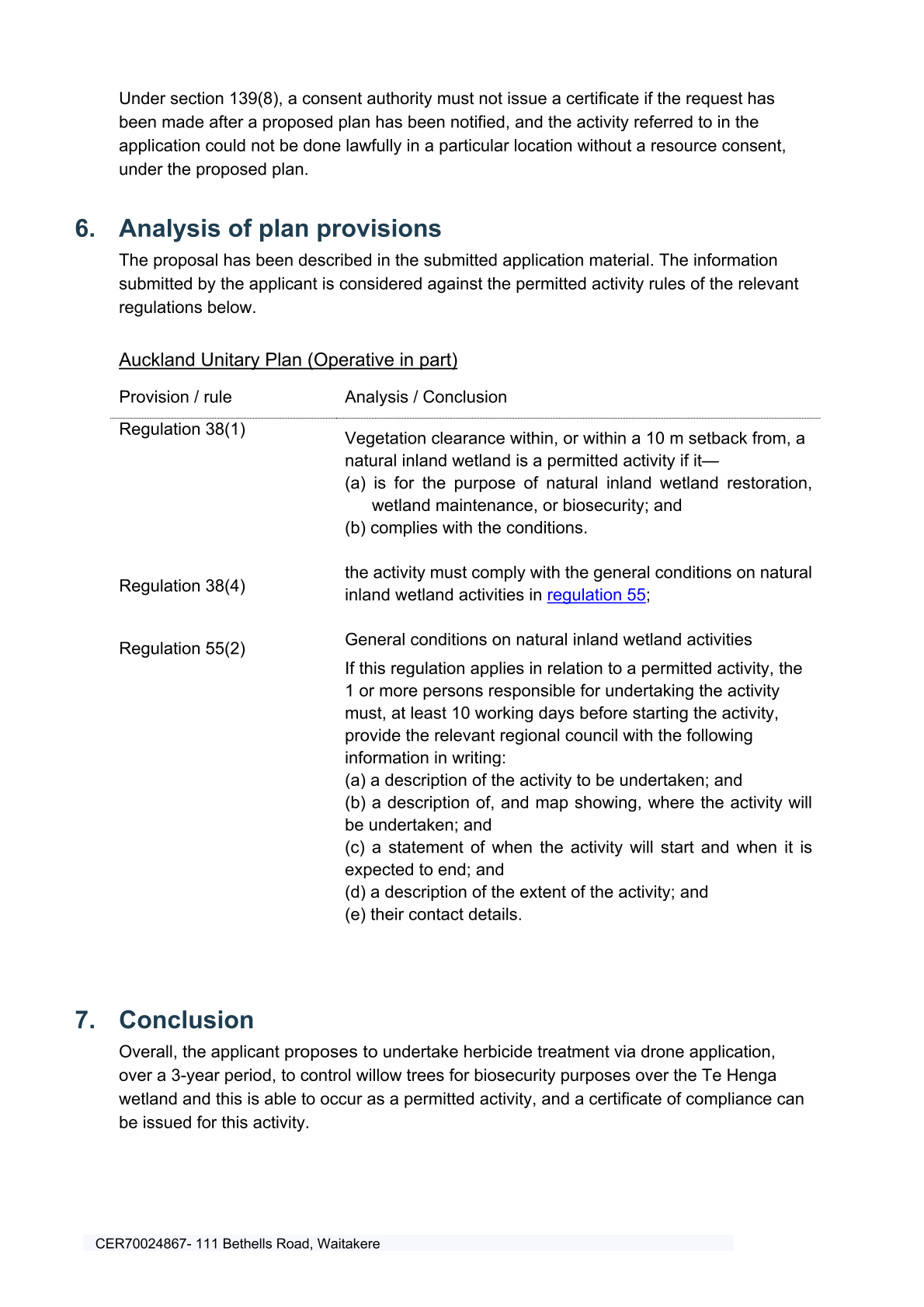
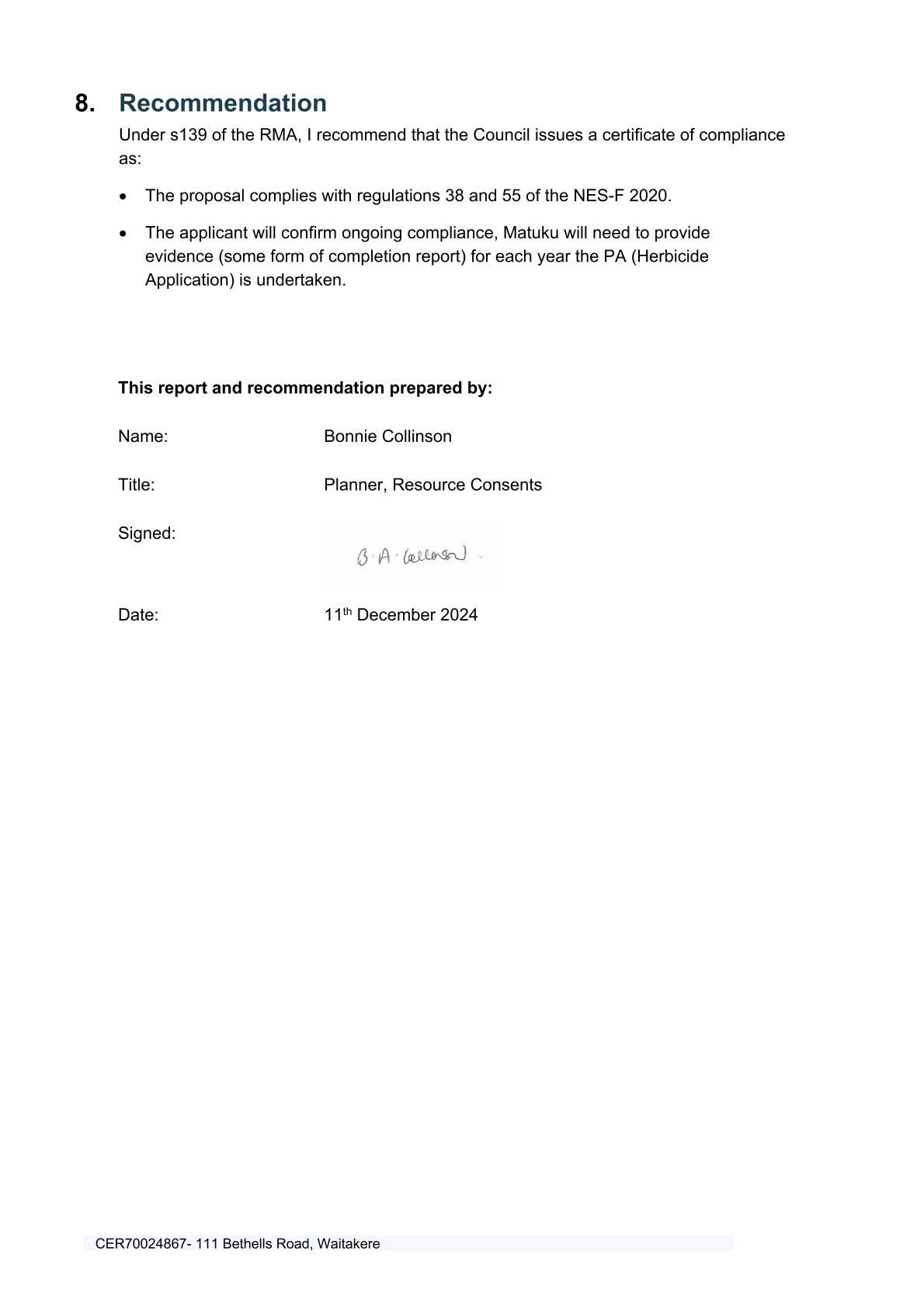
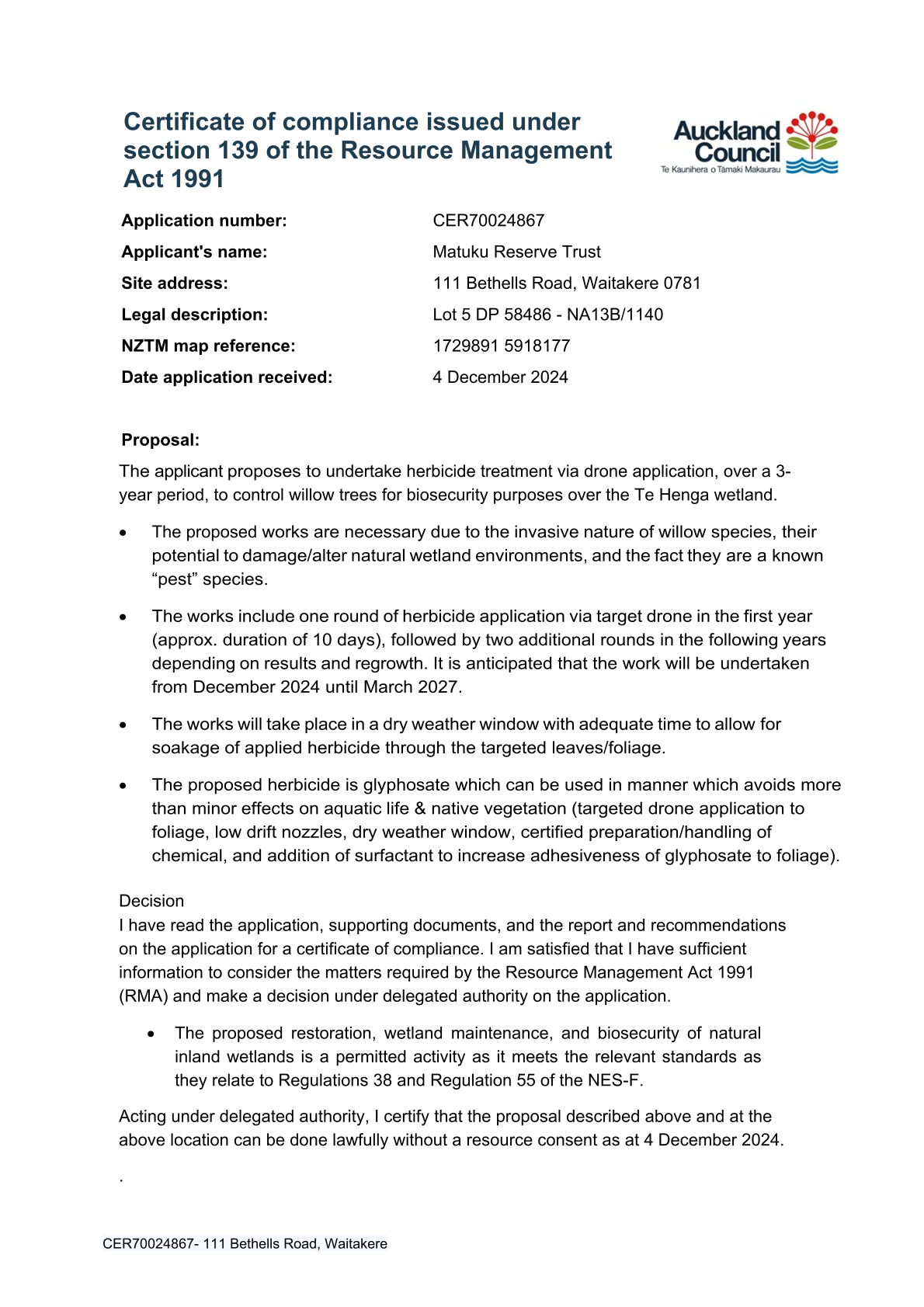
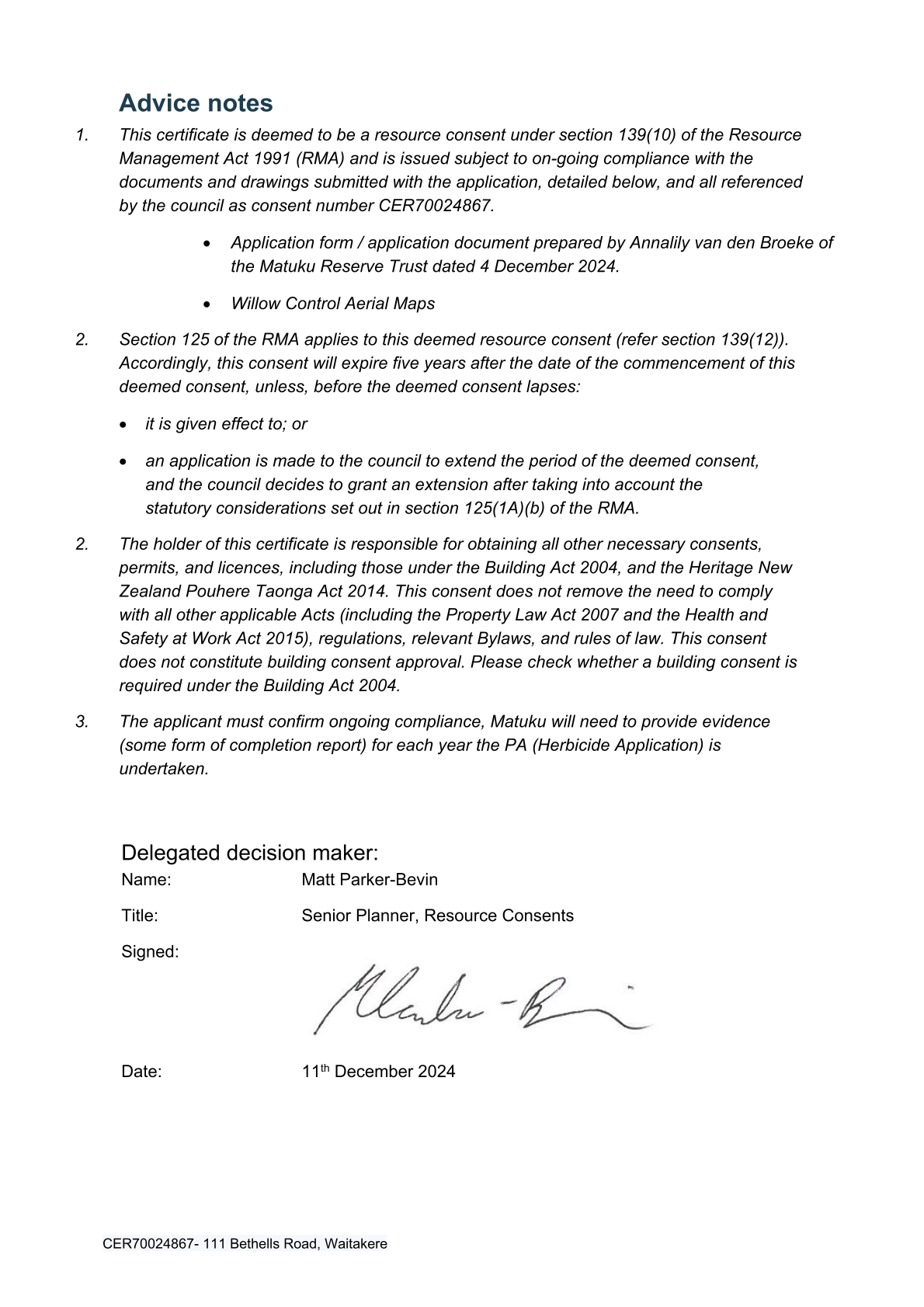
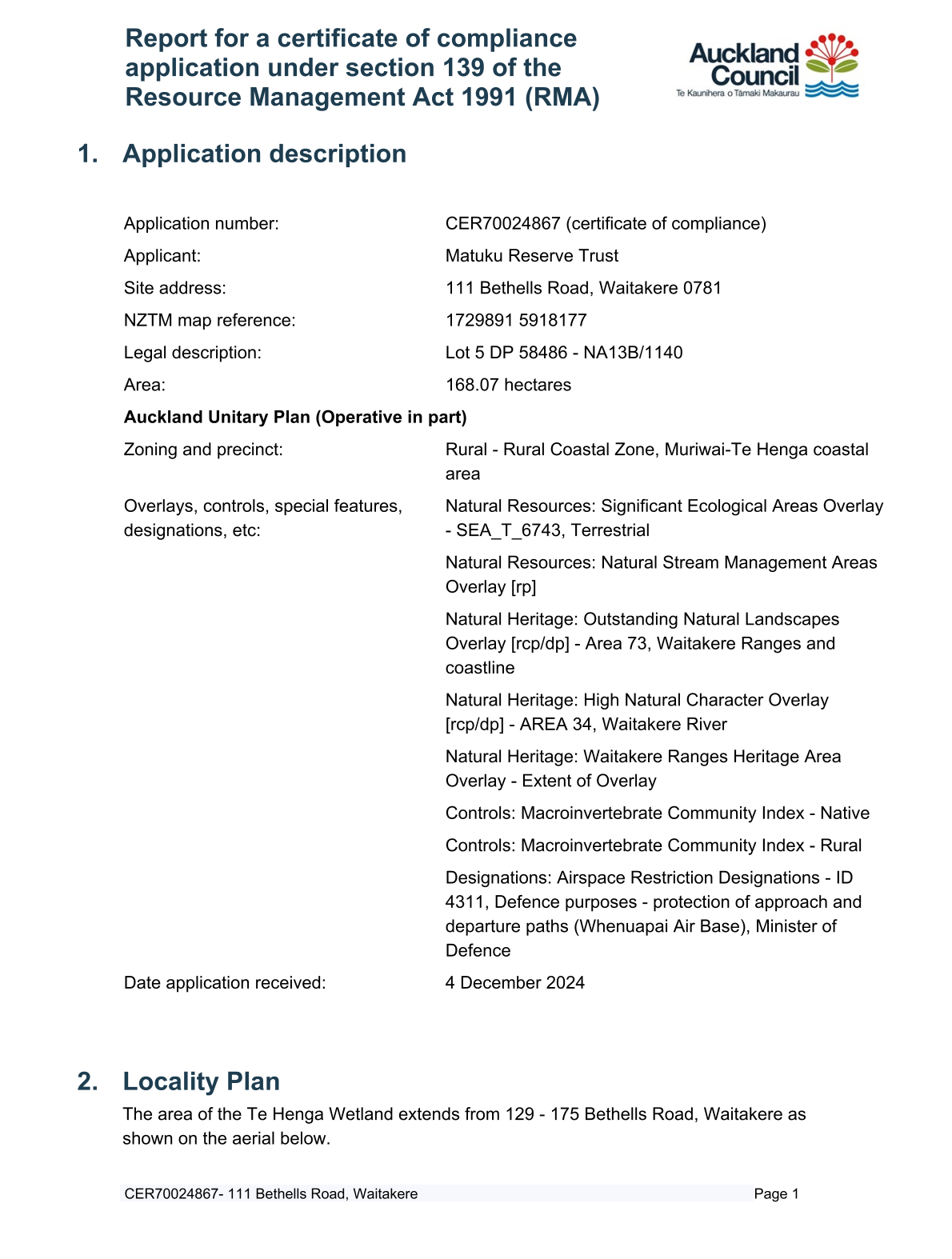 8. Report of Certificate of Compliance
37 |
8. Report of Certificate of Compliance
37 | P a g e
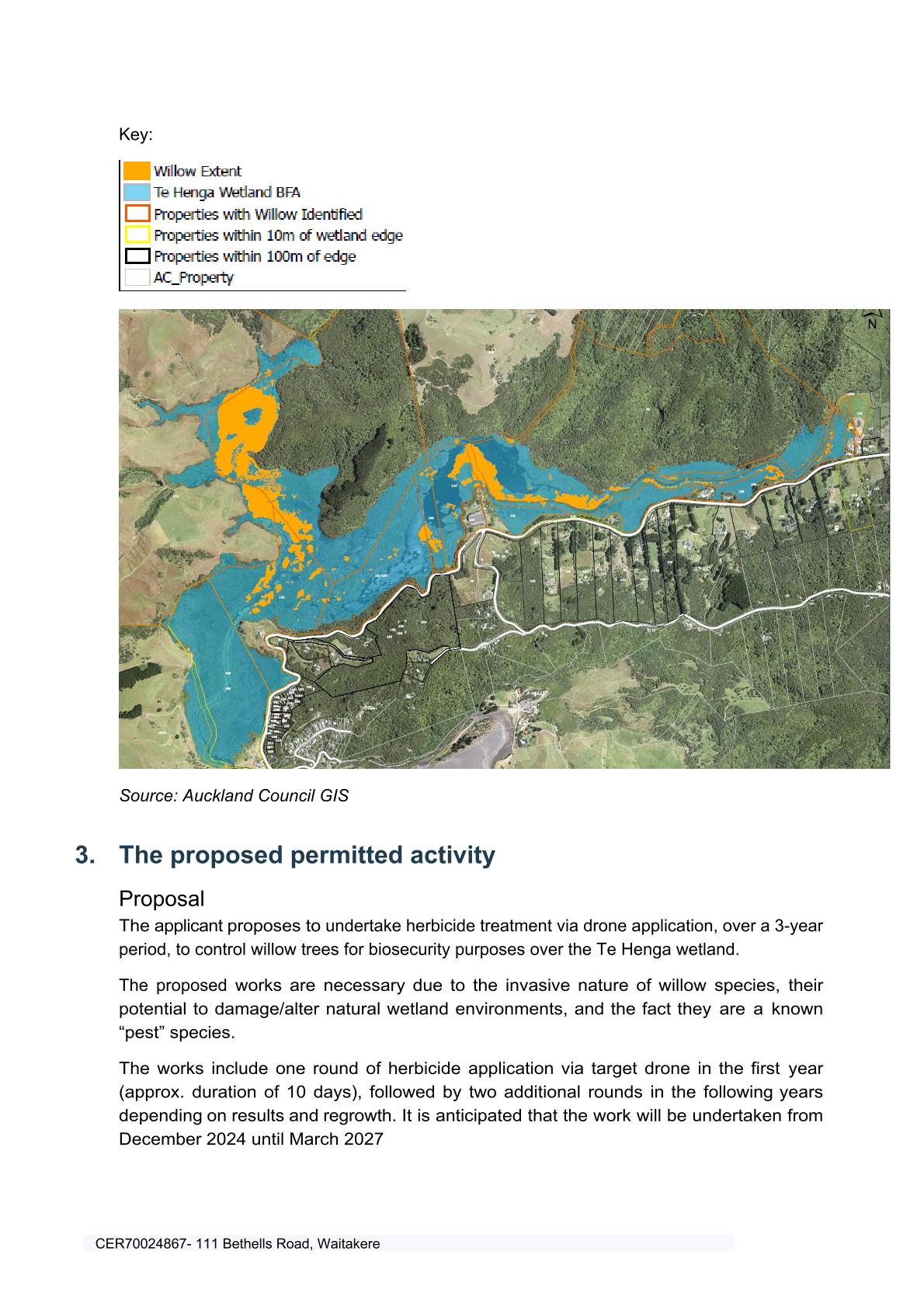 38 |
38 | P a g e
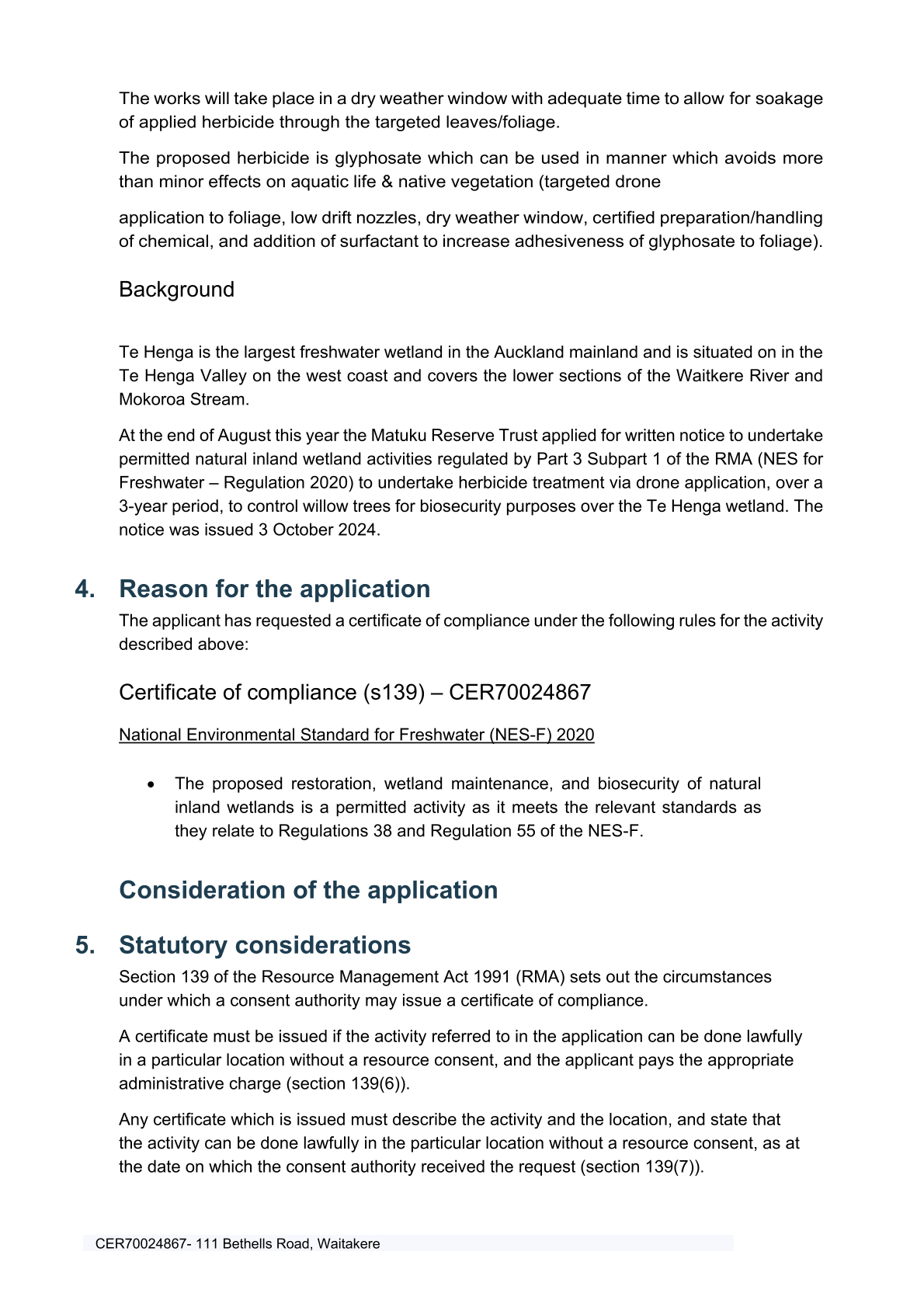 39 |
39 | P a g e
 40 |
40 | P a g e
 41 |
41 | P a g e
 42 |
42 | P a g e
 43 |
43 | P a g e
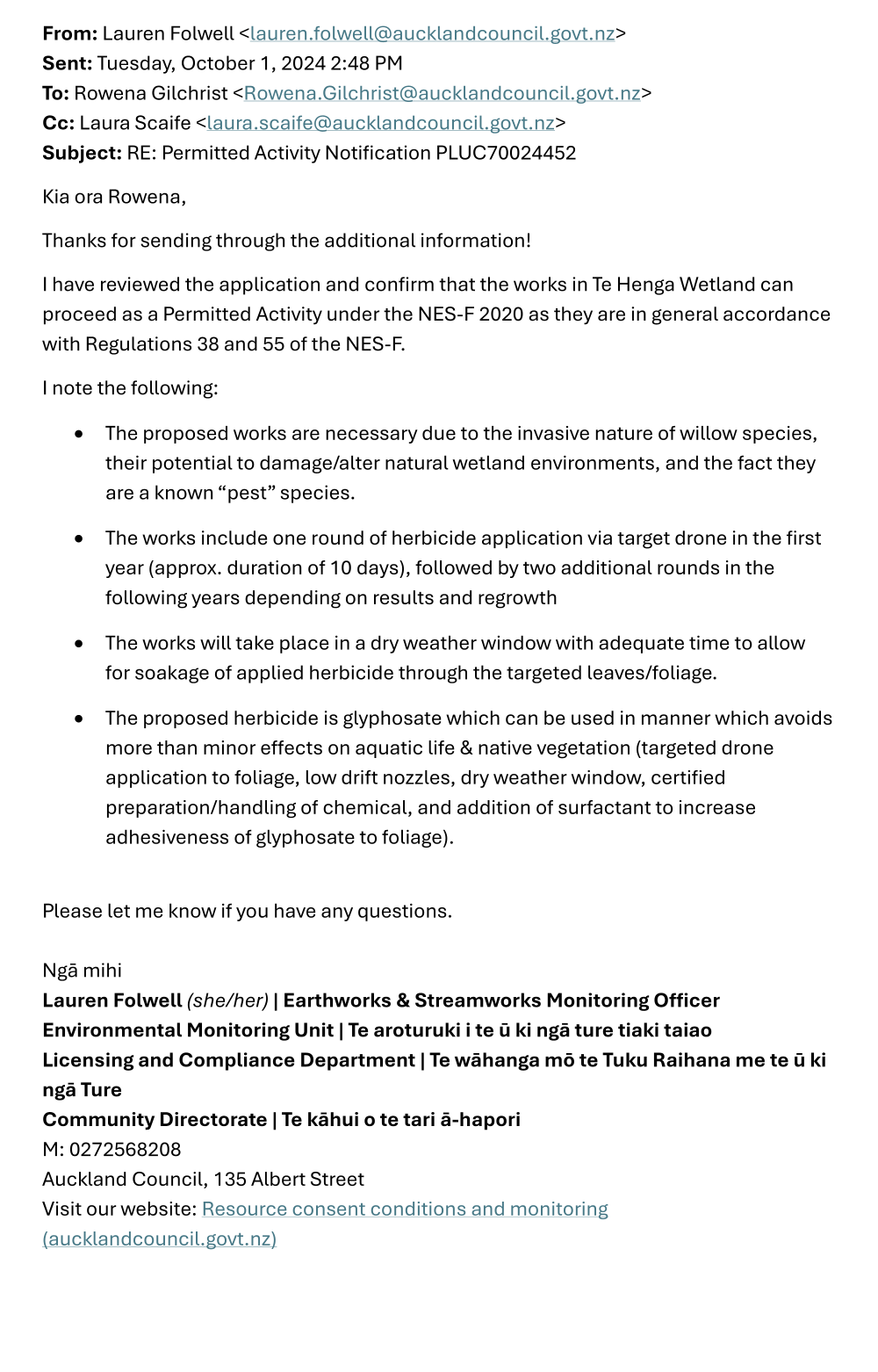 9. Permitted activity notice granted
44 | P a g e
10. Breeding Australasian Bittern – Statement.
23-1-2026
This is an expert witness statement from Peter Langland's WildCapture Research.
I've been a bittern specialist for 20 years now, working for the Department of Conservation as
a private consultant and an advocate for Bittern conservation in Aotearoa. In summary, the
main bitterns breeding season is from September to mid February, and the timing within that
is that eggs are laid from September through to December, with a peak in late October early
November and a peak fledgling time from early December to mid February, with juvenile
bittern fully fledged, dispersed in all breeding areas by early March.
There are occasional outlier breeding attempts, but analysis of 225 breeding attempts of
Australasian Bittern in New Zealand dating from historical records through to the 2025
season, shows a normal distribution. Ranging of eggs laid from September late September to
mid December, with the normal distribution being focused on the October November period.
Further details and references can be supplied to support this statement if required.
11. Dr Aileen Sweeney – Inanga spawning statement
BSc PhD Ecology
26-1-2026
I am an ecologist who has spent the last 4 years working primarily with freshwater species
around the Auckland region. In my opinion, the spraying of willows in Te Henga will have
had a very minimal impact on the whitebait population for the following reasons:
4. Location - spraying occurred upstream from inanga spawning site, and downstream
on any other whitebait species spawning sites.
5. Time of year - spraying occurred outside of whitebait spawning season (this happens
in Autumn) AND outside of whitebait returning to freshwater from the ocean (this
happens in Spring).
6. Dilution levels: the minimal amount of foliage spray will be highly diluted in the large
body of water as spawning site is downstream from the confluence of the Waitākere
River with Waitī Stream.
More information upon request.
Dr Aileen Sweeney BSc PhD
45 | P a g e
