

133 Molesworth Street
PO Box 5013
Wellington 6140
New Zealand
30 March 2026
T+64 4 496 2000
Hayden
By email: [FYI request #33884 email]
Ref:
H2026080055
Tēnā koe Hayden
Response to your request for official information
Thank you for your request under the Official Information Act 1982 (the Act) which was
transferred from Health New Zealand – Te Whatu Ora to the Ministry of Health – Manatū
Hauora (the Ministry) on 13 March 2026. Responses to each part of your request are provided
below.
1. The Ministry's most recent estimate of the total annual health system cost of diet-
related illness in New Zealand, including cardiovascular disease, type 2 diabetes, obesity-
related conditions, and malnutrition.
The Ministry commissioned a report by the New Zealand Institute of Economic Research
(NZIER) in 2022 which reviewed and collated the latest evidence on the cost of long-term
conditions. The report includes (where available) estimates of the cost of modifiable risk factors,
like poor nutrition. This is publicly available here:
www.health.govt.nz/publications/the-cost-of-
long-term-conditions-in-new-zealand as such section 18(d) of the Act applies to this part of your
request.
2. Any analysis of the relationship between food affordability (as distinct from food
choices) and diet-related health outcomes — specifically, whether the cost of nutritious
food relative to household income affects dietary health outcomes.
The Ministry published a report on food insecurity in 2019 using results from the New Zealand
Health Survey. The report looks at the link between food insecurity in children, dietary patterns
and health outcomes. This is publicly available here:
www.health.govt.nz/system/files/2019-
04/household-food-insecurity-among-children-new-zealand-health-survey-summary-of-findings-
jun19.pdf.
The Public Health Advisory Committee published the report ‘Rebalancing our food system’ in
2024, which takes a broad look at the impact of food insecurity and our current food system on
health. This is publicly available her
e: www.health.govt.nz/publications/rebalancing-our-food-
system.
The Ministry also drafted an evidence brief on food security in 2025. Please find this document
attached to this letter as Document 1 and has been released to you in full.
3. Any analysis of the health impacts of the grocery duopoly's pricing structure —
specifically, whether excess grocery margins contribute to reduced consumption of fresh
fruit, vegetables, and other nutritious food among low-income households.
The Ministry has not undertaken or sighted any analyses on this topic. As such this part of your
request is refused under section 18(g)(i) of the Act as the information requested is not held by
the Ministry and there are no grounds for believing it is held by another agency subject to the
Act.
4. Any assessment of the potential public health benefits of increased access to
affordable, locally produced food — including through community food networks, food
cooperatives, or local producer direct sales.
Please refer to the response to question 2 above.
5. Any cross-agency coordination between the Ministry of Health and the Ministry for
Primary Industries regarding the health impacts of food regulation — specifically, whether
the compliance costs imposed by the Food Act 2014 on micro-producers have been
assessed for their indirect health impacts through reduced food access.
The Ministry works closely with the Ministry for Primary Industries to ensure the health impacts
of food policy changes (including through the joint food regulation system with Australia) are
taken into consideration. However, we are not aware of any analysis or cross-agency
correspondence related to the specific topic mentioned above.
6. Any cross-agency coordination between the Ministry of Health and Treasury regarding
the health system costs attributable to food affordability — specifically, whether health
costs are modelled as a consequence of grocery pricing and food access.
The Ministry is not aware of any analysis or cross-agency correspondence with The Treasury on
this topic.
7. I note that Health New Zealand confirmed in writing (OIA response dated December
2025) that it does not model whether economic policy is driving mental health demand
and does not coordinate with Treasury or RBNZ on economic determinants of health. I am
now establishing whether the same gap exists specifically for food policy: does anyone in
government model the health system cost of food being unaffordable, and does anyone
assess whether food regulation itself contributes to that unaffordability?
Responsibility for food policy, food affordability and food insecurity sit across multiple
government agencies. The Ministry has an interest in the impact of food insecurity on nutrition
and health outcomes and has undertaken research (referred to above) to understand this
impact.
The Ministry for Social Development also has an interest in addressing food insecurity and its
impact on wider social outcomes. You may wish to contact their agency for further information
here:
[email address].
Page 2 of 3

The Ministry of Regulation is currently undertaking a Hospitality Sector Review and a Product
Labelling Review, which will include a review of food regulation. You may wish to contact their
agency for further information here:
[email address]. I trust this information fulfils your request. If you wish to discuss any aspect of your request with
us, including this decision, please feel free to contact the OIA Services Team on:
[email address].
Under section 28(3) of the Act, you have the right to ask the Ombudsman to review any
decisions made under this request. The Ombudsman may be contacted by email at:
[email address] or by calling 0800 802 602.
Please note that this response, with your personal details removed, may be published on the
Ministry website at:
www.health.govt.nz/about-ministry/information-releases/responses-official-
information-act-requests. Nāku noa, nā
Dr Andrew Old
Deputy Director-General Public Health Agency | Te Pou Hauora Tūmatanui
Page 3 of 3
DRAFT – NOT FOR PUBLICATION
FOOD SECURITY AND HEALTH
Last updated September 2025
Food security: having reliable access to sufficient safe and nutritious food in a way that is
culturally acceptable.1
Food insecurity: when a person, family or community lacks regular access to enough safe,
nutritious food to support their health and development.1
Food/kai sovereignty: autonomy and protection of ancestral food systems, cultural
knowledge, practices, and ceremonies associated with food production, distribution, and
ACT 1982
consumption.2
Food is one of the most important contributors to our health and wellbeing. It can
physically nourish us, and connect us to our culture, our environment, and our
communities. Accessing affordable, healthy, and culturally acceptable food is becoming
increasingly difficult in Aotearoa New Zealand.
INFORMATION
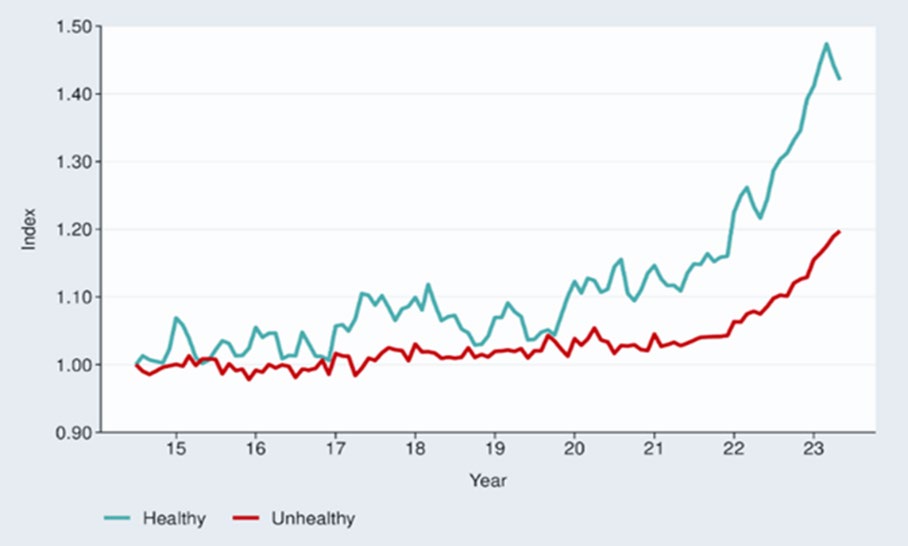
Rising costs of food, housing
and fuel are putting pressure
on household budgets,
requiring families to make
difficult decisions about how
they feed their families.
Between 2019 and 2023,
average weekly household
expenditure increased by 18.4
percent, with weekly food
expenditure increasing by
28.1%.3
More nutritious, whole foods
Food Price Index categorised using the WHO Europe nutrient
– especially fruit and
profile model data (Consumer Price Index, StatsNZ)
RELEASED UNDER THE OFFICIAL
vegetables, meat, poultry,
fish, and dairy - have seen a large increase in prices, while energy dense, nutrient poor
foods – such as highly processed snack foods and takeaways - have seen smaller price
increases and remain relatively affordable.4
DRAFT – NOT FOR PUBLICATION
The prevalence of
moderate to severe food
insecurity has been
steadily rising since 2014.
In 2021-2023, 16.4% of
New Zealanders were food
insecure compared with
10% in 2014-16.5
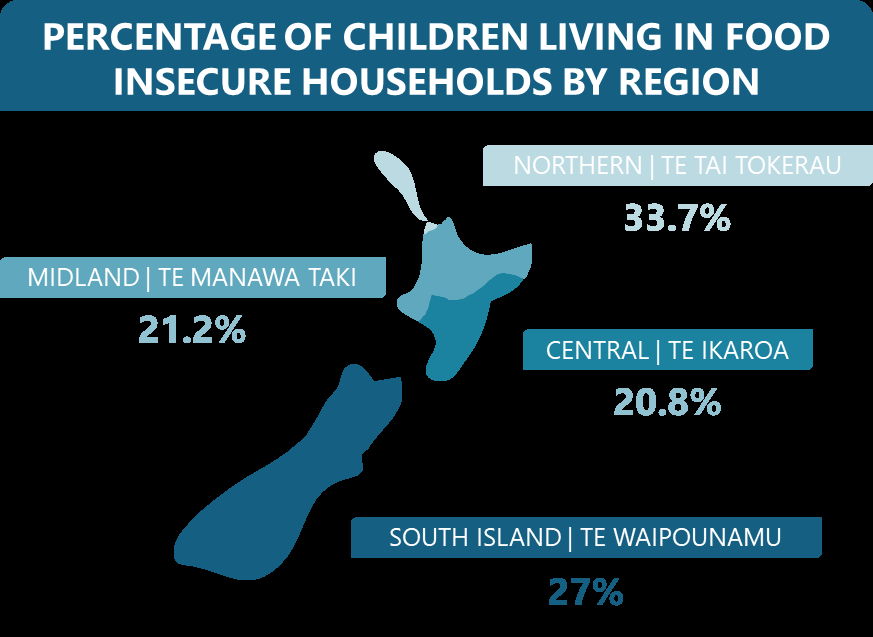
Over a quarter of children
1982
aged 0-14 years live in
households where food
ACT
runs out either often or
sometimes (27% in
2023/24). Food insecurity
disproportionately affects Pacific (54.8%) and Māori (34.3%) children, disabled children
(41%), and children living in the most deprived neighbourhoods (46.9%).6
One in eight children (12.1%) live in households that reported using a fo
INFORMATION od grant or food
bank sometimes in the past year. Pacific (23.5%) and Māori (19.7%) children were over
twice as likely to live in households that used a food grant or food bank in the last year.6
The impact of food insecurity on health
OFFICIAL
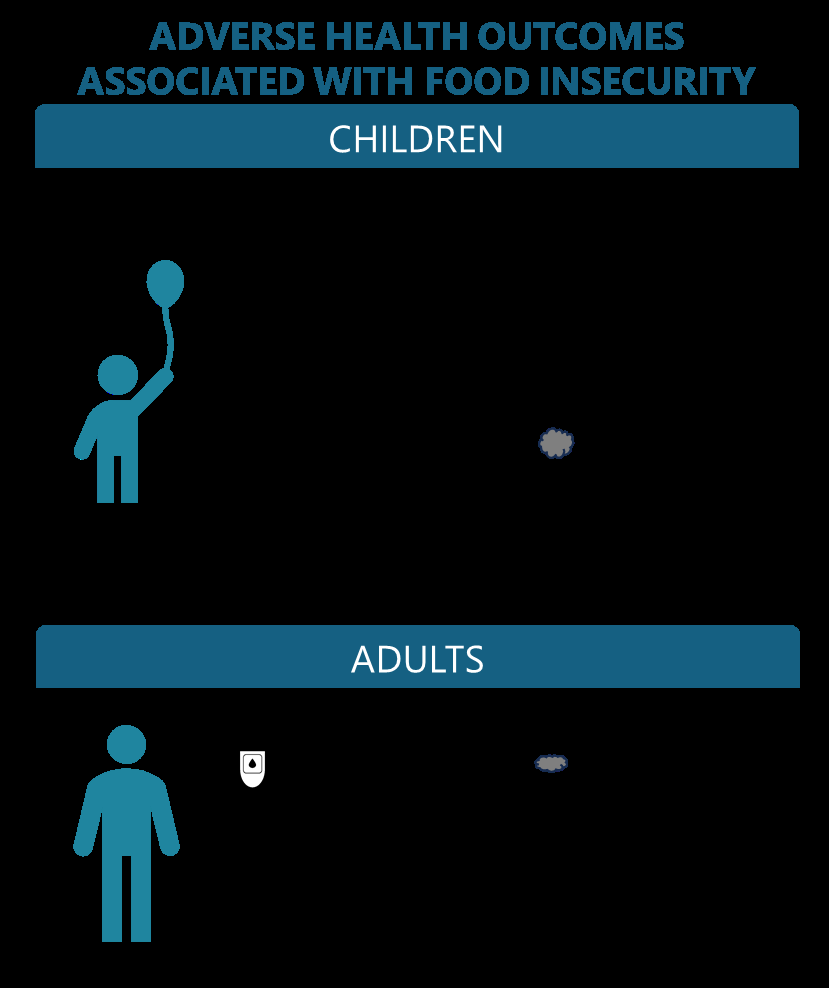
Children who experience food insecurity have lower fruit and vegetable intakes, diets
THE
higher in fat and sugar, and are at increased risk of obesity.7,8,9,10 New Zealand children
aged 5-14 years living in food insecure households are twice as likely to be obese and
22-25% less likely to eat three portions of vegetables per day compared with children
living in food secure household
UNDER s.7
Childhood food insecurity increases the risk of behavioural, developmental, and mental
health challenges, including anxiety, depression, hyperactivity and conduct disorder.
Food insecurity has been linked to adverse child development through multiple
mechanisms, including decreased quantity of food (including nutrient deficiencies),
RELEASED
compromised food quality, and heightened (child and parental) stress and anxiety
associated with obtaining food.7,8,9,11
Food insecurity in childhood has also been associated with higher odds of smoking,
drinking, drug use, bullying victimisation, disordered eating patterns and suicidal
ideation in adolescents.10,12 However, these findings should be interpreted with caution
as they represent associations, not causal relationships. Food insecurity often co-occurs
Page 2 of 5
DRAFT – NOT FOR PUBLICATION
with other risk factors, particularly those associated with other aspects of poverty and
material hardship.7
Food insecurity in adults increases the risk of diet-related chronic conditions, including
obesity and diabetes.7,8 Experience of food insecurity impacts mental health, parenting
practices and social dynamics.7,8,11 Psychological distress, depression, anxiety, and
disordered eating patterns (e.g. binge eating and bulimia) have consistently been found
to be elevated among adults who have experienced food insecurity.11,13
1982
Almost one in five caregivers in food-insecure households (18.2%) experience
psychological distress, compared with 5.9% in food-secure households.7 ACT
Food insecurity also contributes to broader social outcomes, which are in themselves
determinants of health, including chronic school absence, poor education attainment,
low income, and participation in crime.14,15 This highlights the importance of addressing
food security at individual and societal levels to break this persistent cycle of
intergenerational disadvantage.
INFORMATION
OFFICIAL
THE
UNDER
RELEASED
Page 3 of 5
DRAFT – NOT FOR PUBLICATION
1982
ACT
INFORMATION
OFFICIAL
THE
UNDER
RELEASED
Page 4 of 5
DRAFT – NOT FOR PUBLICATION
The health systems role in strengthening food security
-
Partnerships
Cross-Sector Action
Support cross-sector partnerships with
agencies working across the food
Provide health input into programmes
system.
and policies to address food insecurity
e.g. Food Secure Communities (MSD), Ka Ora
e.g. Cross-Agency Food Systems Group, Kai
Ka Ako (MoE), HiAP - Health Impact
1982
Rotorua, Healthy Auckland Together, Food
Assessments
Secure North Canterbury
ACT
Research & Evaluation
Community Action
Monitor and strengthen the evidence
Support local initiatives to strengthen
base on food insecurity and its impact
community food security and food/kai
on communities, health outcomes and
sovereignty
INFORMATION
inequities
e.g. Toi Tangata – Kai Ora, Wel ington Fruit and
Vege Co-op, Healthy Families NZ - Kai
e.g. NZ Health Survey, nutrition surveys, HMAC
Sovereignty Theory of Change
monitoring reports, community insights
OFFICIAL
References:
THE
1. Food and Agriculture Organisation of the United Nations, 2025. Hunger and Food Insecurit
y. https://www.fao.org/hunger/en
2. Kore Hiakai Zero Hunger Collectiv
e https://www.zerohunger.org.nz/paanui/kai-sovereignty
3. Statistics New Zealand. 2023. Household Economic Survey.
https://datainfoplus.stats.govt.nz/item/nz.govt.stats/219ed35e-39c1-4ece-
a77d-6e429732aca6/13
4. Statistics New Zealand. 2024. Consumer Price Index
. https://datainfoplus.stats.govt.nz/item/nz.govt.stats/8b0860b8-cf63-4f12-a578-
UNDER
8eed8ba69ac3
5. FAO, IFAD, UNICEF, WFP and WHO. 2024. The State of Food Security and Nutrition in the World 2024 – Financing to end hunger, food
insecurity and malnutrition in al its forms.
6. Ministry of Health 2024. New Zealand Health Survey Annual Data Explorer 2023/24.
7. Ministry of Health. 2019. Household Food Insecurity Among Children: New Zealand Health Survey.
8. Healthy People 2030 – Food insecurity evidence summary, U.S. Department of Health and Human Services, Office of Disease Prevention
and Health Promotion.
9. Gal egos D, Eivers A, Sondergeld P, Pattinson C. Food Insecurity and Child Development: A State-of-the-Art Review. Int J Environ Res
RELEASED
Public Health. 2021 Aug 26;18(17):8990.
10. Fram MS, Nguyen HT, Frongillo EA. Food Insecurity among Adolescent Students from 95 Countries Is Associated with Diet, Behavior, and
Health, and Associations Differ by Student Age and Sex. Curr Dev Nutr. 2022 Feb 15;6(3):nzac024.
11. Cain KS, Meyer SC, Cummer E, Patel KK, Casacchia NJ, Montez K, Palakshappa D, Brown CL. Association of Food Insecurity with Mental
Health Outcomes in Parents and Children. Acad Pediatr. 2022 Sep-Oct;22(7):1105-1114.
12. National Eating Disorders Collaboration. https://nedc.com.au/eating-disorders/other-learning/food-security
13. Hazzard VM, Loth KA, Hooper L, Becker CB. Food Insecurity and Eating Disorders: A Review of Emerging Evidence. Curr Psychiatry Rep.
2020 Oct 30;22(12):74.
14. McKelvie Sebileau P, Swinburn B and de Seymour J. 2025. The impact of food poverty on educational achievement: a New Zealand case
study in global context.
15. The Treasury/NZPC. 2023. A fair chance for all: Breaking the cycle of persistent disadvantage.
Page 5 of 5
