

IR-01-26-6696
29 June 2026
Miss M Quicken
[FYI request #33843 email]
Tēnā koe Miss Quicken
Request for information
Thank you for your Official Information Act 1982 (OIA) request of 24 February 2026, in
which you asked for information regarding the On Duty App.
On 27 April 2026 you provided clarification of your request, my response to each part of
your request can be found below.
1.
a) The current assessments including impact assessments relating to OnDuty app.
Clarified to:
What specific assessments or impact assessments you are seeking in relation to the
OnDuty app (for example, whether these relate to human rights, privacy, operational,
security, or other matters)
Priority is with human rights & privacy. There are multiple aspects and these
should have been released proactively when the police adopted the posture with
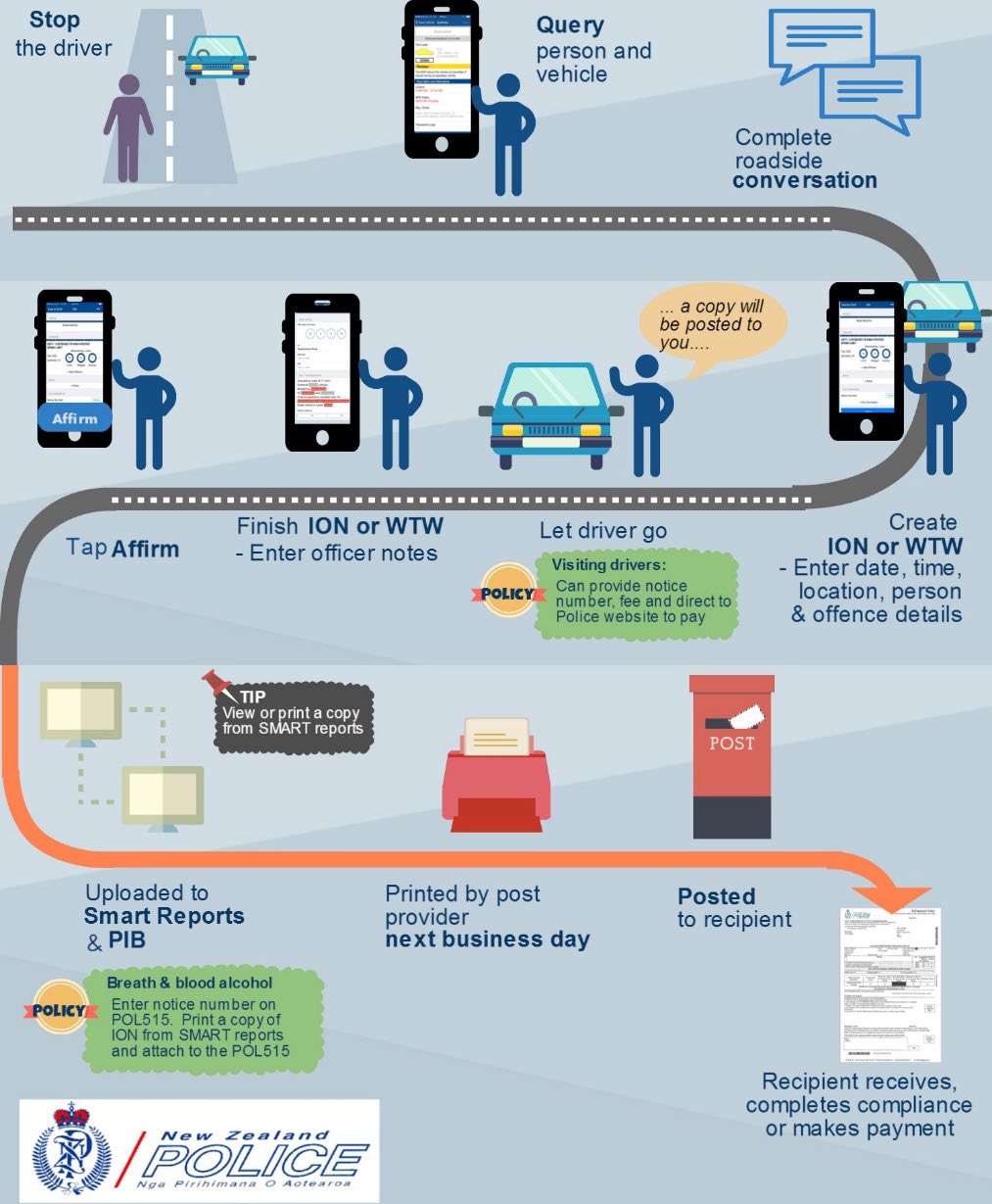
onDuty app.
Impact Assessments other than human rights & privacy typically have scope &
sections relating to human rights & privacy on their impact so general y these
should be included as part of the request.
Specific human rights assessments were not completed for the OnDuty software
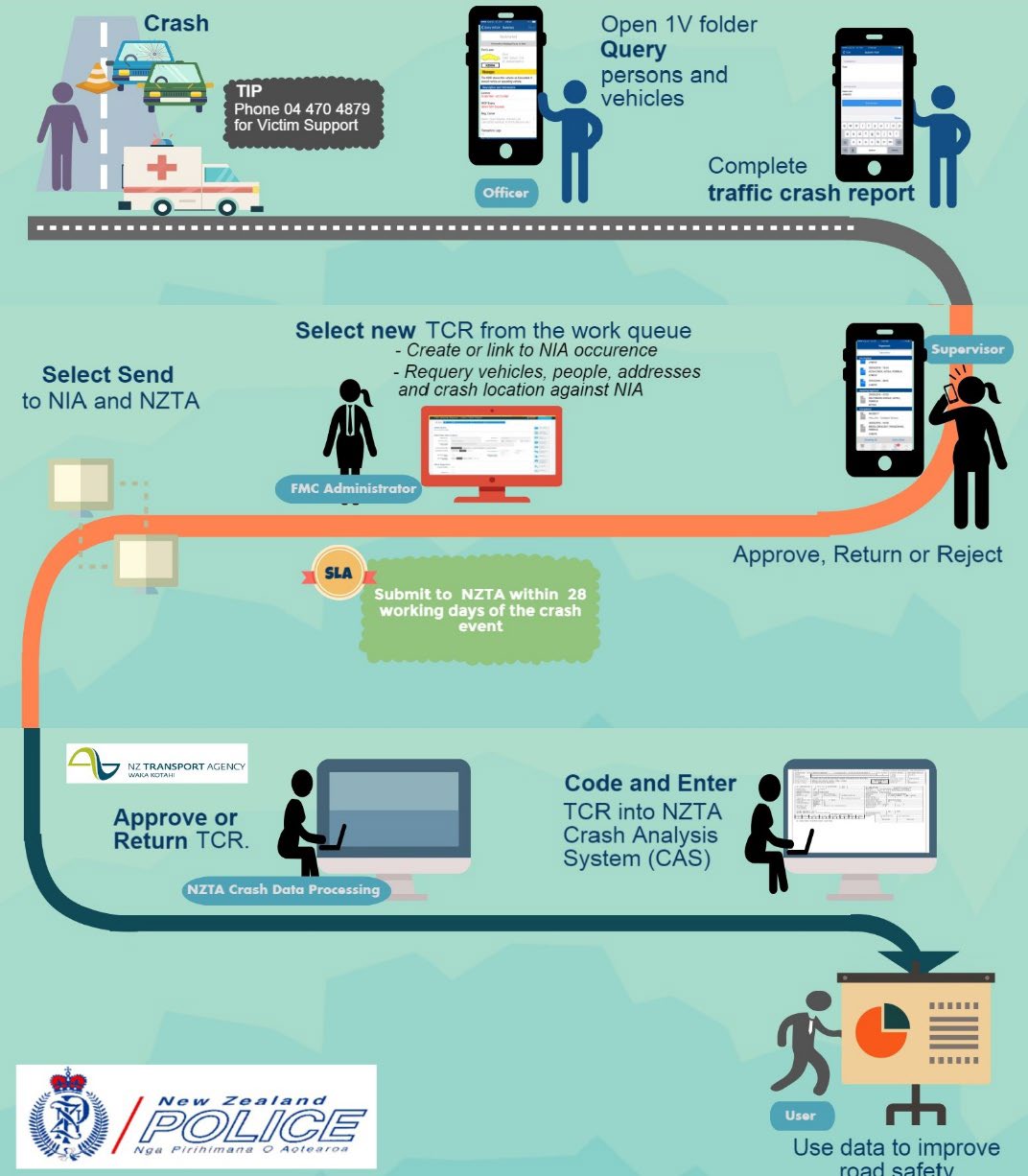
application either at the time of implementation, or in the intervening period. Accordingly,
this aspect of your request is refused under section 18(e) of the OIA, as the information
requested does not exist.
A Privacy Impact Assessment (PIA) for the OnDuty application was completed in April
2018. Given the changes in the law and technology since then, the PIA should only be
considered as a 'historical assessment only'. The lens that was used in the 2018
assessment may be different to the approach that might be taken if a similar assessment
was undertaken today.
A copy of the Privacy Impact Assessment is enclosed in response to this request.
No further Privacy Impact Assessments have been completed since 2018.


2.
b) Access control assessment that has been done to protect it from unauthorized
use.
Clarified to:
What [do] you mean by an “access control assessment” (for example, whether you are
seeking a formal assessment document, a summary of controls, or another type of
information)
This is a standard document trail that gets done as part of the reviews when any
new technology is introduced that has an impact to safety & privacy of general
public.
Access control is meant to mitigate and / or limit the mis-use of the system
outside it's intended scope.
There is significant history international y where staff members of police have
mis-used information collected and even sold the information to bad actors.
Yes, the ones you have listed are typical y included as are documents that ensure
the implementation ensures mis-use is minimized if not eliminated.
Access to OnDuty is restricted to users specified on the Police Active Directory. This
access list includes primarily Constabulary police members, and selected Police
Employees who have a business reason to access the applications controlled by the
Police Active Directory.
Access Control is considered as part of the Security Risk Assessment process. A
Security Risk Assessment for OnDuty was completed in September 2021, which has
been released in response to this request.
Portions of the Security Risk Assessment, including Appendix 1, are withheld under
section 6(c) of the OIA, as the release of the material would likely prejudice the
maintenance of the law, including the prevention, investigation, and detection of offences.
3.
c) The list / spreadsheet of all the parties that are linked to the system e.g. data
exchange and their relevant statutory enabled privacy commissioner vetting.
Clarified to:
What level of detail you are seeking in relation to third parties linked to the system, and
what do you mean by “statutory enabled Privacy Commissioner vetting”.
https://www.privacy.org.nz/about-us/information-sharing/information-matching/
When and if you receive or send data from / to another agency there is a specific
statutory requirement to do this vetting.
https://www.legislation.govt.nz/act/public/2020/0031/latest/whole.html#LMS23752
I am asking the evidence that you both listed where the information is sent and
from which other sources you used which are liable to this statutory requirement.

 And that you followed the process with the privacy commissioner as is required
given the sensitivity of the data.
And that you followed the process with the privacy commissioner as is required
given the sensitivity of the data.
Also just to clarify one more point.
*What level of detail you are seeking in relation to third parties linked to the system
I would like to have
- The organisation name
- Start & end dates and;
- What classification / type of information is either matched, received or shared
- Is information matching used and what identifiers are used to match?
- Is the data being sent to the organization ?
- Is the data being received by the organization ?
A table setting out OnDuty links with organisations is enclosed. In that table you wil note
a reference to the Family Safety System (FSS).
FSS is not an external organisation. FSS is a Police hosted multi-agency software
application to which many organisations have access. Some of these include:
• Department of Corrections
• Ministry of Education
• Health New Zealand - TeWhatu Ora
• ACC
• Oranga Tamariki
• Women’s Refuge
• Iwi providers
It should be noted a security model al ows access only to information that is relevant to
that agency or Non-Governmental Organisation (NGO) to conduct their role for any given
family harm incident.
Further information regarding how we manage personal information is available on the
Police website here:
Privacy statement - how we manage personal information | New Zealand Police
Information specific to the Family Safety System can be found under the
Disclosing and
sharing personal information section.
The Privacy Act 2020 does not include a statutory vetting regime in respect to authorising
parties to access Police systems or to share information with Police.
Police must ensure that any access granted, or sharing of information is consistent with
the Privacy Act 2020 or is otherwise authorised under NZ law.
Memorandum of Understandings (MOUs) between Police and other New Zealand
agencies formalise information sharing however the Privacy Act 2020 does not include a
statutory requirement to consult MOUs with the Privacy Commissioner.
Police is cognisant of the requirement to comply with the Cabinet Manual and recognises
it may sometimes be needed to consult with the Privacy Commissioner as part of the
policy development process (Cabinet Manual, clause 5.19).



Please note that as part of its commitment to openness and transparency, Police
proactively releases some information and documents that may be of interest to the
public. An anonymised version of this response may be publicly released on the New
Zealand Police website.
You have the right to seek an investigation and review by the Ombudsman of the decision
to withhold any information. Information about how to make a complaint is available at
www.ombudsman.parliament.nz or freephone 0800 802 602.
Nāku noa, nā
Inspector Luke Cameron
Product Manager, Mobility and Deployment
New Zealand Police
Organisation Name
Start Date
End Date
Classification/Type of information
Received/Shared
Is Information Matching Used?
What Identifiers Are Use To
Comment
Match Data?
New Zealand Land
Exact date not known Current
Commercial Vehicle Investigation
Shared (Sent) by
No data matching undertaken in N/A
Transport Agency
Traffic Crash Reports
Police
OnDuty
Driver photos
Family Safety System Exact date not known Current
Details from the Family Harm report
Shared (Sent) by
No data matching undertaken in N/A
Family Safety System (FSS) is
(FSS)
including:
Police
OnDuty
not an an external agency.
List of person involved and their name,
FSS is a Police hosted multi-
phone number, enthnicity, gender
agency application to which
Public Safety Order issued: Yes/No Source
organisations including
(Always Police)
Department of Corrections,
Police Station
Ministry of Education, Health
Event no
New Zealand - TeWhatu Ora,
Dynamic Risk Assessment (DYRA) Score
ACC, Oranga Tamariki,
DYRA content
Womens Refuge and Iwi
Reported date
providers have access to.
Incident code
It should be noted that a
Reported by
security model allows access
Scene address
only to information that is
Proximity: (At/Near)
relevant to that agency or
Scene Type
NGO to conduct their role for
Firearm: Yes/No
any given family harm
Alcohol:Yes/No
incident.
Drugs: Yes/No
Summary (Family Harm narrative)
New Zealand Post
Exact date not known Current
A PDF of the Infringement Offence
Shared (Sent) by
No data matching undertaken in N/A
Notice including:
Police
OnDuty
Date
Day
Time
Driver details
Vehicle details
Offence details
Location details
Payment details
Auror
Exact date not known Current
Date and time details
Received by Police
Data matching undertaken in
Name
Note that not all of these
Organisation details
OnDuty
Date of Birth
attributes are visible in the
Reporter details
Gender
user interface ('front end') of
Event details
Address
the application.
Person details
Vehicle details
Photos
Location details
Auror
Exact date not known Current
DOCLOC (Police file number)
Shared (Sent) by
No data matching undertaken in N/A
Police
OnDuty
Immigration New
Exact date not known Current
Photos
No data matching undertaken in N/A
OnDuty includes the ability to
Zealand
Person details
OnDuty
launch a query of
Immigration New Zealand
(INZ) and Department of
Internal Affairs (DIA)
databases. Information from
INZ of DIA is not ingested by
OnDuty but simply presented
for the user.
Department of
Exact date not known Current
Passport information
OnDuty includes the ability to
Internal Affairs
Births Deaths and Marriages information
launch a query of
Immigration New Zealand
(INZ) and Department of
Internal Affairs (DIA)
databases. Information from
INZ of DIA is not ingested by
OnDuty but simply presented
for the user.
Oranga Tamariki
Exact date not known Current
Child Protection Protocol report
Shared (Sent) by
No data matching undertaken in
Family Harm Report
Police
OnDuty
Page 1 of 1


 Information Security Risk Assessmen
System
Mobility Platform including OnDuty application
Date
Information Security Risk Assessmen
System
Mobility Platform including OnDuty application
Date
September 2021
Facilitator
Michelle Soper (Mobility/Digital Project Manager) and Jay Garden (CISO)
Purpose
The purpose of this Security Risk Assessment (SRA) report is to document the information security risks,
controls and treatments associated with the Mobility platform, including the OnDuty application.
System and Project Background
The Mobility platform continues to be a key enabler to NZ Police to deliver frontline services and has been
since iPhones were first rolled out to NZ Police frontline staff in 2013. NZ Police ICT (Public Safety
Network, ICT Operations & Mobility/Digital group) is responsible for the operational management of the
Mobility platform with support from vendor Vodafone.
The NZ Police Mobility Programme developed a bespoke iPhone application for frontline officers called
OnDuty, with the first version implemented in 2015, and ongoing enhancements and additional features
added over 2016-2021. OnDuty is an operational application that provides query, tasking and reporting
capability.
OnDuty has transformed the way frontline police collect, access and act on information. The objective of
OnDuty is for NZ Police staff to have the right information at their fingertips straight away, so they’re able
to make better decisions in real-time situations.
There were previously a series of overlapping assessments completed in the early days of the Mobility
programme (over 2011 to 2013). These were used as the starting point for this SRA, in preparation for
seeking renewal of Certification and Accreditation of the Mobility platform, including the OnDuty app.
The scope of this SRA is:
1. The Mobility platform consisting of:
• Physical iPhones (there are 11,860 Police iPhone XRs currently in use across NZ Police);
• Operational management of the iPhone fleet and the applications on them; and
• Mobility infrastructure (hardware, software, operating systems) that support the
management of the iPhones and the applications on them.
Note: The responsibility for some aspects of Mobility operational management have moved within ICT
from the Mobility/Digital Group to the Public Safety Network group as of 1 Sept 2021.
2. The OnDuty application: OnDuty was developed by the NZP Mobility programme in conjunction with
the National Intelligence Centre, Police ICT and external vendor Smudge, and implemented on
iPhones in December 2015. The initial release was just for Road Policing staff to query persons,
vehicles and organisations. Over 2016-2021 the Mobility Programme (now Mobility/Digital Group)
have continued to evolve and expand the OnDuty app.
OnDuty consists of an iPhone-based ‘OnDuty’ App, a back-end OnDuty database, and a desktop
‘OnDuty Office’ and ‘OnDuty FMC’ app. Some data is retained in the OnDuty database, but most data
collected via OnDuty is submitted and stored in other systems and ‘mastered’ in those other systems
(NIA, PIPS, NZTA CAS, PROP, BMA and others).
OnDuty currently (Aug 2021) includes the following features:
1
IN CONFIDENCE
• QP, QV, QO, QL, QI (Queries)
• FH (Family Harm)
• INF (Infringement Notice Form)
• TCR (Traffic Crash Report)
• CVIR (Commercial Vehicle Inspection Report)
• N (Notings)
• OR (Offence Report)
• WS (Warrantless Search)
• HR (Health Referral - Drug Use)
• PF (Property Form)
• GCR (Gun Club/Range Visit)
• PoE (Place of Education Visit)
• PoW (Place of Worship Visit)
• S118 (s118 Letter)
• Bail
• There is also external agency information available in OnDuty
o NZTA photos in OnDuty
o Immigration New Zealand (INZ) data
o Department of Internal Affairs
There are approximately 10,000 users of OnDuty (of which 8000 are regular users).
The information in the Mobility platform and OnDuty app includes SENSITIVE / RESTRICTED.
See Appendix 3 for an overview diagram of the Mobility infrastructure including OnDuty.
Risk Summary
This risk assessment was carried out in accordance with the Police Risk Management Framework. A risk
workshop was held on 21 & 26 January 2021 with the following stakeholders and subject matter experts:
• Mark Donaldson, Deputy Director Mobility/Digital
• Kate Witchell, A-Product Manager Mobility/Digital
• Michelle Soper, Project Manager, Mobility/Digital
• Sam Holmes, Application Developer, Mobility/Digital
• Greg Lintott, Solutions Architecture
• Kerry Burke, Application Developer, Absolute IT
• Cliff Clark, Cybersecurity Manager
• Jay Garden, Chief Information Security Officer
• Ian Gallagher, ICT Operations Manager, Applications Support
• Janet Thomson, ICT Service Delivery Manager – Mobility
• Sandra Bateman, Developer, Smudge
• Chris Brown, Lead Developer, Smudge
2
IN CONFIDENCE
3
IN CONFIDENCE
Endorsement
Representing
Endorsement date
Brian Moyle
Sponsor – Dir. Mobility/Digital
23 September 2021
Mark Donaldson
Deputy Dir Mobility/Digital
29 September 2021
John Nixon
Programme Manager Mobility/Digital
21 September 2021
Dylan Earle
Public Safety Network
16 September 2021
Greg Lintott
ICT Architecture
20 September 2021
Janet Thomson
Mobility Service Delivery Manager
29 September 2021
Ian Gallagher
ICT Operations, Application Support
29 September 2021
Annabel Fordham
Privacy
24 September 2021
Cliff Clark
Cybersecurity
30 September 2021
Jay Garden
Info Assurance
16 September 2021
Approval by Business Owner
Approval date
Steve Pyne, Acting Chief Information Officer
2 November 2021
Appendix 1: Risk Review
See the attached Spreadsheet for the details of the risks identified and assessed in the risk workshop
. It
includes the risk levels and ratings for inherent (untreated) and residual risks, and details the associated
treatments identified for each risk.
4
IN CONFIDENCE
 Appendix 2: Police Risk Management Tables
5
IN CONFIDENCE
6


OnDuty
Privacy Impact Assessment
7th April 2018

Contents
A. INTRODUCTION AND PURPOSE ............................................................................................................... 3
B. PROJECT SUMMARY ................................................................................................................................ 3
OVERVIEW ................................................................................................................................................................. 3
EXPECTED BENEFITS ..................................................................................................................................................... 3
C. SUMMARY ANALYSIS ............................................................................................................................... 4
D. INDIVIDUAL AND STAKEHOLDER IMPACTS .............................................................................................. 4
E. INFORMATION OVERVIEW ...................................................................................................................... 4
QUERIES .................................................................................................................................................................... 4
INFRINGEMENT OFFENCE NOTICES (IONS) AND WRITTEN TRAFFIC WARNINGS (WTWS) .......................................................... 5
TRAFFIC CRASH REPORTS (TCR) ..................................................................................................................................... 6
COMMERCIAL VEHICLE INSPECTION REPORTS (CVIR) ......................................................................................................... 7
NOTINGS ................................................................................................................................................................... 7
FAMILY HARM INVESTIGATIONS ...................................................................................................................................... 8
F. ASSESSMENT OF PRIVACY IMPACTS ........................................................................................................ 9
COLLECTING OR OBTAINING INFORMATION ....................................................................................................................... 9
STORAGE, SECURITY AND RETENTION ............................................................................................................................ 10
ACCESS AND CORRECTION ........................................................................................................................................... 10
ACCURACY ............................................................................................................................................................... 10
USE AND DISCLOSURE................................................................................................................................................. 11
UNIQUE IDENTIFIERS .................................................................................................................................................. 12
G. MANAGEMENT APPROACH ................................................................................................................... 12
INFORMATION SHARING .............................................................................................................................................. 12
USE OF INFORMATION IN NON-PRODUCTION ENVIRONMENTS ........................................................................................... 12
ACCURACY ............................................................................................................................................................... 13
H. REQUIRED PRIVACY CONTROLS ............................................................................................................. 13
Page 2 of 13

A. Introduction and Purpose
1. Family Harm Investigations are shortly going to be included into the OnDuty solution as part of
the Mobility Programme. A Privacy Impact Assessment (PIA) is being completed at this time to
ensure that any privacy issues are identified prior to release.
2. There is not currently a PIA covering the existing components of the OnDuty solution. The scope
of this assessment has been expanded to cover the OnDuty solution as a whole, with specific
consideration of the changes being implemented to include Family Harm Investigations.
3. This PIA will consider the entire information lifecycle, including:
• Collecting or obtaining information
• Storage, security and retention
• Access and correction
• Accuracy
• Use and disclosure
• Unique identifiers.
4. This PIA has been developed based on:
• Documentation provided by NZ Police
• Walkthroughs of the solution
• Meetings with key NZ Police personnel.
B. Project Summary
Overview
5. Mobility is a fundamental enabler for New Zealand Police to deliver their services. The Mobility
Action Plan to 2021 sets out their smartphone technology aspirations for the next five years that
will enable frontline staff to be more mobile, visible, informed and effective than ever before.
6. The Mobility Programme in conjunction with the National Intelligence Centre, Police ICT and
Smudge Apps developed the application OnDuty.
7. In December 2015, OnDuty was introduced to Road Policing staff providing them the ability to
query persons, vehicles and organisations.
8. In mid-2016, OnDuty was rolled out to all Police staff providing them the ability to issue
Infringement Offence Notices (IONs), Written Traffic Warnings (WTWs), Traffic Crash Reports
(TCRs) and Commercial Vehicle Inspection Reports (CVIRs) using the OnDuty app on their
mobility device.
9. Development in OnDuty has continued with Notings being rol ed out to al users in May 2017, as
well as the introduction of query item and the set up of the OnDuty Service Improvement Team
(OSIT).
10. Currently an enhancement to OnDuty is being developed to enable the inclusion of Family Harm
Investigations. This functionality is expected to go live in June 2018.
Benefits
11. The current and anticipated future benefits of OnDuty are :
• Frontline Officers will be enabled to provide more effective and efficient services by being
more visible within their communities and less time in their offices. The electronic
workflow reduces double handling and improves data capture and consequently data
quality.
Page 3 of 13

• Frontline Officers feel more confident having the tools, resources, systems and processes to
do their job wel .
• NZ Police Staff, partners and sector agencies feel more confident making decisions based on
good quality information.
• The mobility solution contributes to improving NIA data quality.
C. Summary Analysis
12. In general, the remaining privacy risks related to the use of OnDuty are considered low and able
to be mitigated by transparent communications and robust security arrangements.
13. Risks exist around information sharing, use of production information in non-production
environments and accuracy of the information. Recommended controls to address possible risks
are set out at the end of this PIA. The controls include updating privacy notices and providing
written copies longer term to families involved in a Family Harm Investigation. It is also
recommended that a Certification and Accreditation is completed on the non-production version
of OnDuty to ensure all controls are functioning effectively.
D. Individual and Stakeholder Impacts
14. OnDuty is used to collect information about people, places, and incidents. This information is
then utilised to:
• To inform a range of police staff, including the ability for frontline staff to consume that
information in near real time. Record events within other Police systems such as NIA and
the Police Infringement Processing System (PIPS).
Information recorded within OnDuty may be shared with the following third parties as part of
normal Police business:
•
• NZTA
• NZ Post
• Integrated Safety Response (ISR) agencies.
E. Information Overview
Queries
15. When completing queries, Officers can search:
• Vehicles (QV)
• Person (QP)
• Location (QL)
• Item (QI)
• Organisation (QO)
16. The queries return details currently held by Police in NIA.
17. The detailed queries are maintained on the Officer’s mobility device and in their history for
thirty days post submission to allow them to refer to them if required. Queries can also be saved
into a folder to allow the Officer to then link them to other records such as IONs. This reduces
the need for re-entry of information by Officers.
Page 4 of 13

 Infringement Offence Notices (IONs) and Written Traffic Warnings (WTWs)
18. The following shows the information flow relating to IONs and WTWs.
19. When issuing IONs and WTWs the following information is collected:
• Date
• Time
• Location
• Driver details
• Vehicle details
• Offence details
• Officer notes.
20. The driver and vehicle details are first queried to allow the Officer to confirm they have the
appropriate people and vehicles, and are aware of any information of interest. Once the Officer
completes the ION or WTW the information is submitted and is passed to the Police
Infringement Processing System (PIPS). Any information that doesn’t adhere to the PIPS data
structure the ION is entered manually by a Administration Officer at the Police Infringement
Bureau (PIB).
21. Overnight a batch file of the IONs and WTWs is passed to NZ Post who print and send the
relevant notices and warnings.
Page 5 of 13

22. The details of the ION or WTW are maintained on the Officers mobility device for thirty days
post submission to al ow them to refer to it if required. This reduces the need for re-entry of
information by Officers.
Traffic Crash Reports (TCR)
23. The following shows the information flow relating to TCRs.
24. When completing a TCR the following information is collected:
• Date
• Time
• Location
• Driver details
• Passenger details
• Vehicle details
• Crash details
• Witness details
• Officer notes
Page 6 of 13

• Event details
• Environment and road conditions
• Narrative
• Pedestrian details
• Crash diagram
• Witness details
• Outcome
• File information.
25. The driver and vehicle details are first queried to allow the Officer to confirm they have the
appropriate people and vehicles and are aware of any information of interest , unless the driver
is not known at this time. Once the Officer completes the TCR the information is submitted and
is passed to the Officer’s supervisor for review when the Officer is next in mobile reception. If
approved the TCR is then transferred to FMC who validate the information contained and link it
to any existing records within NIA.
26. Once the information is entered into NIA it is then passed to NZTA who then key the crash
details into the NZTA Crash Analysis System (CAS). This process remains unchanged from the
process prior to the launch of OnDuty.
27. Once completed, the details of the TCR are maintained on the Officers mobility device for thirty
days post submission to al ow them to refer to it if required and provide any updates. This
reduces the need for re-entry of information by Officers.
Commercial Vehicle Inspection Reports (CVIR)
28. When completing a CVIR the following information is collected:
• Date
• Time
• Location
• Driver details
• Operator details
• Vehicle details
• Load details
• Vehicle defects
• Logbook Reference
• Notes
• File Information.
29. The driver, vehicle and operator details are first queried to allow the Officer to confirm they
have the appropriate people and vehicles, and are aware of any information of interest. Once
the Officer completes the CVIR the information is submitted and is passed directly into SMART
Reports when the Officer is in mobile reception.
30. Overnight the information is passed as part of a batch to NZTA. This process remains unchanged
from the process prior to the launch of OnDuty.
31. The details of the CVIR are maintained on the Officers mobility device for thirty days post
submission to allow them to refer to it if required and provide any updates. This reduces the
need for re-entry of information by Officers.
Notings
32. When completing a Noting the following information is collected:
Page 7 of 13

• Date
• Time
• Location
• Noting type
• Reporting channel
• Reliability of information
• Updated person details
• New person details including body markings details
• Child Offenders Protection Register (COPR) details
• Narrative.
33. The Officer is able to add persons, vehicles and organisations to Notings. It is also possible to link
objects.
34. The person and / or location are queried, if applicable, to allow the Officer to retrieve the
current information held by Police in NIA. Once the Officer completes the Noting it is then sent
directly to NIA when the Officer is next in mobile reception, unless a new person, address or
vehicle has been added. If a new object is added, the Noting is transferred to FMC who validate
the information contained and link it to any existing records within NIA.
35. Once the information is entered into NIA, the Noting is used to update existing held records. The
information is not shared with any third party at this time.
36. The details of the Noting are maintained on the Officers mobility device for thirty days post
submission to allow them to refer to it if required and provide any updates. This reduces the
need for re-entry of information by Officers.
Family Harm Investigations
37. When creating a Family Harm Investigation, the following information is collected:
• Occurrence details
• People who are involved
• Dynamic assessment and safety plan
• Roles and offences
• Location
• Vehicles
• Offences / Incidents
• Narrative.
38. The people’s details are first queried to allow the Officer to confirm they have the appropriate
items. Once the Officer completes the Family Harm Investigation the information is submitted
and is passed to the Officer’s supervisor for review when the Officer is next in mobile reception.
If approved the Investigation is automatically uploaded to NIA. Any information that doesn’t
adhere to the NIA data structure is passed to the File Management Centre (FMC) who resolve
the issues as per current process.
39. Once approved the Family Harm Investigation is also provided to the Integrated Safety Response
(ISR) Content Management Systems (CMS). ISR is a multi-agency initiative to ensure the
immediate safety of victims and children, and to work with perpetrators to prevent further
violence. Details held within the ISR CMS are used by multiple agencies to prepare Family Harm
Investigations for the daily Safety Assessment Meetings (SAM).
40. The details of the Family Harm Investigation are maintained on the Officers mobility device for
thirty days post submission to allow them to refer to it if required and provide any updates.
Page 8 of 13

F. Assessment of Privacy Impacts
41. This section provides the detailed analysis of the privacy impacts regarding OnDuty. Identified
risks will be examined in section G below.
Collecting or Obtaining Information
42. Information that is input into OnDuty is sourced from the individuals concerned (or their legal
guardians if under 18).
43. Most information required to be input into OnDuty is authorised by law and must be provided
when requested. The exceptions to this are witnesses details and family details relating to those
who have not been arrested. These are provided with the person’s consent.
44. The Land Transport Act 1998 gives Officer’s powers to:
• Demand drivers provide details of their ful name, address, date of birth, occupation and
phone number, as wel as any other details needed to identify the person.
• Require passengers to provide information to assist in the identification of the driver.
• Inspect the driver’s licence, vehicle warrant of fitness and other official land transport
document.
• Demand drivers provide the name and address of the owner of the vehicle and the vehicle’s
registration number.
• Inspect a vehicle for roadworthiness.
45. Police also have powers under the Policing Act 2008 to require passengers to provide their
information if they think they have aided the driver to commit a crime.
46. Principle 3 of the Privacy Act says that, where an agency collects personal information directly
from an individual, the agency must take reasonable steps to ensure that the individual is made
aware of the intended recipients of the information.
47. Police’s privacy notice is available on their website http://www.police.govt.nz/about-us/how-
we-manage-personal-information.
48. Officers are also required to tell individuals how their information will be used when provided
for inclusion in OnDuty. Police training materials detail these requirements. At this time Officers
advise individuals that their information will be shared with other parties as part of the process.
49. The information sharing involved with Family Harm Investigations is wider stretching than for
other features within OnDuty and involves multiple government agencies and non-government
organisations. Currently during Family Harm Investigations, families are left with written
information that included a copy of a privacy notice detailing who their information would be
shared with and for what purpose. When Family Harm Investigations are recorded in OnDuty the
family will no longer receive this written information, including the privacy notice. The design at
time of review did not include a clear replacement for this written notice and therefore nothing
advising the family of who their information would be shared with and for what purpose.
. R01. There is a privacy risk that individuals are not wel enough informed that their
information will be shared with other agencies as a result of Family Harm Investigations.
Page 9 of 13

Storage, Security and Retention
51. When accessing OnDuty the Officer must input their username and password prior to being
granted access. Information held at rest is secured utilising technology solutions provided as
standard with all Police mobility devices. There are also several policies relating to how Officers
must secure and manage their device. Police mobility devices have a current Certification and
Accreditation (C&A) confirming they meet the requirements of the New Zealand Information
Security Manual (NZISM).
52. All information is transferred securely from the Officer’s mobility device to internal police
systems, using virtual private networks (VPNs). OnDuty has been reviewed and has a current
C&A. The inclusion of the new Family Harm functionality will have been reviewed by the
Technical Consultants Forum prior to go live and the C&A extended if required.
53. The Integrated Safety Response (ISR) system that Family Harm Investigations are shared with has
been reviewed and a qualified C&A issued. The C&A is qualified due to some missing
documentation and this does not affect its operational security.
54. NIA receives a copy of information input into OnDuty
1. NIA has a current C&A. Information is
retained within NIA in accordance with the retention schedule for NIA.
55. Production information is used within the non-production environment of OnDuty. This
environment is not subject to the same C&A process as production therefore it is unknown if the
controls to safeguard the personal information in this environment are functioning effectively.
. R02. There is a privacy risk that information relating to individuals is not appropriately
secured within non-production environments.
57. Information regarding all paperwork types is stored on the Officer’s mobility device for a period
of thirty days post submission. This allows the Officer to recheck any details or provide updates
as required when further information becomes available. After thirty days the information is no
longer available via OnDuty.
Access and Correction
58. Individuals are able to access their information in accordance with the Privacy Act. Individuals
are required to prove their identity when making a privacy request and complete the fol owing
form http://www.police.govt.nz/about-us/publication/request-personal-information-form. The
introduction of OnDuty has not altered this process.
59. If an individual wishes to correct their personal information collected or held in OnDuty the
person can utilise the existing correction processes. The introduction of OnDuty has not altered
this process.
Accuracy
60. Information is collected directly from the individual which provides the Officer the opportunity
to clarify items such as spelling of names.
1.
1. 1 With the exception of some ION, WTW and CVIR information.
Page 10 of 13

61. Officers also have the ability within OnDuty to scan the barcode on the individual’s drivers
licence to enable the person’s record to be accurately located. Therefore, reducing the risk of
human error on input.
62. For vehicle details the Officer can use the device camera to scan the registration sticker or
operator sticker to obtain the details of the vehicle and its registered owner. This will reduce the
risk of human error on input.
63. Person, vehicle and organisation queries are utilised based on input information to return
further details. These provide the Officer further information that they can utilise to ensure they
have the correct item prior to including the details in their paperwork.
64. If the Officer does not utilise a direct lookup of the object they are still able to complete a
search. The search results are returned in likelihood order. The Officer is required to select the
item they think is the best match. The Officer is then provided further information that they can
utilise to ensure they have the correct item prior to including the details in their paperwork.
R03. There is a privacy risk that the incorrect item is selected when searching for a person or
vehicle.
65. The Officer is meant to confirm the individual’s address prior to using the details in their
paperwork as they could have a different address to the one that is stored in NIA. The Officer is
prompted to ensure this occurs. However, there is the potential that the address is not updated.
R04. There is a privacy risk that the information input is not updated based on current
information.
66. If an unknown person or vehicle is included in any TCR, family harm investigation or noting, the
paperwork is passed to FMC who complete further lookups to try and identify any possible
matches before creating a new record for the item.
Use and Disclosure
67. Information including within OnDuty is used to fulfil Police obligations under the Policing Act
2008 and the Land Transport Act 1998.
68. All information contained within the non-production versions of NIA is sourced from production.
Therefore, when testing is completed on OnDuty production information has to be utilised to
enable records to be matched and updated in the non-production version of NIA. Individuals are
potentially unaware of this secondary usage of their information.
R05. There is a privacy risk that production information is utilised in non-production versions
of OnDuty.
69. Information input into OnDuty may be shared with
• Police Infringement Bureau
• NZTA
• NZ Post
• Integrated Safety Response (ISR) agencies.
The introduction of OnDuty has not altered the previous information sharing provisions.
Page 11 of 13

70. Individuals may not realise or expect that information about them will be disclosed to another
agency. This is most likely in relation to Family Harm Investigations. The information sharing
provisions regarding Family Harm Investigations are documented in the Information sharing
guidelines- family harm.
Unique Identifiers
71. OnDuty does not assign any unique identifiers to individuals.
72. However, information collected from individual’s may include their drivers licence number which
is a unique identifier assigned by NZTA. The drivers licence number is disclosed to enable Police
to identify the licence relating to the individual. This is the purpose it was assigned for.
G. Management Approach
Information Sharing
R01. There is a privacy risk that individuals are not well enough informed that their
information will be shared with other agencies as a result of Family Harm Investigations.
73. People who provide their information to Police as part of a Family Harm Investigation may be
unaware that it is going to be shared with multiple agencies including a number of NGOs. This
information is provided at a stressful time with the individual’s consent therefore it is important
that they understand thoroughly how it wil be used and shared to enable them to provide
informed consent.
74. Currently the Officer will discuss information sharing with the individual. There is not currently a
formal script for the Officer to follow and there is no evidence it has occurred although all
information is affirmed by the Officer. There is a screen within the OnDuty application reminding
the Officer to provide the information. Therefore, if contested it would be hard to prove it
occurred.
75. There are plans to issue information cards to families showing contacts for further support.
These are stil being developed. There is the opportunity to include the “notice” on the rear but
these won’t be ready in time for the launch.
Use of Information in Non-Production Environments
R02. There is a privacy risk that information relating to individuals is not appropriately
secured within non-production environments.
R05. There is a privacy risk that production information is utilised in non-production versions
of OnDuty.
76. Information is used without consent of the individual within the non-production environment of
OnDuty. This is a secondary usage of the information. This issue is further compounded as most
of the information was collected for legislative requirements rather than consent.
77. The security of the information within the non-production environment is also unknown which
increases the potential risk of a breach of the information if controls are not functioning
correctly.
Page 12 of 13
 Accuracy
R03. There is a privacy risk that the incorrect item is selected when searching for a person or
vehicle.
R04. There is a privacy risk that the information input is not updated based on current
information.
78. Ideally when looking up a person the source of the information should be a piece of official
identification. This allows the Officer to ensure that they have the correct information. There is
still the opportunity for human error if the Officer is not able to scan in the details.
79. The Officer is provided with a list of possible matches based on the information they have
searched, and they are able to view further information regarding the individual. This includes
items such as photographs. Therefore, the risk of the person’s details not being correctly
identified is low if they currently exist within NIA.
80. However, if the person information is not currently located within NIA there is the potential that
they are entered incorrectly. This is mitigated by al new people being double checked by the
FMC prior to inclusion in NIA to ensure a match cannot be located. FMC also check al new
vehicles entered into the system also.
81. When information is queried and used within an ION or WTW, the Officer is prompted to check
the individual’s address with them. This is particularly important as these wil be sent to NZ Post
to post paperwork to the individual. If the address is incorrect the individual will not receive
their fines and / or requests to attend court.
H. Required Privacy Controls
82. It is recommended that the fol owing privacy enhancing controls are designed and implemented.
Reference Recommendation
Due Date
A01
Issue some guidance / script to officers about what they need to
Prior to
advise families regarding information sharing when creating a Family
Launch
Harm Investigation.
A02
Include notes on the OnDuty application about what should be
July 2018
included in the discussion about information sharing and have officers
confirm it was delivered.
A03
Longer term when the new cards are developed it is recommended
August 2018
the privacy notice should be included on the back of the cards and a
step included in the application to remind the Officer to provide a
card to the family.
A04
Update al privacy notices to include the usage of production
May 2018
information in non-production environments.
A05
Complete a C&A for the non-production environments of OnDuty.
June 2018
Page 13 of 13
