
1
MINUTES OF THE ANIMAL WELFARE COMMITTEE
HELD 10.00AM, FRIDAY 6 DECEMBER 2024
IN TE KŌHANGA THE NEST BOARDROOM
Present:
Karen Fifield (Chair), Nic Dunn, Zel Lazarevich, Tim Dench, Maddy Booth, Jo Scott, Simon Eyre,
Professor Ngaio Beausoleil, Dr Hannah Larsen, Claudia Richards,
Others:
Holly Griffin, Dr Ox Lennon (10.50-11.40am)
Apologies: Daniel Warsaw, Dr Kirsten Anderson, Lois Fyfe
NB: The order of Agenda items was altered in places to facilitate the presentation of Ox Lennon however, for clarity, this meeting has been
recorded as structured on the Agenda.
1
WELCOME AND APOLOGIES
Apologies were received from Dr Kirsten Anderson, Lois Fyfe and Daniel Warsaw.
2
DRAFT MINUTES OF THE PREVIOUS MEETING HELD 6 SEPTEMBER 2024
The Minutes of the Previous Meeting held 6 September 2024, as circulated, were accepted as a true and correct
record.
Matters Arising & Actions
7 June 2024:
Mat ers Arising & Actions - ZIMS: Nic had provided a snip of the ZIMS indicators and advised
that the Mental Domain indicators were pre-set via a numeric scale whilst other indicators such as nutrition
could be separately configured.
Action: Nic was asked to investigate further as the mental health indicator
did not seem to tie in overal with the Five Domains of Animal Welfare.
6 September 2024:
•
Pygmy Marmoset Habitat – action underway, no further comments raised.
Action: Simon to circulate
EAZA Guidelines on Pygmy Marmoset care to the Committee.
•
Walkthrough Animal Visitor Interactions (AVI): Dr Hannah Larsen’s ful report has been circulated.
3
REPORT 1: ANIMAL WELFARE
There were no Animal Welfare concerns or enquiries raised since the last meeting.
4
REPORT 2: ANIMAL SCIENCE REPORT
New Nutrition Software – the WCC IT team had final y come up with a solution to enable the keepers to use
the nutrition software via the SharePoint system and it should be fully rol ed out to al users by Christmas.
Animal News
•
Te Nukuao Wel ington Zoo staf were fully involved in releasing fifteen Tuatara into Waimarama Brook
Sanctuary, Nelson.
•
The PM on a Meerkat which died showed it had Toxoplasmosis which is a fairly common disease in this
species. Two females had been sent to Brooklands and Simon was looking to translocate two more
females from the UK.
•
Currently have a very sick Capybara with extreme diarrhoea and Vitamin C injections and diet
supplements have not resolved the issue. She wil undergo a GA next week to see if a reason for this
condition can be found.
•
After nine months of intensive care at Te Kōhanga, Kea Murray and Fern have been returned to the
aviary fol owing treatment for aspergil osis.
2
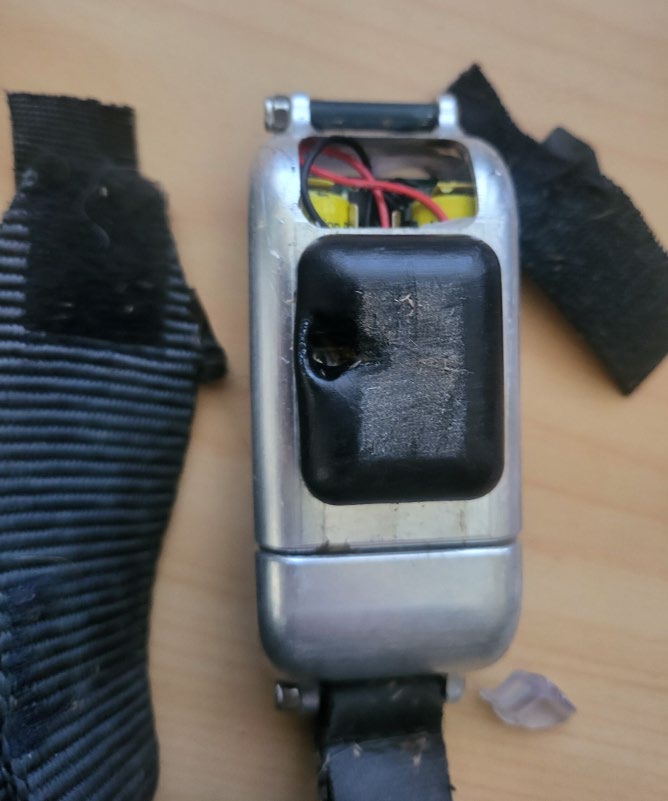
Massey University Research Project (Dr Chris Andrews) – unfortunately, the research project to use an
accelerometer on a col ar along with video recordings and GPS to train an AI model to interpret behavioural
information of a Snow Leopard failed when the col ar was too big to fit Manju. A subsequent attempt to use the
collar on Senja also failed when she removed and destroyed it. We would like to continue with this work, but it
wil depend on when a new col ar can be redesigned ensuring that it was robust enough to prevent potential
ingestion of bat eries used to power the col ar. (NB: Photos of the col ar are at ached as an Appendix to these
Minutes).
Chris had however continued to work with Auckland Zoo’s cheetah, and he presented on this work at the WAZA
Conference in October which was wel received.
HPAI – there was a discussion around what biosecurity plans were in place and it was noted that Te Nukuao
Wel ington Zoo already had a robust management plan in place. Our Senior Vet, Kirsten, was heavily involved
in government agency discussions. Council had been contacted to find out what the city-wide plan was for an
outbreak of HPAI and we had been referred to Greater Wel ington Regional Council which, as the territorial
authority, was taking the lead.
ZIMS – Nic advised that Te Nukuao Wel ington Zoo, Taronga Zoo and ZAA are set ing up a working group for
AVIs which wil include working to improve the use of tools on Species 360, and the indicator scoring system.
Simon advised that one of our ZAA accreditations is around AVIs noting that Te Nukuao Wel ington Zoo was
the only zoo using ZIMS to record these. Ngaio raised the challenge of being pragmatic when assessing the
general at itude and disposition of the animal and the issues of the application while also considering how this
affected data conclusions.
The Commit ee broke for Morning Tea and Ox Lennon joined the meeting to present on Whitaker’s Skink Genetic
Research.
5.
PRESENTATION: WHITAKER’S SKINKS GENETIC RESEARCH
(Ox Lennon in at endance)
There are only an estimated 54 Whitaker’s Skinks left in New Zealand and Te Nukuao Wel ington Zoo recently
entered a partnership with DoC, Ngāti Toa, Ngā Manu and private holders to breed Whitaker’s Skinks for
release.
The aim of this research is to:
•
inform breeding choices to maximise genetic diversity;
•
access more information to indicate provenance of putative northern male skinks;
•
inform a population viability analysis by estimating ef ective population size; and
•
compare inbreeding between populations.
To do this we needed to gather genetic details and there are several ways in which tissue can be retrieved:
freshly sloughed skin; dropped tails; buccal swabs; and, our preferred method, tail tipping. This process
removes 3-4mm cut from the tal - the incision would not normally need to be treated, the animals do not require
recovery time and can be immediately released. Al parties involved in this programme were agreed that this
was the best option to obtain the required results. The next step is to submit this proposal to Victoria University’s
Ethics Commit ee for approval.
On the basis that Ethics Commit ee approval wil be given, the next steps of this research project wil be
determined by the DNA results of the tail tipping.
6.
REPORT 3: PROPOSED ANIMAL WELFARE COMMITTEE MEETING DATES 2025
Al commit ee members were happy with the dates proposed and calendar invitations would be sent out next
week.
7.
ANY OTHER BUSINESS
AZA Animal Welfare Summit – Ngaio had attended this Summit and provided a summary of the content noting
that the quality, breadth and context of presentations was excel ent.
3
WAZA Animal Welfare Goals 2023 – the deadline for members to achieve this had been extended into 2024
and al but one Association member had met the goals.
WAZA Conference 2025 – following the conference, Chief Executive and President of Cheyenne Mountain
Zoo, Bob Chastain, Director of Cali Zoo, María Clara Dominguez (next year’s hosts) and Janet Ho from WAZA
Head Of ice visited Te Nukuao Wel ington Zoo and were impressed with the wel -maintained grounds and
habitats and the native species we visited.
The Meeting closed at 11.50am.
Wellington Zoo Animal Welfare Commit ee – Action List
Action List
Meeting
Item
Responsibility Timeline
7 June 2024
2
Matters Arising & Actions - Nic was asked to investigate the Nic
indicators in ZIMS further as the mental health indicator did not
seem to tie in overal with the Five Domains of Animal Welfare.
6 September 2024
2
Matters Arising & Actions - Simon to circulate EAZA Simon/Lois
Done
Guidelines on Pygmy Marmoset care to the Commit ee.

4
APPENDIX – Massey University Research Project: Accelerometer Col ar
5

1
MINUTES OF THE ANIMAL WELFARE COMMITTEE
HELD 11.00AM, FRIDAY 7 MARCH 2025
IN TE KŌHANGA THE NEST BOARDROOM
Present:
Nic Dunn (Acting Chair), Zel Lazarevich, Maddy Booth, Simon Eyre, Daniel Warsaw, Dr Kirsten
Anderson, Professor Ngaio Beausoleil (via Microsoft Teams), Dr Hannah Larsen (via Microsoft
Teams), Claudia Richards (via Microsoft Teams)
Others:
Lois Fyfe
Apologies:
Karen Fifield, Tim Dench, Jo Scott
1
WELCOME AND APOLOGIES Apologies were received from Karen Fifield, Tim Dench and Jo Scott.
2
DRAFT MINUTES OF THE PREVIOUS MEETING HELD 6 DECEMBER 2024
The Minutes of the Previous Meeting held 6 December 2024, as circulated, were accepted as a true and correct
record.
Matters Arising & Actions
7 June 2024:
Matters Arising & Actions - ZIMS: Nic Dunn advised that the three mental health indicators in
ZIMS are preset and were not used by Te Nukuao Wellington Zoo as they were too subjective. Other Zoos
used ZIMS but he was unsure whether they were using the mental health indicators. Ngaio Beausoleil was
interested in the thinking behind these indicators,
actions:
•
Daniel Warsaw is talking to someone from Species 360 in a couple of weeks on another matter
and he will try to find out how and why the preset Mental Health indicators were set up or ask
who we could talk to within the organisation to find out; and
•
Simon Eyre will find the right person from within the ZAA Animal Record Keeping SAG who could
have a discussion with Ngaio.
Having previously been consulted by Species 360 on some of the features, Hannah Larsen noted that they are
created by people with a certain thinking around them, but users can interpret them quite differently.
6 September 2024:
EAZA Guidelines on Pygmy Marmoset Care – Simon had circulated these to the
Committee.
3
REPORT 1: ANIMAL WELFARE
There were no Animal Welfare concerns or enquiries raised since the last meeting.
4
REPORT 2: ANIMAL SCIENCE REPORT
Nutrition Software Update – the programme is about to be rolled out now that the software issues had been
resolved and training was about to commence.
Te Kōhanga The Nest – it was the usual amount of activity for this time of year. The 16 North Island Kākā were
mostly treated for lead toxicity, trauma and cat attacks. Kirsten also explained that the nine Tūī treated were
ones that had been injured on site or from Zealandia only.
Capybara – the new male Capybara Fernando had arrived and following his quarantine will be introduced to
female Dia and hopefully they will breed.
Bashii Tiger – we continue to work with Dr Chris Andrews to get MPI and EPA approval to store Bashii’s semen
at the Tararua Breeding Centre.
2
Whitaker’s Skinks DNA Sampling – following Te Herenga Waka - Victoria University of Wellington’s Animal
Ethics Approval, 17 of the 52 skinks were “tail clipped” to ascertain their DNA and the studbook updated to give
the correct levels of relatedness so the population can be managed going forward. Outwardly, the skinks did
not react to this, however, care was needed around this language as not reacting did not necessarily mean the
animals did not feel pain.
Waipapa Taumata Rau | University of Auckland/Te Kunenga Ki Pūrehuroa | Massey Universities –
Artificial Intelligence – low level of activity in this area at present as the Meerkat group had been stabilised.
This might change when bringing in the new breeding female Meerkats.
Pipi the Penguin – this bird had escaped from the habitat three times in around five weeks, and it had reached
the stage where she could no longer be kept safely. The habitat is near to the road, bush and Monkey and
Gibbon Islands and if she escaped again she ran a high risk of being run over by a car, attacked by an animal
or lost in the bush to starve to death. Simon showed a video of Pipi’s most recent and last break out. It was
noted that if the planned habitat renovations had been completed she could have been contained successfully.
Every avenue had been explored to prevent Pipi from escaping. Pipi cannot be released back into the wild as
she has severely impaired vision in her right eye and penguins need perfect vision to hunt and to identify
predators. Kirsten Anderson felt there would not be any further improvement to Pipi’s health.
Initially, Auckland Zoo were going to take Pipi however that fell through as a change in their penguin group
meant there would no longer be any room for her. The International Antarctica Centre in Christchurch had
agreed to take Pipi temporarily until a new facility being built at the West Coast Wildlife Centre in Franz Joseph
was completed. It was noted that the West Coast Wildlife Centre are ZAA members and either have undergone
ZAA Accreditation or will be during this round of Accreditation. All pertinent information about Pipi will be passed
on to both facilities so that she can get the best care.
It might be that in the long term, being so close to humans and other penguins might not be the right thing
mentally for Pipi which would mean that euthanasia would be the outcome.
Ngaio also asked if there was a reason Pipi wasn’t removed when she was recorded trying to escape?
Husbandry Manuals – Ngaio has recently been reviewing some native species husbandry manuals (not from
Te Nukuao Wellington Zoo) and expressed some concerns about the criteria around and principles applied
when a Husbandry Manual was created or updated and in her experience some of the information was
inconsistent or too wide-ranging to be really useful, eg, a habitat humidity range from 25-90%. This was a worry
particularly for the husbandry manuals that were created as a nation-wide resource, as some less experienced
organisations relied heavily on these manuals to care for their animals. The sometimes illogical requirements
in the manuals also had an impact on habitat specifications which carried associated financial costs.
As a member of the ZAA NZ Committee,
actions:
•
Daniel will suggest to the ZAA NZ Committee that at the upcoming May workshops, a workshop
is held for members to take this on as a project to provide the criteria, principles and guidelines
for developing robust Husbandry Manuals, so that when the reviews are due there is a template
to work from; and
•
Daniel will ask the Committee if Ngaio can join the relevant workshop.
5.
ANY OTHER BUSINESS
Farewell – Zel Lazarevich advised that after eight years, this would be his last meeting as he was leaving to
take up a new role at Te Papa. Zel had enjoyed his time on the Committee and he was thanked for his
contribution.
The Meeting closed at 12.10pm.
3
Wellington Zoo Animal Welfare Committee – Action List
Action List
Meeting
Item
Responsibility
Timeline
7 March 2025
2
Matters Arising – ZIMS/Species 360
• Daniel Warsaw is talking to someone from Species 360 in a Daniel
couple of weeks on another matter and he will try to find out how
and why the Mental Health indicators were set up or ask who
we could talk to within the organisation to find out; and
• Simon Eyre will find the right person from within the ZAA Animal Simon
Record Keeping SAG who could have a discussion with Ngaio.
4
Animal Husbandry Manuals
• Daniel will suggest to the ZAA NZ Committee that at the Daniel
upcoming May ZAA NZ workshops, a workshop is held for
members to take this on as a project to provide the criteria,
principles and guidelines for developing robust Husbandry
Manuals, so that when the reviews are due there is a template
to work from; and
• Daniel will ask the Committee if Ngaio can join the relevant Daniel
workshop.

1
MINUTES OF THE ANIMAL WELFARE COMMITTEE
HELD 10.00AM, FRIDAY 6 JUNE 2025
THE ARCHIBALD
Present:
Daniel Warsaw (Chair), Simon Eyre, Nic Dunn, Maddy Booth, Tim Dench, Erin Reilly, Professor
Ngaio Beausolei, Dr Hannah Larsen, Claudia Richards
Others:
Holly Griffin, Jess Ellery (10.00-10.35am), Mitchell Rodger
Apologies:
Karen Fifield
, Dr Kirsten Anderson, Jo Scott
1
WELCOME AND APOLOGIES
Apologies were received from Kirsten Anderson and Jo Scott.
2
DRAFT MINUTES OF THE PREVIOUS MEETING HELD 7 MARCH 2025
The Minutes of the Previous Meeting held 7 March 2025, as circulated, were accepted as a true and correct
record.
Matters Arising & Actions
7 March 2025:
•
ZIMS Species 360 – Simon Eyre advised that the Mental Health Indicators are generic and would have
been set up many years ago when the Care and Welfare module was first introduced by Species 360.
This does not preclude Te Nukuao Wellington Zoo creating new indicators and sharing them with other
ZIMS using facilities, noting that once this was done they could no longer be edited. This ensures that if
someone else is using those measures that the Care and Welfare records are not made incorrect
because we have changed something. We have developed a strong relationship with Species360, which
opens up the opportunity to share feedback and input to help improve their tools and systems in the
future.
•
Animal Husbandry Manuals – Nick de Graf, ZAA Office, Sydney, had advised that AMC had raised this
issue on 27 March 2025 and going forward would develop a set of regionally relevant guidelines. Ngaio
has spoken with Todd Jenkinson (ZAA Office, NZ Manager Partnerships) about funding a PhD student
to research Kākā and Kea behaviour, which could also support husbandry manual development. Maddy
noted that, since joining the Australasian Society of Zoo Keeping (ASZK) Committee, there have been
internal discussions in the ASZK Committee about the importance of junior Keepers continuing to
develop and update husbandry manuals as part of their development. Some concerns were raised by
AWC members and Maddy is happy to raise the matter again at future ASZK Committee meetings. It
was suggested that ASZK and the ZAA Office/AMC should be encouraged to discuss this matter further
to ensure alignment.
3
REPORT 1: ANIMAL WELFARE
There was one Animal Welfare concern raised since the last meeting regarding Pipi the kororā, which had
already been discussed at the previous AWC meeting. Plans for Pipi to move to the National Antarctic Centre
have changed, and she will remain at the Zoo. A secure overnight isolation area has been created, and she
now spends full days with the penguin colony, returning voluntarily. Initial signs of distress (e.g. searching for
an exit) have ceased and her behaviour has stabilised.
Habitat upgrades are planned, supported by a private donor. These include removing the jetty to expand the
pool, relandscaping for foot health, improved nest and hiding areas, and glass barriers to prevent visitor
overreach – aligning with Sam Chiew’s research. Pipi is being monitored and her long-term stay is confirmed.
The original concern has been resolved with no further enquiries received from the reporting individual.
A process issue was raised where the Team Leader was unaware a welfare concern had been logged.
2
Action: Staff to be reminded to inform their Team Leader or Manager before submitting a welfare
concern (as outlined on the submission form), while still allowing for anonymous submissions.
ZAA Accreditation Process
(Jess Ellery in attendance)
Simon and Jess provided an overview of the recent ZAA accreditation, which occurs every three years. This
cycle included an on-the-spot welfare and AVI assessment for the Snow Leopards. Jess, spoke to her
experience of conducting a verbal assessment based on her knowledge of the animals, noting most outcomes
were positive with a few neutral areas (e.g. breeding, as they are not a breeding pair and play behaviour, due
to difficulty in evidencing play).
The purpose of the spot assessment is to ensure staff understand the Five Domains Model and how animal
welfare aligns with AVI practices. Simon noted that a minimum of five ‘blue’ scores are required; the Zoo
achieved nine, with all Chimpanzee criteria rated positively. The evolving approach to AVIs was discussed,
highlighting increased flexibility and enrichment options that allow animals to choose whether to engage, without
penalising non-participation. Snow Leopard AVIs now include multiple enrichment options, such as food and
sensory stimuli, with animals given the autonomy to engage or not. Welfare-focused practices like training for
healthcare and allowing choice (e.g. always open slide doors) were emphasised. Safety procedures, SOPs,
and considerations for visitor interaction were also part of the assessment. Conservation outcomes are now a
requirement for accreditation, along with a desktop review of policies, all of which were met.
The Zoo has been reaccredited for another three years, with Jess confirming the process was a positive
experience.
4
REPORT 2: ANIMAL SCIENCE REPORT
Te Kōhanga Patients –
a few unusual cases were admitted, following DOC and MPI removing animals from
a rehabber. These are still required entry into the system.
Transfers – several skinks and a two spider monkeys were transferred in; no transfers out.
Animal Deaths: Two deaths occurred – an elderly Wallaby and a Chimpanzee. The Chimp was euthanised
due to rapid health decline, primarily caused by heart issues and other age-related factors. This has led to a
stronger focus on Chimp heart health, with increased monitoring and training for blood pressure readings and
general anaesthesia protocols. A new external monitoring tower is planned to assist with reintroductions.
Zoo Monitor: Ongoing monitoring of Pipi the kororā continues.
Veterinary Tools – Kelly-Anne Kelleher (Keeper) will bring a veterinary probe to support ultrasound training;
Simon will 3D print a wand for it.
Whitaker’s Skink Program –
DNA sampling is underway. The Pukerua Bay population is extinct in the wild;
remaining individuals are closely related. Plans are progressing to reintroduce skinks to Pukerua Bay and
potentially Mana Island, with input from DOC. There is also consideration of integrating individuals from
Mercury Island to strengthen genetic diversity. During this discussion Erin confirmed she has a contact at
Whittaker’s (Chocolate) and will explore a potential partnership opportunity with Sian Robertson (Partnerships
Manager).
AI Research: Ongoing collaboration with Auckland and Massey Universities, including Chris Andrew and
Murray Potter, is exploring the use of AI in the Whitaker’s skink project.
5
PRESENTATION: AI Technology (Mitchell Rogers)
Mitchell presented on his ongoing work since 2022 using computer vision and causal structure discovery to
model Meerkat behaviour. The project, which has now also extended into sport applications with MBIE, focuses
on two key research areas: computer vision and action modelling.
3
Mitchell outlined a proposed future project on visual grounding of animal vocalisations – training AI to
associate animal sounds with visual sources in video footage without explicit labels. The aim is to build an
audio-visual dataset across species in a zoo environment to support this learning.
Mitchell thanked the Zoo for its support.
6
PRESENTATION: Technology & Animal Welfare (Simon Eyre)
Simon gave a presentation on the use of technology in animal welfare. Following Daniel’s visit to Disney’s
Animal Kingdom, where 3D enrichment items were observed, a 3D printer was purchased and has since been
used to create enrichment tools for various species using freely available designs. Simon highlighted other
opportunities for applying technology in animal care. For example, data from the data logger devices (e.g. in
the Whitaker’s skink program) can now be uploaded into ZIMS, improving data integration.
Daniel thanked Simon for his presentation and noted that several elements have been incorporated into the
broader Technology Strategy.
7
ANY OTHER BUSINESS Departing Committee Members
: Daniel thanked Tim, Maddy and Jo for their contributions to the AWC as their
terms come to an end. Tim expressed his appreciation for the opportunity to be part of the Committee, noting
it provided valuable insight into animal welfare and research, which he can incorporate into Learning Workshops
and Holiday Programme. Maddy also shared that she has enjoyed her time on the Committee.
The Meeting closed at 12.00pm. Daniel requested that the tour of the Wild Theatre be rescheduled to a future
meeting due to time constraints, as the meeting had run over the agenda schedule.
4
Wellington Zoo Animal Welfare Committee – Action List
Action List
Meeting Item
Responsibility
Timeline
6 June 2025
Animal Welfare: Staff to be reminded to inform their Team
Leader or Manager before submitting a welfare concern (as Simon
outlined on the submission form), while still allowing for
anonymous submissions.

1
MINUTES OF THE ANIMAL WELFARE COMMITTEE
HELD 10.00AM, FRIDAY 5 SEPTEMBER 2025
TE KŌHANGA BOARDROOM
Present:
Karen Fifield (Chair), Simon Eyre, Nic Dunn, Dr Hannah Larsen, Claudia Richards, Rob Harland,
Erin Reilly, Kelly-Anne Kel eher, Emma Basset , Fiona Esam, Emily Hince (via Microsoft Teams),
Professor Ngaio Beausoleil (10.20am, via Microsoft Teams)
Others:
Lois Fyfe (Secretary), Matt Fraser (10.20-11.00am)
1
WELCOME AND APOLOGIES
Karen welcomed everyone to the meeting and suggested a round robin of introductions as it was the first
meeting with new staff representatives, Kelly-Anne, Emily, Emma and Fiona. Karen thanked Emily for joining
online during her holiday.
2
DRAFT MINUTES OF THE PREVIOUS MEETING HELD 6 JUNE 2025
The Minutes of the Previous Meeting held 6 June 2025, as circulated, were accepted as a true and correct
record. It was requested that the Minutes general y be reported without identifying individuals, however, it was
acknowledged that on occasion this may be required to provide context.
Matters Arising & Actions
6 June 2025:
Animal Welfare – staff were reminded to inform their Team Leader or Manager before submit ing
a welfare concern.
3
REPORT 1: ANIMAL WELFARE
There had been no internal or external animal welfare enquiries since the last Animal Welfare Commit ee
meeting.
4
REPORT 2: ANIMAL SCIENCE REPORT
Simon Eyre noted that there was a typo in his report, 58 wildlife patients had been treated at Te Kōhanga, not
the reported 158. Also, for the record, the Emerald Catfish referred to in the Animal Science Report had in fact
been euthanised rather than found dead in the habitat.
Deaths – Ring-tailed Lemurs - there was a discussion prompted by the deaths of the two Ring-tailed Lemurs
and the subsequent proposal to move the male Ring-tailed Lemurs to Grassland Cats which would hopefully
minimise further incidents of female aggression. The uncommonly prolonged breeding season was contributing
to the unrest and this situation was being experienced by other zoos and could possibly be at ributed to climate
change.
When setting out to build our RT Lemur troop in 2021 it was with the understanding that the males could be
moved out to other zoos, however, it has transpired that al other options for moving males are currently sitting
at the same levels of capacity as Te Nukuao Wellington Zoo. As a social species, RT Lemurs need to breed to
maintain the social cohesion of the group thus we need to bring in a new, genetical y unrelated male to do so.
This raised a bigger issue around species planning within Zoos and the decisions made by external species
coordinators who may not ful y understand the impact of their decisions, particularly on individual animals.
Examples at Te Nukuao Wel ington Zoo are the possible need to move one of the Snow Leopards due to
potential animal welfare concerns but no spaces are available, and the Nyala for which there are spaces
available in Australia but they are not interested in the import and quarantine process when they can easily
access animals locally.
Nic Dunn is at ending the joint TAG meeting in Taipei in April 2026 where it is hoped the situation, which affects
all zoo associations, can be discussed in more detail.
Mat Fraser joined the meeting at 10.20am.
2
Whitaker Skink’s - the Whitaker Skink data sampling had revealed that the genetic status of this remnant
population is significantly bet er than was previously thought which has enabled breeding and transfer
recommendations to be prepared for the coming year to two years.
AI Work with Auckland University – while using AI to monitor Whitaker’s Skinks will not replace human
observation, it will time stamp the periods of Skink activity which will then enable keepers to be present at those
times. Breeding time of the year was general y known, however the number of of spring was more dif icult to
predict. Simon noted that since Te Nukuao Wel ington Zoo’s involvement in the programme, the death rate for
young skinks had dropped from 82% to 35%, which was substantial y accredited to being able to hold the
youngsters individual y.
Professor Ngaio Beausoleil joined the meeting at 10.25am and apologised for lateness.
5
REPORT 3: GOALS & PRIORITIES OF ANIMAL WELFARE WORKING GROUPS
Kelly-Anne Kel eher had undertaken a very comprehensive review of each of the four Animal Welfare Working
Groups: Animal Training; Enrichment; Habitat; and Nutrition. These groups had been established by Nic Dunn
in 2022 but, in recent times, had been operating at dif ering levels of activity. Kelly-Anne had refreshed each
group by reviewing their objectives, providing the Chairs (formerly known as Champions) with job descriptions,
appointing Deputy Chairs, set ing out new expectations and put ing in place more detailed record keeping.
The outcome of these reviews would make the welfare working groups more structured and streamlined, had
put in place goals for each, would provide a complete picture of animal welfare, and bring targeted reports to
this Commit ee and across the organisation. The new look animal welfare working groups would be launched
next week with a meeting to go through the revamped process.
Kelly-Anne was thanked for the enormous amount of work she had done in reviewing and refreshing the Animal
Welfare Working Groups. Her role going forward wil be to act as a moderator across the four welfare working
groups to ensure there was crossover between each of them.
6
PRESENTATION: Nutrition Animal Welfare Working Group
(Mat Fraser in at endance)
Fol owing on from and directly related to the previous Agenda Item, Mat Fraser presented on the work done
via the Nutrition Animal Welfare Working Group to develop a new process for diet reviews for al species at Te
Nukuao Wel ington Zoo.
Mat ’s presentation drew at ention to the challenges faced with the zoo diets of the Squirrel Monkeys, Ngima
the Red Panda, and the Lace Monitors. Other diets currently under review included: B&W Ruf ed Lemur;
Capybara; Sun Bear; Ostrich and most of our bird species. A further goal for this WWG was to present the
importance of proper nutrition and the zoo’s new process to the animal care teams, and to ensure the nutritional
data was input into Zoo Diet Navigator.
Mat was thanked for his presentation today and the Commit ee acknowledged the huge amount of work he
had done to reach this stage.
The Commit ee took a break for morning tea from 10.50-11.20am.
7
REPORT 4: AWC CHARTER REVIEW
The Commit ee reviewed the AWC Charter which was done every two years to align with bringing new staf
representatives onto the Commit ee. It was noted that the composition of the Commit ee was altered to reflect
that a veterinarian would be on the Commit ee rather than the Senior Veterinarian. There were no other
substantive changes to the Charter.
8
MEETING DATES 2026
There had not been any issues with the proposed meeting dates for 2026 and calendar invitations would be
sent out in due course.
3
9
GENERAL BUSINESS
Info & Readings -
The beastly dilemma facing Europe’s zoos – to cul or not to cul – this article had shown an
interesting perception on some European zoos’ decisions to not only cul their animals but to subsequently feed
these to other animals at the zoo. This wil be discussed at the WAZA Conference in October with the Council
possibly deciding on a position statement.
WAZA Non-Member zoos – there had been much discussion in WAZA associations globally around animal
acquisitions and transfer..
Masters Degree (Claudia Richards)
Claudia Richards was congratulated on graduating with a Masters of Science, International Animal Welfare,
Ethics & Law degree from the University of Edinburgh. This was an online, flexible course which enabled
Claudia to work ful time during the three years it took her to complete. The content of the Masters degree was
very interesting and she had made many global connections, noting that there was a very dif erent train of
thought on the other side of the world.
Animal Care Manuals –
action: Nic to present on these at the next AWC Meeting.
The Meeting closed at 11.50am.
Wellington Zoo Animal Welfare Commit ee – Action List
Action List
Meeting Item
Responsibility Timeline
5 September 2025
9
General Business: Animal Care Manuals – on next Agenda.
Lois/Nic

1
MINUTES OF THE ANIMAL WELFARE COMMITTEE
HELD 10.10AM, FRIDAY 5 DECEMBER 2025
TE KŌHANGA BOARDROOM
Present:
Karen Fifield (Chair), Simon Eyre, Nic Dunn, Dr Hannah Larsen, Claudia Richards (via Microsoft
Teams), Rob Harland, Erin Reil y (via Microsoft Teams) Kelly-Anne Kelleher, Emma Basset , Fiona
Esam, Emily Hince, Professor Ngaio Beausoleil
Others:
Lois Fyfe (Secretary), Kate Irving (10.25-11.05am)
1
WELCOME AND APOLOGIES
As she was unable to at end the meeting today,
action: Maddy would be invited to attend the March 2026
AWC meeting. Ash Vinicombe, Chair of the Animal Training Welfare Working Group, was also unable to at end
today.
2
DRAFT MINUTES OF THE PREVIOUS MEETING HELD 5 SEPTEMBER 2025
The Minutes of the Previous Meeting held 5 September 2025, as circulated, were accepted as a true and correct
record. It was noted that Nic Dunn would not now be travel ing to Taipei to attend the joint TAG meeting.
Matters Arising & Actions
5 September 2025:
Animal Care Manuals – see Agenda Item 6, Report 3.
3
REPORT 1: ANIMAL WELFARE
There had been no internal or external animal welfare enquiries since the last Animal Welfare Commit ee
meeting.
4
REPORT 2: ANIMAL SCIENCE REPORT
The Report was taken as read.
Data Loggers - new commercial wireless data loggers (at a cost of $3.00 each) were now in use in all Te
Piringa Iti habitats. These loggers recorded both temperature and humidity but rather than recording at fixed
times, they were triggered at 0.01 movement.
Action: Simon to send Hannah information on the data
loggers.
LGOIMA – Te Nukuao Wel ington Zoo had received a LGOIMA for a list of al animals in our care and their
individual conservation impact. It was not thought that there was any concern around this request, simply an
interested member of the community.
“The Effects of Light on Vertebrate Welfare” – there was a discussion around this research document
included in the Commit ee papers. It was agreed that considerations like this – and other external influences
such as the impact of noises and vibrations on animals in human care - needed to be considered in future
habitat design.
Actions:
•
Hannah to circulate a WAP report, “The Ground Beneath Joyce: what science reveals about her
captivity at Six Flags” to the Committee;
•
Emily to talk to Nic and Simon about the lights used for tours of diurnal species during sleepover
tours; and
•
Karen to talk to 360 Species about using their data to further understand the impacts of light,
vibrations and noise on animals in human care.
Kate Irving joined the meeting at 10.25am.
5
PRESENTATION: ANIMAL TRAINING WELFARE WORKING GROUP
In the absence of Chair Ash Vinicombe, Kel y Anne Kel eher and Kate Irving presented on the work of the
Animal Training Welfare Working Group.
2
The presentation included a chart showing the representatives on each of the four Welfare Working Groups;
the Training Plan; and updated which animals on each of the sections were currently being trained. Separately,
Kate ran through the training being done on the E&B section with the Derbyans, Monal, Weka, Kororā and Lace
Monitors, sometimes needing to introduce procedures which accommodated specific dietary requirements.
Kelly-Anne emphasised the importance of investing in staf development, thus some resources for keepers to
increase their animal training skil s would be col ated.
Kate and Kel y-Anne were thanked for their presentation.
Kate left the meeting at 11.05am.
6
REPORT 3: ANIMAL CARE MANUALS
Nic Dunn updated the Commit ee on the ongoing work to develop Animal Care Manuals for all species held at
Te Nukuao Wel ington Zoo. Until recently, animal care manuals consisted of ZAA best practice (although this
should possibly now be more appropriately referred to as “bet er” practice), AZA and EAZA guidelines and
some level of “folklore”. ZAA were in the process of developing a template for animal care manuals but it would
take some time to complete but Te Nukuao Wel ington Zoo decided to start working on these now.
Nic showed an animal care manual template that was easy to use and covered al aspects of animal care, eg
diet, age risk assessment, competency check process, keeper routines etc. A keeper on an ACC return to work
programme had already produced ten mammal animal care manuals to a wel -developed level and once
finalised these would be updated annual y. The information gathered around native species had been shared
with DOC and MPI.
Ngaio and Hannah had agreed to review a sample of the Animal Care Manuals when they were completed.
7
WAZA ANIMAL WELFARE STRATEGY - 2025
Karen Fifield advised that fol owing an intensive review by 40 experienced animal welfare professionals, the
WAZA Animal Welfare Strategy 2025 had been relaunched at the recent WAZA Conference. This replaced the
first strategy released in 2015. WAZA had also introduced an Animal Welfare Award this year which was won
by Toronto Zoo.
8
GENERAL BUSINESS
Annual Species Planning Workshop – Te Nukuao Wel ington Zoo would undertake a Species Planning
Workshop in December (to be reviewed annually) which would complement our other business planning
processes such as budgets, renewals and the SoI. The Workshop will involve appropriate staf from across
most areas of the Zoo.
An example of the importance of species planning both within New Zealand and global y was cited with the
current situation of our two Snow Leopards. Due to their animosity towards each other, one needed to be
permanently relocated, however, finding a placement for these animals at another zoo was proving difficult at
this time. In the meantime, precautions had been put in place to protect both cats and we would continue to
look for a suitable placement.
Staying with the species planning theme, a general discussion ensued around Colossal and its de-extinction
strategy and the Indian wildlife park, Vantara, which was being closely monitored by WAZA.
The Meeting closed at 11.50am.
3
Wellington Zoo Animal Welfare Commit ee – Action List
Action List
Meeting Item
Responsibility Timeline
5 December 2025
1
AWC Committee Meeting – March 2026 – Maddy Booth to be invited Lois/Maddy
Done
to the March meeting as an observer.
4
Data Loggers – Simon to send information on new data loggers to Simon
Done
Hannah.
4
“The Effects of Light on Vertebrate Welfare” –
• Hannah to circulate a report to the Commit ee relating to the impact Hannah/Lois
Done
the underground vibrations at Six Flags amusement park had on the
animals in situ, namely an elephant named Joyce;
• Emily to talk to Nic and Simon about the lights used for tours of Emily/Nic/Simon
diurnal species during sleepover tours; and
• Karen to talk to 360 Species about using their data to further Karen
understand the impacts of light, vibrations and noise on animals in
human care.

Z O O A N D A Q U A R I U M A S S O C I A T O N
ACCREDITATION FINAL
REPORT
This document is a strictly confidential report to and solely for the use of the recipient.
Wellington Zoo
200 Daniell Street, Newtown, Wellington 6021
Site Visit Review Date: 25/02/2025
W e l l i n g t o n Z o o A C C R E D I T A T I O N F I N A L R E P O R T
E X E C U T I V E S U M M A R Y
R E P O R T A N D V I S I T D E T A I L S
ALO Simon Eyre
OTHER STAFF
Todd Jenkinson | ZAA Executive
PRIMARY ASSESSOR
ZAA SITE VISIT OFFICER Todd Jenkinson | ZAA Executive Office
Office
REPORT DATE 26th February 2025
W e l l in g to n Z o o has met ZAA Accreditation criteria in the following way:
Welfare Assessment Tool
• Five positive findings were achieved for all eight welfare-assessed species and
validated
• No negative findings confirmed
• No unresolved findings and no corrective actions identified
‘Mystery’ species assessment
• The ‘mystery species’ welfare assessment demonstrated staff knowledge and
understanding of organisational systems that embed understanding and
application of the promotion of positive welfare.
•
21 Declared circumstances for which welfare support was confirmed
• Animal Visitor Interaction
o All AVI’s are supported by an SOP to ensure consistency of all staff and
include providing the AVI animals choice and control to participate or
not in the encounter.
o Any food used during the encounter is a portion of their daily diet, and
no food is withheld to encourage participation in the AVI’s.
Declaration Form
o Comprehensive records are kept on each encounter so trends can be
accessed of animals in the encounters over time.
o
The Snow Leopard AVI’s was discussed with staff as a sample of an
encounter procedure
•
General Site Tour, including off-display areas, indicated alignment of the
welfare circumstances of the animal population with the outcomes of species
selected for a specific assessment.
• All items selected for the Desktop Assessment aligned with the ZAA
Desktop Assessment Tool
Requirements and the Policy documents were of a high standard.
Conservation Validation Tool
• All items for the Conservation Validation Tool were validated on-line.
Observations on site confirms general alignment with the organisations self-assessment
General Site Tour
findings. No significant contradictions identified.
Follow-up Required?
No Follow-up requirements identified.
Assessor Sign-Off:
I affirm that our audit procedures were diligently executed and aligned with professional standards and believe that the
outcomes presented in this report accurately represents the current situation of Wellington Zoo.
Page
1 of
14

W e l l i n g t o n Z o o A C C R E D I T A T I O N F I N A L R E P O R T
NAME:
Todd Jenkinson | ZAA Executive Office
DATE:
26th February 2025
Page
2 of
14
link to page 22 link to page 23 link to page 24 link to page 24 link to page 24 link to page 26 link to page 26 link to page 27 link to page 28 link to page 31 link to page 32
W e l l i n g t o n Z o o A C C R E D I T A T I O N F I N A L R E P O R T
C O N T E N T S
Contents .................................................................................................................................................................. 3
Introduction ........................................................................................................................................................ 4
Program Feedback .............................................................................................................................................. 5
Commendable Observations .......................................................................................................................... 5
Comment from Reviewer ............................................................................................................................... 5
Record of Actions Required & Results ............................................................
Error! Bookmark not defined.
Final Assessment Outcomes ............................................................................................................................... 7
Final Welfare Assessment Summary .............................................................................................................. 7
Finalised Declaration Form Information ........................................................................................................ 8
Final Desktop Assessment Summary.............................................................................................................. 9
Final Conservation Database categories validated ...................................................................................... 12
Appendix 1: Interpreting Welfare Findings ........................................................................................................... 13
Page
3 of
14
W e l l i n g t o n Z o o A C C R E D I T A T I O N F I N A L R E P O R T
INTRODUCTION
This document summarises the Zoo and Aquarium Association (ZAA)’s Accreditation assessment undertaken at Wellington Zoo.
It serves as a record of what was assessed and validated, and any findings made in accordance with the Accreditation Program’s
criteria, so that a recommendation for Accreditation can be made.
The ZAA Accreditation Program (the Program) conducts a rigorous and thorough assessment process to verify that organisations
meet the Program’s Requirements. These requirements include successful demonstrations of the following:
• Positive Welfare: Confirming animals are in a state of Positive Welfare.
• Capacity to Promote Positive Welfare: Implementing systems to promote and maintain Positive Welfare.
• Safety Commitment: Safety is taken seriously.
• Biosecurity Management: Maintaining good biosecurity on site.
• Environmental Impact (Sustainability): Managing business impact on the environment.
• Conservation Engagement: Actively contributing to conservation effort.
The findings and observations in this report are the result of the validation process applied to an organisations submitted self-
assessments. A site visit and review, conducted by a ZAA representative and guided by the relevant criteria, is undertaken to
validate the organisation’s declarations and self-assessment findings.
In the spirit of mutual trust and respect, this report acknowledges information presented by the organisation as legitimate and
truthful. Accreditation status for an organization may be reviewed during its accredited period if there is sufficient cause to
address any conflicting information that might undermine the legitimacy of the provided data.
How to use this report & Confidentiality
Conferral of Accreditation is determined by appraisal of this Report by the ZAA Standards and Accreditation Committee (SAC)
and is approved by the ZAA Board.
This report is confidential. It must not be released for general consumption without prior acknowledgement or approval from
Wellington Zoo and the ZAA Executive office.
Please retain a copy of this report for future reference and to assist with ensuring continued compliance with the Programs’
Requirements. It may also aid with preparations for future Accreditation renewal.
Intellectual Property
The overall program structure and associated reporting templates of the
ZAA Accreditation Program remain the intellectual
property of the Zoo and Aquarium Association.
For assistance in appropriately interpreting information contained in this report, please contact the ZAA Executive Office.
Follow up actions required
NIL
Next Accreditation renewal date for Wellington Zoo:
February 2028
Page
4 of
14
W e l l i n g t o n Z o o A C C R E D I T A T I O N F I N A L R E P O R T
PROGRAM FEEDBACK
Commendable Observations
During the review, the following observations were noted as commendable.
CF DAT 01
All policies and procedure submitted as evidence for the Desktop Assessment were of a very high quality
with no follow-ups or clarification required.
CF WAT 01
Throughout the process, Wellington Zoo has demonstrated a position of taking the review very seriously and
transparently. A significant degree of work has gone into the self-assessments. Self-assessment and
submission of information are of high quality.
CF OBS 01
Support for the Accreditation program through staff engagement in documentation preparation and
organisation of the site review. On-site discussions and completion of documents significantly facilitated the
validation process.
CF OBS 02
RECORDS—Wellington Zoo’s animal care team's general process for keeping records across the organisation
by staff is to be commended.
Comment from Reviewer
• Wellington Zoo’s online submission was well-organised, structured and delivered on time. Evidence compiled for the
species welfare assessments were accurate and concise, reflecting familiarity and understanding of the application of
the assessment tool, which greatly facilitated the validation process.
• Species Welfare Assessment Tools (WAT): Eight species were welfare self-assessed, with 14 items listed to be clarified
(ITC) for the Site Review.
• Wellington Zoo was prepared well for the Site review and participated positively and openly.
• Six staff members participated in the site review.
• Several discussions on the interpretation of Five Domains criteria clearly demonstrated that staff are motivated to
enhance the welfare of their animals, with staff seeking to build on their knowledge and ability to accurately apply the
welfare assessment tool.
• All agenda items for the site review were discussed, resolved and viewed.
• All 14 WAT items to clarify were resolved:
o Eight self-assessment findings were confirmed
o Six self-assessment findings were adjusted
WAT Findings adjusted at Site Visit
Agreed Finding outcome
Cave Tetra
Food Variety
Positive Additional evidence provided during the site visit to support a positive
finding
Chimpanzee
Thermal Range
Positive Additional evidence provided during the site visit to support a positive
finding
Meerkat
Thermal Range
Positive Additional evidence provided during the site visit to support a positive
finding
Meerkat
Body Condition
Neutral Agreed on a neutral finding during the site visit
Meerkat
Play
Neutral Agreed on a neutral finding during the site visit
Sumatran Tiger
Food Intake
Positive Additional evidence provided during the site visit to support a positive
finding
Sumatran Tiger
Body Condition
Positive Additional evidence provided during the site visit to support a positive
finding
Sumatran Tiger
Bonding
Neutral Agreed on a neutral finding during the site visit
Sumatran Tiger
Rearing of Young
Neutral Agreed on a neutral finding during the site visit
Sumatran Tiger
Play
Neutral Agreed on a neutral finding during the site visit
Page
5 of
14
W e l l i n g t o n Z o o A C C R E D I T A T I O N F I N A L R E P O R T
WAT Findings adjusted at Site Visit
Agreed Finding outcome
Tasmanian Devil
Body Condition
Positive Additional evidence provided during the site visit to support a positive
finding
Tasmanian Devil
Play
Neutral Agreed on a neutral finding during the site visit
Tuatara
Food Intake
Positive Additional evidence provided during the site visit to support a positive
finding
Tuatara
Thermal Range
Positive Additional evidence provided during the site visit to support a positive
finding
Page
6 of
14
W e l l i n g t o n Z o o A C C R E D I T A T I O N F I N A L R E P O R T
FINAL ASSESSMENT OUTCOMES
Final Welfare Assessment Summary
The table below provides the final concluded outcome of the reviews. Although these can change over time, it provides a good
‘snapshot’ for future reference. Please refer to
Appendix 1 for information in how to interpret this table.
Criteria
Cave
Sumatran
Swamp
Tasmanian
Tuatara
Chimpanzee
Kea
Meerkat
Tetra
Tiger
Wallaby
Devil
Domain 1: Nutrition
1.1
Food Intake
1.2
Food Variety
1.3
Water intake
n/a
n/a
n/a
n/a
n/a
n/a
n/a
n/a
Food quality
n/a
n/a
n/a
n/a
n/a
n/a
n/a
n/a
/balance
Food quantity
n/a
n/a
n/a
n/a
n/a
n/a
n/a
n/a
Domain 2: Environment
2.1
Thermal Range
2.2
Substrate
Suitability
2.3
Free movement
n/a
n/a
n/a
n/a
n/a
n/a
n/a
n/a
Fresh air
n/a
n/a
n/a
n/a
n/a
n/a
n/a
Noise
n/a
n/a
n/a
n/a
n/a
n/a
n/a
n/a
Light
n/a
n/a
n/a
n/a
n/a
n/a
n/a
n/a
Smell/odour
n/a
n/a
n/a
n/a
n/a
n/a
n/a
n/a
Variability
n/a
n/a
n/a
n/a
n/a
n/a
n/a
n/a
Predictability
n/a
n/a
n/a
n/a
n/a
n/a
n/a
n/a
Domain 3: Health
3.1
Disease
3.2
Injury
3.3
Functional
Impairment
3.4
Body condition
3.5
Fitness
n/a
n/a
n/a
n/a
n/a
n/a
n/a
n/a
Domain 4: Behaviour
4.1
Exploration
4.2
Foraging/Hunting
4.3
Bonding
4.4
Rearing Young
4.5
Playing
4.6
Sexual Activity
4.7
Refuge
4.8
Engaging Choices
n/a
n/a
n/a
n/a
n/a
n/a
n/a
n/a
Sensory inputs
n/a
n/a
n/a
n/a
n/a
n/a
n/a
n/a
Sleep/rest
n/a
n/a
n/a
n/a
n/a
n/a
n/a
n/a
Table colours - each colour in the table represents the welfare assessment findings validated on the day of review.
Blue
A positive finding
Green
A neutral finding (i.e., positive or negative could not be confirmed). For
NDA See *No Data Available
Red
A negative finding
* No Data Available (NDA) - When assessing welfare, there will be cases where there is insufficient established knowledge
about the species to determine if certain experiences occur and how they can be recognised. Where no scientific data is
available (e.g., for a species evolved to eat one food type, do pleasures from tastes occur?), an NDA is applied, making the
finding essentially Neutral.
This category can also be utilised where findings are not applicable (n/a) as it essentially refers to the same issue.
Page
7 of
14
W e l l i n g t o n Z o o A C C R E D I T A T I O N F I N A L R E P O R T
Finalised Declaration Form Information
Please refer to the attached Declaration form, Attachment 1 , for the details (including any updates as a result of the Site Visit )
will consolidate information into this report).
No additional items identified to be added to declaration. No further instances were identified or presented during the course of
the review.
OBSERVED ELEMENT (species,
facility, activity)
OBSERVATION DETAILS
Outcome/Action Required
Kea (Animals of social Species
Now introduced to the two other kea at the
No further action is required
housed individually)
zoo
Monal Pheasant (Animals of
An aged bird and we are unable to source a
No further action is required
social Species housed
suitable companion. Not a suitable candidate
individually)
for transfer (due to age). Will live its life at the
zoo with its welfare supported
Single Capybara (Animals of
This individual to be paired with another
No further action is required
social Species housed
single Capybara from Brooklands Zoo. Pre-
individually)
transfer testing has occurred, and the transfer
is to happen in the next two weeks.
Giraffe (Animals with
Dental issues with one this Giraffe, which
No further action is required
Abnormal / repetitive
were the cause of some oral stereotypies. GA
behaviours)
has been completed to remove tooth spurs
that have reduced the head flicking
stereotypies.
Little Blue Penguins (Animals
Ex rescue/rehab birds and as such a number
No further action is required
with significant functional
of them have physical impairments. The long-
impairment / experiencing
term welfare of individuals with the physical
long-term health issues)
impairments is managed by the animal care
team and the zoo vets.
Ring-Tailed Lemur (Animals
Amputated tail. This impairment does not
No further action is required
with significant functional
affect the range of locomotion of this
impairment / experiencing
individual and is able to freely move
long-term health issues)
throughout the habitat including climbing
structures provided.
Golden Lion Tamarin (Animals Missing part of tail and has a slightly twisted
No further action is required
with significant functional
toe. This impairment does not affect the
impairment / experiencing
range of locomotion of this individual and is
long-term health issues)
able to freely move throughout the habitat
including climbing structures provided.
Giraffe (Animals with
One additional individual identified. Male
No further action is required
significant functional
giraffe with a missing eye.
impairment / experiencing
This animal was imported from Australia with
long-term health issues)
the missing eye after a bird attack. The
impairment does not affect the giraffe's
ability to carry out behaviours to feed or
interact with the other conspecifics in its
habitat.
Multiple Species – see
• All AVI’s are supported by an SOP to
No further action is required
declaration Form for details
ensure consistency of all staff and include
(Instances where direct
providing the AVI animals choice and
contact, feeding or up-close
control to participate or not in the
encounter is allowed)
encounter.
• Any food used during the encounter is a
portion of their daily diet, and no food is
withheld to encourage participation in
the AVI’s.
• Comprehensive records are kept on each
encounter so trends can be accessed of
animals in the encounters over time.
Page
8 of
14
W e l l i n g t o n Z o o A C C R E D I T A T I O N F I N A L R E P O R T
OBSERVED ELEMENT (species,
facility, activity)
OBSERVATION DETAILS
Outcome/Action Required
• The Snow Leopard AVI’s was discussed
with staff during the site visit as a sample
of an encounter procedure.
Locust, crickets and
Insect distribution and breeding areas were
No further action is required
mealworms (Animals bred or
visited, and husbandry and care were
housed as food stock on site)
outlined.
Domestic Dog (Pets and
Domestic dogs are brought into the zoo by
No further action is required
working animals
office staff in Langridge House. The dogs stay
housed/cared for onsite)
specifically at the office when on site and are
always cared for by their owners. No
biosecurity concerns have been identified by
zoo staff.
Final Desktop Assessment Summary
The table below shows which Desktop Assessment criteria were validated against the Members organisational documentation at
the end of this review.
Desktop
Reviewed /
Reviewed /
ZAA Requirement category
Criteria No.
Complete
Incomplete
1. Positive Welfare
1.1
Positive Welfare Leadership and
1.1.1
X
Commitment
1.1.2
1.1.3
X
1.2
Animal Health Management
1.2.1
1.2.2
X
1.2.3
1.2.4
X
1.3
Population Management
1.3.1
X
1.3.2
1.3.3
1.3.4
X
1.3.5
X
1.4
Animal Acquisition & Disposition
1.4.1
1.4.2
X
1.4.2a
X
1.4.2b
X
1.4.2c
1.4.2d
1.4.2e
1.4.2f
X
1.5
Nutrition
1.5.1
X
1.5.1a
X
1.5.1b
1.5.1c
X
1.5.2
1.6
Site Security
1.6.1
X
1.6.1a
1.6.2
X
1.6.3
1.6.3a
X
Page
9 of
14
W e l l i n g t o n Z o o A C C R E D I T A T I O N F I N A L R E P O R T
Desktop
Reviewed /
Reviewed /
ZAA Requirement category
Criteria No.
Complete
Incomplete
1.7
Animal Record Keeping
1.7.1
1.7.1a
1.7.2
X
1.7.3a
X
1.7.3b
1.7.3c
X
1.7.3d
X
1.8
Animal Euthanasia
1.8.1
X
1.8.2
X
1.8.2a
1.8.2b
1.8.2c
X
1.8.2d
X
1.8.2e
1.9
Changes to an organisation's
1.9.1
X
position of solvency
1.9.2
2.
Taking Safety Seriously
2.1
Leadership and Commitment
2.1.1
X
2.2
Working with Dangerous Animals
2.2.1
2.2.2
X
2.2.2a
2.2.3
X
2.2.3a
2.2.3b
2.2.3c
2.2.3d
X
2.2.3e
X
2.2.4
X
2.2.4a
2.2.4b
2.2.4c
2.2.4c 1
2.2.4c 2
X
2.2.4c 3
X
2.2.4c 4
X
2.2.4c 5
X
2.2.5
X
2.2.5a
X
2.2.5b
2.2.6
2.2.6a
2.2.6b
X
2.2.7
X
2.2.8
2.2.9
X
2.3
Animal Escape
2.3.1
X
2.3.2
X
2.3.3
2.3.4
Page
10 of
14
W e l l i n g t o n Z o o A C C R E D I T A T I O N F I N A L R E P O R T
Desktop
Reviewed /
Reviewed /
ZAA Requirement category
Criteria No.
Complete
Incomplete
2.3.5
X
2.3.6
X
2.3.7
2.3.8
2.3.9
X
2.3.10
X
2.3.11
2.3.12
2.3.13
X
2.3.14
2.3.15
2.3.16
X
2.3.17
2.3.18
X
3. Biosecurity
3.1
Leadership and Commitment
3.1.1
3.1.2
X
3.1.3
3.1.4
X
3.1.4a
X
3.2
Continuous Improvement
3.2.1
3.2.1a
X
3.2.2
X
4. Sustainability
4.1
Leadership and Commitment
4.1.1
X
4.1.2
X
4.1.3
4.1.4
4.1.4a
X
4.2
Continuous Improvement
4.2.1
X
4.2.1a
4.2.2
X
Page
11 of
14
W e l l i n g t o n Z o o A C C R E D I T A T I O N F I N A L R E P O R T
Final Conservation Database categories validated
Wellington Zoo has been recognised for working towards conservation in the following ways:
Subject Area sampled:
Program Name
Detail
☒ Cat. 1
Breeding Program
Whitaker's skink
Validated
☒ Cat. 2
In Situ Programs
Fauna and Flora - chimps
Validated
programme
☒ Cat. 3
Biological Research
Chatham Islands Tāiko
Validated
☒ Cat. 4
Education
Zoo Education
Validated
☒ Cat. 5 Onsite Advocacy
Create gecko gardens
Validated
☒ Cat. 8 Wildlife Rescue
Zoo Wildlife Rescue
Validated
Signed (ZAA Representative)
DATE:
26TH February 2025
NAME:
Todd Jenkinson
EMAIL:
[email address]
Page
12 of
14
W e l l i n g t o n Z o o A C C R E D I T A T I O N F I N A L R E P O R T
A P P E N D I X 1 : I N T E R P R E T I N G W E L F A R E
F I N D I N G S
Assessment Sample
The assessment is based on a sample of the organisation’s species. Results from this sample are used as an indication of the
overall welfare state of the animal population.
Findings Adjusted
Should there be variation between the Accreditation Officer’s observation and the Member’s self-assessment, further joint-
review may result in Finding Adjusted. This will be noted as an adjustment up or down.
Page
13 of
14
Document Outline
