
Briefing to the Incoming Minister of
Social Development and Employment
2023
link to page 3 link to page 6 link to page 11 link to page 21 link to page 22 link to page 25
Contents
Congratulations .................................................................................................................................................................... 3
Strategic information to highlight ................................................................................................................................... 6
SWRB at a glance ............................................................................................................................................................... 12
Appendix one: Explanations of our regulatory mechanisms................................................................................ 21
Appendix two: Board members and Chief Executive Biographies ................................................................... 22
Appendix three: Social Workers in New Zealand .................................................................................................... 25
SWRB Briefing to Incoming Minister 2023
2
Congratulations
Congratulations on your appointment as Minister of Social Development. The Social Workers
Registration Board (SWRB), as the regulator of social workers and your lead agency for social worker
workforce planning, looks forward to working with you.
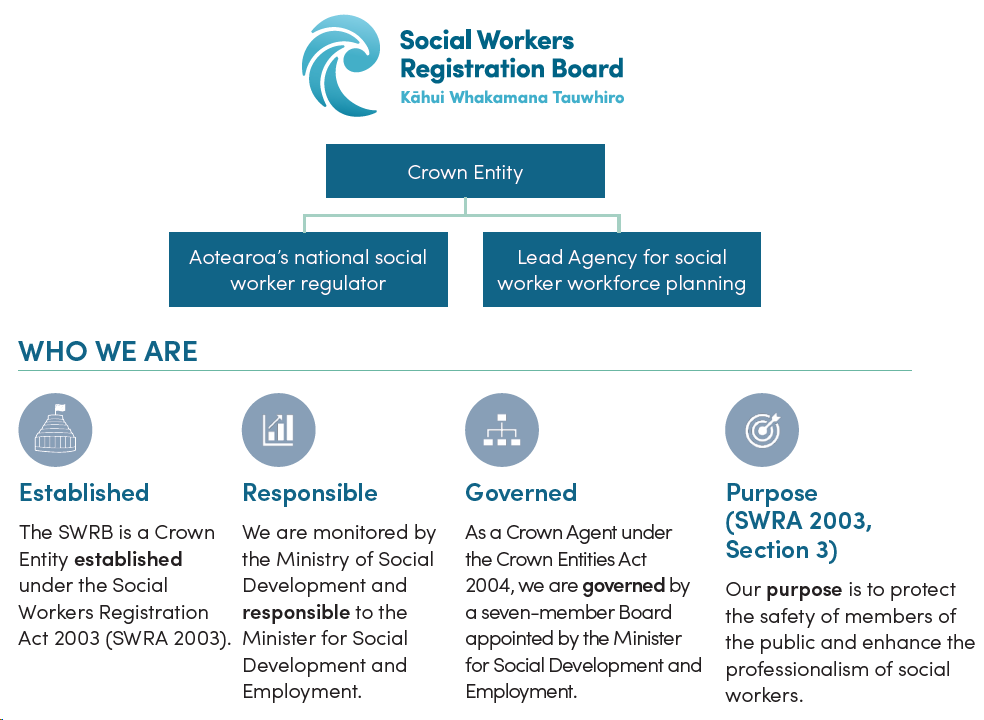
As an occupational regulator, the SWRB’s purpose is to protect the safety of members of the public
by ensuring social workers are competent and safe to practise and are accountable for the way in
which they practise. We acknowledge the interest in assessment on quality of new and existing
regulations and welcome the opportunity to contribute to the lifting of regulatory performance and
stewardship.
Alongside our regulatory role SWRB also enhances social workers’ professional practice and
provides insight into the opportunities and chal enges facing the social worker workforce.
Through our regulatory role we promote and encourage high standards of practice and professional
conduct among social workers and employers of social workers. Responding to concerns and
complaints through our disciplinary procedures is essential to our public safety role. By holding social
workers accountable for their practice, we maintain standards, which in turn wil help to improve
public trust and confidence in the profession.
SWRB Briefing to Incoming Minister 2023
3
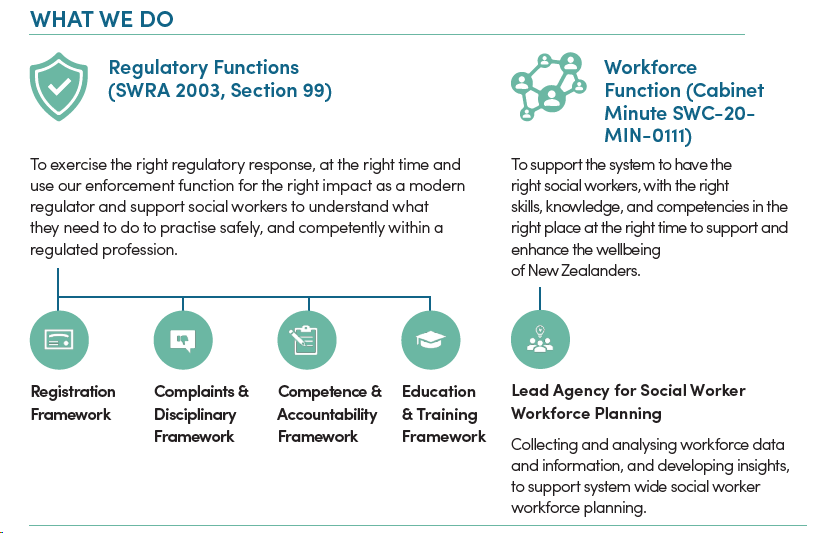
Our work as a regulator has provided the platform for other key activity that connects with the wider
social sector. Having been assigned the role of lead agency for workforce planning for al social
workers (announced in 2021), we have built on our initial work in this area which focused on
gathering evidence and sharing insights. Although developing this knowledge base remains key to
understanding the pressures facing the workforce, this year we have made substantial progress in
strengthening linkages between key agencies and employers to share their priorities for tackling
workforce issues.
With the new government’s stated direction to improve the quality of regulation, including
undertaking sector reviews, we note that healthcare occupational licensing is included. We would
welcome the opportunity to discuss this with you. Social workers are the largest al ied health
workforce, but do not operate under the Health Practitioners Competence Assurance Act 2003, unlike
other health professions. We operate at arm’s length in terms of individual regulatory decisions.
However, as a Crown agent SWRB models a different approach to delivering Crown objectives
within in the health and social sector to health regulators (who are not agents of the Crown).
This briefing provides you with background information on:
• Strategic information and current projects:
o Social work is in a unique position as a regulated profession within a largely
unregulated social services sector
o SWRB is the lead agency for social worker workforce planning and can help connect
the system through our frontline experience
o SWRB is providing advice on part of the ‘Social work-like’ workforce
o The Building Social Worker Capability project wil create resources and develop a
professional development training framework
o A review of the Social Workers Registration Act 2003 (the Act) must be undertaken by
SWRB Briefing to Incoming Minister 2023
4
2025 and progress on the 2020 review
o SWRB is currently undertaking a fees and levy review
o Section 13 Experience Pathway is due to be repealed in February 2024
o There may be alternative options available for non-degree pathways
o SWRB is well placed to provide advice on social work and social sector matters
o Public trust in social workers is relatively low
• our role as the regulator of social workers in New Zealand, established as a Crown Agent
under the Act
• the history of the SWRB, its current structure, and its fit within the wider government and social
sector
Through quarterly reporting, we will provide you regular updates on our progress as both regulator
and lead agency for social worker workforce planning, along with our other strategic areas of focus.
Who are the social work workforce?
Managing the register of social workers is a statutory requirement. Information about registered
social workers and their practising status is available on the public register which is online and
searchable.
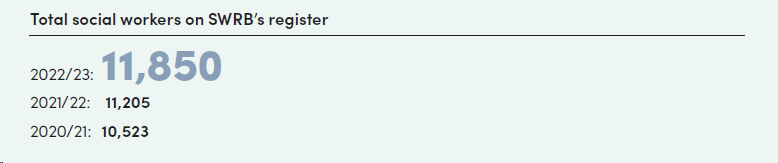
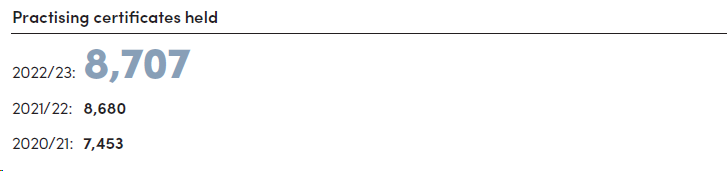
Practising social workers - the social worker workforce in 2022/23
Understanding our workforce is key to both regulation and workforce planning activities. The register
captures data on the composition of the social worker workforce including key demographic and
employment information.
Note: More statistics on social workers can be found in Appendix 3
SWRB Briefing to Incoming Minister 2023
5
link to page 6
Strategic information to highlight
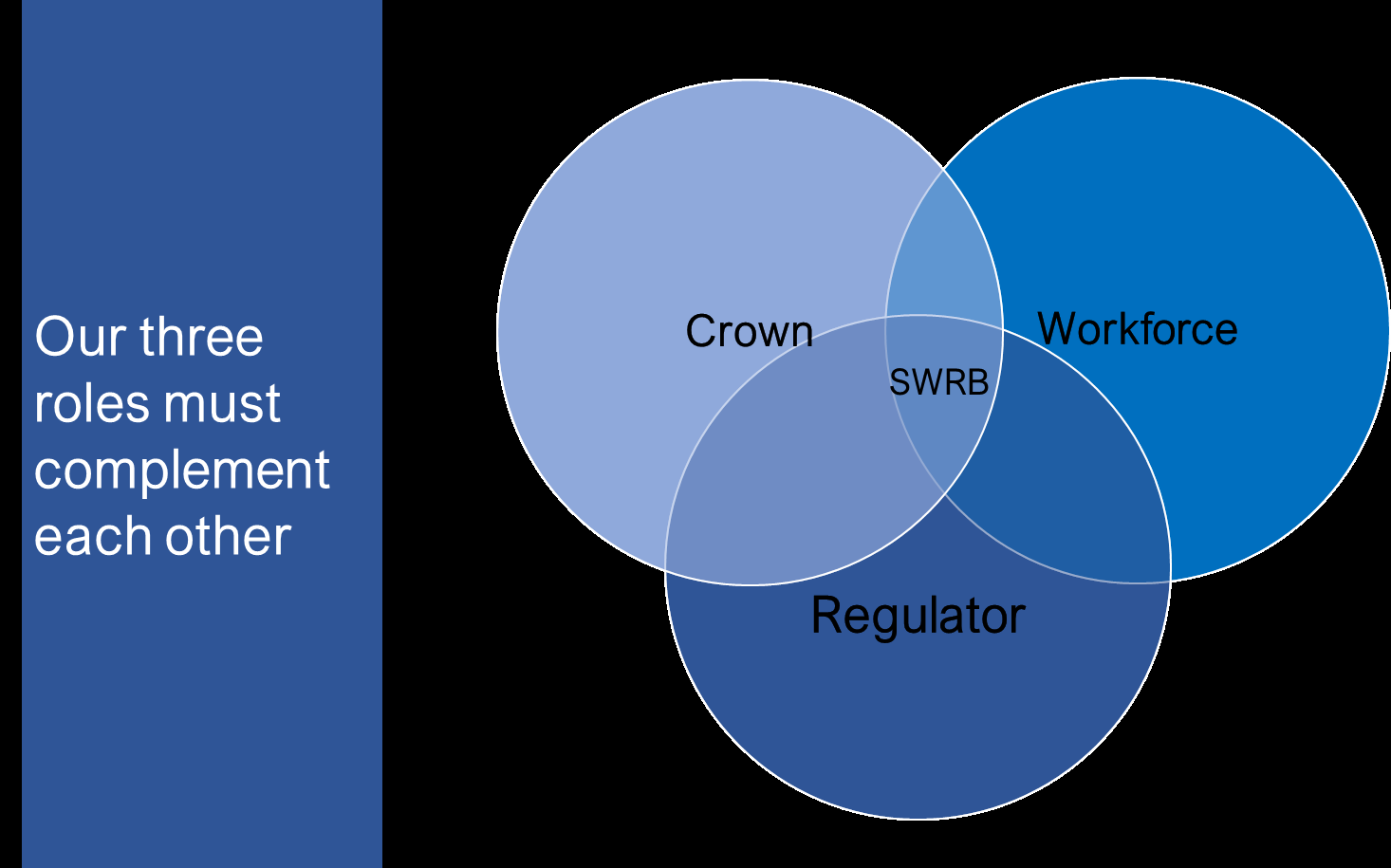
SWRB is the regulator for social workers, lead agency for social worker workforce planning, and a
Crown Agent under the Crown Entities Act 2004. With these roles, SWRB holds a unique
understanding of public safety in the social work and wider social sector. This includes being a
connection point across agencies, both government and non-government, and increasingly being
able to bring a consumer (public) voice into strategic and policy discussions.
With this perspective there are some critical areas we want to highlight with you as the incoming
Minister for Social Development and Employment:
• Social work is in a unique position as a regulated profession within a largely unregulated
social services sector
• SWRB is the lead agency for social worker workforce planning and can help connect the
system through our frontline experience
• SWRB is providing advice on part of the ‘social work-like’ workforce
• The Building Social Worker Capability project wil create resources and develop a
professional development training framework
• A review of the Act must be undertaken by 2025
• SWRB is currently undertaking a fees and levy review
• Section 13 Experience Pathway is due to be repealed in February 2024
• There may be alternative options available for non-degree pathways
• SWRB is well placed to provide advice on social work and social sector matters
• Public trust in social workers is relatively low
Social work is in a unique position as a regulated profession within a largely
unregulated social services sector
As a regulator, the SWRB has a focus on the management of risk and potential for harm, as per the
purpose of our Act, to protect the safety of members of the public through a competent and
accountable social work workforce. Combined with our insights through our workforce planning role
we can combine evidence with frontline insights to deliver better outcomes.
At a system level, we see opportunities for further work to support a more cohesive and consistent
approach. We recognise that while mandatory registration has strengthened the regulatory
framework for social workers, there has been less focus on other parts of the system that have no
professional regulation in place, which creates inconsistencies and risk for those using social
services.
1 Many other roles also work closely with vulnerable children and communities, however social
workers are currently the only regulated profession in the social sector. We are aware that MSD (as
the responsible policy agency for the SWR Act) are currently leading some initial scoping work to
consider the public safety implications of the wider social sector workforce. We wil continue to work
collectively to progress this work, according to your feedback.
1 Noting there are other professions such as psychologists who work within social services, although they tend to be considered part of
the health workforce.
SWRB Briefing to Incoming Minister 2023
6
The SWRB has authority to regulate social workers, however, we currently have no legislative
authority over other social sector professions that work with the public. While these professions have
active peak bodies and professional associations that provide support and guidelines for the
professions, these are voluntary, and lack the same protections afforded to the public who interact
with social workers. We see this as a gap in the system, which may be contributing to a lack of
protections and adverse outcomes of the most vulnerable in society.
Another gap that we would like to highlight is the lack of an organisation that protects and promotes
the rights of the consumers interacting with social services, in the manner of the role played by the
Health and Disability Commission (HDC) within the health sector. While social workers in health
settings are covered, social workers in other sectors fal s outside the Health and Disability
Commissioner Act 1994, meaning the HDC is unable to accept complaints relating to practitioners in
the social services sector.
SWRB is the lead agency for social worker workforce planning and can help
connect the system through our frontline experience
The SWRB has been designated as the lead agency to provide and support workforce planning for
al social workers in New Zealand. In this role, we aim to provide strategic, cross-agency and cross-
sectoral leadership in consultation with the sector, based on a robust evidence base, to guide the
development of a strategy and action plan to support the sustainability of the social worker
workforce.
Since 2018, the SWRB has conducted an annual survey of al social workers across the country. The
results from the 2022 survey highlighted issues about the sustainability of the workforce, with 15% of
social workers stating they were planning to leave the sector in the next five years.
We see an overal picture of significant social worker shortage, with a mismatch between the supply
of social workers into the workforce and increased demand for social workers. At the current rate, by
2024 there wil likely be more social workers leaving the profession than registering with the SWRB.
In our Workforce lead role, there is an opportunity to take a strategic approach that recognises the
breadth of the interaction across the system. Increasingly SWRB is growing our contribution at a
system level, and can contribute a unique view as a frontline regulator.
SWRB is providing advice on part of the ‘Social work-like’ workforce
In November 2022 the Government agreed to extend the pay equity benefits agreed to with Oranga
Tamariki in 2018 to al social workers and other workers undertaking substantial y similar work in
community and iwi organisations. At the same time, the SWRB was funded to undertake work to
better understand ‘social work like’ roles with a public safety lens.
We have been engaging with NGO sector leaders and experts, employers and workers to identify the
workforces within category 3 and better understand their work including: what sort of work are they
doing, who are the communities they are working with, and importantly how are public safety
considerations being addressed?
Workers in social work-like roles are doing valuable work and engaging with the same communities
as registered social workers. However, our work is highlighting that there is a large unregulated
workforce carrying out social work, without the same checks and balances in place for registered
SWRB Briefing to Incoming Minister 2023
7
link to page 8
social workers.
The regulatory framework, including mandatory registration of social workers, was put in place as a
direct response to the high risks associated with poor social work practice, and to strengthen public
safety. We consider that there are opportunities to strengthen both public safety and the
professionalism of the social work-like workforce and wil be reporting our findings to Ministers at the
end of March 2024.
The Building Social Worker Capability project will create resources and
develop a professional development training framework
In Budget 2022, the SWRB was provided with funding for two years to build the capability of social
workers through designing and developing resources, and establishing training standards, in
collaboration with Oranga Tamariki. This initiative provides the SWRB with extra capability to support
the quality and professionalism of social workers and helps SWRB develop a framework for
assessing professional development training for registered social workers. Currently SWRB does this
for Degree level courses, but not for post-degree training.
The training framework wil ensure that SWRB raises educational standards nationally and improves
the quality of both graduating social workers and practising social workers. Developing a training
standards framework was something that SWRB had been unable to achieve due to demands of
other regulatory priorities.
The development of a framework to assess education and training wil enable SWRB to ensure that
professional development of social workers is safer, more effective, better monitored. There is
potential for these to be rolled out to the wider ‘social work-like’ workforce.
A review of the Act must be undertaken by 2025
The SWRB is operating successfully as a regulator under the parameters of the Social Workers
Registration Act 2003 (SWR Act) as it currently stands. The most recent review of the Act was
undertaken in 2020, with recommendations for a smal number of technical changes. We would like
to talk to you about progressing these.
Since the introduction of mandatory registration for social workers in February 2021, we have
become increasingly aware of the limitations of the scope of our legislation to effectively undertake a
public safety function.
Regular reviews of the SWRA must be undertaken every four years, with the next one due by 2025.
This wil provide an opportunity for SWRB to provide advice on where improvements could be made.
SWRB is currently undertaking a fees and levy review
The SWRB is funded predominantly by fees and a disciplinary levy (fees and the levy) charged for
regulatory activities related to our legislation on a cost recovery basis. These include fees and
disciplinary levy charged to al practising social workers. The SWRB Board is responsible for setting
the fees and levy
2, based on Auditor General and Treasury guidance.
2 In 2022 the Board agreed to an updated Financial Reserves Policy for SWRB which set sustainable levels of Reserves held by SWRB to
SWRB Briefing to Incoming Minister 2023
8
SWRB undertook its first comprehensive fees and levy review, with public consultation, in the 2021/22
year. Since that time SWRB has faced increasing costs attributed largely to the higher-than-usual
increases in inflation.
This fee and levy review is likely to be much smal er in size and scope than the 2021 review. Most
adjustments are likely to be CPI adjustments, with two likely exceptions:
• the disciplinary levy due to increasing numbers of disciplinary matters (see below) received by the
SWRB
• the overseas registration fee due to the increasing numbers and complexity of overseas
registrations.
In line with best practice the SWRB wil be undertaking consultation on fees and levy changes with
the public, the Board wil be making a decision on the proposal for any fee changes in December,
with consultation likely to occur in December and January 2024. The Board wil then make a decision
in February to come into place on 1 July 2024. We wil keep you and your office advised on Board
decisions in this area.
Section 13 Experience Pathway is due to be repealed in February 2024
Section 13 (S13) of the SWR Act provides an alternative pathway for people without an approved
social work qualification to apply for social worker registration (the experience pathway). Instead of
demonstrating their competence by having a prescribed qualification, these applicants must satisfy
SWRB of their competence based on their substantial vocational experience. S13 is due to be
repealed in February 2024.
In the 2019 changes to the SWR Act, S13 was retained to support the social work sector to transition
from voluntary to mandatory registration by al owing unregistered social workers more time to either
complete a prescribed qualification or apply to register under S13. This decision assumed at the time
that the supply of social workers would meet future demand and that five years would be sufficient
time for people undertake the steps required to meet registration requirements. However, for a
number of reasons (see Workforce section above), there is now an increasing shortage of social
workers to meet demand. Repealing S13 in February 2024 will likely limit the pipeline of social
workers into the workforce and could exacerbate workforce shortages in coming years, impacting on
the public’s access to professional social work services.
In May 2023 a Bil to amend the SWR Act was introduced to parliament and subsequently went
through the Select Committee. This would delay the repeal of S13 by four years to February 2028.
SWRB provided information to the Social Services Select Committee at the time and acted as a
secretary to the Committee.
SWRB believes that extending the experience pathway (either by two or four years) will help:
• Provide safety and assurance for the public who are receiving services from people in these roles
• leverage benefits of the pay equity settlement
protect from any unforeseen events or significant and sudden drops in revenue streams for the Board. This must be taken into account
when setting SWRB fees and levies.
SWRB Briefing to Incoming Minister 2023
9
• to explore other entry pathways into the social work sector over the longer term, including for
Māori and Pasifika and for those from other cultures at a time when government strategy and
government employers are promoting significant shifts towards community service delivery and;
• wil provide continuing support for a sector experiencing significant workforce shortages and
increased service demand.
While a repeal of S13 wil stop the experience pathway for new applicants, people who are currently
being assessed wil stil have the opportunity to be registered (if they are assessed by SWRB to ful y
meet the criteria).
There may be alternative options available for non-degree pathways
If S13 is repealed in February 2024 there may be other potential options for non-degree pathways
and areas for further investigation:
Regulation of social work-like (support) roles
The work to better understand the social work-like workforce (see section above), could potential y
identify an opportunity to regulate social work support roles through the SWR Act. A report will be
provided to your office, with further advice from MSD to Cabinet, in March 2024. This wil provide
information and advice on how the SWR Act, as it stands, could regulate such roles.
Recognition of prior learning
As part of a review of education standards, SWRB are looking at reviewing Recognition of Prior
Learning (RPL) requirements. SWRB wil be considering whether the current RPL requirements are fit
for purpose. This could be an opportunity to widen the currently narrow scope of the RPL standards
to consider whether experience could be credited towards a social work qualification as a long-term
alternative to the experience pathway.
Building a training framework
Staircasing education pathways and training are also being considered by SWRB through the Social
Work Capability building initiative (see above) to establish an Education and Training Standards
Framework. Such options are likely to be more accessible to people who face barriers to traditional
qualifications and education. SWRB have begun initial exploratory work on alternative entry
pathways to social work but would need to identify funding options to progress this work further.
SWRB is well placed to provide advice on social work and social sector
matters
SWRB has a very constructive relationship with multiple parts of MSD as our Crown Monitor and
Policy Agency. Regular meetings are held, and MSD is kept in close contact around the operating
and policy related areas of our work.
Increasingly SWRB has been providing advice on matters relating to social workers and the wider
social sector on regulatory and workforce matters. An example of this is the social work like advice
mentioned previously, but also into other areas such as the wider pay equity negotiations, legislative
changes, the Royal Commission of Inquiry into Abuse in State Care, as wel as specialist technical
expertise.
SWRB Briefing to Incoming Minister 2023
10
SWRB is well placed to increase visibility of the consumer (public) voice, particularly in respect to
public safety (our core regulatory role) which is, we believe, not currently wel canvassed currently
across the wider social sector. We believe that SWRB can provide an increasing public safety lens
and consumer voice to areas of policy being developed, where appropriate, and would welcome the
opportunity to do this in future.
More information is available about our strategic direction, context, financial position, and wider
Government priorities in our 2022/23 annual report.
Public trust in social workers is relatively low
In early 2023, SWRB commissioned research into public trust in the social work profession which
included an online survey of 1,060 New Zealanders. The findings highlighted that in relation to health
professions, social work is not held in such high regard and that there is lower public confidence in
social workers. However, the research also highlighted that there is a lack of clarity about what social
workers do and the differences between social workers and other professionals in the wider social
sector. Raising public awareness about the strengths of the profession and building understanding of
what social workers do and their professional obligations wil be a focus of future activity.
Our survey showed 44% of respondents have ‘ful ’ or ‘some’ trust in social workers. The level of ful
trust in social workers (13%) is similar to how survey respondents feel about other professions such as
psychologists, counsellors, therapists and youth workers (17-11% ful trust) but much lower than those
who say they have full trust in teachers (23%) or health workers such as doctors and nurses (41%)
One of our high-level outcomes is to promote public trust and confidence in the social work
profession. Our focus on supporting strong professional practise and accountability among social
workers wil be key to building that trust and confidence. However, to measure our progress, it is
important for us establish a ‘baseline’ understanding. The SWRB is using these baseline findings
about public trust to inform our work in the regulation and workforce planning functions, and to add
to our evidence base for the social work workforce in New Zealand, with a particular focus on strong
professional practice and accountability.
SWRB Briefing to Incoming Minister 2023
11
SWRB at a glance
The Board
The SWRB is governed by a seven-member Board established under the Social Workers Registration
Act 2003 (the Act). The Act requires that four out of the seven members be registered social workers,
ensuring that there is social work professional representation alongside the considerable breadth of
skil s and experience brought by the lay members. Board members are appointed by the Minister for
Social Development and Employment. Our current Board members are:
• Shannon Pakura MNZM (Chair) RSW
• Adam Davy
• Gisa Dr Moses Ma’alo Faleolo RSW
• Rose Henderson RSW
• Lois Hutchinson
• Andrea Nichols RSW
• Jeff Sanders QSO
We would like to discuss upcoming appointments with you noting that MSD supports you in
undertaking the appointment process.
Biographies of the Board and Chief Executive Sarah Clark can be found in Appendix two.
The Secretariat
The secretariat provides operational support for the work of
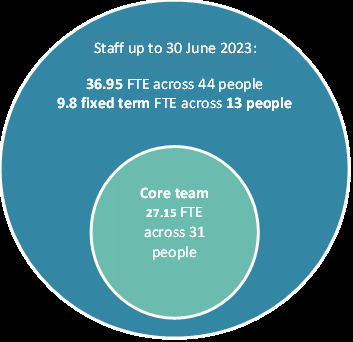
the Board. At the end of 2022/23, we had 36.95 ful -time
equivalent employees (FTEs) across 44 people. The
Secretariat is led by Sarah Clark as Chief Executive.
Current staffing includes fixed-term roles of 9.8 FTE across 13
people, to assist the addition of two government funded
projects, and to support the increasing numbers of regulatory
activities that require professional advice (e.g. complaints).
With the introduction of mandatory registration and the
workforce planning role, the SWRB has undertaken regular
organisational reviews to ensure that the structure is fit for purpose.
Complaints and Disciplinary Tribunal
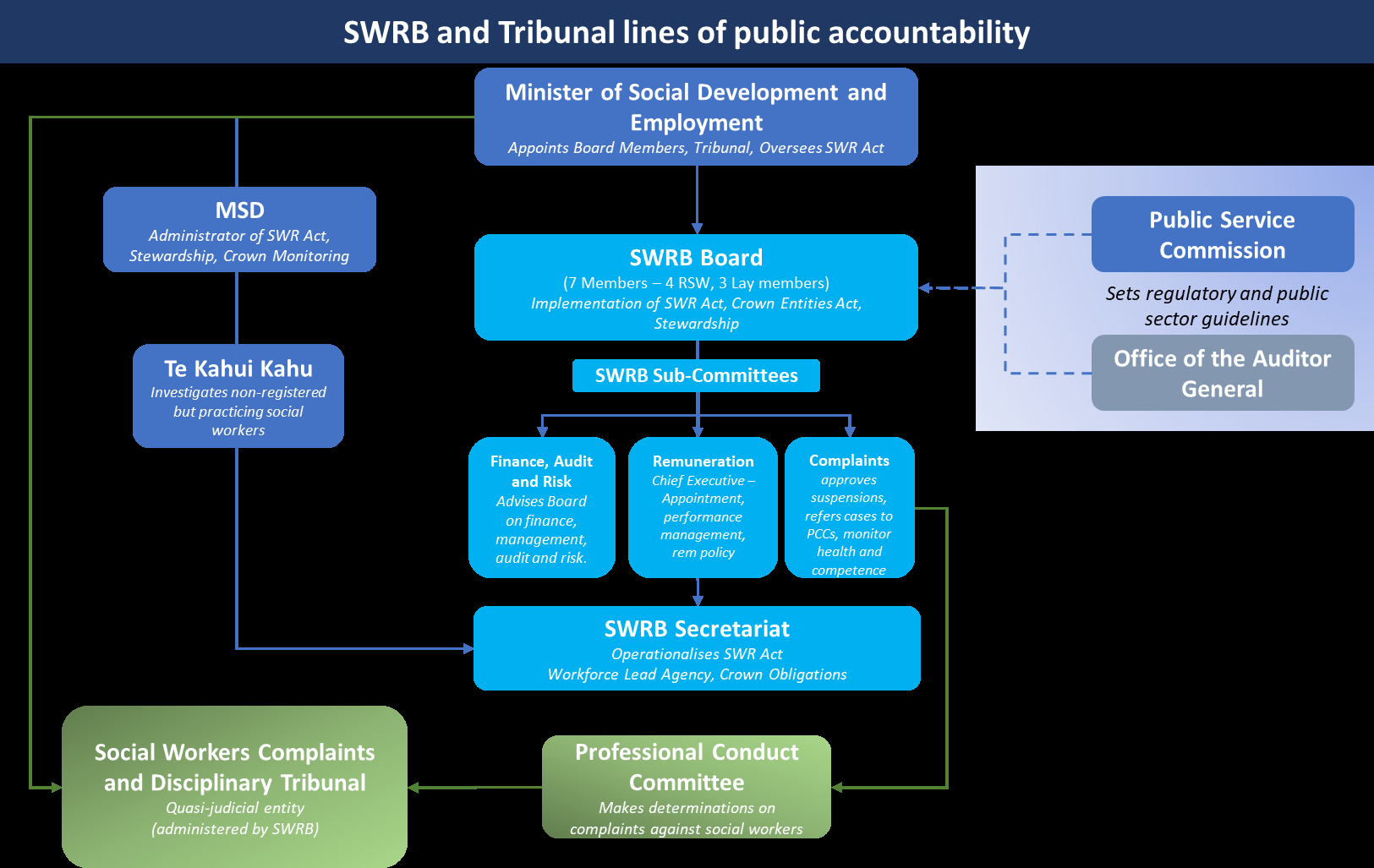
Appointed by the Minister, the Complaints and Disciplinary Tribunal is the disciplinary decision-
making body. The Tribunal is quasi-judicial and its process is similar to that of a court. The Tribunal
is drawn from a pool of people, with each hearing consisting of five, including three social workers, a
layperson, and the chair or deputy chair (experienced barristers) who prepare, preside over the
hearing, and final y issue a written decision. If found guilty, decisions can range from:
• censuring the social worker
• placing conditions on the social worker’s practise
• suspending the social worker from practising
• cancel ation of the social workers registration.
While the Tribunal is Independent in its decision making from the SWRB Board, it is administered by
the SWRB Secretariat. The diagram over the page shows the relationships between the Minister,
SWRB Briefing to Incoming Minister 2023
12
SWRB Board ( and sub committees), Tribunal and Secretariat, as wel as other monitoring agencies.
Note: MSD has delegated to Te Kāhui Kāhu the function of responding to notifications of people
practising as a social worker and/or holding themselves or others out as a social worker who are not
registered (and who should be) by investigating and prosecuting alleged offenders.
SWRB Briefing to Incoming Minister 2023
13
SWRB Briefing to Incoming Minister 2023
link to page 15
The SWRB operates in the wider social sector
MSD is the monitoring agency for the SWRB and administrator of the Act, with the Minister of Social
Development and Employment the responsible Minister. As a Crown Agent, the SWRB gives effect to
government policy, although regulatory decisions are the responsibility of the Board. The Public
Service Act 2020 also provides that Crown agents are part of the public service and must uphold the
purpose, principles and values of public service when carrying out their functions.
3 We also operate
in the wider social sector and work to develop strong relationships with both government and non-
government organisations in matters that relate to our roles as a regulator and workforce planning
lead. As the only regulator in the social services sector we see that we can provide a unique
perspective on the sector, and also observe where there may be opportunities for further work from
a regulatory perspective.
Our legislation mandates our work
The Social Workers Registration Act 2003 (the Act), the Crown Entities Act 2004, and the Public
Service Act 2020 are our overarching legislation. These pieces of legislation govern how we operate
as a regulatory organisation, and how we in turn regulate social workers. Section 99 of the Act sets
out the functions of the Board, Section 100 outlines obligations of the Board to Māori and Section 101,
obtaining views of Pacific people and other ethnic and cultural groups.
History of social work regulation - from unregulated to voluntary
registration
Prior to 2003, social work was a mixture of self-regulation (through the profession’s body the
Aotearoa New Zealand Association of Social Workers) and non-regulated social work. With the
3
https://www.publicservice.govt.nz/assets/SSC-Site-Assets/System-and-Agency-Performance/Statutory-Crown-entities-Your-
role-as-responsible-minister.pdf
SWRB Briefing to Incoming Minister 2023
15
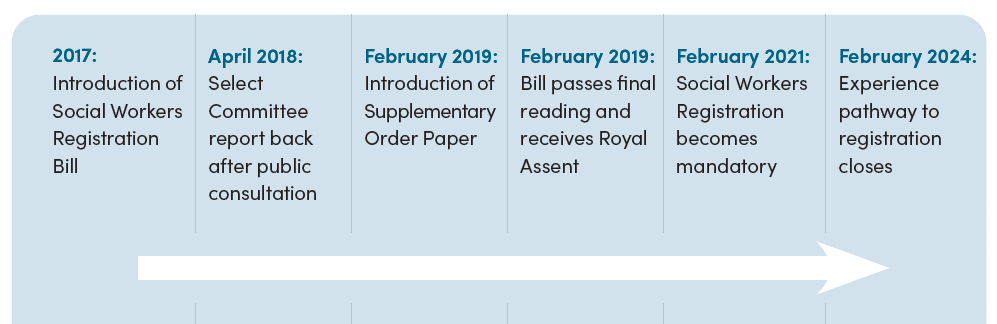
passing of the Social Workers Registration Act 2003, the SWRB was established to make voluntary
registration available to social workers. Subsequently, there were ongoing reviews and cal s from
Government and the sector to make registration mandatory. This culminated in 2015 with a further
Review of the Act, which recommended a mandatory regime.
Registration is mandatory for all social workers
Since 2021 SWRB has been operating in a mandatory registration environment. Mandatory
registration means al people practising as a social worker must be registered with the SWRB and
hold a Practising Certificate. This helps to better protect the safety of members of the public by:
• Ensuring social workers are appropriately qualified to carry out their work
• Requiring continuing professional development and specific competencies
• Addressing concerns about a social worker’s practice with complaints and disciplinary
processes
• Ensuring social workers who have had their registration cancelled are not able to practise
social work again
As mandatory registration beds in, there is a sense of our growing maturity as a government entity
and the national regulator of the social work profession. We have moved on from a significant period
of change and growth into a steadier state of consolidation and quality improvement.
Value of social work and the need for regulation
The existence of the SWRB recognises the value of social work and its ability to create long lasting
change for children, whānau and communities in need. At the same time, it also inherently
recognises the potential for social work to cause harm given elements of the way it is performed; the
need it responds to, and the vulnerability of people with whom it works. Social work is diverse and
complex, it:
• often takes place in private settings,
• confronts and impacts workers with trauma, distress, complexity, and ambiguity,
• can require the assessment of risk,
• necessitates the exercise of judgement,
• uses evidence-based practice, practice-based experience and intuition,
• exposes staff to the very personal information of others, and
• provides easy access to vulnerable people.
These elements present differing levels of risk, particularly when combined, making social work’s
potential to cause harm to the public as significant and makes the case for regulation.
SWRB Briefing to Incoming Minister 2023
16
Mandatory registration provides stronger checks and balances to ensure
public safety
The move to mandatory registration in 2021, strengthened the regulatory authority to protect
members of the public who receive services from social workers, whether that is in statutory care or
other situations. The changes since the new legislation was introduced wil help better protect those
in care, by providing stronger checks and balances, a complaints system that encompasses al social
workers, and overal a higher level of professionalism for social work.
However, we recognise that the sector is stil adapting to regulation through the mandatory system.
We also recognise that the traditional model of regulation is largely an individualistic model that
doesn’t necessarily align to wider local communities recognising the collective model of care.
Our progression as a modern regulator
The introduction of mandatory registration was a significant step forward in the professionalisation
of social work in New Zealand, where we support and encourage high standards of practice and
professional conduct among social workers and the employers of social workers. This aligns with our
progression to being a modern regulator. This progression means moving towards supporting and
encouraging compliance, opening, and increasing our communication channels and proactively
engaging with social workers, employers, and the public.
Our regulatory work
As mandatory registration beds in, there is a sense of our growing maturity as a government entity
and the national regulator of the social work profession. We have moved on from a significant period
of change and growth into a steadier state of consolidation and quality improvement. We
acknowledge that for many in the sector there remain significant chal enges, including further
impacts of the post-Covid environment and severe weather events in parts of the country that have
caused damage and devastation.
Through our regulatory role we continue to support and encourage social workers in their
professional practice. We are starting to reap the benefits of system improvements and investment in
infrastructure, enabling us to streamline some of our processes, including the renewal of practising
certificates.
Responding to concerns and complaints through our disciplinary procedures is essential to our public
safety role. By holding social workers accountable for their practice we maintain standards, which in
turn wil build public trust and confidence in the profession.
SWRB Briefing to Incoming Minister 2023
17
link to page 18 link to page 18
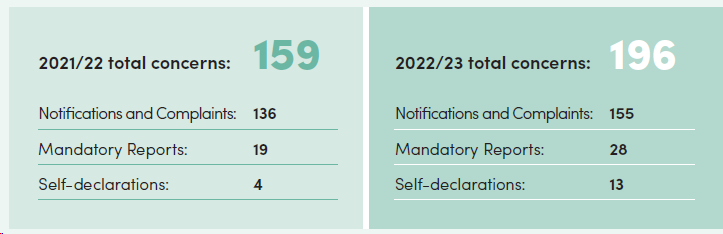
Further information on our regulatory mechanisms can be found in appendix one.
How we are funded
The SWRB, similar to other national regulators, runs a cost recovery model for our regulatory
practices, in line with Auditor General
4 and Treasury guidelines for setting fees
5. The fees and
disciplinary levy are set by the Board and imposed by a Gazette Notice under sections 108 and 109 of
the Social Workers Registration Act 2003. Here is a summary of what charges can be set for and who
pays:
• Fees: Recover the cost of an activity the SWRB provides directly to an individual registered
social worker, an individual applying for registration (whether successful or not), or an
education provider. Paid by the individual registered social worker/applicant (or their
employer on their behalf) or an education provider, as applicable.
• Practising Certificate fee: Is paid by a registered social worker (or their employer on their
behalf) who wishes to practise. Practising certificates are renewed annual y for those who
continue to practise. Recovers the cost of processing the application, and the balance
recovers the cost of SWRB’s functions.
• Disciplinary levy: Paid annual y by registered, practising social workers (or their employer on
their behalf). Recovers the cost of complaints & notifications and disciplinary proceedings.
• Education programme fee: Paid by education providers annual y to recover the cost of the
SWRB’s functions attributable to them.
To ensure appropriate funding for volume changes, priority areas of work, and cost pressures, in
2021 we reviewed the fees and disciplinary levy applying the Auditor General and Treasury
guidelines on setting charges in the public sector. Following consultation with the sector, the fees and
disciplinary levy were increased to reflect SWRB’s increase costs. This was the first change to the
Practising Certificate fee since the SWRB was established in 2003. We are currently conducting
another fees review, with consultation due to take place over December and January with changes
to be in place by July 2024.
The SWRB also receives some funding from the Crown, with ongoing funding for our Workforce
Planning role, as wel as Crown Accountability funding.
4
https://oag.parliament.nz/2021/fees-and-levies/docs/fees-and-levies.pdf
5
https://www.treasury.govt.nz/publications/guide/guidelines-setting-charges-public-sector-2017-html
SWRB Briefing to Incoming Minister 2023
18
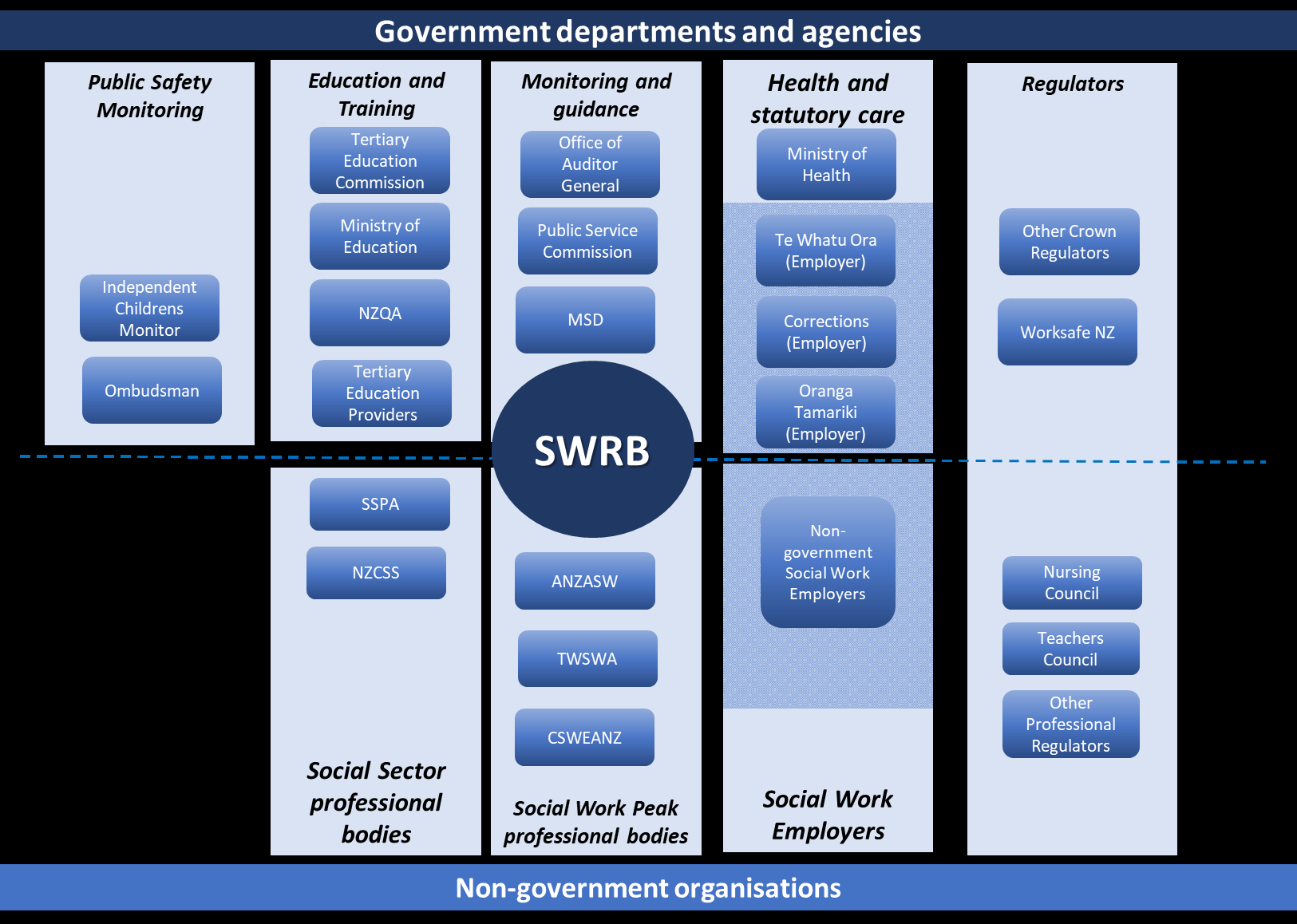
SWRB Key Stakeholders
The SWRB has a wide range of stakeholders across the government and non-government sectors.
These include:
Public Sector and Government
Sector Stakeholders
• MSD
The SWRB works with a number of social work
• Oranga Tamariki
and social service associations and peak bodies,
• Ministry of Education, New Zealand
including:
Qualifications Authority, Tertiary Education
• Aotearoa New Zealand Association of
Commission
Social Workers (ANZASW) - Social Workers
• Ministry of Health
peak body
• Public Service Commission,
• Tangata Whenua Social Workers
• Other government regulators (WorkSafe)
Association (TWSWA) – Tangata Whenua
Social Workers peak body
• Social Sector Providers Association – Social
Sector peak body
• New Zealand Christian Social Services
• Council for Social Work Education in
Aotearoa New Zealand (CSWEANZ) -
Social Work education peak body
SWRB Briefing to Incoming Minister 2023
19
SWRB Briefing to Incoming Minister 2023
Appendix one: Explanations of our regulatory
mechanisms
The Register
The SWRB has monitoring and oversight of those who can legal y hold themselves out as social
workers. The SWRB must maintain a register of social workers under section 121 of the Act and hold
information as set out in section 123. Under section 135, we publish a Register for public inspection on
our website. Members of the public may search the register to check on registration and to hold
social workers accountable.
Annual Practising Certificate
The SWRB monitors and has oversight of practising social workers. Under section 26 the Board issues
practising certificates to registered social workers who apply to practise social work. The Board
requires applicants to make declarations that they:
• wil undertake CPD
• wil undertake supervision
• have not been convicted or are under investigation for a criminal offence
• have not been dismissed or are under investigation in their workplace
• Social workers who declare issues are assessed as to whether they are fit to practise and be
issued a practising certificate.
Code of Conduct
The Board monitors and has oversight of the conduct of social workers. Under section 105 of the Act
the Board must issue and maintain a Code of Conduct. The Code covers minimum standards of
integrity and conduct to protect the safety of the members of the public. A social worker is held
accountable and against the Code of Conduct when considering complaints or concerns about
conduct. The Disciplinary Tribunal may make orders that a social worker is guilty of professional
misconduct if the Tribunal finds the social work has breached the Code of Conduct.
Competence standards
The Board monitors and has oversight of social worker competence. Under section 42 of the Act the
Board may set programmes to help it decide whether people have the skil required to practise
social work. Under section 39 the Board may review the competence of a social worker and assess
the competence of a social worker and if they fail, place conditions or limit the scope of practice.
Complaints
The Board has the authority to receive complaints about social workers and their practice from any
members of the public under section 65 of the Act. If a social worker is involved in, or undertakes in
anyway, individual or systemic abuse and or neglect, the Board may under section 65 of the Act,
establish a committee to investigate and refer breaches of the Code of Conduct to a Disciplinary
Tribunal.
Mandatory reporting
The Board has broad oversight and monitors over reported instances of social worker serious
misconduct, competence and health based on reporting from employers.
Under section 38B, an employer who believes on reasonable grounds that a social worker they
employ is not competent to practise must report that belief to the Board.
Under section 47A, an employer who believes on reasonable grounds that a social worker they
employ has undertaken serious misconduct must report that belief to the Board.
SWRB Briefing to Incoming Minister 2023
21


Under section 51, an employer who believes on reasonable grounds that a social worker they employ
may be unable to satisfactorily perform the functions required to practise because of a mental or
physical condition must report that belief to the Board.
Appendix two: Board members and Chief Executive
Biographies
Shannon Pakura MNZM RSW (Chair)
Ko Aotea te waka
Ko Ruapehu te māunga
Ko Whanganui te awa
Ko Te Atihaunui-a-Paparangi te iwi
Ko Ngā Paerangi te hapu
Ko Shannon Pakura tōku ingoa
Shannon Pakura is passionate in her advocacy and support for the social work profession and has
served as SWRB Chair since 2019.
She has worked extensively in both the Statutory Child Protection and the Youth Justice social work
sector. She was the former Chief Social Worker for the Department of Child, Youth and Family, held
Māori Service Development roles, and served as a member of the NZ Parole Board from 2008 to
2021. She is a life member of the Aotearoa New Zealand Association of Social Workers (ANZASW)
having previously been their President.
Shannon holds a number of advisory and advocacy roles, including membership of the Oranga
Tamariki Ministerial Advisory Board. In recognition of her services to social work, Shannon was
awarded a Member of the New Zealand Order of Merit in 2022.
Adam Davy
Adam is experienced in the area of governance, both in the business and
social space. A fel ow of Chartered Accountants Australia and New Zealand
and a Chartered Member of the Institute of Directors, Adam was previously
accounting and advisory firm BDO’s National Head of Advisory and Director
of Innovation.
Adam is on the board and audit committee of Emerge Aotearoa Housing
Trust. He is also Chair and Director of the health and safety consultancy
HazardCo Ltd, and consults to various other commercial entities.
As well as governance, Adam’s expertise includes strategic and business planning, business growth
facilitation, and management, merger and acquisition negotiations.
Gisa Dr Moses Ma’alo Faleolo
Gisa Dr Moses Ma’alo Faleolo or Moses is a Sāmoan born in Aotearoa and
the son of Leaula (Falelima & Sāleaula) and Pepe (Luatuānu’u-Leusoali’i).
His paramount chief title, Gisa, is bestowed on him by the vil age of Falelima
in Savai’I, Sāmoa.
Moses is a registered social worker and his career spans over three
decades. His career includes being a case manager specialising in Youth
Benefits for Work and Income New Zealand, a residential and youth justice
social worker for Child Youth and Family Service, a youth worker specialist for Youth Horizons Trust
and Pasifika Healthcare (now trading as The Fono), and a senior social work lecturer for Manukau
SWRB Briefing to Incoming Minister 2023
22



Institute of Technology and Massey University.
Moses has a PhD in social work, which was the first of its kind as it featured life histories col ected
from gang-involved Sāmoan young men and covered the employment of Sāmoan cultural practices
as part of gang activity. He recently switched to criminology and is now based at Victoria University
of Wel ington where amongst his roles he is currently leading a Marsden-funded project that seeks
to construct a new criminological strand cal ed Pacific criminology - explaining and understanding
criminology from a Pacific lens in order to generate specific Pacific solutions. Moses joined the
SWRB Board in September 2022.
Rose Henderson
Rose Henderson has a long history in the social work profession. She
began as a social worker in the Invercargil office of the Department of
Social Welfare in the late 1970s and found time, amidst a busy family life, to
establish and co-ordinate the Invercargil Women’s Refuge. After working
in a range of social work positions in Southland, Rose then moved north to
Christchurch, continuing to work in the Women’s and Mental Health fields.
After working in a number of leadership roles she became a Director of
Al ied Health in Canterbury. She has provided clinical leadership in various
disaster response and recovery roles and has led a range of teams in both urban and rural
Canterbury.
Rose was President of the ANZASW, from 2003 to 2009, and again in 2016 and is now a Life Member
of her professional body. She is also a Past Vice-President of the International Federation of Social
Workers (IFSW) and Immediate Past President of the Asia-Pacific region of IFSW.
Rose is a registered social worker and has a depth of knowledge across health social work and
employer relations and many experiences of representing social workers at a national and
international level.
Lois Hutchinson
Lois has over 30 years’ senior management experience in the public sector
in the areas of social justice regulation as the statutory decision maker for
the Video Recordings Authority and Deputy Chief Censor at the Office of
Film and Literature Classification; in health as General Manager, Hospital
Services at Midcentral DHB; and transport as Chief Executive of the
Transport Accident Investigation Commission (TAIC). Working in these
sectors, Lois developed particular expertise in the delivery of mandated
services, both domestic and international, that operate to avoid or reduce
harm to people and organisational operating environments.
Through her work at TAIC and alongside associated international treaty organisations, Lois also has
expertise in developing organisational strategy and improved performance to achieve policy and
legislative intentions relating to transport safety in the aviation, rail and maritime sectors.
Lois is currently the Deputy Chairperson of the Radiation Safety Advisory Council and a member of
WorkSafe New Zealand Board. She is a Fel ow of the Australian Institute of Health and Safety (Hon.)
and holds degrees of Master of Public Policy from Victoria University of Wellington, and Master of
Science - Managing Organisational Performance from Cranfield University, UK.
Lois joined the SWRB Board in June 2023.
Andrea Nichols
Andrea is a registered social worker with over 25 years of experience
working with children, young people and their whānau within both NGO
and statutory settings. Until recently she was the Director, Safety of
SWRB Briefing to Incoming Minister 2023
23


Children in Care at Oranga Tamariki, a unit that is responsible for reviewing and reporting on harm
caused to children in care. She currently works in the Office of the Chief Social Worker where she is
Director, Social Work Strategy.
Andrea has a strong interest in supervision and professional development for social workers.
Jeff Sanders QSO
Jeff Sanders has experience as a senior manager and chief executive in
the NGO sector, working in organisations focused on providing services
that make a positive difference to people’s lives. These included IHC NZ,
the Methodist Church, Relationships Aotearoa, and Barnardos NZ, from
which he retired as Chief Executive in early 2019.
Jeff’s career has al owed him to be connected to local community needs
which has given him a desire and ability to seek out systemic change and
ensure excellent provision of services. He has strong relationships across
the NGO and government sector and has built effective leadership teams in the organisations that he
has led.
Jeff has experience and understanding of how governance structures operate and what is required
when considering and governing strategic implementation of programmes of work. Jeff understands
and is committed to the principles of te Tiriti o Waitangi.
Chief Executive – Sarah Clark
Sarah joined the SWRB in May 2017 as Chief Executive after holding a number of
roles within the state sector. Original y from Christchurch, Sarah has a Masters in
Geography, and a thesis on female offending. Her career has taken her on a
diverse path, including Superu (Families Commission) as Director of Client
Services with a focus on building evidence and insights informed policy, and at
the Office for Seniors as its Director and as the General Manger for the
Parliamentary Commissioner for the Environment.
She believes the SWRB is well placed to lift awareness of the importance of
public safety and building trust and confidence, and to support the
professionalisation of social workers.
SWRB Briefing to Incoming Minister 2023
24
Appendix three: Social Workers in New Zealand
SWRB holds a public register of al registered and practising social workers. The Register is public!
This enables the public, and employers, to check the register to find out if the professionals they are
coming into contact with are registered social workers and hold a current practising certificate.
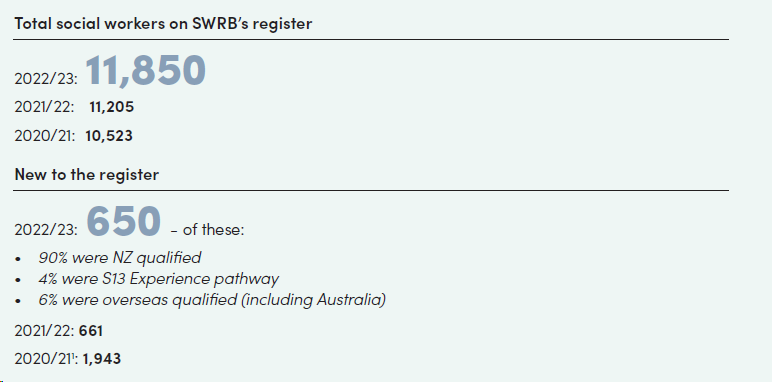
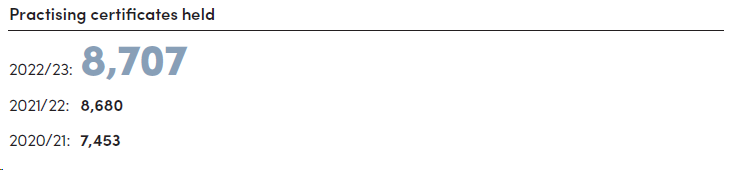
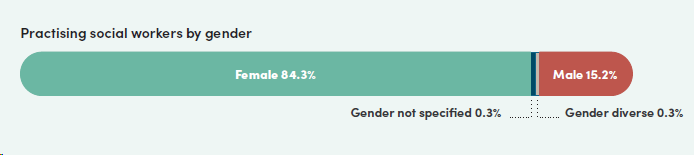
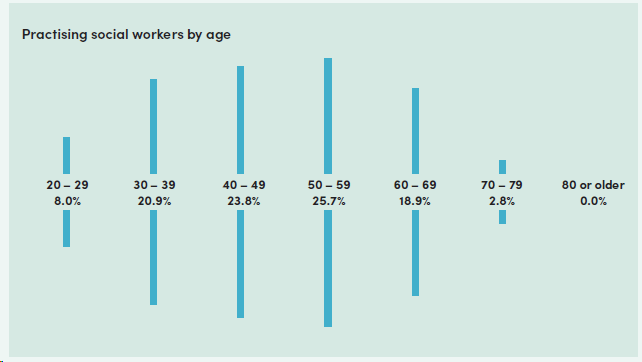
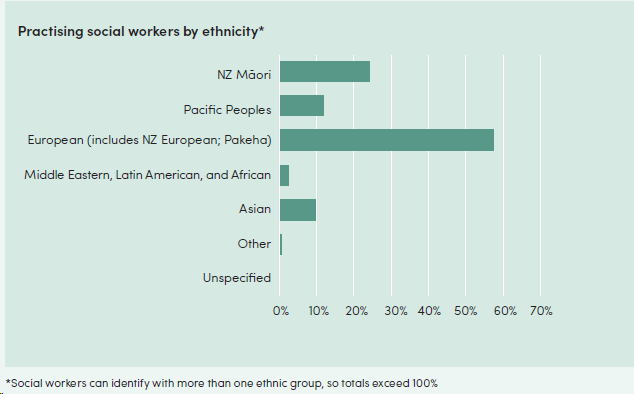
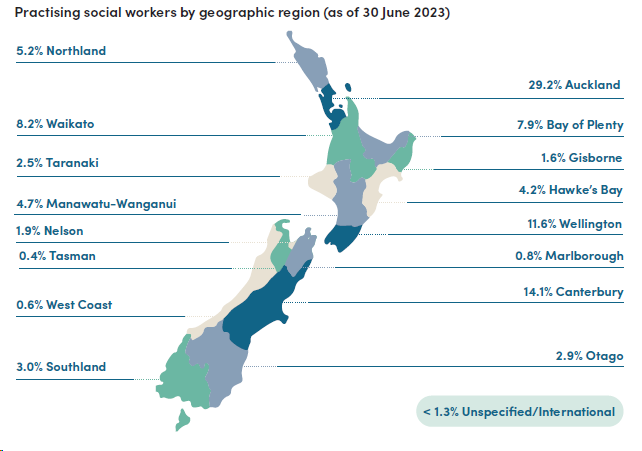
Below are some statistics on our registered and practising social workers from the 2022/23 year.
SWRB Briefing to Incoming Minister 2023
25
SWRB Briefing to Incoming Minister 2023
26
SWRB Briefing to Incoming Minister 2023
27
Document Outline
