

1982
ACT
Initial Insights: ADHD in
Aotearoa New Zealand INFORMATION
Using the IDI to understand outcomes and prevalence
OFFICIAL
May 2024
THE
UNDER
These results are not official statistics. They have been created for research purposes
from the Integrated Data Infrastructure (IDI) which is carefully managed by Stats NZ. For
more information about the IDI please v
isit https://www.stats.govt.nz/integrated-data/
RELEASED

1982
This work is
ACT
based on data
from the IDI.
Taking the NZ population in 2022 and
identifying people with ADHD, we compared
INFORMATION
their outcomes across the range of indicators
Our ADHD indicator is based on diagnoses,
captured through NASC assessments,
hospitalisations and mental health
specialists. Pharmaceutical data is also used OFFICIAL
in the definition.
The indicator likely underestimates true
THE
prevalence of ADHD, as data in the IDI only
goes back so far.
The trends are consistent with what we know
UNDER
from international evidence.
RELEASED
 Using the IDI, we were able to identify ~79,000 people in
1982
Aotearoa New Zealand with ADHD
ACT
12,000
The population with
10,000
ADHD is young and
disproportionately male
INFORMATION
8,000
le
p
Male
eo
p
of
Female
6,000
er
OFFICIAL
mb
u
N
THE
4,000
2,000
UNDER
0
0-4
5-9
10-14
15-19
20-24
25-29
30-34
35-39
40-44
45-49
50-54
55-59
60-64
65-69
70-74
75-79
80-84
85+
Age
RELEASED
 People with ADHD have more exclusionary experiences
1982
at school and are less likely to achieve NCEA Level 2
ACT
48%
NCEA level 2 achievement
68%
INFORMATION
31%
1 or more stand down
OFFICIAL
12%
People with ADHD
THE
Rest of population
11%
1 or more suspension
UNDER
3%
RELEASED
* 18-year-olds in 2022
 People with ADHD are more likely to have long-term (5+
1982
years) reliance on the benefit
ACT
24%
23%
Rest of population
23%
People with ADHD
20%
20%
19%
18%
INFORMATION
17%
14%
OFFICIAL
10%
9%
9%
9%
8%
THE
8%
8%
8%
5%
UNDER
20-24
25-29
30-34
35-39
40-44
45-49
50-54
55-59
60-64
Age
RELEASED
 People with ADHD are disproportionately over-represented in
1982
the justice system
ACT
5.9%
INFORMATION
Reported criminal offending prev 12 months
1.5%
OFFICIAL
People with ADHD
Rest of population
THE
0.5%
In prison or on remand prev 12 months
0.1%
UNDER
RELEASED
 These experiences are consistent with our previous evaluation
1982
of Alternative Education
ACT
14%
Our analysis found that many young people
in Alternative Education (AE) have ADHD.
12%
AE
12%
Rest of the population
The most striking finding in our evaluation
10%
10%
was the comparison of young people in
INFORMATION
Alternative Education to a group of similarly
8%
disadvantaged young people. The long-term
outcomes for young people in Alternative
6%
Education across multiple measures were
OFFICIAL
worse.
4%
4%
4%
4%
THE
3%
There are missed opportunities to identify
2%
2%
and address educational and other needs
1% 1%
1%
1%
much earlier in their lives, to promote
UNDER
0%
0%
better long-term outcomes.
ADHD
ASD
Intellectual
Any
Ever received
Disabled
disability
neurodiversity
ORS
(Census)
Note: ADHD: Attention Deficit Hyperactivity Disorder; ASD: Autism Spectrum Disorder; ORS: Ongoing Resourcing Scheme (an MoE learning support).
Technical report available a
t https://www.swa.govt.nz/assets/Document-Library/Experiences-and-outcomes-of-Alternative-Education-participants-v3.pdf
ERO’s full report available at
An Alternative Education? Support for our most disengaged young people | Education Review Office (ero.govt.nz)
RELEASED

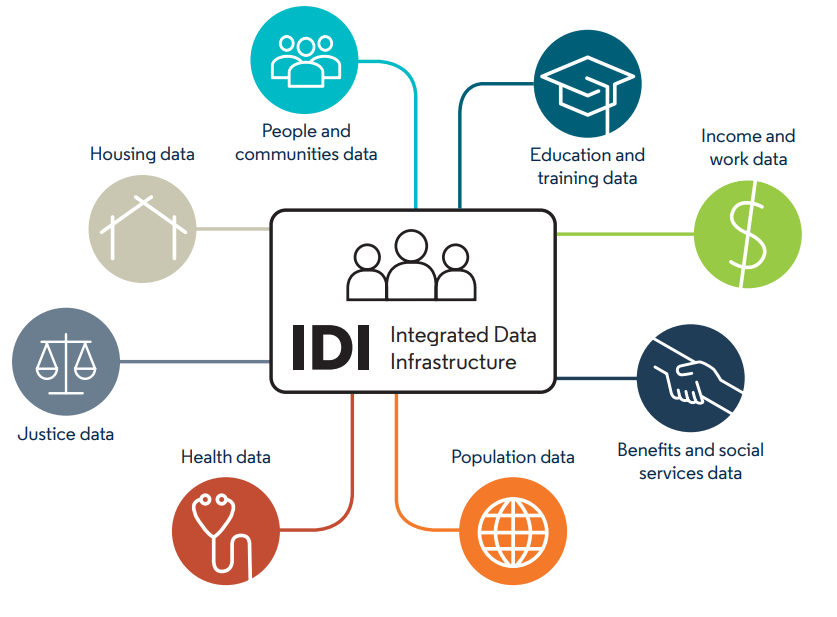 The IDI can provide further information about the experiences,
1982
outcomes and trajectories of people with ADHD
ACT
The IDI is a large research database. It holds de-identified
It can be used to understand, for example:
microdata about people and households.
• Other experiences and interactions with
government, such as income, Oranga Tamariki
involvement, housing security, access to Learning
Supports, reported victimisations, accide
INFORMATION nts and
injuries.
• Mental health, addiction and medical co-
occurrences.
OFFICIAL
• Changes to diagnosis and (pharmaceutical)
treatment over time and varies across/between
THE
population sub-groups.
• The socio-demographics of people with ADHD and
their whānau.
UNDER
• Opportunities to provide better support for people
with ADHD to enable better short- and long-term
outcomes.
RELEASED
Document Outline
