DRAFT – NOT GOVERNMENT POLICY
As well as updating the content of the rules, we wil set the framework up for the future by
making the rules more flexible, and easier to amend. This is likely to include using transport
instruments, increasing use of guidance, and designing more flexibility into what the rules
require (where this can be done without compromising other objectives).
In addition, to make the most of opportunities from advanced aviation, we need to:
design faster, leaner, agile processes to help improve throughput and allow the
regulatory system to keep pace with change
enable safe and secure experimental areas to develop and proof new aviation
technologies
provide clear pathways for approvals to use those technologies in the aviation
system, both domestically and internationally.
Initial steps for the sector and Government to achieve the Council’s ambition include:
Lead
Initial Action
ACT 1982
Ministry of
Review and modernise the full civil aviation rule set to ensure that the rules
Commented [Mv11]: As proposed here, this would be
Transport
align with our objectives for the regulatory framework and respond to the
undertaken as an individual project which would
and CAA,
need to fully integrate new technologies into the regulatory system.
displace the majority of work already on the Authority’s
with input
policy and rule development programmes. I suggest
from the
In updating the rules, we will set the framework up for the future by
that ‘modernising’ the CAR’s is a process done through
attrition, and falls into two broad tasks (both of which
sector
making it more flexible and better able to respond to change.
are already being done albeit with constraints from
available funding/resourcing): ICAO alignment; and
CAA, with
Rework specific rules to allow for safe innovation and growth in the
development of new rules for emerging technologies. In
input from
advanced aviation sector, and contribute to improving the pace of regulatory
short, modernising the rules requires investment.
the sector
decision-making, while continuously improving safety and security.
INFORMATION
RELEASED UNDER THE
OFFICIAL
DRAFT – NOT GOVERNMENT POLICY
Safety and security
Current state
Safety and security continue to be the primary focus and most important outcomes of the
aviation system. Without high standards of safety and security, the sector cannot operate.
Responsibility for aviation safety and security policy and regulation is a vital obligation of the
government. The safe and secure operation of the aviation sector enables the economic and
social benefits of aviation, including our ability to connect to the world.
Commented [SS12]: The important ancillary issue here
is that the ability to mitigate/manage safety is often
Aviation safety involves managing risks to prevent aviation accidents and incidents. The
impacted by other regulation in other areas of
aviation industry is subject to significant safety-focused regulation and oversight.
government. Since rogue drones first appeared over
AKL airport in 2018, attempts have been made to
The objective of aviation security is to protect passengers, crew, ground personnel and the
address aviation’s inability to detect and track drone
systems. RF Spectrum regulation (MBIE) and Radio
public against acts of unlawful interference with civil aviation. The international threat
Communications Act Part 72 c impose limitations that
environment directly influences New Zealand’s aviation security settings.
impact aviation safety. So cross-agency aviation safety
work, supported by the Ministry’s involved may be the
[Placeholder text: Our aviation security settings are guided by and based on international
way to raise awareness of the issues, clarify problem
standards, known threats, risks and vulnerabilities. New Zealand is a contracting State of the
areas and address solutions.
ACT 1982
International Civil Aviation Organization (ICAO) and is signatory to Annex 17- Aviation
Security - Safeguarding Civil Aviation Against Acts of Unlawful Interference (‘Annex 17’) of
the Chicago Convention 1944. Annex 17 provides the standards and recommended
practices that are to be applied by Contracting States and is given legal effect in New
Zealand through legislation, including Civil Aviation Rules, Notices of Direction, and other
regulatory instruments. As a contracting State, New Zealand is required to align with the
standards of Annex 17 unless impossible to do so, with respect to international civil aviation
operations. These standards (and the recommended practices, which States are not
required to implement) are predominantly outcomes focussed, so that States can choose
how to achieve the desired security outcome.
Annex 17 also requires States to have an up-to-date National Civil Aviation Security
Programme (NASP) to outline roles and responsibilities within the security system and to
provide guidance which supports positive security outcomes.]
An evolving geopolitical environment is placing a growing strain on the rules-based order. As
more States focus on the Pacific, New Zealand will face pressure from those who seek to
undermine traditional security relationships and replace us as a trusted partner for Pacific
INFORMATION
Island countries.
This pressure requires New Zealand to foster international cooperation with like-minded
RELEASED UNDER THE
partners on emerging challenges to prevent aviation security threats, strengthen connectivity
linkages and ensure we are playing our part in creating stability for the aviation system in our
region, and globally. The whole aviation system has a role to play to ensure New Zealand,
and our broader Pacific region, continues to be a safe, secure, and reliable place to travel to.
Ambition
Commented [SW13]: The purpose of the NASP is to
Our ambition is to continuously improve safety and security, embedding a safety and security
combine global and regional safety priorities with our
culture throughout the sector and through each participant’s habits, practices and
own safety risks into a plan that relevant to us.
interactions.
Commented [SW14]: It’s slightly more nuanced than
OFFICIAL
that - although it is a descriptor of the system, it
New Zealand’s actions to improve aviation safety are shaped by our participation in ICAO
includes some aspects about how the system is
and our national safety risks and priorities. New Zealand will maintain a State Safety
designed to be, rather than how it necessarily is at
present. It’s better described as a document that sets
Programme (SSP) – which describes existing practices – and a National Aviation Safety
out how NZ will ensure that the aviation system is safe.
DRAFT – NOT GOVERNMENT POLICY
Plan (NASP). Both are documents that ICAO requires member States to have. The NASP
will identifies identify national safety issues, defines national goals, targets, and measures
for safety, and presents initiatives to address safety risks. Key actions contained in this
Vision document are: XYZ.
We will respond to ICAO’s recommendations for how we can improve aviation safety,
including recommendations from ICAO’s latest audit to assess New Zealand’s
implementation of international best practice on safety (in particular, our implementation of
ICAO Standards and Recommended Practices).
The Ministry will continue policy work to ensure aviation security services are delivered as
efficiently as possible without compromising safety and security.
[More text to come on ICAO and the National Aviation Security Programme]
Initial steps for the sector and Government to achieve the Council’s ambition include:
Lead
Initial Action
Interim
ACT 1982
Aviation
?
Council
Continue an ongoing programme of work to ensure New Zealand’s safety
CAA
systems comply with international standards and recommended practices.
Maintain and implementImplement and maintain the National Aviation Safety
CAA
Plan.
Commented [SW15]: Implementation of the NASP will
require input from other organisations, but CAA will
lead. Also does there need to be a line entry re the
Security NASP in this table as well?
INFORMATION
RELEASED UNDER THE
OFFICIAL
DRAFT – NOT GOVERNMENT POLICY
Workforce
Current state
The training pipeline for the aviation workforce is influenced by many factors11 including:
an increasingly tight global market for labour and skills
changes in the industry – for example, fewer businesses now operate smal planes
suitable for new pilots looking to build experience
tertiary education policy settings (including student loan policies)
CAA training and licensing rules
technological changes, leading to changes in the types of skills that the industry of
the future will need.
Commercial airline growth and the COVID pandemic’s impacts on the aviation sector have
created a demand for aviation personnel, in particular pilots and engineering staff. If we do
not act to improve recruitment and retention, we face worsening shortages of key personnel.
ACT 1982
To build the right incentives and protections to attract and retain skilled workers we will also
need to understand what system changes are needed to embed safety and security culture
at an institutional level and through each participant’s habits, practices and interactions.
New Zealand trains overseas pilots, and there is potential for demand for this training to
increase.
New Zealand also hosts a growing advanced aviation sector that may create opportunities
for innovation in aviation education, as well as requiring new skil sets and training needs.
Ambition
The Council’s long-term ambition is that aviation provides attractive, highly skilled jobs in
New Zealand and is a desirable career path. As part of achieving this ambition, we also need
to address the sector’s workforce challenges to overcome shortages of key personnel and
develop the attributes, knowledge and competencies that the aviation system will need in the
future.
INFORMATION
Initial steps for the sector and Government to achieve the Council’s ambition include:
RELEASED UNDER THE
OFFICIAL
11 Workforce supply and demand issues for pilots and aviation maintenance engineers are assessed in a report by Scarlatti for
the Aviation Industry Association and Ringa Hora. A summary of the findings is available here: https://aianz.org.nz/wp-
content/uploads/Summary-report_October-2024.pdf
DRAFT – NOT GOVERNMENT POLICY
Lead
Initial Action
Continue to engage with the sector to understand and work towards
Ministry of
Education
resolving issues related to training in the aviation sector and how they
contribute to workforce challenges in civil aviation.
Commented [NH16]: This is a placeholder action for
now. Ministry of Education wil confirm the action after
Set up an ongoing permanent Aviation Workforce Working Group to:
briefing their Minister. Actions will be subject to change
based on Ministerial direction.
review and streamline training pipelines for civil and military aviation
Feedback on this section will be passed on to the
maximise the ability of personnel to transition between aviation careers
Ministry of Education for consideration.
Interim
(including military/civilian)
Aviation
Council, with
improve professional development and sabbatical opportunities
support from
promote aviation as a future career
Government
facilitate discussions between large and small airlines on pilot
recruitment and training pathways
publish best practice guidelines on embedding relevant incentives and a
ACT 1982
positive safety and security culture in aviation workplaces.
Commented [NH17]: TBC
Note Ministry of Education will need to brief their
Aviation
Minister before they can confirm their role. Actions are
Workforce
Develop a national strategic aviation workforce plan to address current and
subject to change based on Ministerial direction.
Working
future workforce shortages, scope opportunities for promoting aviation
Group, with
careers, and research the work preferences of young people in aviation and
support from
incentives that could support their retention in the sector.
Commented [NH18]: As above
Government
INFORMATION
RELEASED UNDER THE
OFFICIAL

DRAFT – NOT GOVERNMENT POLICY
Environmental sustainability
Current state
Aviation is a significant contributor to global carbon emissions. International efforts to
develop and adopt sustainable aviation fuels (SAF) and more efficient aircraft can drastical y
reduce the industry's carbon footprint.
Domestic aviation emissions make up 7.5 percent of New Zealand’s transport emissions.
These emissions are managed through the Emissions Trading Scheme (ETS) in a net based
approach to lowering emissions across al sectors. The Government will respond, by the end
of 2025, to the recommendation of the Climate Change Commission to include emissions
from international aviation in the 2050 emissions reduction target.
International organizations like ICAO set global standards for emissions and noise, ensuring
that al countries work towards common environmental goals. This helps create a level
playing field. New Zealand has committed to ICAO’s global Long-Term Aspirational Goal
(LTAG) of Net Zero by 2050. The LTAG is a non-binding global goal.
ACT 1982
New Zealand is currently voluntarily participating in ICAO’s Carbon Offsetting and Reduction
Scheme for International Aviation (CORSIA), a global market-based measure for reducing
and offsetting carbon emissions in the international aviation sector. Participation in CORSIA
wil become mandatory in 2027.
Chart 1: il ustration of NZ emissions through the motor vehicle fleet and other modes of
transport
INFORMATION
RELEASED UNDER THE
New Zealand relies on aviation for travel and freight. Both international and domestic flights
are essential for connectivity and economic activity in New Zealand. However, aviation faces
chal enges in adapting to low and zero emission alternative technologies. Carbon reduction
initiatives will need to take into account economic growth objectives including increasing the
value of exports.
OFFICIAL
DRAFT – NOT GOVERNMENT POLICY
Aviation is a hard-to-abate sector and although industry is making some investments in
clean technology and low emissions fuel to reduce emissions, high costs and commercial
viability of low emissions alternatives remain an issue.12
Commercial aircraft that use zero emissions (at tailpipe) technologies, such as hydrogen-
electric engines, are still in development. While they are currently not a viable commercial
solution, they may be in future.
[To be refined - The Emissions Trading System (ETS) for aviation is a market-based
mechanism designed to reduce greenhouse gas emissions from the aviation sector. The
ETS operates on a cap-and-trade principle, where airlines must purchase allowances for
their emissions. This can lead to market volatility and price fluctuations, impacting the cost of
compliance for airlines.]
Ambition
Sustainable aviation can create new economic opportunities, from the production of SAF to
the development of new technologies. This can lead to job creation and economic growth in
various sectors.
ACT 1982
The Council’s ambition is that:
all involved in the system work to reduce use of fossil fuels and promote a transition
to clean energy, in line with New Zealand’s target of net zero carbon emissions by
2050
New Zealand participates fully in international forums responsible for negotiating
aviation emission targets.
Initial steps for the sector and Government to achieve the Council’s ambition include:
Lead
Initial Action
Ministry of Work with Australian Ministerial counterparts on the 2+2 Climate and Finance
Transport
dialogue to develop regional collaboration on SAF uptake and supply.
Ministry of Lead Government and industry collaboration on national aviation
Transport
decarbonisation through Sustainable Aviation Aotearoa (SAA). This will be
MBIE
developed through further engagements in 2025.
INFORMATION
Ministry of Participate in ICAO forums, including affirming our LTAG commitment and
voluntary participation in Carbon Offsetting Reduction Scheme for
Transport
International Aviation (CORSIA).
RELEASED UNDER THE
[check with Industry through consultation what sustainability targets,
Industry
investments, and other actions that can be listed here]
OFFICIAL
12 For example, the production and use of Sustainable Aviation Fuel (SAF) lowers flight emissions without the
need to upgrade existing infrastructure or fleets. However, SAF is currently two to five times more expensive than
standard jet fuel. Competition for supply is also a concern as other countries also increase measures for SAF
uptake.

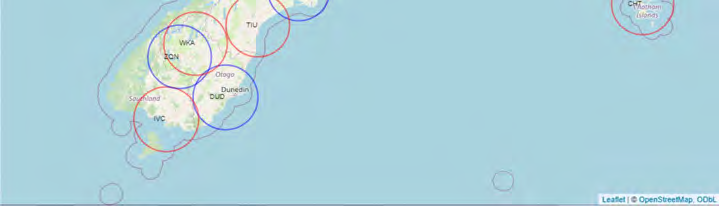
DRAFT – NOT GOVERNMENT POLICY
Annex 1 – Geographical coverage of airports
ACT 1982
INFORMATION
RELEASED UNDER THE
OFFICIAL
Document 10
Harry Atkins
From:
Stuart Worden <[email address]>
Sent:
Thursday, 15 May 2025 2:02 pm
To:
[email address]; Natalie Howell; Mark von Motschelnitz; John Kay; Steve
Smyth
Cc:
Jane Turner; Charlotte Baetens; Jo Nicholas
Subject:
RE: Revised Vision document for your comment
Attachments:
Draft Vision for Aviation to 2035 - incorporating IAC feedback from meeting held on 26
March 2025_CAA Comments.docx
Follow Up Flag:
Follow up
Flag Status:
Flagged
Hello Natalie
Further to Keith’s comments below, please find attached some more detailed CAA feedback on the document.
In general, our main question is around the status of the document (and the IAC itself) with regards to assigning actions
ACT 1982
to the CAA and how this fits with the role of the Minister and the priorities of the government of the day. Our
understanding is that the purpose of the document is advisory, not directive, but this isn’t always reflected in the
language used. Related to this is the question of resourcing needed to achieve the objectives set out in the vision –
there doesn’t seem to be much discussion of this.
Another general comment is that it’s often unclear about what is current state and what is the desired future state.
Some of the ambition statements reflect what we’re doing now, and to list them as ambitions would imply that they are
things we are not doing. For example, the ambition statement calling for a “…regulatory framework that…is robust,
internationally credible, and achieves high standards of safety and security (including a positive safety and security
culture).” I would argue we largely have that at the moment, so it’s not clear what the ambition is.
As Keith mentions below, it would be beneficial to discuss the current state in more detail to inform what is needed for
the future state. The Vision does not acknowledge that the current aviation system is rooted in decades old technology
and procedure and therefore the need for the aviation system to constantly evolve. That future evolution will not occur
INFORMATION
naturally as a consequence of new technologies entering the current system; in fact, the adoption of new technologies
will become increasingly challenging without system change. A dedicated integrated programme of effort is required
RELEASED UNDER THE
to develop the aviation system of the future that is designed to swiftly accept new technologies while maintaining
current ‘traditional’ service provision.
As always, we’d be happy to discuss further.
Thanks
OFFICIAL
Stu
Stuart Worden | Manager Regulatory Policy & International Engagement
Civil Aviation Authority of New Zealand
Te Mana Rererangi Tūmatanui o Aotearoa
System Strategy & Policy
s 9(2)(a)
[email address]
1
From: Keith Manch <[email address]>
Sent: Saturday, 10 May 2025 10:39 am
To: Natalie Howell <[email address]>; s 6(a)
; s 9(2)(a)
Billie
Moore <[email address]>;s 9(2)(a)
John Kay <[email address]>; s 9(2)(a)
Ray Thorpe <[email address]> <[email address]>; Steve Smyth
<[email address]>; catherine.macgowans 9(2)(a)
[email address]; Stuart
Worden <[email address]>; Chris Noble (MetService) <[email address]>; Saskia Vervoorn
<[email address]>; President NZALPA <[email address]>; s 9(2)(a)
[email address]; [email address];
[email address]; James Young <[email address]>; Cath O’Briens 9(2)(a)
Carrie
Hurihanganui (Auckland Airport) <[email address]>; mahangas 9(2)(a)
; Cossar
<[email address]>
Cc: Siobhan Routledge <[email address]>; Tom Forster <[email address]>; Carolina Durrant
<[email address]>; Isabel Avery <[email address]>; Ruth Fairhall <[email address]>
Subject: Re: Revised Vision document for your comment
ACT 1982
Thanks Natalie, we will come back with comments on the vision document (from an overall CAA
perspective) as requested.
In respect to this point:
We have transferred the current state material to another document which we will share with you
another time (as the focus now is on the Vision).
While a vision for the future isn’t necessarily determined by the current state, the current state should be
something that Council has a very clear understanding of in setting the vision. This is especially so in
identifying actions to achieve the vision. It’s not clear that we have a shared view of key issues relating to
things like:
INFORMATION
the state of the regulatory framework and its ability to enable the vision
the current state of aviation in terms of economic viability and path to ‘recovery’, if we look
RELEASED UNDER THE
through the lens of still recovering from the impacts of COVID and how we are coping via a vis
other regions, especially noting the relative priority NZ has in terms of access to things necessary
to support our aspirations, and the interest of international airlines in operating here. And added
to this point is the variability of progress being made by different sectors, especially the sector
that carries the biggest load in terms of system costs
what is realistic in terms of NZs aspirations for aviation especially in respect to the balance
between the private sector and the government role in (support for or the provision of) the basic
OFFICIAL
infrastructure to enable aviation and the operation of aviation. Given that our location, size and
geography makes aviation critical to NZs economic and social well being, we may need a different
perspective on the balance as we consider the role of the state and the role of the private sector
in setting the vision and actions.
I’d suggest that the Council should be engaged on the current state as well as the vision - beyond the
short segment of the vision that touches on that.
2
Thanks
Keith
Keith Manch
Released in Document 8
s 6(a)
s 9(2)(a)
s 9(2)(a)
s 9(2)(a)
ACT 1982
s 9(2)(a)
s 6(a)
s 9(2)(a)
s 9(2)(a)
INFORMATION
RELEASED UNDER THE
OFFICIAL
3
DRAFT – NOT GOVERNMENT POLICY
Version 8 May 2025 – incorporating Council feedback
Vision for Aviation to 2035
Key Interim Aviation Council Actions
[Photo]
ACT 1982
May 2025
INFORMATION
RELEASED UNDER THE
OFFICIAL
1
DRAFT – NOT GOVERNMENT POLICY
Minister’s foreword
[xxx]
Likely themes:
Grow and show our country
Keep Kiwis connected
Hon James Meager
Acting Minister of Transport
ACT 1982
Interim Council’s foreword.
[xxx]
INFORMATION
RELEASED UNDER THE
OFFICIAL
2
DRAFT – NOT GOVERNMENT POLICY
An ambi on to grow and future-proof our avia on sector
The Interim Council shares an ambition for aviation in New Zealand.
Our aviation sector is already productive. It supports our tourism and trade industries and
provides essential services like disaster and medical support. Aviation is a dynamic and
innovative sector. To make the most of opportunities offered by innovation and change, the
aviation system wil need to continue to adapt.
We want to build on opportunities and address barriers to growth, building on our existing
strengths and supporting the development of new capabilities and technologies that wil help
to boost our economy.
It is our ambition that by 2035:
the aviation system has grown and is thriving, connected, resilient and productive
(priority area)
aviation system infrastructure is wel -planned and integrated, supports efficient and
ACT 1982
sustainable movement of people and goods and enables economic growth (priority area)
new technology and innovative operational practices that drive efficiencies and help grow
the sector are the norm
aviation is a desirable career path; we have the talented and skil ed people we need for
the sector to grow (priority area)
Iwi and hapū see important, exciting, and long-term opportunities in the aviation sector
we are reducing use of fossil fuels and transitioning to clean energy, in line with New
Zealand’s target of net zero carbon emissions by 2050
New Zealanders and visitors experience consistently accessible and efficient aviation
services and are treated fairly.
The success of the aviation sector relies on safety and security, international engagement,
and on the regulatory environment. Our ambition for these enabling conditions is:
our part in the international aviation system helps grow our aviation sector
our world-class aviation regulatory environment is robust, internationally credible, and
INFORMATION
nimble, and allows businesses and New Zealanders to thrive
we maintain high standards safety and security.
RELEASED UNDER THE
OFFICIAL
3
DRAFT – NOT GOVERNMENT POLICY
The Interim Council’s role in developing the Vision for Aviation
The Interim Council was set up after the independent panel reviewing the Air Navigation
System said, in its May 2023 report,1 that improving system leadership was the critical
priority for aviation.
The Panel’s nine recommendations aimed to strengthen the system to seize future
opportunities and challenges. The Panel recommended that system leadership be driven
through:
a ministerially-appointed Interim and then permanent Aviation Council with whole-of-
system oversight responsibilities
a new and long-range National Aviation Policy Statement
a Flight Plan for New Zealand: a medium-term direction for aviation and air navigation.
The Interim Council has developed this Vision for Aviation as a response to the
recommendation to develop a National Aviation Policy Statement.
ACT 1982
The Interim Council’s role is to provide a whole-of-system perspective on the current and
future direction of aviation, focusing on system-level strategy, performance, change
management and thought leadership. The Council takes an interest in, and provides
guidance on, matters of national significance to the aviation sector.
The Interim Council includes representatives from the following organisations:
Ministry of Transport (chair)
Air New Zealand
Air Ruatoria
Airways Corporation of New Zealand
Auckland International Airport Limited
Aviation Industry Association New Zealand
Board of Airline Representatives of New Zealand
INFORMATION
Civil Aviation Authority
Ministry of Business, Innovation and Employment
RELEASED UNDER THE
New Zealand Air Line Pilots Association
New Zealand Airports Association
New Zealand Aviation Federation
New Zealand Defence Force
Wisk Aero. OFFICIAL
1 https://www.transport.govt.nz/area-of-interest/air-transport/aviation-system-review
4
DRAFT – NOT GOVERNMENT POLICY
The Vision for Aviation has been developed, and is owned by, the Interim Council. It delivers
on the Air Navigation Systems Review’s critical priority: improving system leadership. The
permanent Council will build on the Interim Council’s work by:
advising on the sector’s response to, and prioritisation of, the remaining Air Navigation
System Review panel recommendations
enabling Government, agencies, and the aviation sector to voice their opinions and
provide advice and recommendations on how to address challenges facing the sector
and how best to embrace opportunities.
Commented [KM1]: Who drives the actions to ensure
delivery of the vision
Commented [NH2]: Placeholder until we finalise the
TOR for the Permanent Council.
ACT 1982
INFORMATION
RELEASED UNDER THE
OFFICIAL
5
DRAFT – NOT GOVERNMENT POLICY
Avia on in New Zealand
Aviation is critically important to help grow New Zealand’s economy by facilitating resilient
global connections, tourism and trade. Given our location and our geography, aviation is
necessary for international travel and plays an important role in domestic travel.
Aviation supports tourism
Aviation makes it possible for millions of tourists to visit each year. Increased tourism leads
to higher passenger volumes, which directly boost revenue from ticket sales, airport fees,
and services such as parking, and retail. Tourism supports local businesses including hotels,
restaurants, and attractions and helps create jobs in the tourism sector. International tourism
numbers are increasing but have not yet fully recovered to pre-pandemic levels.2
International aviation connections support social connections: over 30 per cent of
international visitors to New Zealand in the three months ending 30 September 2024 were
visiting friends and family as the primary purpose of their trip.3
ACT 1982
Aviation supports trade
Aviation plays a vital role in the transport of high value, perishable and critical products that
must reach international markets in a timely way like seafood, value-added dairy products,
and fresh produce. Efficient air freight services transport these products to international
markets quickly, maintaining their quality and competitiveness. Domestic air cargo services
provide time critical connections to export hubs for many of these products.
Air freight capacity is heavily dependent on passenger volumes. High passenger revenues
mean cargo can be carried in belly-holds of passenger aircraft at a lower cost than on planes
dedicated to just air freight. This means that air freight capacity is affected by passenger
demand and not freight demand alone.4
The importance of international air connectivity was apparent during the COVID-19
pandemic. With Government support, the aviation sector continued to import essential
supplies such as vaccines, and export valuable products to world markets.
Innovation in aviation
INFORMATION
Innovation is critical for improving efficiency and operational capabilities. Innovations in
aircraft technology, fuel efficiency, and digital services can create opportunities for new
RELEASED UNDER THE
entrants, new services, and new options for consumers. For example, drones have become
embedded in the agricultural and forestry industries due to their diverse applications. Drone
use in farming and emergency services has increased, with new applications appearing
regularly. In future, emerging aviation technologies will increasingly change the way
passengers and freight are moved, requiring the sector to adapt.
2 Overseas visitor arrivals were 370,200 in January 2025, an increase of 43,800 from January 2024, but 93
% of the 399,300 in January 2019 (before the COVID-19 pandemic). While most arrivals are by air, these data
OFFICIAL
also include cruise ship and other sea arrivals.
3 MBIE International Visitor Survey https://www.mbie.govt.nz/immigration-and-tourism/tourism-research-and-
data/tourism-data-releases/international-visitor-survey-ivs
4 Aotearoa New Zealand Freight and Supply Chain Strategy: Government Policy, p 47
6
DRAFT – NOT GOVERNMENT POLICY
Innovation also supports growth by improving competitiveness, connectivity, sustainable
development, managerial and operational capabilities, as well as efficiency and profitability.
Aviation helps connect the regions
Air connectivity is important to the prosperity of regional New Zealand, enabling regional
communities to access critical services (such as healthcare, and in response to natural
disasters) and supporting regional economies. Airports can be regional hubs for commercial
and industrial activity.
General aviation contributes economically and to the community
General aviation, that is, civil aviation activities other than commercial air transport, makes
an important economic contribution. General aviation (such as charter and freight, aerial
work, flight instruction, ground aviation services, and agricultural aviation) supports
economic activity in the regions – for example, in agriculture and tourism.
Essential services like disaster support and relief, firefighting, aero-medical flights, and
search and rescue operations provide vital, lifesaving assistance. Sport and recreational
ACT 1982
aviation associations provide social benefits to the wider community. General aviation also
plays a key part in the aviation system workforce and capability supply chain.
The sector faces change
Despite its strengths, the aviation sector is facing challenges and undergoing change. The
sector has always been dynamic, searching for new and profitable routes while managing
the challenges of flying to and within a distant small market. The sector faces increased
cumulative cost pressures, with increases in charges, fees and levies, higher maintenance
costs for airlines due to issues with the supply of engines and parts, and a lack of narrow-
body jets needed to serve regional routes. We are also in a period of high international
macroeconomic uncertainty. Factors that depress global GDP, such as high fuel prices. also
impact on growth. At the same time, aviation is poised for transformation through rapid
innovation and the adoption of new technologies, alongside the imperative to decarbonize.
Now is the right time for the sector and Government to work together to set a shared
ambition and direction for aviation in New Zealand. This Vision is a key stepping stone
towards realising the Council’s ambition for the sector.
INFORMATION
RELEASED UNDER THE
[photo?]
OFFICIAL
7
DRAFT – NOT GOVERNMENT POLICY
Avia on’s contribu on – by the numbers
[to be turned into a graphic]
Supporting growth through tourism
$16.9b
Contribution of international visitors to New Zealand's economy in the year to March 2024.5
$27.5b
Contribution of domestic tourism expenditure to New Zealand’s economy in the year to
March 2024.6
3.35 million
Overseas visitor arrivals in the February 2025 year (also includes arrivals by sea).7
ACT 1982
Transporting freight
16%
Share of exports carried by airfreight, by value.
22%
Share of imports carried by airfreight, by value.
217,000 tonnes
Air cargo transported through airports in New Zealand in 2023, supporting the country’s total
import and export volumes.8
Contributing to the wider economy
5.6% of GDP, 14.2 billion USD
Estimated contribution of aviation to New Zealand’s GDP (IATA estimate, 2023)9 – from air
transport including foreign tourists arriving by air.10 INFORMATION
$1.4 billion
Estimated economic output generated through employment at Auckland Airport alone in
RELEASED UNDER THE
2024.11
14,000 or 1% of the total workforce
5 https://www.stats.govt.nz/information-releases/tourism-satellite-account-year-ended-march-2024/
6 https://www.stats.govt.nz/information-releases/tourism-satellite-account-year-ended-march-2024/
7 https://www.stats.govt.nz/information-releases/international-travel-february-2025/.
8 https://www.iata.org/en/iata-repository/publications/economic-reports/the-value-of-air-transport-to-new-zealand/
OFFICIAL
9 https://www.iata.org/en/iata-repository/publications/economic-reports/the-value-of-air-transport-to-new-zealand/
10 https://www.iata.org/en/iata-repository/publications/economic-reports/the-value-of-air-transport-to-new-zealand/
11 https://corporate.aucklandairport.co.nz/-/media/Files/Corporate/241015-Final-Auckland-Airport-Economic-Impact-
Analysis.ashx
8
DRAFT – NOT GOVERNMENT POLICY
People employed in Aviation and Airport Services in 2023.12
177,000
Estimated number of jobs supported by the commercial air transport sector (IATA estimate,
2023).13
What about adding numbers re the total cost of government actions to enable aviation - and
as a % of GDP?
ACT 1982
INFORMATION
RELEASED UNDER THE
OFFICIAL
12 The “Aviation and Airport Services” industry consists of businesses involved in aircraft manufacturing and repair, airport
operations, and air transport services. https://ringahora.nz/for-industry/skills-leadership/workforce-development-plan-
2023/aviation-airport-services-workforce-action-plan/
13 https://www.iata.org/en/iata-repository/publications/economic-reports/the-value-of-air-transport-to-new-zealand/
9
DRAFT – NOT GOVERNMENT POLICY
Roles and responsibili es
Industry, government and not-for-profit organisations have important roles to play in the
aviation sector.
The private sector owns and operates airports, air operators (including those
providing scheduled passenger services, air cargo services, adventure aviation,
charters, agricultural aviation, and advanced aviation), maintenance providers,
manufacturers, training providers, and many other businesses directly and indirectly
involved in the aviation sector. These businesses play a large role in maintaining
operational standards, investing in infrastructure, and driving innovation. The private
sector is best placed to lead and drive change in the sector.
Commented [KM3]: Is this true given aviations critical
role in NZ against a small economy
The Government has an enabling role, overseeing the regulatory framework for
aviation to ensure safety and security while enabling efficiency and growth, and to
ensure that the market continues to work effectively. It also looks to maintain New
Zealand’s international reputation.
Commented [KM4]: Ownership of Air NZ, Airways,
MetService
ACT 1982
Industry associations, unions, federations and other organisations represent
aviation businesses and professionals working in the sector. These organisations
play an important role in ensuring members’ views and interests are understood and
considered.
Local authorities wholly own 23 airports and partially own several others (including
the joint-venture airports). Through District and Regional Plans, local government can
enable and influence commercial aviation activity.
Not-for-profit organisations provide emergency services and are involved in sport
and recreational aviation.
Minister of Transport/Associate Minister of Transport
Commented [SW5]: There should be a mention of the
Minister for Space’s responsibilities for advanced
The Minister of Transport responsible for aviation (currently Hon James Meager) sets New
aviation.
Zealand’s policy direction for aviation which includes establishing the laws, regulations, and
rules that govern the aviation sector. The Minister ensures that aviation policies align with
national goals for safety, security, and economic growth and that they implement
international commitments.
INFORMATION
Interim Aviation Council RELEASED UNDER THE
The Interim Aviation Council (the Council) represents the aviation sector, oversees its
strategic direction and addresses emerging challenges in New Zealand's aviation sector.
Commented [SW6]: Perhaps in a commercial sense,
The Council aims to ensure a coordinated, future-focused aviation sector that supports
but less so in the regulatory/enablement sense. On
economic growth, safety, and sustainability.
balance, the tone of the document could give the
impression that the IAC directs the Authority’s strategic
Provides oversight and leadership for the aviation sector
work programme, rather than that direction coming from
strategic planning documents, Ministerial direction etc.
Helps develop comprehensive sector-wide documents, such as this Vision for Aviation
Collaborates with public and private sector leaders to set system priorities
OFFICIAL
Supports development of policy focusing on workforce needs, infrastructure, regulation,
innovation, safety, security, international engagement, consumer protection, and
sustainability
10
DRAFT – NOT GOVERNMENT POLICY
Engages with stakeholders, including government agencies, Māori communities, and
international bodies.
Annex 1 describes in more detail the roles and responsibilities of some Government
agencies and key stakeholders in the aviation sector.
How we wil achieve our ambi on
The Interim Council has identified three priority areas that contribute to achieving its long-
term ambitions for aviation. Priority areas are:
supporting system growth
infrastructure
workforce.
The Council also has a strong interest in:
New Zealand’s part in the international aviation system
ACT 1982
regulation
safety and security
environmental sustainability
consumers.
These areas are discussed below, along with shorter-term initial actions under each area.
The actions are stepping stones that will set us up for longer-term initiatives.
Success will rely on different groups working together, including government agencies and
the private sector.
INFORMATION
RELEASED UNDER THE
OFFICIAL
11
DRAFT – NOT GOVERNMENT POLICY
Ambi on: The avia on system has grown and is thriving, connected,
resilient and produc ve (priority area)
Supporting aviation system growth is important because air transport drives trade, tourism
and economic growth. Without aviation, the landscape of global and regional tourism and
trade would undoubtedly look very different. Tourism relies on aviation to bring in visitors,
and aviation relies on tourism to generate demand and fil seats. Innovation has had a
profound impact on aviation and tourism – streamlining booking and check-in processes and
enhancing the overall air travel experience.
Growth also contributes to skills development, technology transfer, and regional connectivity,
thereby playing a key role in overall economic progress.
The aviation system is characterised by competition and driven by a complex interplay of
factors, including dynamic and ongoing market changes, technological progress,
environmental considerations, the establishment of new business models (the service level
offered, the regional reach and the main functions) and regulatory changes.
Commented [KM7]: Is it also characterised by high
ACT 1982
costs of operation and challenges given the small scale
To grow our economy, our aviation system should grow in a way that:
of NZ's economy and population, with a hint of market
failure; and reliance on aviation for international and
maximises efficiency, including but not limited to through innovative operational practices
domestic connection, economic and social avtivity
and the safe and secure adoption of new technologies
strengthens its financial and environmental sustainability
supports regional and international connectivity.
This could involve government policies, industry innovations and collaborative efforts to
support growth.
First set of actions towards our ambition
The initial actions in the table below lay some of the groundwork to support future growth.
Lead
Initial Action
To have a clear picture of the current conditions and trends that impact on
Ministry of
growth – develop an aviation system indicator framework, and progress
Transport
INFORMATION
aviation data collection by December 2025.
Aviation
To address barriers to growth – identify 3-5 actions for the Council to unlock
RELEASED UNDER THE
Council
barriers across government and industry by June 2026.
Civil
To ensure that the aviation funding model drives efficiencies in the regulator
Aviation
and participants – undertake a system-wide first principles funding review
Authority
by June 2027.
Commented [KM8]: This should acknowledge that has
to occur with a keen eye on the fact that maintaining
To enhance competition, international and regional air connectivity, and
high safety and security standards is a key foundation
Ministry of
of aviation's success
Transport
visitor distribution – align tourism and trade strategies with aviation policy,
where appropriate (ongoing).
Commented [KM9]: What about industry action
OFFICIAL
12
DRAFT – NOT GOVERNMENT POLICY
Ambi on: Avia on infrastructure is wel -planned and integrated,
supports efficient and sustainable movement of people and goods
and enables economic growth (priority area)
Aviation infrastructure includes, but is not limited to, airspace design, system
communications, meteorological observation systems, energy supply, and take-off and
landing points that are needed for a safe, secure and effective public network of air
transport.
Commented [SW10]: There is a lack of detail around
roles and responsibilities for infrastructure, and in
It is important we have the necessary infrastructure to maintain a safe and secure aviation
particular where the planning and coordination role sits.
system, and:
support growth and increased flight volumes safely and efficiently
withstand extreme weather events and adapt to changing climate conditions
incorporate airspace requirements for advanced aviation while ensuring today’s
ACT 1982
technology can operate with certainty
accommodate new and emerging aircraft technologies, including those using electricity
or new types of fuel
withstand new cyber threats to ensure the safety and integrity of operations
Commented [SW11]: Some of these actions appear to
be things that could, or should, be included within a
provide long-term investment opportunities for Iwi and hapū, including through expanding
National Air Navigation Plan (NANP). We have an
commercial partnerships and collaboration.
action to implement a NASP and a NCASP in the safety
and security section below, so it would make some
sense for there to be a corresponding action to update
First set of actions towards our ambition
and implement NZ’s NANP.
The initial actions in the table below lay some of the groundwork to support aviation
Commented [SW12]: The initial action probably needs
to be the development of a clear plan and leadership
infrastructure.
framework.
Lead
Initial Action
Aviation
To enable prioritisation of infrastructure investment decisions – develop a set of
principles to support decision making, including about roles and responsibilities
Council
- by December 2025.
INFORMATION
To support future focused investment decisions - assess future infrastructure
needs, including electricity and transmission requirements for future aviation,
Air NZ
and convene with the energy sector for specific discussion - by December
RELEASED UNDER THE
2025.
To support future focused investment decisions - document infrastructure
Aviation
requirements for emerging technologies, for example, but not limited to, take-off
Council
and landing - by June 2026.
Commented [KM13]: Don't understand the reference
to take off and landing specifically (even though as an
To ensure that New Zealand can remain ‘open for business’ at all times -
example)
BARNZ
engage with the sector to increase the hours of availability of Ohakea as an
international alternate/diversion port – ongoing.
Commented [KM14]: This requires airforce and
airways engagement/action
OFFICIAL
13
DRAFT – NOT GOVERNMENT POLICY
MOT with
To enable the use of airspace by more appropriately equipped aviation users -
input from develop a future airspace and traffic management integration policy - by
CAA and
Commented [SW15]: I see a risk here in such a
December 2027.
document intersecting with, and possibly conflicting
Airways
with, Global, Regional and National Air Navigation
Plans. NZ’s NANP is now quite old and needs to be
revised at some point, so this action needs to be done
with an updated NANP in mind.
ACT 1982
INFORMATION
RELEASED UNDER THE
OFFICIAL
14
DRAFT – NOT GOVERNMENT POLICY
Ambi on: Avia on is a desirable career path; we have the talented
and skil ed people we need for the sector to grow (priority area)
The Interim Council’s long-term ambition is that aviation provides attractive, highly skilled
jobs in New Zealand and is a desirable career path. As part of achieving this ambition, we
also need to address the sector’s workforce challenges to overcome personnel shortages
and develop the attributes, knowledge and competencies that the aviation system will need
in the future. If we do not act to improve recruitment and retention,14 we face worsening
shortages of key aviation personnel such as pilots and engineering staff.
The Council wants to see increased Māori participation in the sector. Māori are significantly
underrepresented in the aviation workforce: the Māori aviation workforce is just 8% of the
total aviation workforce, despite Māori making up just over 17% of the overall New Zealand
population.15
First set of actions towards our ambition
ACT 1982
Setting up an Aviation Workforce Working Group will help us achieve our ambition by
promoting cross-sector collaboration and coordination on aviation workforce challenges,
informed by understanding of all parts of the aviation workforce pipeline. Ringa Hora’s
updates to the pilot qualification will improve the relevance of the qualification for airlines.
INFORMATION
RELEASED UNDER THE
14 Ringa Hora reports that, of people who joined the industry in 2015, only 60% remained after the first year, and 22% after five
years. In contrast, some parts of the workforce are very loyal. For example, 73% of the aircraft manufacturing and repair
OFFICIAL
workforce has only had one employer. This is an ageing workforce which presents natural limits on retention (over half is older
than 45, and 7% aged over 65). https://ringahora.nz/wp-content/uploads/2023/10/Ringa-Hora_Aviation_IAP_print.pdf
15 The Ringa Hora workforce development council has reported on their engagement with Māori in aviation:
https://ringahora.nz/wp-content/uploads/2024/06/Kaupapa-Maori-Aviation-hui-findings_final-Jul24.pdf.
15
DRAFT – NOT GOVERNMENT POLICY
Initial steps for the sector and Government to achieve the Council’s ambition include:
Lead
Initial Action
Aviation
Set up an Aviation Workforce Working Group to:
Council
build on the existing Aviation and Airport Services Workforce Action
Plan (developed by Ringa Hora in 2023)16
review and streamline training pipelines for civil and military aviation
maximise the ability of personnel to transition between aviation careers
(including military/civilian)
improve professional development and sabbatical opportunities
promote aviation as a future career
grow Māori and Pasifika participation in the aviation workforce
facilitate sector engagement, including discussions between airlines of
different sizes on pilot and ground engineer recruitment and training
ACT 1982
pathways
publish best practice guidelines on embedding relevant incentives and a
positive safety and security culture in aviation workplaces.
Ministry of
Continue policy work around issues related to training in the aviation sector
Education
and how they contribute to workforce challenges in civil aviation – ongoing.
Updates to the pilot qualification, in consultation with airlines, by the end of
Ringa Hora
2025.
INFORMATION
RELEASED UNDER THE
OFFICIAL
16 https://ringahora.nz/wp-content/uploads/2023/10/Ringa-Hora_Aviation_IAP_print.pdf
16
DRAFT – NOT GOVERNMENT POLICY
Ambi on: We are reducing use of fossil fuels and transi oning to
clean energy, in line with New Zealand’s target of net zero carbon
emissions by 2050
Aviation is a “hard to abate” sector, but international efforts to develop and adopt sustainable
aviation fuels (SAF) and more efficient aircraft can reduce the industry's carbon footprint.
Sustainable aviation can also create new economic opportunities as new forms of propulsion
become more viable through the development of new technologies, such as software and
uncrewed vehicles.
New Zealand has committed to ICAO’s global Long-Term Aspirational Goal (LTAG) of Net
Zero by 2050 and is voluntarily participating in ICAO’s Carbon Offsetting and Reduction
Scheme for International Aviation (CORSIA), a global market-based measure for reducing
and offsetting carbon emissions in the international aviation sector.
The Council’s ambition is that:
ACT 1982
all involved in the system work to reduce use of fossil fuels and promote a transition to
clean energy, in line with New Zealand’s target of net zero carbon emissions by 2050
New Zealand participates fully in international forums responsible for negotiating aviation
emission targets.
First set of actions towards our ambition
Commented [SW16]: There are also CAA activities
underway such as the RZEP and regulatory change
Our initial actions contribute to the Council’s ambition by leveraging international
work to accommodate alternative propulsion activities
connections and domestic relationships between agencies and industry. The actions will
help us meet international expectations and explore opportunities for SAF uptake and
supply.
Initial steps for the sector and Government to achieve the Council’s ambition include:
Lead
Initial Action
Ministry of
Work with Australian Ministerial counterparts on the 2+2 Climate and
Transport
Finance dialogue to develop regional collaboration on SAF uptake and
and industry
supply – Ongoing.
INFORMATION
Sustainable
In line with the second Emissions Reduction Plan, explore ways to work
Aviation
with counterparts in other countries, such as Australia, on settings that
RELEASED UNDER THE
Aotearoa
would support sustainable aviation fuel supply and uptake – Ongoing.
Participate in ICAO forums, including affirming our voluntary participation
Ministry of
in Carbon Offsetting Reduction Scheme for International Aviation
Transport
(CORSIA). The next forum is in September/October 2025.
Industry
members of
[Any actions flowing from scenarios work being developed by industry -
Sustainable
Aviation
TBC]
Commented [NH17]: TBC
OFFICIAL
Aotearoa
17
DRAFT – NOT GOVERNMENT POLICY
Ambi on: New Zealanders and visitors experience consistently
accessible and efficient avia on services and are treated fairly
We want all passengers to enjoy accessible, safe and efficient air travel services.
Consumers’ rights, for example when flights are cancelled, are important to the Council –
and of interest to the public.
Although many airlines voluntarily inform passengers about their rights, passengers may not
always know about the protections they are entitled to. In some overseas jurisdictions,
airlines are required by law to tell passengers what their rights are.
Disabled passengers can face challenges when travelling. It is essential for airports, airlines,
government agencies (including the CAA and border agencies) and others to collaborate so
that disabled passengers have a smooth experience throughout their journey – from
checking in, through security and border checks, on to the aircraft, and through their
destination airport. Improving services for New Zealanders with disabilities is also an
opportunity to make New Zealand an attractive “accessible destination” for international
ACT 1982
disabled travellers.
First set of actions towards our ambition
Initial steps for the sector and Government will help to achieve the Council’s ambition by
exploring options and fostering collaboration between different parts of the sector. They are:
Lead
Initial Action
To help ensure that disabled passengers enjoy accessible and efficient air
travel services throughout their journey, establish a Council working group
Aviation
and work programme focused on finding solutions to improve air travel for
Council
people with disabilities, in consultation with people with disabilities (including
Māori with disabilities17) – by early 2026.
Aviation
TBC – any other actions involving enhancing consumers’ experience/rights?
Council
Ministry of
Explore what other countries require airlines to disclose to passengers about
their rights, taking into account information that airlines already provide – by
INFORMATION
Transport
mid 2026.
RELEASED UNDER THE
OFFICIAL
17 Māori are a population group with higher rates of disability than the general New Zealand population (21% compared to 17%)
and engagement with disabled people wil need to take account of any distinct issues or needs faced by Māori with disabilities.
18
DRAFT – NOT GOVERNMENT POLICY
Ambi on: Our part in the interna onal avia on system helps grow our
avia on sector
Ambition
International harmonisation is the foundation for international aviation and a key principle of
our domestic regulatory framework.
Our ambition is that international engagement should be:
proactive – influence international aviation outcomes that align and advance New
Zealand’s interests
outcomes-focused – adhere to international aviation conventions and adopt best
practices for informed regulatory decisions to meet the required outcomes
supportive – aid Pacific Island nations to foster economic growth, enhance connectivity,
promote sustainability, and build resilience
ACT 1982
reputable – elevate New Zealand's standing as a responsible aviation regulator and
constructive participant in the international aviation system
growth-oriented – build international relationships that enhance our knowledge of best
practices and enable economic activity and growth.
First set of actions towards our ambition
To engage internationally successfully, we must take a strategic and coordinated approach.
This involves first developing a sector-wide international engagement plan that integrates
our ambition.
Lead
Initial Action
CAA with
Develop a sector-wide international engagement plan that integrates more
Commented [SW18]: We question whether we actually
support from
active, linked-up international and regional participation with specific current
need an “NZ Inc” international engagement plan like this
others
and future actions – by mid 2026?. [CAA please confirm suitable timeframe]
and it’s unclear what it would be seeking to
achieve. Our view is that IAC should not be setting
action items for the CAA in this way. They are free to
make recommendations, but we would argue that
INFORMATION actions worded in this way should only come from the
Minister
Commented [KM19]: JK - views on that over that
RELEASED UNDER THE
timeframe?
Commented [SW20R19]: End 2026 would probably be
achievable in the context of the demands on the team. I
could see this flowing on from the CAA international
engagement plan that we’re expected to deliver as part
of our priority areas.
OFFICIAL
19
DRAFT – NOT GOVERNMENT POLICY
Ambi on: our world-class avia on regulatory environment is robust,
interna onal y credible, and nimble, and al ows businesses and New
Zealanders to thrive
Regulation is an enabling condition for success. Our ambition is a world-class regulatory
framework that:
is robust, internationally credible, and achieves high standards of safety and security
(including a positive safety and security culture)
promotes competition, safe innovation and economic development
provides greater certainty and timeliness for sector participants (including new entrants)
and allows businesses to thrive so that the industry feels supported, not stifled, by
regulation
is adaptable, keeps pace with innovation, can manage the demands of both conventional
aviation and advanced aviation, and can integrate evolving markets and other regulatory
ACT 1982
regimes
is risk-based, fair and proportionate, supported by evidence, outcome-focused, and
enabling
is efficient and minimises complexity so that it achieves its objectives with the least
possible administrative burden and cost.
To achieve this, Government wil review the civil aviation rule set, in line with a prioritised 2-
Commented [SW21]: I’m not sure that the word
year rolling work programme. Our approach will be informed by strategic planning, agreed
“review” is the right one here - there are many rules
principles of good rule design, and stakeholder engagement.
where there is no need for review, and it doesn’t really
suggest the kind of intelligence-led “find problems and
solve them” approach that is needed. I suggest that
As well as updating the rules’ content, we will set the framework up for the future by making
“maintain and enhance” would better reflect the IAC’s
it more flexible and easier to amend. We will utilise new provisions in the Civil Aviation Act
objectives.
2023 and look for innovative ways to improve processes so that updating the regulatory
framework is as efficient as possible. This may draw on learning from other jurisdictions and
organisations.
Commented [SW22]: Who’s making the commitment
here? Is the IAC’s role to make commitments like this
Advanced aviation
on matters that would normally rest entirely with
government?
INFORMATION
In addition, to make the most of opportunities from advanced aviation, we need to:
design faster, leaner, agile processes to help improve throughput and allow the
RELEASED UNDER THE
regulatory system to keep pace with change
enable safe and secure experimental areas to develop and proof new aviation
technologies
provide clear pathways for approvals to use those technologies in the aviation system,
both domestically and internationally.
First set of actions towards our ambition
Initial steps for the sector and Government to achieve the Council’s ambition involve looking
OFFICIAL
for ways to improve processes so that rules are more adaptable, and prioritising rule review
work to make the most of our limited resources.
20
DRAFT – NOT GOVERNMENT POLICY
Initial actions are:
Lead
Initial Action
CAA and
Ministry of
Rework specific rules to allow for safe innovation and growth in the
Transport,
advanced aviation sector, and contribute to improving the pace of regulatory
with input
decision-making, while continuously improving safety and security – to be
from the
implemented by the end of 2025.
Commented [KM23]: Reference current Minister
sector
Collins linked work programme?
Commented [SW24R23]:
Explore how best to use transport instruments
This seems to be referring to
that, although it seem very odd to single out this one
Ministry of
project, that’s already well underway and will be finished
Transport
Develop a 2-year, prioritised rolling rule-making programme, tested with
in less than a year, in a 2035 vision document
and CAA
the sector.
Commented [KM25]: Perhaps broaden this to be more
[Timeframe to be determined]
ambitious re rules framework changes?
Commented [SW26R25]: I agree - this is hardly much
of an ambition. We already know how TIs can be used
to enhance rule efficiency, but I’m concerned that the
IAC may have an incorrect understanding of their
ACT 1982
purpose and limitations. A more performance-based
action may be more appropriate here, such as “explore
options for enhancing the efficiency of rulemaking
systems.”
Commented [SW27]: This needs to be considered in
the context of the Minister’s expectations. This kind of
action should only come from the Minister, not the IAC.
In terms of how this works practically, the devil’s in the
detail. The question of how this is prioritised, and how
regulatory changes are initiated, will have a significant
impact on what this looks like.
INFORMATION
RELEASED UNDER THE
OFFICIAL
21
DRAFT – NOT GOVERNMENT POLICY
Ambi on: We maintain high standards safety and security
Our aviation sector relies on safety and security. Our ambition is to maintain safety and
security, embedding a best practice safety and security culture throughout the sector and
through each participant’s habits, practices and interactions.
New Zealand will maintain its SSP and National Aviation Safety Plan. Both are required by
ICAO. The purpose of the National Aviation Safety Plan is to combine global and regional
safety priorities with our own safety risks, into a plan that is relevant to us. The plan will
identify national safety issues, define national goals, targets, and measures for safety, and
present initiatives to address safety risks.
ICAO also requires states to have an up-to-date National Civil Aviation Security Programme
to outline roles and responsibilities within the security system and the legislation, rules and
guidance which support positive security outcomes. We will continue to maintain, oversee
and implement our programme.
We will respond to ICAO’s recommendations for how we can improve aviation safety and
ACT 1982
security, including recommendations from ICAO’s most recent audits to assess New
Zealand’s implementation of international best practice (in particular, our implementation of
ICAO Standards and Recommended Practices).
First set of actions towards our ambition
The actions below support safety and security by ensuring we have well defined and clear
systems, regulations, roles and responsibilities across the sector to implement safety and
security measures efficiently. They also ensure we meet ICAO expectations.
Initial steps for the sector and Government to achieve the Council’s ambition include:
Lead
Initial Action
Work collaboratively with the CAA and AvSec, and key industry members to
improve operational efficiency of the current aviation security service, with a
Ministry of
review at the end of 2025 to see how performance has tracked over the year
Transport
and understand the impact of efficiency work programmes that have been
put in place.
INFORMATION
Continue an ongoing programme of work to ensure New Zealand’s safety
CAA
systems comply with international standards and recommended practices
Commented [SW28]: And security systems?
RELEASED UNDER THE
and respond to ICAO recommendations arising from audits.
Commented [KM29]: This will be likely need a system
response - at least it should be an MoT CAA joint action
CAA, with
- does noone know the law isn't made by the CAA and
input from
rules belong to the Minister?
Implement and maintain the National Aviation Safety Plan – ongoing.
other
organisations
CAA, with
input from
Implement and maintain the National Civil Aviation Security Programme -
other
ongoing.
OFFICIAL
organisations
22
DRAFT – NOT GOVERNMENT POLICY
Annex 1 – Roles and responsibili es of organisa ons
Ministry of Transport
The Ministry of Transport (the Ministry) provides strategic advice to the Minister on the policy
and regulatory settings for the aviation system.
Ministry of Education
The Ministry of Education provides strategic policy advice for the education sector, including
tertiary education provision that contributes to the skills, knowledge, and capabilities needed
to fully participate in the labour market, society, and communities.
Ministry of Business, Innovation and Employment (MBIE)
MBIE develops and delivers policy, services, advice, and regulation to support economic
growth and the prosperity and wellbeing of New Zealanders. It plays a key role in various
sectors, including aviation and tourism.
ACT 1982
Civil Aviation Authority (CAA)
Commented [SW30]: Given the actions above, might
need to have something in here about the CAA’s role in
The CAA is New Zealand’s specialist aviation safety and security regulator. It ensures
rulemaking under contract to the Ministry
compliance with aviation safety standards, oversees the certification and surveillance of
aviation activities, and collaborates with international aviation organisations.
Aviation Security Service (AvSec)
AvSec is an operational unit within the CAA. AvSec is responsible for aviation security in
New Zealand. It screens passengers and their luggage, ensuring compliance with security
regulations and maintaining a safe travel environment.
New Zealand Defence Force (NZDF)
The NZDF supports civil aviation through search and rescue operations, disaster response,
providing airspace security, and training aviation sector personnel (including pilots, ground
engineering staff, and logistics specialists), some of whom will go on to civil careers.
INFORMATION
Airways Corporation of New Zealand (Airways)
RELEASED UNDER THE
Airways provides air traffic control and navigation services. It ensures the safe and efficient
movement of aircraft within New Zealand and oceanic airspace. As New Zealand’s air
navigation service provider, Airways is responsible for delivering air traffic services to ensure
the safe and efficient operation of both civil and military aircraft in New Zealand’s controlled
airspace. Airways provides information to aircraft traveling in uncontrolled airspace, provides
an alerting service for aircraft in distress, and delivers aeronautical telecommunication
services and meteorological services. Through its subsidiary companies, Airways provides
aeronautical information management, procedure design and other training and digital
services and products.
OFFICIAL
23
DRAFT – NOT GOVERNMENT POLICY
Meteorological Service of New Zealand Ltd (MetService)
MetService provides a range of aviation weather products and services, including
observations, forecasts, warnings, and volcanic ash advisory services for New Zealand
airspace. MetService also supports civil aviation and defence for search and rescue
operations, disaster response, and collaboration with other national and private weather
service providers and ICAO.
Industry organisations
The Aviation Industry Association New Zealand represents the commercial aviation
industry in New Zealand. Members come from many sectors of the industry, such as
agriculture, scheduled and charter services, freight, search and rescue, and tourism, and
companies that service, maintain, design or manufacture for these sectors. AIANZ also
represents uncrewed aerial vehicle (UAV) businesses.
The Board of Airline Representatives of New Zealand is the voice of the airline industry in
New Zealand, representing 26 airline members and 5 non-airline members. It champions the
ACT 1982
airline industry and its contribution to travel, trade and tourism in New Zealand.
The New Zealand Air Line Pilots Association is an internationally affiliated professional
association and trade union that represents over 2,600 New Zealand pilots, air traffic
controllers and flight service operators.
The New Zealand Airports Association is the peak industry body dedicated to supporting
New Zealand’s airports and the broader aviation sector. NZ Airports represents 46 airport
members ranging from New Zealand’s largest airports to small aerodromes.
The New Zealand Aviation Federation unites various sectors of General Aviation (this
excludes scheduled and non-scheduled air transport for hire) to discuss and present issues
to regulators, covering activities from private and recreational flying to agricultural and aerial
work.
Iwi and hapū
Iwi and hapū have interests in, and ambitions about, aviation matters including infrastructure,
workforce development, environmental sustainability, boosting exports (including tourism)
INFORMATION
and regional economic development. For example:
as part of the Crown’s Treaty settlement with Ngāi Tahu, the iwi has the first opportunity
RELEASED UNDER THE
to acquire a large range of Crown assets, at their current market value. These assets will
become available to Ngāi Tahu as and when the Crown chooses to sell them.
Ngai Tahu have the right of first refusal for the Crown’s 50% shareholdings in each of
Dunedin and Invercargill airports, 25% shareholding in Christchurch airport (subject to
existing pre-emptive rights) and the assets of Milford airport
in 2018 Ngāti Porou and Air New Zealand signed a Partnership Agreement aimed at
generating further economic and social growth in Tairāwhiti Gisborne
Auckland Airport and Waikato-Tainui have built 2 hotels together through a joint venture.
OFFICIAL
24
Document
Document 11
Harry Atkins
From:
Stuart Worden <[email address]>
Sent:
Friday, 13 June 2025 1:59 pm
To:
Natalie Howell; Marcus Linnell
Cc:
Jo Nicholas
Subject:
RE: Security text in Vision - and proposed new action
Re the NASP – industry engagement will be a key part of NASP development, and we expect to be in a posi on to
commence this within the next couple of months. We agree with AirNZ that this is really important and we will need the
sector’s input to ensure the document is meaningful and reflects the State’s safety risks and issues.
Stu
Stuart Worden | Manager Regulatory Policy & International Engagement
Civil Aviation Authority of New Zealand
Te Mana Rererangi Tūmatanui o Aotearoa
System Strategy & Policy
ACT 1982
s 9(2)(a)
[email address]
From: Natalie Howell <[email address]>
Sent: Friday, 13 June 2025 12:05 pm
To: Marcus Linnell <[email address]>
Cc: Jo Nicholas <[email address]>; Stuart Worden <[email address]>
Subject: RE: Security text in Vision - and proposed new action
Thanks Marcus – I’m sorry I caught you at a busy time! And sorry if I’ve also got mixed up about who does
what.
I’ll add in “including industry and government partners” as it would be nice to be able to respond to Air
NZ’s feedback. Unless you tell me not to, I will do this for both the security and safety actions because it
INFORMATION
could look weird to be inconsistent.
RELEASED UNDER THE
Thanks
Natalie
From: Marcus Linnell <[email address]>
Sent: Friday, 13 June 2025 11:05 am
OFFICIAL
To: Natalie Howell <[email address]>
Cc: Jo Nicholas <[email address]>; Stuart Worden <[email address]>
Subject: RE: Security text in Vision - and proposed new action
Hi Natalie
I’m really sorry for the delayed response – I’m away for work at the moment and haven’t managed to keep up with my
emails. Hopefully I’m not too late, but some thoughts below.
1
I’ve Cc’d in Jo and Stu for the safety NASP perspec ve.
On the security NCASP, we recently consulted with industry, including Air NZ while refreshing the NCASP, so it’s
absolutely something we do for the security work. I see Air NZ suggests (at least in rela on to the NASP) that they want
collabora on to be “more meaningful” – we’re definitely open to that feedback (but it also isn’t something they raised
during the process!).
I wouldn’t have any issue with including the highlighted text with regards to the NCASP – as our NCASP is very broad
concept, industry is effec vely ‘implemen ng’ it through their regulated security ac vi es, so they are playing a key
role. The original text “input from others” may impliedly include industry already, so it might be redundant? An
alterna ve also might be “…with input from others (including industry and government partners)” to cover off the cross-
government involvement too, as key parts of a broader NCASP (intelligence, response, enforcement etc) are also
performed by Police and others.
Apologies again for the delayed response – very happy to talk further.
Marcus
Marcus Linnell | Lead Analyst, Aviation Security Threat and Risk
ACT 1982
Civil Aviation Authority of New Zealand
Te Mana Rererangi Tūmatanui o Aotearoa
Security Certification, Monitoring and Response | Aviation Security Group
s 9(2)(a)
| [email address]
Level 15, Asteron Centre, 55 Featherston Street, PO Box 3555, Wel ington, 6011 New Zealand
Please consider the environment before printing this e-mail
From: Natalie Howell <[email address]>
Sent: Thursday, 12 June 2025 2:29 pm
To: Marcus Linnell <[email address]>
Subject: FW: Security text in Vision - and proposed new action
Hi Marcus, hope your day is going well. INFORMATION
Just following up on this question below.
If I don’t hear back from you, I will leave the text as “CAA, with input from others”.
RELEASED UNDER THE
Many thanks
Natalie
From: Natalie Howell
Sent: Tuesday, 10 June 2025 10:54 am
To: Marcus Linnell <[email address]>
Subject: RE: Security text in Vision - and proposed new action
OFFICIAL
Hi again Marcus
I hope you’re having a nice morning.
Thanks for your help on the Vision for Aviation to 2035 a while back. I’ve got another question for you
about it. Can you give me your thoughts by midday Thu? Thanks!
2
We had some feedback from Air NZ on the latest draft.
They said:
We recommend: The CAA, when designing the NASP, look to collaborate more meaningfully with
industry. Industry is involved with international associations and standards bodies (e.g. IATA) and
can o er a lot in this area to ensure a collaborative more e ective approach to safety. We also
recommend additional leadership from the CAA on ‘Sector Risk Profiles’ to support further safety
education and promotion of aviation safety to the public (e.g. dangerous goods, drones, lasers).
What are your thoughts on this? Is industry consultation something that CAA will do anyway on the
NASP?
Here’s the text I’ve already got about safety and security (see below in green) – what needs to
change?
Since we last emailed about this, we’ve pruned it back quite a lot, by putting the ‘current state’
content into a separate document. The Vision is now shorter and mostly focused on the ambition and
actions.
I’ve added some draft text (highlighted) about involving industry – is this appropriate? Is it even
ACT 1982
necessary?
Should I make the same change for the security programme?
I don’t propose to add anything in about the Sector Risk Profiles, unless you think that is a good idea.
Does anything else need to change?
Happy to send you the whole doc if you like.
Ambition: We maintain high standards safety and security
Our aviation sector relies on safety and security. Our ambition is to maintain safety and security,
embedding a best practice safety and security culture throughout the sector and through each
participant’s habits, practices and interactions.
INFORMATION
RELEASED UNDER THE
New Zealand will maintain its State Safety Programme (SSP)[1] and National Aviation Safety Plan. Both
are required by ICAO. The purpose of the National Aviation Safety Plan is to combine global and regional
safety priorities with our own safety risks, into a plan that is relevant to us. The plan will identify national
safety issues, define national goals, targets, and measures for safety, and present initiatives to address
safety risks.
ICAO also requires states to have an up-to-date National Civil Aviation Security Programme to outline
OFFICIAL
roles and responsibilities within the security system and the legislation, rules and guidance which
support positive security outcomes. We will continue to maintain, oversee and implement our
programme.
We will respond to ICAO’s recommendations for how we can improve aviation safety and security,
including recommendations from ICAO’s most recent audits to assess New Zealand’s implementation
3
of international best practice (in particular, our implementation of ICAO Standards and Recommended
Practices).
First set of actions towards our ambition
The actions below support safety and security by ensuring we have well defined and clear systems,
regulations, roles and responsibilities across the sector to implement safety and security measures
e iciently. They also ensure we meet ICAO expectations.
Initial steps for the sector and Government to achieve the Council’s ambition include:
Lead
Initial Action
Work collaboratively with the CAA and AvSec, and key
industry members to improve operational e iciency of the
current aviation security service while maintaining safety and security
Ministry of
outcomes.
Transport
Review the work at the end of 2025 to see how performance has
tracked over the year and understand the impact of e iciency work
programmes that have been put in place.
Continue an ongoing programme of work to ensure New Zealand’s
CAA and
ACT 1982
safety and security systems comply with international standards and
Ministry of
recommended practices and respond to ICAO recommendations
Transport
arising from audits.
CAA, with input
from others
including
Implement and maintain the National Aviation Safety Plan – ongoing.
industry [is this
addition
appropriate?]
CAA, with input
from others
including
Implement and maintain the National Civil Aviation Security
industry [is this Programme - ongoing.
INFORMATION
addition
appropriate?]
RELEASED UNDER THE
OFFICIAL
4

Thanks!
Natalie Howell (she/her)
Kaitohutohu Matua - Whakaritenga Ohaoha | Senior Adviser – Aviation
Te Manatū Waka Ministry of Transport
M: s 9(2)(a)
E: [email address] | transport.govt.nz
I work full days on Monday, Thursday and Friday, and 9am-1pm on Tuesdays and Wednesdays.
From: Marcus Linnell <[email address]>
ACT 1982
Sent: Wednesday, 9 April 2025 2:17 pm
To: Natalie Howell <[email address]>
Subject: RE: Security text in Vision - and proposed new action
Not a problem Natalie!
Yes absolutely, outlines is definitely more accurate than provides - thanks for picking that up!
Marcus
From: Natalie Howell <[email address]>
Sent: Wednesday, 9 April 2025 1:18 pm
INFORMATION
To: Marcus Linnell <[email address]>
Subject: RE: Security text in Vision - and proposed new action
RELEASED UNDER THE
Thanks again for this Marcus.
Just checking – would it be better to say that the programme outlines the legislation and rules (rather
than that the programme provides these?) As shown in my edits below?
ICAO also requires states to have an up-to-date National Civil Aviation Security Programme to outline
OFFICIAL
roles and responsibilities within the security system and to provide the legislation, rules and guidance
which supports positive security outcomes. We will continue to maintain, oversee, and implement our
programme.
Thanks
Natalie
5
From: Marcus Linnell <[email address]>
Sent: Tuesday, 8 April 2025 8:08 pm
To: Natalie Howell <[email address]>
Cc: Isabel Avery <[email address]>
Subject: RE: Security text in Vision - and proposed new action
Hi Natalie, thanks for the catch up yesterday and context below.
I had a chat with our policy manager who has been involved in the early cybersecurity work to date. We came to the
view that it is too early to commit to the development of a code of prac ce at this stage, in advance of the required
policy work behind where and how cybersecurity requirements wil be advanced in the avia on security (and safety)
context.
So for now our preference would be to leave it out of the Vision document – this will s ll allow us to advance a code of
prac ce (if this is the pathway chosen) but doesn’t prematurely e us to the measurable meframes the document
would require.
I’ve reviewed the text below and overall I think it’s looking good, and have suggested just a few addi ons below in red.
The small adjustments mainly reflect ICAO’s intent that the NCASP encapsulates all the laws, regula ons, rules, guidance
(etc) of the whole avia on security system. And also the addi on of ‘oversee’ to reflect that our role is partly
implementa on, but also oversight of the sector’s implementa on through their opera ons.
ACT 1982
I’ll have a bit of a think about further specific ac ons with meframes in the security space. We have a number of longer
term pieces of work underway (par cularly for my role in the security risk context), but with our restructure kicking in
this week, and the uncertainty this brings about priori es etc moving forward, I would be reluctant to lock them in at
this stage.
Hopefully this is useful, very happy to discuss further,
Marcus
Marcus Linnell | Lead Analyst, Aviation Security Threat and Risk
Civil Aviation Authority of New Zealand
Te Mana Rererangi Tūmatanui o Aotearoa
Security Certification, Monitoring and Response | Aviation Security Group
INFORMATION
s 9(2)(a)
| [email address]
Level 15, Asteron Centre, 55 Featherston Street, PO Box 3555, Wel ington, 6011 New Zealand
Please consider the environment before printing this e-mail
RELEASED UNDER THE
From: Natalie Howell <[email address]>
Sent: Monday, 7 April 2025 3:52 pm
To: Marcus Linnell <[email address]>
Cc: Isabel Avery <[email address]>
OFFICIAL
Subject: Security text in Vision - and proposed new action
Hi Marcus
Thanks so much for your time just now!
Proposed action
Here’s that wording from Airways on a proposed new joint action for CAA and Airways:
6
“Create a code of practice for aviation cyber security within New Zealand that includes
examples of best practice and provides a framework for assessing security maturity to
ensure continual improvement.”
It would be great to hear your thoughts on whether this action is appropriate to include in the
Vision document.
The rest of the section…
For context I’ve also copied below the text of the Safety and Security chapter which I had on
screen during our discussion.
I recalled after we talked that I have also been asked to strengthen the connection between the
actions and achieving the ambition. I’ve had a go at better linking the National Civil Aviation
Security Programme text with the ambition – see highlights below. Is what I’ve got OK? Please edit
it as you see fit.
If you can think of any actions relating to security that include more specific timeframes, I would
love to hear them!
Safety and security
ACT 1982
Current state
Safety and security continue to be the primary focus and most important outcomes of the
aviation system. High standards of safety and security mean the sector can continue to grow.
All participants in the system, including airports, airlines, and those providing supporting
services, contribute to keeping consumers safe. 18 Responsibility for aviation safety and security
policy and regulation is a vital obligation of the government. The safe and secure operation of the
aviation sector enables the economic and social benefits of aviation, including our ability to
connect to the world.
Aviation safety involves managing risks to prevent aviation accidents and incidents. The aviation
industry is subject to significant safety-focused regulation and oversight. The objective of aviation
security is to protect passengers, crew, ground personnel and the public against acts of unlawful
INFORMATION
interference with civil aviation. The international threat environment directly influences New
Zealand’s aviation security settings.
RELEASED UNDER THE
Our aviation security settings are guided by and based on international standards, known threats,
risks and vulnerabilities. Remaining secure also requires us to consider how the threat
environment may change with new technologies. As an ICAO member state, New Zealand is
required to align with ICAO security standards with respect to international civil aviation
operations, unless it is impossible to do so. These standards (and the recommended practices,
which States are not required to implement) are predominantly outcomes focussed, so that
OFFICIAL
States can choose how to achieve the desired security outcome.
An evolving geopolitical environment is placing a growing strain on the rules-based order. As
more States focus on the Pacific, New Zealand will face pressure from those who seek to
undermine traditional security relationships and replace us as a trusted partner for Pacific Island
countries.
This pressure requires New Zealand to foster international cooperation with like-minded partners
on emerging challenges to prevent aviation security threats, strengthen connectivity linkages and
7
ensure we are playing our part in creating stability for the aviation system in our region, and
globally. The whole aviation system has a role to play to ensure New Zealand, and our broader
Pacific region, continues to be a safe, secure, and reliable place to travel to.
Ambition
Our ambition is to continuously improve safety and security, embedding a best practice safety
and security culture throughout the sector and through each participant’s habits, practices and
interactions.
New Zealand’s actions to improve aviation safety are shaped by our participation in ICAO and
other bodies, and our national safety risks and priorities. New Zealand will maintain a State Safety
Programme (SSP) – which describes existing practices – and a National Aviation Safety Plan. Both
are documents that ICAO requires member States to have. The purpose of the National Aviation
Safety Plan is to combine global and regional safety priorities with our own safety risks, into a plan
that is relevant to us. The plan will identify national safety issues, defines national goals, targets,
and measures for safety, and presents initiatives to address safety risks. Key actions contained in
the Plan are: [to come].
We will respond to ICAO’s recommendations for how we can improve aviation safety, including
ACT 1982
recommendations from ICAO’s latest audit to assess New Zealand’s implementation of
international best practice on safety (in particular, our implementation of ICAO Standards and
Recommended Practices). [I wondered if this could also reference advancing recommendations
from the 2022 ICAO Security Audit?]
ICAO also requires states to have an up-to-date National Civil Aviation Security Programme to
outline roles and responsibilities within the security system and to provide the legislation, rules
and guidance which supports positive security outcomes. We will continue to maintain, oversee,
and implement our programme.
The Ministry will continue policy work to ensure aviation security services are delivered as
e iciently as possible without compromising safety and security.
Initial steps for the sector and Government to achieve the Council’s ambition include:
INFORMATION
Lead
Initial Action
RELEASED UNDER THE
Interim
Aviation
?
Council
Continue an ongoing programme of work to ensure New Zealand’s safety
CAA
systems comply with international standards and recommended
practices.
CAA, with
OFFICIAL
input from
Implement and maintain the National Aviation Safety Plan.
other
organisations
CAA, with
Implement, oversee, and maintain the National Civil Aviation Security
input from
Programme. This supports continuous improvement of security by
other
ensuring we have well defined and clear systems, regulations, roles, and
organisations
8

responsibilities across the sector to implement aviation security
procedures. It also ensures we meet ICAO expectations.
Thanks again
Natalie Howell (she/her)
Kaitohutohu Matua - Whakaritenga Ohaoha | Senior Adviser – Aviation
Te Manatū Waka Ministry of Transport
M: s 9(2)(a)
E: [email address] | transport.govt.nz
I work full days on Monday, Thursday and Friday, and 9am-1pm on Tuesdays and Wednesdays.
ACT 1982
This e-mail (and its accompanying attachments) is intended for the named recipient only and may
contain information that is provided in confidence and may be subject to legal privilege. Any
classification marking must be adhered to. If you are not the intended recipient please inform the sender
and destroy the message. If you have received this message in error you must not distribute or copy this
e-mail or its attachments. The Civil Aviation Authority accepts no responsibility for any changes made to
this message after the transmission from the Civil Aviation Authority. Before opening or using
attachments, check them for viruses and other effects. This communication may be accessed or
retained for information assurance and cyber security purposes.
This e-mail (and its accompanying attachments) is intended for the named recipient only and may
contain information that is provided in confidence and may be subject to legal privilege. Any
classification marking must be adhered to. If you are not the intended recipient please inform the sender
and destroy the message. If you have received this message in error you must not distribute or copy this
e-mail or its attachments. The Civil Aviation Authority accepts no responsibility for any changes made to
INFORMATION
this message after the transmission from the Civil Aviation Authority. Before opening or using
attachments, check them for viruses and other effects. This communication may be accessed or
RELEASED UNDER THE
retained for information assurance and cyber security purposes.
OFFICIAL
9
Document 12
Harry Atkins
From:
Stuart Worden <[email address]>
Sent:
Friday, 13 June 2025 10:38 am
To:
Natalie Howell; Tom Forster; Mark von Motschelnitz
Subject:
RE: Meeting briefing - CAA contact
Hi Natalie
S ck with early 2027. We’l probably have a review completed before then, but there might be more of a tail on work to
embed processes to engage stakeholders more deeply in our interna onal engagement work.
All good on the other point, on the assump on that calling it a “policy” at this point doesn’t preclude the eventual
output taking the shape of a NANP. I’m just wary of crea ng a plethora of strategic documents with duplicate func ons,
and the need to ensure we are aligned with ICAO expecta ons.
Stu
Stuart Worden | Manager Regulatory Policy & International Engagement
ACT 1982
Civil Aviation Authority of New Zealand
Te Mana Rererangi Tūmatanui o Aotearoa
System Strategy & Policy
s 9(2)(a)
[email address]
From: Natalie Howell <[email address]>
Sent: Thursday, 12 June 2025 3:10 pm
To: Stuart Worden <[email address]>; Tom Forster <[email address]>; Mark von Motschelnitz
<[email address]>
Subject: RE: Meeting briefing - CAA contact
Thanks Stuart!
INFORMATION
Is there a due date for this action? Still early 2027?
RELEASED UNDER THE
Re the other one you commented on – the airspace policy – I checked with Caro. She felt there was some
policy work to be done by the Ministry as well as work by the CAA in this area, and she therefore wanted
me to leave the text as it is.
Thanks again OFFICIAL
Natalie
From: Stuart Worden <[email address]>
Sent: Thursday, 12 June 2025 2:41 pm
To: Tom Forster <[email address]>; Mark von Motschelnitz <[email address]>
Cc: Natalie Howell <[email address]>
Subject: RE: Meeting briefing - CAA contact
1
Hello all
Here is my suggested wording for the ac on.
Carry out a review of interna onal obliga ons and expecta ons related to safety and security to ensure they are
appropriately reflected in CAA strategies, and work with stakeholders across government and industry to ensure that
New Zealand’s interests are advanced in interna onal forums.
This obviously more narrowly focused on the CAA’s primary safety and security remit, so it might be appropriate to add
an addi onal corresponding ac on for the Ministry to do something similar in the facilita on, economic and
environmental space.
Stu
Stuart Worden | Manager Regulatory Policy & International Engagement
Civil Aviation Authority of New Zealand
Te Mana Rererangi Tūmatanui o Aotearoa
System Strategy & Policy
s 9(2)(a)
[email address]
ACT 1982
From: Tom Forster <[email address]>
Sent: Thursday, 12 June 2025 11:34 am
To: Mark von Motschelnitz <[email address]>
Cc: Stuart Worden <[email address]>; Natalie Howell <[email address]>
Subject: FW: Meeting briefing - CAA contact
Hi Mark
When we spoke on Tuesday, you were going to provide revisions to how the action on international engagement
was framed, as the current action was conceived before the Flight plan changes came into existence. Are you able
to please let us know what we can change to make it align with your current thinking?
For ease of reference, I’ve copied the current action below.
INFORMATION
Lead
Initial Action
RELEASED UNDER THE
CAA with
Develop a NZ Government international aviation engagement plan that
support
integrates more active, linked-up international and regional
from other
participation with specific current and future actions – by early 2027.
agencies
OFFICIAL
Thanks
Tom
2
From: Stuart Worden <[email address]>
Sent: Thursday, 12 June 2025 10:55 am
To: Natalie Howell <[email address]>
Subject: RE: Meeting briefing - CAA contact
Hi Natalie
There wasn’t much. The main point was the lack of clarity around what the purpose and objec ve of the interna onal
engagement plan would be - this is a new ac on that the CAA wasn’t planning on doing, and ques on is who exactly is
direc ng the CAA to do this work (given the status of the IAC and the vision).
The other thing was “develop a future airspace and traffic management integra on policy,” in the infrastructure bit. I
suggest that the appropriate mechanism for this would be a new Na onal Air Naviga on Plan, which is the air nav
system equivalent of the NASP. Our current one dates back to 2014 and drove the NSS programme, so it makes some
sense to con nue using the same kind of process to plan for the next phase of system transforma on. However, CAA
resourcing to support a NANP update is another ques on, and like the interna onal engagement strategy, there would
need to be some clarity around who is direc ng it to be done.
Thanks
Stu
ACT 1982
Stuart Worden | Manager Regulatory Policy & International Engagement
Civil Aviation Authority of New Zealand
Te Mana Rererangi Tūmatanui o Aotearoa
System Strategy & Policy
s 9(2)(a)
[email address]
From: Natalie Howell <[email address]>
Sent: Thursday, 12 June 2025 10:29 am
To: Stuart Worden <[email address]>
Subject: RE: Meeting briefing - CAA contact INFORMATION
Thanks for this Stu!
RELEASED UNDER THE
On another matter – Caro mentioned that CAA might have some feedback on the latest draft of the
Vision….? Could you send this to me please? Thanks!
Natalie
From: Carolina Durrant <[email address]>
Sent: Wednesday, 11 June 2025 1:40 pm
OFFICIAL
To: Natalie Howell <[email address]>
Cc: Stuart Worden <[email address]>; Tom Forster <[email address]>; Siobhan Routledge
<[email address]>
Subject: Meeting briefing - CAA contact
Dear Nat
Stu has kindly offered to assist you with content for the MBIE/MoT mee ng briefing re CHCH visit.
3

We wil need to include a para on where we are at with the rules, as the NPRMs wil be out for public consulta on.
We should also talk about the airspace approval at Tawhaki as the Minister wil want to men on it.
Stu can help you with anything you need!
Thanks, Caro
Carolina Durrant
Kaitohutohu Mātāmua - Principal Adviser, Avia on
Te Manatū Waka Ministry of Transport
Waea: s 9(2)(a)
| Īmera: [email address] | transport.govt.nz
ACT 1982
MINISTRY OF TRANSPORT
Wellington (Head Office) | Ground Floor, 3 Queens Wharf | PO Box 3175 | Wellington 6011 | NEW ZEALAND | Tel: +64
4 439 9000 |
Auckland | NZ Government Auckland Policy Office |Level 7, 167B Victoria Street West | PO Box 106238 | Auckland City |
Auckland 1143 | NEW ZEALAND | Tel: +64 4 439 9000 |
Disclaimer: This email is only intended to be read by the named recipient. It may contain information which is
confidential, proprietary or the subject of legal privilege. If you are not the intended recipient you must delete this email
and may not use any information contained in it. Legal privilege is not waived because you have read this email.
Please consider the environment before printing this email.
INFORMATION
RELEASED UNDER THE
OFFICIAL
4
Document
Document 13
Harry Atkins
From:
Stuart Worden <[email address]>
Sent:
Thursday, 19 June 2025 8:52 am
To:
Natalie Howell; Tom Forster
Cc:
Katherine Dickerson
Subject:
RE: Pilot quals
Very much an ongoing thing – it’s very much dependent on the other countries, and we don’t even know if they will be
interested s 6(a)
Stuart Worden | Manager Regulatory Policy & International Engagement
Civil Aviation Authority of New Zealand
Te Mana Rererangi Tūmatanui o Aotearoa
System Strategy & Policy
s 9(2)(a)
[email address]
From: Natalie Howell <[email address]>
ACT 1982
Sent: Thursday, 19 June 2025 8:49 am
To: Stuart Worden <[email address]>; Tom Forster <[email address]>
Cc: Katherine Dickerson <[email address]>
Subject: Re: Pilot quals
PS - is there a timeframe we could put on this? Or is it ongoing?
Get Outlook for Android
From: Natalie Howell <[email address]>
Sent: Thursday, June 19, 2025 8:46:39 AM
To: Stuart Worden <[email address]>; Tom Forster <[email address]>
Cc: Katherine Dickerson <[email address]>
INFORMATION
Subject: Re: Pilot quals RELEASED UNDER THE
Great, thanks all
Get Outlook for Android
From: Stuart Worden <[email address]>
Sent: Wednesday, June 18, 2025 3:59:23 PM
To: Tom Forster <[email address]>; Natalie Howell <[email address]>
OFFICIAL
Cc: Katherine Dickerson <[email address]>
Subject: RE: Pilot quals
Yep, should be fine
Stuart Worden | Manager Regulatory Policy & International Engagement
Civil Aviation Authority of New Zealand
1
Te Mana Rererangi Tūmatanui o Aotearoa
System Strategy & Policy
s 9(2)(a)
[email address]
From: Tom Forster <[email address]>
Sent: Wednesday, 18 June 2025 3:58 pm
To: Stuart Worden <[email address]>; Natalie Howell <[email address]>
Cc: Katherine Dickerson <[email address]>
Subject: RE: Pilot quals
Happy with that as an action. Can we add the highlighted? I took it from the Saudi Arabian MOC
Nat – can you please include it?
Thanks Stu.
From: Stuart Worden <[email address]>
Sent: Wednesday, 18 June 2025 3:55 pm
To: Tom Forster <[email address]>; Natalie Howell <[email address]>
Cc: Katherine Dickerson <[email address]>
ACT 1982
Subject: RE: Pilot quals
s 6(a)
I would suggest “Engage with other States, where appropriate, to explore putting in place mutual recognition
agreements of licencing systems and Licences
Stuart Worden | Manager Regulatory Policy & International Engagement
Civil Aviation Authority of New Zealand
Te Mana Rererangi Tūmatanui o Aotearoa
System Strategy & Policy
s 9(2)(a)
[email address]
INFORMATION
From: Tom Forster <[email address]>
Sent: Wednesday, 18 June 2025 3:49 pm
RELEASED UNDER THE
To: Stuart Worden <[email address]>; Natalie Howell <[email address]>
Cc: Katherine Dickerson <[email address]>
Subject: RE: Pilot quals
The Minister seems to want that as an action for the Vision. Is this something that the CAA may be up to?
Something like “Engage with the US, Canada and UK to explore putting in place mutual recognition agreements”.
OFFICIAL
From: Stuart Worden <[email address]>
Sent: Wednesday, 18 June 2025 3:40 pm
To: Tom Forster <[email address]>; Natalie Howell <[email address]>
Cc: Katherine Dickerson <[email address]>
Subject: RE: Pilot quals
2
Nope. I think the only thing we have at the moment is Australia within the scope of ANZA and possibly TTMRA (but I
don’t know the details on that)
Stuart Worden | Manager Regulatory Policy & International Engagement
Civil Aviation Authority of New Zealand
Te Mana Rererangi Tūmatanui o Aotearoa
System Strategy & Policy
s 9(2)(a)
[email address]
From: Tom Forster <[email address]>
Sent: Wednesday, 18 June 2025 3:32 pm
To: Stuart Worden <[email address]>; Natalie Howell <[email address]>
Cc: Katherine Dickerson <[email address]>
Subject: RE: Pilot quals
Hi Stu
Do you have mutual recognition arrangements with the US and Canada?
Cheers
ACT 1982
Tom
From: Stuart Worden <[email address]>
Sent: Wednesday, 18 June 2025 2:52 pm
To: Natalie Howell <[email address]>
Cc: Tom Forster <[email address]>; Katherine Dickerson <[email address]>
Subject: RE: Pilot quals
Hi Natalie
If the question is what I think it’s about, it’s myself and Katherine (copied in).
We met with a delegation from the UK Department of Trade & Industry on this back in Apri (at their request), and
INFORMATION
indicated that we are willing to start work on a mutual recognition arrangement.s 6(a)
RELEASED UNDER THE
Stu
Stuart Worden | Manager Regulatory Policy & International Engagement
Civil Aviation Authority of New Zealand
Te Mana Rererangi Tūmatanui o Aotearoa
System Strategy & Policy
OFFICIAL
s 9(2)(a)
[email address]
From: Natalie Howell <[email address]>
Sent: Wednesday, 18 June 2025 2:17 pm
To: Stuart Worden <[email address]>
Cc: Tom Forster <[email address]>
Subject: Pilot quals
3
Hi Stuart
Hope you’re having a great day.
We have received some feedback from the Minister on the Vision and it touches on recognition of
overseas pilots' qualifications. Can you please tell us who we should contact at CAA about that issue?
Thanks
Natalie
Get Outlook for Android
MINISTRY OF TRANSPORT
Wellington (Head Office) | Ground Floor, 3 Queens Wharf | PO Box 3175 | Wellington 6011 | NEW ZEALAND | Tel: +64
4 439 9000 |
Auckland | NZ Government Auckland Policy Office |Level 7, 167B Victoria Street West | PO Box 106238 | Auckland City |
Auckland 1143 | NEW ZEALAND | Tel: +64 4 439 9000 |
ACT 1982
Disclaimer: This email is only intended to be read by the named recipient. It may contain information which is
confidential, proprietary or the subject of legal privilege. If you are not the intended recipient you must delete this email
and may not use any information contained in it. Legal privilege is not waived because you have read this email.
Please consider the environment before printing this email.
INFORMATION
RELEASED UNDER THE
OFFICIAL
4
Document 14
Harry Atkins
From:
Stuart Worden <[email address]>
Sent:
Wednesday, 3 September 2025 11:31 am
To:
Natalie Howel
Subject:
RE: Minister's feedback on Action Plan
Hi Natalie
No issues from me – movement of personnel is the whole reason for licence recogni on…
Stuart Worden | Manager Regulatory Policy & International Engagement
Civil Aviation Authority of New Zealand
Te Mana Rererangi Tūmatanui o Aotearoa
System Strategy & Policy
s 9(2)(a)
[email address]
ACT 1982
From: Natalie Howell <[email address]>
Sent: Wednesday, 3 September 2025 11:27 am
To: Stuart Worden <[email address]>
Subject: FW: Minister's feedback on Action Plan
Hi Stuart, hope you’re having a nice day.
Just checking if you have any issues with the Minister’s edits?
Many thanks
Natalie
From: Natalie Howell
Sent: Monday, 1 September 2025 11:34 am
To: Stuart Worden <[email address]>
INFORMATION
Cc: Tom Forster <[email address]>; Carolina Durrant <[email address]>; Mark von
Motschelnitz <[email address]>; John Kay <[email address]>
RELEASED UNDER THE
Subject: Minister's feedback on Action Plan
Hi Stuart
I hope you had a great weekend.
Mutual recognition of licences continues to be an area of interest for the Minister. His feedback on the
OFFICIAL
latest draft of the Action Plan includes these edits:
Progress potential opportunities with like-minded partners and other
States, where appropriate, to put in place mutual recognition
CAA
agreements for licensing systems, and licences, and the movement of
aviation personnel.
1

This seems OK to me…? Is it OK from your perspective?
Thanks
Natalie Howell (she/her)
Kaitohutohu Matua - Whakaritenga Ohaoha | Senior Adviser – Aviation
Te Manatū Waka Ministry of Transport
M: s 9(2)(a)
E: [email address] | transport.govt.nz
I work full days on Monday, Thursday and Friday, and 9am-1pm on Tuesdays and Wednesdays.
ACT 1982
From: Natalie Howell
Sent: Thursday, 14 August 2025 11:59 am
To: Stuart Worden <[email address]>; Tom Forster <[email address]>; Mark von Motschelnitz
<[email address]>; John Kay <[email address]>
Subject: RE: ACTION REQUIRED: Minister Meager WR
Thanks for your help with this Stuart.
INFORMATION
From: Stuart Worden <[email address]>
Sent: Thursday, 14 August 2025 11:47 am
RELEASED UNDER THE
To: Tom Forster <[email address]>; Natalie Howell <[email address]>; Mark von Motschelnitz
<[email address]>; John Kay <[email address]>
Subject: RE: ACTION REQUIRED: Minister Meager WR
I’m much happier with that “poten al” added in.
Stuart Worden | Manager Regulatory Policy & International Engagement
OFFICIAL
Civil Aviation Authority of New Zealand
Te Mana Rererangi Tūmatanui o Aotearoa
System Strategy & Policy
s 9(2)(a)
[email address]
From: Tom Forster <[email address]>
Sent: Thursday, 14 August 2025 11:45 am
2
To: Natalie Howell <[email address]>; Stuart Worden <[email address]>; Mark von
Motschelnitz <[email address]>; John Kay <[email address]>
Subject: RE: ACTION REQUIRED: Minister Meager WR
I think he also suggested a word which I have added and highlighted
From: Natalie Howell <[email address]>
Sent: Thursday, 14 August 2025 11:40 am
To: Stuart Worden <[email address]>; Mark von Motschelnitz <[email address]>; John
Kay <[email address]>
Cc: Tom Forster <[email address]>
Subject: RE: ACTION REQUIRED: Minister Meager WR
Hi again Stuart
We totally understand where you are coming from. Tom and I just rang Gary to talk this through. We
explained that this relies on other states’ willingness to engage, and that it is not possible to commit to
an outcome that depends on someone else.
Gary suggested some alternative language – see below in red.
ACT 1982
Is this ok?
Thanks
Natalie
From: Stuart Worden <[email address]>
Sent: Thursday, 14 August 2025 9:50 am
To: Natalie Howell <[email address]>; Mark von Motschelnitz <[email address]>; John
Kay <[email address]>
Cc: Tom Forster <[email address]>
Subject: RE: ACTION REQUIRED: Minister Meager WR
INFORMATION
Hi Natalie
RELEASED UNDER THE
I think the response to that is very simple – we simply can’t say we “will put in place” mutual recogni on agreements
because it is 100% dependent on another State’s decision.
Even if the Gary is referring to unilateral recogni on, we can’t commit to something like that without doing the
necessary work to ensure that safety is maintained (e.g. that the system we recognise is equivalent in all areas and that
we have access to the specific licensing informa on that we need to administer a recogni on process)
OFFICIAL
s 6(a)
Otherwise, we don’t have any work underway in this area, so anything we do (especially with other States) would be a
new workstream.
3
Stu
Stuart Worden | Manager Regulatory Policy & International Engagement
Civil Aviation Authority of New Zealand
Te Mana Rererangi Tūmatanui o Aotearoa
System Strategy & Policy
s 9(2)(a)
[email address]
From: Natalie Howell <[email address]>
Sent: Thursday, 14 August 2025 9:24 am
To: Stuart Worden <[email address]>
Cc: Tom Forster <[email address]>
Subject: FW: ACTION REQUIRED: Minister Meager WR
Importance: High
Good morning Stuart, hope your day has got o to a good start.
We’ve received some comments from the Minister’s o ice on the weekly report item about mutual
recognition agreements – see below.
ACT 1982
How would you like to respond to this?
Happy to set up a quick chat if that’s best?
Thanks
Natalie
From: Weekly Report <[email address]>
Sent: Thursday, 14 August 2025 9:00 am
To: Natalie Howell <[email address]>; Tom Forster <[email address]>
Cc: Weekly Report <[email address]> INFORMATION
Subject: ACTION REQUIRED: Minister Meager WR
Importance: High
RELEASED UNDER THE
Kia ora,
Gary has left a comment in the Meager WR on the below highlighted paragraph of the Aviation workforce
item– he has said:
A couple of comments:
1. Its not clear if this action has been added or was already in the Action Plan being consulted on
OFFICIAL
2. The Ministers comments are likely to be:
“explore putting in place” is too weak and can it at least say “put in place”; and
CAA are already doing this (they have already signed mutual recognition agreements with Saudi and are
in discussion with the UK).
Can you thinki about how the item could give assurance that the Action Plan is driving an increased
focus, or new activity please.
4
Could you please make any amendments required in response to his comments in the text box below,
and send it back to me when done? Thank you!
Aviation workforce - recognising overseas licences
You asked us to consider adding to the Aviation Action Plan an action to automatically recognise
equivalent qualifications from Canada, UK, and Australia as being valid in NZ across the aviation sector.
In response to your comment we have added an action (as outlined below).
Existing processes
Australian flight crew and maintenance engineer licences are already recognised in New
Zealand under the Trans-Tasman Mutual Recogni on Act.
The Civil Avia on Act 2023 and the New Zealand Civil Avia on Rules allow the Director of
Civil Avia on to recognise current licences which have been issued by the licensing
authority of an ICAO member state.
Subject to the holder mee ng specific requirements, such qualifica ons may be
accepted as a basis for the issue of a NZ flight crew licence or a short-term NZ valida on
permit.
Overseas pilots wan ng a NZ Commercial Pilot Licence (CPL) or an Airline Transport Pilot
ACT 1982
Licence (ATPL) are required to have their flight experience and qualifica ons assessed.
These assessments are carried out on behalf of the CAA by Aspeq.
Mutual recognition
The Ac on Plan now includes an ac on for the CAA to progress mutual recogni on
agreements: “Progress poten al opportuni es with likeminded partners and other
States, where appropriate, to put in place mutual recogni on agreements for licensing
systems and licences.”
The CAA can nego ate agreements with other jurisdic ons to mutually recognise each
other’s licences and licensing systems. This is permi ed by ICAO Standards and
Recommended Prac ces. There are exis ng mutual recogni on arrangements in place
between New Zealand and Australia and New Zealand and Saudi Arabia.
Mutual recogni on is preferred because it reduces barriers for New Zealand trained
INFORMATION
workers to work in the same occupa on in another State.
To ensure ongoing safety, an important requirement for any recogni on of another
RELEASED UNDER THE
State’s licence would be an ongoing rela onship between the two States to enable the
sharing of relevant safety informa on. This means that we would be made aware of
issues that might be relevant to the con nued recogni on of an individual’s license.
Progressing these agreements relies on other jurisdic ons’ willingness to engage. In April
the CAA met with a delega on from the UK for an ini al discussion about mutual
recogni on.
Certain parts of the sector may oppose this such as the New Zealand Airline Pilots’
OFFICIAL
Associa on. Whilst it is possible for airline pilots to move between countries, there can
be some complexi es, as factors like pilot seniority and airline policies can influence the
ease of such transi ons.
Ngā mihi,
5

Hazel McLaren-Swift
Advisor – Ministerial & Executive Services
M: s 9(2)(a)
E: [email address]
This e-mail (and its accompanying attachments) is intended for the named recipient only and may
contain information that is provided in confidence and may be subject to legal privilege. Any
classification marking must be adhered to. If you are not the intended recipient please inform the sender
and destroy the message. If you have received this message in error you must not distribute or copy this
e-mail or its attachments. The Civil Aviation Authority accepts no responsibility for any changes made to
this message after the transmission from the Civil Aviation Authority. Before opening or using
attachments, check them for viruses and other effects. This communication may be accessed or
retained for information assurance and cyber security purposes.
This e-mail (and its accompanying attachments) is intended for the named recipient only and may
contain information that is provided in confidence and may be subject to legal privilege. Any
classification marking must be adhered to. If you are not the intended recipient please inform the sender
and destroy the message. If you have received this message in error you must not distribute or copy this
ACT 1982
e-mail or its attachments. The Civil Aviation Authority accepts no responsibility for any changes made to
this message after the transmission from the Civil Aviation Authority. Before opening or using
attachments, check them for viruses and other effects. This communication may be accessed or
retained for information assurance and cyber security purposes.
This e-mail (and its accompanying attachments) is intended for the named recipient only and may
contain information that is provided in confidence and may be subject to legal privilege. Any
classification marking must be adhered to. If you are not the intended recipient please inform the sender
and destroy the message. If you have received this message in error you must not distribute or copy this
e-mail or its attachments. The Civil Aviation Authority accepts no responsibility for any changes made to
this message after the transmission from the Civil Aviation Authority. Before opening or using
attachments, check them for viruses and other effects. This communication may be accessed or
retained for information assurance and cyber security purposes.
INFORMATION
RELEASED UNDER THE
OFFICIAL
6
Document 15
Harry Atkins
From:
Catherine MacGowan <[email address]>
Sent:
Friday, 5 September 2025 1:39 pm
To:
Natalie Howel
Cc:
Carolina Durrant; Stuart Worden; Tom Forster; Jess Carter; John Kay; Mark Davis; Kane
Patena
Subject:
Re: Minister's feedback on the Aviation Action Plan
Hi Natalie,
I've chatted with the team - unfortunately because the funding is not yet secured for the digital initiatives, we can't
give a timeline. Would it be possible to say 'contingent on the outcome of the funding review' or similar words?
Warm regards
Catherine
From: Natalie Howell <[email address]>
Sent: Friday, September 5, 2025 11:05 AM
ACT 1982
To: Catherine MacGowan <[email address]>
Cc: Carolina Durrant <[email address]>; Stuart Worden <[email address]>; Tom Forster
<[email address]>; Jess Carter <[email address]>; John Kay <[email address]>; Mark Davis
<[email address]>; Kane Patena <[email address]>
Subject: RE: Minister's feedback on the Aviation Action Plan
Morning Catherine
Thanks so much for your message and for the helpful chat yesterday.
How about we add an action about your digital delivery plan to the Action Plan – maybe something like
this?
INFORMATION
CAA
Lift the quality of service and speed up certification decision-making by:
Improving resourcing and processes
RELEASED UNDER THE
Replacing paper-heavy processes with smarter, more accessible systems
Automating routine tasks
By X date.
The Minister will expect to see a deadline. Can you help me with this please?
If you don’t want to commit to achieving all of the above by a set time, I think it would be ok to
OFFICIAL
attach a deadline to an interim step, if you can give me some words describing the interim step.
We already have an action in the Action Plan about the rules programme, and I’ll leave that as is.
Many thanks
Natalie
1
From: Catherine MacGowan <[email address]>
Sent: Thursday, 4 September 2025 8:36 pm
To: Natalie Howell <[email address]>
Cc: Carolina Durrant <[email address]>; Stuart Worden <[email address]>; Tom Forster
<[email address]>; Jess Carter <[email address]>; John Kay <[email address]>; Mark Davis
<[email address]>; Kane Patena <[email address]>
Subject: Re: Minister's feedback on the Aviation Action Plan
Kia ora Natalie,
Thanks again for reaching out on this issue. CAA is working with the Minister on two key proposals that will create
a system that is able to deliver improved certification timeliness, participant experience, and responsiveness.
There is significant thinking and design behind both these initiatives, so we can provide further detail if required.
We propose that these are included additional initiatives in the action plan.
Aviation Rules Programme. The current Civil Aviation Rules framework is a product of several
decades of gradual evolution, where rules have generally been amended in an ad-hoc and piecemeal
manner in response to changes in the domestic and international aviation environment. This reactive
approach has resulted in rules that provide the requisite levels of safety and security but does little to
ensure that they are able to accommodate the more rapid pace of change we are now seeing.
ACT 1982
CAA has proposed to the Minister a focused two year programme which will: Bring current rules into
alignment with international standards and address issues raised in the 2025 Universal Safety Oversight
Programme audit by the International Civil Aviation Organization (ICAO); identify and address high priority,
high benefit issues that require rules amendments; and implement a modern approach to rule-making for
aviation safety and security. The cost is $3M, covering 20 FTE to deliver the work. The intent (still under
consideration by the Minister) is for 50% crown funding, 50% levy funding.
Digital Delivery Plan. Over the past decade CAA’s demand for digital services has risen sharply:
new applications increased 76%, service tickets rose 23%, supporting new sites increased 43%, number
of new devices grew 400%, storage grew 57%, and network infrastructure expanded 7,206%. Our current
outdated systems limit the efficiency of our service delivery, contributing the certification timeliness
challenges and undermining participant experience.
CAA is embarking on a digital transformation to make it easier for people to engage with us and to
INFORMATION
strengthen aviation safety in Aotearoa New Zealand. By embracing cloud-first, XaaS, and AI-enabled tools,
we’ll replace paper-heavy processes with smarter, more accessible systems. Routine tasks will be
RELEASED UNDER THE
automated, so our people can focus on what matters most: keeping aviation safe. This shift will speed up
certification, improve the clarity and consistency of regulation, and lift the quality of service and
engagement across the aviation sector. Our goal is simple, fair, and responsive regulation that is easier to
navigate and delivers better outcomes for everyone in aviation. There are several options for scope and
timeline that we are currently engaging with the Minister on.
In terms of the near-term management of certification timeliness, we are using a number of resourcing and
OFFICIAL
process changes to improve our performance. However, these sit in the area of operational management and are
being constantly adjusted as we learn more about where the delays are occurring, so it probably wouldn't be
helpful to include them in the strategy.
Out of Scope
2
Please don't hesitate to connect with the team on any of these matters.
Warm regards
Catherine
From: Natalie Howell <[email address]>
Sent: Monday, September 1, 2025 2:08 PM
To: Catherine MacGowan <[email address]>
Cc: Carolina Durrant <[email address]>; Stuart Worden <[email address]>; Tom
Forster <[email address]>; Jess Carter <[email address]>
Subject: Re: Minister's feedback on the Aviation Action Plan
Thanks Catherine. We received the feedback in writing, so what I sent you is all that I have for now -
although I can go back to the Minister's office for more info if you like.
If the CAA were willing to sign up to something additional to or more ambitious than what is the SPE, I'm
sure the Minister would welcome that. What are you comfortable committing to?
ACT 1982
Whatever we include, the Minister will want it to be something tangible, with a date attached to it.
Thanks
Natalie
Get Outlook for Android
From: Catherine MacGowan <[email address]>
INFORMATION
Sent: Monday, September 1, 2025 1:13:35 pm
To: Natalie Howell <[email address]>
RELEASED UNDER THE
Cc: Carolina Durrant <[email address]>; Stuart Worden <[email address]>; Tom Forster
<[email address]>; Jess Carter <[email address]>
Subject: Re: Minister's feedback on the Aviation Action Plan
Hi Natalie,
Thanks for reaching out - very happy to support this, and timely as we discussed it with the board this week as
well.
OFFICIAL
I can send through some notes, but it would be good to understand, was the conversation about communicating
the work underway, or proposing new actions? Also happy to jump on a call.
Warm regards
Catherine
3

From: Natalie Howell <[email address]>
Sent: Monday, September 1, 2025 12:55 PM
To: Catherine MacGowan <[email address]>
Cc: Carolina Durrant <[email address]>; Stuart Worden <[email address]>; Tom Forster
<[email address]>
Subject: Minister's feedback on the Aviation Action Plan
Dear Catherine
I hope your week has got off to a good start.
Caro suggested you would be the right person for this query. Minister Meager has given us some
feedback on the latest draft of the Aviation Action Plan. He said:
“We need to add an action about speeding up certification backlog. That is a must have to signal
to the sector we are listening to their biggest issue with CAA”.
Could we include something on this in the Action Plan that’s drawn from the performance measures in
page 15 of the CAA SPE?
What would you be comfortable with including?
ACT 1982
Many thanks
Natalie Howell (she/her)
Kaitohutohu Matua - Whakaritenga Ohaoha | Senior Adviser – Aviation
Te Manatū Waka Ministry of Transport
M: s 9(2)(a)
E: [email address] | transport.govt.nz
I work full days on Monday, Thursday and Friday, and 9am-1pm on Tuesdays and Wednesdays.
INFORMATION
RELEASED UNDER THE
MINISTRY OF TRANSPORT
Wellington (Head Office) | Ground Floor, 3 Queens Wharf | PO Box 3175 | Wellington 6011 | NEW ZEALAND | Tel: +64
4 439 9000 |
Auckland | NZ Government Auckland Policy Office |Level 7, 167B Victoria Street West | PO Box 106238 | Auckland City |
OFFICIAL
Auckland 1143 | NEW ZEALAND | Tel: +64 4 439 9000 |
Disclaimer: This email is only intended to be read by the named recipient. It may contain information which is
confidential, proprietary or the subject of legal privilege. If you are not the intended recipient you must delete this email
and may not use any information contained in it. Legal privilege is not waived because you have read this email.
Please consider the environment before printing this email.
4
Document 16
From:
Robyn Henderson
To:
Natalie Howell
Cc:
Tracey Black;
Saskia Vervoorn; Carolyn Tremain
Subject:
FW: Revised Vision document for your comment Sec: unclassified
Date:
Monday, 19 May 2025 5:25:27 pm
Attachments:
image001.png
250513 Draft Vision for Aviation to 2035 - incorporating IAC feedback from meeting held on 26 March
2025.docx
Hi Natalie
Carolyn has passed to me to comment from an MBIE point of view. I’ve noted some comments
below from both the SI&T, Space and Tourism portfolios.
For SIT and Space, the main area we would comment on is the degree of emphasis on benefits
from new technologies and how easily the aviation system can absorb and incentivise these to
develop for the benefit of consumers/passengers and also as export opportunities for NZ. This
could be added into the early section on “ambition that by 2035 that:” e.g. the system can readily
adapt to new technologies that bring efficiency and safety benefits as well as create new jobs in
New Zealand.
ACT 1982
In the section “the sector faces change” on page 7, we feel there could be more emphasis on the
potential changes that are coming via the adoption of new aviation technologies. And under
Roles and Responsibilities on page 10, the disrupter element within the private sector is also
relevant. The text currently notes driving innovation but there is significant change on the horizon
which is being driven by the creation and adoption of new technologies and related activity by the
private sector and in particular investors. It’s largely the private sector that is driving for change
which can ultimately benefit users of the aviation system, but at the same time, there’s pressure
from incumbents to retain the status quo (or an evolving version of that). It would be good if
there’s a way to unpick these different drivers.
For Tourism
INFORMATION
On the action list on page 12 – this may be semantics, but for the highlighted text, isn’t it the other
way around? Align aviation policy with Going for Growth, and the Government’s export double
RELEASED UNDER THE
goal? (trade and tourism both part of that)
First set of actions towards our ambition
The initial actions in the table below lay some of the groundwork to support future growth.
Lead
Initial Action
To have a clear picture of the current conditions and trends that impact on
OFFICIAL
Ministry of
growth – develop an aviation system indicator framework, and progress
Transport
aviation data collection by December 2025.
Aviation
To address barriers to growth – identify 3-5 actions for the Council to unlock
Council
barriers across government and industry by June 2026.
To ensure that the aviation funding model drives efficiencies in the regulator
Civil Aviation
and participants – undertake a system-wide first principles funding review by
Authority
June 2027.
To enhance competition, international and regional air connectivity, and
Ministry of
visitor distribution – align tourism and trade strategies with aviation policy,
Transport
where appropriate (ongoing).
We also note that Digby added a comment on the chapter “Ambition: New Zealanders and
visitors experience consistently accessible and efficient aviation services and are treated fairly”
“This ambition appears new to me. I’m not sure it sits at the same degree of importance
to others. If retained through consensus, I would place it last in priority.”
This ambition serves visitors/travellers, which supports our tourism growth goals. We don’t have
a view of relative importance, but think it should be included somehow.
Thanks
Robyn
Robyn Henderson
Acting General Manager, Science & Space Branch
ACT 1982
Ministry of Business, Innovation and Employment
s 9(2)(a)
From: Carolyn Tremain <[email address]>
Sent: Thursday, 15 May 2025 7:49 am
To: Robyn Henderson <[email address]>
Subject: FW: Revised Vision document for your comment Sec: unclassified
Hi Robyn, any comments from you? CT
INFORMATION
RELEASED UNDER THE
From: Webb, Darryn, AVM <[email address]>
Sent: Wednesday, 14 May 2025 4:38 pm
To: Natalie Howell <[email address]>; s 6(a)
; s 9(2)(a)
Billie Moore
<[email address]>; s 9(2)(a)
John Kay <
[email address]>; s 9(2)(a)
Ray Thorpe <
[email address]>
OFFICIAL
<[email address]>; Steve Smyth <[email address]>;
catherine.macgowan
[email address]; Stuart Worden
<[email address]>; Chris Noble (MetService) <[email address]>;
Saskia Vervoorn <[email address]>; President NZALPA
<[email address]>; s 9(2)(a)
; [email address]; Carolyn Tremain
<[email address]>; [email address]; James Young
<[email address]>; Cath O’Brien s 9(2)(a)
; Carrie Hurihanganui
(Auckland Airport) <
[email address]>; mahangas 9(2)(a)
Iain
Cossar <
[email address]>
Cc: S Routledge <[email address]>; Tom Forster <[email address]>;
Carolina Durrant <[email address]>; Isabel Avery <
[email address]>;
Ruth Fairhall <[email address]>
Subject: RE: Revised Vision document for your comment Sec: unclassified
Hi Natalie,
I have had a crack at providing some feedback. I am looking at the Statement from both a Board
member perspective, but also through a Defence lens – the emphasis on the latter, in my view,
feels a bit light and while the primary goals are noted to be growth and economic development,
s 9(2)(g)(i)
ACT 1982
Comments attached, very happy to discuss.
Regards
AVM D.R. Webb
CAF
Released in Document 8
s 6(a)
s 9(2)(a)
s 9(2)(a)
INFORMATION
RELEASED UNDER THE
s 9(2)(a)
OFFICIAL
s 9(2)(a)
s 6(a)
s 9(2)(a)
s 9(2)(a)



Document 17
Harry Atkins
From:
Melanie Berg <[email address]>
Sent:
Thursday, 20 March 2025 3:07 pm
To:
Natalie Howell; Tom Forster; Carolina Durrant
Cc:
Manish Muthukrishnan
Subject:
RE: Draft Vision for Aviation
Attachments:
Draft Vision for Aviation to 2035 -TPK comments.docx
Kia ora anō,
The attachment is the draft vision document with our comments and recommendations throughout. I hope you
find this helpful, and let us know if you have any questions about the feedback we’ve given.
Ngā mihi,
Mel
ACT 1982
Melanie Berg
s 9(2)(a)
Senior Advisor | Kaitohu Mātua
Evaluation, Research & Engagement | Arotake,
Rangahau me Totoro
Te Puni Kōkiri, Te Tari Matua
Te Puni Kōkiri, Te Puni Kōkiri House, 143 Lambton Quay, Wellington
PO Box 3943 Wellington 6140, New Zealand
Te Puni Kōkiri Website
Kōkiri Magazine
Facebook
From: Natalie Howell <[email address]>
Sent: Wednesday, 19 March 2025 1:44 pm
To: Melanie Berg <[email address]>; Tom Forster <[email address]>; Carolina Durrant
INFORMATION
<[email address]>
Cc: Manish Muthukrishnan <[email address]>
RELEASED UNDER THE
Subject: RE: Draft Vision for Aviation
Thank you Melanie!
From: Melanie Berg <[email address]>
Sent: Wednesday, 19 March 2025 12:14 pm
To: Natalie Howell <[email address]>; Tom Forster <[email address]>; Carolina Durrant
OFFICIAL
<[email address]>
Cc: Manish Muthukrishnan <[email address]>
Subject: RE: Draft Vision for Aviation
Kia ora koutou,
Thank you for your responses to my questions yesterday.
1



Just updating you on our timeframe for responding to you- we’ll send our advice around consultation with Māori to
you by COP tomorrow. I know you’re on a tight timeline with the vision document, I hope this works okay for you.
Ngā mihi,
Mel
Melanie Berg
Senior Advisor | Kaitohu Mātua
s 9(2)(a)
Evaluation, Research & Engagement | Arotake,
Rangahau me Totoro
Te Puni Kōkiri, Te Tari Matua
Te Puni Kōkiri, Te Puni Kōkiri House, 143 Lambton Quay, Wellington
PO Box 3943 Wellington 6140, New Zealand
Te Puni Kōkiri Website
Kōkiri Magazine
Facebook
From: Natalie Howell <[email address]>
Sent: Tuesday, 18 March 2025 1:34 pm
ACT 1982
To: Tom Forster <[email address]>; Melanie Berg <[email address]>; Carolina Durrant
<[email address]>
Cc: Manish Muthukrishnan <[email address]>
Subject: RE: Draft Vision for Aviation
Hi Melanie
I met with the Disabled People’s Organisations Coalition – Managers’ Group in October last year to hear
about disabled people’s experiences with air travel. They suggested further consultation (that would
allow them to reach out to their membership) so I have included that as part of one of the actions in the
Vision document.
Natalie
INFORMATION
From: Tom Forster <[email address]>
RELEASED UNDER THE
Sent: Tuesday, 18 March 2025 1:20 pm
To: Melanie Berg <[email address]>; Carolina Durrant <[email address]>
Cc: Natalie Howell <[email address]>; Manish Muthukrishnan <[email address]>
Subject: RE: Draft Vision for Aviation
Hi Melanie
OFFICIAL
No it didn’t progress. They were too busy.
Cheers
Tom
From: Melanie Berg <[email address]>
Sent: Tuesday, 18 March 2025 12:59 pm
To: Carolina Durrant <[email address]>
2




Cc: Tom Forster <[email address]>; Natalie Howell <[email address]>; Manish Muthukrishnan
<[email address]>
Subject: RE: Draft Vision for Aviation
Kia ora Caroline,
I have a question regarding the information you forwarded. It looks like you commissioned Whiti mai te Rā, a policy
document which would help inform the development of the National Aviation Policy Statement. Did this progress
at all?
And regarding the consultation you carried out with disabled people (through Whaikaha?), are you able to send
any details about this?
Ngā mihi,
Mel
Melanie Berg
s 9(2)(a)
Senior Advisor | Kaitohu Mātua
Evaluation, Research & Engagement | Arotake,
ACT 1982
Rangahau me Totoro
Te Puni Kōkiri, Te Tari Matua
Te Puni Kōkiri, Te Puni Kōkiri House, 143 Lambton Quay, Wellington
PO Box 3943 Wellington 6140, New Zealand
Te Puni Kōkiri Website
Kōkiri Magazine
Facebook
From: Carolina Durrant <[email address]>
Sent: Wednesday, 12 March 2025 2:28 pm
To: Melanie Berg <[email address]>; Manish Muthukrishnan <[email address]>
Cc: Tom Forster <[email address]>; Natalie Howell <[email address]>
Subject: Draft Vision for Aviation
INFORMATION
Some people who received this message don't often get email from [email address]. Learn why this is important
Kia ora kōrua
RELEASED UNDER THE
Please find attached the latest version of the document, as wel as emails outlining previous discussions.
We look forward to receiving your feedback next week, at your convenience, Caro
Carolina Durrant
Kaitohutohu Mātāmua - Principal Adviser, Aviation
Te Manatū Waka Ministry of Transport
OFFICIAL
Waea: s 9(2)(a)
| Īmera: [email address] | transport.govt.nz
The linked
image can not
be d isplayed.
The file may
have been
mov ed,
ren amed, or
deleted.
Verify that
the link
points to the
correct file
and location.
3
DRAFT – NOT GOVERNMENT POLICY
Version 11 March 2025 – for Working Group feedback
Vision for Aviation to 2035
Key Interim Aviation Council Actions
[Photo]
ACT 1982
March 2025
INFORMATION
RELEASED UNDER THE
OFFICIAL
DRAFT – NOT GOVERNMENT POLICY
Minister’s foreword
[xxx]
Likely themes:
Grow and show our country
Keep Kiwis connected
Hon James Meager
Associate Minister of Transport
Other forwards needed here too.
ACT 1982
INFORMATION
RELEASED UNDER THE
OFFICIAL
DRAFT – NOT GOVERNMENT POLICY
Avia on in New Zealand
Aviation is critically important to help grow New Zealand’s economy by facilitating resilient
global connections, tourism and trade. Given our location and our geography, aviation is
necessary for international travel and it is not always possible to swap to road, rail or ferries,
as many other countries can, to replace regional flights.
The economic benefits of aviation are significant. Aviation makes it possible for millions of
tourists to visit each year, supporting local businesses including hotels, restaurants, and
attractions. Visitors generate substantial revenue and help create jobs in the tourism sector.
International visitors contributed $16.9 billion to New Zealand's economy in the year to
March 2024; domestic tourism expenditure in the same period was $27.5 billion.1
Aviation plays a vital role in the transport of high value, perishable and critical products that
must reach international markets in a timely way like seafood, value-added dairy products,
and fresh produce. Efficient air freight services transport these products to international
markets quickly, maintaining their quality and competitiveness. Domestic air cargo services
provide time critical connections to export hubs for many of these products. Airfreight carries
ACT 1982
around 16 percent of our exports and 22 percent of our imports by value.
The importance of our aviation system and the international connectivity it provides was
apparent during the COVID-19 pandemic. Air connectivity ensured the supply and availability
of the vaccines and personal protective equipment necessary for the pandemic response
and ongoing societal resilience. Throughout the pandemic, and with Government support,
the aviation sector continued to import other essential supplies, while carrying valuable
exports to world markets.
Aviation also supports international and domestic social connectivity. Over 30 per cent of
international visitors to New Zealand in the three months ending 30 September 2024 were
visiting friends and family as the primary purpose of their trip.2 Domestically, flying times
between urban centres, in our long and sprawling country, are typically 80-90 percent shorter
than driving. This drastically improves social connectivity, noting that 78 percent of New
Zealanders live within a 45-minute off-peak drive from an airport.3
New Zealand’s domestic aviation network provides good geographic coverage (see Annex
1). Air New Zealand operates to 20 domestic destinations, while Jetstar serves five. In
INFORMATION
addition, around eight smaller airlines provide scheduled services, predominantly linking
smaller towns with larger centres and offering charter flights. While key routes are well-
served with frequent flights, some smaller communities face challenges in maintaining
RELEASED UNDER THE
regular and affordable air connectivity.
We have over 30 airports serving scheduled domestic routes, and five international airports.
Airports are businesses operating within regional economies and are hubs for commercial
and industrial activity. In 2013 it was estimated that airports and businesses located within
airport environs generated $4.6 billion in economic activity, not including facilitated tourism
1 https://www.stats.govt.nz/information-releases/tourism-satellite-account-year-ended-march-2024/
OFFICIAL
2 MBIE International Visitor Survey https://www.mbie.govt.nz/immigration-and-tourism/tourism-research-and-
data/tourism-data-releases/international-visitor-survey-ivs
3 Facilitating prosperity. The economic contribution of Air New Zealand. Report to Air New Zealand 08 December
2023. Sense Partners. (pp. 3-4 & 11)
DRAFT – NOT GOVERNMENT POLICY
and trade.4 In 2024, an economic analysis estimated that Auckland Airport alone generated
$1.4 billion of economic impact.5
The commercial air transport sector, together with the tourists arriving by air that it brings to
New Zealand, were estimated in 2023 to support 177,000 jobs and contribute USD 14.2
billion gross value to New Zealand’s GDP – with a total of 5.6 percent of GDP supported by
the air transport sector and foreign tourists arriving by air.6
Emerging aviation and aerospace opportunities also have significant economic growth
potential for New Zealand.
The benefits quantified above do not include those from other sectors in the New Zealand
aviation system, such as commercial general aviation, which makes an important economic
contribution of its own. General aviation (such as charter and freight, aerial work, flight
instruction, ground aviation services, and agricultural aviation) supports economic activity in
the regions and plays a key part in the aviation system workforce and capability supply
chain. Sport and recreational aviation associations provide social benefits to the wider
community.
ACT 1982
New Zealand relies on the aviation sector for disaster support and relief in times of national
emergency, for example in the response to Cyclone Gabrielle. Emergency services,
including firefighting, aero-medical flights and search and rescue, provide essential,
lifesaving services.
Despite its strengths, the sector is facing challenges and change. Sector growth, safety and
security are of critical importance to the aviation sector and those who benefit from it, but an
evolving geopolitical environment is placing a growing strain on the rules-based order.
Meanwhile, the sector is entering a period in which it will be transformed by the rapid
innovation and adoption of advanced air mobility and other new technology, and by the need
to decarbonise. Now is the right time for the sector and Government to work together to set a
shared ambition and direction for aviation in New Zealand.
INFORMATION
RELEASED UNDER THE
OFFICIAL
4 New Zealand Airports Association.
5 https://airport-world.com/auckland-airport-remains-key-economic-generator-for-new-zealand/
6 https://www.iata.org/en/iata-repository/publications/economic-reports/the-value-of-air-transport-to-new-zealand/
DRAFT – NOT GOVERNMENT POLICY
Ambi on Statement
The Council shares an ambition:
New Zealand’s aviation sector grows, innovates, and contributes to a thriving,
productive, connected and resilient country.
International and regional air connectivity, integrated with other modes of transport,
bolsters economic growth opportunities and resilience
Safety and security are continuously improved, while New Zealanders and visitors
enjoy accessible and efficient services.
Our world-class aviation regulatory environment is robust, internationally
credible, and nimble, and allows businesses and New Zealanders to thrive.
Aviation provides attractive, highly skilled jobs and is a desirable career path.
Iwi and hapu see exciting opportunities in the aviation sector
Commented [MM1]: It would be good to reflect
throughout the document (in current state and
The aviation system nurtures and embraces advanced aviation technologies that
ambition) that Iwi see important, long-term opportunities
ACT 1982
can safely drive productivity, attract investment, and benefit New Zealand and New
in the aviation sector. Especially in the areas of
Zealanders.
Infrastructure investment, workforce development,
environmental sustainability, boosting exports (incl
All involved in the system work to reduce use of fossil fuels and promote a transition
tourism) and regional economic development.
to clean energy, in line with New Zealand’s target of net zero carbon emissions by
Please find attached an example of Ngāti Porou’s
2050.
partnership with Air NZ from 2018. The partnership is
multi-faceted with a focus on the following areas:
The Interim Aviation Council’s role in developing the Vision for Aviation
- Enhancing tourism experience
- Talent sharing
- Expanding commercial partnerships through
The Interim Aviation Council was set up after the independent panel reviewing the Air
collaboration
Navigation System said, in its May 2023 report,7 that improving system leadership was the
- Sell carbon credits to Air NZ from its forest estates on
critical priority for aviation.
the east coast
The Panel’s nine recommendations aimed to strengthen the system to seize future
Ngāti Porou and Air New Zealand sign Partnership
Agreement - MSC NewsWire
opportunities and challenges. The Panel recommended that system leadership be driven
through:
Commented [MM2R1]: We have included some
examples throughout the document that show some
a ministerially-appointed interim and then permanent Aviation Council with whole-of-
existing connections between Iwi and the aviation
sector. This can help in understanding what Iwi find
system oversight responsibilities
important in terms of focus/ ambition. Iwi are especially
interested in reflecting their ambition in the
INFORMATION
a new and long-range Vision for Aviation
infrastructure investment space.
a Flight Plan for New Zealand: a medium-term direction for aviation and air
Formatted: Highlight
RELEASED UNDER THE
navigation.
Formatted: Highlight
The Council’s role is to provide a whole-of-system perspective on the current and future
direction of aviation, focusing on system-level strategy, performance, change management
and thought leadership. The Council oversees matters of national significance to the aviation
sector including infrastructure, workforce, consumers, international engagement, regulation,
safety and security, environmental sustainability and system growth.
The Council includes representatives from the following organisations:
OFFICIAL
Ministry of Transport (chair)
7 https://www.transport.govt.nz/area-of-interest/air-transport/aviation-system-review
DRAFT – NOT GOVERNMENT POLICY
Air New Zealand
Air Ruatoria
Airways New Zealand
Auckland International Airport Limited
Aviation Industry Association
Board of Airline Representatives of New Zealand
Civil Aviation Authority
Ministry of Business, Innovation and Employment
New Zealand Air Line Pilots Association
New Zealand Airports Association
New Zealand Aviation Federation
New Zealand Defence Force
ACT 1982
Wisk Aero.
The Vision for Aviation has been developed by the Interim Aviation Council in a collaboration
between Government agencies and industry. Working together, they have set out an
ambitious plan focused on growth and innovation, with safety at the core.
In setting up the Interim Council and developing this Vision for Aviation, industry and
Government are delivering on the Air Navigation Systems Review’s critical priority: improving
system leadership. Now that the Vision for Aviation is complete, the interim Council will focus
on its other tasks:
advising on the sector’s response to, and prioritisation of, the remaining Air
Navigation System Review panel recommendations
working with the Ministry of Transport to develop terms of reference for a permanent
Aviation Council; and
enabling Government, agencies, and the aviation sector to voice their opinions and
provide advice and recommendations on how to address challenges facing the sector
and how best to embrace opportunities.
INFORMATION
RELEASED UNDER THE
OFFICIAL
DRAFT – NOT GOVERNMENT POLICY
How we wil achieve our ambi on
The Council has identified priority areas that will contribute to achieving its long-term
ambitions for aviation. These priority areas are discussed below, along with shorter-term
initial actions under each priority area. The actions are stepping stones that will set us up for
longer-term initiatives.
Success will rely on different groups working together, including government agencies and
the private sector.
Roles and responsibili es
Industry, Government and not-for-profit organisations have important roles to play in the
aviation sector.
The private sector owns and operates airports, air operators (including those
providing scheduled passenger services, air cargo services, adventure aviation,
charters, agricultural aviation, and advanced aviation), maintenance providers,
ACT 1982
manufacturers, training providers, and many other businesses directly and indirectly
involved in the aviation sector.
The Government facilitates competition and growth in the market, while regulating
the sector to ensure safety and other key outcomes and maintain New Zealand’s
international reputation. The Government also owns or partly owns some entities and
businesses that operate within the sector, for example:
o State-owned enterprises Airways and MetService
o a 51 percent stake in Air New Zealand
o 50 percent of six “joint-venture” airports
o Shareholdings in Christchurch, Hawke’s Bay and Dunedin airports
Local authorities wholly own seven airports and partially own several others
(including the joint-venture airports).
Commented [MM3]: We would recommend that you
Not-for-profit organisations are involved in sport and recreational aviation.
engage with the National Iwi Chairs Forum (NICF) to
understand and incorporate a nationally coordinated Iwi
INFORMATION
Industry associations, unions, federations and other organisations represent aviation
approach to the aviation industry.
The economic pil ar (Pou Tahua) and the Skills and
businesses and professionals working in the sector.
employment pillar would be particularly useful to
RELEASED UNDER THE
engage with for your purposes.
This section describes the roles and responsibilities of some Government agencies and key
Commented [MM4R3]: You can also leverage this
stakeholders in the aviation sector.
useful tool. It is a directory of Iwi and Māori
organisations. They are also broken down by regions.
It can help you with finding, engaging and partnering
Minister of Transport
with the relevant stakeholders.
The Minister of Transport sets the strategic direction for aviation in New Zealand and has the
Directory of Iwi and Māori organisations: TKM | Home |
primary role in establishing the laws, regulations, and rules that govern the aviation sector.
Te Kāhui Māngai | Te Kahui Mangai: Directory of Iwi and
The Minister ensures that aviation policies align with national goals for safety, security, and
Māori Organisations | Te Kahui Mangai
economic growth.
Commented [MM5R3]: You can also use this guideline
OFFICIAL
document for engaging with Māori. It was prepared by
Interim Aviation Council
Te Arawhiti but now sits within TPK due to their
restructure.
Crown engagement with Māori
DRAFT – NOT GOVERNMENT POLICY
The Interim Aviation Council (the Council) oversees the strategic direction and addresses
emerging challenges in New Zealand's aviation sector. The Council aims to ensure a
coordinated, future-focused aviation sector that supports economic growth, safety, and
sustainability.
Provides oversight and leadership for the aviation sector
Helps develop comprehensive sector-wide documents, such as this Vision for
Aviation
Collaborates with public and private sector leaders to set system priorities
Supports development of policy focusing on workforce needs, infrastructure,
regulation, innovation, safety, security, international engagement, consumer
protection, and sustainability
Engages with stakeholders, including government agencies, Māori, and international
Commented [MM6]: Iwi/hapu, Māori communities
bodies.
Ministry of Transport
ACT 1982
The Ministry of Transport (the Ministry) provides strategic advice to the Minister on the policy
and regulatory settings for the aviation system.
Ministry of Education
The Ministry of Education shapes an education system that delivers equitable and excellent
outcomes. It develops strategic policy for the education sector, supports education providers,
and ensures the education system meets the needs of students and the workforce.
Ministry of Business, Innovation and Employment (MBIE)
MBIE develops and delivers policy, services, advice, and regulation to support economic
growth and the prosperity and wellbeing of New Zealanders. It plays a key role in various
sectors, including aviation.
Civil Aviation Authority (CAA)
The CAA is New Zealand’s specialist aviation safety and security regulator. It ensures
compliance with aviation safety standards, oversees the certification and surveillance of
aviation activities, and collaborates with international aviation organisations.
INFORMATION
Aviation Security Service (AvSec)
RELEASED UNDER THE
AvSec is an operational unit within the CAA. AvSec is responsible for aviation security in
New Zealand. It screens passengers and their luggage, ensuring compliance with security
regulations and maintaining a safe travel environment.
Airways New Zealand
Airways New Zealand provides air traffic control and navigation services. It ensures the safe
and efficient movement of aircraft within New Zealand and oceanic airspace.
New Zealand Defence Force (NZDF)
OFFICIAL
The NZDF supports civil aviation through search and rescue operations, disaster response,
and providing airspace security.
DRAFT – NOT GOVERNMENT POLICY
Private Sector
The private sector includes airlines, aviation service providers, and other businesses that
operate commercially within the aviation sector. These stakeholders play a large role in
maintaining operational standards, investing in infrastructure, and driving innovation.
Industry Bodies/NGOs
Commented [MM7]: If Iwi and hapu are referenced in
the main ambition statement, then they need to be
Various associations, unions, and other organisations represent the interests of the aviation
included in your key stakeholders list. Please note their
sector in New Zealand. These organisations play an important role in ensuring members’
focused ambition on infrastructure ambition, workforce
views and interests are understood and considered.
development, environmental sustainability, boosting
exports (incl tourism) and regional economic
development.
Better information can only be received about their
focus and ambition with direct engagement with the
NICF and specific Iwi/hapu.
ACT 1982
INFORMATION
RELEASED UNDER THE
OFFICIAL
DRAFT – NOT GOVERNMENT POLICY
Suppor ng system growth
Current state
New Zealand largely follows a user-pays approach to aviation. This means that the costs
associated with aviation services and infrastructure are primarily covered by the participants
in the system – airports, airlines, aviation businesses – and then passed on to the ultimate
users, the passengers and freight customers.
There is some cross-subsidisation between different user groups in the setting of fees, levies
and charges. Whilst it might be impossible to eliminate cross-subsidies entirely, they must be
justified, as they hinder cost reduction and efficiency.
Funding for aviation comes from various sources, including, but not limited to:
Government funding through the Ministry of Transport for, for example, policy and
rules development
the CAA operates under a cost recovery model which means its services are largely
funded through user charges - levies, fees, and charges - because they benefit
ACT 1982
distinct user groups
airport revenues from airlines’ landing fees and commercial activities
airlines’ fees and charges for air navigation services
private investment such as aircraft leasing and aviation technology development.
Tourism and trade lead to higher revenue, through increased passenger and cargo traffic.
Aviation businesses are facing a range of pressures such as increasing costs, supply chain
challenges and workforce shortages. There is also an infrastructure deficit across the sector,
driving increased costs.
Ambition
New Zealand’s aviation system should grow in a way that strengthens its financial and
environmental sustainability, supports regional and international connectivity, and maximises
economic growth, including through the adoption of new technologies.
We need to ensure that the aviation funding model (including design of levies, fees and
INFORMATION
charges) drives efficiencies in the regulator and participants and contributes to achieving our
vision for the sector.
RELEASED UNDER THE
Initial steps for the sector and Government to achieve the Council’s ambition include:
Lead
Initial Action
Interim
Aviation
?
Council
Ministry of
Transport /
CAA with
Undertake a first principles CAA funding review
OFFICIAL
input from
the sector
DRAFT – NOT GOVERNMENT POLICY
Ministry of
Progress aviation data collection and reporting to support policy and
Transport
investment decisions
Ministry of
Ensure policy settings support competition and facilitate air traffic growth,
Transport/
both domestically and internationally. [MBIE what are your thoughts? To
MBIE
discuss.]
MBIE/
Align tourism strategies with aviation policy to strengthen competition and
Ministry of
international air connectivity, regional air connectivity and visitor dispersal
Transport
[MBIE what are your thoughts? To discuss.]
ACT 1982
INFORMATION
RELEASED UNDER THE
OFFICIAL
DRAFT – NOT GOVERNMENT POLICY
Infrastructure
Current state
Aviation infrastructure includes, but is not limited to, airspace design, system navigation aids,
system communications, and take-off and landing points that are needed for a safe, secure
and effective public network of air transport.
It is important to have a good understanding of the current state of key aviation
infrastructure. International air travel relies heavily on a limited number of airports for
emergency landings and diversions. Air travel is a lifeline for extremely remote communities
where there is no reliable alternative. We need to ensure the sustainability and resilience of
our current infrastructure system, while preparing for the future. Resilient infrastructure
ensures that aviation services can continue or quickly resume operations after natural
disasters, pandemics, or other crises.
Commented [MM8]: Iwi/hapu should definitely be
involved in this section. Iwi have stated their focus on
The design, construction, and operation of aviation facilities and systems should minimise
infrastructure investment and regional economic growth
in several different forums. Understanding the current
environmental impact, maximise economic growth, and support social wel -being.
state and ambition of Iwi in this area would be very
ACT 1982
important.
Ambition
Please find some examples below to understand Iwi
Our future aviation system will need to be able to:
interests in Infrastructure focused on the aviation
industry.
handle increased flight volumes safely and efficiently
Commented [MM9R8]: Right of First Refusal (RFR) for
withstand extreme weather events and adapt to changing climate conditions
Ngai tahu includes airports in the South Island:
enable efficient integration with other modes of transport
Ngāi Tahu will have first opportunity to acquire a large
range of Crown assets, at their current market value.
accommodate enhanced use of digital technologies and next generation aircraft for
These assets will become available to Ngāi Tahu as and
when the Crown chooses to sell them .
operations
Ngai tahu have RFR for Airports – Crown’s 50%
withstand new cyber threats to ensure the safety and integrity of operations.
shareholdings in each of Dunedin and Invercargill
airports, 25% shareholding in Christchurch airport
Our future infrastructure system needs to accommodate new and emerging technologies,
(subject to existing pre-emptive rights) and the assets of
including those using electricity or new types of fuel. For example, urban air mobility
Milford airport.
solutions can help alleviate traffic congestion on the ground, leading to shorter commute
Commented [MM10]: Waikato Tainui’s interests in
times and less stress for commuters. Air mobility can provide better access to remote or
Auckland airport focused assets:
underserved areas, improving connectivity and economic opportunities for those regions.
Auckland airport has two joint ventures with Iwi partner
INFORMATION Waikato Tainui - Te Arikinui Pullman Auckland airport
It is important to consider next steps for airspace integration to help unlock economic growth
Hotel and Novotel Auckland airport Hotel
by enabling the anticipated growth of urban air mobility and uncrewed aircraft in any class of
Auckland airport: $200m Te Arikinui will be new
RELEASED UNDER THE
airspace with other aircraft safely, securely and efficiently. The implementation of advanced
welcome to NZ | BusinessDesk
air traffic management systems will enhance the safety, efficiency, and capacity of our
airspace.
Commented [MM11R10]: Waikato Tainui have also
indicated their interest in Auckland airport shares.
It is also important that the system can accommodate diverse needs for take-off and landing
infrastructure to support future urban air mobility solutions, including vertiports and drone
Airport Shares for Unsettled Auckland Interests –
delivery systems and continue to integrate with other forms of transportation to improve
Waikato-Tainui
connectivity.
Commented [MM12R10]: Iwi (like Waikato Tainui)
want to approach infrastructure investment in the
Initial steps for the sector and Government to achieve the Interim Council’s ambition include:
aviation industry (and other associated assets) a
OFFICIAL
cohesive, long-term oriented way that drives economic
growth and leads to further development of the airport
Lead
Initial Action
and the surrounding areas. The ambition statements
must reflect the ambition of Iwi to use infrastructure
investment to drive growth.
DRAFT – NOT GOVERNMENT POLICY
Who from
Understand and report on the minimum infrastructure, service levels, and
Interim
performance standards that ensure resilience and delivery of essential
Aviation
services. Clearly articulate what infrastructure is required to meet safety
Council?
standards.
Develop a future airspace and traffic management integration policy to enable
TBC
the use of airspace by more aviation users.
Who from
Interim
Improve understanding of infrastructure requirements for emerging
Aviation
technologies, for example, but not limited to, take off and landing.
Council?
Who from
Assess future infrastructure needs, including electricity generation and
Interim
transmission requirements for future aviation, and convene with the energy
Aviation
sector for specific discussion.
Council?
ACT 1982
INFORMATION
RELEASED UNDER THE
OFFICIAL
DRAFT – NOT GOVERNMENT POLICY
Consumers
Current state
Passengers’ rights are protected by New Zealand law (including the Consumer Guarantees
Act 1993, Fair Trading Act 1986, Contract and Commercial Law Act 2017 and Civil Aviation
Act 2023) and international agreements such as the Montreal Convention.8
Ambition
We want all passengers to receive accessible and efficient services. However, although
many airlines voluntarily inform passengers about their rights, passengers may not always
know about the protections they are entitled to. In some overseas jurisdictions, airlines are
required by law to tell passengers what their rights are.
The Civil Aviation Act 20239 includes a new regulation-making power: it allows for regulations
to be made requiring any aviation participant to disclose information about rights of
passengers, consignors and consignees (freight customers) to specified persons, or to make
the information publicly available. This could include information on punctuality,
ACT 1982
performance, pricing and passengers’ rights.
The Ministry of Transport has started policy work on information disclosure requirements. [To
be confirmed]
Disabled consumers
Current state
One in five New Zealanders has a disability, and as the population ages, more and more
consumers will need accessible travel options. Disabled travellers can face challenges such
as time-consuming and repetitive check-in processes when travelling with a wheelchair, or
difficulty navigating through airports as a blind traveller.
Disabled travellers want airports, airlines, and government agencies to better understand
and consider their needs.
Ambition
We want all passengers, in particular disabled passengers, to enjoy accessible and efficient
air travel services.
INFORMATION
It is essential for airports, airlines, government agencies (including the CAA and border
RELEASED UNDER THE
agencies) and others to collaborate so that disabled passengers have a smooth experience
throughout their journey - from checking in, through security and border checks, on to the
aircraft, and then through the destination airport – here or overseas. Collaborating to
improve services for New Zealanders with disabilities also presents an opportunity to make
New Zealand an attractive “accessible destination” for international disabled travellers.
To implement some new accessibility technologies, it may be necessary to change
regulatory settings. We also need to adhere to International Civil Aviation Organisation
OFFICIAL
8 This Convention is given force of law in New Zealand through s91C of the Civil Aviation Act 1990 and s256 of the 2023 Act.
9 Section 410
DRAFT – NOT GOVERNMENT POLICY
(ICAO) Standards concerning the air transport of passengers with disabilities, such as
Standards included in Annex 9 – Facilitation to the Convention on International Civil Aviation.
Initial steps for the sector and Government to achieve the Council’s ambition include:
Lead
Initial Action
Ministry of
Explore what other countries require airlines to disclose to passengers about
Transport
their rights, taking into account information that airlines already provide.
Establish a Council working group and work programme focused on finding
Interim
solutions to improve air travel for people with disabilities. As a first step, this
Aviation
group will engage more extensively with the disabled community to learn
Council
more about the challenges they face when travelling by air.
Commented [MB13]: Māori are a population group
with higher rates of disability than the general NZ
Develop passenger assistance profiles (following Australia’s lead10).
population (21%, compared to 17%), think about how
you might ensure Māori have a voice through this
engagement to ensure you capture any distinct issues
or needs faced by Māori with disabilities.
Profiles will give each passenger the choice to grant airlines permission to
ACT 1982
store personal details, including accessibility requirements, in a profile that
Commented [MB14]: You may want to think about
Māori data sovereignty principles here, Te Mana
airlines can access for future bookings. The profile will contain information
Airlines
Raraunga might be a helpful resource.
about assistance animals and wheelchair battery specifications so airlines
can confirm in advance the necessary support that meets air
safety requirements.
[TBC – to discuss– what is possible on a voluntary basis?]
INFORMATION
RELEASED UNDER THE
OFFICIAL
10 https://www.infrastructure.gov.au/sites/default/files/documents/awp-factsheet-accessible-air-travel-for-people-with-
disability.pdf
DRAFT – NOT GOVERNMENT POLICY
Interna onal engagement
Current state
International harmonisation is the foundation for international aviation and a key principle of
our domestic regulatory framework.
The aviation sector, ICAO and partner states expect the Government to be engaged in
international matters of importance to New Zealand, to meet our international obligations,
and ensure New Zealand standards align with safety, and other, international standards.
New Zealand’s aviation sector faces several challenges and opportunities in international
engagement. The rapid pace of change in global aviation standards makes it difficult for
small countries like New Zealand to keep up with changes required. Additionally,
participating in international engagements is challenging due to our distance and limited
resources, so we have to prioritise our effort for maximum impact.
Regional harmonisation is complex as it requires collaboration and effort to align regulations
and policies to improve safety, efficiency, and interoperability in aviation. Our Pacific
ACT 1982
neighbours confront distinct challenges that, while similar to our own, are often more severe.
These include limited resources, infrastructure constraints, and the significant impacts of
climate change, all of which can hinder the development of their aviation sectors.
Ambition
Our ambition is that international engagement should be:
active – enabling us to influence international aviation outcomes that align with New
Zealand’s interests
compliant – by adhering to international aviation conventions and adopting best
practices for informed regulatory decisions
supportive – through aiding Pacific Island nations' participation in the international
aviation system
reputable – by maintaining New Zealand's standing as a responsible aviation
regulator and constructive participant in the international aviation system.
Active participation involves regularly engaging with ICAO and other key aviation bodies to
advocate and build relationships with agencies like the Federal Aviation Administration and
INFORMATION
European Union Aviation Safety Agency. Our participation in international and regional
forums will be well-planned and prioritised based on New Zealand’s strategic interests.
RELEASED UNDER THE
Complying with international obligations and adopting best practices means adhering to
Standards and Recommended Practices (SARPs), filing differences when impractical, and
drawing from other international practices to inform and enhance New Zealand's
international and domestic policy settings.
Supporting Pacific Island nations includes helping them meet international SARPs and
fostering their participation in the international aviation system. The reinforcing of strong and
robust relationships within the Pacific puts New Zealand firmly as the preferred strategic
partner of choice.
OFFICIAL
DRAFT – NOT GOVERNMENT POLICY
Initial steps for the sector and Government to achieve the Council’s ambition include:
Lead
Initial Action
Develop a sector-wide international engagement plan that integrates more
TBC
active, linked-up international and regional participation with specific actions
such as support for Pacific Island nations.
Commented [NH15]: We are investigating what else
we can say here about Pacific engagement
ACT 1982
INFORMATION
RELEASED UNDER THE
OFFICIAL
DRAFT – NOT GOVERNMENT POLICY
Regula on
Current state
The regulatory framework (Acts, regulations and rules relating to aviation) is the foundation
of a safe and secure aviation system. As noted already, New Zealand’s domestic regulatory
settings are heavily influenced by international standards and expectations.
The credibility and integrity of our aviation regulatory system is vital and compromising it
would have implications for our ability to export high-value products and attract international
tourism. Airlines and aviation businesses from countries with well-regarded regulatory
systems are more likely to gain access to international markets. This is because other
countries and regulatory bodies have confidence that safety and operational standards are
met.
The Civil Aviation Act and regulations have been recently modernised. The Civil Aviation
Rules framework was set up in the 1990s, with many amendments and additions since that
time. Maintaining the Civil Aviation Rule set (where the detailed legal requirements for
aviation lie) and ensuring they continue to be in line with ICAO Standards and
ACT 1982
Recommended Practices (SARPs) as they evolve is a key challenge. The rules are
fundamental to good safety and security outcomes and it is essential they are updated to
avoid drifting out of alignment with international best practice.
Civil Aviation Rules are not always as flexible as they could be – hindering use of new
technologies (such as satellite communications equipment), creating unnecessary barriers,
and leading to workarounds such as exemptions. Innovations in advanced aviation are
pushing the boundaries of the regulatory framework still further.
The processes to make or change a rule take up considerable resource and time.
Ambition
Our ambition is a world-class regulatory framework that:
is robust, internationally credible, and achieves high standards of safety and security
(including a positive safety and security culture)
supports safe innovation and economic development
provides greater certainty and timeliness for sector participants and allows
INFORMATION
businesses to thrive, so that the industry feels supported, not stifled, by regulation
is adaptable - able to keep pace with innovation, can manage the demands of both
RELEASED UNDER THE
conventional aviation and advanced aviation, and can integrate evolving markets and
other regulatory regimes
is risk-based, fair and proportionate, outcome-focused, and enabling
is efficient - achieves objectives with the least possible administrative burden and
cost
To achieve this, over the coming years we will review and modernise the whole rule set. Our
approach will be informed by agreed principles of good rule design.
OFFICIAL
We also need to look for innovative ways to improve processes to ensure that updating the
regulatory framework is as efficient as possible.
DRAFT – NOT GOVERNMENT POLICY
As well as updating the content of the rules, we wil set the framework up for the future by
making the rules more flexible, and easier to amend. This is likely to include using transport
instruments, increasing use of guidance, and designing more flexibility into what the rules
require (where this can be done without compromising other objectives).
In addition, to make the most of opportunities from advanced aviation, we need to:
design faster, leaner, agile processes to help improve throughput and allow the
regulatory system to keep pace with change
enable safe and secure experimental areas to develop and proof new aviation
technologies
provide clear pathways for approvals to use those technologies in the aviation
system, both domestically and internationally.
Initial steps for the sector and Government to achieve the Council’s ambition include:
Lead
Initial Action
ACT 1982
Ministry of
Review and modernise the full civil aviation rule set to ensure that the rules
Transport
align with our objectives for the regulatory framework and respond to the
and CAA,
need to fully integrate new technologies into the regulatory system.
with input
from the
In updating the rules, we will set the framework up for the future by
sector
making it more flexible and better able to respond to change.
CAA, with
Rework specific rules to allow for safe innovation and growth in the
input from
advanced aviation sector, and contribute to improving the pace of regulatory
the sector
decision-making, while continuously improving safety and security.
INFORMATION
RELEASED UNDER THE
OFFICIAL
DRAFT – NOT GOVERNMENT POLICY
Safety and security
Current state
Safety and security continue to be the primary focus and most important outcomes of the
aviation system. Without high standards of safety and security, the sector cannot operate.
Responsibility for aviation safety and security policy and regulation is a vital obligation of the
government. The safe and secure operation of the aviation sector enables the economic and
social benefits of aviation, including our ability to connect to the world.
Aviation safety involves managing risks to prevent aviation accidents and incidents. The
aviation industry is subject to significant safety-focused regulation and oversight.
The objective of aviation security is to protect passengers, crew, ground personnel and the
public against acts of unlawful interference with civil aviation. The international threat
environment directly influences New Zealand’s aviation security settings.
[Placeholder text: Our aviation security settings are guided by and based on international
standards, known threats, risks and vulnerabilities. New Zealand is a contracting State of the
ACT 1982
International Civil Aviation Organization (ICAO) and is signatory to Annex 17- Aviation
Security - Safeguarding Civil Aviation Against Acts of Unlawful Interference (‘Annex 17’) of
the Chicago Convention 1944. Annex 17 provides the standards and recommended
practices that are to be applied by Contracting States and is given legal effect in New
Zealand through legislation, including Civil Aviation Rules, Notices of Direction, and other
regulatory instruments. As a contracting State, New Zealand is required to align with the
standards of Annex 17 unless impossible to do so, with respect to international civil aviation
operations. These standards (and the recommended practices, which States are not
required to implement) are predominantly outcomes focussed, so that States can choose
how to achieve the desired security outcome.
Annex 17 also requires States to have an up-to-date National Civil Aviation Security
Programme (NASP) to outline roles and responsibilities within the security system and to
provide guidance which supports positive security outcomes.]
An evolving geopolitical environment is placing a growing strain on the rules-based order. As
more States focus on the Pacific, New Zealand will face pressure from those who seek to
undermine traditional security relationships and replace us as a trusted partner for Pacific
INFORMATION
Island countries.
This pressure requires New Zealand to foster international cooperation with like-minded
RELEASED UNDER THE
partners on emerging challenges to prevent aviation security threats, strengthen connectivity
linkages and ensure we are playing our part in creating stability for the aviation system in our
region, and globally. The whole aviation system has a role to play to ensure New Zealand,
and our broader Pacific region, continues to be a safe, secure, and reliable place to travel to.
Ambition
Our ambition is to continuously improve safety and security, embedding a safety and security
culture throughout the sector and through each participant’s habits, practices and
interactions.
OFFICIAL
New Zealand’s actions to improve aviation safety are shaped by our participation in ICAO.
New Zealand will maintain a State Safety Programme (SSP) – which describes existing
practices – and a National Aviation Safety Plan (NASP). Both are documents that ICAO
DRAFT – NOT GOVERNMENT POLICY
requires member States to have. The NASP will identifies national safety issues, defines
national goals, targets, and measures for safety, and presents initiatives to address safety
risks. Key actions contained in this Vision document are: XYZ.
We will respond to ICAO’s recommendations for how we can improve aviation safety,
including recommendations from ICAO’s latest audit to assess New Zealand’s
implementation of international best practice on safety (in particular, our implementation of
ICAO Standards and Recommended Practices).
The Ministry will continue policy work to ensure aviation security services are delivered as
efficiently as possible without compromising safety and security.
[More text to come on ICAO and the National Aviation Security Programme]
Initial steps for the sector and Government to achieve the Council’s ambition include:
Lead
Initial Action
Interim
Aviation
?
ACT 1982
Council
Continue an ongoing programme of work to ensure New Zealand’s safety
CAA
systems comply with international standards and recommended practices.
CAA
Maintain and implement the National Aviation Safety Plan.
INFORMATION
RELEASED UNDER THE
OFFICIAL
DRAFT – NOT GOVERNMENT POLICY
Workforce
Commented [MM16]: Ambition should have clear
focus on increasing the Māori workforce participation in
the sector.
Current state
Commented [MM17]: IMPORTANT: Would be valuable
The training pipeline for the aviation workforce is influenced by many factors11 including:
to use existing engagement that has been conducted by
other orgs to inform your current state assessment and
ambition.
an increasingly tight global market for labour and skills
The Ringa Hora workforce development council have
changes in the industry – for example, fewer businesses now operate smal planes
developed a report based on their engagement with
suitable for new pilots looking to build experience
Māori in the aviation space. The goal of their hui was to
provide a forum for Māori in aviation, kaimahi, whānau,
tertiary education policy settings (including student loan policies)
hapū, and interested partners to participate in sharing
kōrero, identifying challenges, and future thinking for
CAA training and licensing rules
Māori within the aviation industry.
technological changes, leading to changes in the types of skills that the industry of
Their report is attached below.
the future will need.
Kaupapa Māori Aviation hui (2024) - Ringa Hora
Services Workforce development council
Commercial airline growth and the COVID pandemic’s impacts on the aviation sector have
created a demand for aviation personnel, in particular pilots and engineering staff. If we do
Commented [MM18]: Including the changing
not act to improve recruitment and retention, we face worsening shortages of key personnel.
workforce of NZ. Connect to Māori workforce
ACT 1982
projections here
To build the right incentives and protections to attract and retain skilled workers we will also
Commented [MM19]: @Melanie Berg Can you pls
need to understand what system changes are needed to embed safety and security culture
include some stats on the future of the Māori workforce.
at an institutional level and through each participant’s habits, practices and interactions.
(could add a point about the NZ workforce, specifically
about Māori workforce - Including the changing
New Zealand trains overseas pilots, and there is potential for demand for this training to
workforce of NZ. Connect to Māori workforce
increase.
projections here.)
Commented [MM20R19]: The Māori aviation
New Zealand also hosts a growing advanced aviation sector that may create opportunities
workforce make up 8% of the overall NZ aviation
for innovation in aviation education, as well as requiring new skil sets and training needs.
workforce despite Māori
accounting for just over 17% of the overall NZ
population.
Ambition
Commented [MB21R19]: Added - and incorporated
The Council’s long-term ambition is that aviation provides attractive, highly skilled jobs in
your aviation workforce stats too
New Zealand and is a desirable career path. As part of achieving this ambition, we also need
Commented [MM22]: The Iwi chairs have a specific
to address the sector’s workforce challenges to overcome shortages of key personnel and
pillar focused on skills and employment.
develop the attributes, knowledge and competencies that the aviation system will need in the
NICF - Skills and Employment ILG - Rahui Papa -
future.
Lorraine Toki
Pou & ILG Contacts | Iwi Chairs Forum Secretariat
INFORMATION
Initial steps for the sector and Government to achieve the Council’s ambition include:
Sharing The Vision of Kotahitanga
Commented [MB23]: The Māori population is growing
faster than the rest of the NZ population, and it is
RELEASED UNDER THE
structurally younger, too. This means that in coming
years a higher proportion of those in schooling and
higher education will be Māori, and Māori wil make up a
higher proportion of the NZ workforce. Stats NZ
population projections estimate the Māori workforce,
currently at 14% of the NZ workforce, will make up 20%
of the workforce in 2040. (These are 2022 numbers,
you may find more up-to-date numbers and projects on
the Stats NZ website, or through their Aotearoa Data
Explorer). The Māori aviation workforce make up 8%. .of
[ 1]
Commented [MM24]: Might need an active focus on
OFFICIAL
retention based on data found by Ringa Hora.
11 Workforce supply and demand issues for pilots and aviation maintenance engineers are assessed in a report by Scarlatti for
Talent attraction will be an ongoing problem if retention
the Aviation Industry Association and Ringa Hora. A summary of the findings is available here: https://aianz.org.nz/wp-
rates do not improve. Of people who joined the industry
content/uploads/Summary-report_October-2024.pdf
in 2015, only 60% remained after the first year, and . . [2]
DRAFT – NOT GOVERNMENT POLICY
Lead
Initial Action
Continue to engage with the sector to understand and work towards
Ministry of
Education
resolving issues related to training in the aviation sector and how they
contribute to workforce challenges in civil aviation.
Commented [NH25]: This is a placeholder action for
now. Ministry of Education wil confirm the action after
Set up an ongoing permanent Aviation Workforce Working Group to:
briefing their Minister. Actions will be subject to change
based on Ministerial direction.
review and streamline training pipelines for civil and military aviation
Feedback on this section will be passed on to the
maximise the ability of personnel to transition between aviation careers
Ministry of Education for consideration.
Interim
(including military/civilian)
Aviation
Council, with
improve professional development and sabbatical opportunities
support from
promote aviation as a future career
Commented [MM26]: Have a specific focus on
Government
attracting Māori and Pacifika. Similar to initiatives like
facilitate discussions between large and small airlines on pilot
these: Māori and Pasifika Aviation Career Expo
recruitment and training pathways
Commented [MM27R26]: Again retention will a key
publish best practice guidelines on embedding relevant incentives and a
issue to address here.
ACT 1982
positive safety and security culture in aviation workplaces.
Commented [MM28R26]: Māori are significant
underrepresented in the aviation workforce - The Māori
Aviation
aviation workforce make up 8% of the overall NZ
aviation workforce despite Māori
Workforce
Develop a national strategic aviation workforce plan to address current and
accounting for just over 17% of the overall NZ
Working
future workforce shortages, scope opportunities for promoting aviation
population.
Group, with
careers, and research the work preferences of young people in aviation and
Commented [NH29]: TBC
support from
incentives that could support their retention in the sector.
Note Ministry of Education will need to brief their
Government
Minister before they can confirm their role. Actions are
subject to change based on Ministerial direction.
Commented [NH30]: As above
Commented [MM31]: Ringa Hora have developed an
aviation and airport services workforce action plan. This
was developed in 2024 and include a lot of facts and
actions that would be useful for any refreshed
plan/strategy
INFORMATION
RELEASED UNDER THE
OFFICIAL

DRAFT – NOT GOVERNMENT POLICY
Environmental sustainability
Current state
Aviation is a significant contributor to global carbon emissions. International efforts to
develop and adopt sustainable aviation fuels (SAF) and more efficient aircraft can drastical y
reduce the industry's carbon footprint.
Domestic aviation emissions make up 7.5 percent of New Zealand’s transport emissions.
These emissions are managed through the Emissions Trading Scheme (ETS) in a net based
approach to lowering emissions across al sectors. The Government will respond, by the end
of 2025, to the recommendation of the Climate Change Commission to include emissions
from international aviation in the 2050 emissions reduction target.
International organizations like ICAO set global standards for emissions and noise, ensuring
that al countries work towards common environmental goals. This helps create a level
playing field. New Zealand has committed to ICAO’s global Long-Term Aspirational Goal
(LTAG) of Net Zero by 2050. The LTAG is a non-binding global goal.
ACT 1982
New Zealand is currently voluntarily participating in ICAO’s Carbon Offsetting and Reduction
Scheme for International Aviation (CORSIA), a global market-based measure for reducing
and offsetting carbon emissions in the international aviation sector. Participation in CORSIA
wil become mandatory in 2027.
Chart 1: il ustration of NZ emissions through the motor vehicle fleet and other modes of
transport
Commented [MM32]:
INFORMATION
Considering Iwi assets and their
plans for economic growth and diversification, they
might have a big part to play here?
RELEASED UNDER THE
Commented [MM33R32]: The Ngāti porou example
presents an ambition vision of how Iwi can partner with
New Zealand relies on aviation for travel and freight. Both international and domestic flights
the aviation sector to encourage economic growth while
are essential for connectivity and economic activity in New Zealand. However, aviation faces
also enabling carbon reduction.
chal enges in adapting to low and zero emission alternative technologies. Carbon reduction
Please find attached an example of Ngāti Porou’s
initiatives will need to take into account economic growth objectives including increasing the
partnership with Air NZ from 2018. The partnership is
value of exports.
multi-faceted with a focus on the following areas:
- Enhancing tourism experience
- Talent sharing
- Expanding commercial partnerships through
collaboration
OFFICIAL
- Sel carbon credits to Air NZ from its forest estates on
the east coast
Ngāti Porou and Air New Zealand sign Partnership
Agreement - MSC NewsWire
DRAFT – NOT GOVERNMENT POLICY
Aviation is a hard-to-abate sector and although industry is making some investments in
clean technology and low emissions fuel to reduce emissions, high costs and commercial
viability of low emissions alternatives remain an issue.12
Commercial aircraft that use zero emissions (at tailpipe) technologies, such as hydrogen-
electric engines, are still in development. While they are currently not a viable commercial
solution, they may be in future.
[To be refined - The Emissions Trading System (ETS) for aviation is a market-based
mechanism designed to reduce greenhouse gas emissions from the aviation sector. The
ETS operates on a cap-and-trade principle, where airlines must purchase allowances for
their emissions. This can lead to market volatility and price fluctuations, impacting the cost of
compliance for airlines.]
Ambition
Sustainable aviation can create new economic opportunities, from the production of SAF to
the development of new technologies. This can lead to job creation and economic growth in
various sectors.
ACT 1982
The Council’s ambition is that:
all involved in the system work to reduce use of fossil fuels and promote a transition
to clean energy, in line with New Zealand’s target of net zero carbon emissions by
2050
New Zealand participates fully in international forums responsible for negotiating
aviation emission targets.
Initial steps for the sector and Government to achieve the Council’s ambition include:
Lead
Initial Action
Ministry of Work with Australian Ministerial counterparts on the 2+2 Climate and Finance
Transport
dialogue to develop regional collaboration on SAF uptake and supply.
Ministry of Lead Government and industry collaboration on national aviation
Transport
decarbonisation through Sustainable Aviation Aotearoa (SAA). This will be
MBIE
developed through further engagements in 2025.
INFORMATION
Ministry of Participate in ICAO forums, including affirming our LTAG commitment and
voluntary participation in Carbon Offsetting Reduction Scheme for
Transport
International Aviation (CORSIA).
RELEASED UNDER THE
[check with Industry through consultation what sustainability targets,
Industry
investments, and other actions that can be listed here]
OFFICIAL
12 For example, the production and use of Sustainable Aviation Fuel (SAF) lowers flight emissions without the
need to upgrade existing infrastructure or fleets. However, SAF is currently two to five times more expensive than
standard jet fuel. Competition for supply is also a concern as other countries also increase measures for SAF
uptake.
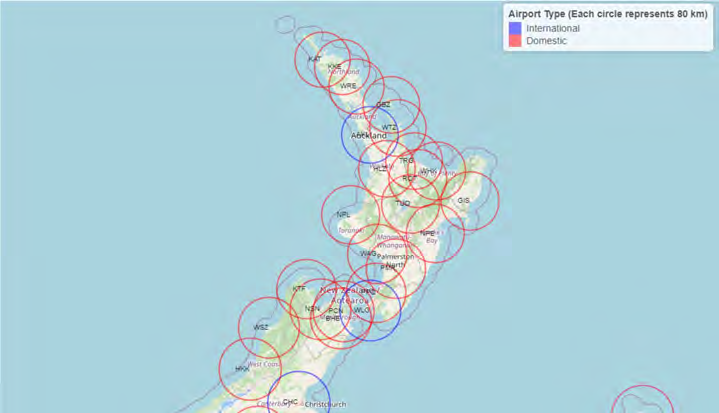
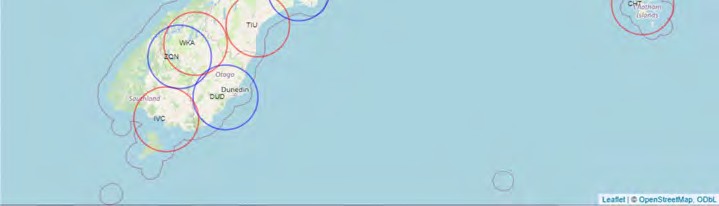
DRAFT – NOT GOVERNMENT POLICY
Annex 1 – Geographical coverage of airports
ACT 1982
INFORMATION
RELEASED UNDER THE
OFFICIAL
Page 22: [1] Commented [MB23]
Melanie Berg
20/03/2025 12:51:00 pm
The Māori population is growing faster than the rest of the NZ population, and it is structurally
younger, too. This means that in coming years a higher proportion of those in schooling and higher
education will be Māori, and Māori will make up a higher proportion of the NZ workforce. Stats NZ
population projections estimate the Māori workforce, currently at 14% of the NZ workforce, will make
up 20% of the workforce in 2040. (These are 2022 numbers, you may find more up-to-date numbers
and projects on the Stats NZ website, or through their Aotearoa Data Explorer). The Māori aviation
workforce make up 8% of the overall NZ aviation workforce, despite Māori accounting for just over
17% of the overall NZ population. You may want to think about how current representation of Māori in
the aviation workforce could be addressed, as well as planning for a future where there are more
Māori workers that could contribute to the aviation sector.
Page 22: [2] Commented [MM24]
Manish Muthukrishnan
19/03/2025 3:30:00 pm
Might need an active focus on retention based on data found by Ringa Hora.
Talent attraction will be an ongoing problem if retention rates do not improve. Of people who joined
the industry in 2015, only 60% remained after the first year, and 22% after five years. In contrast,
some parts of the workforce are very loyal. For example, 73% of the aircraft manufacturing and repair
workforce has only had one employer. We do not know the full reasons for these different dynamics,
although can see that this is an ageing workforce which presents natural limits on retention (over half
is older than 45, and 7% aged over 65).
ACT 1982
INFORMATION
RELEASED UNDER THE
OFFICIAL
Document 18
Harry Atkins
From:
Leo Shen <[email address]>
Sent:
Friday, 11 April 2025 3:02 pm
To:
Natalie Howel
Cc:
Tejas Menon; Ben Whitehouse (Education); Eleonora Sparagna
Subject:
RE: Question about Action to include in the Vision for Aviation to 2035
From: Natalie Howell <[email address]>
Sent: Friday, 11 April 2025 2:28 pm
To: Leo Shen <[email address]>
Cc: Tejas Menon <[email address]>; Ben Whitehouse (Education)
<[email address]>; Eleonora Sparagna <[email address]>
Subject: RE: Question about Action to include in the Vision for Aviation to 2035
Good afternoon Leo
ACT 1982
Thanks for the info and phone chat earlier this week. Here’s what I have put in the draft Vision document
about Ringa Hora’s action – see below. Looking over this again… do we need the “associated settings”
part of the description?
Let me know by the end of Monday if you have any issues with this text.
Thanks!
Priority Focus Area: Workforce
INFORMATION
Current state
RELEASED UNDER THE
The training pipeline for the aviation workforce is influenced by many factors[[1] Workforce supply and demand
issues for pilots and aviation maintenance engineers are assessed in a report by Scarlatti for the Aviation Industry Association
and Ringa Hora. A summary of the findings is available here: https://aianz.org.nz/wp-content/uploads/Summary-
report_October-2024.pdf 1] including:
an increasingly tight global market for labour and skills
ageing of the current workforce and changing demographics of the future workforce (for example,
OFFICIAL
growth of the Māori workforce as a proportion of the total workforce)
changes in the industry – for example, fewer businesses now operate small planes suitable for
new pilots looking to build experience
tertiary education policy settings (including student loan policies)
CAA training and licensing rules (influenced by ICAO standards and recommendations)
1
technological changes, leading to changes in the types of skills that the industry of the future will
need.
Commercial airline growth and the COVID pandemic’s impacts on the aviation sector have created a
demand for aviation personnel such as pilots and engineering staff. If we do not act to improve
recruitment and retention,[[2] Ringa Hora reports that, of people who joined the industry in 2015, only 60% remained after
the first year, and 22% after five years. In contrast, some parts of the workforce are very loyal. For example, 73% of the aircraft
manufacturing and repair workforce has only had one employer. This is an ageing workforce which presents natural limits on
retention (over half is older than 45, and 7% aged over 65). https://ringahora.nz/wp-content/uploads/2023/10/Ringa-
Hora_Aviation_IAP_print.pdf 2] we face worsening shortages of key personnel.
To build the right incentives and protections to attract and retain skilled workers we will also need to
understand what system changes are needed to embed a safety and security culture at an institutional
level and through each participant’s habits, practices and interactions.
There is potential to increase Māori participation in the sector. Māori are significantly underrepresented in
the aviation workforce: the Māori aviation workforce is just 8% of the total aviation workforce, despite Māori
making up just over 17% of the overall New Zealand population.[[3] The Ringa Hora workforce development council has
reported on their engagement with Māori in aviation: https://ringahora.nz/wp-content/uploads/2024/06/Kaupapa-Maori-
Aviation-hui-findings_final-Jul24.pdf.3]
New Zealand trains overseas pilots, and there is potential for demand for this training to increase.
ACT 1982
The Royal New Zealand Air Force is working to harmonise its systems and rules with the wider civil
aviation system, including recognised international standards. This means that in future, the Defence
Force could play a greater role in training technical, engineering, and logistics personnel who can fill
workforce shortages in the civil system.
New Zealand also hosts a growing advanced aviation sector that may create new demand for skilled
personnel, and new opportunities for innovation in aviation education. It may also require new skill sets
and training needs.
Ambition
The Interim Council’s long-term ambition is that aviation provide attractive, highly skilled jobs in New
Zealand and is a desirable career path. As part of achieving this ambition, we also need to address the
INFORMATION
sector’s workforce challenges to overcome shortages of key personnel and develop the attributes,
knowledge and competencies that the aviation system will need in the future.
RELEASED UNDER THE
First set of actions towards our ambition
Setting up an Aviation Workforce Working Group will help us achieve our ambition by promoting cross-
sector collaboration and coordination on aviation workforce challenges, informed by understanding of
all parts of the aviation workforce pipeline.
Ringa Hora’s updates to the pilot qualification will improve the relevance of the qualification for airlines,
OFFICIAL
so that pilots develop the competencies the sector needs. (just to avoid the general aviation parts of the
industry screaming what about me)
Initial steps for the sector and Government to achieve the Council’s ambition include:
Lead
Initial Action
2
Continue policy work around issues related to training in the aviation
Ministry of
sector and how they contribute to workforce challenges in civil aviation –
Education
ongoing.
Updates to the pilot qualification [and associated settings], in
Ringa Hora
consultation with airlines, by the end of 2025. Happy with the change
Set up an Aviation Workforce Working Group to:
build on the existing Aviation and Airport Services Workforce
Action Plan
review and streamline training pipelines for civil and military
aviation
maximise the ability of personnel to transition between aviation
careers (including military/civilian)
hAviation
Council
improve professional development and sabbatical opportunities
promote aviation as a future career
ACT 1982
grow Māori and Pasifika participation in the aviation workforce
facilitate sector engagement, including discussions between
airlines of different sizes on pilot and ground engineer recruitment
and training pathways
publish best practice guidelines on embedding relevant incentives
and a positive safety and security culture in aviation workplaces.
From: Leo Shen <[email address]> INFORMATION
Sent: Tuesday, 8 April 2025 9:37 am
To: Natalie Howell <[email address]>
RELEASED UNDER THE
Cc: Tejas Menon <[email address]>; Ben Whitehouse (Education)
<[email address]>; Eleonora Sparagna <[email address]>
Subject: RE: Question about Action to include in the Vision for Aviation to 2035
Kia ora Natalie
Unfortunately, this is a slightly trickier question to answer as it depends s 9(2)(b)(ii)
OFFICIAL
Once we got confirmation from AirNZ/Airlines on what changes they want to see the process we had to go through
is pretty straight forward and fairly speedy. It will probably take 12 weeks from inception to approval by NZQA for a
programme change of this nature. .
3
I don’t think I have explained this well as there are a few technical considerations.. will give you a call this morning
Leo
From: Natalie Howell <[email address]>
Sent: Tuesday, 8 April 2025 8:56 am
To: Leo Shen <[email address]>
Cc: Tejas Menon <[email address]>; Ben Whitehouse (Education)
<[email address]>; Eleonora Sparagna <[email address]>
Subject: RE: Question about Action to include in the Vision for Aviation to 2035
Thanks for this Leo!
Can you tell me the timeframe for this action? When do you expect it to be completed?
From: Leo Shen <[email address]>
Sent: Monday, 7 April 2025 4:55 pm
To: Natalie Howell <[email address]>
Cc: Tejas Menon <[email address]>; Ben Whitehouse (Education)
<[email address]>; Eleonora Sparagna <[email address]>
Subject: RE: Question about Action to include in the Vision for Aviation to 2035
ACT 1982
Kia ora Natalie
From our perspective we would support an action around “reviewing the pilot qualification and associated
settings” as part of the action suite. However, we do note that Ringa Hora will be replaced by Industry Skills Board
in 2026 so it may be a vocational education system action rather than a Ringa Hora action.
What we are working on at the moment is reviewing whether the pilot qualification is fit for purpose as a part of our
qualification setting functions. s 9(2)(b)(ii)
INFORMATION
RELEASED UNDER THE
Hope this helps, give me a call if need
Leo
OFFICIAL
From: Natalie Howell <[email address]>
Sent: Monday, 7 April 2025 4:23 pm
To: Leo Shen <[email address]>
4
Cc: Tejas Menon <[email address]>; Ben Whitehouse (Education)
<[email address]>; Eleonora Sparagna <[email address]>
Subject: Question about Action to include in the Vision for Aviation to 2035
Dear Leo
I hope you are having a nice day today.
I have a question for you about a possible action to include in the draft “Vision for Aviation to 2035”
document for the Interim Aviation Council.
When reviewing the draft Vision document, NZ Airports commented that: “Could be a Ringa Hora
action in here that is more specific - they are now working with Air NZ on qual review, and we are
plugging in the regional airlines to that”.
Can you tell me more about this work please? It sounds relevant! Would it be appropriate to
include it in the Vision document? Happy to discuss it with you on a quick call if you like.
Are you able to come back to me by the end of the day tomorrow? Thanks!
ACT 1982
Background: what is the Vision for Aviation?
The Vision will be a product of the Interim Aviation Council.
The document sets out the Council’s shared ambition for the aviation sector and includes some
actions identifying how it will achieve its ambition.
As you know from earlier discussions, the Council is motivated to address workforce issues
affecting the sector.
There is a section in the draft Vision about Workforce issues, and I’ve been working with the
Ministry of Education on this.
I’ve copied the draft section on Workforce below, for context – and any feedback you might have.
INFORMATION
Workforce
RELEASED UNDER THE
Current state
The training pipeline for the aviation workforce is influenced by many factors11 including:
an increasingly tight global market for labour and skills
ageing of the current workforce and changing demographics of the future workforce
changes in the industry – for example, fewer businesses now operate small planes suitable for new pilots
OFFICIAL
looking to build experience
tertiary education policy settings (including student loan policies)
CAA training and licensing rules (influenced by ICAO standards and recommendations)
technological changes, leading to changes in the types of skills that the industry of the future will need.
5
Commercial airline growth and the COVID pandemic’s impacts on the aviation sector have
created a demand for aviation personnel, such as pilots and engineering staff. If we do not act to
improve recruitment and retention,12 we face worsening shortages of key personnel.
To build the right incentives and protections to attract and retain skilled workers we will also need
to understand what system changes are needed to embed a safety and security culture at an
institutional level and through each participant’s habits, practices and interactions.
There is potential to increase Māori participation in the sector. Māori are significantly
underrepresented in the aviation workforce: the Māori aviation workforce is just 8% of the total
aviation workforce, despite Māori making up just over 17% of the overall New Zealand population.13
New Zealand trains overseas pilots, and there is potential for demand for this training to
increase.
The Royal New Zealand Air Force is working to harmonise its systems and rules with the wider
civil aviation system, including recognised international standards. This means that in future, the
Defence Force could play a greater role in training technical, engineering, and logistics personnel
who can fill workforce shortages in the civil system.
New Zealand also hosts a growing advanced aviation sector that may create new demand for
skilled personnel, and new opportunities for innovation in aviation education. It may also require
ACT 1982
new skill sets and training needs.
Ambition
The Interim Council’s long-term ambition is that aviation provides attractive, highly skilled jobs in
New Zealand and is a desirable career path. As part of achieving this ambition, we also need to
address the sector’s workforce challenges to overcome shortages of key personnel and develop
the attributes, knowledge and competencies that the aviation system will need in the future.
Initial steps for the sector and Government to achieve the Council’s ambition include:
Lead
Initial Action
Continue to understand and work towards resolving issues related to
Ministry of
INFORMATION
training in the aviation sector and how they contribute to workforce
Education
challenges in civil aviation.
RELEASED UNDER THE
OFFICIAL
6


Set up an Aviation Workforce Working Group to:
build on the existing Aviation and Airport Services Workforce
Action Plan
review and streamline training pipelines for civil and military
aviation
maximise the ability of personnel to transition between aviation
careers (including military/civilian)
Interim
improve professional development and sabbatical opportunities
Aviation
Council
promote aviation as a future career
grow Māori and Pasifika participation in the aviation workforce
facilitate sector engagement, including discussions between
airlines of different sizes on pilot and ground engineer
ACT 1982
recruitment and training pathways
publish best practice guidelines on embedding relevant
incentives and a positive safety and security culture in aviation
workplaces.
Natalie Howell (she/her)
Kaitohutohu Matua - Whakaritenga Ohaoha | Senior Adviser – Aviation
Te Manatū Waka Ministry of Transport
M: s 9(2)(a)
E: [email address] | transport.govt.nz
INFORMATION
I work full days on Monday, Thursday and Friday, and 9am-1pm on Tuesdays and Wednesdays.
RELEASED UNDER THE
OFFICIAL
Cautionary notice: This email and any attachments are confidential. If this email is not intended for you, please contact the sender immediately,
and delete the original email and attachments: do not use, read, distribute or copy it. Any views expressed in this email and attachments do not
necessarily reflect the views of the Council. The Council does not accept liability in connection with computer viruses, data corruption, delay,
interruption, unauthorised access, or unauthorised amendment.
To help protect you r priv acy, Microsoft Office prevented automatic download of this
picture from the Internet.
7
Document 19
Harry Atkins
From:
Leo Shen <[email address]>
Sent:
Monday, 23 June 2025 8:01 am
To:
Natalie Howel
Cc:
Tom Forster
Subject:
RE: Follow-Up from Today’s Meeting – Aviation Workforce Development Next Steps
Morning Natalie
That’s good from our end
Leo
From: Natalie Howell <[email address]>
Sent: Wednesday, 18 June 2025 1:15 pm
To: Leo Shen <[email address]>
Cc: Tom Forster <[email address]>
Subject: RE: Follow-Up from Today’s Meeting – Aviation Workforce Development Next Steps
ACT 1982
Hi again Leo, sad to hear you’ve been unwell. I hope you’re all better now.
The Minister has asked us to include some more specific actions in the Vision, including in the
Workforce section.
We are wondering if we can include your action from the Minister’s meeting as an action in the Vision.
How would you feel about that?
What about something like this?
Ringa Hora
Work with industry partners, Aviation Council, and Transport, Immigration and
Education officials to develop a holistic aviation workforce package including
INFORMATION
coordinated recommendations to address persistent challenges in the training and
RELEASED UNDER THE
retention of aviation workforce – by end 2025.
Would that be ok?
Many thanks! OFFICIAL
Natalie Howell (she/her)
Kaitohutohu Matua - Whakaritenga Ohaoha | Senior Adviser – Aviation
Te Manatū Waka Ministry of Transport
M: s 9(2)(a)
E: [email address] | transport.govt.nz
I work full days on Monday, Thursday and Friday, and 9am-1pm on Tuesdays and Wednesdays.
1


From: Tom Forster <[email address]>
Sent: Tuesday, 17 June 2025 2:59 pm
To: Leo Shen <[email address]>
Cc: Natalie Howell <[email address]>
Subject: RE: Follow-Up from Today’s Meeting – Aviation Workforce Development Next Steps
Hi Leo
I hope you are much better now.
This is great.
Have a good rest of the week.
Cheers
ACT 1982
Tom
From: Leo Shen <[email address]>
Sent: Tuesday, 17 June 2025 2:53 pm
To: Tom Forster <[email address]>
Subject: RE: Follow-Up from Today’s Meeting – Aviation Workforce Development Next Steps
Sorry Tom .. just about to reply to you, apologies for the delayed response.. was caught up with some illness
We are currently working on a scoping document building on work done to date by agencies and the aviation
council, we will share this scoping document with the agencies and key associations by early next week. The
desire is then meet with the agencies by early July to confirm the scope and work towards an initial industry +
agency workshop in early August and confirmed detailed milestones and outputs.
INFORMATION
It is envisaged that the work will involve a detailed count of workforce challenges/opportunities from key aviation
stakeholders (pilots, engineers, airport, regional operators and other key aviation sub industries etc..) and gauge
RELEASED UNDER THE
from the various perspectives in regards to possible ways forward. It would helpfully build up a comprehensive
repository of aviation workforce insights for agencies to build on for future policies/interventions
Hope this helps, again apologies for the delayed response. Just give me a call if you need anything further
Leo
OFFICIAL
Leo Shen
General Manager Strategy and Advice
M: s 9(2)(a)
PO Box 27-048, Wellington, New Zealand
www.ringahora.nz
2
From: Tom Forster <[email address]>
Sent: Tuesday, 17 June 2025 2:42 pm
To: Leo Shen <[email address]>
Subject: RE: Follow-Up from Today’s Meeting – Aviation Workforce Development Next Steps
Hi Leo
I’m just following on my email below. We want to put a short update to the Minister in the weekly report on
progress being made – so just checking whether there’s anything we can say?
Entries into the Weekly report close at 4.30 today – so if there’s anything we can say, we’ll need to get it by 4.30.
Thanks
Tom
From: Tom Forster
ACT 1982
Sent: Friday, 13 June 2025 12:34 pm
To: Leo Shen <[email address]>
Subject: RE: Follow-Up from Today’s Meeting – Aviation Workforce Development Next Steps
Hi Leo
I hope you’ve had a good week thus far?
I just thought I’ll drop you a line to find out how things are going with the below?
Are you able to please give me an update?
Cheers
Tom
INFORMATION
From: Kari Scrimshaw <[email address]>
Sent: Thursday, 5 June 2025 3:55 pm
RELEASED UNDER THE
To: James Meager (MIN) <[email address]>
Cc: Gary Tonkin (Parliament) <[email address]>; Tom Forster <[email address]>; Leo Shen
<[email address]>
Subject: Follow-Up from Today’s Meeting – Aviation Workforce Development Next Steps
Tēnā koe Minister Meager
OFFICIAL
Thank you again for taking the time to meet with Leo and I today and for your thoughtful engagement on
the challenges and opportunities facing regional aviation in Aotearoa. We greatly appreciated the
opportunity to discuss how workforce planning and system-level coordination can help build a more
resilient and future-ready aviation sector.
We were particularly encouraged by your interest in practical solutions that bring together government,
industry, and providers.
3

Key Follow-Up Actions Agreed:
Cross-Agency Collaboration – We will meet with officials from across the Transport,
Immigration, and Education portfolios to scope what a holistic aviation workforce
package could look like. This work will be undertaken alongside industry partners and the
Aviation Council, with the goal of developing coordinated recommendations to address
persistent challenges in the training and retention of aviation workforce.
We will outline potential co-investment and partnership models to support workforce
capability aligned with regional air connectivity priorities. We will consider the details
discussed during our time together – with a particular focus on improving efficiency in the
existing system, increasing completion rates, and reducing barriers across the training
and regulatory settings, including funding structures and timeframes.
We expect to be able to come back to you within a month with our approach and timeline for delivery of
the above. We would appreciate guidance along the way to ensure that your and the industries
aspirations can be met. We can then look to hand over an approach for real change to be driven to
address the future workforce needs before our disestablishment at the end of the year.
We look forward to working collaboratively to progress the next steps.
ACT 1982
Ngā manaakitanga
Kari Scrimshaw
Tumu o Ringa Hora | Chief Executive
Ringa Hora Services Workforce Development Council
A: 49 Tory St, ANZ Campus, Tower B Level 3, Wel ington
M: s 9(2)(a)
E:[email address] W: ringahora.nz
Cautionary notice: This email and any attachments are confidential. If this email is not intended for you, please contact the sender immediately,
INFORMATION
and delete the original email and attachments: do not use, read, distribute or copy it. Any views expressed in this email and attachments do not
necessarily reflect the views of the Council. The Council does not accept liability in connection with computer viruses, data corruption, delay,
interruption, unauthorised access, or unauthorised amendment.
RELEASED UNDER THE
MINISTRY OF TRANSPORT
Wellington (Head Office) | Ground Floor, 3 Queens Wharf | PO Box 3175 | Wellington 6011 | NEW ZEALAND | Tel: +64
4 439 9000 |
OFFICIAL
Auckland | NZ Government Auckland Policy Office |Level 7, 167B Victoria Street West | PO Box 106238 | Auckland City |
Auckland 1143 | NEW ZEALAND | Tel: +64 4 439 9000 |
Disclaimer: This email is only intended to be read by the named recipient. It may contain information which is
confidential, proprietary or the subject of legal privilege. If you are not the intended recipient you must delete this email
and may not use any information contained in it. Legal privilege is not waived because you have read this email.
Please consider the environment before printing this email.
4
Document 20
Harry Atkins
From:
Leo Shen <[email address]>
Sent:
Tuesday, 15 July 2025 11:54 am
To:
Natalie Howel
Subject:
RE: Pilot training - how it all fits together
That’s no problem at all from our perspective
From: Natalie Howell <[email address]>
Sent: Tuesday, 15 July 2025 10:58 am
To: Leo Shen <[email address]>
Subject: RE: Pilot training - how it all fits together
Hi Leo, hope you are having a great day.
A quick question about this action (see below). NZALPA has suggested changing the wording to “in
consultation with the sector” instead of “in consultation with airlines”.
ACT 1982
Perhaps this means that they want to be consulted? Can you let me know if you were planning to consult
any other sector stakeholders as part of this work? And, would changing the wording cause any issues
for you? I will only change the text if the proposed wording works for Ringa Hora.
Thanks
Natalie
From: Leo Shen <[email address]>
Sent: Tuesday, 20 May 2025 2:26 pm
To: Natalie Howell <[email address]>
Subject: RE: Pilot training - how it all fits together
INFORMATION
Will do
RELEASED UNDER THE
From: Natalie Howell <[email address]>
Sent: Tuesday, 20 May 2025 2:25 pm
To: Leo Shen <[email address]>
Subject: RE: Pilot training - how it all fits together
Thanks! Can you let me know if there any significant developments?
Cheers!
OFFICIAL
From: Leo Shen <[email address]>
Sent: Tuesday, 20 May 2025 2:11 pm
To: Natalie Howell <[email address]>
Subject: RE: Pilot training - how it all fits together
Yep I think that’s fine.. just FYI . also meeting with AirNZ this Thursday to go through the Qual
1
From: Natalie Howell <[email address]>
Sent: Tuesday, 20 May 2025 2:10 pm
To: Leo Shen <[email address]>
Subject: RE: Pilot training - how it all fits together
Hi Leo, thanks again for your time last week.
I’d like to add a bit more detail to the Ringa Hora action in the Vision. Have I described it accurately
below?
Updates to the pilot qualification, in consultation with airlines, by the
end of 2025. This involves developing an airline-approved training
Ringa Hora
programme that:
can be delivered over a shorter period
better aligns training to airlines’ needs.
Thanks!
ACT 1982
Natalie
From: Leo Shen <[email address]>
Sent: Wednesday, 14 May 2025 2:18 pm
To: Natalie Howell <[email address]>
Cc: Carolina Durrant <[email address]>
Subject: RE: Pilot training - how it all fits together
Sure more than happy to support
How about 10:30?
Leo
INFORMATION
From: Natalie Howell <[email address]>
Sent: Wednesday, 14 May 2025 1:08 pm
RELEASED UNDER THE
To: Leo Shen <[email address]>
Cc: Carolina Durrant <[email address]>
Subject: Pilot training - how it all fits together
Hi Leo, hope you’re having a great day today.
I’m wondering if I can chat with you about how the whole pilot training system works, including Ringa
OFFICIAL
Hora’s place in it. I’m having trouble fitting all the pieces together – it seems like there are a lot of
agencies and organisations involved!
Would you be free on Friday to talk with me about this? I’m free anytime except 11.30-12.00.
If you’re available to do this, Caro would like to join us.
2

thanks
Natalie Howell (she/her)
Kaitohutohu Matua - Whakaritenga Ohaoha | Senior Adviser – Aviation
Te Manatū Waka Ministry of Transport
M: s 9(2)(a)
E: [email address] | transport.govt.nz
I work full days on Monday, Thursday and Friday, and 9am-1pm on Tuesdays and Wednesdays.
MINISTRY OF TRANSPORT
Wellington (Head Office) | Ground Floor, 3 Queens Wharf | PO Box 3175 | Wellington 6011 | NEW ZEALAND | Tel: +64
ACT 1982
4 439 9000 |
Auckland | NZ Government Auckland Policy Office |Level 7, 167B Victoria Street West | PO Box 106238 | Auckland City |
Auckland 1143 | NEW ZEALAND | Tel: +64 4 439 9000 |
Disclaimer: This email is only intended to be read by the named recipient. It may contain information which is
confidential, proprietary or the subject of legal privilege. If you are not the intended recipient you must delete this email
and may not use any information contained in it. Legal privilege is not waived because you have read this email.
Please consider the environment before printing this email.
Cautionary notice: This email and any attachments are confidential. If this email is not intended for you, please contact the sender immediately,
and delete the original email and attachments: do not use, read, distribute or copy it. Any views expressed in this email and attachments do not
necessarily reflect the views of the Council. The Council does not accept liability in connection with computer viruses, data corruption, delay,
interruption, unauthorised access, or unauthorised amendment.
INFORMATION
RELEASED UNDER THE
OFFICIAL
3
Document 21
Harry Atkins
From:
Leo Shen <[email address]>
Sent:
Friday, 29 August 2025 1:35 pm
To:
Natalie Howel
Cc:
Jenny Connor; Lisa Sengelow
Subject:
RE: Edits to actions in Action Plan
All good from our end
Leo
From: Natalie Howell <[email address]>
Sent: Friday, 29 August 2025 12:59 pm
To: Leo Shen <[email address]>
Cc: Jenny Connor <[email address]>; Lisa Sengelow <[email address]>
Subject: Edits to actions in Action Plan
Hi Leo
ACT 1982
Hope you’re having a nice Friday!
The Minister’s o ice has given us some comments on the Aviation Action Plan – including some
requested edits to the Ringa Hora actions, as shown below. Are these changes ok with you?
To iImprove the relevance of the qualification for airlines by updateing
the pilot qualification, in consultation with the sector, by the end of
2025. This involves developing an airline-approved training programme
Ringa Hora
that:
can be delivered over a shorter period
better aligns training to airlines’ needs.
INFORMATION
Work with industry partners, Aviation Council, and Transport,
Immigration and Education o icials to develop an holistic aviation
RELEASED UNDER THE
Ringa Hora
workforce package of options including coordinated recommendations
to address persistent challenges in the training and retention of aviation
workforce – by end 2025.
You might be interested that he also brought forward the timeframe for the industry action, by a year!
OFFICIAL
By end 2026:
Collaborate on joint employment promotion activities to ensure
aviation is seen as an attractive, diverse and rewarding sector for
Industry
young people – by end 2026
Report to the Council on options for the Council to help
coordinate aviation graduates’ placement and progression in the
workforce – by end 2025.
1

Thanks
Natalie
Natalie Howell (she/her)
Kaitohutohu Matua - Whakaritenga Ohaoha | Senior Adviser – Aviation
Te Manatū Waka Ministry of Transport
M: s 9(2)(a)
E: [email address] | transport.govt.nz
I work full days on Monday, Thursday and Friday, and 9am-1pm on Tuesdays and Wednesdays.
ACT 1982
MINISTRY OF TRANSPORT
Wellington (Head Office) | Ground Floor, 3 Queens Wharf | PO Box 3175 | Wellington 6011 | NEW ZEALAND | Tel: +64
4 439 9000 |
Auckland | NZ Government Auckland Policy Office |Level 7, 167B Victoria Street West | PO Box 106238 | Auckland City |
Auckland 1143 | NEW ZEALAND | Tel: +64 4 439 9000 |
Disclaimer: This email is only intended to be read by the named recipient. It may contain information which is
confidential, proprietary or the subject of legal privilege. If you are not the intended recipient you must delete this email
and may not use any information contained in it. Legal privilege is not waived because you have read this email.
Please consider the environment before printing this email.
Cautionary notice: This email and any attachments are confidential. If this email is not intended for you, please contact the sender immediately,
INFORMATION
and delete the original email and attachments: do not use, read, distribute or copy it. Any views expressed in this email and attachments do not
necessarily reflect the views of the Council. The Council does not accept liability in connection with computer viruses, data corruption, delay,
interruption, unauthorised access, or unauthorised amendment.
RELEASED UNDER THE
OFFICIAL
2
