
CLASSIFICATION
Quarterly Health, Safety and Wellbeing Report
Meeting date: 3 September 2024
Written date: 1 August 2024
Sponsor: Laura Dixon
Prepared by: 9(2)(a)
What you’re updating Te Pūrengi on
Q4 (April – June 2024) Health, Safety and Wellbeing report covering lead and lag
indicators and work programme update including:
• Our current state and how we will re-set our HSW approach for the new structure.
• The progress made against the Wellbeing Action Plan.
The report has been discussed at Te Mīmiro and the key points of discussion will be
shared with Te Pūrengi.
Reason for Te Pūrengi’s consideration
The intent of this report is to be a tool for Te Pūrengi to receive information, to ask
questions and to discharge their governance duties. This report allows the Ministry as a
PCBU to monitor the HSW performance, status, and progress against current
assumptions.
Have Te Pūrengi considered this item before?
While some detail may be similar to previous reports, we would like to bring your attention
to the update on slide two outlining our current state and our plan to re-set our approach
in line with the re-setting of the Ministry.
Recommendations
I recommend TP:
• Note the pivot in the last quarter to focus on psychosocial harm as a critical risk
instead of the intended focus on driving and lone/isolated work
• Support the reprioritising of (the critical risk) psychosocial harm ahead of the
driving lone/isolated work critical risk
• Note that from now until the end of the year HSW will engage directly with
business groups/units to understand changing context and needs ahead of
updating the HS&W work programme for next year
• Continue to encourage leaders to demonstrate care and support in their leadership
styles.
Practical ways leaders can do this:
1. Ensure they are holding appropriate change conversations, that are in line with key
organisational messaging.
2. Blocking enough time in their diaries over the week to have more regular check in times
with their team members that is not about delivery of work programs
3. Leading by example by ensuring they take the time they need to take regular breaks
during the day
4. Having courageous conversations with their direct managers and/or GMs about how
they can prioritise work and delivery expectations.
Te Pūrengi paper: Quarterly Health, Safety and Wellbeing Report
Te Pūrengi meeting: 3 September 2024
1
CLASSIFICATION
 ARC Cover Note
Q4 HSW Report
ARC Meeting Date
8 November 2024
Agenda item
Sponsor
Laura Dixon
Presented by
XXX
Deputy Secretary,
Business Transformation
Purpose
To bring the committee’s attention to the most recent Quarterly Health, Safety
and Wellbeing (HSW) report.
This paper requires
Advice
Discussion
X
Endorsement
Feedback
X
What other governance
Te Mīmiro August 28th
groups have considered Te Pūrengi September 3rd
this before ARC?
Introduction and background
Every quarter, People and Capability provide Te Mīmiro and Te Pūrengi with a Health, Safety and Wellbeing report
covering lead and lag indicators and HSW work programme update.
This report covers Q4 (April – June 2024) including:
• Our current state and how we will re-set our HSW approach for the new structure.
• The progress made against the Wellbeing Action Plan.
• Incident and hazard data
• EAP data
The report has been discussed at Te Mīmiro and Te Pūrengi who had the following feedback:
• Acknowledgement of the need to shift our critical risk priority to focus on psychosocial wellbeing through the
change process.
• Plan to re-set our approach from Nov 1st with the creation of a roadmap approved.
• Acknowledgement that some kaimahi still unaware of our HSW process/offering, particularly best practice for
logging incidents/hazards.
Recommendations It is recommended that the Committee:
1.
Discuss and provide feedback on any aspects of the report, including the focus to re-set our priorities
within the new structure.

CLASSIFICATION
Quarterly Health,
Safety and Wellbeing
Report
Quarter 4: April – June 2024
CLASSIFICATION

CLASSIFICATION
Update
The resetting of the Ministry is an excellent opportunity for us to re set our priorities and workplan for Health, Safety and Wellbeing. Over the past twelve months we have had to pivot our
attention to support the wellbeing of our kaimahi through the change period. This pivot has had two impacts to bring your attention to:
• It has allowed us to make significant progress in our wellbeing action plan, aligning closely to our psychological harm critical risk.
• 9(2)(g)(i)
9(2)(g)(i)
Meeting our obligations: How we will prepare and re-set for the new structure – our focus until October 31st
• Complete existing project tasks and review our employee engagement cadence. This will allow us to free up capacity to focus on our road map going forward (details of milestones for this activity
on next slide).
• Design a sustainable road map underpinned by best practice and our legislative obligations. This will focus on risk management, incident and hazard management, investigation processes, critical
risk, and other elements designed to lift our HSMS maturity.
• Review current HSW reps post the Expression of Preference (EOP) process to ensure we have the required HSW reps in place for 1 Nov 2024.
From 1st November we will begin implementing our new road map. This road map will be the precursor of a HSW strategy which will be brought to Te Pūrengi for review and approval in 2025.
Q1
Q2
Q3
Q4
Jul Aug Sep
Oct Nov Dec
Jan Feb Mar
Apr May Jun
Completing open projects, designing road map
New road map implementation
Nov
1st
2
CLASSIFICATION
 Activity
CLASSIFICATION
Element
Current Activity
Milestones before 31st Oc
Governance,
• Safety and Wellbeing Committee (SWC) meeting was held 10th June.
• Design HSW road map. Implementation to begin
Engagement &
within new structure on November 1st.
Participation
• Decide what we will need to pause or adjust to allow
us to focus on completing the HSW road map i.e.
cadence of policy/charter updates, cadence of HSW
Committee meetings.
Critical Risk
• Work paused due to a shift in focus to implement kaimahi wellbeing support and resources through the change process.
• Design sustainable implementation plan as part of the
Management
• During this period, we have not had capacity to move our critical risk project forward as planned. 9(2)(g)(i)
new road map to ensure this work is completed as a
priority post Nov 1st.
• 9(2)(g)(i)
• Our Psychosocial Harm critical risk has had momentum with the completion of many of our Wellbeing Action Plan pillars
(see detail on slide 4).
Wellbeing
• Further wellbeing webinars completed with organisational psychologist 9(2)(a)
focusing on gaining clarity and equipping
• Promotion of Indigenous Rongoā EAP.
kaimahi with a range of tools during this period of change. Recordings and slides saved on Te Taiao for kaimahi to access.
This is part of our wellbeing through change approach – see appendix for detail.
• Design a tracking process for uptake and feedback of
Indigenous Rongoā EAP pilot.
• 2024 Flu Vaccination drive completed with 309 vouchers used in total. This is a similar uptake to last yar where a total of
314 were claimed ( 223 redeemed through vouchers and 91 in person).
• Mental Health Awareness Week promotion and
resources. This will be running 23- 29th September
with the theme of community and connection. Mental
• Wellbeing Pulse survey template and guidance pack has been sent to business group wellbeing champions. This will allow a
Health Awareness Week 2024
cohesive approach to wellbeing pulse surveys and add to the wellbeing data that we have access to. This pack was clear
that all pulse surveys need Dep Sec approval before launch see full pack here.
• HSW Reps have completed Mental Health First Aid Training to support them in their roles. This has also been completed by
a number of PSA delegates to support them in their engagement with kaimahi. An article will be posted on Te Taiao to
promote this resource, highlighting the support and guidance managers can utilise through these trained Mental Health
First Aiders.
Incident & Hazard
• Our Kiosk/Jadestar data is being ‘cleaned’ to ensure data is accurate. This is also being pulled into PowerBI to make our
Management
reporting smoother and less time consuming.
3
CLASSIFICATION

CLASSIFICATION
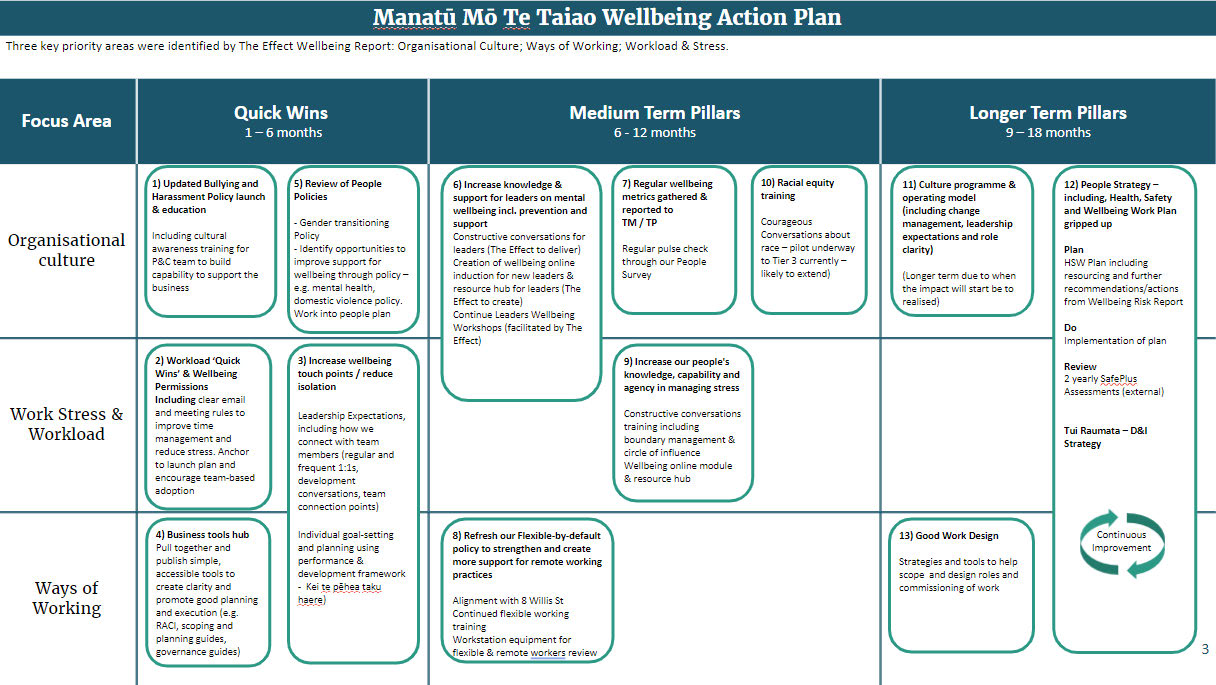
Wellbeing Action Plan Progress
Our recent focus on kaimahi wellbeing has given us the opportunity to make significant progress on our Wellbeing action plan from October 2021. This work has a
direct link to our psychological harm critical risk. The work completed has given us a strong foundation of embedded support and resources which we will continue to
build on within the new structure.
Background:
In 2021, the Ministry engaged an external provider (The Effect) to look at wellbeing from the perspective of psychosocial risk. Key findings from The Effect’s report showed many areas of
strength along with some priority areas for development. Below is an outline of the action plan with green representing completed work and amber indicating work that continues to progress.
Next steps:
As part of our re-set within the new operating model, we
will reassess our wellbeing action plan and ensure clear
links to our psychological harm critical risk work.
The pillars in amber will be our priority. Much of this
work will dove-tail with the capability and culture build
work that is planned across the organisation.
Our shift into the Culture and Capability team will allow
us to have stronger connections to this work and input
on the key capability build areas of psychological safety
and leadership capability.
To inform our planning, we will look to best practice
across other organisations. The Better Work by Design
Framework, created by Dr Hillary Bennet, will inform our
direction in this area alongside other key thought
leaders and both the Business Leader’s Health and
Safety Forum and the Government Health and Safety
Lead.
The new structure is an exciting opportunity for us to re-
design our approach with a future-focus to ensure we
have a robust and sustainable strategy in place to
proactively protect and support our kaimahi.
4
CLASSIFICATION


 Incident, Hazard & Workstation Asse
CLASSIFICATION
ssment Data
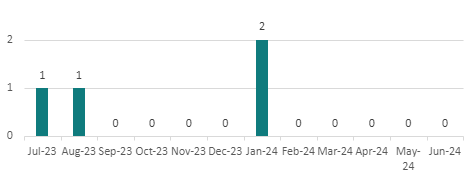
Incidents reported rolling 12 months Jul 2023 – Jun 2024
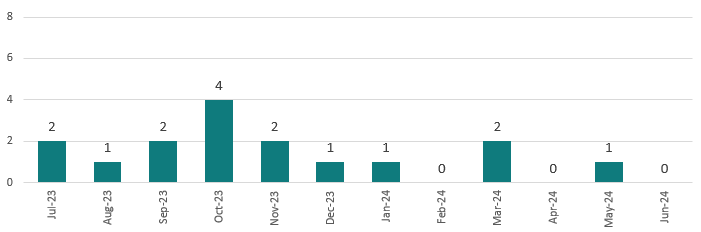
Hazards reported rolling 12 months
Top Hazards reported rolling 12 months
9(2)(ba)(i)
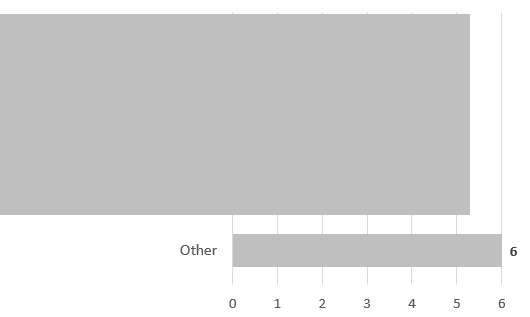
Injury Type rolling 12 months
Incidents
One incident was reported this quarter which9(2)(ba)(i)
9(2)(ba)(i)
Hazards
No hazards reported this quarter.
While we have had low incidents, and no hazards reported this quarter. This may not be an accurate picture of what is occurring. We
should focus on lifting our reporting culture and educating kaimahi about the importance of logging incidents and hazards to give us a
more accurate picture of what is occurring. Steps to achieve this could include; induction update, better access to and oversight of
our risks, education and understanding across the Ministry of our critical risks, and critical control work.
Workstation assessments
Three assessments have been completed this quarter. These are from both hybrid and remote workers. Equipment
recommendations from the assessments have been processed.
Additional Information
9(2)(ba)(i)
We have raised this with the Stats team and continue to advocate for our kaimahi as there have been a number of near-miss incidents with the
coffee plungers at 8WS recorded.
5
CLASSIFICATION

CLASSIFICATION
Employee Assistance Programme (EAP) data
EAP usage data rolling 12 months Jul 2023 – June 2024
9(2)(ba)(i) 9(2)(ba)(i)
EAP definitions of personal and work issues can be
found here.
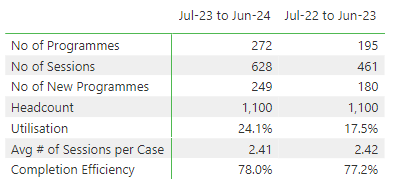
Generic EAP usage for July-23 to June-24 is 5.4%.
Other customers of Habit Health include NZ
Police, MBIE, Ministry of Justice, Ministry of
Education.
Our usage is sitting at 24.1% for the same period.
9(2)(ba)(i) 9(2)(ba)(i) This is an increase from our last report which was
at 21.5%. This increase was expected as we move
through this period of change. It is likely that this
will remain high into 2025 as kaimahi continue to
seek support and our leavers still have access to
EAP up to three months after exiting the
Ministry.
9(2)(ba)(i)
See Appendix for breakdown of usage by business group.
6
CLASSIFICATION

CLASSIFICATION
Employee Assistance Programme (EAP) contd.
The above data gives an overview of how we compare against other agencies that are clients of Habit Health (NZ Police, MBIE, Ministry of Justice, Ministry of Education).
9(2)(ba)(i)
Critical Incident Support:
During this quarter we had two incidents occur which needed wrap around wellbeing support. 9(2)(ba)(i)
Commentary from our Business Partners and P&C Advisors:
9(2)(ba)(i)
Our ask of Leaders
Our ask is for leaders to continue connecting with their teams and leading with care and support.
This state of uncertainty is having an enormous impact on our kaimahi. Maintaining connections and creating opportunities for kaimahi to share how they are coping and guiding them to available
support options will help them get through this difficult period.
7
CLASSIFICATION

CLASSIFICATION
Appendix: Wellbeing Approach to Support 2024 Change Activities
In January we designed our Wellbeing Approach to support 2024 change activities This approach is focused on three key support pillars; Proactive, Just-in-time, and Aftercare. All pillars are
progressing well, with all actions complete and in place. Below is an outline of completed activity:
Proactive Support
Activity from Wellbeing Approach
Detail
Status
Preparing our managers for change
• Sessions run for GMs with Organisational psychologist - complete
Complete
• E-Learning module live outlining key change principles and wellbeing implications - complete
• Change leadership sessions
• Peer learning/support cohorts
• 1:1 support with external experts where needed
Preparing teams who will have high-interaction with the
• HSW Reps booked in for Mental First Aid Training in May
Complete
business during change ( P&C Advisors, BPs, and HSW Reps)
• Connection / preparation meetings with BPs and Advisors
Preparing all kaimahi for change
• Wellbeing sessions with Organisational psychologist9(2)(a)
Complete
• Detailed Te Taiao page outlining key resources and support options available
Just-in Time Support
Activity from Wellbeing Approach
Detail
Status
1:1 support for kaimahi who are affected
• Clear pathways to access this support and connect with BPs, Advisors and S&W Team
In place
• External support pathways clearly defined and communicated
February Tō reo survey. This will give us valuable insights and
• Recommendations from results given
Complete
allow us to pinpoint further opportunities for support.
Aftercare Support
Activity from Wellbeing Approach
Detail
Status
Outplacement and career support
• Provide assistance with counselling, career advice, financial advice and paid time off for job searching, applications and interviews. This
In place
is in line with the Collective Employment Agreement.
Support for leaders managing changing teams
• On going support for those who are leading and supporting the organisation through change particularly where they bear a significant
In place
amount of the interaction and emotional load with impacted kaimahi.
CLASSIFICATION



CLASSIFICATION
Appendix: EAP Usage by Business Group
Please note:
• Due to the change in Business Group names we will be showing both names for the next three quarters until a full year has passed.
9(2)(ba)(i)
9(2)(ba)(i)
CLASSIFICATION
CLASSIFICATION
9(2)(ba)(i)
CLASSIFICATION
CLASSIFICATION
9(2)(ba)(i)
CLASSIFICATION
CLASSIFICATION
9(2)(ba)(i)
CLASSIFICATION
