
 Te Pūrengi – Decision or Action
Note: Where this document says "August 2023", it should say "October 2023" as this was the correct date of the Te Pūrengi meeting
Quarterly Health, Safety and Wellbeing Report
Meeting date: August 2023
Written date: 8th October 2023
Sponsor: Laura Dixon, Deputy Secretary Organisational Performance and Chief
Prepared by: 9(2)(a)
– Senior Advisor Safety and Wellbeing
Operating Officer
What are you updating Te Pūrengi on?
1. Q1 (July – September 2023) Health, Safety and Wellbeing report covering lead and lag indicators and work programme update
2. Our Work Programme has been updated and phasing of work is outlined in the report.
3. Our EAP usage data is now being pulled directly from the Habit health dashboard. This allows us to track a wider range of data and see which
teams may be experiencing common issues.
9(2)(ba)(i)
.
4. Our Critical Risk external consultant is onboard with discovery workshops on Isolated/Remote work beginning in October.
5. Provision of Equipment Memo has been included with a proposed solution to allow us better oversight of our fully remote kaimahi.
6. The report has been discussed at Te Mīmiro and the key points of discussion will be shared with Te Pūrengi.
Why should Te Pūrengi consider this?
The intent of this report is to be a tool for Te Pūrengi to receive information, to ask questions and to discharge their governance duties. This report
allows the Ministry as a PCBU to monitor the HSW performance, status, and progress against current assumptions.
Recommendations or Actions sought: Note – this report contains an update on HSW activities for Quarter 1 (1 July 2023 to 30 September 2023).
Actions:
• Continue to make space for our HSW Reps to connect with your teams to share resources and ask for feedback.
• Encourage your teams to join the upcoming Wellbeing Workshops with Humanex.
• Feedback your thoughts on any Safety and Wellbeing reporting additions or deletions that you would like to see in the OHR.
Q4 Health, Safety and Wellbeing Report
Te Pūrengi meeting: August 2023
1

CLASSIFICATION
Quarterly Health,
Safety and Wellbeing
Report
Quarter 1: July – September 2023
CLASSIFICATION
 Work Programme Overview
 CLASSIFICATION
Below is an overview showing work programme phasing over the next 12 months. Please note this work programme will run through to 2025 with some projects starting 2024/2025.
9(2)(g)(i)
Q2
Q3
Q4
Q1
RAG
Sept
Oct
Nov
Dec
Jan
Feb
Mar
April
May
June
July
Aug
Governance,
ONGOING - Policy & Charter review / Quarterly Reporting / HSW Rep Engagement / Safety & Wellbeing Committee / Te Taiao updates and management
Reporting &
G
Engagement
Review and update reporting (will begin once Critical Risk collateral document creation underway)
ONGOING - Reporting and data management
Incident and
Hazard
Jadestar review and updates
G
Management
Investigation process review and updates
Engagement with external consultant
Critical Risk
Isolated/Lone Work
G
Phasing of remaining critical risk work to be decided on recommendations from
Management
consultant (Psychological Harm / Driving for Work / Pandemic)
Wellbeing monitoring and initiatives
Wellbeing
A
Wellbeing Work Program Creation
Work Program Implementation
Emergency
Assess emergency management process and standardise across Ministry
Preparedness
G
Management
Assess internal process and standardise documentation
Contractor
G
Management
2
CLASSIFICATION

CLASSIFICATION
Update
Element
Current Activity
Next Milestones
Governance,
• All Health, Safety and Wellbeing (HSW) Representative positions are filled. Seven of our ten reps have • Explore additional training opportunities for our HSW Reps both
Engagement, and
completed training with three newer reps booked in.
internally and externally to ensure they have the tools and
Participation
• Safety and Wellbeing Committee (SWC) meeting held October 10th. All 2024 meetings booked in.
knowledge they need to succeed in their roles.
• Initial review of Safety and Wellbeing Worker Agreement completed in SWC Meeting. Final • Update resources and client information in line with new
consultation and changes to be made once Operating Model changes are in place as there is direct
Operating model.
impact with team names and group movements.
• Ensure we have coverage of HSW reps across all teams within the
•
new Operating model.
9(2)(a)
Critical Risk
• External consultant engaged. Discovery workshops completed with feedback and recommendations • Resources and documentation will be created from the
Management
expected by November. These workshops are focused on Isolated/Lone Work as a priority with
consultation feedback and be communicated to relevant teams.
targeted groups attending including; Waste Operations, Kaiwhakatere, Project Implementation and
• Page on Te Taiao created to outline our critical risks and house
Assessment, Climate and Water Agriculture, and Freshwater Farm Planning.
relevant resources.
• Psychological Risk is also a priority, we will work with the consultant to understand where best to • Future state for Hybrid and Office worker provision of equipment
place this in our timeline.
outlined.
• Remote Worker Provision of Equipment Memo created and ready for approval (detail page 9)
Wellbeing
• EAP Promotion created (see here). Alternative Psychologist and Counsellor support offered (see here).
• Develop wellbeing work program to outline clear actions and
• Financial wellbeing webinars underway with four out of six completed. Attendance approx. 30 per
framework to ensure we are supporting our Psychosocial Safety
session.
Critical Risk work (detail page 4)
• Ergonomic champions training to be completed in October (detail page 8).
• Te Taiao wellbeing pages to be updated to include more self-
•
service information and resources.
Webinar Sessions on Uncertainty, Anxiety, and Resilience (detail page 7).
• Piloting of Te Ao Māori EAP to be in place by end of December.
Incident and Hazard
• Workstation Assessment process to be streamlined and automated where possible.
• Review of current investigation process and creation of clear
Management
• Data deep-dive to ensure we are reporting accurately against logged incidents and hazards.
guidance and expectations for managers and kaimahi.
• Promotion and education around use of Kiosk to log incidents and
hazards including training our HSW Reps.
Emergency
• Posters with our First Aiders have been created and posted on all MfE 8Willis floors to ensure we have • Working with Facilities to ensure our kaimahi have good
Preparedness
good visibility of who can help if an incident occurs. Roll out to other offices completed by end of
understanding of evacuation procedures at 8WS.
Management
November.
• Connecting with Business Continuity Advisor to understand how our roles can support and connect.
3
CLASSIFICATION
 Wellbeing
CLASSIFICATION
Our Wellbeing Plan is focused on three key pillars; Support, Promote, and Prevent which was outlined in our Wellbeing Approach May 2023 . Our current focus is on building resources in both the Support and
Promote pillars. Once these foundational pillars are in place, well socialised, trusted, and resourced, we will shift our focus to the Prevent pillar. This first phase should be completed by January 2024.
The Prevent pillar ties in directly to our Psychological Harm Critical Risk and therefore needs careful consideration and planning. To have successful preventative factors in place, we
must first understand the current state of the organisation and the experiences of kaimahi within the new Operating Model Framework. This will require a separate project to ensure we
are recommending and implementing valuable and relevant interventions.
Detail
Status + Commentary
Support those
Access to EAP including:
In place. This includes lifting our EAP reporting scope which has allowed us to see lead indicators of areas of concern and to provide
experiencing poor
- Psychologists and Counsellors
extra resources where necessary.
wellbeing
- Available for whanau to access
- Financial advice
- Legal advice
Access to external psychologist/counselling support outside EAP
In place.
Flexible by Default Policy
In place.
P&C Advisor and BP network
In place.
Rongoa Māori EAP access
To be procured and piloted through current EAP provider. In place by Dec 2023.
Building capability of leaders to support their people
Managing through change workshops underway. Additional resources to be created and in place by Dec 2023.
Promote positive
Te Taiao Wellbeing pages
In place. Updates and more resources to be added including details of Te Whare Tapa Wha.
wellbeing
Wellbeing Allowance
In place.
Access to EAP
In place. This can be used as a proactive tool. Promotion around how to use EAP proactively to be undertaken. In place by Dec 2023.
Wellbeing webinars
Working with external providers to provide webinars with practical tools and tips. These will be both org-wide and within business
groups. Climate has recently had a session with 9(2)(a) , Director of the Flourishing Institute, and PID is organising a number of
sessions through October.
HSW Reps and Wellbeing groups within teams
In place. Work to be done to create a more cohesive approach to wellbeing groups and to ensure all groups have this in place.
Prevent Harm to
Project to design work that protects the wellbeing of our
To be undertaken in line with our Psychological Harm Critical Risk in 2024. This will allow us to ensure we are creating change across
Wellbeing
kaimahi.
the organisation and doing so in a way that meets the needs of our kaimahi while balancing the needs of the business. This will
include; work design, assessing workloads and task allocation, leadership capability, job descriptions, and reviewing processes that
are impacting wellbeing.
CLASSIFICATION

CLASSIFICATION
Critical Risk Project
Our Critical Risk project is underway (see high-level project outline below). The first workshops on Isolated/Lone work have been completed with Van Schaik consulting and we have
gathered valuable insights into the work that is being undertaken by our kaimahi offsite.
9(2)(g)(i)
Project Milestone
Status
Commentary
Procurement for external Critical Risk consultant
Complete
Van Schaik Ltd contracted to run discovery bow-tie workshops on Lone/Isolated Work and Driving Critical
Risks.
Lone/Isolated Work Discovery Bow-Tie workshops
Complete
These workshops included Teams from; Waste Operations, Kaiwhakatere Regional Partners, Project
Implementation and Assessment, Climate and Water Agriculture, and Freshwater Farm Planning.
Driving discovery Bow-Tie workshop
Underway
To be held 17th October
Creation of proposed solution memo for remote home office workers
Underway
In the approval process (see slide 9 for more detail)
Feedback and recommendations received from Van Schaik on Driving and Lone/Isolated
Underway
Feedback expected by end of November 2023
Work critical risks
Working with teams to review documentation for Driving and Lone/Isolated work to align
Underway
To be completed by March 2024
with feedback from Van Schaik
Reporting to Te Pūrengi within Q2 HSW Report
Not Started
To be completed by February 2024
Creation of Te Taiao page to outline critical risk information
Not Started
Version one to be completed by March 2024. This will include an explanation of Critical Risk, the controls
we have in place and resources associated with each risk where applicable.
Pandemic Critical Risk
Not Started
To begin March 2024
Psychological Harm Critical Risk
Not Started
To begin March 2024
Review orocess and reporting cadence to be put in place
Not Started
To begin March 2024. An important aspect of this Critical Risk work is how we will ensure the controls
put in place are both utilised and effective. A review process will need to be put in place and regular
reporting included in Quarterly HSW reporting as this becomes BAU.
As we progress with this project, we will ensure we provide detailed updates to Te Pūrengi in the Quarterly HSW Report and additional updates as required. This will include detailed feedback on our first
Isolated/Lone work Critical Risk Deep Dive including recommendations.
5
CLASSIFICATION

CLASSIFICATION
Employee Assistance Programme (EAP) data
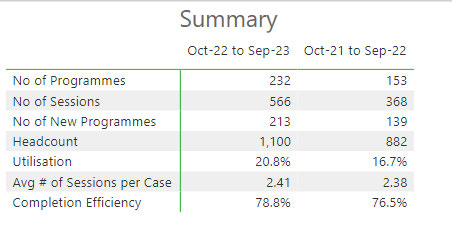
EAP usage data rolling 12 months Oct 2022 – Sept 2023
9(2)(ba)(i) 9(2)(ba)(i)
See detail of Work and Personal Issues by Business
Group in Appendix.
EAP definitions of personal and work
issues can be found here.
Other customers of Habit Health include
NZ Police, MBIE, Ministry of Justice,
Ministry of Education.
9(2)(ba)(i)
General EAP usage for Oct-22 to Sept -23
9(2)(ba)(i) is 5.4%. Our usage is sitting at 20.8% for
the same period. This is an increase from
our last report which was at 17.5%. While
this is a good indication that our people
are comfortable using EAP, it is an
increase and be highlighting the strain
that our people are experiencing. This was
communicated at our October HSW
Committee Meeting which prompted
good discussion.
6
CLASSIFICATION

CLASSIFICATION
Employee Assistance Programme (EAP) contd.
The above data gives an overview of how we compare against other agencies that are clients of Habit Health (NZ Police, MBIE, Ministry of Justice, Ministry of Education). We are
tracking higher than these agencies in cases of career, anxiety, personal relationships, and restructuring for the 22/23 period.
Anxiety
9(2)(ba)(i)
The EAP definition of Anxiety: In an anxious state the individual is fearful, worried and uneasy. This state is usually generalised and unfocused. The symptoms are often an over-reaction to the presenting
situation. Symptoms can include restlessness, fatigue, problems with concentration, muscular tension, and occasionally, panic attacks. The focus of counselling is to develop strategies to better manage the
impact of the anxiety on the client’s life.
Career
9(2)(ba)(i)
The EAP definition of Career: Some clients are unhappy in their careers and are seeking change. This can be for a number of reasons. Counselling will help the client identify that it is (or not) the job itself that is
the problem and will explore wider options and issues. The counselling will also look at issues such as career exploration, career change, personal career development, and other career-related issues. This
work will be done by a career counsellor.
Commentary from our Business Partners and P&C Advisors:
9(2)(ba)(i)
Alternative Psychologist and Counselling support offered
Since we socialised this offer and launched in September,
9(2)(ba)(i)
. We have had positive feedback from
individuals and the uptake of this offering highlights the need among kaimahi for support above what EAP currently offers. We will continue to monitor uptake and take this into account when we next review
our EAP service offering.
Planned Activity
The Op Model review has brought a lot of uncertainty and anxiety for our kaimahi. Some people are dealing with this better than others, with some stress behaviours starting to show up across teams. To help
our kaimahi to manage through this change we will be running some interactive webinars. These will be run by an external speaker with the aim to give our kaimahi a better understanding of uncertainty and
anxiety through change. They will be an opportunity for our people to gain valuable tools and skills to help them manage through the Operating Model changes.
7
CLASSIFICATION

CLASSIFICATION
Incident, Hazard & Workstation Assessment data
Incidents reported rolling 12 months Oct 2022 – Sept 2023
9(2)(ba)(i)
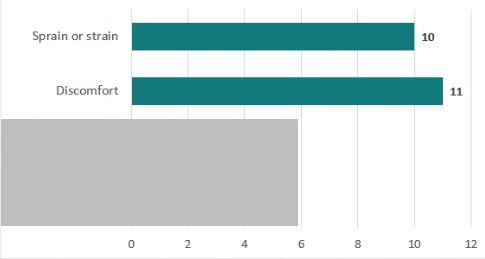
Injury Type rolling 12 months
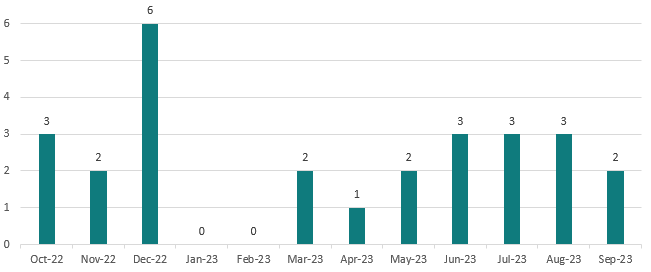
Workstation assessments
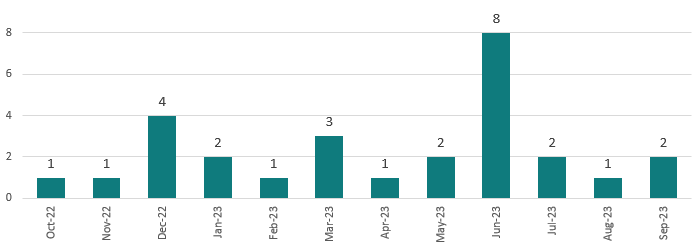
Eight assessments have been completed this
Workstation Assessments by Month
quarter. These are from both hybrid and remote
workers.
A group of kaimahi based at 8WS will be trained in
ergonomic assessments in October. This will give
9(2)(ba)(i)
us an in-house resource to ensure our people have
their desks set up ergonomically. This option will
be communicated to staff through Te Taiao and
our HSW Reps. Having these champions will not
replace an external ergonomic assessment where
we have an injury to manage.
Incident
Of the five incidents reported this quarter two were due to ergonomic injury. All have been investigated with ergonomic issues being referred to a workstation assessment and provisioning of ergonomic equipment
recommended. 9(2)(ba)(i)
The lift in incidents for July was due to the process for receiving a workstation assessment requiring logging an incident in Kiosk. We will be reviewing the need for this step as we streamline the
process for ordering assessments.
Hazard
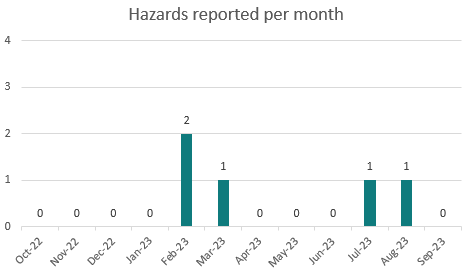
Two hazards reported this quarter. 9(2)(ba)(i)
.
8
CLASSIFICATION

CLASSIFICATION
9(2)(g)(i)
.
9
CLASSIFICATION

CLASSIFICATION
OHR Reporting
Some changes to Safety and Wellbeing reporting in the OHR are being discussed. The aim of these discussions is to understand what the current OHR reporting is providing to Te Mīmiro and
Te Pūrengi and to discover if there are any areas not currently reported on that would benefit both groups. For example, the current EAP data highlighted in the OHR does not pinpoint areas
of action or give context or commentary on the state of our kaimahi. We will be identifying areas for improvement in the coming months and adjust the Safety and Wellbeing section of the
OHR accordingly.
Ask of Leaders
Our previous ask was to encourage leaders to engage with the EAP promotion, continue allowing space for HSW Reps to connect with your teams, and to book in for you Officer training if you have not done so
already.
1.
Encourage your teams to join the upcoming Wellbeing Webinar on managing through change and uncertainty. These will give our kaimahi valuable tools to help them manage through the change
process.
2.
Continue to allow space for HSW Reps to engage with teams.
3.
Encourage your teams to feedback on any Safety and Wellbeing reporting additions or deletions they would like to see in the OHR.
10
CLASSIFICATION

CLASSIFICATION
Appendix
9(2)(ba)(i)
11
CLASSIFICATION


CLASSIFICATION
9(2)(ba)(i)
12
CLASSIFICATION


CLASSIFICATION
9(2)(ba)(i)
13
CLASSIFICATION
