 Te Pūrengi Cover Sheet
Title
Te Pūrengi Cover Sheet
Title
Health, Safety and Wellbeing (HSW) Quarterly Report and Risk update
Te Pūrengi
Tuesday, 8th August 2023
meeting date
Sponsor
Laura Dixon, Deputy Secretary Organisational Performance and Chief Operating
Officer
Summary
A quarterly report covering leading and lagging indicators in the health, safety
and wellbeing space and critical risk update is produced quarterly for review by
Te Mīmiro and Te Pūrengi.
Why does Te
This report allows the Ministry as a PCBU, and Te Pūrengi in its governance role,
Pūrengi need to
to monitor the HSW performance, status, and progress against current
consider this?
assumptions.
Te Pūrengi is a key stakeholder in overseeing the HSW performance of the
Ministry. This includes ensuring the Ministry has effective management systems
in place.
The intent of this report is to be a tool for Te Mīmiro and Te Pūrengi to receive
information, to discharge their governance duties.
Decisions wanted
Note – this report contains an update on HSW activities for quarter 4, 1 April
2023 to 30 June 2023.
Note – this report contains Tō Reo data as it relates to Health, Safety and
Wellbeing.
Provide any feedback on the content of the Health, Safety and Wellbeing
report.
Action - Continue to make space for our HSW Reps to connect with your teams
to share resources and ask for feedback.
Encourage leaders to engage with the EAP promotion. The more our leaders
understand what is available, the better equipped they will be to help their
teams and direct them to the right support.
Attachments and
Attachment
Appendices
•
Quarter 4 HSW Report July
Prepared by
9(2)(a)
– Senior Advisor Safety and Wellbeing

 Te Pūrengi – Decision or Action
Quarterly Health, Safety and Wellbeing Report
Te Pūrengi – Decision or Action
Quarterly Health, Safety and Wellbeing Report
Meeting date: 8 August 2023
Written date: 19 July 2023
Sponsor: Laura Dixon, Deputy Secretary Organisational Performance and Chief
Prepared by: 9(2)(a)
– Senior Advisor Safety and Wellbeing
Operating Officer
What are you updating Te Pūrengi on?
1. Q4 (April – June 2023) Health, Safety and Wellbeing report covering lead and lag indicators and work programme update
2. Our Work Programme has been updated and phasing of work is outlined in the report.
3. Our EAP usage data is now being pulled directly from the Habit health dashboard. This allows us to track a wider range of data and see which
teams may be experiencing common issues. Issues that are of note in this report are increases in anxiety and career related sessions.
4. Our EAP provider is running a pilot to provide wellbeing and healing practices built upon Māori base knowledge systems. Work is underway to
join this pilot and give our kaimahi access to this support.
5. Our Critical Risk project is in the procurement stage for an external consultant and work will begin with Isolated/Remote work.
6. The report has been discussed at Te Mīmiro and the key points of discussion will be shared with Te Pūrengi.
Why should Te Pūrengi consider this?
The intent of this report is to be a tool for Te Pūrengi to receive information, to ask questions and to discharge their governance duties. This report
allows the Ministry as a PCBU to monitor the HSW performance, status, and progress against current assumptions.
Recommendations or Actions sought: Note – this report contains an update on HSW activities for Quarter 4 (1 April 2023 to 30 June 2023).
Actions:
• Continue to make space for our HSW Reps to connect with your teams to share resources and ask for feedback.
• Encourage leaders to engage with the EAP promotion. The more our leaders understand what is available, the better equipped they will be to
help their teams and direct them to the right support.
Q4 Health, Safety and Wellbeing Report
Te Pūrengi meeting: August 2023
1

CLASSIFICATION
Quarterly Health,
Safety and Wellbeing
Report
Quarter 4: April – June 2023
CLASSIFICATION

CLASSIFICATION
Update
Element
Current Activity
Next Milestones
Governance, Engagement, and
•
All Health, Safety and Wellbeing (HSW) Representative positions are filled with training
• Explore additional training opportunities for our HSW Reps both
Participation
completed or booked in. Guidelines have been created to ensure the group has clarity on
internally and externally to ensure they have the tools and knowledge
their role and responsibilities. Monthly meetings in place to keep reps engaged and up to
they need to succeed in their roles.
date.
• Next SWC Meeting booked in for October where we will review the
• Safety and Wellbeing Committee (SWC) meeting held 4th July. Minutes here.
Safety and Wellbeing Worker Agreement.
• Charter and Policy updated and posted on Te Taiao - next updates due in June and July 2024
respectively.
• Updates made to the structure of our Safety and Wellbeing work programme to allow more
streamlined management and reporting (see overview on page 2).
Critical Risk Management
• Procurement underway for external consultant to review our four Critical Risks. This will
• We expect to engage external support by the end of August.
begin with Isolated/Lone Work as a priority. Psychological Risk is also a priority, we will
• Resources and documentation will be created from the consultation
work with the consultant to understand where best to place this in our timeline. Teams
feedback and be communicated to relevant teams.
have been monitoring these risks with their own resources – this work will aim to review
• Page on Te Taiao created to outline our critical risks and house
and consolidate these resources into clear, cohesive processes and documents (see detail
relevant resources.
on page 7).
Wellbeing
• Flu vaccination campaign for 2023 has so far had 223 vouchers claimed between April-June
• Develop tactical Wellbeing Strategy to outline clear actions and a
(105 last year) and 91 in-house vaccinations completed at 8 Willis St (109 last year).
framework to ensure we are supporting our Psychosocial Safety
• Te ao Māori EAP has been sourced through our current EAP provider, Habit Health. We will
Critical Risk work.
be promoting this offering to our people and monitoring feedback to ensure it is fit-for-
• Financial Wellbeing webinars offered free through Westpac.
purpose (see detail on page 5).
• Promotion of resources on managing anxiety (see data supporting this
• Promotion of current EAP service including ‘myth-busting’ information to ensure our people
need on page 5).
are aware of the full offering (ie: available for family, six sessions per year, financial advice).
• Review provision of equipment process.
• Group of kaimahi trained in ergonomic assessments.
Incident and Hazard
• Promotion and education around use of Kiosk to log incidents and hazards including training
• Review of current investigation process and creation of clear guidance
Management
our HSW Reps.
and expectations for managers and kaimahi.
• Review and update Jadestar notifications to include clear guidance and manaaki.
• Data deep-dive to ensure we are reporting accurately against logged
incidents and hazards.
Emergency Preparedness
• Posters with our First-Aiders have been created and will be posted on all MfE 8 Willis floors
• Involvement with National Emergency Management Agency (NEMA) in
Management
to ensure we have good visibility of who can help if an incident occurs. This will be rolled out
their upcoming emergency planning roundtables.
through our other offices in due course.
2
CLASSIFICATION
 Updated Work Programme Overvi
CLASSIFICATION
ew
We have consolidated our work programme into six clear areas ensuring we are aligned with the original workplan agreed by Te Pūrengi. Below is an overview showing how we will phase
our work over the next 12 months. Please note this work programme will run through to 2025 with some projects not getting underway until 2024/2025. The aim of this work programme
is to lift the maturity of our safety and wellbeing management system and to ensure we are meeting our responsibilities under the HSWA 2015. As Officers, you play a key role in ensuring
we have the resource and support available to achieve this.
Q1
Q2
Q3
Q4
RAG
July
Aug
Sept
Oct
Nov
Dec
Jan
Feb
Mar
April
May
June
Governance,
ONGOING - Policy & Charter review / Quarterly Reporting / HSW Rep Engagement/ SWC / Te Taiao updates and management
Reporting &
G
Engagement
Review and update reporting (will begin once Critical Risk mahi underway)
ONGOING - Reporting and data management
Incident and
Hazard
Jadestar review and updates
G
Management
Investigation process review and updates
Engagement with external Consultant
Critical Risk
Isolated/Lone Work
G
Phasing of other critical Risk work to be decided on recommendations from
Management
consultant (Psychological Harm / Driving for Work/ Pandemic)
Wellbeing Strategy Creation
Wellbeing
G
Strategy Phase One
Strategy Phase Two
Strategy Phase Three
Emergency
Assess emergency management process and standardise across Ministry
Preparedness
G
Management
Contractor
Assess internal process and standardise documentation
G
Management
3
CLASSIFICATION

CLASSIFICATION
Employee Assistance Programme (EAP) data
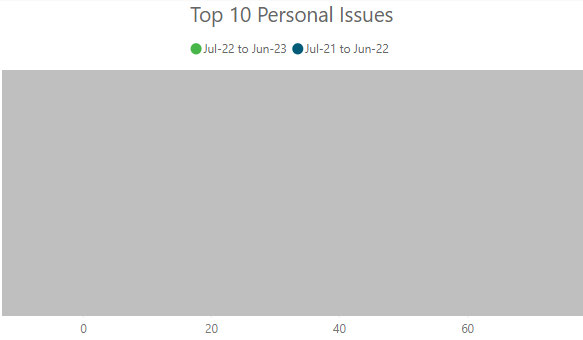
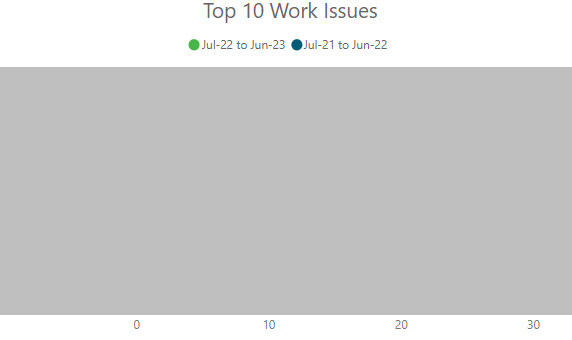
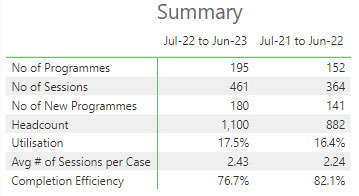
EAP usage data rolling 12 months July 2022 – June 2023
9(2)(ba)(i) 9(2)(ba)(i)
EAP definitions of personal and
work issues can be found here.
Other customers of Habit Health
include NZ Police, MBIE, Ministry of
Justice, Ministry of Education.
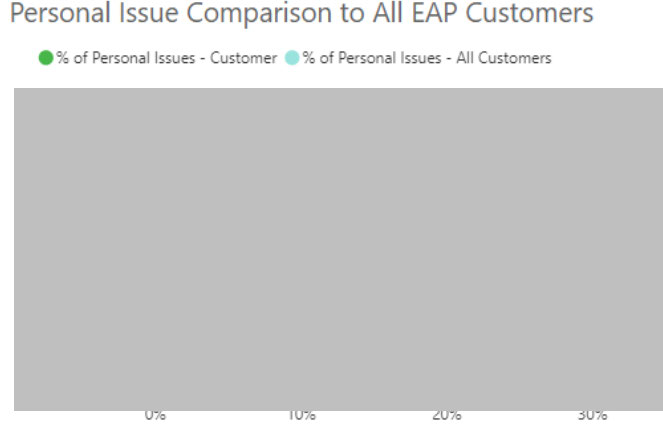
9(2)(ba)(i) 9(2)(ba)(i) General EAP usage for Jul-22 to
Jun-23 is 5.1%. Our usage is sitting
at 17.5% for the same period. This
is a good indication that our people
are comfortable using the service.
However,
we
still
have
a
responsibility to provide proactive
support to our people on top of
offering EAP.
4
CLASSIFICATION

CLASSIFICATION
Employee Assistance Programme (EAP) contd.
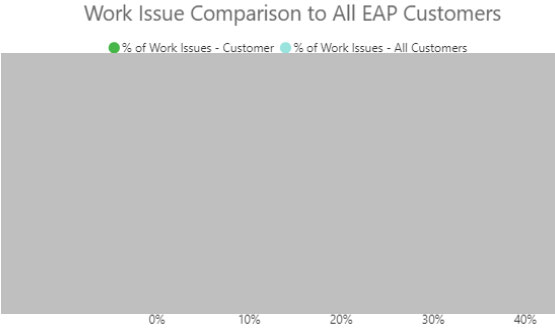
Please note the data above has been pulled directly from the dashboard provided from Habit Health which may account for new markers that have not been highlighted in previous
reports. The data gives an overview of how we sit against other agencies that are clients of Habit Health (NZ Police, MBIE, Ministry of Justice, Ministry of Education). We are tracking
significantly higher than these agencies in cases of anxiety and career for the 22/23 period.
Anxiety
9(2)(ba)(i)
The EAP definition of Anxiety: In an anxious state the individual is fearful, worried and uneasy. This state is usually generalised and unfocused. The symptoms are often an over-reaction to the presenting
situation. Symptoms can include restlessness, fatigue, problems with concentration, muscular tension, and occasionally, panic attacks. The focus of counselling is to develop strategies to better manage the
impact of the anxiety on the client’s life.
Career
9(2)(ba)(i)
The EAP definition of Career: Some clients are unhappy in their careers and are seeking change. This can be for a number of reasons. Counselling will help the client identify that it is (or not) the job itself that is
the problem and will explore wider options and issues. The counselling will also look at issues such as career exploration, career change, personal career development, and other career-related issues. This
work will be done by a career counsellor.
9(2)(ba)(i)
Te ao Māori EAP
Habit Health had extended their EAP service offering to include wellbeing and healing practices built upon Māori base knowledge systems. After consulting with their project lead, we are confident that this is
aligned with what we have been looking for to meet the needs expressed by our people. We are currently working with Habit Health to join their pilot and will be communicating this to our people as soon as
we know more. This is an exciting opportunity for our people to have access to this support and beneficial that it will sit under our current EAP contract. This support will be available not just to our Māori
people but to all kaimahi looking for alternative methods of healing. More detail here.
Financial Wellbeing
Financial Wellbeing is an important aspect of holistic wellbeing that often exhibits through the anxiety, relationship, depression and career markers. With the current cost of living crisis, it is important for us to
support our people in this area. We are working with Westpac to organise free webinars for our people which will be running across August-October. These will cover an array of topics from basic budgeting to
managing home loans. The hope is that we can alleviate some of the common financial stressors by equipping our people with good habits and tools.
5
CLASSIFICATION

CLASSIFICATION
Incident, Hazard & Workstation Assessment data
Incidents reported rolling 12 months July 2022 – June 2023
9(2)(ba)(i)
Injury Type rolling 12 months
9(2)(ba)(i)
Workstation Assessments by Month
Workstation assessments
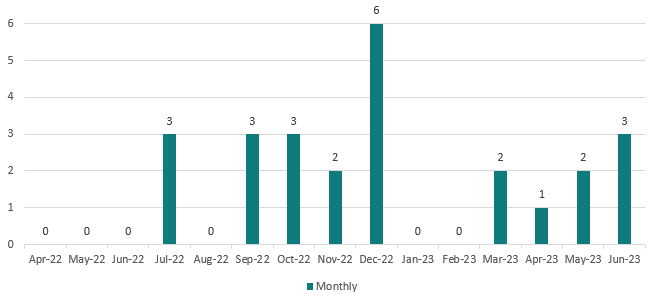
Six assessments have been completed this quarter. A clear
pattern from these assessments is that many of our remote
workers are not set up for success within their home office.
This should be addressed to avoid future injury and to give
better alignment with what our office kaimahi have access to.
There is a level of responsibility both from workers and the
Ministry to ensure this is a priority. We will investigate and look
to solve this as we review our provision of equipment process
and continue our work around flexible, hybrid and remote mahi.
Incident
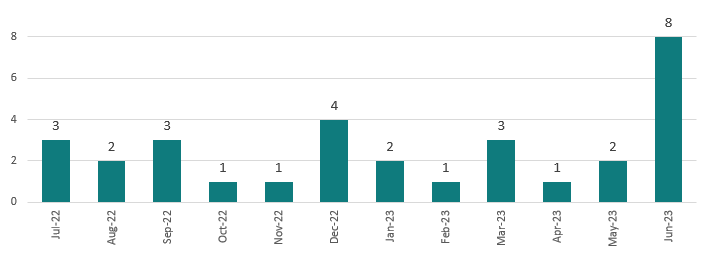
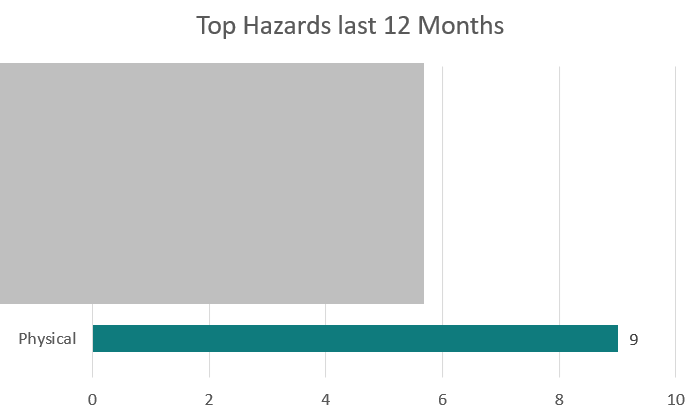
Of the 11 incidents reported this quarter: Seven were due to ergonomic injury – all have been investigated with ergonomic issues being referred to a workstation assessment and provisioning of ergonomic
equipment where recommended. 9(2)(ba)(i)
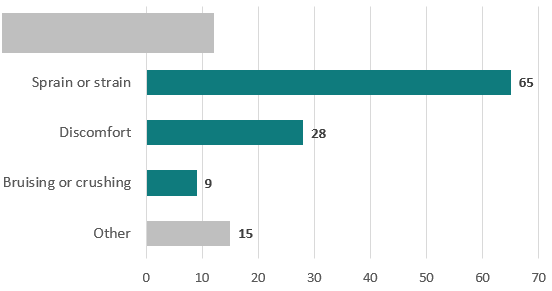
Sprain or strain continues to be the highest injury type making up 53% of our reported incidents. The majority of these are related to poor ergonomic set up which should be addressed.
Hazard
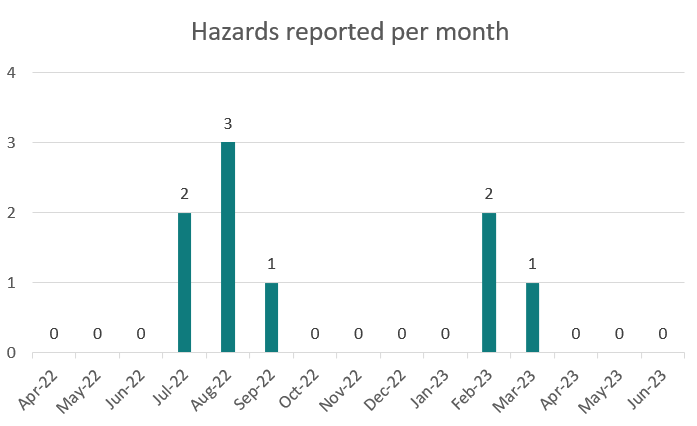
No hazards reported this quarter. However, this is not an indication that no hazards are occurring – there is low reporting on hazards, this is something that should be addressed through education and promotion
across the Ministry.
6
CLASSIFICATION

CLASSIFICATION
Tō Reo Results
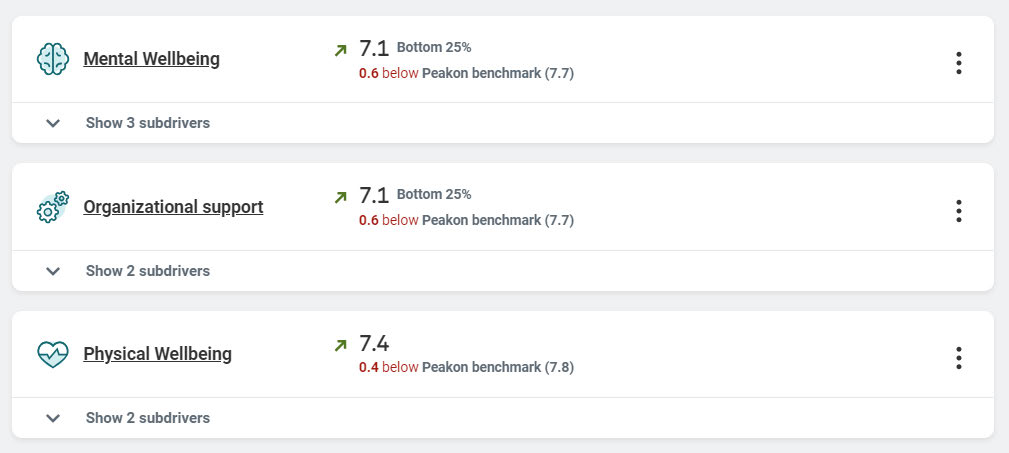
Our focus this quarter will be lifting three sub drivers from our Tō Reo results; Organisational support, Mental Wellbeing,
and Physical Wellbeing. We see through the comments that there are gaps in our people’s knowledge about what our
safety practices are and where to easily find this information.
Initially, our aim is to lift these results closer to benchmark. This work will help to build a strong foundation of knowledge
in our systems and to ensure we have the basics in place before we move onto more detailed work such as our critical
risk project and updates to our incident and hazard management process.
Through our Tō Reo results and comments, we know there is a need for addressing workload and lifting the capabilities
of our managers to role-model good wellbeing behaviours. Considering the Operational Model project, we see the
opportunity for addressing workload better placed once this project is completed. Our Wellbeing Strategy will include
actions to address this and incorporate the key areas defined in the Wellbeing work undertaken by Juliet and brought to
Te Pūrengi in May.
Critical Risk Project
This will be a long-term project, crucial to lifting the maturity of our safety and wellbeing systems and to meet our obligations under the HSWA 2015. For this project to be successful, we first need to understand the
work that our people are undertaking. Engaging an external consultant will bring a high level of focused expertise to complete a deep dive of our critical risks. This work will allow us to deeply understand our risks
and outline accurate controls and measures that should be implemented. The aim with this specialist advice is to get a clear and robust overview of what we need to do going forward to ensure we have everything
in place to protect our people. We are currently exploring potential consultants and given the budget set aside for this project we will need to phase the project by focusing on one critical risk at a time.
Following from the consultation we will begin updating and creating user-friendly resources, educating our people, and ensuring our approach remains fit-for-purpose. Much of this work will be done in-house based
on recommendations from the consultant.
We will begin with Isolated/Lone work -9(2)(g)(i)
.
Ask of Leaders
Previous ask of leaders was to help us fill all vacant HSW rep positions – this has been successful with all vacancies filled. Secondly, there was an ask to continue kōrero with teams on Tō Reo results and to work
on action plans for these.
1.
Continue to make space for our HSW Reps to connect with your teams to share resources and ask for feedback.
2.
Encourage leaders to engage with the upcoming EAP promotion. The more our leaders understand what is available, the better equipped they will be to help their teams and direct them to the right
support.
3.
If you have not completed or booked in your Officer training, please connect with 9(2)(a)
to get booked in.
7
CLASSIFICATION
