
CLASSIFICATION
Quarterly Health, Safety and Wellbeing Report
Te Pūrengi paper: Quarterly Health, Safety and Wel being Report
Te Pūrengi meeting: 10 December 2024
1
CLASSIFICATION
CLASSIFICATION
Meeting date: 10 December 2024
Written date: 11 November 2024
Sponsor: Laura Dixon
Prepared by: 9(2)(a)
What you’re updating Te Pūrengi on
Q1 (July – September 2024) Health, Safety and Wellbeing report covering lead and lag
indicators and work programme update.
9(2)(g)(i)
This paper specifically provides an update on:
1. The allocation of additional funding that was agreed by Te Pūrengi.
2. Work that has been undertaken since September including an overview of our new
HSW Roadmap. The roadmap identifies priority HSW work to ensure we continue to
meet our obligations under the HSWA.
This roadmap prioritises the following:
• Implementing priority critical risk controls
• Strengthening the Ministry’s Health and Safety Management System
• Increasing the Ministry’s HSW capability and understanding of responsibilities
under the HSWA.
• Implementing recommendations from 9(2)(a), 6(d)
review
• Continuing to embed and monitor Psychosocial Harm critical controls
3. Progress made on our existing HSW plan, note this will be retired within the
development of the new roadmap.
4. 9(2)(a), 6(d)
The report has been discussed at Te Mīmiro with the key points below highlighted:
• The planned Ministry culture build and how this supports building a positive
health and safety reporting culture.
• The focus on safety and wellbeing capability uplift across the Ministry. Te
Mīmiro noted the capability build already planned for managers and the
criticality of that cohort to lifting our health and safety culture.
• A reminder of the clear prompts within these reports to promote HSW.
Reason for Te Pūrengi’s consideration
The intent of this report is to be a tool for Te Pūrengi to receive information, to ask
questions and to discharge their governance duties. This report allows the Ministry as a
PCBU to monitor the HSW performance, status, and progress against current
assumptions.
Te Pūrengi paper: Quarterly Health, Safety and Wel being Report
Te Pūrengi meeting: 10 December 2024
2
CLASSIFICATION
CLASSIFICATION
Have Te Pūrengi considered this item before?
While some detail may be similar to previous reports, we would like to bring your attention
to the update on slide 3 outlining our progress on the re-set of our HSW approach, and
the HSW roadmap outlined on slide 6.
Recommendations
It is recommended that Te Pūrengi:
1. Note the activity completed since the last quarterly report and the update on progress
to meet our obligations under the HSWA 2015.
2. Support the purpose and priorities outlined in the new HSW roadmap.
3. Continue to focus on driving a positive culture of health, safety and wellbeing. Noting
the link with the Culture and values work that P&C are supporting Te Pūrengi with.
4. Take practical steps within their own business groups to ensure proactive discussions
are occurring within their leadership teams.
Te Pūrengi paper: Quarterly Health, Safety and Wel being Report
Te Pūrengi meeting: 10 December 2024
3
CLASSIFICATION
 ARC Cover Note
Q1 HSW Report
ARC Meeting Date
19 December 2024
Agenda item
Q1 HSW Report
Sponsor
Laura Dixon
Presented by
9(2)(a)
– Senior Advisor
Deputy Secretary,
HS&W
Business Transformation
9(2)(a)
– Manager –
Culture & Capability
Tracey Kaio – General Manager –
P&C
Purpose
To bring the committee’s attention to the most recent Quarterly Health, Safety
and Wellbeing (HSW) report.
This paper requires
Advice
Discussion
X
Endorsement
Feedback
X
What other governance
Te Mīmiro - November 27, 2024
groups have considered Te Pūrengi - December 10, 2024
this before ARC?
Introduction and background
Every quarter, People and Capability provide Te Mīmiro and Te Pūrengi with a Health, Safety and Wellbeing report
covering lead and lag indicators and HSW work programme update. This report covers Q1 (July– September 2024).
9(2)(g)(i)
This paper specifically provides an update on:
1. The allocation of additional funding that was agreed by Te Pūrengi.
2. Work that has been undertaken since September including an overview of our new HSW Roadmap. The
roadmap identifies priority HSW work to ensure we continue to meet our obligations under the HSWA.
This roadmap prioritises the following:
• Implementing priority critical risk controls
• Strengthening the Ministry’s Health and Safety Management System
• Increasing the Ministry’s HSW capability and understanding of responsibilities under the HSWA.
• Implementing recommendations from 9(2)(a), 6(d) review
• Continuing to embed and monitor Psychosocial Harm critical controls
3. Progress made on our existing HSW plan, note this will be retired within the development of the new roadmap.

CLASSIFICATION
4. 9(2)(a), 6(d)
The report has been discussed at
Te Mīmiro with the key points below highlighted:
• The planned Ministry culture reset and how this supports building a positive health and safety reporting
culture.
• The focus on safety and wellbeing capability uplift across the Ministry. Te Mīmiro noted the capability build
already planned for managers and the criticality of that cohort to lifting our health and safety culture.
• A reminder of the clear prompts within these reports to promote HSW.
The report has been discussed at
Te Pūrengi with the key points below highlighted:
• Noted they are comfortable with the work programme and have committed to continuing to unlock
funding should we highlight the need for it
• Discussion on whether the Ministry could do more to encourage managers to check in regularly with their
direct reports. Members noted the importance of highlighting this responsibility both at induction and
with new managers. This included:
• An emphasis on the role of the Growth and Performance Framework in supporting Health, Safety
and Wellbeing by driving leadership accountability and ensuring the right conversations between
kaimahi and their leaders are happening regularly.
Recommendations It is recommended that the Committee:
1.
Note the report and provide feedback on any aspects of the report, including the priorities as outlined in
the roadmap.
CLASSIFICATION

CLASSIFICATION
Quarterly Health,
Safety and Wellbeing
Report
Quarter 1: July – September 2024
CLASSIFICATION

CLASSIFICATION
Contents
Update on meeting HSW Obligations and additional funding
Slide 3
Progress on existing HSW plan
Slide 4
9(2)(a), 6(d)
Slide 5
Focus areas and plan to July 2025
Slide 6
HSW Metrics including lead and lag indicators
• Incident and Hazard data
Slide 7
• Employee Assistance (EAP) data and analysis
Slide 8
Our ask of Te Pūrengi
Slide 11
Appendix
Slide 12
2
CLASSIFICATION

CLASSIFICATION
Update on meeting HSW obligations and additional funding
9(2)(g)(i)
9(2)(g)(i)
In addition to this capability building, we have made progress on the
following to ensure we meet our HSW obligations:
1.
Reset our HSW Committee (HSWC) to align with HSWA
requirements. Specifically, promoting active employee participation
and engagement.
9(2)(g)(i)
2.
Completed a review of our HSW Representative placements within
the new structure post Nov 1. Some new reps will need to be included
due to kaimahi movements within the org change.
3.
Design a strategic HSW roadmap. The purpose of this is to complete
priority HSW work to ensure we meet our obligations under the HSWA.
The completion of this roadmap will give us a solid foundation from
which to create a HSW Operating Model and HSW Strategy to take us
to 2027.
This roadmap prioritises the following:
• Implementing priority critical risk controls
• Strengthening the Ministry’s Health and Safety Management
System
• Increasing the Ministry’s HSW capability and understanding of
responsibilities under the HSWA.
• Implementing recommendations from 9(2)(a), 6(d) review
• Continuing to embed and monitor Psychosocial Harm critical
controls
Note:
Our recent focus was on completing the review of 9(2)(a), 6(d)
This unexpected shift in priority meant that our roadmap design
phase was lengthened. However, with our roadmap completed, we are
confident we will still be able to meet our milestones as outlined.
3
CLASSIFICATION

CLASSIFICATION
Progress on existing HSW Plan
Element
Current Activity
Future Activity
Governance,
• Health Safety and Wel being Committee (HSWC) meeting held 22 October.
Engagement &
• Te Pūrengi updated on report from INC452 Review Mon 11 November. Detail on slide 5.
Participation
• HSW roadmap designed for implementation post Nov 1st. Detail on slide 6.
Critical Risk
Our focus remained on our Psychosocial Harm critical risk (see below) in line with our pivot in reaction to the change process and the creation of our
Management
Wel being Through Change Approach (see appendix slide 12). All actions completed in line with this approach have strengthened our psychosocial harm
critical controls.
• Additional planned critical risk activity is outlined in the roadmap on slide 6.
Wellbeing
We continued to focus our efforts on strengthening our Psychosocial Harm critical risk controls:
• In September, we ran a number of workshops specifically for Managers on “Productive Mental Health Conversations’. These were designed alongside
Humanex, an accredited Mental Health First Aid Provider. These workshops equipped leaders the following: understanding the signs and behaviours to
See focus areas and plan to
indicate distress, best practice techniques for approaching these conversations with kaimahi, understanding of how to navigate severe or crisis mental
July 2025 on slide 6
health disclosures, reminder of the support and guidance available to leaders as they navigate these situations.
• To promote our trained Mental Health First Aiders, an article was posted on Te Taiao to promote and introduce this resource, highlighting the support
and guidance managers can utilise through these trained Mental Health First Aiders. Introducing Mental Health First Aiders
• We ran a webinar to promote Rongoā EAP including giving kaimahi an understanding of what Rongoā is and what types of support they can access. A Te
Taiao page was created to promote this support option Rongoā now offered as part of EAP wellbeing support.
• Our Mental Health Awareness Week promotion ran 23- 29th September with the theme of community and connection. During the week we promoted
resources, webinars, and activity through a Te Taio Article What fills your cup?. Additional y, we made use of the Manager’s update to promote resources
and tips for managers engage with the activity How to support and strengthen the wellbeing of kaimahi.
Incident & Hazard • Work continues to improve our management of incident and hazard data, including shifting this into PowerBI for easier and more timely reporting.
Management
• Work has begun to map our processes in Jadestar to understand improvements that can be made to the system.
4
CLASSIFICATION
CLASSIFICATION
9(2)(a), 6(d)
5
CLASSIFICATION

CLASSIFICATION
Focus areas and plan to July 2025 Note: These are the priority milestones - HSW BAU has been factored into this timeline.
Milestone
Outcome
Resource
Start
End
1. Driving and Fatigue
Fit for purpose policies that are wel understood and embedded
• Driving policy
Internal HSW/C&C Team
Nov
Jan
Policies
across the Ministry.
• Fatigue Policy
External cost for driving training
2024
2025
• Defensive/4WD training
2. HSW Induction
Al kaimahi have clear understanding of health and safety at the
• Updated HSW induction module
Internal HSW/C&C Team
Nov
Feb
Ministry. We see an improved culture of reporting.
• Supporting documents and Te Taiao
2024
2025
pages.
3. HSW Governance
Te Pūrengi confident in their governance role with easy access to
• Training for key T3 and P&C kaimahi.
Internal
Dec
June
guidance material. Additional kaimahi understand their
• Governance ‘quick guide’ created in line
External governance training
2024
2025
responsibilities.
with updated IOD guide.
4. Leadership MH/Wel being
Managers understand their responsibilities in supporting kaimahi
• Workshops with MHFA provider
Internal HSW/C&C Team
Dec
June
Induction
wel being, how to have conversations with their kaimahi, what
• ‘Quick guide’ for supporting kaimahi,
External for training with MHFA
2024
2025
support is available and our P&C process.
where to access support and the role that
provider
P&C play.
5. HSW Rep and HSWC
Clear responsibilities for HSW reps and HSWC leading to deeper
• HSWC charter
Internal HSW/C&C Team
Dec
May
Guidelines
employee engagement and participation
• HSW Rep guidelines and expectations
2024
2024
• HSW Rep Training
6. Remote/Hybrid Worker
Al kaimahi are set up for success and safe work in their home office, • Remote worker supplementary induction
Internal HSW/C&C Team
Jan
June
HSW Induction
clarity around WFH incidents and hazards.
and guidance for leaders.
2025
2025
7. Updating incident and
Fit for purpose reporting process, increased culture of reporting and • Updates to Jadestar (which may be
External cost to upgrade Jadestar or
Jan
June
hazard reporting system
higher accuracy, and clarity of process and injury classifications
phased out in the next 12 months)
procure for new system
2025
2025
and
• Investigate fit for purpose system
8. Incident Investigation
Confidence in our investigation capability, clear process and
• Investigation SoPs
Internal HSW/C&C Team
Jan
June
process
responsibilities for managers and HSW reps, escalation point for
• Investigation training for HSW Reps and
External cost for training Reps in
2025
2025
severe incident investigation, and integration with BCarT
leaders.
investigation training
9(2)(a), 6(d)
Psychosocial CR
Pandemic CR
Driving CR
Isolated/Lone Work CR
9(2)(a), 6(d)
6
CLASSIFICATION

CLASSIFICATION
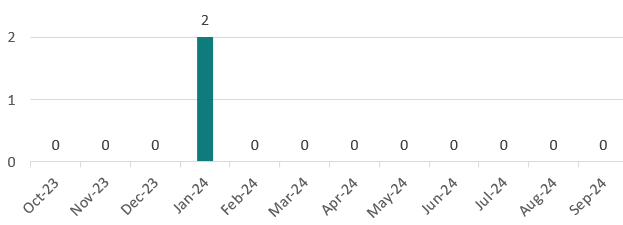
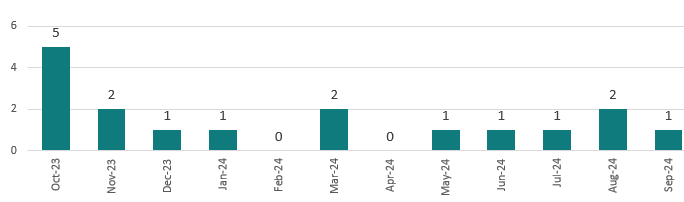
Incident, Hazard & Workstation Assessment Data
Incidents reported rol ing 12 months Oct 2023 – Sep 2024
Hazards reported rol ing 12 months
Top Hazards reported rol ing 12 months
9(2)(ba)(i)
Injury Type rol ing 12 months
Incidents
Four incidents were reported this quarter:
• 9(2)(ba)(i)
9(2)(ba)(i)
Note: We have seen an increase in incident reporting this quarter. This is largely due to a conscious effort to encourage reporting by
kaimahi when we have heard of incidents occurring. However, we will continue to prioritise improving our reporting culture and have
included this as a priority item in our roadmap within our induction update and leadership capability build.
Hazards
No hazards reported this quarter.
Note: This is also an area we will be focusing on improving the reporting culture of within our roadmap priorities.
Workstation assessments
One assessment was completed this quarter. Equipment recommendations from the assessment have been processed.
7
CLASSIFICATION

CLASSIFICATION
Employee Assistance Programme (EAP) data
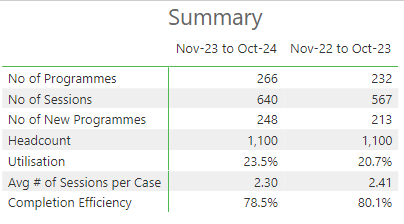
EAP usage data rol ing 12 months Nov 2023 – Oct 2024
9(2)(ba)(i) 9(2)(ba)(i)
EAP definitions of personal and work issues can be
found here.
Average Habit Health EAP usage for Nov-23 to Oct-24 is
13.3%. Other customers of Habit Health include NZ Police, MBIE, Ministry of Justice, Ministry of Education.
Our usage is sitting at
23.5% for the same period. This is a slight decrease from our last report which was
24.1%. While this is a small decrease, we are still seeing high usage rates. This was expected as
we have moved through the change and in the lead up to the Dec holiday period. It is likely that we will see this number continue to decrease from Jan 2025 (more on next slide).
Kaimahi who have left the Ministry have access to EAP for three months after leaving.
9(2)(ba)(i)
9(2)(ba)(i)
See Appendix for breakdown of usage by business group.
8
CLASSIFICATION

CLASSIFICATION
Employee Assistance Programme (EAP) data
Personal Issue Comparison
9(2)(ba)(i)
9(2)(ba)(i)
Work Issue Comparison
9(2)(ba)(i)
9(2)(ba)(i)
9(2)(ba)(i)
9(2)(ba)(i)
See Appendix 13 for breakdown of usage by business group.
9
CLASSIFICATION

CLASSIFICATION
Employee Assistance Programme (EAP) contd.
The above data gives an overview of how we compare against other agencies that are clients of Habit Health (NZ Police, MBIE, Ministry of Justice, Ministry of Education). We
are continuing to track higher than these agencies in some areas.
9(2)(ba)(i)
Critical Incident Support:
9(2)(a), 6(d)
Commentary from our Business Partners and P&C Advisors:
9(2)(ba)(i)
Business Group Detail
The appendix on slides 13-16 gives a full breakdown of usage for each business group.
Future trends
With the small decrease in usage this period from 24.1% to 23.5% – we expect that we wil see a continued decrease from January 2025 as kaimahi settle into the new structure and there is less anxiety
around change impacts. This may not decrease immediately as there is traditionally an additional layer of stress and anxiety for kaimahi as we head into the December holiday period. We would expect
to see our usage decrease in the new year to be closer to the average Habit Health customer usage of 13.3%.
9(2)(ba)(i)
10
CLASSIFICATION

CLASSIFICATION
Our ask of Te Pūrengi
In your role as Officers of the PCBU you hold a unique obligation to actively engage with and understand the HSW of workers within your organisation. To support you in
this, below are a few suggested actions for you to consider to compliment your understanding of our HSW processes.
1. In your role as governors of HSW for MfE how would Te Pūrengi rate HSW capability and awareness across each of your business groups? Some questions to ask yourselves could be:
• Are you and your leaders
• familiar with our incident and hazard reporting process.
• Including Health & Safety moments and Health & Safety toolboxes in your meetings
• Do you and your leaders know what the What are the high-risk activities being asked of or undertaken by your kaimahi
• Who is undertaking this work?
• What oversight or approvals are currently in place?
Here are some things that you can do to help yourself and your leaders to help
• familiarise with our incident and hazard reporting process.
• Go for a walk around your normal place of work and see if you can identify at least one hazard.
• Hint: Are bags left on the floor that could cause a tripping hazard? Is there someone at work showing visible signs of illness that should be sent home/to see a
medical professional? Are there any desks that have untidy wires or loose electrical connections?
• Log the hazard into the reporting system
• If you would like a refresher here is the link to instructions or please reach out to your People Services BP
• Understand high risk activities
• Ask your leaders what these are, who is doing and what oversight or approvals are currently in place?
• Including Health & Safety moments and Health & Safety toolboxes in your meetings
• P&C can help you with these
11
CLASSIFICATION

CLASSIFICATION
Appendix: Wellbeing Approach to Support 2024 Change Activities
In January we designed our Wellbeing Approach to support 2024 change activities This approach is focused on three key support pillars; Proactive, Just-in-time, and Aftercare. All pillars are
progressing well, with all actions complete and in place. Below is an outline of completed activity:
Proactive Support
Activity from Wel being Approach
Detail
Status
Preparing our managers for change
• Sessions run for GMs with Organisational psychologist E-Learning module live outlining key change principles and wel being
Complete
implications
• Change leadership sessions
• Peer learning/support cohorts
• 1:1 support with external experts where needed
Preparing teams who wil have high-interaction with the
• HSW Reps booked in for Mental First Aid Training in May
Complete
business during change ( P&C Advisors, BPs, and HSW Reps)
• Connection / preparation meetings with BPs and Advisors
Preparing al kaimahi for change
• Wel being sessions with Organisational psychologist 9(2)(a)
Complete
• Detailed Te Taiao page outlining key resources and support options available
Just-in Time Support
Activity from Wel being Approach
Detail
Status
1:1 support for kaimahi who are affected
• Clear pathways to access this support and connect with BPs, Advisors and S&W Team
Complete
• External support pathways clearly defined and communicated
February Tō reo survey. This wil give us valuable insights and
• Recommendations from results given
Complete
al ow us to pinpoint further opportunities for support.
Aftercare Support
Activity from Wel being Approach
Detail
Status
Outplacement and career support
• Provide assistance with counsel ing, career advice, financial advice and paid time off for job searching, applications and interviews. This
Complete
is in line with the Col ective Employment Agreement.
Support for leaders managing changing teams
• On going support for those who are leading and supporting the organisation through change particularly where they bear a significant
Complete
amount of the interaction and emotional load with impacted kaimahi.
CLASSIFICATION



CLASSIFICATION
Appendix: EAP Usage by Business Group
Please note:
• Due to the change in Business Group names we will be showing both names for the next three quarters until a full year has passed.
9(2)(ba)(i) 9(2)(ba)(i)
CLASSIFICATION

CLASSIFICATION
9(2)(ba)(i)
CLASSIFICATION

CLASSIFICATION
9(2)(ba)(i)
CLASSIFICATION

CLASSIFICATION
9(2)(ba)(i)
CLASSIFICATION
CLASSIFICATION
9(2)(a), 6(d)
CLASSIFICATION
CLASSIFICATION
9(2)(g)(i)
18
CLASSIFICATION
