

Our Reference: 842472334-12479
Consent No. RM25.279.01
LAND USE CONSENT
Pursuant to Section 104B of the Resource Management Act 1991, the Otago Regional
Council grants consent to:
Name:
Matakanui Gold Limited
Address:
Cuffs Limited, Level 2, Como House, 51 Tancred Street, Hokitika
For the placement, reconstruction, associated bed disturbance and bed remobilisation and
ongoing use of three culverts in Shepherds Creek for the purpose of al owing for crossings
For a term expiring 3 September 2040
RELEASE
Location of consent activity:
Bendigo, approximately 1.6 kilometres south east of the
intersection of Thomson Gorge Road and Ardgour Road
Legal description of consent location:
Lot 11 DP 525588
Map References (NZTM 2000):
Culvert 1: E1315254 N5021700
Culvert 2: E1315123 N5020463
Culvert 3: E1315571 N5019441
Conditions
SR.10485
Specific 1.
The consent authorises the placement, reconstruction and ongoing use of three
culverts, as detailed below and as shown in Appendix 1 to this consent:
a) Reconstruction of Culvert 1 located in Shepherds Creek, at the location
specified above;
b) Placement of Culvert 2 and Culvert 3 in Shepherds Creek, at the locations
specified above;
c) Ongoing use of al culverts specified in the conditions above.
LGOIMA
2.
The activities authorised by this consent must be carried out in accordance with the
plans and all information submitted with the application, detailed below, and all
referenced by the Consent Authority as consent number RM25.279.
a) Form 1 – Application for Resource Consent, signed and dated 10 June 2025
b)
Resource Consent Application and Assessment of Environmental Effects for the
Placement, Use and Maintenance of Three Culvert Crossings, prepared by Lowe
Environmental Impact, dated 10 June 2025
c)
Preliminary Roading Concept, Prepared by Landpro Ltd, dated 6 March 2025
1 of 10


d)
Bendigo – Ophir Gold Mine Project – Surface Water & Catchment Existing
Environment & Effects Assessment, Report No: Z24002BOG-2, prepared by
Kōmanawa Solutions Ltd, dated 15 May 2025
e)
Summary for – Early Works Site Access Road – Culverts, prepared by Water
Ways Consulting, dated 22 May 2025
f)
Plan for Early Works Consent, prepared by Landpro Ltd, Revision C, dated 3
April 2025
g) Culvert Design Plans by Bonisch Consultants Limited,
Proposed Culvert
Locations and
Proposed Culvert Longsections, Sheets 1 and 2, Revision C,
dated 28 May 2025
h)
Design Memorandum, prepared by Jeremy Rees, Principal Civil Engineer of
Bonisch Consultants Limited, dated 21 May 2025
i) Written Approval of Affected Persons – Form 8A, signed by Bruce Duncan
Stuart Jol y and dated 4 August 2025
j) Further information response prepared by Lowe Environmental Impact, dated
14 August 2025.
k) Additional information prepared by Teagan Graham of Lowe Environmental
Impact, dated 28 August 2025 and 3 September 2025.
If there are any inconsistencies between the above information and the conditions of
RELEASE
this consent, the conditions of this consent will prevail.
3.
The culverts must be constructed as detailed below:
Culvert 1
Culvert 2
Culvert 3
Number of
1
1
1
barrels
Minimum
1050 millimetres 900 mil imetres 900 mil imetres
barrel
diameter
Culvert
15 metres
24 metres
20 metres
SR.10485
length
a) All culverts must be constructed paral el to the bed of the watercourse where
they are constructed.
b) All culverts must be constructed to ensure there is no undercut and/or erosion
of the bed of the watercourse where they are constructed.
c) All culvert outlets must not be perched above the bed of the watercourse
where they are constructed.
4.
Prior to the commencement of the works, the Consent Holder must ensure that al
LGOIMA
personnel working on the site are made aware of and have access at all times, the
contents of this document.
Copies of this documents must be present on-site at al times while the work
authorised by this consent is being undertaken.
2 of 10

 Performance Monitoring
 5.
The Consent Holder must notify the Consent Authority in writing of the
commencement date of the activity, no less than 10 working days prior to the
commencement of works.
6.
The Consent Holder must notify the Consent Authority in writing of the completion of
the activity, no less than 10 working days fol owing the completion of works and must
provide photographs of the areas where work has been undertaken including both
ends of the culverts, viewed upstream and downstream.
Photographs must be in colour and be no smal er than 200 x 150 millimetres in size
and be in JPEG form.
7.
Within 20 working days of the completion of the activity, the Consent Holder must
col ect and provide the Consent Authority in writing the fol owing information:
a) the culvert’s asset identification number, if known:
b) whether the culvert’s ownership is—
i.
held by the Crown (for example, the Department of Conservation), a
regional council, a territorial authority, the New Zealand Transport
Agency, or KiwiRail Holdings Limited; or
RELEASE
ii.
held publicly by another person or organisation; or
iii.
held privately; or
iv.
unknown.
c) the geographical co-ordinates of the culvert;
d) the number of barrels that make up the culvert;
e) the culvert’s shape;
f) the culvert’s length;
g) the culvert’s diameter or its width and height;
h) the height of the drop (if any) from the culvert’s outlet;
i) the length of the undercut or erosion (if any) from the culvert’s outlet;
j) the material from which the culvert is made;
k) the mean depth of the water through the culvert;
SR.10485
l) the mean water velocity in the culvert;
m) whether there are low-velocity zones downstream of the culvert;
n) the type of bed substrate that is in most of the culvert;
o) whether there are any remediation features (for example, baffles or spat rope)
in the culvert;
p) whether the culvert has wetted margins;
q) the slope of the culvert;
r) the alignment of the culvert;
s) the number of wingwal s or screens on the culvert;
t) the flow of the river or connected area (whether none, low, normal, or high);
LGOIMA
u) whether the water is tidal at the structure’s location;
v) at the structure’s location;
i.
the width of the river or connected area at the water’s surface; and
ii.
the width of the bed of the river or connected area.
w) whether there are improvements to the structure to mitigate any effects the
structure may have on the passage of fish;
x) whether the structure protects particular species, or prevents access by
particular species to protect other species; and
y) the likelihood that the structure will impede the passage of fish.
3 of 10


In addition, if there is any apron or ramp on the culvert, the fol owing information
must be provided;
Apron
a) the apron’s length;
b) the height of the drop (if any) from the apron’s downstream end;
c) the material from which the apron is made;
d) the mean depth of the water across the apron;
e) the mean water velocity across the apron;
f) the type of bed substrate that is across most of the apron.
Ramp
a) the ramp’s length;
b) the slope of the ramp;
c) the type of surface that the ramp has;
d) whether the ramp has wetted margins.
8.
The Consent Holder must undertake routine monitoring and maintenance of the
culverts, once constructed, as detailed below:
a) Visual y inspect each culvert every 12 months to ensure the provision for fish
passage has not been reduced since the culvert was placed, reconstructed,
RELEASE
altered, or extended;
b) In addition to clause a), visual y inspect each culvert within 5 days fol owing
high flow events, or events that may otherwise affect the culvert’s stability
and provision for fish passage;
c) If any of the visual inspections in clause a) or b) identified that provision for
fish passage has been reduced, or the culvert damaged, undertake
maintenance works as soon as practicable to remedy the issues identified.
9.
The Consent Holder must:
a) Maintain a record of:
i.
All placement, alteration, extension, and reconstruction works,
SR.10485
including when the works commence, how long they take, and when
the works are completed;
ii.
Details of al monitoring and maintenance works undertaken in
accordance with Condition 8, including evidence of any maintenance
works undertaken;
iii.
Details demonstrating compliance with the remaining conditions of
consent.
b) If requested, provide this record to the Consent Authority within 10 working
days of the date of request.
10. The Consent Holder must maintain a record of any complaints. The register must
LGOIMA
include, but not be limited to:
a) The date, time, location, and nature of the complaint;
b) The name, phone number, and address of the complainant, unless the
complainant elects not to supply this information;
c) Action taken by the Consent Holder to remedy the situation, and any policies
or methods put in place to avoid or mitigate the problem occurring again.
A record of the complaints must be submitted to the Consent Authority every 12
months and made available for inspection at other times upon request.
4 of 10

 General
 11. The Consent Holder must ensure that al practical measures are taken to prevent
cement and cement products, from entering flowing water. This must include:
a) Avoiding flowing water coming into contact with the concrete until the
concrete is firmly set.
b) Using boxing or other similar devices to contain wet cement during
construction of the structure.
c) If any concrete is spilled beyond the boxing, pouring of concrete must stop
immediately and al concrete must be removed from the watercourse.
d) No equipment used in the pouring of concrete may be washed out on-site.
12. When undertaking works within the bed of Shepherds Creek, the Consent Holder
must:
a) Undertake works, as far as practicable, when there is no flow in the river;
b) Not undertake works in the wet bed;
c) Ensure that any reinstatement of works after floods are, as far as practicable,
on the recession of the flood, while the river flow is still naturally turbid;
d) Ensure that sediment losses to natural water are avoided where practicable
RELEASE
and that silt control measures are in place;
e) Ensure that al disturbed vegetation, soil, or other material is deposited,
stockpiled, or contained to prevent the movement of the material so that it
does not result in:
i.
the diversion, damming or blockage of any river of stream;
ii.
the passage of fish being impeded;
iii.
the destruction of any significant habitat in a water body;
iv.
flooding or erosion.
f) Ensure that consented structures in the bed or banks of the river are stabilised
and/or armoured to prevent scouring and erosion;
g) Ensure that the instal ation of in-river structures and associated river
disturbances are implemented under the supervision of persons with
SR.10485
appropriate experience in the supervision of in-river civil engineering
construction works;
h) Ensure that fuel storage tanks and machinery stored in the construction area
are maintained at al times to prevent leakage of oil and other contaminants
into the river. No refuelling of machinery must occur within the river. In the
event of contamination, the Consent Holder must undertake remedial action
immediately and notify the Consent Authority within 5 working days; and
i) Ensure no damage to trees on the riverbed or in riparian areas;
j) Ensure that any damage to the riverbanks be reinstated to a quality at least
equivalent to that prior to works commencing within one month of
LGOIMA
completion of the works.
13. When undertaking the disturbance of the wet bed in Shepherds Creek between the
months of 1 May and 30 September inclusive, the Consent Holder must notify the
Department of Conservation and Fish and Game Otago of the proposed works at least
5 days prior to works commencing.
5 of 10


14. The Consent Holder must ensure that the works and associated discharge authorised
by this consent does not cause:
a) any flooding, erosion, scouring, land instability or property damage; and
b) damage to structures beyond the property boundary.
15. The Consent Holder must take al reasonable precautions to minimise the spread of
pest plants and aquatic weeds. In particular, the Consent Holder must:
a) Water blast all machinery to remove any visible dirt and/or vegetation prior to
being brought on-site to reduce the potential for pest species being
introduced to the bed of the watercourse. Machinery and equipment that has
worked in watercourses must, prior to entering the site, also be cleaned with
suitable chemicals or agents to kill didymo;
b) Avoid working in areas where aquatic weeds such as
Lagarosiphon major are
known to be present (for information, contact the Consent Authority’s
Biosecurity Team); and
c) To avoid the spread of the
Didymosphenia geminata or any other pest plant
,
not use machinery in the berm or bed of the river that has been used in any
area where the pest plant(s) are known to be present in the previous 20
working days, unless the machinery has been thoroughly cleansed with a
RELEASE
decontamination solution (for information on decontamination contact the
Consent Authority’s Biosecurity Team);
d) Remove any vegetation caught on the machinery at the completion of works;
and
e) Prior to leaving the site, water blast al machinery fol owing the completion of
works to reduce the potential for pest species being spread from the bed of
the watercourse.
16. Within 10 working days fol owing the completion of earthworks on the subject site al
areas of exposed soil will be permanently stabilised against erosion.
17. Al machinery; temporary fencing and signs; chemicals; rubbish, debris and other
SR.10485
materials must be removed upon completion of the works.
18. The structures authorised by this consent must be maintained to ensure that they are
structural y sound, pose no undue risk to human life, property, or the natural
environment.
19. In the event that an unidentified archaeological site is located during works, the
following will apply;
a) Work must cease immediately at that place and within 20 metres around the
site.
b) Al machinery must be shut down, the area must be secured, and the Heritage
LGOIMA
New Zealand Pouhere Taonga Regional Archaeologist and the Consent
Authority must be notified.
c) If the site is of Māori origin, the Consent Holder must also notify the
appropriate iwi groups or kaitiaki representative of the discovery and ensure
site access to enable appropriate cultural procedures and tikanga to be
undertaken, as long as al statutory requirements under legislation are met
(Heritage New Zealand Pouhere Taonga Act 2014, Protected Objects Act
1975).
6 of 10


d) If human remains (kōiwi tangata) are uncovered the Consent Holder must
advise the Heritage New Zealand Pouhere Taonga Regional Archaeologist, NZ
Police, the Consent Authority, and the appropriate iwi groups or kaitiaki
representative and the above process under (c) will apply. Remains are not to
be disturbed or moved until such time as iwi and Heritage New Zealand
Pouhere Taonga have responded.
e) Works affecting the archaeological site, and any human remains (kōiwi
tangata) must not resume until Heritage New Zealand Pouhere Taonga gives
written approval for work to continue. Further assessment by an
archaeologist may be required.
f) Where iwi so request, any information recorded as the result of the find such
as a description of location and content, must be provided for their records.
20. Under Section 125 of the Resource Management Act 1991, this consent lapses five
years after the date of commencement of the consent unless:
a) The consent is given effect to; or
b) The Consent Authority extends the period after which the consent lapses.
21. Where information is required to be provided to the Consent Authority in Conditions
RELEASE
5-10 and 19, this is be provided in writing to [email address] and the email
heading is to reference RM25.279.01 and the condition/s the information relates to.
Review 22. The Consent Authority may, in accordance with Sections 128 and 129 of the Resource
Management Act 1991, serve notice on the Consent Holder of its intention to review
the conditions of this consent during the period of three months either side of the
date of granting of this consent each year, or within two months of any enforcement
action taken by the Consent Authority in relation to the exercise of this consent, or on
receiving monitoring results, for the purpose of:
a) Determining whether the conditions of this consent are adequate to deal with
SR.10485
any adverse effect on the environment which may arise from the exercise of
the consent and which it is appropriate to deal with at a later stage, or which
becomes evident after the date of commencement of the consent;
b) Ensuring the conditions of this consent are consistent with any National
Environmental Standards, relevant regional plans, and/or the Otago Regional
Policy Statement;
c) Reviewing the frequency of monitoring or reporting required under this
consent;
d) Amending the monitoring programme set out in accordance with Conditions
5-10.
LGOIMA
Notes to Consent Holder 1.
Under the Heritage New Zealand Pouhere Taonga Act 2014, an archaeological site is
defined as any place in New Zealand that was associated with human activity that
occurred before 1900 and provides or may provide, through investigation by
archaeological methods, evidence relating to the history of New Zealand (see Section 6).
For pre-contact Māori sites this evidence may be in the form of Taonga (artefacts) such
as toki (adzes) or flake tools as wel as bones, shel s, charcoal, stones etc. In later sites of
7 of 10

 European/Chinese origin, artefacts such as bottle glass, crockery etc. may be found, or
evidence of old foundations, wells, drains or similar structures. Pre-1900 buildings are
also considered archaeological sites. Burials/kōiwi tangata may be found from any
European/Chinese origin, artefacts such as bottle glass, crockery etc. may be found, or
evidence of old foundations, wells, drains or similar structures. Pre-1900 buildings are
also considered archaeological sites. Burials/kōiwi tangata may be found from any
historic period. Archaeological sites are legally protected under Sections 42(1) & (2) of
the Heritage New Zealand Pouhere Taonga Act 2014. It is an offence under Section 87 of
the Heritage New Zealand Pouhere Taonga Act 2014 to modify or destroy an
archaeological site without an Authority from Heritage New Zealand Pouhere Taonga
irrespective of whether the works are permitted, or a consent has been issued under the
Resource Management Act 1993 or Building Act 1991.
2.
Section 126 of the Resource Management Act 1991 provides that the Consent Authority
may cancel this consent by written notice served on the Consent Holder if the consent
has been exercised in the past but has not been exercised during the preceding five
years.
3.
If you require a replacement consent upon the expiry date of this consent, any new
application should be lodged at least 6 months prior to the expiry date of this consent.
Applying at least 6 months before the expiry date may enable you to continue to exercise
this consent under Section 124 of the Resource Management Act 1991 until a decision is
made on the replacement application (and any appeals are determined).
RELEASE
4.
The Consent Holder is responsible for obtaining al other necessary consents, permits,
and licences, including those under the Building Act 2004, the Biosecurity Act 1993, the
Conservation Act 1987, and the Heritage New Zealand Pouhere Taonga Act 2014. This
consent does not remove the need to comply with al other applicable Acts (including
the Property Law Act 2007 and the Health and Safety at Work Act 2015), regulations,
relevant Bylaws, and rules of law. This consent does not constitute building consent
approval. Please check whether a building consent is required under the Building Act
2004.
5.
The Consent Holder wil be required to pay the Consent Authority an annual
administration and monitoring charge to recover the actual and reasonable costs
SR.10485
incurred to ensure ongoing compliance with the conditions attached to this consent,
col ected in accordance with Section 36 of the Resource Management Act 1991.
6.
Where information is required to be provided to the Consent Authority in accordance
with Condition 7 (Post Works Notification Condition), please submit this information
online at https://my.orc.govt.nz/do-it-online/alerts. Please quote the consent number in
the asset identification number field.
7.
The Consent Holder is responsible for compliance with the conditions of this consent and
remains liable for the exercise of the consent and any charges until the Regional Council
has received a completed and signed Transfer of Holder of Permit form, with the
LGOIMA
required fee. Transfer forms are available online, or from our offices.
Most consents need to be transferred when land is sold; they are legal documents
owned by an individual or entity. If you sell or subdivide, consents do not automatical y
change hands. If you have sold and do not want to retain ownership of and
responsibility for compliance with the consent, you need to transfer it, either at the time
of sale or as soon as possible afterwards.
8 of 10



Issued at Dunedin this 4th day of September 2025
7(2)(a)
Peter Christophers
Team Leader Consents
RELEASE
SR.10485
LGOIMA
9 of 10


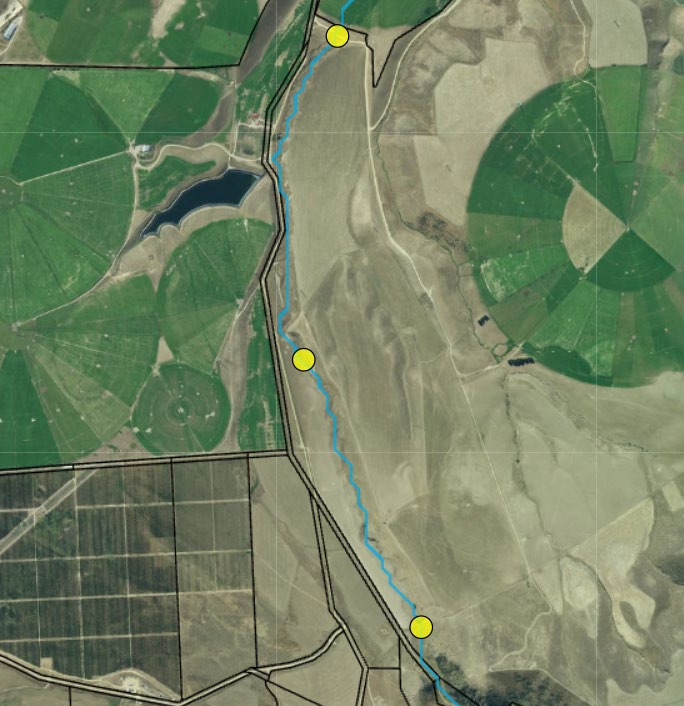 Appendix 1 to Land Use Consent RM25.279.01
Culvert Locations (Source: Otago Maps)
RELEASE
SR.10485
LGOIMA
10 of 10
